Barely 10-15 years ago, Streets were not just a medium of commuting. Somewhere around our childhood, all we could remember was cycling in our residential lanes, playing cricket in vacant plots, running all through the neighborhood while our parents walked to nearby markets, and our fathers used to be home soon before the stars started to shine brighter at night. Now we could barely find vacant plots and kids playing in streets, roadside markets are less preferred over 5-minute doorstep delivery, while kids prefer playing on mobiles to being mobile.once an active lifestyle filled with sweat is now largely sedentary, shaped by more urban growth, shifting economies, and demographics of residential areas.
Reasons for transition:-
- Resources for public fitness — parks, sports grounds, and open gym areas — have increasingly been monetized. For much of the population, especially in countries like India, ,nearly 60% of urban households fall below the income level that is required for regular gym memberships, which is not affordable for many households. (National Sample Survey Office data).
- The encroachment and congested urban grain, where space for large recreational facilities is almost impossible to carve out due to high urban density. Spotting vacant plot areas is nearly impossible, and owning or renting a house inside a gated community is still a very big dream for most middle-class households.
- According to The Times of India in 2023, the average one-way commute in metro cities was approximately 59 minutes for 20 km—an increase from 51 minutes for 17 km pre-pandemic—indicating a substantial rise in travel time. which has subsequently affected, in time, an individual gets to invest in physical activities.
To address this, urban design must do more than provide “opportunities” for exercise —it must not just exist it should motivate and create opportunities to move for better and healthy society.
Global examples: Cities That Made Movement Inevitable
It is highly human to ignore the awareness programmes or preachings until a policy or infrastructure forces you to adapt to the change. There are a few global lessons that have carried out this responsibility of reducing the vehicle carbon footprint and increasing the physical activity of people not just for their wellness but also for better Air quality and less pollution, which indeed leads to a better lifestyle and environment.
Vauban, Germany:-
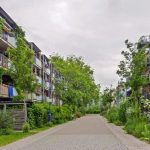
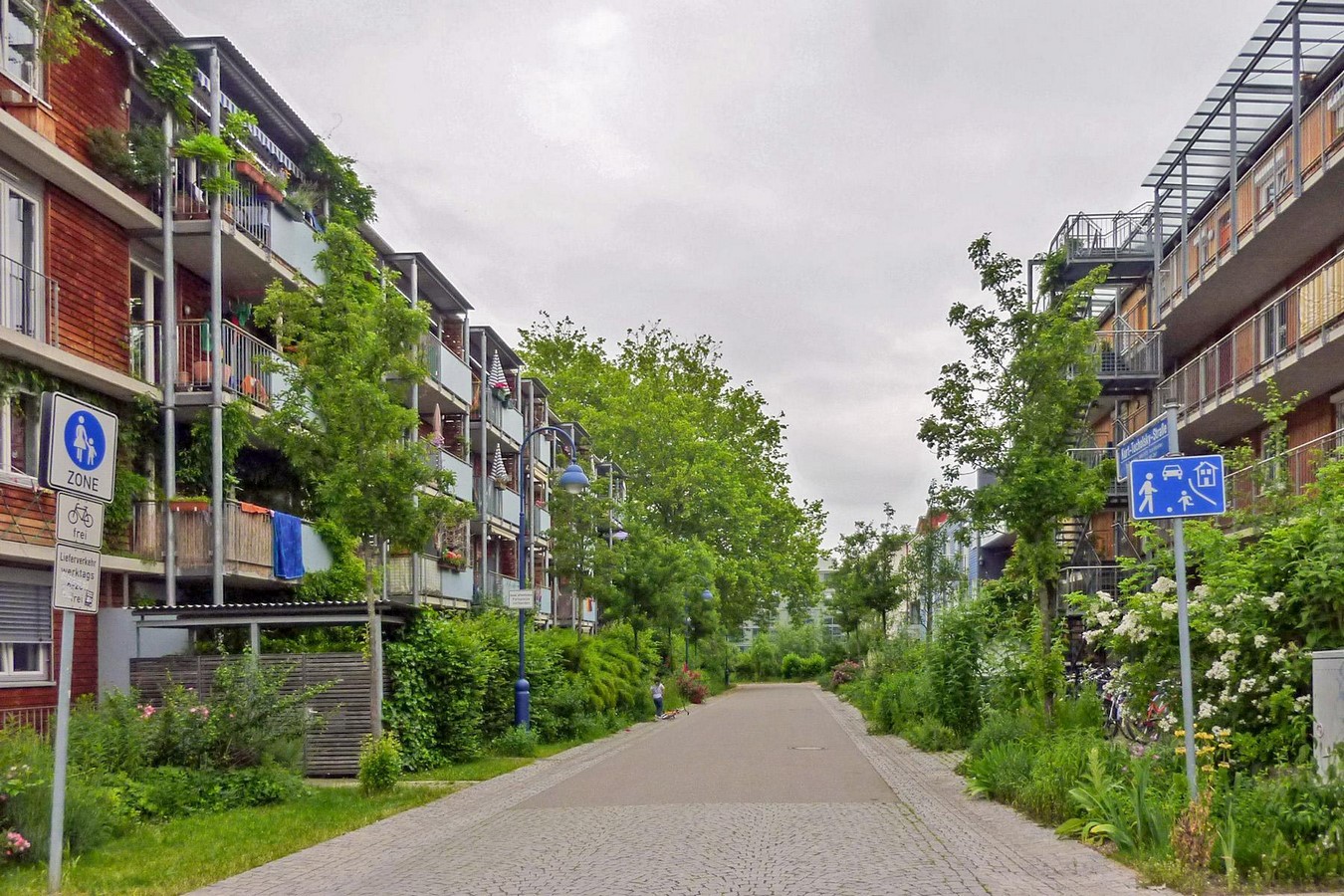
The Vauban district of Freiburg is a poster child for pedestrian-first design. A decade ago, the Vauban district took a bold initiative to go car-free. Residents who owned cars were required to purchase parking spaces in large garages located at the edge of the development, costing around $40,000 each, and even with existing cars, they had to only drop off the people for a brief moment and take the car to a two-storied garage at the end of the city. The neighbourhood is closely knitted and the parking spaces in the streets are completely limited, making people choose walking and riding bicycles over cars. Nearly 70 percent of the people here don’t own cars, and 57 percent of people have given up their cars. This deliberate design forces — and rewards — physical movement as the most efficient mode of transport. For longer distances, they use either trams or buses. This has significantly contributed to better sustainable living, and in Freiburg, the shift is visible with NO₂ levels dropping from around the legal limit zone (≈39 µg/m³ in early 2019; exceedances in 2017) to ~25 µg/m³ in 2024/2025—an improvement of roughly a third—reflecting cleaner vehicles, city measures, and less car traffic.
China’s Bikescape:-
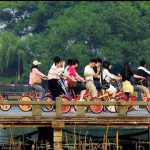
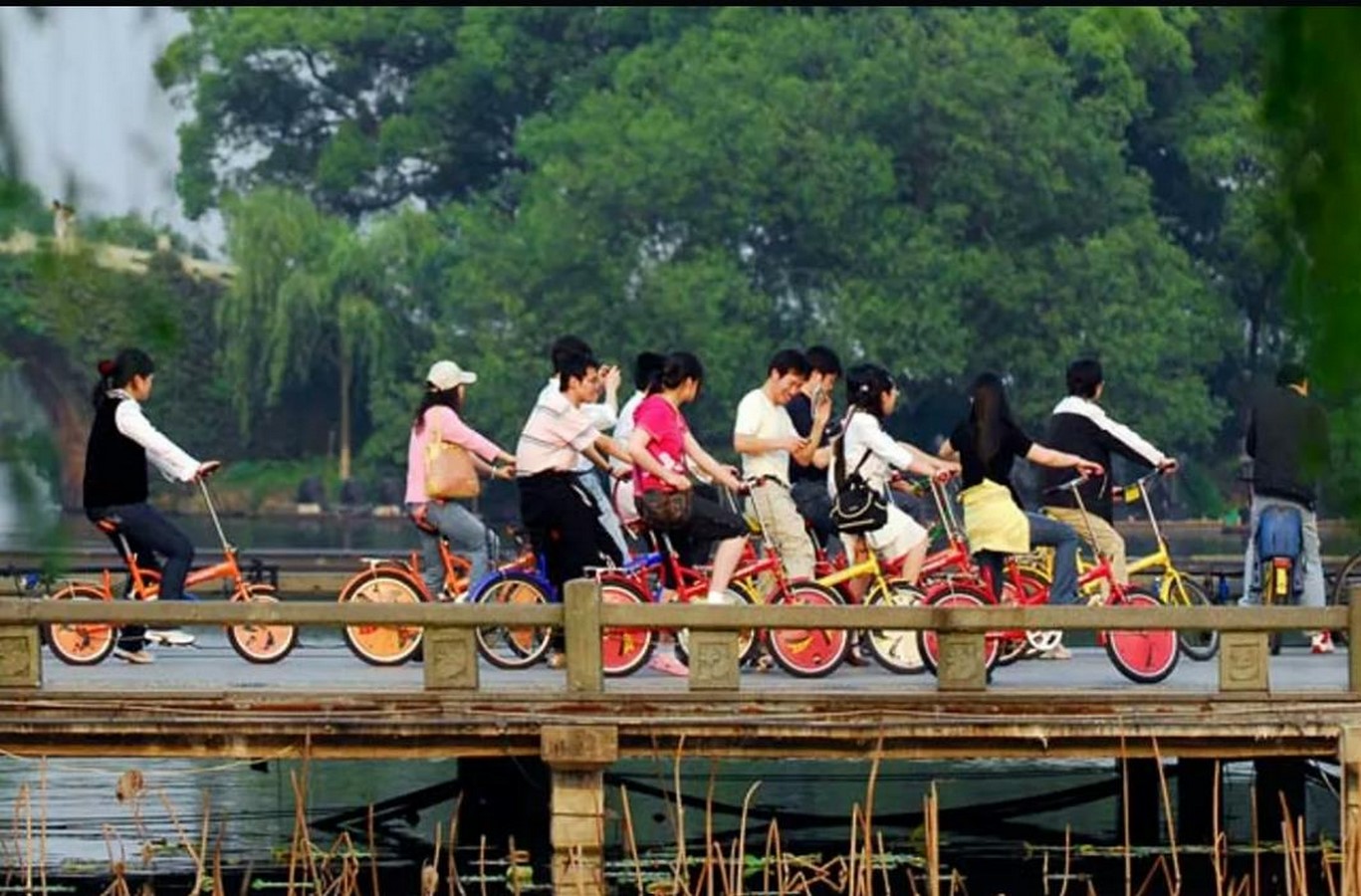
In cities like Hangzhou, the “bikescape” has transformed urban mobility. By the 1980s and 90s China was known to be the land of bicycles, which slowly transformed into the possession of cars by the early 2000s. The craze for cars was so high that by 2023, the total registered motor vehicles in Hangzhou had reached 4.42 million. To limit this, the government started quota-based car possession in 2014, 80000 cars per year, among which 80 percent is lottery and 20 percent via auction. This cut shortened the purchase limit. They also had driving time restrictions since 2011. Then they invested in cycle track-based infrastructures and shared public bikes with stations every few hundred metres. with the first hour free and easy payment with a city transit card and stations every few hundred metres, youth and people started preferring bikes instead of cars. With 100 km of BRT, the people paired their transportation with a combination of bikes and BRT instead of cars. This has shown significant improvement in air quality level – 2.5, and by 2024, this has also resulted in lower blood pressure among young adults (pubmed.ncbi.nlm.nih.gov).
Why This Model Struggles in India
Translating these international approaches to Indian cities faces multiple challenges:
- Long Commute:–
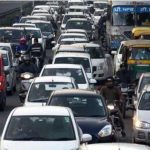
Census and NITI Aayog studies indicate that the average urban commute in metro cities like Delhi, Mumbai, and Bengaluru exceeds 10 km each way, taking 45–90 minutes. Paired with 9-hour workdays, commuting swallows at least 12–13 waking hours, leaving very little time or energy for planned exercise. The increase in traffic and high population make travel through public transport much longer and uncomfortable with long hours of standing.
- Limited Metro access: –
While metro systems are expanding, vast areas remain unconnected. This turns out to make cycling to nearby metro stations impossible, and the encroachment of cycling or pedestrian tracks by street vendors is yet another major problem, which increases risk in using cycles.
- The Chandigarh as a lesson:–
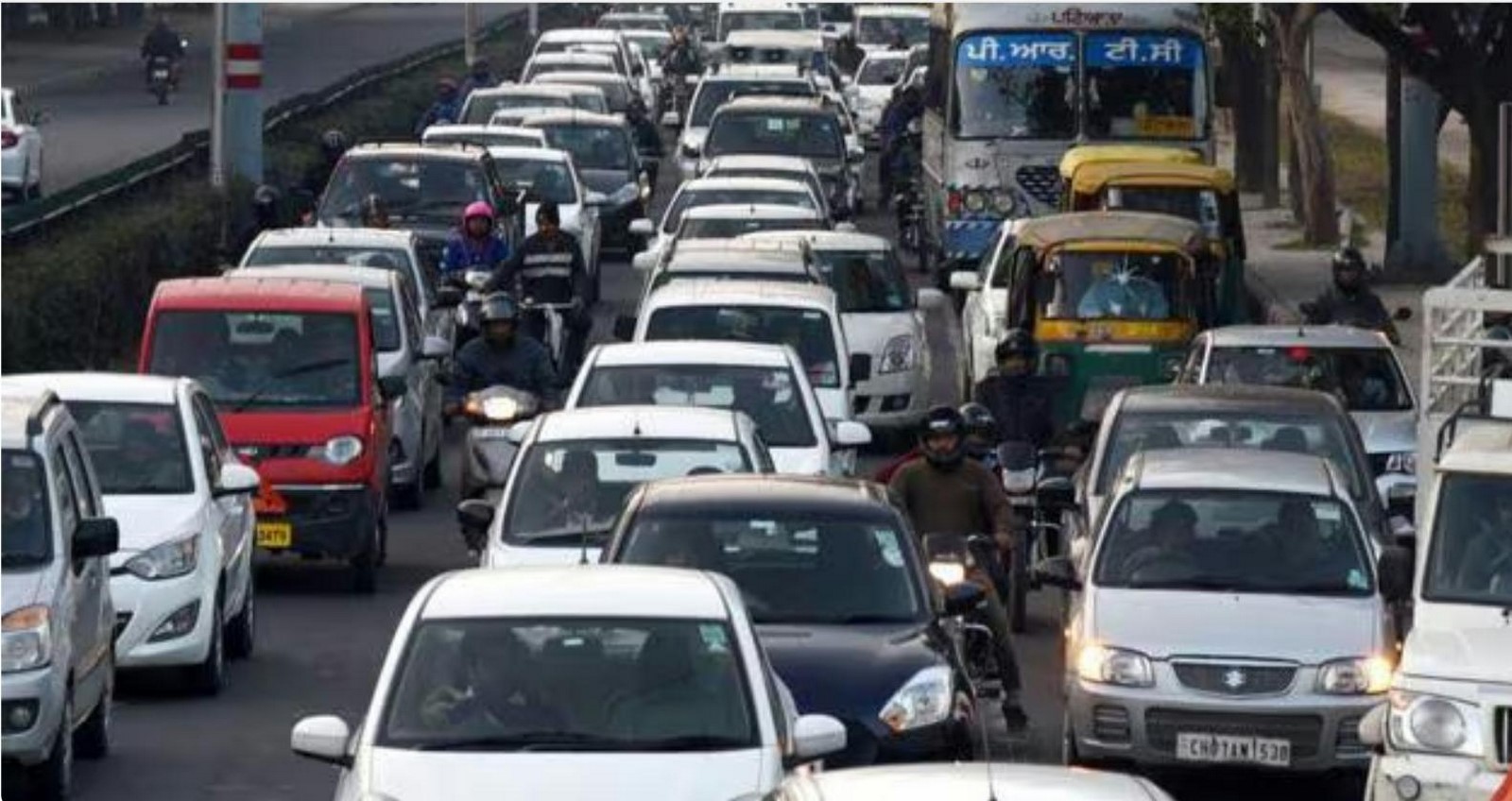
Chandigarh was a city that was planned under the neighborhood model. Chandigarh intended to blend residential, commercial, and leisure within walking distances by having everything under sectors, with height restrictions, greenscapes and a hierarchical road network. This was supposed to be one of the best sustainable cities, which turned out to be the opposite. Chandigarh surpassed its population in vehicle count. It now holds the highest per-capita vehicle ownership rate in India, which is estimated at about 878 vehicles per 1,000 persons. The lack of mass transit and the location of the workplace in different or central sectors far from residential sectors pushed people into buying more private vehicles.
This also affected people’s health, according to the LASI report. About 56% of Chandigarh’s population aged 45 and above are either overweight or obese, compared to 28% across India. The AQI is barely recorded as good, and it remains only poor in winters, while 45% of this pollution is contributed by vehicles. The city failed to serve as “self-sufficient “ despite its urban planning.
Indian Adaptations: Designing Activity Into Daily Life:-
Sabarmati Riverfront, Ahmedabad
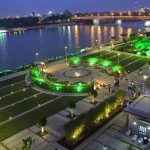
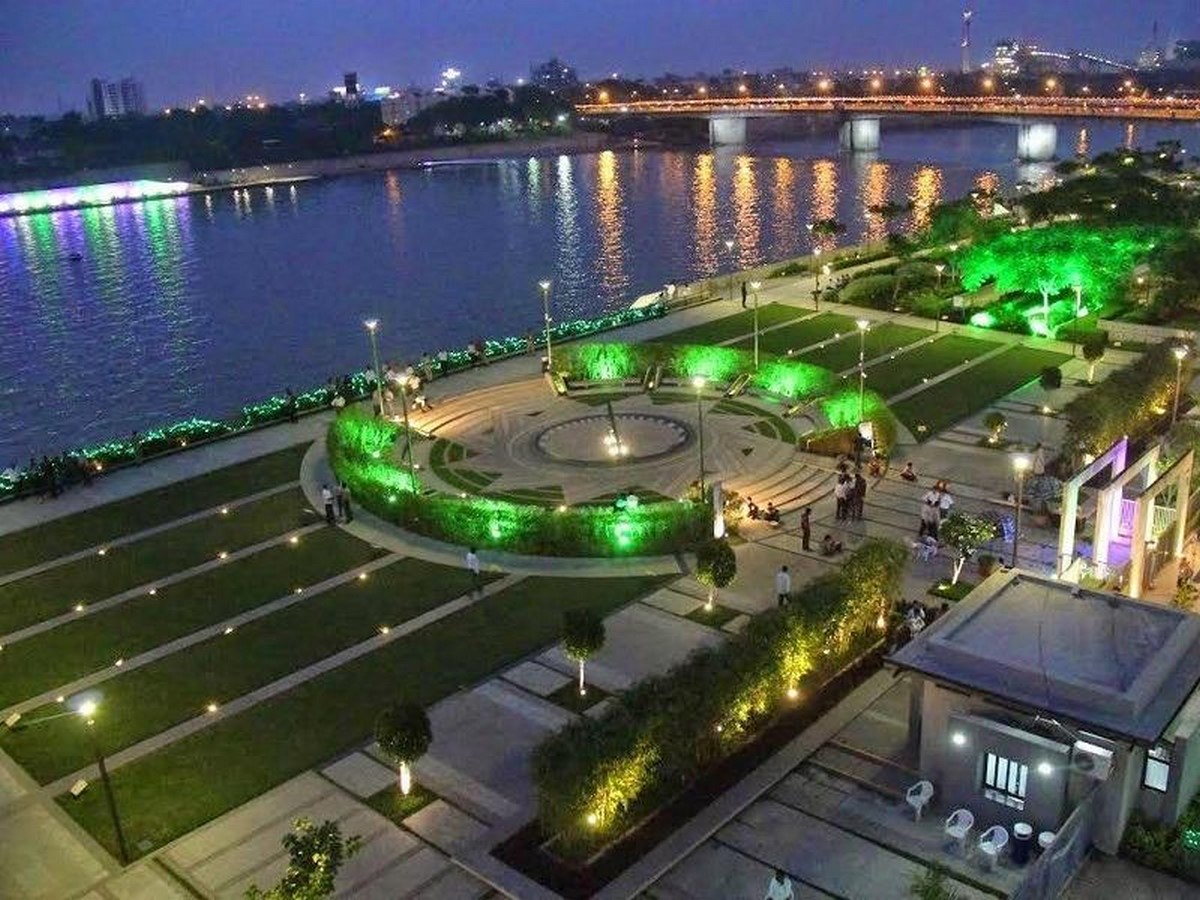
Once a polluted stretch of riverbank, the Sabarmati Riverfront is now a revitalized public spine with walking promenades, cycling tracks, and open fitness zones. Its integration into the city fabric makes physical activity accessible without major detours from daily routes.
Lake Development Projects
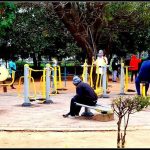
Cities like Hyderabad (Hussain Sagar) and Bengaluru (Ulsoor Lake) have upgraded lakeside areas with jogging paths, open gyms, and recreational spaces. These facilities draw users across age groups — early morning walkers, evening strollers, and casual exercisers — embedding fitness into leisure time.
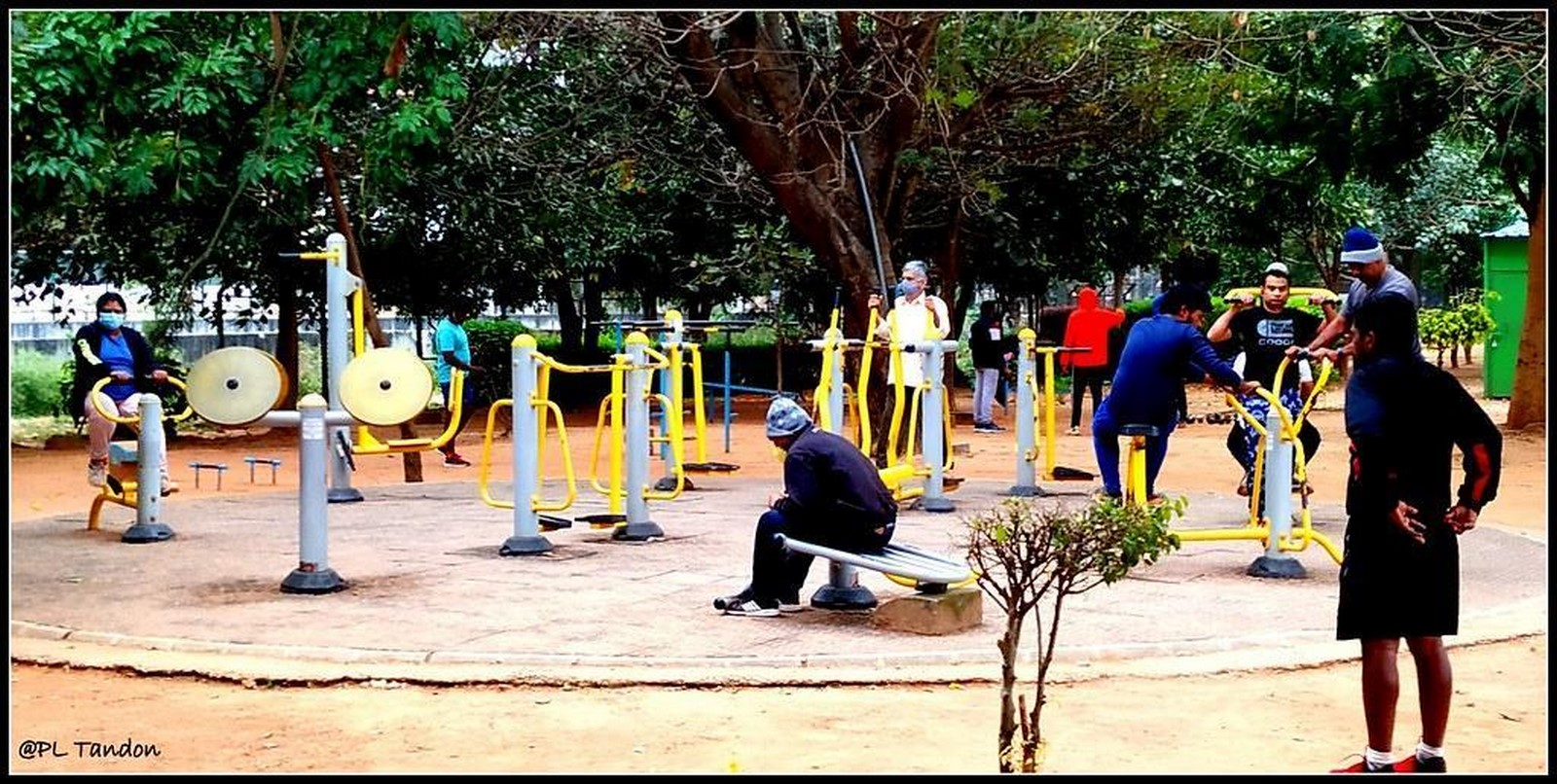
Niche Urban Opportunities: Fitness Under Flyovers:-
Flyovers, often dismissed as dead urban space can be doubled up as urban fitness areas and also it reduces the risk and complexities involved in land acquisitions.
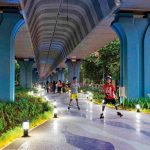
- Mumbai has converted some of its under-flyover spaces into basketball courts and skating rinks. eg:- Matunga’s uner flyover garden
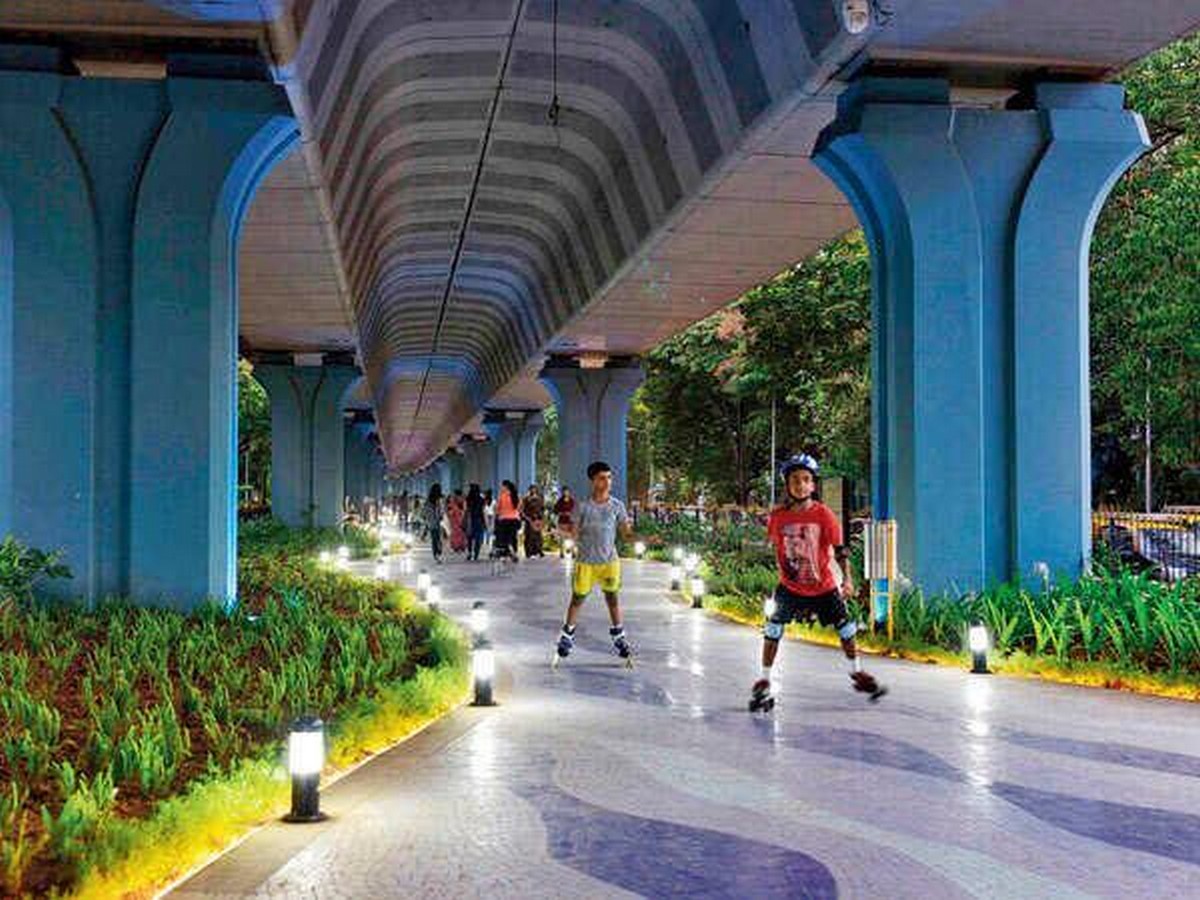
- Chennai has converted its space under the Kathipara flyover into an urban square where it also contains a children’s park, exhibition areas, and a place to stroll around.
- Madurai has parks and walking trails woven around its lakes and ponds, with ample amounts of two-wheeler parking by the main roads, which attracts elderly and young people around that area for a walk with nature.
These areas are shaded, centrally located, which increases accessibility and requires minimal land cost . It can include open gyms, jogging loops, or small courts — making them ideal for dense cities with very few open spaces.
Policy Levers:-
With ground space scarce, rooftops in residential complexes present a ready-made platform for communal fitness. Policy incentives can accelerate their adoption:
- Property Tax Rebates for complexes with open gyms, yoga decks, or walking tracks on terraces.
- Relaxed Norms for lightweight shade structures or flooring.
- Public Access Hours for neighboring residents, promoting inclusivity.
- Encroachment of pedestrians and cycle lanes should be strictly fined and relocated to safer and accessible zones.
Such policies bridge infrastructure gaps without additional land acquisition, and it also foster community well-being on a broader scale.
A truly active city blends infrastructure, policy, and culture. While International models show what’s possible when movement is prioritized in urban planning, India’s realities demand adaptation — turning riverfronts, lakes, under-flyover spaces, and rooftops into accessible fitness zones. With strategic policy support and public cooperation, we can transform our cities from sedentary landscapes into living, breathing spaces that move us — not just for aesthetics but for better life .
References:-
Buehler, R. and Pucher, J. (2012) Cycling in China: Past, Present, and Future. Transport Reviews, 32(4), pp. 409–436. Available at: https://doi.org/10.1080/01441647.2012.699314 (Accessed: 15 August 2025).
City of Freiburg (2023) Vauban District: A Model for Sustainable Urban Living. Available at: https://www.freiburg.de/vauban (Accessed: 15 August 2025).
Gupta, K. and Sharma, A. (2021) Understanding Commute Patterns in Indian Cities. Centre for Science and Environment. Available at: https://www.cseindia.org/understanding-commute-patterns-in-indian-cities-10873 (Accessed: 15 August 2025).
Indian Express (2024) Sabarmati Riverfront: How Ahmedabad Reclaimed its Waterfront. Available at: https://indianexpress.com/article/cities/ahmedabad/sabarmati-riverfront-development-1234567 (Accessed: 15 August 2025).
Sharma, R. (2022) Why Chandigarh Struggled to Become a Model Indian City. Scroll.in. Available at: https://scroll.in/article/1012345/why-chandigarh-struggled-to-become-a-model-indian-city (Accessed: 15 August 2025).
Times of India, ‘Mumbai Needs More Spaces Like Matunga’s Under-Flyover Garden’, The Times of India (Mumbai, 18 June 2016) https://timesofindia.indiatimes.com/city/Mumbai-needs-more-spaces-like-Matungas-under-flyover-garden/articleshow/52808164.cms accessed 17 August 2025.