Purpose of this Article THIS ARTICLE
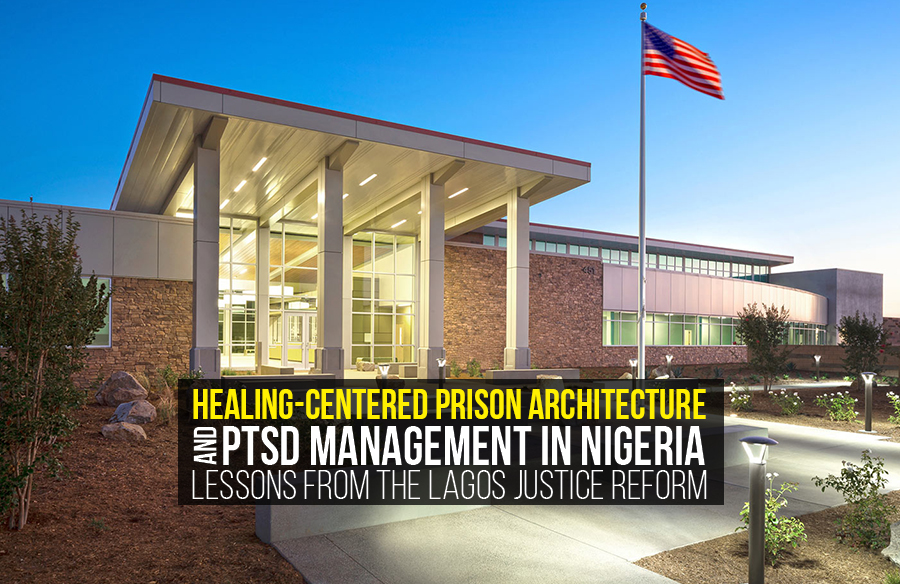
This article critically explores the urgent need for healing-centered prison architecture in Nigeria as a strategic approach to managing Post-Traumatic Stress Disorder (PTSD) among incarcerated individuals. Using recent justice sector reforms by the Lagos State Ministry of Justice as a policy backdrop, the author advocates for a bio-cognitive, sustainable, and climate-resilient architectural response to correctional infrastructure. The intended audience includes policymakers, architects, justice sector stakeholders, and mental health professionals seeking a humane and effective model for correctional rehabilitation in Nigeria.
Background
Nigeria’s correctional institutions, particularly the Kirikiri Maximum Security Prison in Lagos, are characterized by overcrowding, infrastructural decay, and a systemic neglect of mental health. According to the Open Society Justice Initiative (2023), a significant proportion of inmates in Nigeria’s correctional system remain unconvicted, with an estimated 70 percent classified as pre-trial detainees. These individuals, still presumed innocent under the law, are often confined in overcrowded police cells or custodial centers that lack access to basic services, highlighting systemic challenges within the country’s criminal justice and detention infrastructure. Such conditions significantly exacerbate psychological distress, contributing to high rates of PTSD, depression, and anxiety.
Although the Lagos State Ministry of Justice has implemented commendable reforms such as restorative justice programs, mobile legal clinics, and prison decongestion initiatives, the physical infrastructure of incarceration remains largely unchanged. The author argues that without the integration of healing-centered architectural design, these legal and policy advances may fall short of delivering complete rehabilitation.
- What Role Does the Built Environment Play in Inmate Mental Health?
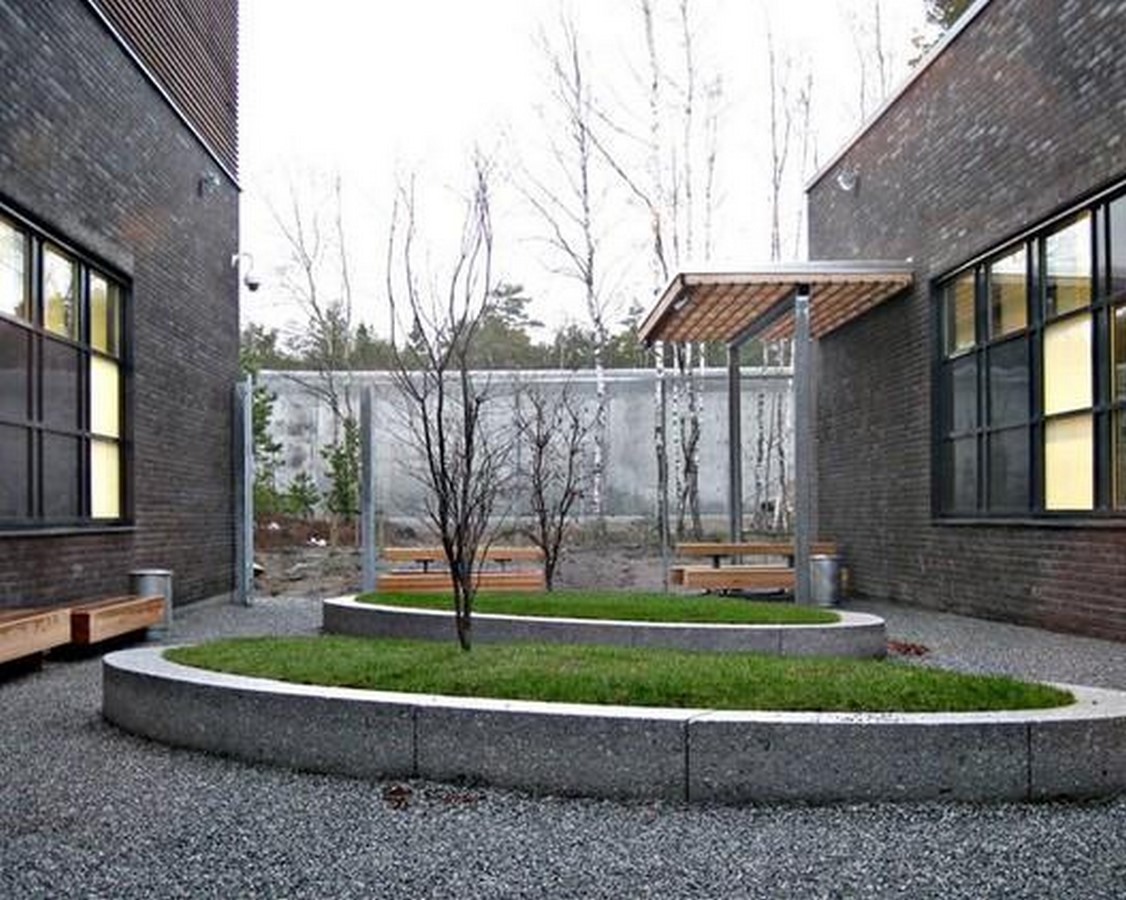
Global evidence highlights that the architectural design of correctional facilities plays a vital role in shaping inmates’ mental health outcomes. In institutions such as Halden Prison in Norway and the Las Colinas Detention and Reentry Facility in California, design features like natural lighting, access to green outdoor spaces, acoustic control, and dignified living conditions have been associated with reduced aggression and improved psychological well-being (Jewkes & Moran, 2015).
In contrast, Nigerian prison environments are typically dark, congested, and poorly ventilated, conditions that intensify psychological trauma. Orjiakor et al. (2017) observe that traumatic experiences in pre-trial detention, especially among Awaiting Trial Prisoners (ATPs), contribute significantly to a deterioration of well-being. They argue for the inclusion of ATPs in wellness-promoting programs, particularly as these inmates spend prolonged periods in remand custody without sentencing.
To address these conditions, healing-centered architecture should integrate:
- Daylighting and biophilic (nature-oriented) design elements
- Passive cooling for thermal comfort
- Calm, warm-toned visual environments
- Quiet zones designated for reflection and therapy
In this context, architecture is not merely a physical construct—it becomes a therapeutic agent.
- Are PTSD Interventions Possible Without Architectural Change?
While psychosocial support services are essential in any rehabilitation program, their effectiveness can be severely undermined by poor spatial conditions. Negarestan (2025) emphasizes that spatial designs which prioritize natural light exposure can enhance mental health, cognitive function, and emotional resilience—making architectural considerations central to trauma-informed care.
Without such considerations, delivering trauma therapy in overcrowded, dark, and noisy settings may not only be ineffective but could further retraumatize individuals.

To complement existing justice reforms in Lagos, correctional facilities should include:
- Therapy rooms designed with cross-ventilation
- Quiet gardens for mindfulness and recreation
- Modular wellness pavilions tailored for female and juvenile inmates
When these spatial elements are excluded, psychological interventions risk becoming futile.
- Can Nigeria Afford Such Prison Design Innovations?
A common misconception is that healing-centered design is unaffordable in resource-constrained contexts like Nigeria. However, Usher Jr. (2025) highlights that investing in rehabilitative infrastructure significantly reduces long-term expenditures associated with recidivism, violence, and operational crises within prisons.
Other cost-effective implementation strategies include:
- Utilizing locally sourced materials such as compressed earth blocks
- Employing passive design techniques to reduce energy demand
- Mobilizing Public-Private Partnerships (PPPs) and tapping into international development grants
A phased implementation starting in Lagos—widely recognized as Nigeria’s most reform-minded state could serve as a scalable prototype for broader national adoption.
- Should Architecture Be Part of Lagos Justice Reform Strategy?
The inclusion of architectural transformation within justice reform is not optional—it is imperative. While the Lagos State Ministry of Justice and the Office of the Public Defender have made meaningful progress in legal, administrative, and programmatic reforms, these must be grounded in rehabilitative spaces.
To institutionalize healing-centered design, the Lagos State Government should:
- Engage architects, planners, and mental health experts in prison design
- Establish a cross-ministerial task force dedicated to correctional infrastructure reform
- Embed healing-centered architectural policies within its justice transformation strategy
- Pilot design interventions in facilities for women and juveniles, where trauma incidence is particularly high.
- What Are the Risks of Ignoring Architectural Solutions in PTSD
Neglecting the architectural dimension of prison reform poses grave risks, including:
- Increased prevalence of self-harm, suicide, and psychiatric emergencies
- Escalation of inmate aggression and correctional officer burnout
- Elevated recidivism rates due to the absence of rehabilitative environments
- Systematic violation of international human rights standards such as the UN’s Mandela Rules
As Wener (2012) succinctly puts it, “architecture is not neutral; it either contributes to healing or to harm.” Without architectural transformation, the Nigerian correctional system will continue to operate as a punitive loop—rather than a restorative bridge to reintegration.
Lagos State has demonstrated commendable leadership in the arena of justice sector reform. However, true rehabilitation must be spatially grounded. Healing-centered prison architecture rooted in sustainable, climate-conscious, and neuroscience-informed design—is the missing link in Nigeria’s justice transformation.
As Lagos and other Nigerian states map the future of criminal justice, they must confront pivotal questions:
- Will prisons remain sites of punishment and trauma, or evolve into environments of healing?
- Will justice and dignity converge through architecture?
- Or will Nigeria’s built environment continue to undermine the promise of reform?
Ultimately, a just and humane society will not be shaped solely in courtrooms and policy memos—it must also be forged in the bricks, air, and light of its correctional spaces.
REFERENCES:
Jewkes, Y., & Moran, D. (2015). The paradox of the ‘green’prison: Sustaining the environment or sustaining the penal complex?. Theoretical Criminology, 19(4), 451-469. https://doi.org/10.1177/1362480615576270
Negarestan, A. (2025). Natural Light in Interior Architecture: Enhancing Mental Health. Management Strategies and Engineering Sciences, 7(3), 66-76. https://doi.org/10.61838/msesj.7.3.7
Open Society Justice Initiative. (2023, September). Reforming pretrial detention in Nigeria: Project overview. https://www.partnersglobal.org/wp-content/uploads/2024/02/Reforming-Pretrial-Detention-in-Nigeria-Project-Overview-FINAL.pdf
Orjiakor, C. T., Ugwu, D. I., Eze, J. E., Ugwu, L. I., Ibeagha, P. N., & Onu, D. U. (2017). Prolonged incarceration and prisoners’ wellbeing: livid experiences of awaiting trial/pre-trial/remand prisoners in Nigeria. International Journal of Qualitative Studies on Health and Well-Being, 12(1), 1395677. https://doi.org/10.1080/17482631.2017.1395677
Usher Jr, D. L. (2025). Inmate Recidivism: The Impact of In-Custody Rehabilitation Programs on the Reduction of Recidivism (Doctoral dissertation, California Baptist University). https://www.proquest.com/openview/2a7ff10c6f56fc16375357bc80e130b2/1?pq-origsite=gscholar&cbl=18750&diss=y
Wener, R. (2012). The environmental psychology of prisons and jails: Creating humane spaces in secure settings. Cambridge University Press. https://books.google.com.ng/books?hl=en&lr=&id=kiGhM0-vddQC&oi=fnd&pg=PR9&dq=Wener,+R.+(2012).+The+environmental+psychology+of+prisons+and+jails:+Creating+humane+spaces+in+secure+settings.+Cambridge+University+Press.+&ots=59wJ9Y8AW0&sig=IYWh3XN8vqyPlT1Gq5X_Z_3TAYk&redir_esc=y#v=onepage&q=Wener%2C%20R.%20(2012).%20The%20environmental%20psychology%20of%20prisons%20and%20jails%3A%20Creating%20humane%20spaces%20in%20secure%20settings.%20Cambridge%20University%20Press.&f=false