Dearest fellow rulers,
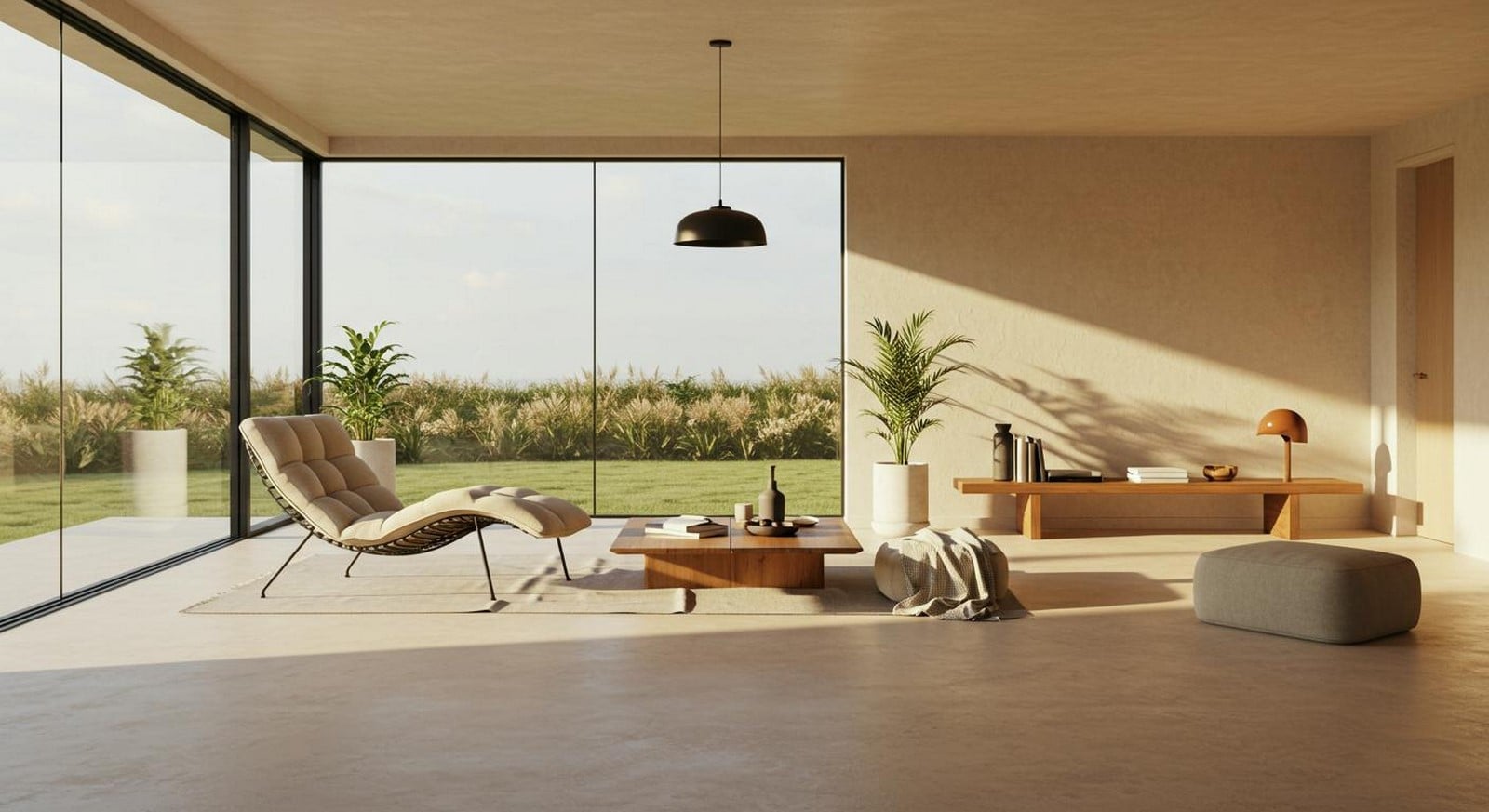
Join me as we delve further into interior design and architecture and explore challenges with designing for interior well-being in Africa. Using an africanfuturist approach, we will highlight both barriers and possibilities in crafting spaces that cater to the health and wellness of users, spiritually, mentally, and physically. At the end of our journey, you should be able to appreciate the importance of interior well-being and ways you can navigate them to create spaces that feel like home, or what Arc. Bofu Ugbodaga calls “spaces that feel like a second skin.”
The Importance of Interior Well-being
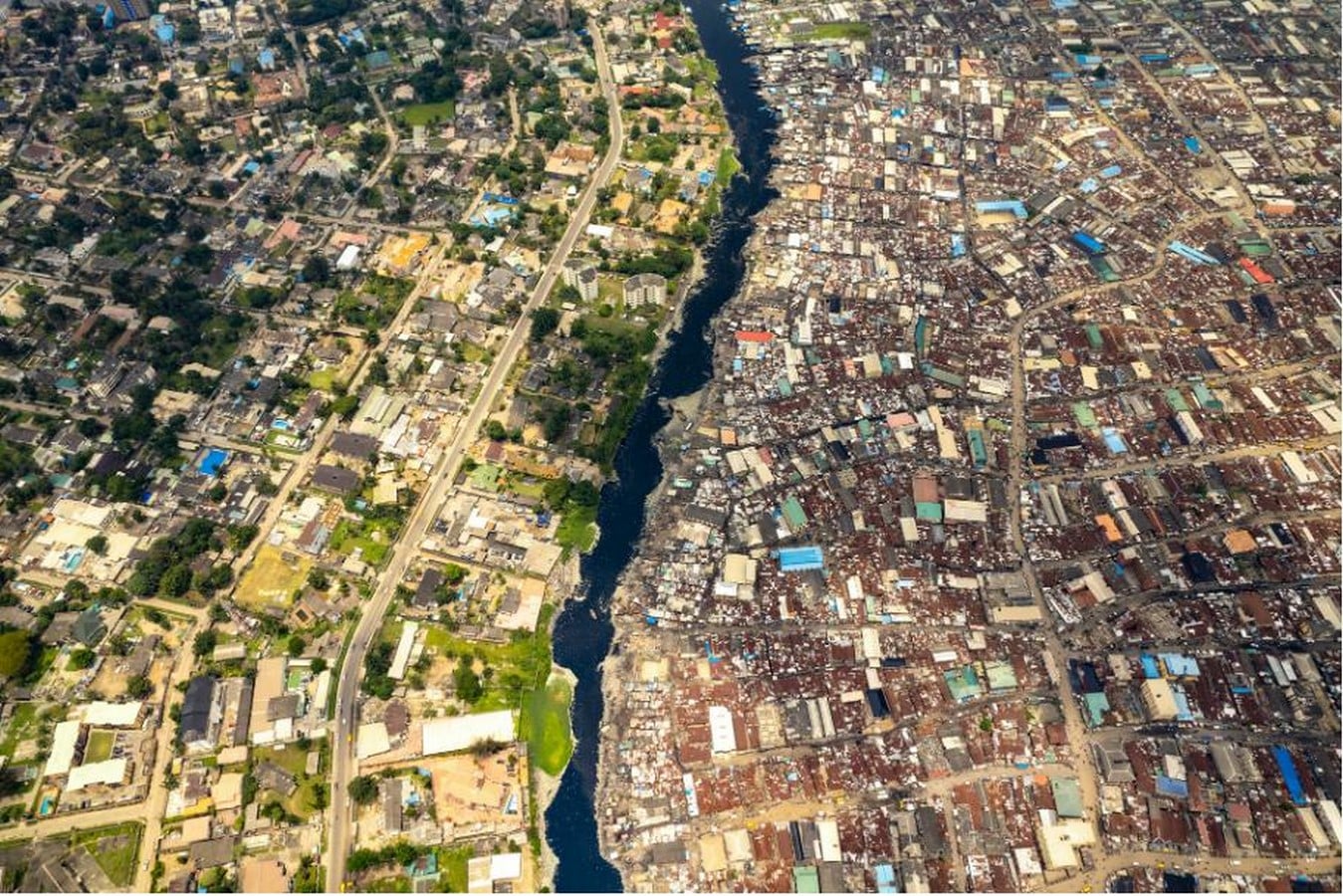
Interior well-being is the harmony between spatial experience and human functionality. It encompasses users’ spatial, emotional, and physiological health influenced by architectural decisions. In Africa, where rapid urbanisation, socioeconomic inequality, and resource scarcity are common, we can’t overemphasise the role of architects in creating solutions that enhance health and wellness (UN-Habitat, 2023). Thus, the lack of interior well-being in Africa shows that poor indoor air quality, lighting, acoustics, and spatial arrangements contribute to rising rates of mental health issues, sleep disorders, and even physical ailments (WHO, 2025).
Challenges in Designing for Well-being

The Client
Unfortunately, the client is the most important deciding factor in designing for interior well-being, which is more complicated when the client is not the end user. Often, their demands do not align with user behaviour, particularly in multi-functional homes. A living room may serve as a dining room, study, and sleeping area in low to middle-income homes. Clients often have big dreams but small budgets, expecting miracles. Some have erratic decision-making attitudes and expect architects to be therapists, psychics, and seers.
Especially for commercial or corporate clients, prioritising cost-efficiency over comfort becomes necessary due to limited resources. This forces the commercialisation of the design process and results in low-quality materials and compromised wellness outcomes. Architects are also pressured by tight deadlines, impacting design integrity and mental health. Still, navigating these storms to create what the client truly needs and wants is the hallmark of impactful design.
The System
External support systems—including policy, infrastructure, material access, and regulation—pose systemic challenges. For example, the lack of local material industries discourages sustainable choices. Many architects must import or improvise materials that suit health-focused interior design. Poor infrastructural systems prevent energy-efficient solutions like passive ventilation and daylighting. Moreover, Africa’s housing deficit has forced mass developments where speed often trumps integrity (UIA, 2022).

The Users
Users are rarely involved in the design phase in commercial and public projects. This can result in cultural insensitivity, mismatched user mapping, and a lack of maintenance culture. Here, participatory and community design principles are crucial. Engaging the end user allows architects to design spaces with real needs in mind (Nunes et al., 2023).
The Environment
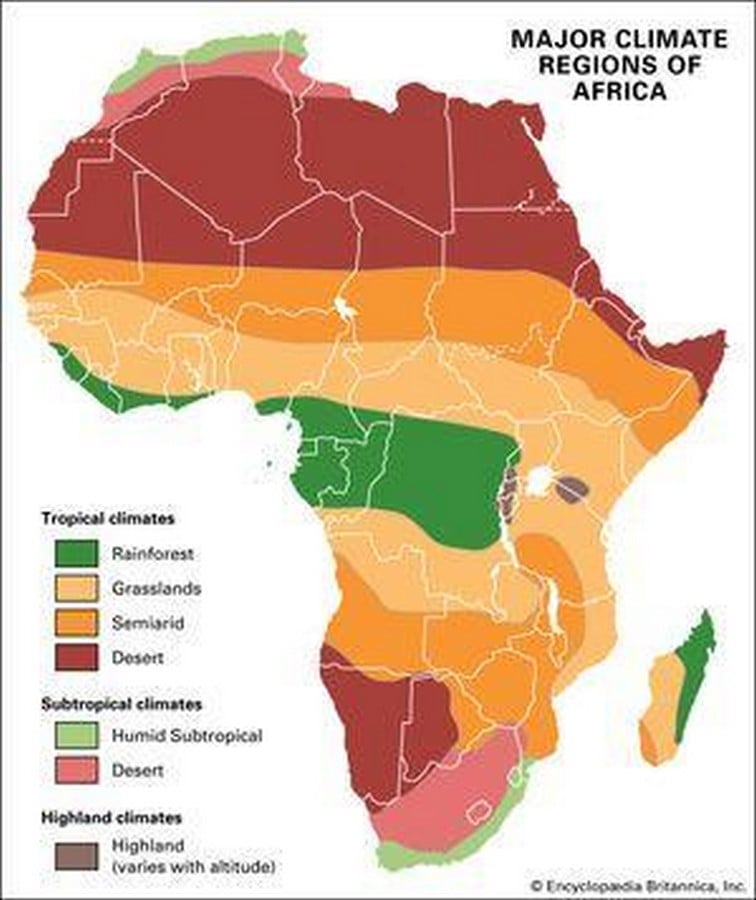
Africa’s diverse climate necessitates responsive spatial solutions. Failure to consider context—what Prof. David Aradeon calls “rotation”—results in inefficient and harmful architecture. Designing with the environment, not against it, is essential.
Technology and Collaboration
Most advanced design tools use foreign datasets, leading to non-contextual results. There is little to no integration of adapted tech that works for the local systems.
The Africanfuturist Approach
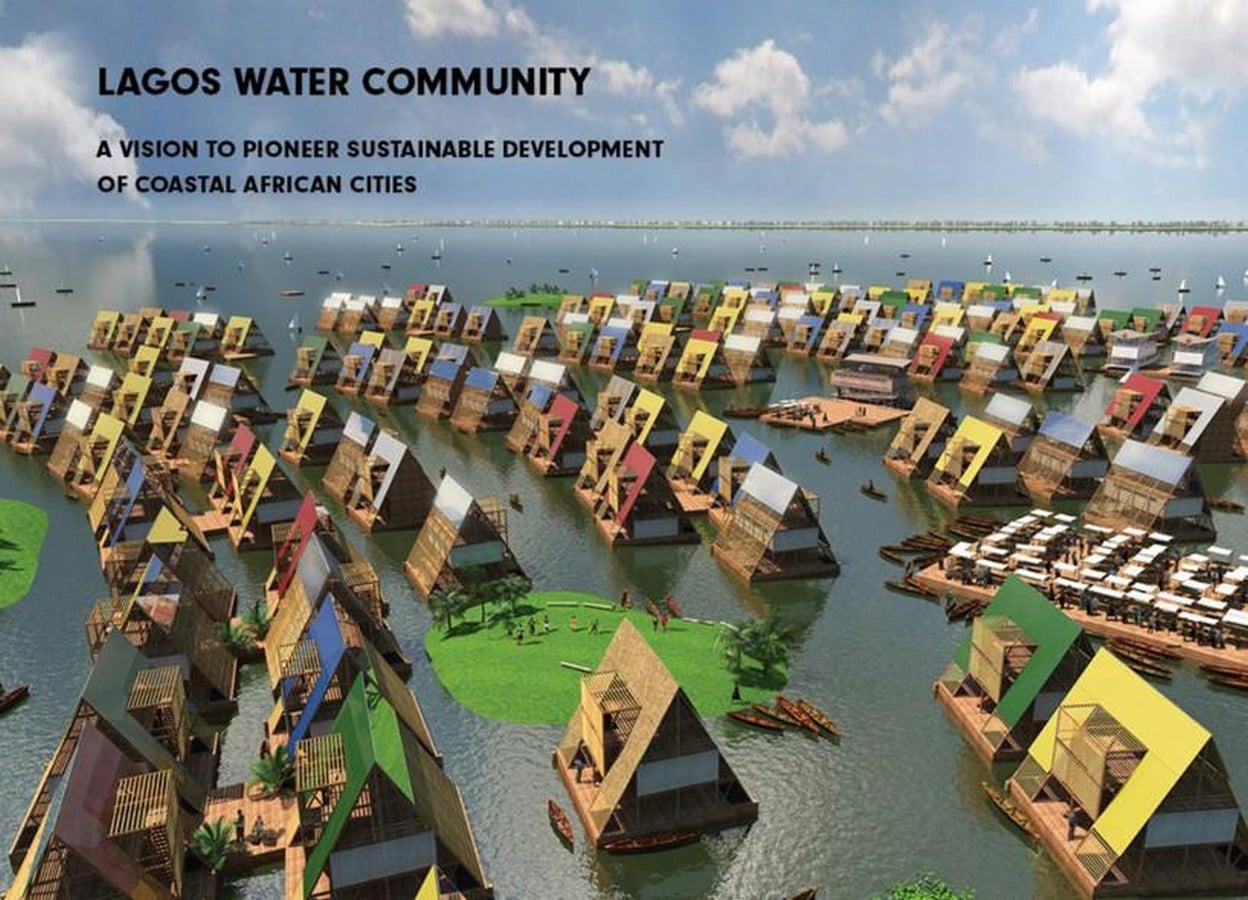
The Africanfuturist approach offers grounded wisdom and forward-thinking solutions to these challenges. This approach is rooted in contextual relevance, spirituality, and cultural authenticity that enables designers to work within the existing realities while introducing sustainable innovations tailored to the African user.
In response to the misalignment between clients and end-users, participatory design frameworks can be introduced, where clients, users, and artisans co-create interior solutions. Instead of imposing Western standards, this method will respect lived realities and enhance well-being through empathy-driven design.
On the systemic level, Africanfuturism proposes contextualising building codes and policies to include well-being metrics such as spatial daylight autonomy, indoor air quality, and acoustics. It also requires working with design advocacy groups or regional alliances that translate research findings into practical, scalable recommendations. Strengthening the local production of sustainable materials—like stabilised earth blocks, bamboo, raffia, and palm frond composites—can reduce reliance on imports while aligning with climate-responsive principles.
Community mapping and spatial behaviour studies should guide layouts for public or commercial spaces. These can be integrated with vernacular wisdom—such as shaded courtyards, perforated walls, and natural materials—to craft socially cohesive, low-stress interiors. Designs should consider climatic conditions by applying bioclimatic strategies—like stack ventilation, high ceilings, and thermal mass materials—to improve thermal comfort and reduce dependence on mechanical systems (Ekhaese & Ndimako, 2023). Even digital technologies can be adapted to local contexts by training young African designers in parametric software and encouraging the development of regionally appropriate tools.
Finally, we have to prioritise interdisciplinary collaboration across the professionals and even the public and private sectors to foster the integration of sensory well-being into spatial design, from lighting and acoustics to colour psychology and spatial proportions. This will ensure that health, culture, and innovation are not mutually exclusive but harmonised to create holistic spaces tailored for the man, his spirit and his environment.
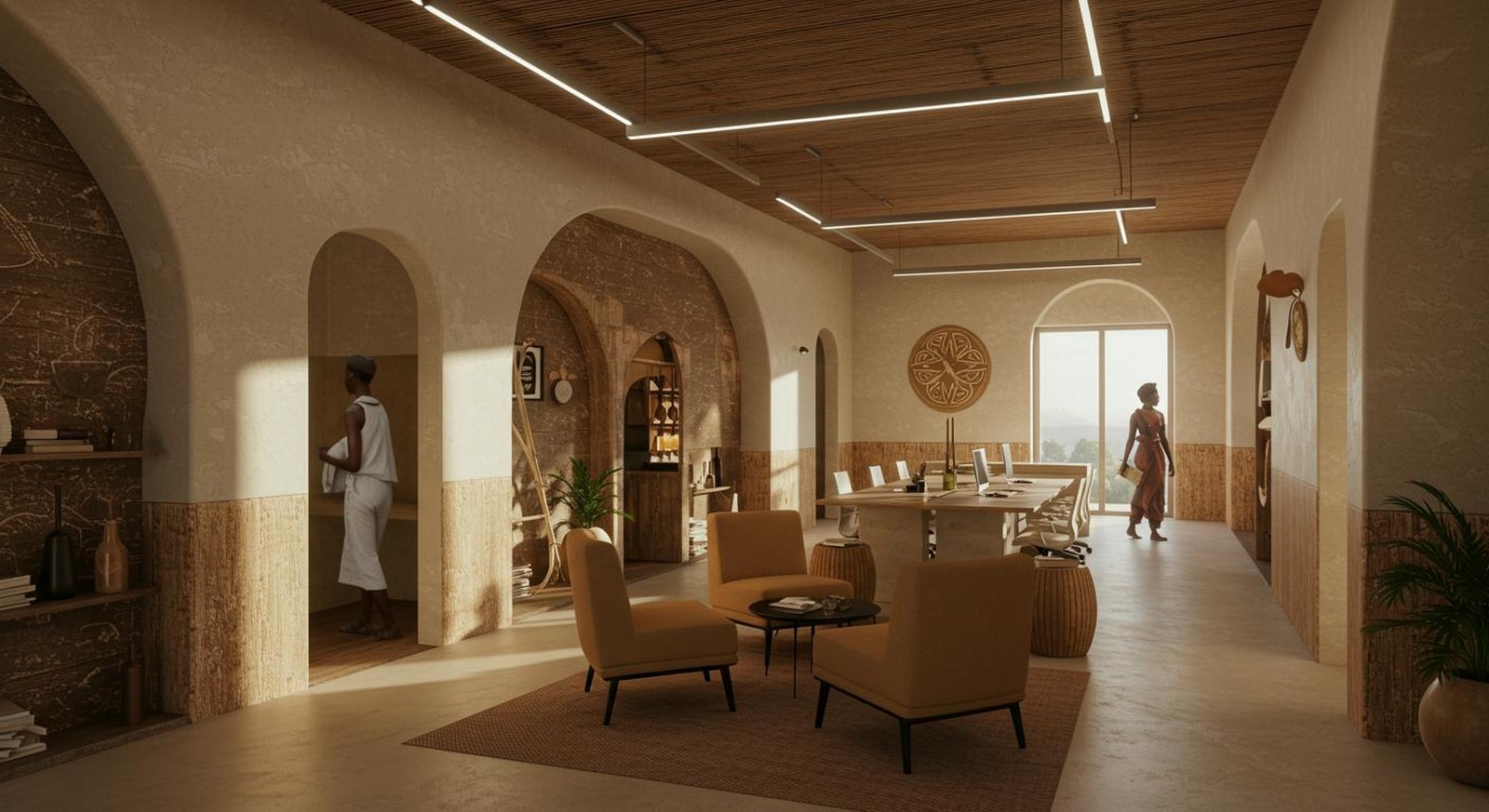
Designing for interior well-being in Africa is not about copying Western standards or justifying minimal budgets. It is about rooting our solutions in African knowledge, history, and systems thinking.
Through African futurism, we create for the man, his spirit, and his environment. As the Africanfuturist Collective (2024) suggests, “health is wholeness—the harmony of man, spirit, and environment.” Interior well-being is more than layout or lighting—it is cultural alignment, spiritual sensitivity, and ecological stewardship all embodied in space.
The real power of interior design lies in its ability to shape people—and it is time African design does that intentionally, beautifully, and transgenerationally.
References:
- Africanfuturist Collective. (2024). Africanfuturism in Architecture and Its Impact on the African’s Health and Wellness [Unpublished BSc dissertation]. Covenant University.
- Ekhaese, O. N., & Ndimako, O. O. (2023). Eco-friendly construction materials and health benefits in the design of an all-inclusive health resort, Nigeria. Frontiers in Built Environment, 9, 1011759. https://doi.org/10.3389/fbuil.2023.1011759
- Nunes, F., Couto Silva, J., Félix, B., et al. (2023). African co-design: Past, present, and emerging. Proceedings of the 4th African Human Computer Interaction Conference (AfriCHI’ AfriCHI’23). https://doi.org/10.1145/3610614.3618053
- UIA (2022). Architecture for Well-being. International Union of Architects. https://www.uia-architectes.org/en/resources/architecture-for-well-being/
- UN-Habitat. (2023). Urban Housing and Well-being in Africa: Regional Report.
- WHO. (2025). Urban Health Fact Sheet. World Health Organisation. https://www.who.int/publications/i/item/urban-health-fact-sheet-2025