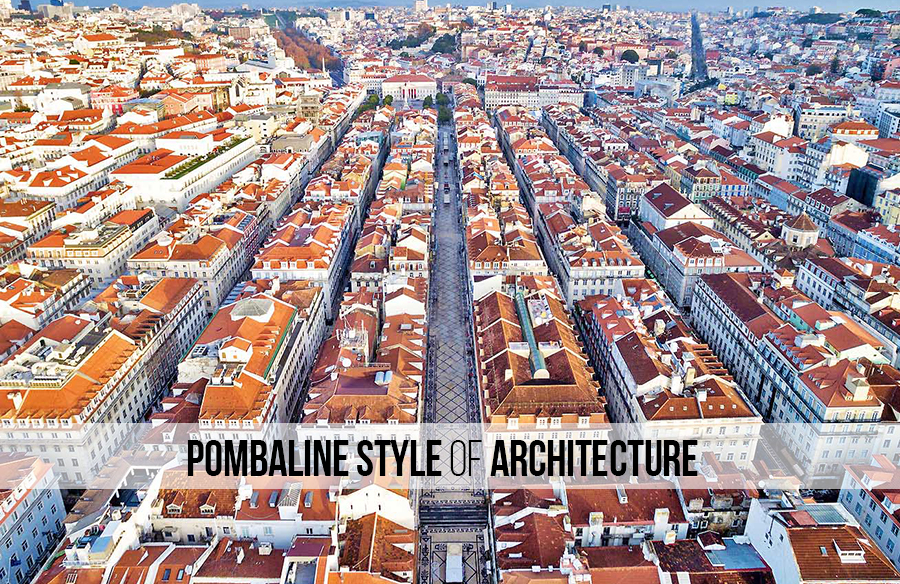
Pombaline architectural style emerged in the reconstruction of Lisbon, Portugal after the earthquake of 1755. This style reformed the structural configuration of the buildings to make them earthquake-resistant and the urban layout of the Lisbon streets. Many buildings in downtown Lisbon still look very similar to each other, belonging to this particular language and style. Over time, these buildings have deteriorated and are recently being refurbished and renovated to preserve the pombaline style of architecture.
Features of Pombaline Architecture
Certain design reforms taken by Marquis de Pombal (Tatiana, 2025), in charge of reconstruction, became exemplary for earthquake-resistant construction and developed into a new style of architecture. He established building rules and regulations to ensure a better health and life of the citizens. Most buildings in this area are up to three floors (Tatiana, 2025) and the ground floor is mostly used for shops and cafes with residential flats on the above floors.
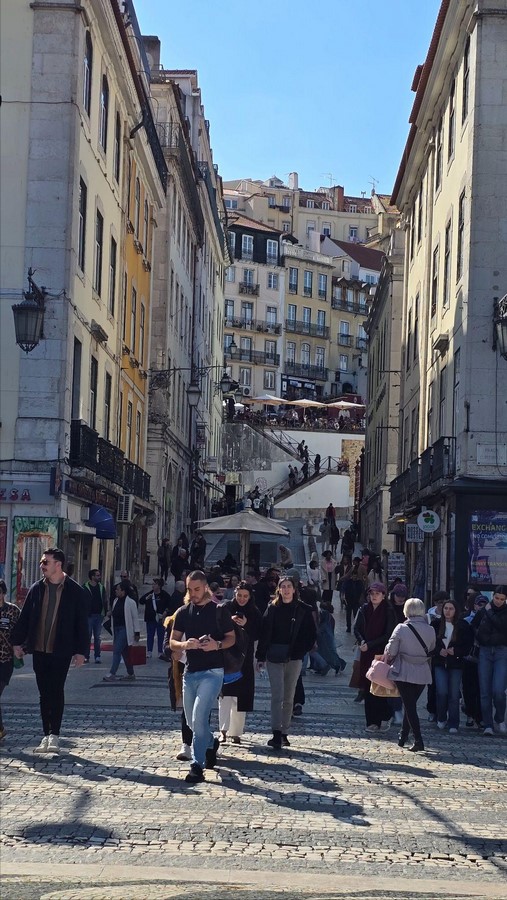
The main feature of Pombaline architecture is the wooden structure with multiple cross bracings inside the walls to provide flexibility in case of an earthquake (Tatiana, 2025). The facades were ornamented by either traditional tiles or elaborated iron balconies.
Present Context of Lisbon Downtown
Over time people have moved out of the Pombaline Quarter and shifted to the city centre (Taquenho and Fernandes, 2016). Most of these buildings had been abandoned leading to severe deterioration and need for renovation. An effort has been made to refurbish most of these buildings now occupied by commercial brands and restaurants.
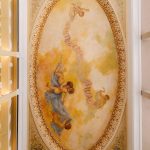
While renovating these buildings, care has been taken to retain the Pombaline architecture and also some ornamental features such as frescos on the ceilings and walls. The major changes to these buildings are in terms of their interiors to suit different functions than what it was built for. The majority of the projects have preserved the facades if nothing else is feasible. Also, in most renovations, the attics have been removed and reconstruction of the roof structure.
Examples of Refurbished Projects
1.Douradores Residential Building Renovation
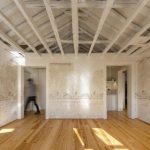
This building was constructed in the early 19th century in Lisbon’s Baixa Pombalina district. Till 2016, the building was abandoned and was in a degraded condition. The structure was weakened because of the demolition of the resistant walls (Silva, 2021).
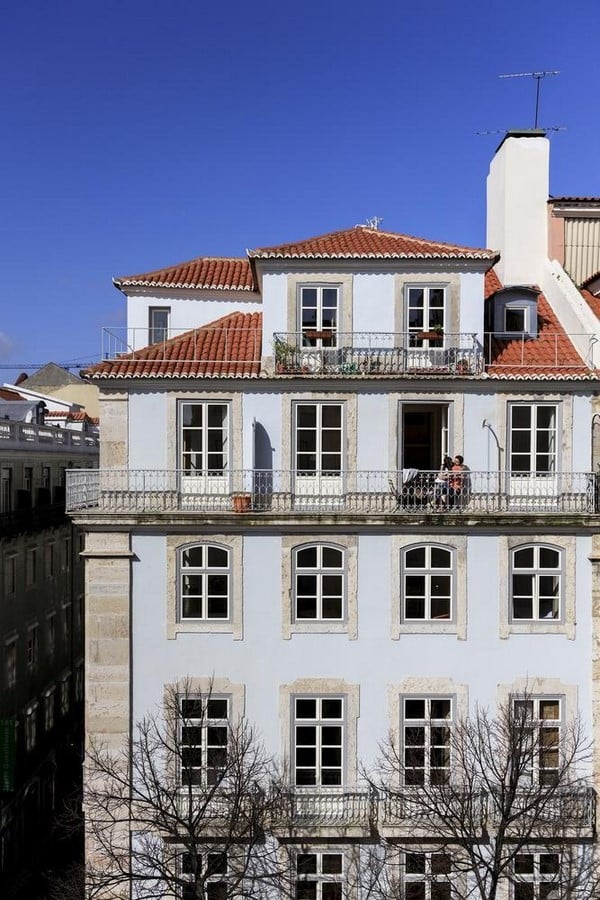
It was renovated by José Adrião Architects. The configuration per floor was changed from two apartments to three, maintaining the existing Pombalina layout to suit the present needs. A lift was installed, keeping the original staircase as it was (Silva, 2021).
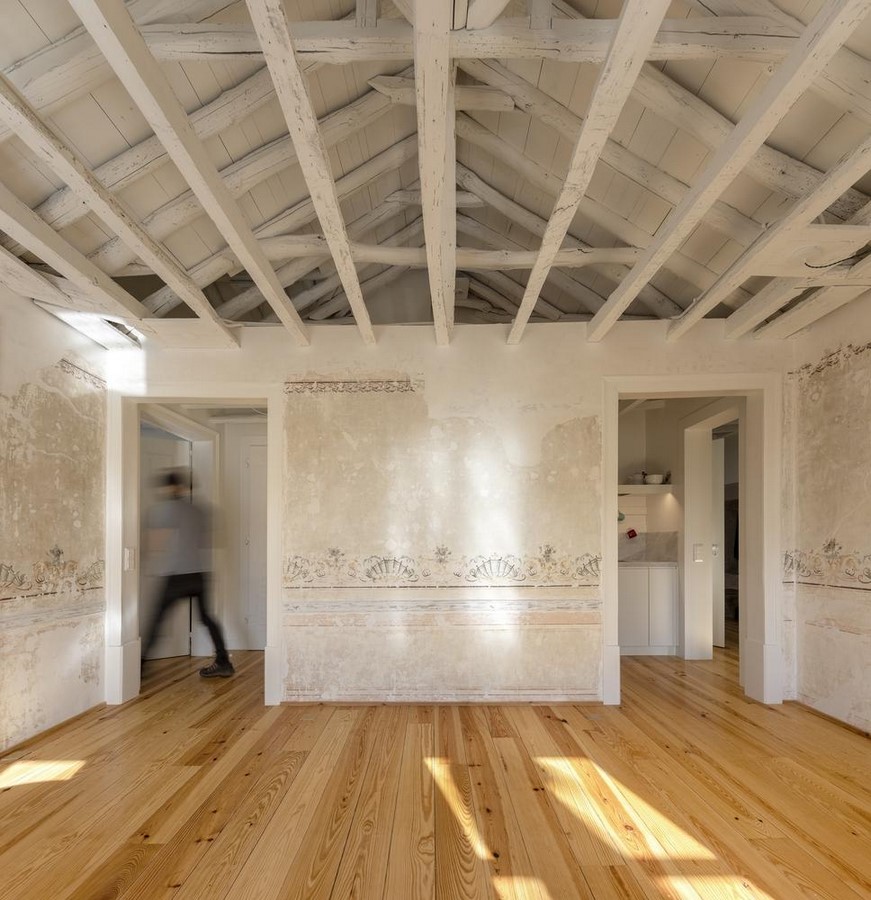
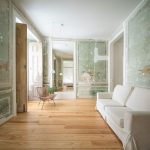
The existing wooden structure was repaired and retained including the roof structure which was kept exposed. Further, there was an attempt to preserve the frescos on the wall by scraping them under the layers of paint. The walls have incomplete overlapping frescos with the new white paint, revealing the narrative of the space (Silva, 2021).
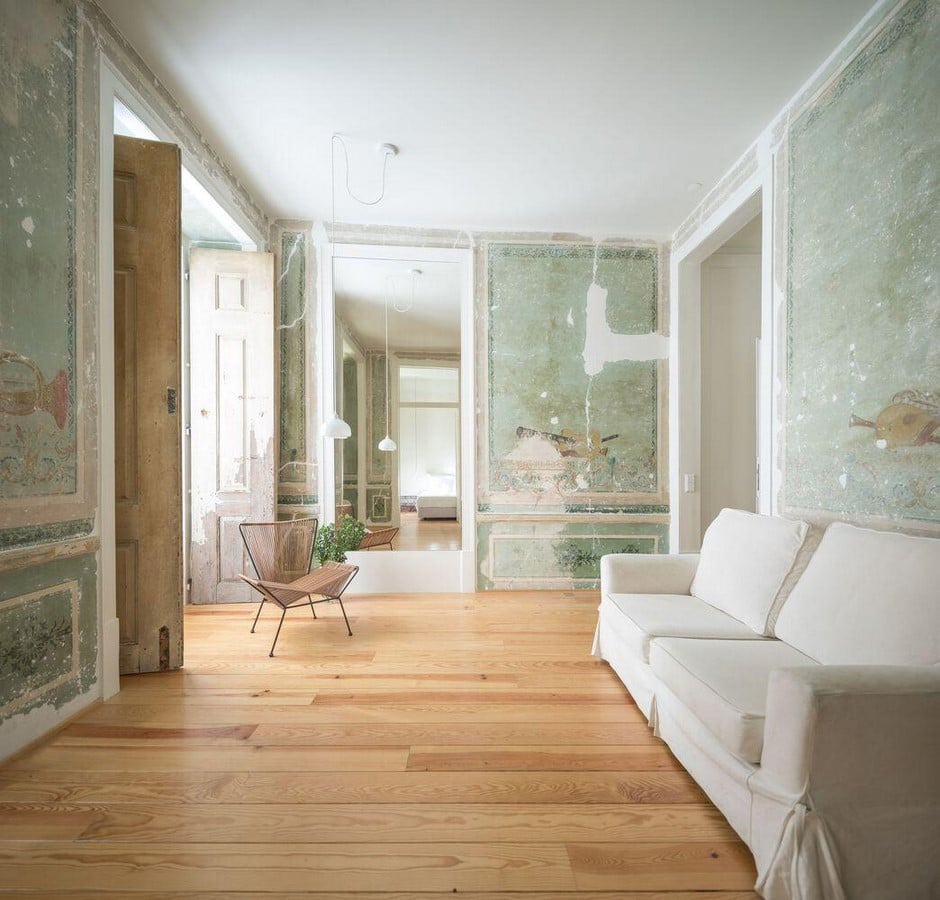
The exposed structure along with incomplete frescos on the wall show the changes the building has gone through and preserve its identity. The changes in the interiors are done to enhance the texture of the wooden structure as well as the subtle faded colours of the frescos rather than covering them up.
2. Apartment in Santa Apolonia
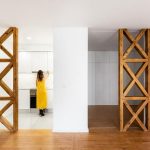
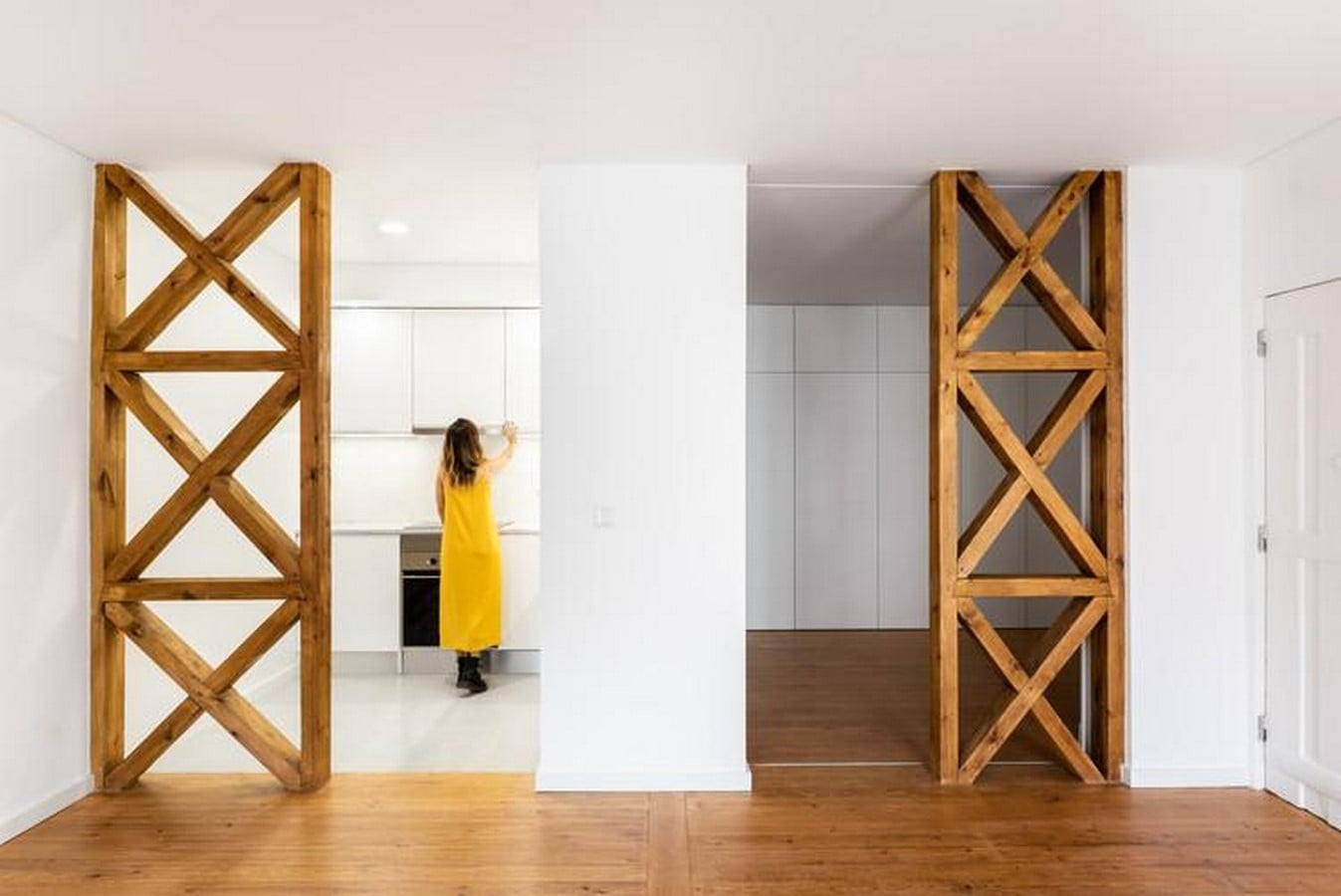
This particular apartment is on the first floor of one of the buildings in the Pombalina district of Lisbon. This was refurbished by the firm SER-ra. (Sagredo, 2019). It is one of the buildings where the wooden bracings, called the St. Andrew’s Cross, are visible. Like every other building, the rest of the structure and interior configuration are retained. The architects have strategically exposed these structural members to make them a part of the space by using them as visual dividers (Sagredo, 2019).
3. Zara Store in Lisbon
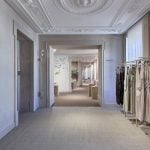
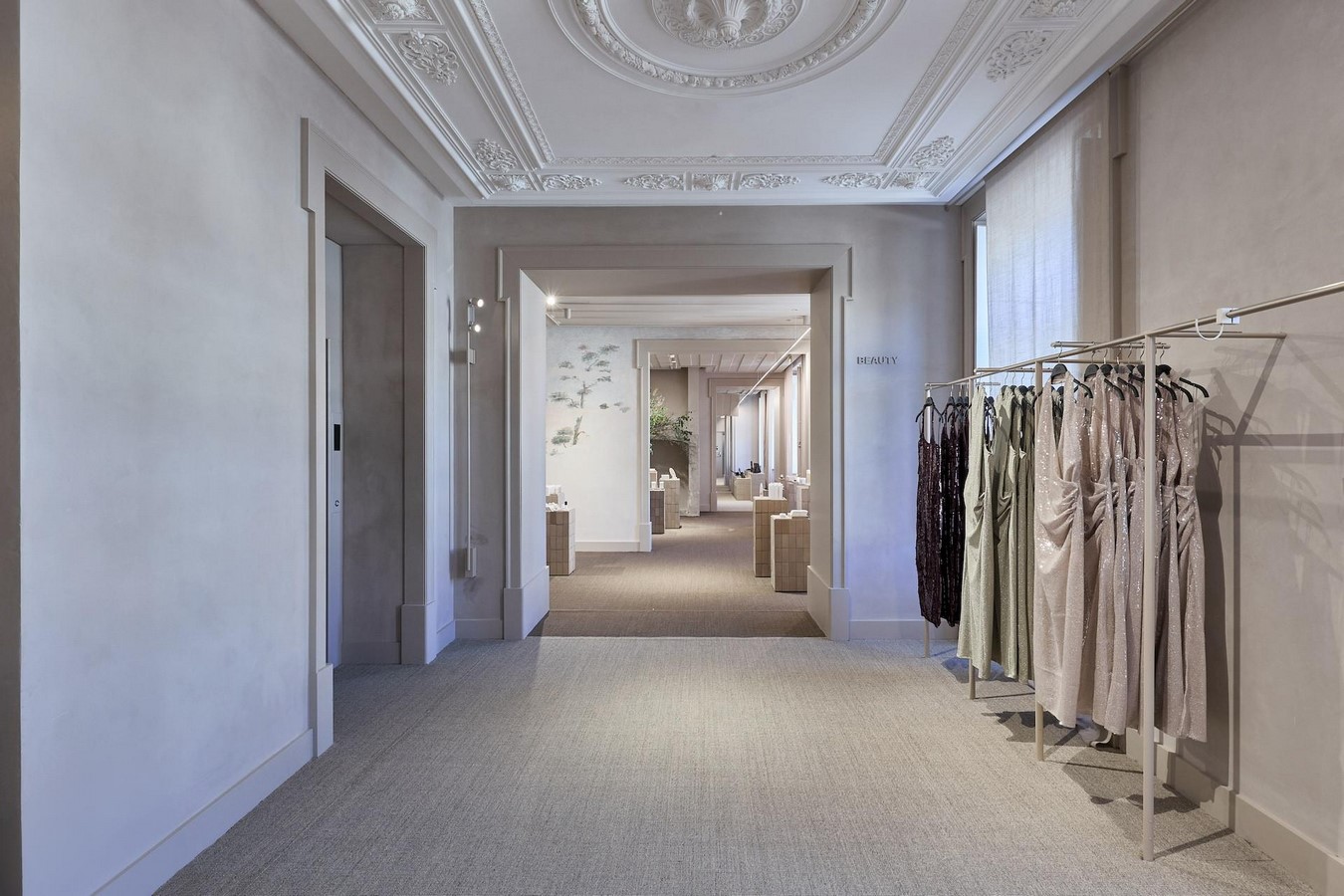
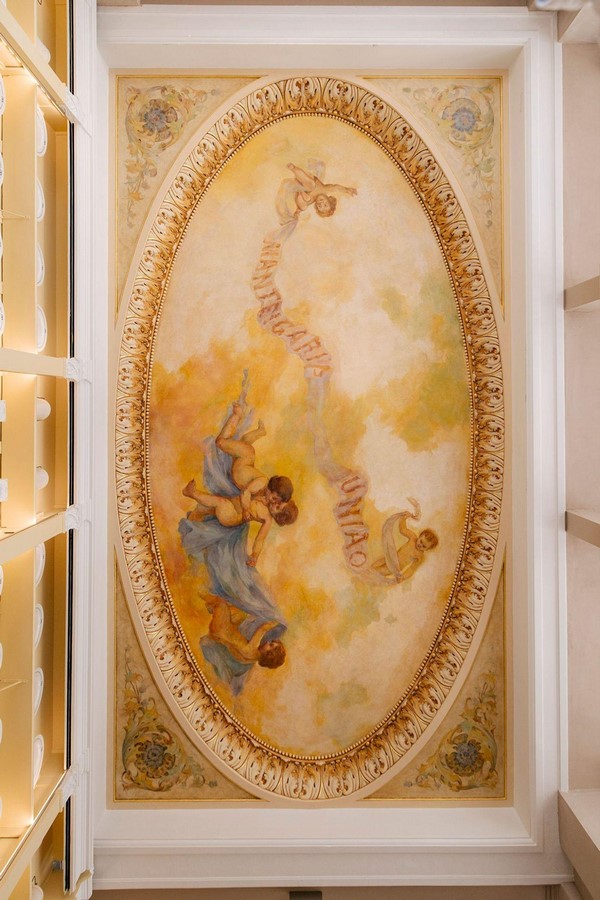
Zara’s flagship store in Lisbon is another example of how they have adapted the building without stripping away its identity. This project is done by Elsa Urquijo Architects (D5 MAG – Design Magazine, 2024). The renovation ensured the preservation of the stone carvings on the facade windows along with iron railings. The interior of the store follows a Pombaline colour and material palette- the ceiling and wall frescos, local stone, wooden panels and stucco mouldings (Leandro, 2024) to enhance the historic essence of the building.
Along with the store, they have also included a patisserie that serves the traditional Portuguese custard tarts, making it a homely experience. The bakery also follows similar original elements like the ceiling painting and uses similar Pombaline elements (Yatzer, 2024).
As it unfolded in Lisbon, with time and urbanisation, people moved towards modern parts of the city which resulted in the abandonment of the historic construction. But to preserve it for future generations to see them, these buildings have to be renovated to be usable again. Pombaline architecture is an important part of the architectural history of Portugal. This narrative is an example of what is bound to happen with time, and how the historic styles need to be adapted. Refurbishment needs to ensure that the style is being embraced rather than hiding the old stuff under false ceilings and layers of paint.
Reference:
- D5 MAG – Design Magazine. (2024). The World’s Second-Largest Zara Store Opens in Lisbon’s Historic Rossio Square. [online] Available at: https://d5mag.com/a-new-chapter-for-zara-in-lisbons-iconic-rossio-square/ [Accessed 27 Apr. 2025].
- Leandro, V. (2024). We already know what opened in Rossio: it’s one of the world’s biggest clothing stores. [online] Lisboa Secreta. Available at: https://lisboasecreta.co/en/rossio-zara-en/ [Accessed 27 Apr. 2025].
- Sagredo, R. (2019). Apartment in Santa Apolonia / SER-ra. [online] ArchDaily. Available at: https://www.archdaily.com/910794/apartment-in-santa-apolonia-ser-ra?utm_source=chatgpt.com [Accessed 27 Apr. 2025].
- Silva, v (2021). Douradores Residential Building Renovation / José Adrião Arquitetos. [online] ArchDaily. Available at: http://www.archdaily.com/962514/douradores-residential-building-renovation-jose-adriao-arquitetos?utm_source=chatgpt. [Accessed 27 Apr. 2025].
- Taquenho, F. and Fernandes, M. (2016). Rehabilitation of the interior structures of the Pombaline Buildings An architectural perspective. [online] Available at: https://fenix.tecnico.ulisboa.pt/downloadFile/1689244997257341/EXTENDED%20ABSTRACT_62881.pdf [Accessed 26 Apr. 2025].
- Tatiana (2025). Pombaline Architecture: Unique Style Emerged from Reforms – Alonga Travel. [online] Alongatravel.com. Available at: https://alongatravel.com/pombaline-architecture-unique-style-emerged-from-reforms/.[Accessed 26 Apr. 2025]
- Yatzer (2024). Blending Heritage with Modernity: Zara’s New Pastelaria in Lisbon. [online] Yatzer. Available at: https://www.yatzer.com/zara-pastelaria-lisbon.
Image References:
Image 1
Jain, D. (n.d.). Streets of Lisbon.
Image 2 – 4
Almendra, N. (n.d.). Douradores Residential Building Renovation / José Adrião Arquitetos. Available at: https://www.archdaily.com/962514/douradores-residential-building-renovation-jose-adriao-arquitetos/60b157f4ae1cb-%20201650620be-douradores-residential-building-renovation-jose-adriao-arquitetos-photo?next_project=no [Accessed 27 Apr. 2025].
Image 5
Emontenegro (n.d.). Apartment in Santa Apolonia / SER-ra. Available at: https://www.archdaily.com/910794/apartment-in-santa-apolonia-ser-ra?utm_source=chatgpt.com [Accessed 27 Apr. 2025].
Image 6
ZARA (n.d.). Available at: https://frameweb.com/article/retail/zara-ditches-generic-high-street-interiors-for-a-hyperlocal-spatial-direction-in-lisbon [Accessed 27 Apr. 2025].
Image 7
Sales, T.V. (n.d.). Available at: https://www.yatzer.com/zara-pastelaria-lisbon [Accessed 27 Apr. 2025].