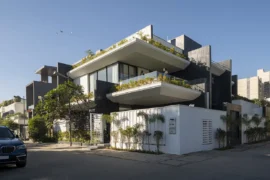
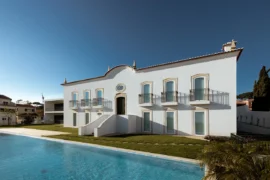
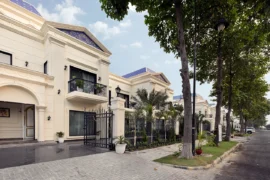
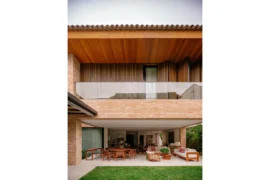
Miranda Palmeto is a productive home conceived under a mixed-use neighborhood-scale scheme. It is part of a series of architectural interventions aimed at revaluing the Palmeto (palm collection) of the Cholul Nursery, a 2.5-hectare green lung with several decades of antiquity, dedicated to the production and sales of tropical plants. This nursery is located in the heart of the Cholul commissary, a community with Maya-colonial origin in the the municipality of Mérida, southeast of Mexico.
Project Name: Miranda Palmeto
Studio Name: TACO Taller de Arquitectura Contextual
Location: Mérida, Yucatan, Mexico
Year: 2023
Lot Surface: 475 sqm
Intervened Area: 285 sqm
Team: Carlos Patrón Ibarra, Alejandro Patrón Sansor, Ana Patrón Ibarra, Karla Gómez Luna, Kristell Guillen
Photography: Manolo R. Solís
The proposal seeks to materialize a lifestyle that reflects the architectural and urban values of its inhabitants, allowing the house to be not only a living space but also a source of income by fragmenting its spaces. Additionally, it contributes to urban densification by offering a flexible structure that integrates different uses compatible with habitability within an already consolidated urban area.
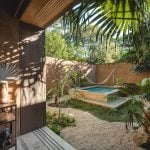
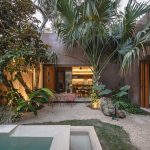
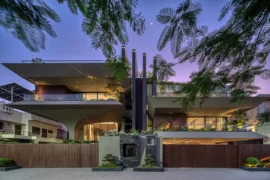
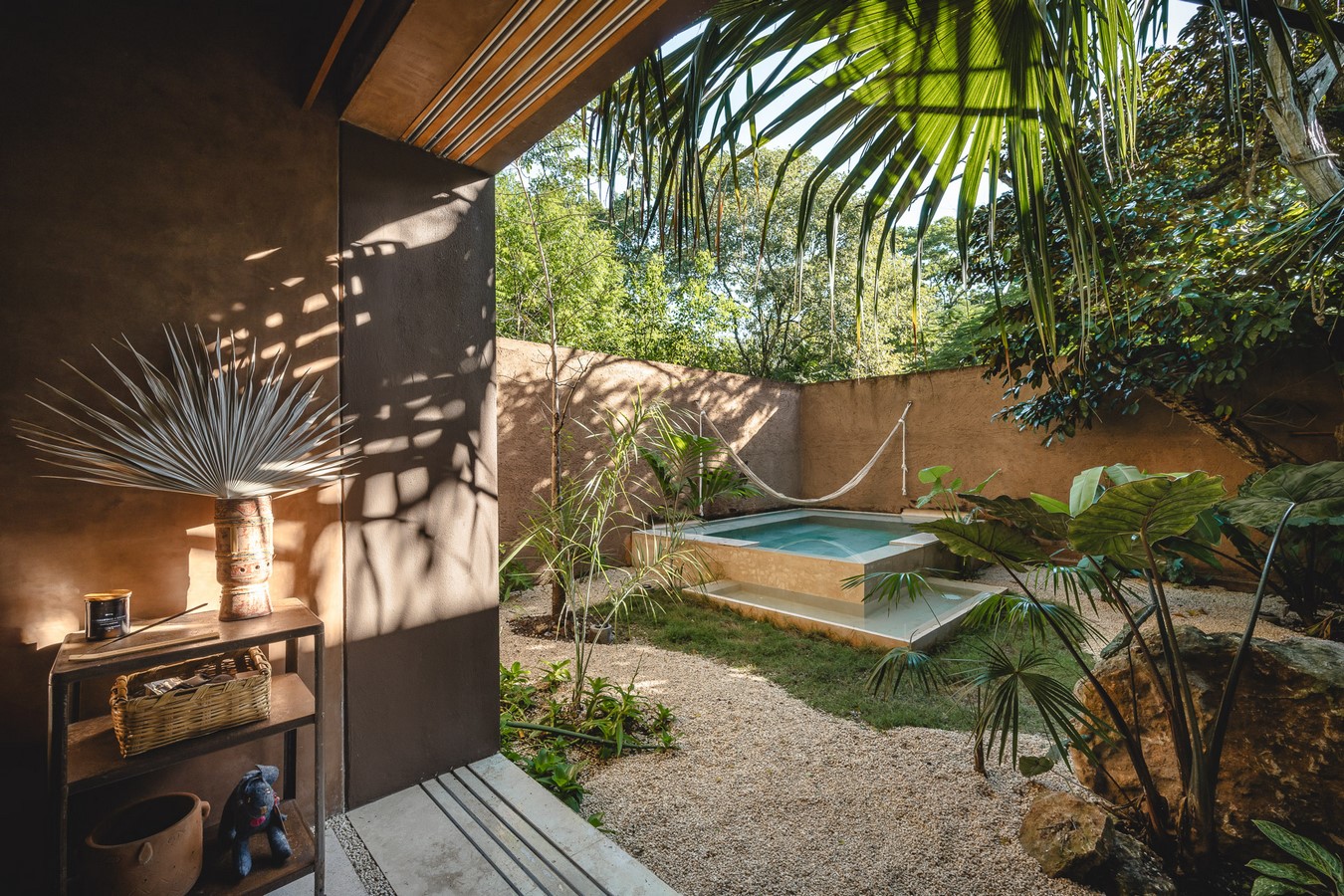
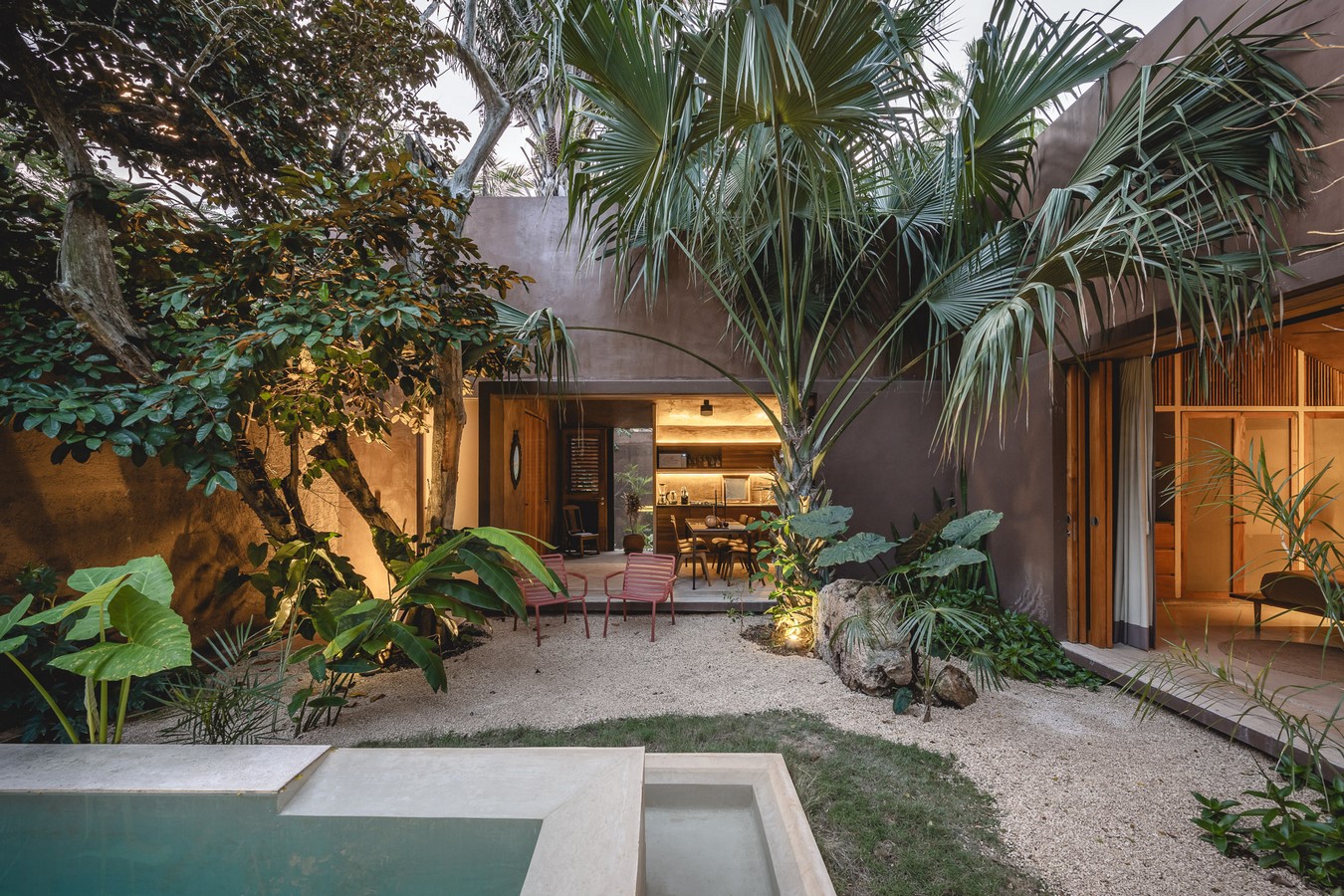
The architectural program includes a park facing the public road, three low-impact commercial units, and a pedestrian access portal that connects to a vestibular courtyard. This courtyard distributes access to the main house and to the satellite rooms located above the commercial units, allowing independent use. The L-shaped layout of the main house creates cross ventilation and natural lighting, with a single social space that opens onto a patio with a pool.
The design process began with a detailed survey of trees and contour lines, which was overlaid on a grid based on the module used in previous architectural interventions at the Palmeto. This strategy aimed to create alignments and proportions that reinforced the integral vision of the complex. In this way, the appropriate areas for construction were identified, interacting with a series of patios that evoke the memory of the place.
The project’s stereotomic volumetry seeks to generate a primitive and essential atmosphere of habitability in harmony with nature, using forms and proportions derived from both the built environment and the vernacular architecture of the region. The sloping roofs not only reduce maintenance due to the accumulation of leaves but also expand the interior space and optimize thermal comfort. The main house was designed on a single level to maintain a clear view of the nursery from the satellite rooms, while ensuring privacy through careful sectional design.
The architectural program is organized around a pocket park open to the public road, which provides access to three low-impact commercial units, designed with the possibility of being unified. Next to the park, a pedestrian portal leads to the vestibular courtyard, from which both the main house and the satellite rooms, located above the commercial units, are accessed. These rooms are intended for short stays and can function independently without disrupting the daily life of the inhabitant.
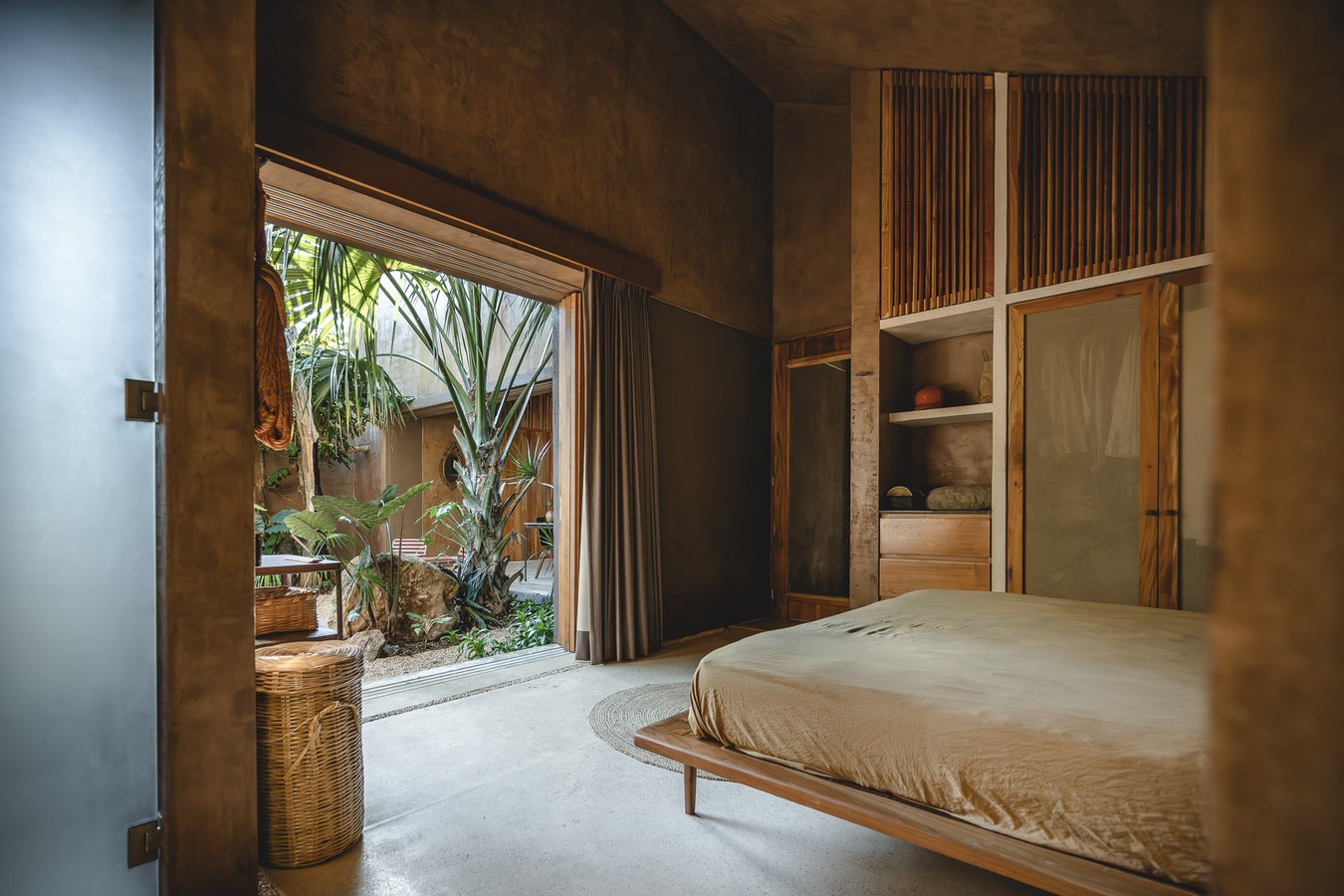
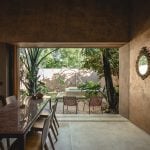
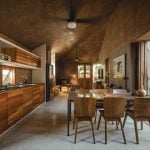
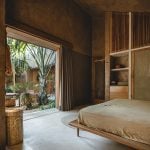
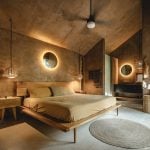
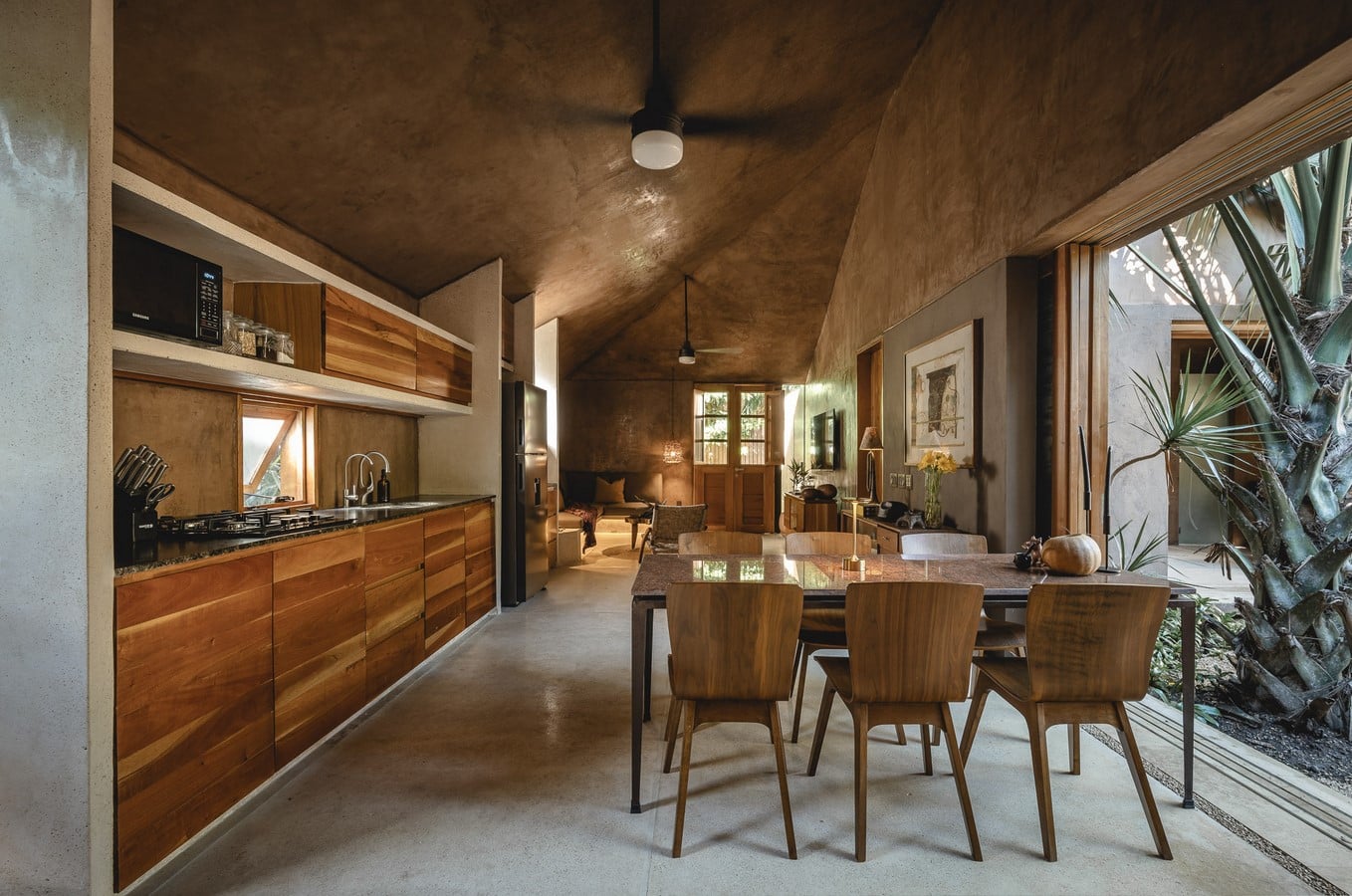
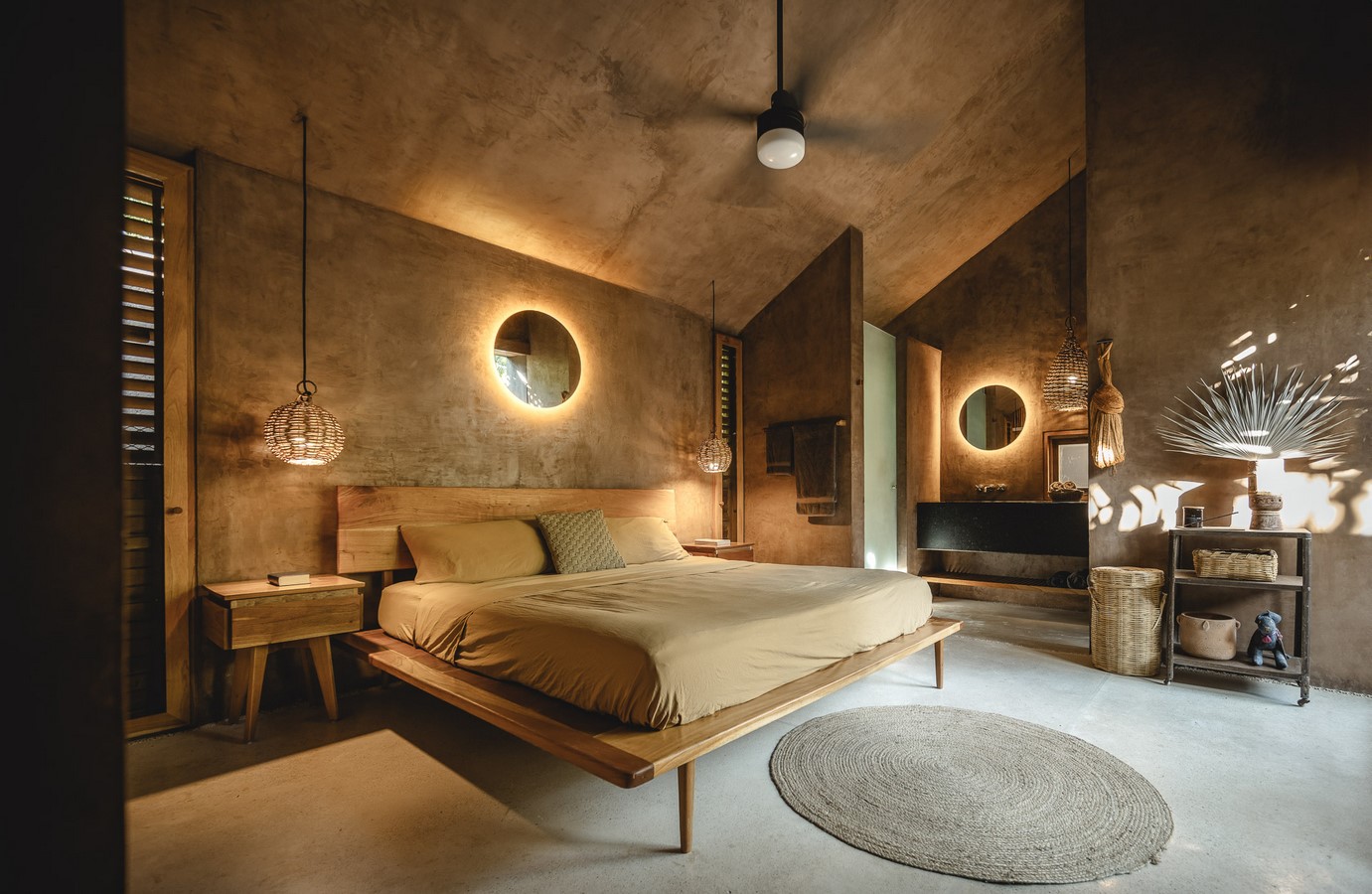
Passing through the second door of the vestibular courtyard, you reach the buffer garden, enjoyed from the elevated terraces of the satellite rooms and also acting as a prelude to the main house. Access to the house is at the vertex of the L-shaped layout, where a unique social space integrates the living room, dining room, kitchen, laundry room, and guest bathroom in the long wing. The master bedroom with its bathroom is located in the short wing. Both wings are connected by a system of retractable doors that transform the interior into a large terrace open to the northeast, taking advantage of the prevailing winds to create cross ventilation and natural lighting, complemented by a corner patio with a pool.
The modular scheme of the complex facilitated construction in three stages. The structural system included load-bearing walls, concrete columns, and beams, adapting to the flexibility required in each space. For the walls and slabs, concrete blocks, beams, and hollow-core panels were used, maintaining the construction tradition of the region.
The proposal for the finishes seeks to integrate harmoniously with previous interventions at the Palmeto, prioritizing exposed materials that require low maintenance. On the ground floor, the exterior floors are bush-hammered concrete, and the interior floors are honed concrete, with marble joints and risers, as well as a perimeter of eco-concrete that facilitates soil moisture release. The fixed furniture was also cast in place, following this approach.
On the upper floor, national marble was used, while the walls were finished with a burnished stucco, pigmented in the tone of the local soil, complemented by a plaster finish and artisanal paint made from excavated soil. The slabs feature the same burnished stucco as the walls, with some exposed ceilings revealing their structure. The bases are made of carved stone from the site, in harmony with the project’s aesthetic.
The doors, windows, and fixed furniture are made from regional cedar wood, adding a warm and natural touch. Accent details include black granite, colored glass, steel beams salvaged from demolitions, and colors inspired by the garden’s blooms. Additionally, all interior spaces are equipped with mosquito screens for added comfort.
The existing vegetation was enriched with endemic species that attract wild birds, as well as aromatic and edible plants typical of the traditional Maya solar. Aquatic gardens with recirculation systems were implemented to control mosquitoes and attract wildlife. These considerations enhance the range of sensory experiences that can be enjoyed in the space.
Miranda Palmeto is the result of a search to redefine living spaces, adapting them to current needs while maintaining a connection to the specific characteristics of the place. We start from the premise that housing, as the essential unit of the city, must be reconsidered in its relationship with other uses, also considering its potential to contribute to the family economy, rather than being seen solely as an expense. Furthermore, we promote integration with public space to create better urban environments for all.