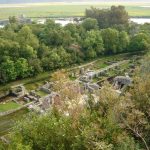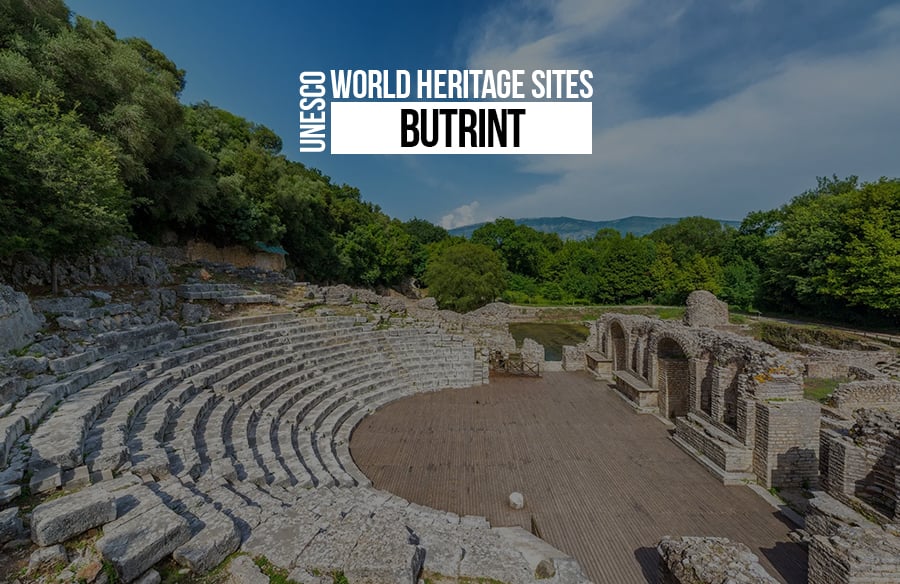
Butrint is an ancient city located in the south of Albania. It is one of the most significant archaeological sites in the Mediterranean region with archaeology, monuments, and nature. It was recognized as a UNESCO World Heritage Site in 1992. The rich history of Butrint includes influences from the Greeks, Romans, Byzantines, and Ottomans. It provides insights into past civilizations with well-preserved ruins, diverse ecosystems, and cultural significance. The monuments, archaeology, and natural setting make it a unique location.
Historical Background
The history of Butrint dates back to at least 800 BC. Butrint was originally part of an area called Epirus, which was later occupied by the Greeks, the Romans, the Byzantines, and the Venetians. According to legend, the city was founded by exiles escaping the collapse of Troy. Over time, it developed into a settlement because of its advantageous location along key trade routes in the Ionian Sea. From 800 BC until the arrival of the Romans, Butrint flourished under the influence of Greek culture, bearing the elements of “polis”, an ancient city-state in ancient Greece. There were many significant architectural developments during this time, including the construction of temples, agora, and defensive walls. In 44 BC, Butrint became an integral part of the Roman Empire. It was a bustling town and experienced economic growth and urban expansion, primarily to the south across the Vivari Channel which links Lake Butrint with the Straits of Corfu forming a border of the peninsula of Butrint. This time, it saw the construction of aqueducts, a forum, baths, and an amphitheater, reflecting typical Roman urban planning.
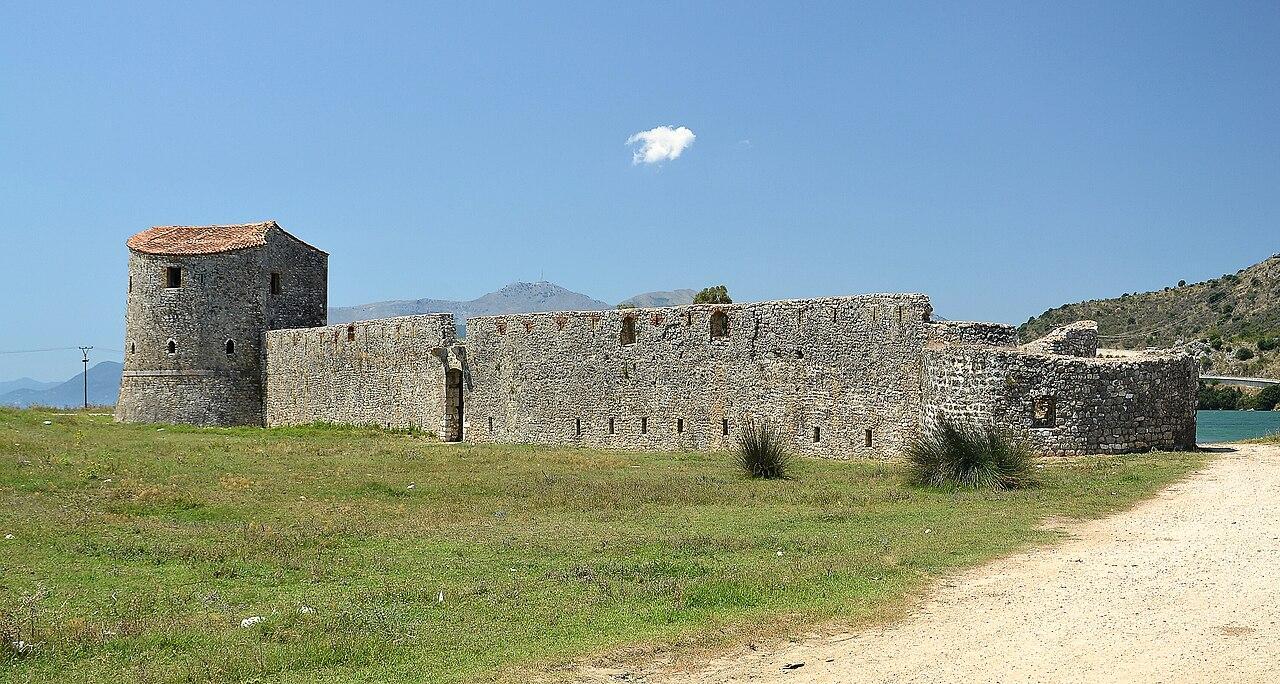
In the 5th Century AD, Butrint was an episcopal center. It was fortified, and early Christian structures like the basilicas and religious buildings were built during this period. After a certain period of abandonment, in the 9th century, it was reconstructed under the control of Byzantine. Also, it came under Angevin and then Venetian control in the 14th century. There were many strengthening and extension of the defensive works in Butrint as there were several attacks by the despots of Epirus and Ottomans. A new fortress was added to the defensive system of Butrint at the mouth of the Vivari channel at the beginning of the 19th century by an Ottoman ruler, Ali Pasha, who controlled Butrint and the area until its final abandonment. The history of Butrint reflects the story of the Mediterranean with its shifting politics and respective cultures and religions, which shaped modern-day Albania. The ruins remain as evidence of its diverse historical influences.
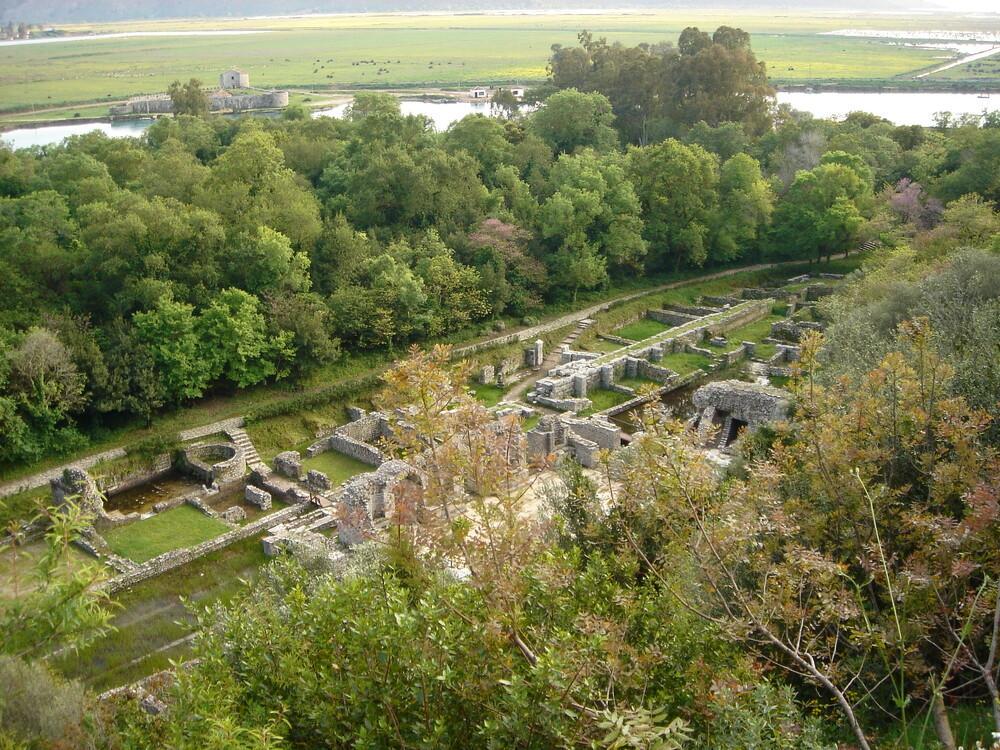
Architectural Significance
The architectural sites of Butrint are remarkable for their well-preserved structures that span multiple historical periods. Some of the most notable features are:
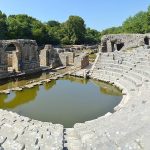
- The Greek Theater- It is an ancient Greek monument built under the Acropolis. It has a classic semicircular shape, and it can accommodate up to 2500 spectators. Later, during the Roman Empire, it was modified by the Romans to suit their entertainment needs.
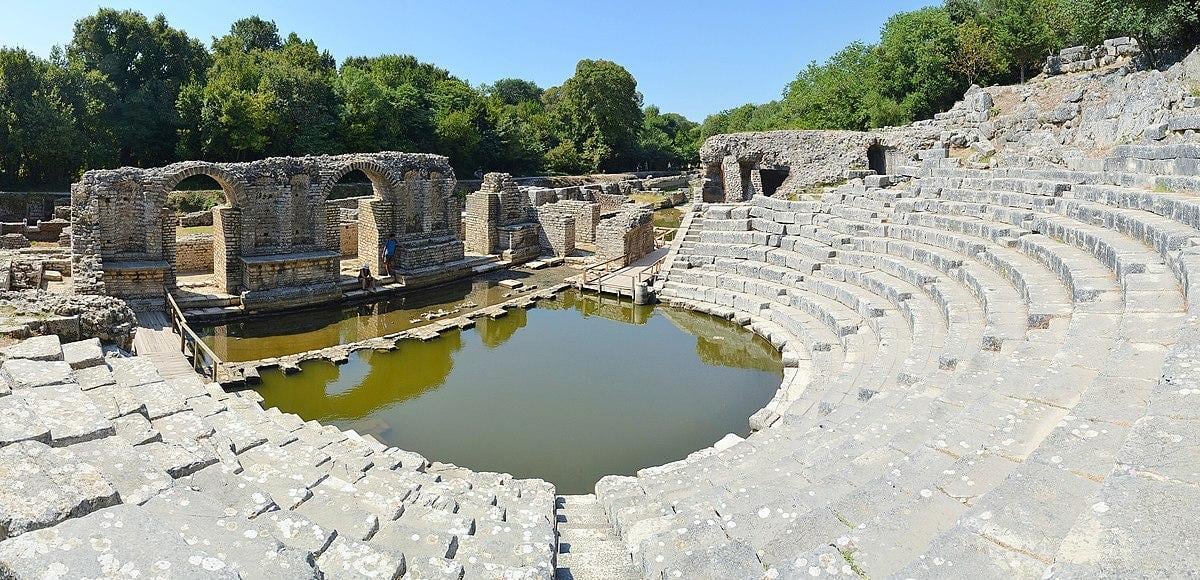
2. The Roman baths- The aqueduct allowed for the creation of a large bath complex located near the agora and the theatre, which is still visible.
3. Forum and Basilica- The forum, the center of civic life during Roman rule, includes remnants of temples, administrative buildings, and a large basilica. The forum was built on the site of an earlier Greek agora. The forum complexes have temples decorated with frescoes and marble. Likewise, there are stone piers in the basilica with the mosaic flooring beneath the medieval flagstones.
4. The Baptistery- One of the most significant Christian monuments at Butrint, the baptistery is famous for its mosaic pavement, which depicts religious symbols and animals dating back to the 6th century AD. It was excavated in 1928 by the Italian Mission, where it revealed the baptistery with a diameter of over 14 m, which was built with a large rectangular structure preexisting that was probably previously a Roman bath house.
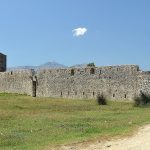
5. The Venetian Fortress- Built by the Venetians in the 16th century, this fortress showcases Butrint’s medieval defensive architecture and offers panoramic views of the surrounding landscape.
6. Butrint’s triangular castle- The three-sided shape of Butrint’s triangular castle was not only an architectural choice but also optimized its defensive capabilities for controlling the narrow Vivari Channel.
7. The Lion Gate– An iconic entrance to the city, the Lion Gate features a relief carving of a lion attacking a bull, symbolizing strength and power.
8. The Acropolis– Located on the highest point of the site, the acropolis offers evidence of early Greek settlements and later Byzantine modifications.
Butrint constitutes a very rare combination of archaeology and nature. Due to its architectural importance, the site has so much to offer, like archaeological research and international collaboration, contributing to the broader understanding of ancient Mediterranean civilizations. Hence, such sites must be preserved to allow future generations to appreciate and learn from this remarkable site.
References:
Centre, U.W.H. (n.d.). Butrint. [online] UNESCO World Heritage Centre. Available at: https://whc.unesco.org/en/list/570/.
Albaniavisit.com. (2025). Available at: https://albaniavisit.com/destinations/butrint/ [Accessed 28 Feb. 2025].