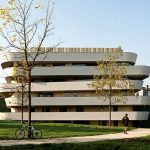
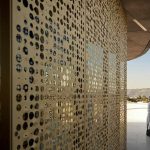
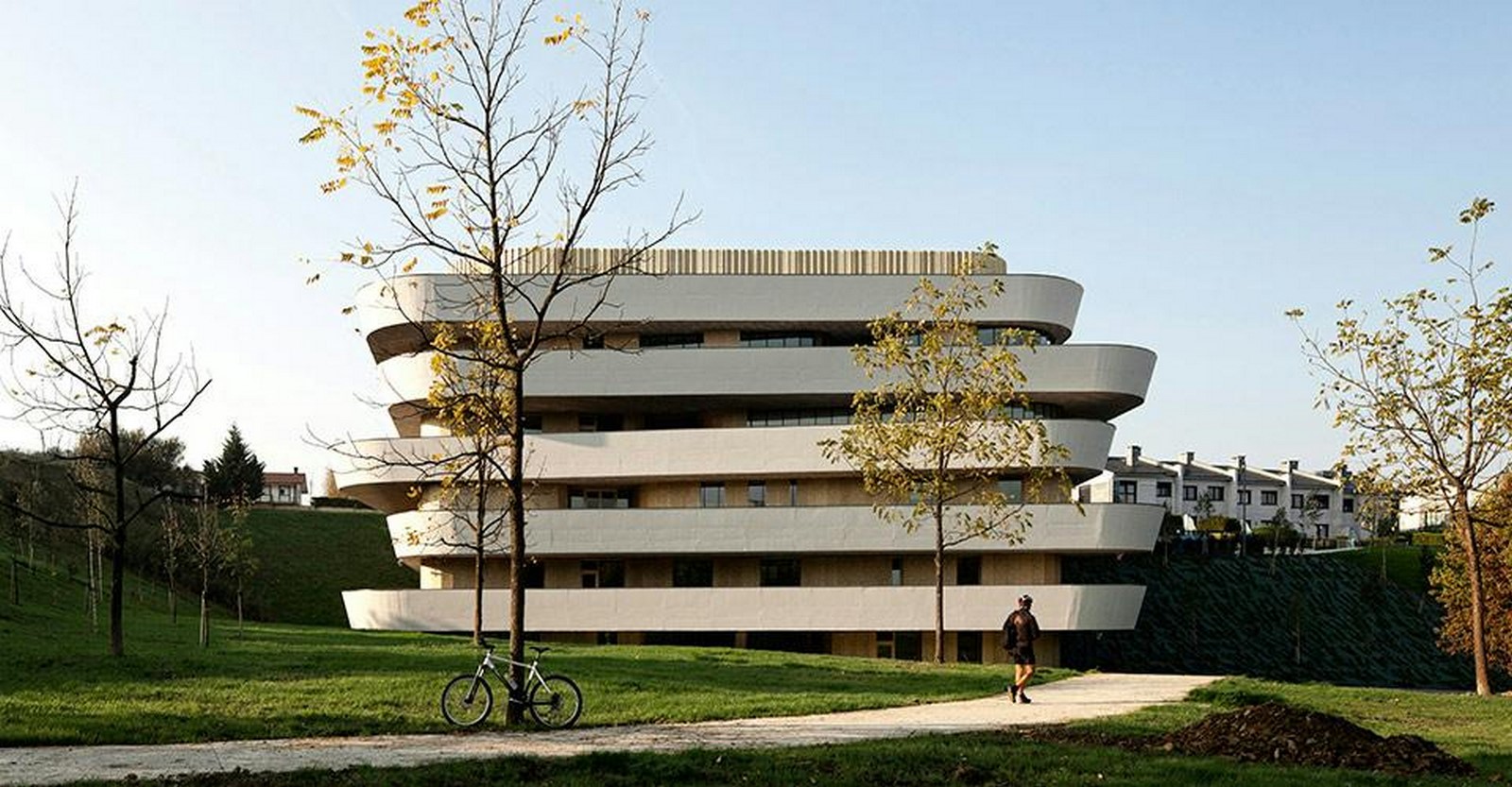
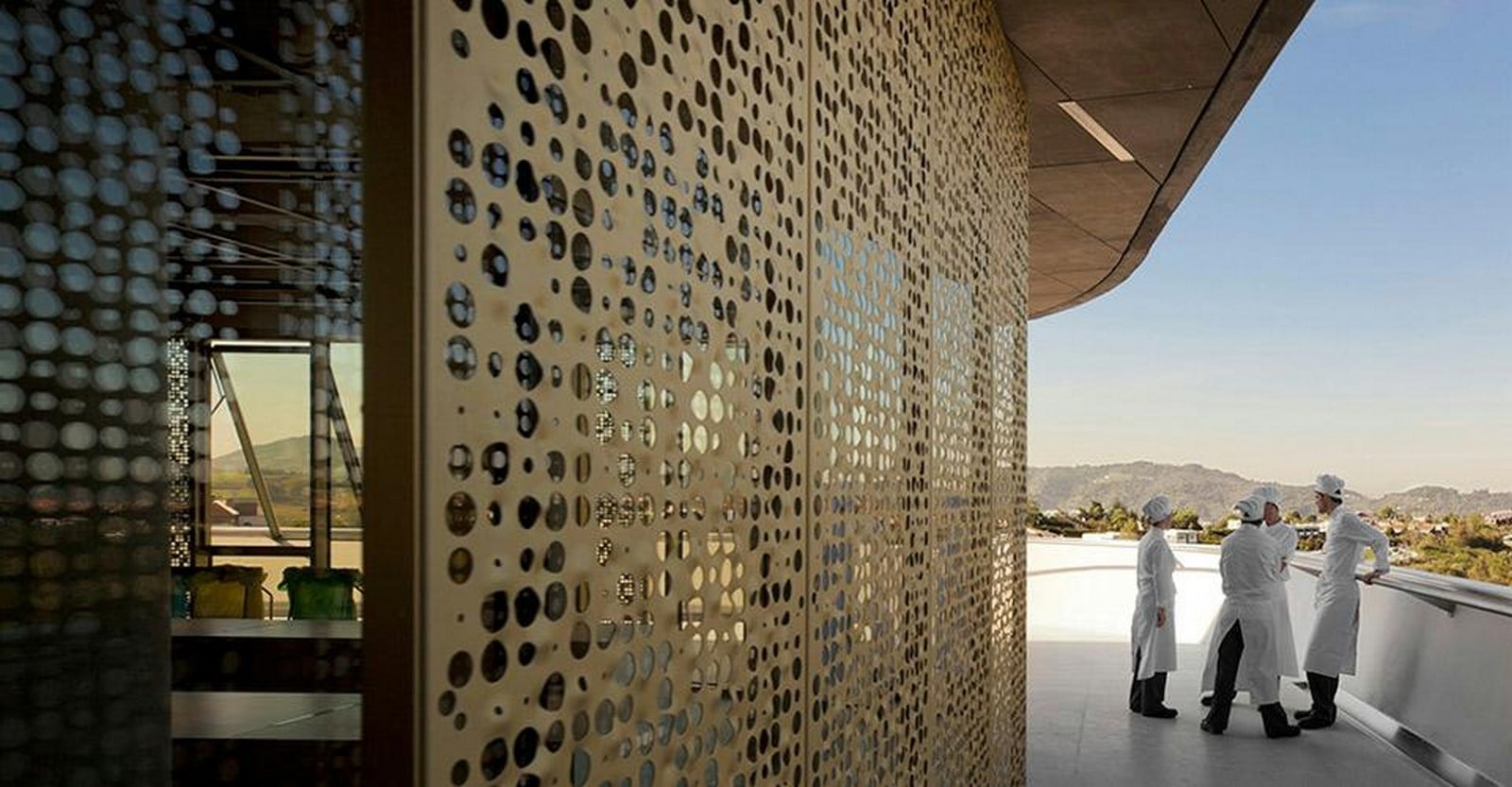
In the landscapes of San Sebastian is a building that gently tucks itself into the landscape rising like a collection of plates stacked together in an oddly artistic fashion. The Basque Culinary Centre conceptualized by VAUMM architects is a unique institution combining innovative nouvelle cuisine with an artistic flair, concepts reflected in the overall design as well as in the educational philosophy of the school. Like a master chef, the architects transformed their work and role into art, a form of expression. Exemplified in the simple act of stacking dishes on top of one another, the architects saw an action that colluded to be frozen in time and replicated to create a sculptural masterpiece. The façade is expressive with adorned geometric patterns that reflect decoratively patterned dishes and allow small rays of light through.

Design: Continuing Where the Landscape Left Off.
Where the natural landscapes stopped, architects drawing pen continued, creating softness of waves in the white bands of the façade reminiscent of the topography of the site but also carefully placed like a rock sticking out of the landscape of which it is a part. A careful interplay of harmony with the surroundings whilst calling for the public’s attention in an expressive way. Innovation is the keyword here acting as the spirit of the place with careful consideration in the apportioning of different functions within the building like educational, administrative, services, circulation, and social spaces. The concrete provides support and stability, and steel allows for cantilevering, creating the illusion of different floors hovering over each other. Glazed windows and curtain walls flood light deep into the interior spaces. This is blended with the composite panels, whose perforations allow light in, creating a beautiful play of light and shadow in the interior space transforming the space with the sun’s journey throughout the day. It is all crowned with a green roof that insulates the top of the building but also blends into the surroundings while maintaining a distinct identity.
The Spirit of Innovation Exemplified in Design and Activity.
The most outstanding thing about the center is the seamless blend of innovation and age-old tradition, which is composed of grandmother’s wisdom and designed to create recognizable and familiar recipes with a modern twist. To pass on some of this age-old wisdom the Master chefs have to bring their stars down to earth but also be receptive in adopting the new that foster innovation. The expertise brought in by master chefs like Yukio Hattori, Massimo Bottura, Michel Bras, Dan Barber, and Gastón Acurio, enhances its global profile but also brings in a wealth of experience intertwining cooking with management, science, and other related fields. Like with all field diversification is key and this is exemplified by the Upcoming Gastronomy Open System set to be completed in 2025 featuring multiple kitchen labs, creative workshops, audiovisual production studios, and co-working spaces. While the EDA Drinks & Wine Campus Initiative in Laguardia and Vitoria-Gasteiz, the diversification will be focused on the wine and beverage sector featuring training, research, and innovation hubs. A commitment to furthering knowledge and developing the culinary arts, of which the Basque Culinary Centre is the backbone, is a way of reshaping the gastronomy industry through research, innovation, and collaboration facilitated by architecture.


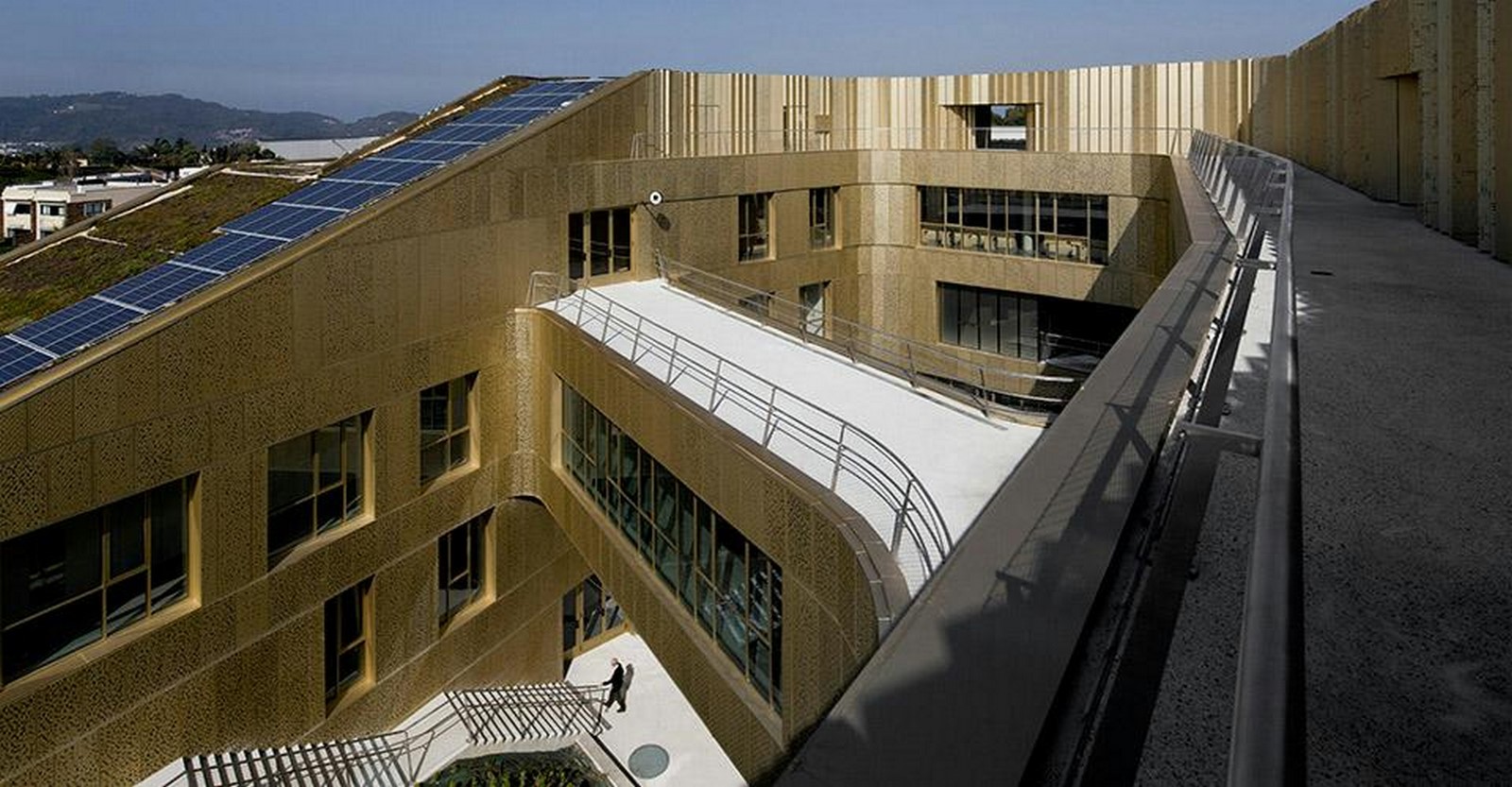
Since its inception in 2011, it has garnered international recognition from students and professionals alike boasting a variety of activities. With the nature of the landscape the building is situated upon, it is no wonder each floor offers a unique experience with the ground floor fully entrenched into the site on one side but open to the greenery on the other but having no external accesses, especially from the road level. The roof deck is composed of a terrace, green roofs, and solar panels for energy but not forgetting the main attraction being the expansive views out to the open. The different floors offer beautiful but limited views and different perspectives which are all brought to the climax with the roof terrace.
Ultimately the Basque Culinary Center beyond the building can be viewed as an architectural icon that seeks to stand out with its unique design while being cleverly tucked into its landscape. It is a place where the stakeholders see beyond the center rather than just innovating through the use of traditional recipes with a modern twist and artistic flair. What is clear is that this project stands at the backbone of reshaping the culinary arts with ventures into gastronomy as well as wine and beverage. The walls, façades, interior design, and overall design tell a story about the culinary industry. They offer insight into the artistry and world of the culinary industry and show how spaces are tools for transformation. This is a case of an architectural project being a vehicle that can research innovation and development.
References:
Vaumm Architects (2011) Basque Culinary Center, San Sebastián, Spain. Available at: https://tourism.euskadi.eus/en/cultural-heritage/basque-culinary-center (Accessed: 29 January 2025).
ArchDaily. (2011). Basque Culinary Center / VAUMM. [online] Available at: https://www.archdaily.com/196035/basque-culinary-center-vaumm.
Basque Culinary Center (2016). Alumnos de Basque Culinary Center. [online] YouTube. Available at: https://www.youtube.com/watch?v=yz6t6AdU200 [Accessed 30 Jan. 2025].
Basque Culinary Center (2023). Basque Culinary Center. [online] YouTube. Available at: https://www.youtube.com/watch?v=ZmeK3Nus-ps [Accessed 30 Jan. 2025].
Bculinary.com. (2024). Home – Basque Culinary Center. [online] Available at: https://www.bculinary.com/en/home.
Frame Publishers (2012). Basque Culinary Center. [online] Frameweb.com. Available at: https://frameweb.com/article/architecture/basque-culinary-center [Accessed 30 Jan. 2025].
KREAN. (2024). BASQUE CULINARY CENTER. [online] Available at: https://www.krean.com/en/projects/basque-culinary-center.
Lopes Dias Arquitetura. (2017). Basque Culinary Center | VAUMM. [online] Available at: https://lopesdias.com.br/en/basque-culinary-center-vaumm/.
nama, H. (2024). ilovepdf_merged. [online] Scribd. Available at: https://www.scribd.com/document/472719326/ilovepdf-merged.
super (2019). Architecture and Gastronomy in the Basque Culinary Center fostered by Silestone Institute – Silestone Institute. [online] Silestone Institute. Available at: https://silestoneinstitute.com/en/architecture-and-gastronomy-in-the-basque-culinary-center-fostered-by-silestone-institute/ [Accessed 30 Jan. 2025].