As problems have been mounting at the global level, with climate change, population growth, and urbanization in the list, cities must adjust to remain resilient and sustainable. Urban design turns out to be the most significant factor shaping the future of cities: it lets cities adapt to changing conditions while offering their residents a high quality of life. One of the most important concepts that have emerged in urban planning is the concept of flexible and adaptable urban design. This approach allows cities to respond to changing environmental, social, and technological conditions, thus promoting long-term resilience.
Why Urban Design Needs Resilience
This is called urban resilience: the capacity of a city to resist, absorb, and recover from man-made and natural stresses and shocks so that vital functions could be sustained. And such forces that change the climate-increasing sea levels, more intense and frequent extreme events, rising temperatures-are forcing cities to become resilient. This demographic shift has thrust a lot more individuals into the urban fray who are now seeking an urban form responsive to new realities in the digital economy.

A resilient city is one that can quickly recover from disasters and adapt to long-term environmental and societal changes. Achieving such resilience calls for an approach integrating sustainability, inclusiveness, and the capacity to transform. Flexible and adaptable urban design is central in the achievement of this objective as it allows for cities responsive to the dynamic needs of their populations and to the environment.
What is flexible and adaptable urban design?
Flexible and adaptive urban design is planning and building the city in such a way that it will easily adapt to changing circumstances. It is designing urban space, infrastructure, and policy that can be modified through time to meet emerging needs. Instead of building stiff, one-size-fits-all solutions, adaptive design aims to predict change and provide a framework for cities to evolve as circumstances change.
There are a few key principles guiding flexible urban design:
- Modular and Scalable Infrastructure: Inflexible infrastructure must change as the city changes and be designed to grow or shrink with the city. Such infrastructure includes transportation systems, utilities, and green spaces designed in modular units that would make it easier to scale up or down based on demand.
- Mixed-Use Development: Mixed-use zoning encourages the integration of residential, commercial, and recreational spaces in a manner that allows for flexibility in how space is used. This concept helps reduce dependence on cars, makes cities more walkable, and allows quicker adaptation to changing economic needs.
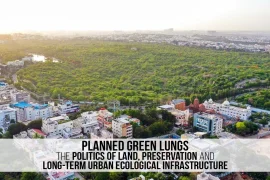
- Green Infrastructure:- Flexible urban design means incorporating nature into the built environment. Such designs include green roofs, permeable pavements, and urban forests. Apart from providing ecological services, such designs make cities more adaptive to the changing climate. For instance, green infrastructure helps manage stormwater, reduces the urban heat island effect, and supports biodiversity.

- Smart Technologies:- Smart technologies have been incorporated in urban designs. In this way, cities have a chance of monitoring and responding appropriately to real-time data from variables such as air quality, traffic flow, and energy consumption. This shall make resource management efficient with the capability to quickly adjust to the changes that they may come with. Consequently, it is resilient and sustainable.

- Participatory Design: Community participation in the design process is fundamental to the creation of flexible urban spaces. The more the changes are representative of people’s needs and preferences, the more they will accept and participate in them. Participatory urban design encourages feedback loops and collaboration between local governments, architects, urban planners, and residents.
Flexibility and Adaptability in Urban Problem-Solving
The flexibility and adaptability of the design of cities have much deeper implications for how such modern cities will respond to their challenges, especially when these relate to climate, economic shifts, and issues of social equity.
- Climate Change Resilience: Climate change affects cities worldwide, including intense flooding and heatwaves to sea level rise. Climate adaptation strategies can be incorporated in flexible urban design such as elevating infrastructure in flood-prone areas or installing heat-resistant building materials. Green spaces may act as carbon sinks and heat mitigators, and the water management systems could be designed to cope with changed rainfall patterns. Flexible design of urban design will help cities to respond dynamically to climate risks, hence saving long-term adaptation costs.
- Population Growth and Urbanization: The world is urbanizing at a rocket pace, with over 60% of the people projected to live in cities by 2050. Once cities grow, their populations become bigger, and this generates more demand for housing, transportation, and services. Adaptive urban design enables the city to grow without a compromise on livability. Cities can then accommodate more people with quality of life by incorporating scalable infrastructure, mixed-use zoning, and walkable communities. This is an important population growth adaptation: to scale with such stressors of public transport systems, energy grids, and social services.

- Technological Change and Innovation: Autonomy in vehicles, smart intelligent energy grids, Internet of Things, and much more are changing the very shapes of cities. A ‘flexible city’, if designed with the flexibility to adapt, can very flexibly adopt new technologies of organic change. Examples of this include energy-efficient smart systems refurbished on already existing buildings or transport networks renovated to accommodate electric and autonomous vehicles. Preparing for change in the potential technology would reduce shock for the city and hence get the maximum benefits out of innovation.
- Social Equity: Urban design should be developed as an inclusive environment for diverse communities. Accessible design opens access to housing, health care, education, or transportation for all. For example, affordable housing units can be accommodated in mixed development, and public spaces, by design, can become accessible to all. Then, by design, many social and cultural demands may be accommodated within urban spaces so that all may be represented within the urban development.

Successful Examples of Adaptive Urban Planning Design in India
Some Indian cities have already started some elements of flexible and adaptive urban design and have much to offer to others as lessons.
Chennai:The coastal city, Chennai, faces extreme levels of floods when there are heavy downpour rings, and its drainage facilities are not effective enough. Recently, it began restoring wetlands and implementing green infrastructure solutions, such as constructing water retention ponds, integrating flood management systems in urban planning.
Mumbai:One such practice developed is for climate-resilient design of urban setup, practiced by Mumbai-Mumbai-the most populous but also highly vulnerable city-and focused particularly on the refurbishment and upgradation in Mumbai drainage works, incorporating designs through its building complex that have designed integrated rainwater harvesting, or more, the development in creating space in the face of rising city dwellings.
Pune: The city has been showing a progressive approach toward urban mobility, by focusing on public transport and sustainable infrastructures. The city’s BRTS has been in place for some years, and it is gradually working towards developing its bicycle infrastructure. These projects exhibit a flexible approach toward an urban design, which evolves by introducing new modes of transportation into the city during its growth.

In such uncertain times, what happens in the future will surely depend on cities having more flexibility and adaptiveness to it. Modular infrastructures, green spaces, smart technologies, and participative planning all have to be constituents for building resilience and producing sustainability. Flexible urban design would make possible for cities all challenges they face regarding climatic conditions, population and technological, and social factors that progressively make the built environment always liveable, lively, and adaptable. Such an approach is what innovative strategies have been taken to become a resilient and future-proof community, emerging from these approaches.