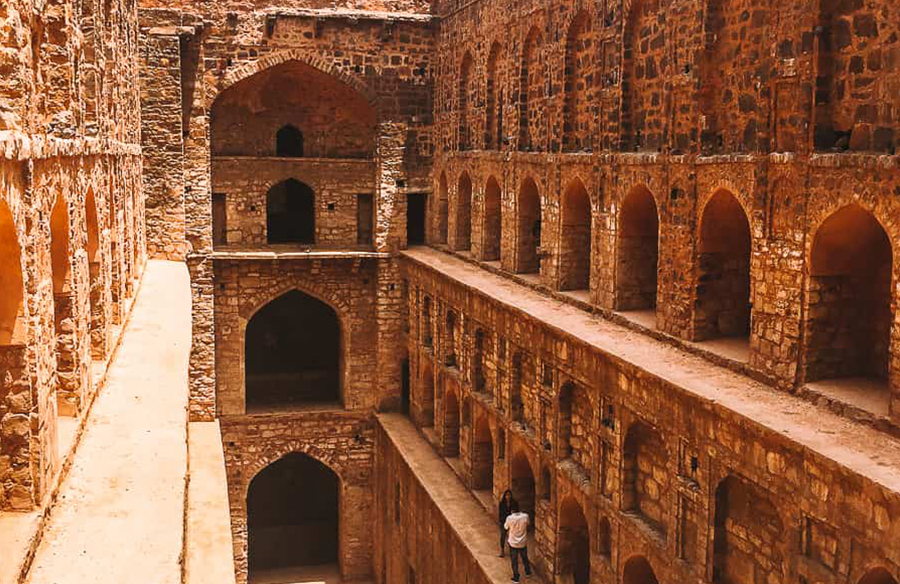
Agrasen Ki Baoli, also known as Ugrasen Ki Baoli, is a captivating historical stepwell located in New Delhi, near Connaught Place. Traditionally attributed to Maharaja Agrasen, this architectural marvel is believed to date back to the Mahabharata era and was later renovated during the Tughlaq dynasty in the 14th century. Measuring approximately 60 metres in length, the baoli features 103 steps that lead down to a rectangular reservoir, adorned with intricate carvings and arches that reflect the artistic brilliance of its time.
Originally serving as a vital water source and communal gathering space, Agrasen Ki Baoli now stands as a significant cultural landmark. In the midst of New Delhi’s rapid urbanisation, it remains a symbol of heritage and resilience, underscoring the importance of preserving such sites for future generations.

Historical Context and Origin
The origins of Agrasen Ki Baoli are steeped in legend and historical lore. It is traditionally attributed to Raja Agrasen, a legendary king believed to have ruled during the Mahabharata period. Agrasen is credited with founding the prosperous kingdom of Agroha, a hub for trade and commerce in ancient India. According to folklore, the baoli was constructed as a public water source and a communal gathering spot, embodying the king’s benevolent rule focused on community welfare.
While the exact date of construction remains uncertain, historians widely accept that the current structure was renovated during the 14th century under the Tughlaq dynasty. This era witnessed significant architectural advancements in India, with a fusion of Hindu and Islamic design elements. The architectural features of Agrasen Ki Baoli reflect this amalgamation, blending traditional stepwell design with Islamic arches and motifs.
Arhitectural Style

Agrasen Ki Baoli is a quintessential example of ancient Indian architecture, characterised by its stepwell design. The structure spans approximately 60 metres in length and 15 metres in width, descending through 103 steps arranged across three levels. Each level features intricately carved arches and niches, showcasing the craftsmanship of its builders.
Constructed primarily from red sandstone and lime mortar, materials commonly used in medieval Indian architecture, the baoli also incorporates a bawri system—a well within a well—that helped maintain cool and fresh water throughout the year. This ingenious design was essential for water management, particularly in arid regions where access to clean water was a challenge.
Cultural Heritage and Social Importance
Agrasen Ki Baoli serves as a vital link to India’s past, representing both architectural ingenuity and the social dynamics of its era. Stepwells like Agrasen Ki Baoli were essential in regions prone to drought, functioning as reservoirs during dry seasons and providing a space for social interaction and cultural exchange.
In contemporary times, the baoli attracts numerous visitors, both local and international, who are drawn to its historical significance and architectural beauty. This influx of visitors contributes to cultural tourism in Delhi, highlighting the importance of preserving such heritage sites as symbols of the city’s rich cultural identity.
Political Significance
The political relevance of Agrasen Ki Baoli extends beyond its historical context. As a symbol of royal heritage, the stepwell reflects the governance philosophies of rulers who prioritised public welfare through infrastructure development. In the present day, the baoli serves as a poignant reminder of the need for responsible urban planning that honours historical sites while accommodating modern growth.
Discussions around the conservation of Agrasen Ki Baoli often centre on balancing heritage preservation with urban development. As New Delhi continues to expand, the baoli stands as a testament to the possibility of integrating historical structures into contemporary urban landscapes, fostering a sense of identity and continuity among residents.
Impact on the Urban Fabric
Situated amidst the bustling environment of New Delhi, Agrasen Ki Baoli significantly influences the city’s urban fabric. Surrounded by modern high-rises and commercial complexes, such as Connaught Place, the baoli provides a stark contrast to its contemporary surroundings. It offers a tranquil retreat where visitors can connect with history and experience a sense of calm amidst the city’s chaos.
Moreover, the baoli’s strategic location promotes sustainable tourism by encouraging visitors to explore nearby cultural sites and patronise local businesses. This integration into the urban landscape enhances community engagement and creates economic opportunities for local artisans and vendors, further embedding the stepwell into the fabric of modern Delhi.
Conservation Efforts

Recognising the cultural importance of Agrasen Ki Baoli, several conservation initiatives have been undertaken by the Archaeological Survey of India (ASI). These efforts aim to preserve the structural integrity of the baoli and promote awareness about its historical significance.
Regular maintenance work is carried out to prevent deterioration caused by pollution and environmental factors. Additionally, educational programmes targeting local communities emphasise the value of preserving heritage sites for future generations. By fostering a sense of ownership among residents, these initiatives encourage active participation in conservation efforts, ensuring the baoli remains an integral part of Delhi’s cultural landscape.
Agrasen Ki Baoli stands as a remarkable example of India’s royal heritage, blending architectural brilliance with social and cultural relevance. Its intricate design, historical significance, and contemporary role in Delhi’s urban landscape make it a site of immense value.
As cities worldwide continue to evolve, preserving historical structures like Agrasen Ki Baoli is crucial for maintaining cultural identity amidst rapid change. Through ongoing conservation efforts and community engagement, this iconic stepwell will continue to inspire awe and admiration, serving as a living testament to India’s rich heritage.
References:
Indiaheritage.in. (2024). India Heritage | Agrasen ki baoli. [online] Available at: https://indiaheritage.in/agrasen-ki-baoli/ [Accessed 29 Nov. 2024].
Admin (2021). Agrasen ki Baoli history and architecture – History Finder. [online] History Finder. Available at: https://historyfinder.in/agrasen-ki-baoli-history-and-architecture/ [Accessed 30 Nov. 2024].