Starchitecture, a fairly new and now commonly used word to describe swanky, deconstructivist, and parametric styles of architecture, has been trendy for some time. The architects who led this style are often known as starchitects. This is an outcome of modernism, postmodernism, and the high-technology tools and mediums to design.
However, alongside post-modernism, a strand of modernism continued to thrive, frequently advocating for progress through technological experimentation – as seen in the projects of Norman Foster, Renzo Piano, Richard Rogers, and Cathal Morgan, the latter two being the architects of the Pompidou Centre (1977) in Paris, which garnered significant public and critical praise. What this termed High-tech architecture demonstrated was that an industrial aesthetic—an architecture defined by both urban roughness and engineering effectiveness—had widespread attraction. This was also somewhat apparent in what is known as Deconstructionist architecture, such as Frank Gehry’s incorporation of chain-link fencing, raw plywood, and various industrial materials in residential design. As urban growth accelerated at the start of the twentieth century, economists predicted that globalization and multinational corporations would alter the power dynamics, moving influence from nation-states to individual cities. These cities would then vie with nearby urban areas and others globally for the most profitable modern industries, which in many major cities of Western Europe and the US increasingly excluded manufacturing. Consequently, cities began to ‘reinvent themselves’, prioritizing the significance attributed to culture. Cities and non-profit groups aim to attract visitors and tourism revenue to their new venues by employing a renowned architect.
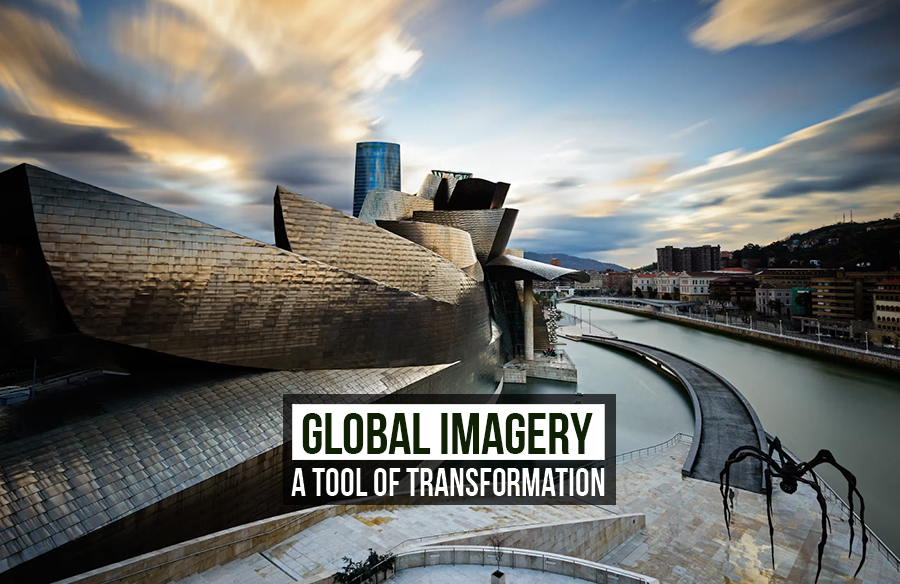
Following the acclaimed success of Frank Gehry’s Guggenheim Museum in Bilbao, Spain, which revitalized a deteriorating part of an economically struggling city, significant financial growth and recognition were achieved. This led the media to discuss the “Bilbao factor”; it was believed that a star architect creating a high-profile, prestigious structure could transform the area into a distinctive landmark for the city. Comparable instances include the Imperial War Museum North (2002), Manchester, UK, designed by Daniel Libeskind, the Kiasma Museum of Contemporary Art in Helsinki, Finland, created by Steven Holl, and the Seattle Central Library (2004), located in Washington, USA, by OMA.
Case Study- The Bilbao Effect:
The Bilbao Effect denotes the significant change prompted by the Guggenheim Museum Bilbao in the city of Bilbao, Spain, and, in a wider context, on architecture, urban renewal, and cultural tourism. Created by architect Frank Gehry and inaugurated in 1997, the Guggenheim Bilbao Museum is frequently referenced as a trigger for a worldwide transformation in how cities and regions have engaged with the convergence of art, architecture, and urban growth.

Origins of the Bilbao Effect
The phrase “Bilbao Effect” appeared to characterize the impressive transformation of Bilbao, a post-industrial city in northern Spain, from a deteriorating industrial center to a lively cultural and tourist hotspot. Before the museum opened, Bilbao faced economic stagnation, especially following the downturn of its major industries such as steel and shipbuilding. The city urgently required renewal and a fresh identity.
The Guggenheim Museum, featuring its striking avant-garde and legendary design by Frank Gehry, turned into a symbol of Bilbao’s metamorphosis. The museum aimed to serve as a world-class cultural establishment and a symbol for wider urban renewal. The significant investment in the museum and the related redevelopment of the nearby waterfront and urban infrastructure contributed to revitalizing the region and drawing international interest.
Cultural Impacts of the Bilbao Effect on Global Architecture
The Strength of Iconic Architecture:
The design of the Guggenheim Bilbao Museum was revolutionary for its incorporation of organic, curvilinear shapes and cutting-edge materials (like titanium) to make a bold architectural impression. The achievement of this project showcased architecture’s ability to influence a city’s identity and economic landscape. The term “Bilbao Effect” demonstrated that striking, landmark structures could act as a centerpiece for larger urban revitalization initiatives.
Architectural Tourism:
The museum swiftly turned into one of the most frequented cultural institutions in Europe. Bilbao saw a substantial rise in global tourism as millions flocked to admire Gehry’s creation. This showed how one structure can draw visitors, enhance local economies, and establish a cultural hub. Consequently, numerous cities around the globe aimed to mimic the achievement of the Guggenheim Bilbao by initiating projects for similarly remarkable buildings.

Urban Regeneration:
The Bilbao Effect is frequently referenced as a case of how regeneration through culture can rejuvenate a city. For Bilbao, the Guggenheim Museum formed part of a broader urban renewal strategy that encompassed enhancements to the city’s waterfront, infrastructure, and public areas. This method has been replicated in various cities, where landmark cultural initiatives are regarded as means to rejuvenate deteriorating industrial zones or neglected regions.
Globalization of Iconic Architecture:
After Bilbao, the worldwide tendency to commission iconic structures from renowned architects (including Zaha Hadid, Norman Foster, and Herzog & de Meuron) intensified. Cities started to view iconic architecture as a strategy to establish themselves internationally, drawing in global business, tourism, and investments. Instances of this trend are the Sydney Opera House, the Burj Khalifa located in Dubai, and the Louvre Pyramid situated in Paris.
Criticism and Sustainability Concerns:
While the Bilbao Effect has been widely praised for its positive impact on the city and its ability to transform an area, it has also faced criticism. Critics argue that the emphasis on iconic, high-cost architecture sometimes overlooks the broader social and economic needs of local communities. Furthermore, the sustainability of such developments has been questioned, as large-scale, high-profile projects can lead to gentrification and rising costs for residents. Some critics argue that these projects prioritize global recognition over addressing local needs, creating “starchitecture” that is more about branding than genuine urban improvement.
Spillover Effect:
As the success of the Guggenheim Bilbao became evident, many other cities sought to replicate this model of cultural revitalization. For example, cities like Bilbao’s neighbors in Europe, such as Porto (Casa da Música), and further afield in cities like New York (with the Frank Gehry-designed “New York by Gehry” building) and Beijing (the National Stadium or “Bird’s Nest” by Herzog & de Meuron), adopted similar strategies. This has led to what some have called a “spillover” effect, where a city’s ability to attract global attention through architecture becomes a priority for civic planners and local governments.

Broader Implications of the Bilbao Effect
Cultural Capital as Economic Driver:
The Bilbao Effect demonstrated how cultural institutions could significantly drive local economies. Cities started investing in not just museums but also in theaters, galleries, and concert halls, hoping that these institutions could provide a return on investment through increased tourism, cultural engagement, and related business growth (hotels, restaurants, retail).
Global Branding of Cities:
Cities increasingly use architecture as a tool for branding and international recognition. The notion of a city branding itself through high-profile cultural and architectural projects became a key part of many urban strategies, especially in the post-industrial era.

Legacy and Challenges
The Bilbao Effect’s legacy is complex. It undoubtedly reshaped how the world views architecture’s role in city-making. The Guggenheim Museum Bilbao has become a touchstone in the discussion of how cultural institutions can drive urban change and economic growth. However, the replication of the Bilbao model in other cities has not always yielded similar results. Sydney Opera House and Pompidou Centre are other examples that aim at creating global architecture.
Throughout history, iconic buildings have been an integral part of the development of cities and an instrument to showcase power, wealth, and significance. It has taken different forms and typologies over different contexts. The iconic landmark, which has transitioned from the forms of temples, forts, tombs, and statues that symbolize power today, has been replaced by cultural centers. Guggenheim Bilbao has been a successful icon as a tool for transforming the imagery of Basque and the city of Bilbao. It designates and dictates power and acts as a public forum for the development of the arts today.
The key takeaway is that while iconic architecture can stimulate urban regeneration, it is most effective when combined with broader strategies for social, economic, and environmental sustainability. The Bilbao Effect has shown that when architecture is part of a larger vision—one that is deeply connected to the needs of the local community—it has the potential to create lasting, meaningful change. It has the power for image creation of a place.
Bilbao effect is dominated by the sculptural (form-based) aspects of architecture and is sourced by the flow of impatient capital as a part of the nation-building agenda. The Bilbao effect started as a trend after the Guggenheim Museum at Bilbao and led to global-scale landmarks which have transformed the conventional public buildings.
References:
Prelikj, K. (2024) From sensationalism to sustainability: Why starchitecture lost its shine, Journal. Available at: https://architizer.com/blog/inspiration/stories/why-starchitecture-lost-its-shine/
The Bilbao Effect: How Frank Gehry’s Guggenheim started a global craze (2017) The Guardian. Available at: https://www.theguardian.com/artanddesign/2017/oct/01/bilbao-effect-frank-gehry-guggenheim-global-craze