A major problem in the world today is the lack of cheap housing, particularly in cities with limited resources and land. One potential way to address this issue is through adaptive reuse, which turns vacant buildings into useful areas. In addition to saving time and money, adaptive reuse preserves cultural heritage, lessens its negative effects on the environment, and revitalizes communities by converting existing buildings into affordable dwelling units. With a case study of a noteworthy Indian project that exemplifies its efficacy, this essay examines the possibility of adaptive reuse in the creation of inexpensive housing.

The Promise of Adaptive Reuse
With so many advantages, adaptive reuse is a great option for the construction of inexpensive housing. Among the principal benefits are:
- Environmental Sustainability: Reusing existing buildings is a sustainable option because it minimizes construction waste and the demand for new resources. It adheres to green building principles by reducing the carbon footprint connected to both new construction and deconstruction.
- Economic Efficiency: Adaptive reuse can be less expensive than new development because a large amount of the infrastructure is already in place. Developers can frequently save money on labor and raw materials by repurposing historic structures, which lowers the cost of the finished housing units for low- and middle-income people.
- Preservation of Cultural Heritage: Adaptive reuse initiatives revitalize old buildings, protecting architectural legacy and strengthening local identity. Converting many ancient structures into residential areas keeps them from deteriorating or being demolished because they have inherent cultural and historical significance.
- Revitalization of Urban Areas: Repurposing vacant or underutilized buildings can revive neglected areas, bringing economic activity and social vibrancy back to urban centers. These projects attract businesses, reduce crime, and foster a sense of community among residents.

Adaptive Reuse for Affordable Housing in India
The situation of cheap housing in India is getting worse, especially in urban areas. Cities are increasingly searching for creative ways to offer affordable housing for low-income populations as a result of the rising urbanization that is taxing their resources. Although Western nations have embraced adaptive reuse more extensively, a number of Indian towns are seeing its potential to address the housing deficit.

The strategy is especially applicable in Indian cities, which include a large number of heritage buildings, abandoned or underutilized government buildings, and former industrial complexes. With their wealth of abandoned houses and rich architectural histories, cities like Delhi, Kolkata, and Mumbai provide a wealth of opportunities for adaptive reuse projects that could aid in closing the gap in affordable housing.
Case Study: Bhendi Bazaar Redevelopment Project, Mumbai
The Bhendi Bazaar Redevelopment Project in Mumbai, one of India’s most ambitious urban renewal initiatives, is a prime example of adaptive reuse with elements of inexpensive housing. Although Bhendi Bazaar was mostly a business district, it also had a large number of run-down residential structures. The Saifee Burhani Upliftment Trust (SBUT) is leading the project, which intends to develop the region into a contemporary, integrated neighborhood with affordable housing, commercial, and recreational facilities in order to establish a self-sustaining community.

Project Background
A heavily inhabited neighborhood in South Mumbai’s Bhendi Bazaar is housed in dilapidated, dilapidated structures. Due to their outdated infrastructure and restricted access to necessities, many of these buildings were dangerous. The neighborhood had come to represent crowded living conditions, unsanitary conditions, and a lack of security. With the goal of reviving the area, SBUT started the reconstruction project in 2009 after realizing the need for intervention.

Objectives
The primary objectives of the Bhendi Bazaar Redevelopment Project are to:
- Provide safe and affordable housing to existing residents.
- Improve the quality of life by upgrading infrastructure and amenities.
- Preserve the cultural essence of Bhendi Bazaar while modernizing it.
- Foster a self-sustaining, inclusive community.
Key Features of the Project
-
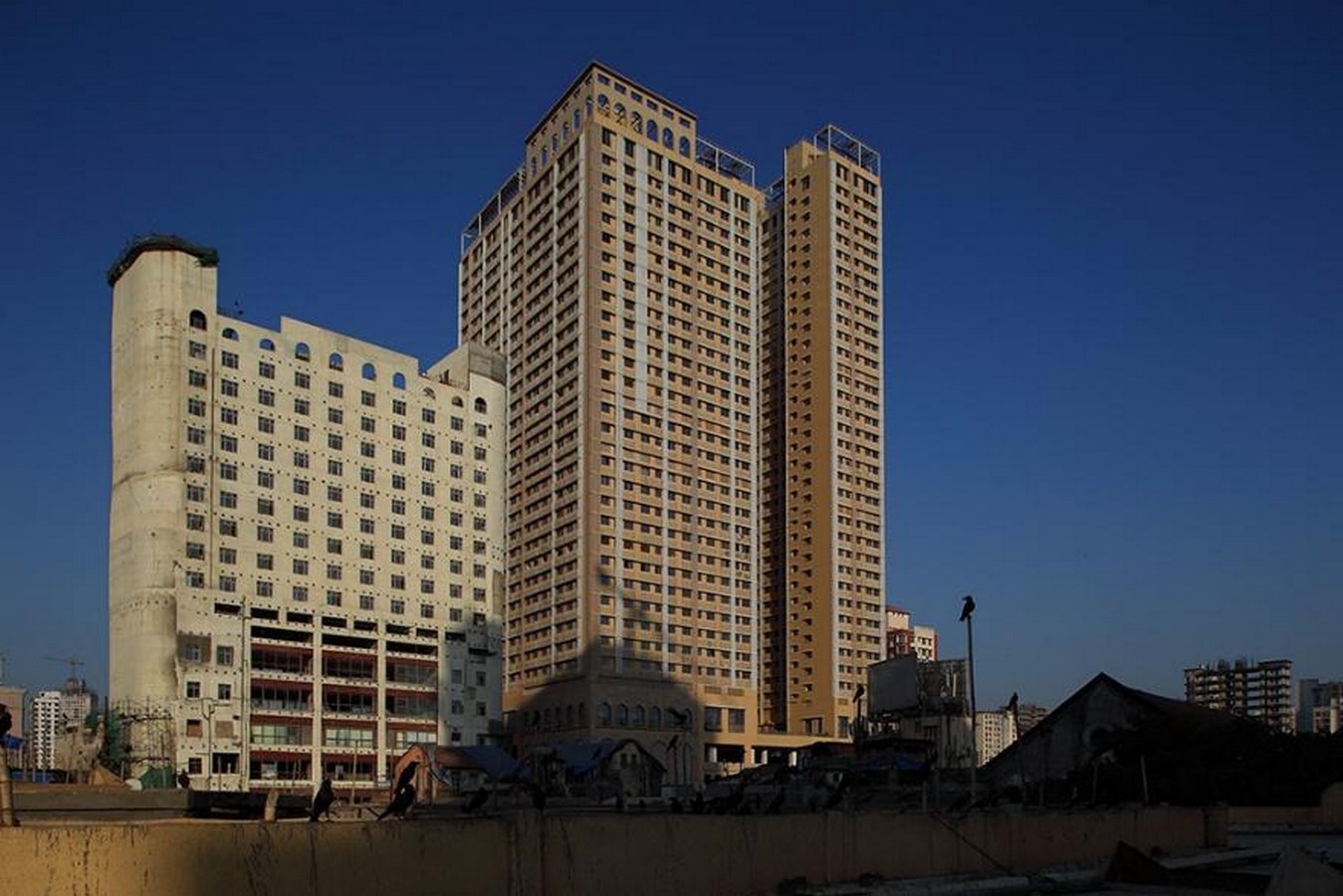
Bhendi Bazaar housing Mumbai_© MQA Architects Affordable Housing Units: Approximately 3,200 affordable housing units will be built as part of the renovation for Bhendi Bazaar’s residents. Current occupants are being moved into brand-new, contemporary apartments that have previously lacking features like elevators, restrooms, and open areas. This part of the project makes sure that the original inhabitants may still access the housing without having to move.
- Mixed-Use Development: A mixed-use development of residential, commercial, and recreational areas is being developed in Bhendi Bazaar. The project’s incorporation of stores, startups, and offices contributes to the development of a thriving neighborhood with employment prospects for locals.
- Sustainable Infrastructure: The project has a strong emphasis on green building techniques, such as energy-efficient lighting, trash management, and rainwater collection. This dedication to sustainability encourages an eco-friendly way of life and lowers operating expenses for residents.
- Heritage Preservation: Despite the substantial upgrading that the project entails, the area’s architectural and cultural legacy has been preserved. Traditional architectural features that honor Bhendi Bazaar’s past and character are incorporated into the design.
- Community Facilities: Schools, hospitals, community centers, and playgrounds are examples of new infrastructure that improves the standard of living for locals. The purpose of these facilities is to increase the general livability of the area and promote a feeling of community.


Challenges and Solutions

The Bhendi Bazaar project had a number of difficulties, such as:
- Community Resistance: One of the biggest challenges was persuading locals to move temporarily while work was underway. By providing temporary accommodation and ensuring residents’ right to return to the new complex, SBUT was able to overcome this.
- Heritage Conservation: It took careful balancing to modernize Bhendi Bazaar while maintaining its traditional identity. To preserve heritage aspects, the project required close collaboration with local architects and historians.
- Financial Constraints: Significant investment is needed for extensive rehabilitation. In order to solve this, SBUT implemented a phased building plan to control expenses and obtained financial support from private contributors.

The Future of Adaptive Reuse for Affordable Housing in India
In order to address India’s problems with affordable housing, the Bhendi Bazaar Redevelopment Project demonstrates the revolutionary potential of adaptive reuse. Adaptive reuse offers a workable strategy that can be used in other locations around the nation in response to the rising need for affordable urban housing. Similar projects could be beneficial in a number of other Indian cities that have a high proportion of unused buildings.
A few steps could be helpful in order to fully utilize adaptive reuse for cheap housing:
- Policy Support: More developers would be encouraged to utilize this strategy if the government offered clear policies and incentives, such as tax breaks, expedited approvals, and funding for adaptive reuse projects.
- Public-Private Partnerships: Large-scale redevelopment projects can be financed with the assistance of partnerships between the public and private sectors as well as non-profit groups, which will guarantee that affordable housing is always a top priority.
- Community Engagement: Successful adaptive reuse requires active involvement of the local community. Consulting residents during the planning process can help align project outcomes with community needs and foster acceptance.
- Heritage Conservation Regulations: For adaptive reuse projects including heritage buildings, striking a balance between modernization and preservation is essential. The preservation of cultural value while satisfying contemporary housing standards can be achieved by establishing explicit rules for heritage conservation.

Adaptive reuse provides a viable, cheap solution that helps communities and cities alike as urbanization picks up speed and the need for affordable housing increases. Adaptive reuse may turn abandoned areas into thriving, reasonably priced communities that conserve history, improve community life, and support urban revitalization, as seen by projects like Mumbai’s Bhendi Bazaar Redevelopment.
The accomplishments of these programs demonstrate the necessity of giving adaptive reuse more consideration as a housing solution in India. India can significantly meet its cheap housing requirements while preserving its cultural legacy and fostering a more equitable urban future by ingeniously repurposing ancient buildings and implementing ecological techniques.
Citation:
- Groth, P. and Corbett, M. (2008) Everyday America: Cultural Landscape Studies after J.B. Jackson. Berkeley: University of California Press.
- Langston, C. and Shen, L. (2007) ‘Application of the adaptive reuse potential model in Hong Kong: A case study of Lui Seng Chun’, International Journal of Strategic Property Management, 11(4), pp. 193–207.
- Bullen, P.A. and Love, P.E.D. (2011) ‘Adaptive reuse of heritage buildings’, Structural Survey, 29(5), pp. 411–421.
- Government of India (2017) National Urban Housing and Habitat Policy. New Delhi: Ministry of Housing and Urban Affairs.