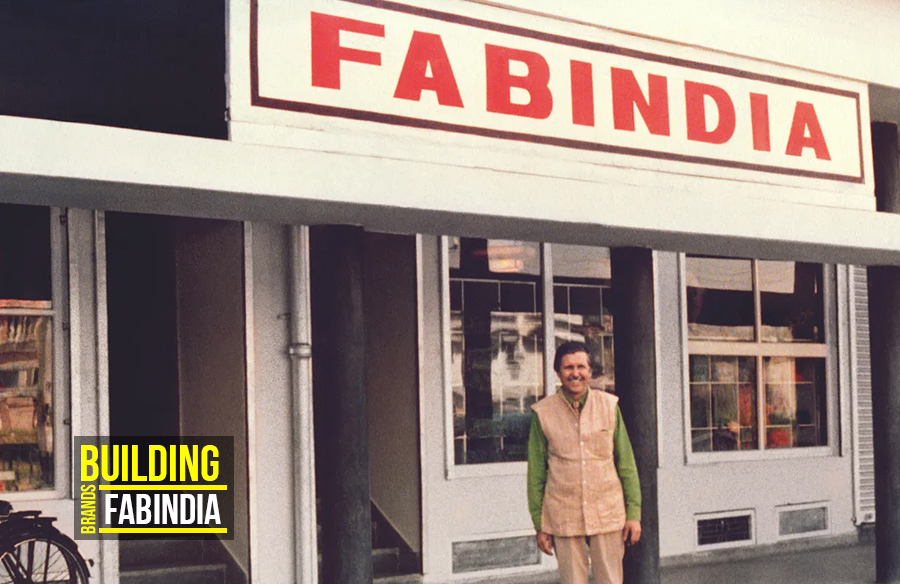
Fabindia as a brand is considered a celebration of all that is India and its unique handicrafts retailing clothes and other products with high-quality craftsmanship. The brand features a variety of offerings in Indian and Western Apparel for men, women, and children, jewellery, bags and footwear, home furnishings, furniture, gifts, organic food and personal care products. By focusing on sustainable and ethical business practices, supporting rural artisans and promoting India’s cultural heritage and diversity, Fabindia has carved out a niche in today’s world of fast fashion. Foreigners visiting India mostly visit any of the Fabindia Stores to collect souvenirs and memories associated with the rich culture of the country.
Beginnings and Initial Growth
Fabindia was originally founded in 1960 as an export company for home furnishings by John Bissell who relocated to India as a consultant for the Ford Foundation. While advising the Indian Government-run Central Cottage Industries Corporation, a two-year grant was given for instructing Indian villagers in the making of goods for export. ‘Fabindia Inc.’ originally incorporated in Connecticut started in two small rooms in Golf Link, New Delhi with UK-based Habitat being their main overseas customer. In 1976 when the Indian Emergency Period was at its peak, Fabindia had to limit its foreign equity by forty percent as per the rules set by the Reserve Bank of India. In the same period, commercial establishments were barred from operating in Residential areas – forcing it to start the first Retail store in Greater Kailash, New Delhi. Fabindia slowly catered to the urban Indian and differentiated itself from other government-run institutes by incorporating Western design and aesthetics into its traditional and handwoven fabrics. Designers were enlisted to introduce the ready-to-wear clothes, with attention to detail, unique craftsmanship, colours and finishes.

Fabindia faced a challenge in 1992, when Habitat, their prominent UK customer, was acquired by Ikano Group (of IKEA). The following year, John Bissell suffered a stroke and his son, William Bissell gradually took over the helm of Fabindia. William had good experience working with rural artisans and crafts co-operatives and was instrumental in the formation of various weavers’ cooperatives. He shifted Fabindia’s focus from purely exports to the domestic market and slowly became a retail chain with around 357 stores across 127 cities within India and 13 international outlets across 7 countries now. Over the years, other products in the non-textile range like organic foods, personal care products, Crafted jewellery etc were introduced.
Current Challenges
Although Fabindia has tried to reinvent itself by diverging from its core services – not all their ventures have been successful or carried forward. Fabindia partnered with Organic India in 2013 to introduce its products and invested significantly in the brand. They continued their partnership well into 2024 when TATA Consumer Pvt. Ltd bought the brand from Fabindia. In a bid to have local culinary experience, Fabindia started FabCafe Food Pvt. Ltd in partnership with Chef Sunil Chauhan in 2017, with a 70:30 partnership. Only a few cafes in New Delhi were opened but did not generate much widespread interest and it was eventually bought over by Sunil Chauhan in 2023. FabOne, a custom tailoring service in select outlets, and Interior Design Studio by Fabindia are some other new ventures.
Like every other business, the 2020 Coronavirus Pandemic did affect the retail and export of Fabindia. There is now fierce competition with Ethnic clothes brands ‘Aurelia’, ‘Wishful’ & ‘W’ owned by the Aditya Birla Group as well as ‘Swadesh’ by Reliance Foundation in the ethnic products category. The competition offers similar products at a much more affordable price. With stores like Zara & H&M penetrating the minds of urban youth with higher purse strings and Max, Zudio and Yousta in the lower rung of price, Fabindia has a tough crowd to sell to. The GenZ & Millennial youth do not see the Fabindia brand as ‘cool’ or ‘hip’ and are often considered for ‘nostalgic old or middle-aged people’. Most faithful Fabindia patrons do agree that even though the quality of their products is good, the designs have stayed the same and need a design revamp.

The Road Ahead
The brand Fabindia is a vehicle for marketing the vast and diverse craft traditions of India and with this in mind as of September 2024, Fabindia has also partnered with the Ministry of Micro, Small, and Medium Enterprises under the PM Vishwakarma Scheme to support traditional Indian artisans. It aims to promote artisan products and provide financial support, skill development, and marketing assistance, enhancing its market reach through Fabindia’s retail network. Aimed at improving the seamless product experience throughout their stores, Fabindia converted a few of its 360-odd stores from franchise-owned, franchise-operated (FOFO) to a company-owned, franchise-operated (COFO) model.
The vision for Fabindia continues to maximize the handmade element in the products, whether it is handwoven textiles, hand block printing, hand embroidery or handcrafting home products. With a promise of newer designs and material palettes, Fabindia hopes to raise awareness of ethical and sustainable industry practices in the retail market. It needs to prioritize the connection with customers rather than obsessing over growth. Fabindia needs to market itself as a socially conscious brand for progressive parents as well as their progressive children.