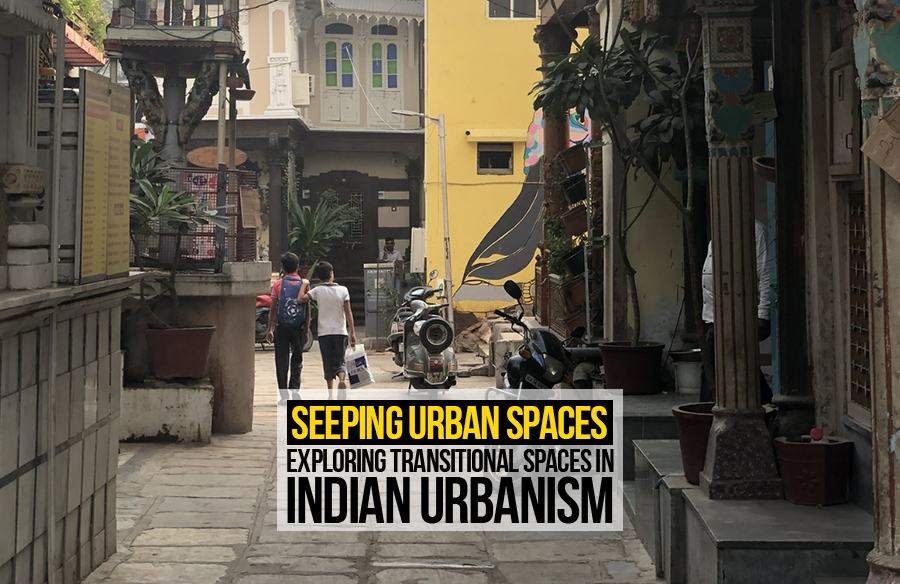
In the contemporary landscape of the urban, transitional spaces informal connectors between private and public realms are increasingly under threat. More characterised by social interactions and cultural practices, these transitional spaces constitute an essential social fabric within denser cities. Otlas, chabutras, kollams, and poles illustrate the transitional spaces for community and collective gatherings in India; however, they are constantly being eroded by the processes of modern urban planning. This article considers the importance of these dripping-away spaces and how such spaces gradually disappear before the force of modernization and how such influences shape and, in turn, affect daily life as well as communal dynamics.

Understanding Transitional Spaces
Transitional spaces are those areas that make it possible to interact and to move from one environment to another, namely, the private home, the public street, and communal space. In Indian urbanism, these spaces of transition are charged with rich cultural meaning and important nodes for communal interaction.
- Transitional Spaces in Urban Contexts
Transitions between these segments are usually manifested as otlas (front yards or courtyards), chabutras (platforms or seating areas), and kollams, which greatly enhance interactions socially and culturally. These spaces help the residents relate and interact with their environment and also with other people, thus binding the community in Bhan (2016)Moreover, poles in urban settings can be applied as marks for community activities. Some of the poles could be decorated with local art or used as hanging points for suspended traditional ornamental items during festivals, which will automatically increase participation in the community (Datta, 2012).

Cultural Importance of Transitional Spaces
- Otla and Chabutra
Otlas and chabutras are integral to the traditional Indian domestic environment and urban structures, which serve as semi-public spaces that family and friends can use for informal purposes. This transitional space promotes impromptu interactions through a fosters sense of community building (Datta, 2012). As contemporary residential designs are alienating people, these transitional spaces provide an open invitation to social interaction.
- Cultural icon: Kollam
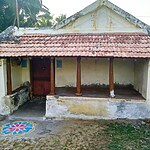
In South Indian cultures, the Kollam is a decorative art form created at the entrance of homes and serves as an indication of cultural identity and social connection. Drawing a Kollam beautifies transitional space but also generates interactions and relationships among neighbours, bonding them even more socially (Srinivas, 2017).
It is usually made by women and mostly made of rice flour; being works of art and also a way to attract birds. In so doing, the process unites people closer to one another, as in the community’s respect for one another’s work while participating in the ritual of making these elaborate designs (Srinivas, 2017).
Impact of Urban Modern Design on Transitional Spaces
- Modernism and Challenges
The above trend in current architectural practices focuses on aesthetics and functionality but not on community needs; transitional spaces suffer from such negligence. The focus on glass facades and sterile environments pushes people farther away from their cultural roots (Tiwari, 2018). Therefore, the informal, casual spaces that once facilitated interpersonal interaction within urban metropolises are increasingly missing.
- Lost Community Interaction
Transitional space erosion has a profound implication on community engagement. According to Mitra (2019), urban design that focuses on individualism increases the lack of interaction opportunities between people. This results in decreased community engagement and leads to social isolation. Conversely, this means that its severely bad impact relates mainly if it is associated with densely populated urban areas.
Besides that, a lack of public space for non-formal social life may adversely affect the daily routine. What was once an ingrained assembly across otlas or chabutras is now broken up into unconnected individual pursuits hidden within the confines of homes or commerce that retreat community life even further.
Revival Transitional Urban Spaces
- Role of Participatory Urbanism
Thus, the transitional spaces require participatory urbanism. Participatory urbanism remains deeply rooted in the activation of community participation at the design and planning stage. The process will facilitate the development of environments that ensure social interactions and maintain cultural values associated with transitional spaces through the involvement of local voices and cultural practices (Sharma, 2020).
- Design for Sensory Experiences
The transition spaces must be refurbished with richness, involving sensory experience to awaken the dwellers. Such cities, breaking out with greenery, seating areas, and cultures, can make the place more welcoming and friendlier to interact with others. Incorporation of such sensory-rich environments would facilitate rebuilding that connection with nature and the community at large, and that would contribute significantly to the quality of life.
- Integrate Cultural Practice into Urban Design
Urban design should reflect the culture practised extensively in transitional spaces. Incorporation of traditional features, like kollams, otlas, chabutras and poles, within new urban designs can bridge the old with the new and enable people to feel connected and own the place (Bhan, 2016).
Margins and Byelaws: Eroding Transitional Spaces
- Urban Planning Regulations
Urban planning regulations, which most of the time favour land use maximization and economic development, rarely take into consideration the transitional spaces. High-density development-oriented byelaws can eliminate informal gathering places, such as otlas, chabutras, and kollams (Sharma, 2020). Most such regulations fail to realize the cultural significance of the same, and thus, these elements slowly disappear from the urban fabric.
- Zoning Laws and Gated Communities
Residences and commercial spaces are separated by zoning laws, which also reduces interaction among members of a given community. Gated communities are a result of this separation of the residential space from the urban context, thus promoting segregation and separation of people from each other (Mitra, 2019). Such spaces deter informal socialisation and suppress public life.
- Impact on Cultural Identity
Transitional space loss has serious implications for cultural identity. As transitional spaces disappear, the rituals and practices that accompany these spaces are bound to lose their way as well. Losses in communal space to execute interactions with one another will lead to community disengagement and eventual loss of cultural continuity (Srinivas, 2017).
- Toward Inclusive Urban Policies
To overcome these hurdles, urban planners must engage in lobbying to ensure that policies are affirmative and show recognition and sustenance of transitional spaces. Engaging the community in the planning process is likely to contribute to the promotion of cultural practices through taking care of them in city design besides informal meeting places. Cities can find conditions that enhance interaction and appreciation for local culture through zoning and byelaws (Datta, 2012).

Case Studies and Examples
- Transitional Space Integration Success
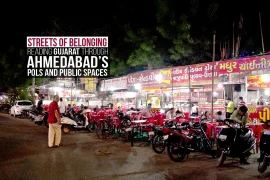
Those cities which have been able to incorporate transitional spaces into their design can be good examples. In the context of the Sabarmati Riverfront planning of Ahmedabad, it is seen that community spaces are crucial to reserve areas for socialisation activities. Poles in that region have turned to be community art platforms that depict localism and enhance public engagement.
- Urban Renewal in Urban Spaces
The revitalization of public spaces such as Delhi’s Chandni Chowk has illustrated the potential to build community engagement by regenerating traditional gathering spaces (Tiwari, 2018). However, through various participatory processes of design, it also resulted in the renovation of those areas, re-establishing feelings of ownership among its inhabitants.
- Kollam and Pole Art as Community Engagement Tool
Thus, many southern Indian cities have aligned the Kollam revival with community art projects encouraging inhabitants to beautify transitional spaces.
Just like this, art installations on poll poles have involved local artists and residents, converting these markers to express the community and local culture, according to Sharma (2020).
- Otlas and Chabutras as cultural anchors
The use of otlas and chabutras within neighbourhoods and towns across India highlights the utility of transitional spaces in community identity development. Transitional spaces were applied as a rallying point for festivals and celebrations of any type, and for general day-to-day assembly in many regions, thereby creating lively micro-communities within the tissues of the urban setting (Datta, 2012).

Transitional spaces are pivotal within the social and cultural elements of Indian urbanism. However, contemporary notions of urban design paradigms, as well as regulatory regimes, imperil these very transitional spaces. This gradual disappearance of these spaces badly affects the daily routines and dynamics of communities, and it brings about social isolation and disconnection from the cultural roots. If one understands the significance of the disappearance or decline of such spaces and hence advocates for policies that are inclusive in character, one can act to retain such heritage complexes and, therefore, expedite lively social interactions. All the transformed modernity challenges and regulatory frameworks need to be worked on in a quest to revitalise the transitional role spaces to transform urban life.

References:
Bhan, G. (2016). Learning from the slums: A critical approach to urban planning in India. Urban Studies, 53(11), 2284-2300. https://doi.org/10.1177/0042098015610690
Datta, A. (2012). The role of urban planning in informal settlements in Indian cities. Cities, 29(4), 278-285. https://doi.org/10.1016/j.cities.2011.11.001
Mitra, A. (2019). Gated communities in urban India: The social consequences of exclusionary practices. Journal of Urban Affairs, 41(5), 703-719. https://doi.org/10.1080/07352166.2019.1621387
Sharma, S. (2020). Participatory urbanism: Bridging the gap between design and community in Indian cities. Journal of Urbanism: International Research on Placemaking and Urban Sustainability, 13(4), 444-458. https://doi.org/10.1080/17549175.2020.1773344
Srinivas, K. (2017). Cultural regulations on traditional cultural practices: A case study of kollams in Kerala. Journal of Cultural Geography, 34(2), 172-188. https://doi.org/10.1080/08873631.2017.1282006
Tiwari, S. (2018). Revitalising public spaces in Indian cities: The role of cultural identity. Landscape Research, 43(5), 681-696. https://doi.org/10.1080/01426397.2017.1416700
Preston, C. (2024, August 6). Rangoli | India, Floor Art, Designs, Meanings, & Festivals. Encyclopedia Britannica. https://www.britannica.com/art/rangoli
Gattupalli, A. (2024, July 23). The Veranda: A Disappearing Threshold Space in India. ArchDaily. https://www.archdaily.com/985402/the-veranda-a-disappearing-threshold-space-in-india
Turlapati Lohita 2014 A–D — Pol houses (residential cluster). (n.d.). https://architectureindevelopment.org/project/492
Wovensouls. (2023, November 7). Traditional Architecture & Art in the Houses of South India. The Art Blog by WOVENSOULS.COM. https://wovensouls.org/2014/01/15/traditional-architecture-art-in-the-houses-of-south-india/