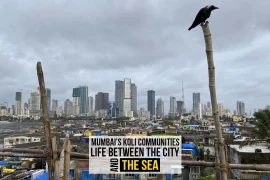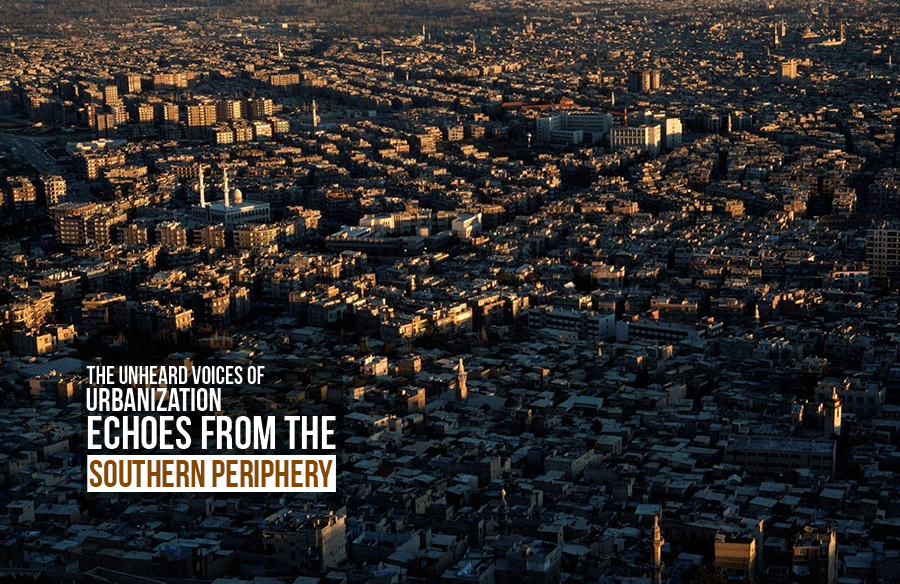
Cities have evolved into powerful engines of economic advancement and innovation, shifting from mere symbols of modernity to complex landscapes often encapsulated under the term urbanisation. Yet, behind the gleaming towers and orderly streets lies a less visible narrative—the widening gap between those who reap the benefits of progress and reside at the heart of urban life, and those who are pushed to the peripheries, where their pleas for inclusion and solidarity often go unheard.

Are we ready to wander
Through narrow lanes and forgotten streams,
Where the unheard dwell
In an urban world adorned with an elite term?
But for those buried beneath,
Is urbanisation truly their dream?
The Reality of Urban Displacement
As cities in the Global South—particularly Mumbai, Dhaka, and Jakarta—experience rapid urban growth, they have capitalised on economic opportunities while displacing many families. This pattern is common with the emergence of upscale residential complexes and commercial developments, where low-income residents are often evicted or relegated to poorly serviced slums.
While urbanisation may drive national progress, it has also deepened social inequalities. Many urban centres have seen the simultaneous rise of sprawling slums alongside elite suburbs and thriving business districts, highlighting a development model that frequently overlooks social inclusion.
Is growth the bridge we need,
Or a curse for those in need?
Sustainability and inclusivity,
Ornamental ideals masking harsh realities,
Gleaming towers and gated communities—
Symbols of stark disparity,
Hidden behind the facade of modernity.
Linking Urbanisation to the Sustainable Development Goals (SDGs)

While trying to overcome these issues, the processes of urbanisation must be integrated with the Sustainable Development Goals (SDGs). While some progress has been made: eradication of poverty (SDG 1), provision of water and sanitation (SDG 6), and looking for and providing adequate housing (SDG 11) have often been left behind in the zeal for hastened urbanisation.
Such goals are critical in addressing the challenges of urbanisation both for the haves and the have-nots in development where the rich get richer the poor suffer more. Urban plans can encompass the SDG targets ensuring that every resident of the city benefits from the development rather than a few elites.
Case Studies: Lessons from the Ground
1.Redevelopment of Dharavi: Mumbai, India

The reflections during the transformation of any of the biggest slums in the world to a modern urban area through the redevelopment of Dharavi are quite a several. It is good to know about these changes after reporting any improvement in conditions and infrastructure, there should be no fears about eviction for it might lead to loss of shelter and out to reach livelihoods. Redevelopment plans must provide for adequate housing and protection of the sources of earnings of the people. This orientation not only helps in the retention of the already existing occupied space but also leads to deeper urban amelioration by taking into account the residents who are now in any aspect of Dharavi.
2.Flood Management Basin: Jakarta, Indonesia

Jakarta and flooding have featured as a recurrent subject matter in the Makassar urban area and the economy through promotion. Those who undertake such activities are very necessary due to the bad that they are aiming at, to help restore the city’s devastated vegetation and prevent the occurrence of disasters, but most of the time poor people living in the cities are always in danger of being displaced from their homes in the flood risk regions because of these efforts.
Yet amidst these concrete jungles,
Hope persists—an optimistic vision
To embrace all, correct the 20th-century mistakes,
To not push anyone to the fringes.
Empowered urbanism beckons,
Threads of equity and innovation weaving a sphere for all.
Towards a More Equitable Future
Though good ambitions and solid infrastructure can make a difference, there is also more to the building of inclusive cities. This means a paradigm shift in expansion is not measured in the crude parameters of economic growth but also includes the welfare of all. For the cities of the Global South, this requires tackling structural inequalities that have formed the dynamics of the cities and ensuring that marginalised groups are consulted throughout the planning and implementation stages.
Regarding climate change, the answer to the problem of rapid urbanisation cannot be blind to the plight of the disadvantaged. Sustainability is not an ideal agreement that exists in paper which is ideal for any kind of development and that which says that this goal is too good to be true. It is now a way of life and living for every urban dweller. The principles of inclusivity and sustainability are fundamental to creating places with advanced favourable settings for people of every social class of society.
Decades of dialogue on inclusivity,
Yet does any city truly embrace every soul?
Grand plans widen gaps,
In practice, inclusivity and sustainability remain mere clichés.
In the age of climate change,
Sustainable cities are no longer a luxury.
It’s time for action,
Where dreams and struggles intertwine,
Where cities grow in balance—
Inclusion and resilience intertwined.
While cities in the Global South are expanding, there exists an opportunity to change the story around urbanisation. Although, if we connect the development processes with the SDG goals, and observe the success stories /case studies, there is a possibility of designing the cities that work for all the people. The objective is to promote cities, which are not simply aspirational engagements embracing inclusiveness and resilience but actual day-to-day experiences.
From waste-choked rivers to burning lakes,
The call for swift innovation is clear.
Let us embrace all, grow together,
No more delays,
Let this be the world we build.
References:
- United Nations. (2024). Urbanisation: expanding opportunities, but deeper divides | Nations Unies. United Nations. https://www.un.org/fr/desa/urbanization-expanding-opportunities-deeper-divides
- https://www.ohchr.org/en/land/urbanization-and-human-rights#:~:text=In%20many%20places%20this%20trend%20towards%20rapid%20urbanization%20goes%20hand%20in%20hand%20with%20the%20creation%20of%20more%20slums%3B%20more%20people%20in,and%20discrimination.
- Sustainable Urbanization & Sustainable Development Goals | UN-Habitat. (2024). unhabitat.org. https://unhabitat.org/sustainable-urbanization-sustainable-development-goals
- Hunter Urban Review. (2024). Dharavi Redevelopment | Hunter Urban Review. cuny.edu. https://hunterurbanreview.commons.gc.cuny.edu/dharavi-redevelopment/