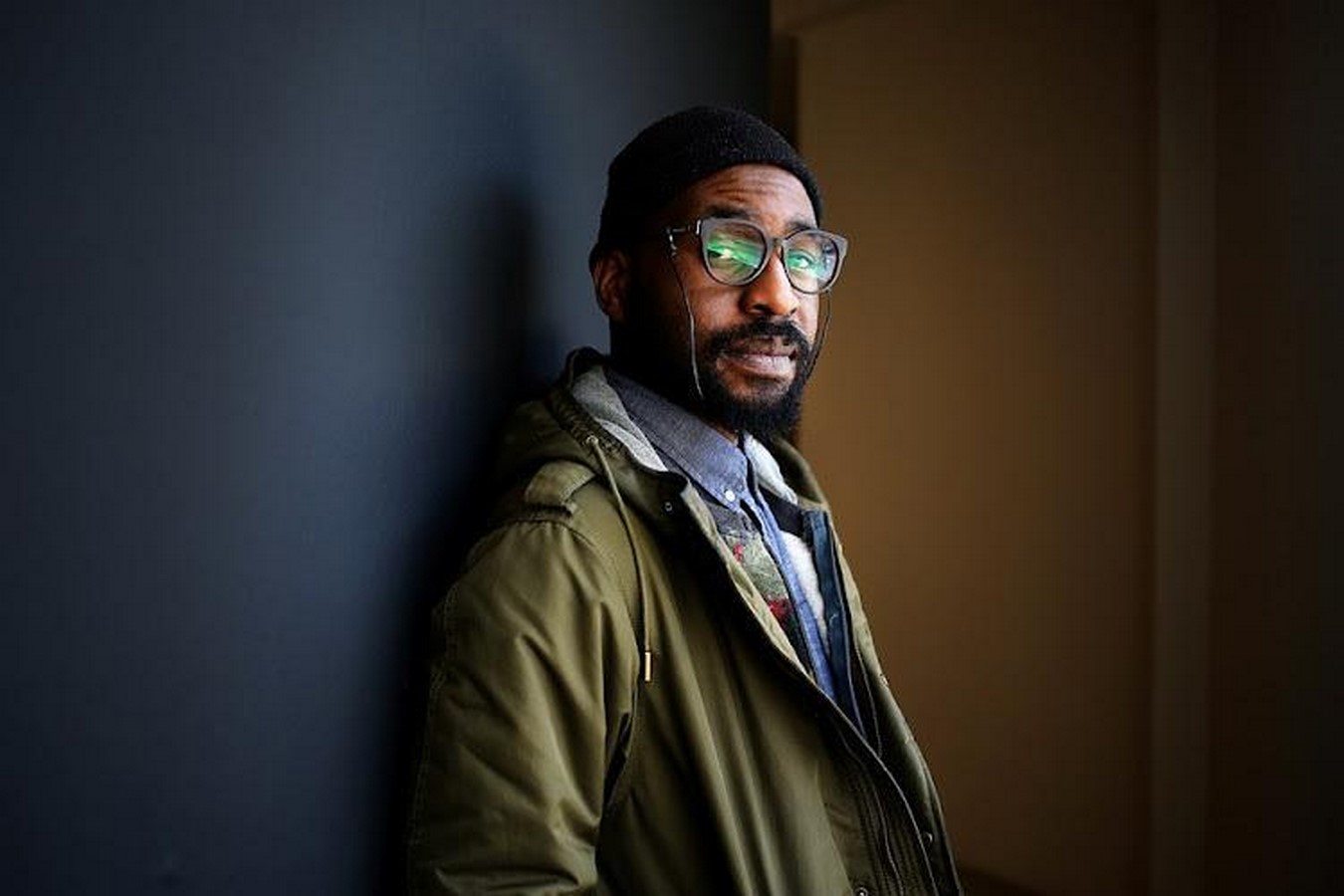
Kudzanai Chiurai is a multi-disciplinary mixed-media contemporary artist working in photography, drawing, film, painting, and sculpture. Later, Chiurai also explored the mediums of activism, publishing, poetry, fashion, and music, making him a “cultural activist”. Much of Chiurai’s work is rooted in his personal interaction with the changes in Southern African politics, economics, and social relationships, from colonialism and independence to the present day. His artworks reflect on the intricacies between history, contemporary culture, and the shift, the psychological experience of urban spaces, power, war, and the impact of colonialization on Africa. Kudzanai Chiurai is a distinguished artist who was shortlisted for the prestigious Future Generation Art Prize in Venice. Additionally, Forbes has lauded his talent, identifying him as one of the “13 Africans to Watch” in 2013 and he was named among the “15 Young African Creatives Rebranding Africa” in 2015.
An Overview: Kudzanai Chiurai, Art, and Politics
“Art is politics and our lives are political” quoted Kudzanai Chiurai; indeed, Kudzanai Chiurai’s life was intertwined with politics from as early as his birth (www.gq.co.za, n.d.). Kudzanai Chiurai was born in Harare, Zimbabwe in 1981, a year after Zimbabwe gained independence from the white minority Rhodesian rule. Hence, Chiurai was considered a part of Zimbabwe’s “Born Free generation” which had a significant impact on his artworks (Kim, 2021).
Chiurai’s acquaintance with activist Elinor Sisulu, access to interviews activists had conducted with people who had been tortured and interactions with economists gave Chiurai a precise idea about the circumstances in Zimbabwe in 2002. As, he received arrest threats following the presentation of murals and artworks criticizing the Zimbabwean government and President, in 2004, he left for South Africa where he enrolled in a BA in Fine Art at the University of Pretoria. Moreover, in an interview, Chiurai acknowledged a Visual Culture lecturer at the University of Pretoria for inspiring him to experiment with art even before graduating, when he further researched visual culture and activism. Subsequently, making him an activist from an artist, Chiurai hosted his first solo exhibition at Brixton Art Gallery, London in 2003 which became an international media event. (www.gq.co.za, n.d. & Akpata-Ohohe, 2004)
Philosophy and Style of Work
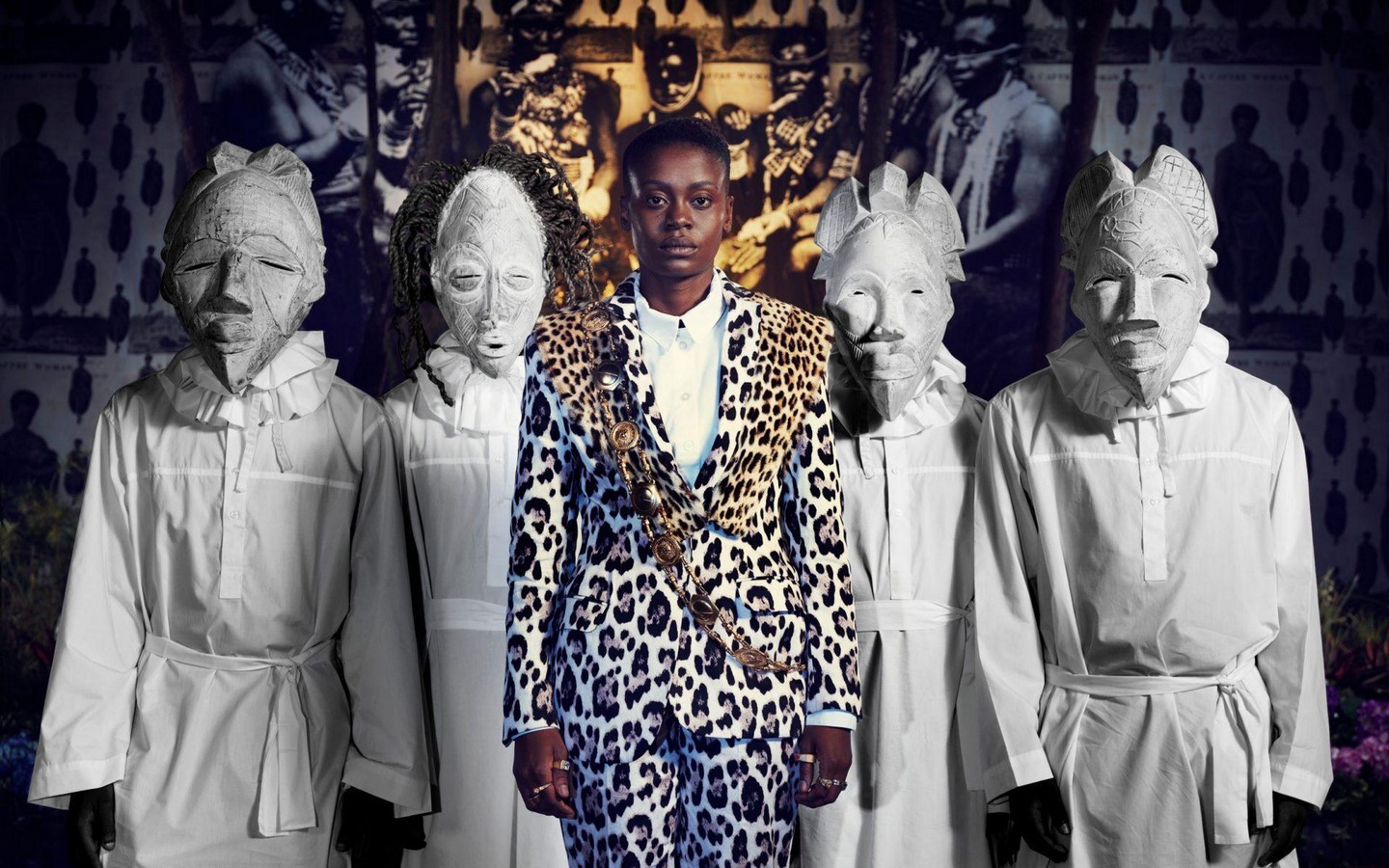
The life of the Zimbabwean artist Kudzanai Chiurai significantly influenced his philosophy. He realized the potential for art as political commentary and activism. Kudzanai Chiurai depicts the cyclical nature of history, i.e., the tendency of history to repeat in his artworks (Mashabela, 2018). Chiurai, though belonging to the “born-free generation” of Zimbabwe, sensed a massive racial or ethnical inequality that still exists in this region and was disappointed to see citizens of the region still being subjected to poverty and lack of opportunity (Akpata-Ohohe, 2004). Hence, Chiurai felt that he no longer belonged to post-colonial societies but only resided in colonial futures (Lang, n.d.). He explained that Afro-futures don’t exist as, African nations though liberated from Western power are still molded by colonial social and political institutions which doesn’t suit the regional expectations (Lang, n.d.). Through narrative, figuration, symbolism, and staging, Chiurai’s work reflects on intergenerational inequality, political conflict, socioeconomic disparities, and the ongoing impact of colonialism in Zimbabwe and South Africa (Kim, 2021).
Photography and Videography
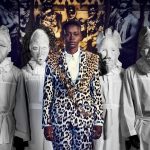
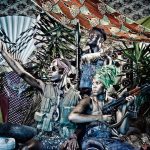
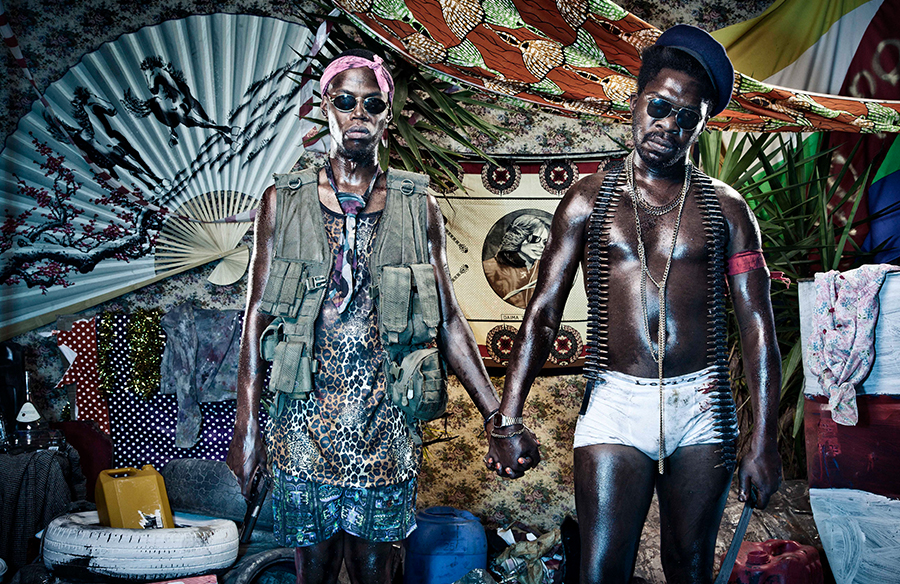
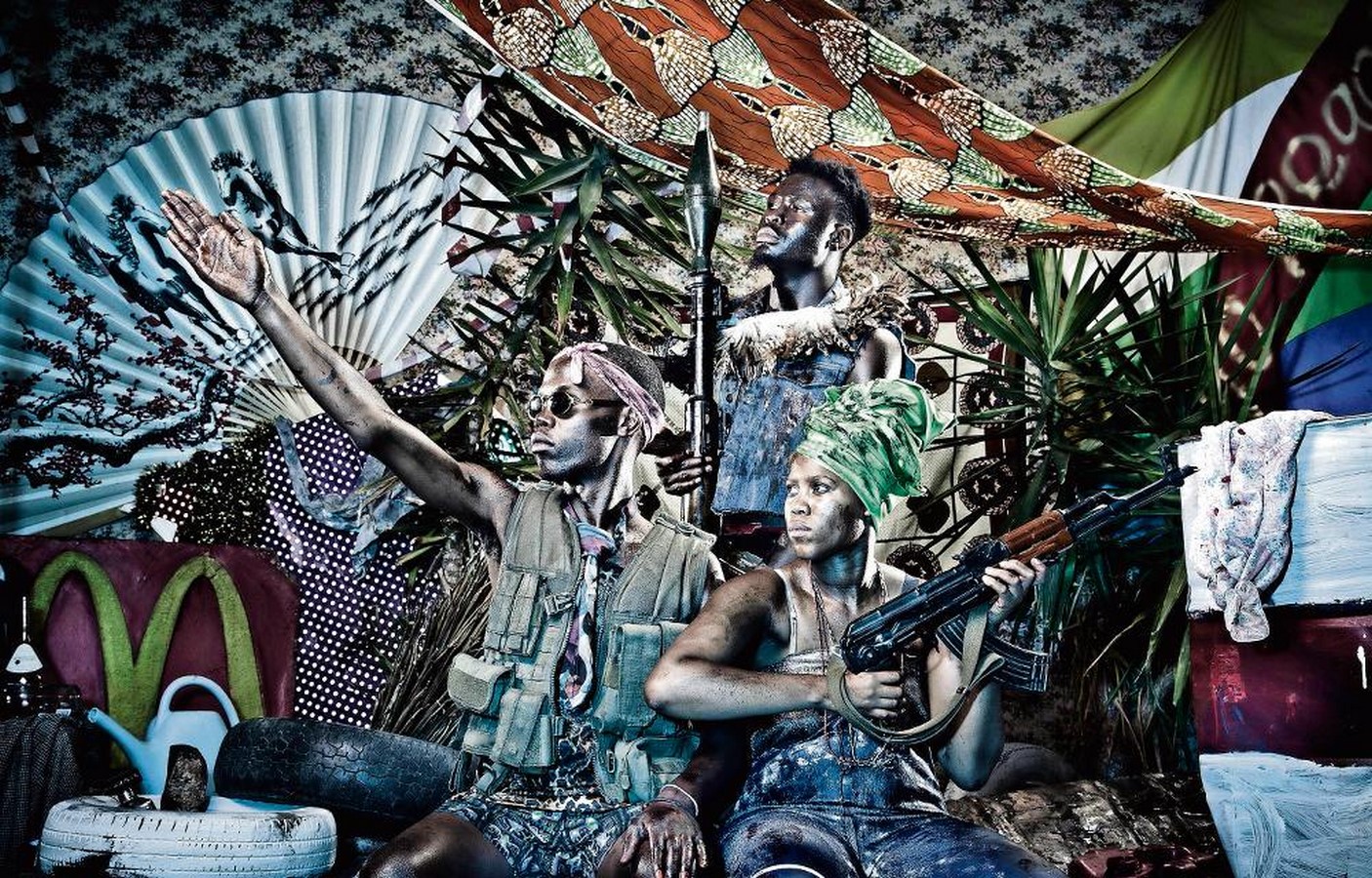
Kudzanai Chiurai’s photographs and videos, thoroughly explore the portrayal of violence, sacrifice, and rituals. These pieces navigate the intricacies of colonial rule and independence, history and modernity, inter-generational gap, power, and militarized masculinity. Chiurai’s videos and photographs possess a theatrical quality, with highly staged compositions featuring Black models and symbolic props and backdrops. Notably, his ‘Revelations series (2011) presents a number of staged photographs that depict Black figures with weapons and are heavily edited with dramatic, cool lighting to appear almost painterly. Additionally, the large format photo series ‘Moyo’ (2013) examines media representations of violence in dramatically staged tableaus that seemingly glorify death or injury.
Graffiti, Paintings and Posters
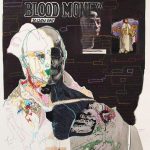
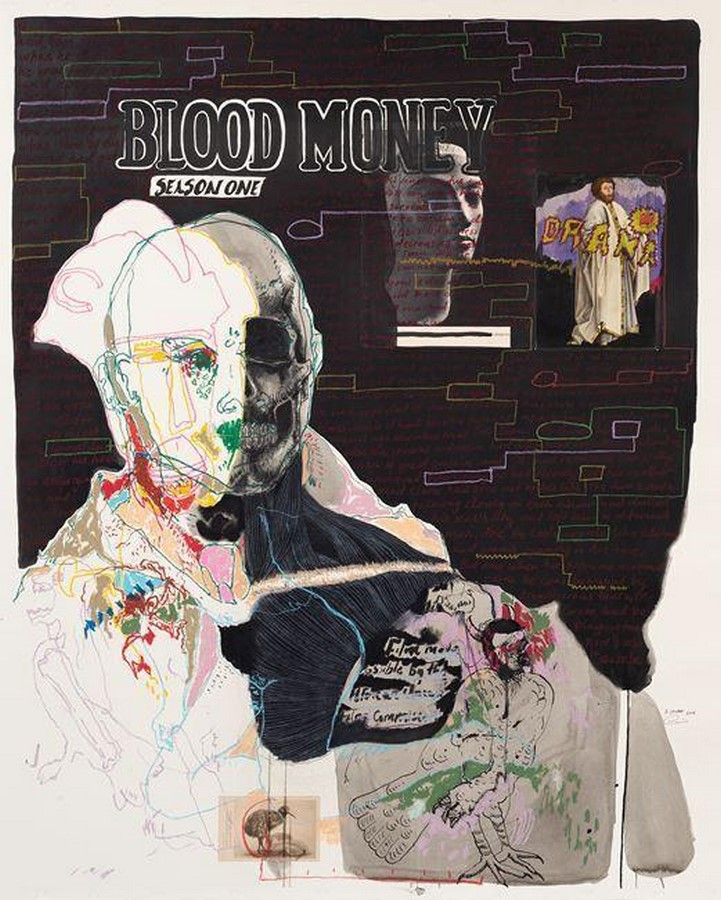
Chiurai has drawn inspiration from the British street artist Banksy, to create murals that reflect concerns about elections and xenophobic violence in South Africa and Zimbabwe utilizing stencils and spray paint. Chiurai’s paintings including Untitled VI- Marxism-Leninism-Mao Zedong thought and Untitled XX- Blood Money: Season One follow an expressionistic style and his mixed-media approach employs abstract images, drawings, and text collages to explore political themes. (Kim, 2021)
Posters are also included as a significant medium for activism in Chiurai’s practice. His ongoing ‘Conflict Resolution’ series comprises of lithograph posters that provide commentary on the conflict in Southern Africa. The posters exhibit political figures, soldiers, and weaponry, coupled with slogans such as Untitled- We Always Have Reason to Fear, Abuse of Power (2009), and Vote at Own Risk (2009). These posters make bold proclamations regarding violence and power in Africa. (Kim, 2021)
Chiurai’s New Stance on Art
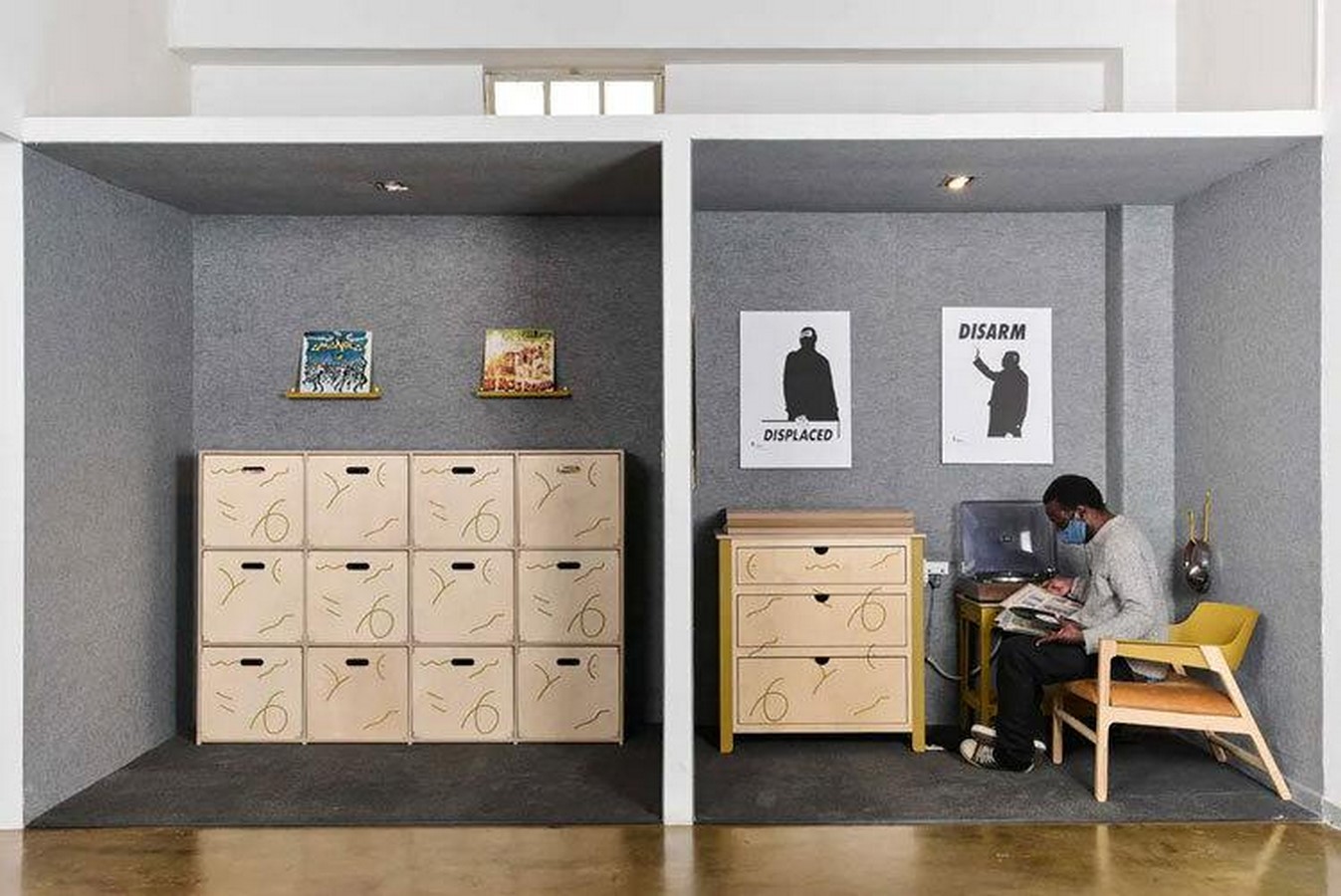
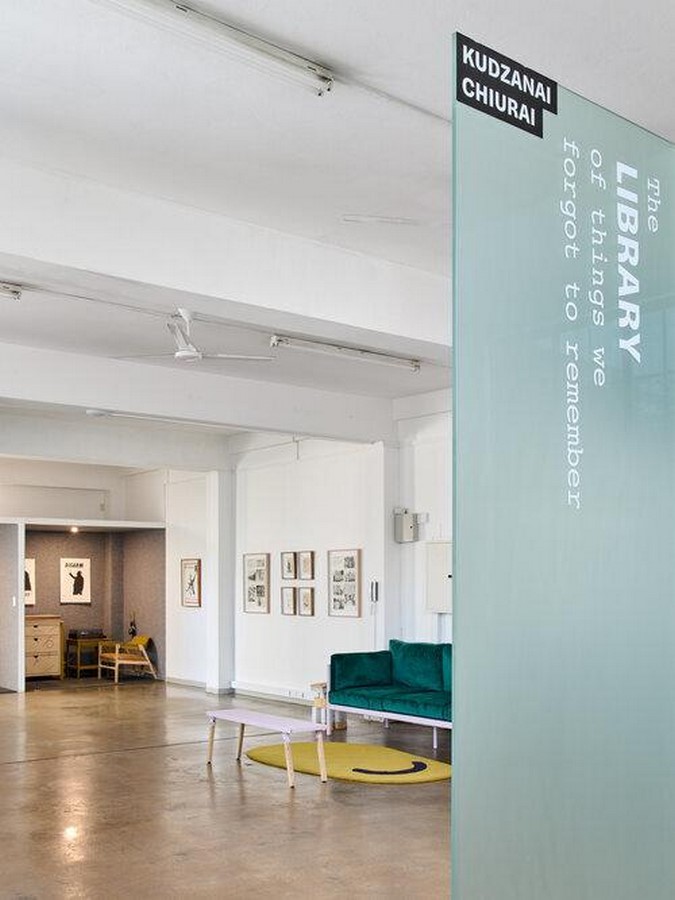
Chiurai curated The Library of Things We Forgot to Remember initially, in 2017 as his own exhibition, out of his passion for archivism. However, the COVID-19 pandemic altered the idea into a mobile liberated library. The library includes the artist’s extensive collection of vinyl records associated with liberation movements in southern Africa. The collection has continued to grow as it obtained digital recordings from the US-based educational project, Freedom Archives in 2018 and also accepted other materials donated by individuals and institutions.
The work takes a deliberately non-conventional approach to archivism. The selection and acquisition are determined by interaction. Moreover, Chiurai also invites others to curate this archive, to re-arrange it for regular public viewing. In his library, visitors are not merely passive observers, but collaborators, interpreters, and readers. While most archives and libraries prioritize the preservation of materials, Chiurai’s library promotes access, physical engagement, and active use of the materials to maintain their continued relevance. In this innovative space, designed as a combination of a gallery, community center, library, and archive, the act of remembering is transformed into a collaborative process of re-envisioning and sharing cultural heritage. Additionally, it serves as a tribute to the benevolent nature of Chiurai’s artistic endeavors, emphasizing the values of compassion and togetherness within the community. (Mushakavanhu, 2021)
Virtuous Intentions Behind Chiurai’s Work
Chiurai’s work intends to break the silence and initiate a dialogue between people of Afro-nations and the West which will aid them in accepting themselves as victims of the past and architects of the future, according to him. Moreover, he portrays his artworks as a “peaceful protest” against the current state of turmoil in his nation which he believes is due to the betrayal of the local leaders who were once a part of the liberation movement. Though his protest doesn’t happen in the streets, his peaceful protests highlight injustice and atrocities in Afro-nations globally and evoke the youth and other citizens to voice out against human rights abuses. (Akpata-Ohohe, 2004)
The defacing of a controversial painting of South African President Jacob Zuma and violent demonstrations in Tunisia, in 2012 over branding as offensive art raises a concern if artistic expression is being suppressed in parts of the continent. (Mabuse, 2012). However, Chiurai sees this as the rise of the young born-free generation of South Africa who began to realize the influence and power they hold. Moreover, he considers it the “re-emergence of artistic activism” (Mabuse, 2012). He says that there is a necessity for an absolute increase in such things as “it is very important for the average person to have a voice out there,” and public art is an effective means to do so. (Mabuse, 2012)
Reference list
- Akpata-Ohohe, B. (2004). Kubatana – Archive – Kudzanai Chiurai – award winning Zimbabwean Artist – May 2004. [online] archive.kubatana.net. Available at: http://archive.kubatana.net/html/archive/artcul/040531kc.asp?sector=artcul&year=2004&range_start=31 [Accessed 1 Sep. 2023].
- Kim, M (2021). Kudzanai Chiurai Biography, Artworks & Exhibitions. [online] 12 Feb. Available at: https://ocula.com/artists/kudzanai-chiurai/.
- Lang, A. (n.d.). Kudzanai Chiurai’s Mixed Media Series Challenges What It Means To Live in a Post-Colonial Society – Okayplayer. [online] Available at: https://www.okayafrica.com/kudzanai-chiurai-mixed-media-series-challenges-post-colonial-society/ [Accessed 2 Sep. 2023].
- Mabuse, N. (2012). Kudzanai Chiurai: The artist who stood up to Mugabe. [online] CNN. Available at: https://edition.cnn.com/2012/07/12/world/africa/kudzanai-chiurai-art/index.html. [Accessed 2 Sep. 2023].
- Magazine, U. (2017). INTERVIEW: Artist Kudzanai Chiurai Launches his Book ‘Whilst the Harvest Rots’. [online] Unlabelled Magazine. Available at: https://www.unlabelledmagazine.com/post/2017/02/17/interview-artist-kudzanai-chiurai-launches-his-book-whilst-the-harvest-rots [Accessed 1 Sep. 2023].
- Mashabela, K. (2018). Archive Fever: Repetition And History In The Works Of Kudzanai Chiurai. [online] Riot Material. Available at: https://www.riotmaterial.com/archive-fever-kudzanai-chiurai/ [Accessed 1 Sep. 2023].
- Mushakavanhu, T. (2021). How Zimbabwean artist Kudzanai Chiurai has reinvented the idea of a library. [online] Daily Maverick. Available at: https://www.dailymaverick.co.za/article/2021-09-29-how-zimbabwean-artist-kudzanai-chiurai-has-reinvented-the-idea-of-a-library/ [Accessed 2 Sep. 2023].
- www.gq.co.za. (n.d.). GQ&A with Kudzanai Chiurai. [online] Available at: https://www.gq.co.za/culture/gq-and-a-with-kudzanai-chiurai-16534513 [Accessed 1 Sep. 2023]