Gary Stevens writes in The Favored Circle, an education in architecture is not about learning to “do architecture.” it is about “thinking architecturally”. In simpler terms, it encompasses identifying problems, understanding its components, and orienting one to view these problems as opportunities. Architectural thinking instilled in every student varies in their unique responses, ethical stances, and skill set. At architecture school, one not only learns to think architecturally but also learns to apply the same through projects of diverse scopes and proportions.
Architecture takes decades to master. It should come as no shocker that there isn’t enough time to teach students all there is to know about architecture in a mere 5 years. School is the place where you are given a foundation of life skills, work ethics, and design sensibility that you imbibe for a lifetime.
Critique and Critics
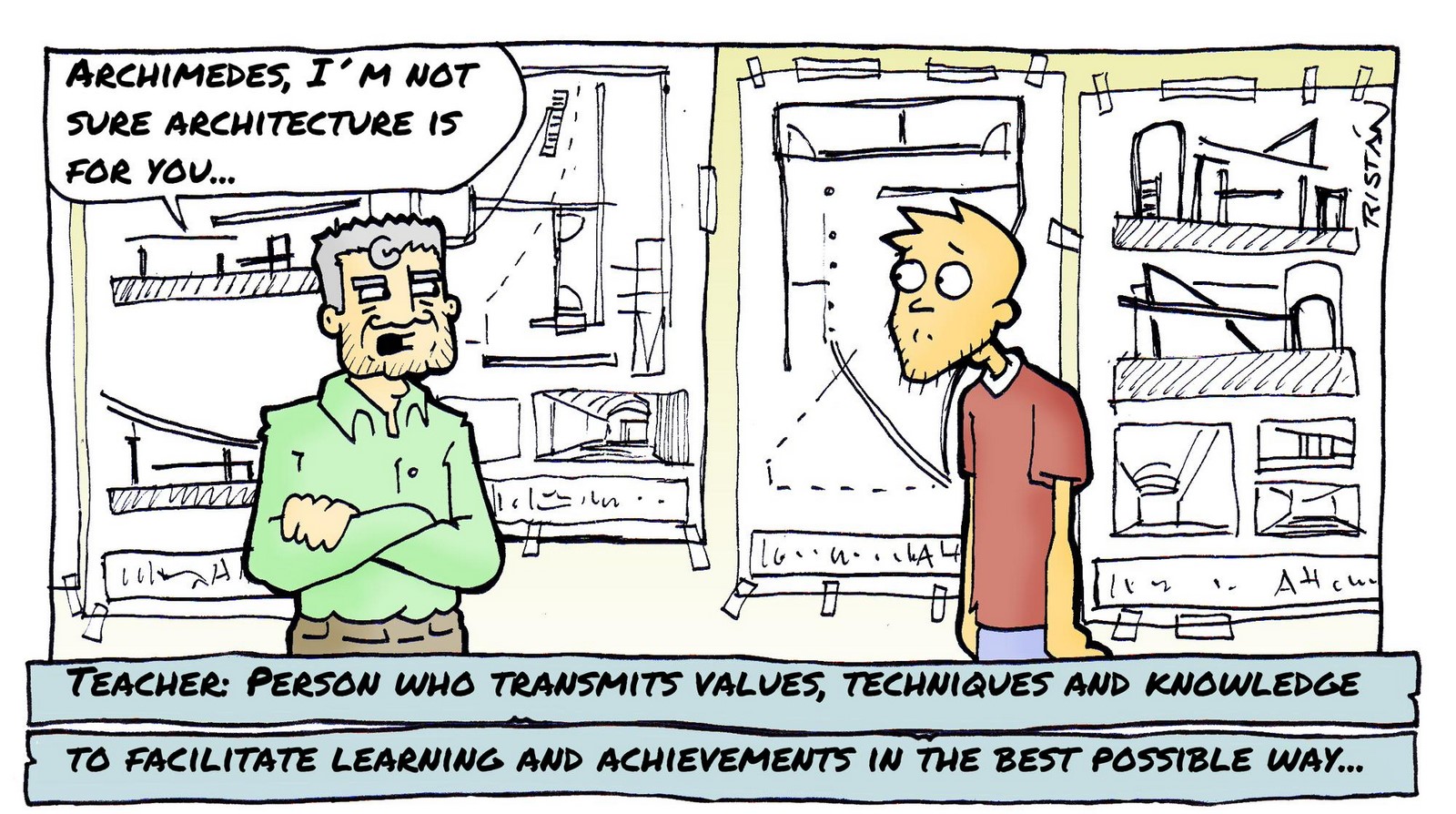
In the Indian education system, a student rarely finds a chance to look at one’s work critically. Criticism is mortifying and unwelcome. Neither does one learn to step back from his/her body of work and judge it, nor does he/she remain open to repeated reviewing and scrutiny.
However, the system in architecture school is very different. It helps inculcate a habit of being comfortable with analyzing one’s work with an unbiased eye. It does take a fair amount of soul-crushing juries, but eventually, the student learns to detach from a project and view it critically. Once you start to acknowledge that there are wide-ranging approaches to tackling a given design brief, you become more accepting of subjective opinions from your peers and teachers. A habit takes honing for years to perfect. Self-critiquing and learning to accept perspectives is the toughest to crack but the most rewarding, indeed.
Presentation vs. Process
Architecture is often misconstrued as visual art. The need for it however arises because if the architect is to help his/her client visualize their project, presentation is crucial. But one’s time in architecture school is not limited to perfecting the art of rendering visually appealing designs. The education entails meticulous planning, structural integrity, financial feasibility, and above all accurate readability of drawings for the benefit of construction contractors. All these important ingredients are then encapsulated in the final presentation for the jurors. To learn to strike a balance is essential. “Every line on the sheet has a meaning”, is an overused yet underrated sentence resounding in the corridors of architecture schools. Being an architect is a responsibility, to callously overlook the accuracy of design and use seductive visuals can prove dangerous beyond academic purview.

Peers over Pages
Peer learning is a concept that is truly observed in all its glory at architecture schools. The faculty unable to spend hours on each project leaves you to face the music on your own. That’s when you turn to your peers. The yearly ritual of being rounded up by your seniors to help with their thesis may look like child labor on the outset but proves to be the most important part of one’s learning process in college. Those late nights making parts of models, setting layouts for renders, drafting, and coloring trees, teaches you much more than what meets the eye. You become a part of stimulating collaborations over the years where relationships are fostered over the discussion about your projects and theirs. Peers don’t mark you, won’t judge you, and often give you insights from their personal experiences and learning. You find collaborators, guides, partners in the close quarters of your studio.
A workflow that’s your Own
A course meant to brew your creativity; does not allow you to play by the book. There are no rules about the right or wrong process in a subjective field like architecture. 5 years is a journey to hone your distinctive style. A journey to find your rhythm in the tide. A journey where you start to play by your strengths. From smaller details like calibrating schedule with the most productive time of the day to larger aspects of presentation style. You learn not to vie for unattainable standards. When one does find their unique process of work then it stands apart and doesn’t need the test of comparison anymore. You learn software out of your interest because your design calls for a specific form of representation. No more are you following the school syllabus where everyone is rot learning the same book. From design to execution is your expedition. That amount of creative freedom one seldom receives in a professional course, and you learn to use it to your advantage. You are the captain of your ship, in-charge of the sails, the crew and to steer in the face of stormy adversities.

Temple of Time
A building on a 30 x 40 site to be handed over to the client takes about 18 months at least from conception to completion. In architecture school, you have 16 weeks to see a project through and make your final submissions. You learn that time is very important in this course and profession, alike. To train to become an architect one must aspire to achieve targets within a stipulated time. The course teaches you to make quick and efficient decisions, to micromanage the design subjects, outsource redundant work, and balance other engagements. There is one slip up too many and you will be left grappling to stay in control of your work in the semester. Hence to respect the time is the most important of the learning that one takes away from college.

Education in architecture is beyond learning to configure spaces; it inculcates priceless life lessons in one’s being. One learns to apply architectural thinking in scopes beyond design and unlocks potential in varied fields from academia to entrepreneurship. All the skills above are most likely to be unintentionally attained during your time as a student but will be an asset of a lifetime.