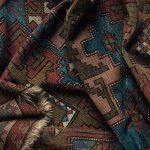
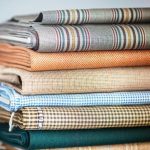
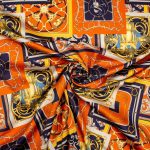
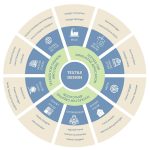
Nowadays, everyone aspires to beautify themselves. As a result, people view new trends as a challenge. Here, textile designs have been incorporated as a new component of fashion. Textile design is a fascinating field that combines creativity, art, and technological know-how to create one-of-a-kind fabrics. It involves the process of creating patterns, textures, and colour palettes for various textile products, including clothing, home décor items, and furniture. Textile designers employ a range of components, methods, and tools to transform ideas into useful and functional fabrics.

The basic goal of textile design is to create distinctive and enticing designs that enhance the visual appeal of materials while also taking their utility, durability, and marketability into account. Textile designers draw inspiration from a wide range of sources, such as culture, art, current trends, and even the natural world, while making their designs.

Basic Principles in Textile Design
To create and manufacture clothing worn by people and families all around the globe, designers must adhere to certain design principles. Each principle has a distinct role in producing beautiful clothing or ensembles. They provide guidelines on how to properly combine the five design elements to create consistently beautiful designs. The following are the top five guidelines for fashion design –
-

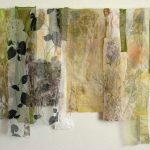
Variations in Textile Pattern_©manoramarajshree Balance
A composition’s capacity to integrate opposing forces and create visual stability. Balance refers to the textile’s overall stability with a suitable set-up of sections and details.
- Proportion
In art, proportion refers to the relative harmonious relationship between two or more compositional parts regarding their size, color, and number. Most of the time, the potion is only recognized when something is out of proportion.
- Emphasis
Usually, designers will contrast one area with other parts to make it stand out. The region could vary in terms of its size, color, texture, shape, etc.
- Rhythm
Repetition can be a fantastic technique for drawing the viewer’s attention to different parts of a design, but without diversity, repetition can soon grow monotonous. Variety is crucial because it makes things exciting and lively.
- Harmony
To avoid a disorganized or lifeless design, it’s important to strike a healthy balance between uniformity and variety. A sense of completion is created by the harmony that permeates every aspect of the artistic creation.

Disciplines in Textile Design
Printed Textile Designs
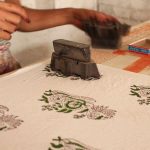
These are manufactured by using different printing techniques on fabric, cloth, and other media. Floral, geometric, global cultures, and conversational are the four main types.

Woven Textile Design
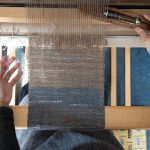
These come from the art of weaving, which involves weaving together, most frequently at right angles, two horizontal and vertical yarns to create fabric. A mechanized or computerized jacquard loom is now the most common confifuration of loom used to generate woven textile designs.

Mixed Media Textile Design
These are fabricated with embroidery or other contrasting methods of manipulating the cloth, such as quilting, appliqué, pleating, and laser cutting.

Textile Designers’ Materials
Designers of textiles use a variety of materials to realize their imaginative visions. The intended application, ideal aesthetics, functionality, and production methods all influence the material selection. Just a few examples of the materials used in textile design are listed below –
- Today, in textile design, natural fibers like cotton, linen, silk, wool, and hemp are frequently employed. With the aid of weaving, knitting, or other textile techniques, these fibers can be customized in terms of their textures, appearances, and other characteristics.
- Polyester, nylon, acrylic, and rayon are more frequent nowadays synthetic fibers used in textile design. These fibers are adaptable, strong, and frequently available in several hues and textures.
-

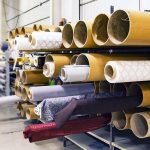
Assorted Thread on Rack_©Annie Spratt Ribbons, lace, braids, and sequins are used as decorative trims to adorn and enhance textile designs.
- Combining natural and synthetic fibers can create distinctive fabrics with improved qualities. For instance, a blend of cotton and polyester can combine the softness of cotton with the improved durability and wrinkle resistance of polyester.
- Bamboo, soy, maize, and milk protein fibers are examples of specialty fibers. They all have unique textures, the capacity to wick away moisture, and other desirable characteristics.
-

Clothing Fabrics_©Sewing.com Decorative elements, such as quilting stitches, appliqués, beads, sequins, embroidery threads, or quilting, give their designs depth and visual interest.
- Sustainable and ‘green’ Materials used in their designs include hemp, recycled polyester, organic cotton, and eco-friendly colors to reduce their opposite environmental effects.
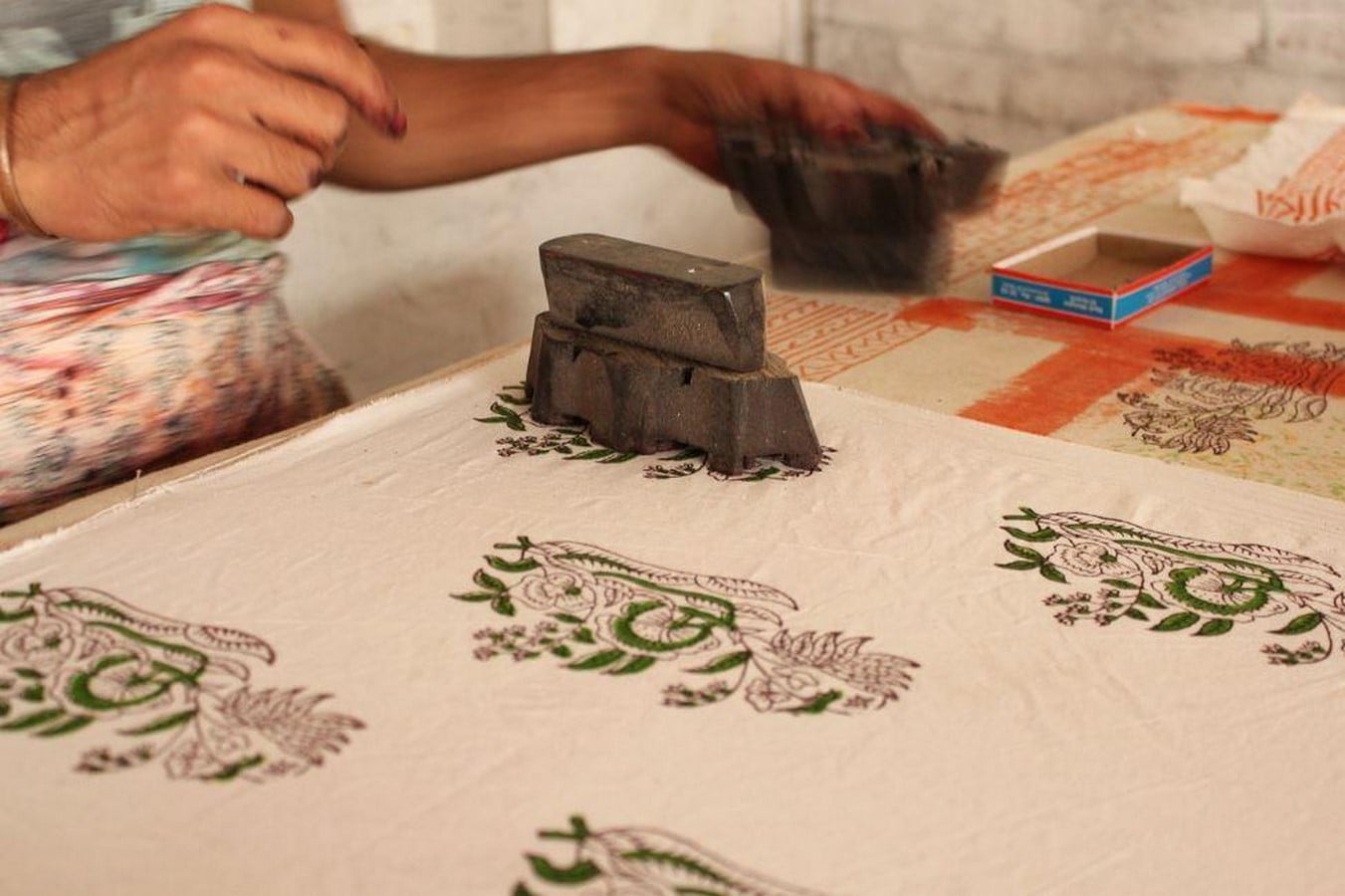
- Dyes and Prints – Techniques like batik, screen printing, block printing, digital printing, tie-dyeing, and block printing are frequently used to apply pigments, reactive dyes, acid dyes, and other colorants.
Textile Designers’ Tools & Equipment
Generally speaking, the term “textile design” describes the process of creating designs for woven, knitted, printed, or surface-adorned fabrics. It changes the appearance of materials like clothing. Textile designers frequently make use of a variety of tools to create their designs. Additionally, they use digital tools like Photoshop to create and edit textile designs.
- Early design concepts are developed using drawing tools like pencils, pens, markers, and charcoal to explore motifs, create patterns, and generate patterns. Drawing tablets and digital pens can also be used for digital sketching and illustration.
- Color Tools such as color wheels, color swatch books, Pantone color guides, and color-mixing instruments aid designers in making precise color selections and combinations. For accurate color matching and analysis, spectrophotometers and color-matching software may also be employed.
-

Tools and Equipment used in Designing of a Textile_©Adobestock - A variety of printing techniques, including screen printing, block printing, and stencil printing, can be carried out using printmaking tools like screen printing frames, squeegees, printing screens, printing inks, brayers, blocks, and carving tools.
- Tools for weaving, knitting, and sewing prototypes include looms, knitting needles, crochet hooks, sewing machines, yarn winders, shuttles, warp boards, and warping mills.
-

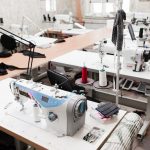
Sewing Machine and Tailoring Tools_©Sewing.com - Photography gear, including digital cameras, tripods, lighting fixtures, and photo-editing software, to capture and enhance photos of their textiles.
- Fabric cutters, measuring tapes, cutting mats, pattern-making tools, and sewing supplies are examples of tools for sampling and prototyping. Physical textile samples are employed to assess the drapes, weight, textures, and other characteristics of fabrics.
- One of the most recent technological developments that has an impact on this industry is computer-aided design (CAD) for textile design, along with shape-memory software and 3D printing for textile design.
-

Digital Desiging of Textile through Softwares_©textilesfrauperezsl -
Various career possibilities for textile design
- The evolution of textiles, from fiber to fabric, is crucial to the fashion industry’s success. The main textile courses include woven, print design, embroidery, and surface embellishment, which together give students a thorough and adaptable education. Students have many opportunities to experiment, create, and innovate with materials in textile design. In addition to incorporating the creative powers of design with textile technology, the program also takes into account the historical, social, and cultural settings in which contemporary designers operate. Additionally, there is a focus on learning specialized software so that you can experiment with digital and non-traditional approaches to design, fabric structures, and surfaces. Students who complete the program are prepared for a variety of employment opportunities in the textile and apparel industries.

References:
Tutorials, O. (2022) Basic tools, equipment & support materials used in Textiles Design, omemy. Available at: https://www.omemy.com/post/basic-tools-equipment-support-materials-used-in-textiles-craft (Accessed: 26 June 2023).
Author links open overlay panelJacquie Wilson (2014) The principles and elements of Textile Design, Handbook of Textile Design. Available at: https://www.sciencedirect.com/science/article/abs/pii/B9781855735736500096 (Accessed: 27 June 2023).
(No date) Principles of design – utah state university. Available at: https://digitalcommons.usu.edu/cgi/viewcontent.cgi?article=2522&context=extension_curall (Accessed: 27 June 2023).
Scitechnol.com (no date) About textile materials, Textile Materials | List of High Impact Articles | Ppts | Journals | Videos. Available at: https://www.scitechnol.com/scholarly/textile-materials-journals-articles-ppts-list.php (Accessed: 28 June 2023).