Architecture college is a world in itself. To the outsider’s eye, it appears to be a lustrous place that often reflects the happening life of architects as well as students. However, only the person embarking on this toilsome journey can agree that it’s not a walk in the park. Survival is possible only if you keep up with the fast-pace. There are umpteen things that you have to learn through the years to get a holistic approach to the subject and absolutely no shortcuts. Missing out on even a few skill sets would only hold you back. Evolution happens with time as the newcomer learns and grows along the way.
First-year merely provides a small glimpse of what is in store. It arms us with the basics and oils our brain to think in a critical way. The creative exercises conducted in the early semesters generally make students question their purpose. It is only later that we realize how it helped in developing the design thinking along with making us see things with an artist’s perspective. The fundamental work of an architect is solving problems to enrich the living experiences of people around them. Designing a user-friendly space requires us to look at a hundred different factors to get the best possible solution. Many parameters involved affect the initial artistic design in various ways. The natural environment is a gigantic building block to incorporate into the process.
The first semester also aids in polishing the hand drafting as well as rendering skills that are the indispensable tools to bring our imagination and creative thought process to life. Everyone in this field has gone through the good old days of hand drafting. The building construction drawings were drafted using t-scales and set squares used to look tedious. Learning about the history of architecture and the movements that shaped our present helps in a greater understanding. Reading and comprehension of the famous works of architects and how design is always evolving is a crucial aspect. They give an astute insight into the pragmatic thought processes governing the design.
Talking about the design process, there are so many skills needed to have a smooth workflow. It begins with studying the site and space requirements and looking into case studies. Researching is a handy tool to keep up with the new advancements. After developing the concept and design philosophy, begins a lengthy process. Whether it be the drafting of plans, modeling, and rendering or the finalization of sheets, learning software is a must. Model making is another skill needed for the visual presentation that students become proficient in from the early days.
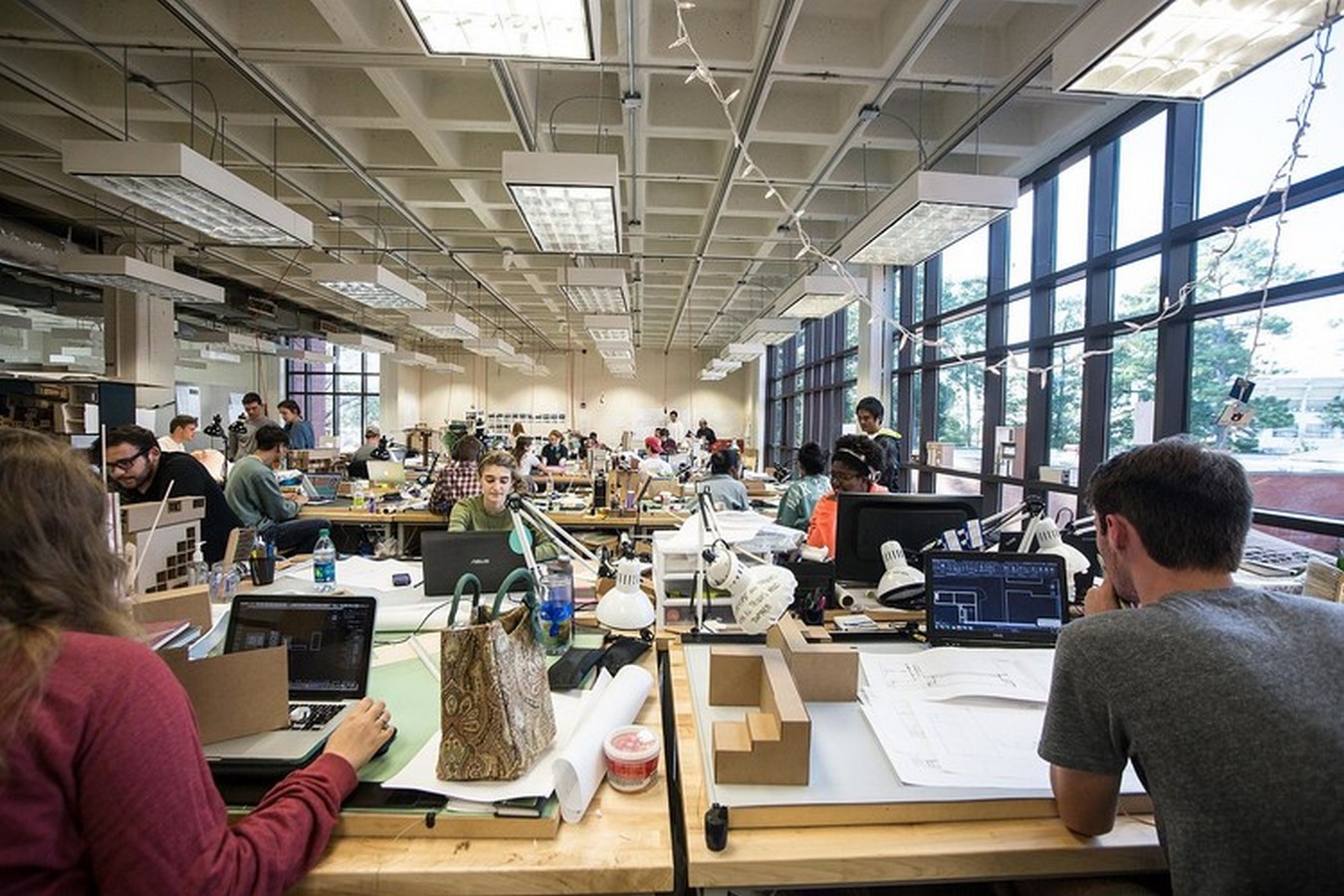
The primary thing that strikes me when thinking about non-technical skills is time-management. It is a significant skill that not only equips you for college but also your life ahead. The work-life balance is something that most of the professionals struggle to maintain. In architecture college, your plate is always full of several activities. Without managing time, it tends to get grueling to juggle equally between all areas. Therefore, starting from the first year, after a lot of struggle, you slide into prioritizing pretty well. Adhering to deadlines has always been part of the process. Apart from these, we get accustomed to working for long hours without rest thus helping us adapt to the taxing work environment comfortably.
Teamwork is another lesson learnt in architecture college. The architectural practice involves working as a cohesive force towards problem-solving. Without synchronization between the team, a balanced work environment is not possible. Learning to step up in perplexing situations or dealing smoothly with people despite the hardships is instrumental in teaching us the importance of teamwork.
Another skill of value is the interpersonal skill. If we can’t explain our thought process to a group of people, however much the potential it holds, all the efforts could go to vain. Communication is the key in all places. You should know how to defend your design before a group of panelists. In five years, there are countless events like juries, seminars, workshops, and competitions that help in giving us the confidence to speak. It immensely improves our public oratory skills that form an elementary part of the practice. Many times architects have to interact with people from various fields therefore having the know-how to interact effortlessly is a prerequisite.
These are just a few of the many lessons that architecture college teaches us. Since the first year, a student is subjected to criticism and asked to reanalyze his designs multiple times. It is easy to get disheartened. Eventually, you learn to keep an open mind and take the feedback constructively. Throughout the college years, with so many experiences, a student also learns in which area his true potential lies. By and by, you find your niche in this colossal discipline. Each semester is a large-scale leap from the previous one. By the end, you have jumped through numerous hurdles that you march prepared into the outside world, with a badge of versatility.