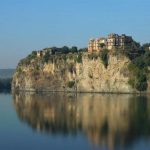
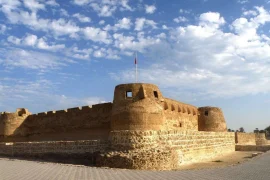
Situated 235 kilometres north-east of Udaipur and 50 kilometres south of Kota, Bhinsorgarh Fort is a central place that is a visual testament to Rajasthan’s rich cultural heritage. Reviving the life of Rajputs and their day-to-day culture in the bygone era, this fort can be argued to have been designed keeping the socio-political and cultural factors of the past. Located on a 200-foot steep ridge, Bhinsorgarh Fort offers a serene landscape overlooking the Chambal and Brahmani rivers. Subsequently, it creates an intangible oasis within the majestic experience, surrounded by rivers, hills, and a fort with around 5000 occupants. The wildlife sanctuary, situated around the fort, further enhances the cultural rootedness of the built and existing environment. A clear division of a luxury heritage hotel, which opened in 2007, by the royal family, and the other end is dedicated to the royal lineage residence. It features five tanks and pilgrimage spaces dedicated to Devi Bhim Chauri, Shiva, and Ganesh, and a palace available for rent. However, as of today, the fort is specifically utilised for great photography spots for nature and history enthusiasts (Mindtrip, 2025). Mesmerised by the architectural phenomenon, British historian Colonel James Todd stated that if there was a possibility of anyone offering him a ‘jagir’ (estate) in Rajasthan and he had an option to choose, he would choose Bhinsorgarh. Therefore, the Bhinsorgarh Fort is also called the ‘Scotland of Rajasthan’! (Indiatour.ind.in, 2025).
History Etched Within Stones
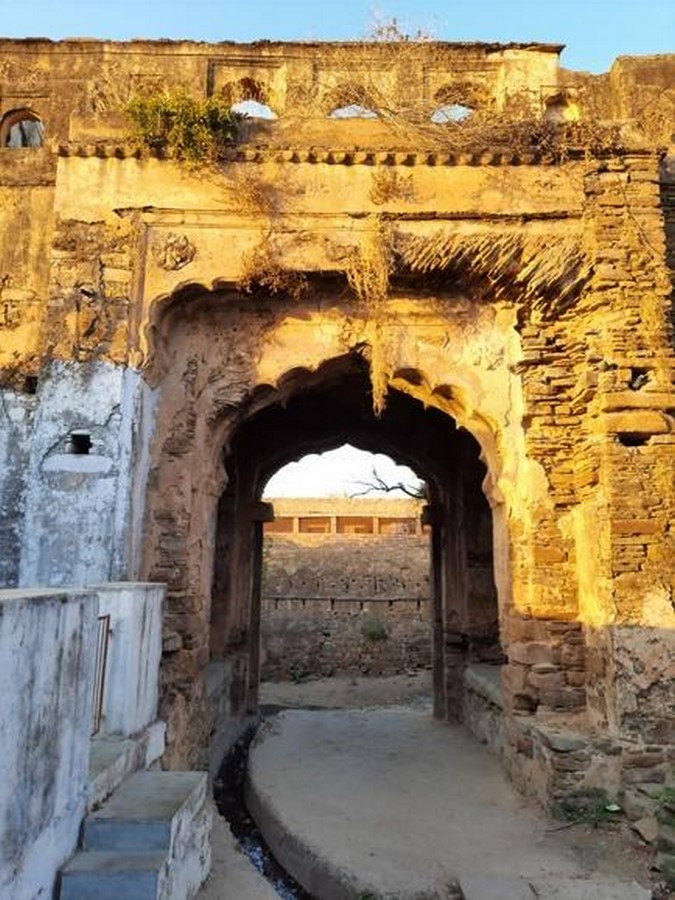
The story behind the creation of Bhinsorgarh Fort dates back to the 2nd century BC. Based on the ubiquitous belief among the community, the fort was built by Rawat Lal Singh-II, who was rewarded with a ‘jagir’ (estate) from the king of Maharana, Maharana Jagat Singh II, in 1741 AD. This was because of destroying the enemy of Maharana. Nevertheless, the fort, initially designed as an outpost, circulated among the various rulers before ending up in Mewar’s Kingdom in 1764 AD. Consequently, during this period, Alaudin Khilji allegedly might have colonised and destroyed the temples and connecting remains associated with the history of the fort ( Explore the Bhainsrorgarh Fort near Chittorgarh, n.d.). Thus, the current structures are a later construction. Nevertheless, it can be argued that Khilji underestimated the historical and cultural value of the fort because the revival of the fort occurred due to the natural vulnerability. Specifically, the geographical proximity of the Rajput clans such as Parmaras, Dodias, and Choondawats until it came to Hadas. This led to the perpetual influence of Mewar in the fort.
Another interpretation of the fulcrum of this historical creation, stated by the chronicler Colonel James Todd, mentions the Bhinsorgarh Fort being built by Baniya merchant ‘Bhainsa Sah’ and trader ‘Rora Charan’. This was indicated as a protection from raiding bandits. Therefore, the derivation of the names ‘Bhainsa’ and ‘Rora’. Additionally, the first chapter of Bhinsorgarh’s book was written by the gentleman (Kumar, 2010). Peculiarly, through their innate strategic sense, they commanded the position in the fort centuries after the builders had passed on.
Chambel as a Sentinel?
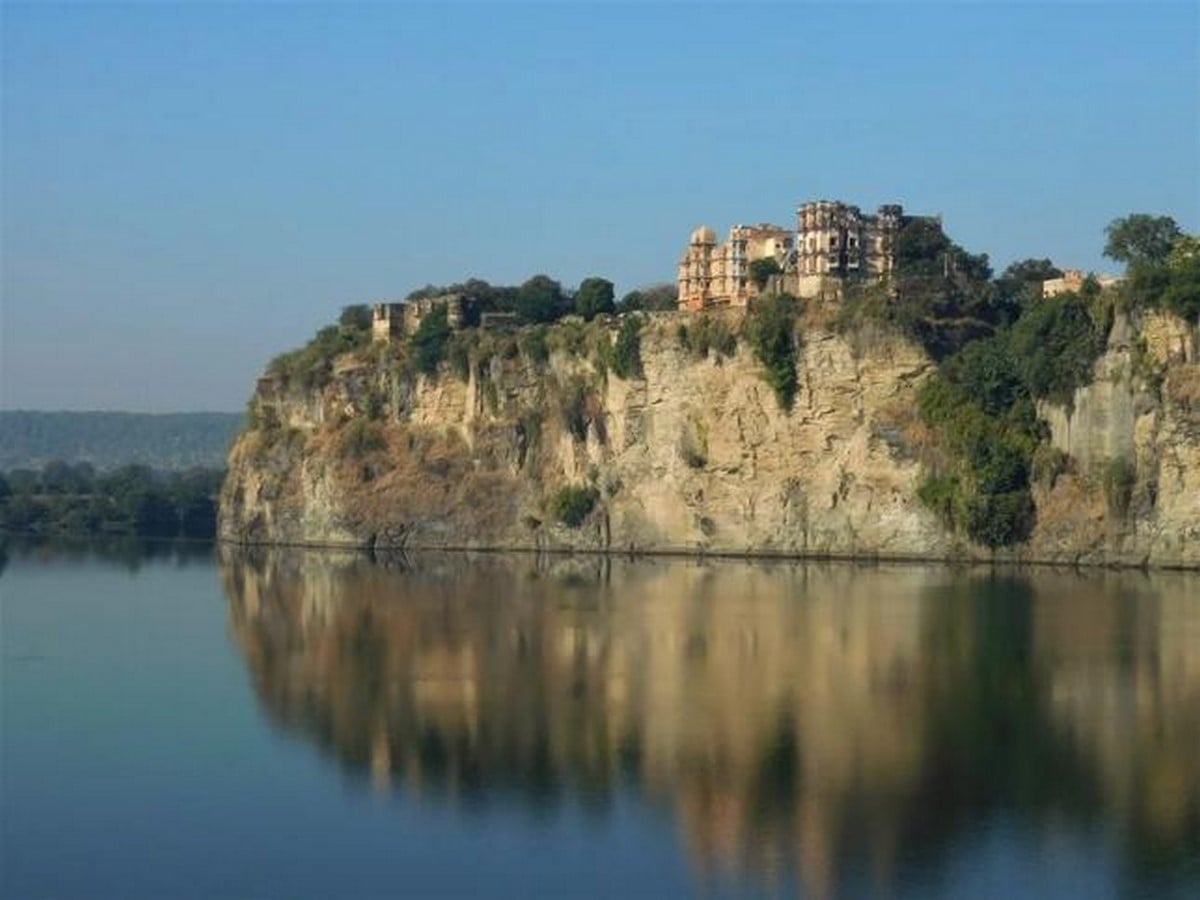
The depth of the Chambel river can be endeavoured beyond the literal meaning. Metaphorically, the river played a pivotal part in safeguarding the sanctity of the fort during battle times. The fort on one side was susceptible to the invaders’ access to the fort through an open area. The land tilted by 400 yards in a gentle curve; this area is now built as part of the village. One of the key moments includes when Shakti Singh, who was the brother of Maharana Prathap, invaded the Bhinsorgarh residences following the Haldighati battle. Consequently, this led to his death in the fort, and to date, his cenotaph lies on the banks of the river. The positioning of the fort overlooking the Chambel river was once looked up as a threat to the opposing forces. The structure was intended as a fortified outpost built against the river line to safeguard against invasions. Nevertheless, the access to the fort through the curved walls gave the garrison perpetual fright.
As opposed to the modern day, now the site is predominantly considered a heritage tourism spot with a cultural palimpsest of battlefield history and the cultural community of the Rajputs. The hilly curve now allows visitors to drive to the fort; however, the space has been acquired by the villagers, hence the continuous row houses deteriorate the vehicular passage.
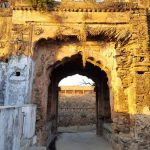
The alleyways that lead up to the fort are then followed by the common courtyard. The inner complex surrounded by the outer walls of the old fort is accessible through two gateways. The entire royal residences and heritage hotel are now surrounded by the green countryside around and the Chambel river flowing seamlessly below. The rocky path down the cliff leads to the clearing of the banks of the stream by the fort’s side. This secluded part of the fort has historical relevance in terms of cenotaphs being almost stacked. One example includes an idol of Lord Ganesh, with a saffron tone that juxtaposes with the background of grey and green. The trees around metaphorically form a canopy to protect these lost souls. Therefore, it can be perceived that visitors experience timelessness in the 21st century (Kumar, 2010). Moreso, the Chambel river continues to serve as a sentinel in preserving the rich heritage of the fort.
References:
- Explore the Bhainsrorgarh Fort near Chittorgarh (no date) Incredible India. Available at: https://www.incredibleindia.gov.in/en/rajasthan/chittorgarh/bhainsrorgarh-fort.
- Indiatour.ind.in. (2025). Available at: https://indiatour.ind.in/explore-details/bhainsrorgarh_fort.
- Kumar, A. (2010). Chambal’s sentinel: Explore Bhainsrorgarh fort. [online] The Economic Times. Available at: https://economictimes.indiatimes.com/magazines/travel/chambals-sentinel-explore-bhainsrorgarh-fort/articleshow/5748983.cms?from=mdr.
- Mindtrip. (2025). mindtrip_© https://mindtrip.ai/attraction/rawatbhata-rajasthan/bhainsrorgarh-fort/at-WHpjrluK.