Added in 2019 to UNESCO’s World Heritage List, the Historic Centre of Sheki with the Khan’s Palace, holds a cultural, social, economic, and historical significance to Azerbaijan. The historical site takes place at the foot of the Greater Caucasus Mountains and is divided in two by the Gurjana River. Currently, the historical centre has a population of 15,000 people, while the entire city is home to 68,300 inhabitants.

The city holds strong roots in its traditions and old history with a cultural fusion including Safavid, Qadjar, and Russian occupation. Sheki tourism attracts tourists for its outstanding architecture, red brick roofs, and attractive ecotourism with its mountains, river, climate, clean air, and forests.
Its main building is considered the Khan’s Palace, built in 1797 during the Mammad Hasan Khan reign, the palace complex consists of the Khan residence, stables, bars, and other service buildings. The major characteristic is its intricate artistic decoration, including paintings, stalactites niche ornaments, and ceilings adorned with floral patterns, which reflect the luxurious and sophisticated tastes of the era.

Outstanding Universal Value
The historical centre is characterised by its traditional architecture reflecting Safavid, Qadjar, and Russian building traditions due to occupation and trade throughout its history. Some of the main characteristics are the saddle roofs, deep verandas, and stunning gardens. A mix of cultures also influenced the site throughout its history, where Christianity was introduced in the 1st century CE and Islam in the 7th century, additionally, in the 19th century, Russia ruled Sheki. This cultural mosaic supported the architectural aesthetic of Khan’s Palace and extended to many interiors of wealthy merchant houses in fireplaces (bukhras), decorations, and a vernacular type of window (shabaka).
The site also represents an important trading centre, being in contact with Asia and Europe and part of the Silk Road route principal economy of Sheki. The silkworms’ breeding, the trading of cocoons and raw silk, and the development of various crafts were Sheki’s main economy since the early days since the local climate conditions favoured these activities. That also resulted in specific characteristics of the architecture present in the country, such as high-pitched roofs for breeding the silkworms in the airy spacious attics. The economic success of the trade of silk products offered, enabled the construction of new caravanserais, shops, public fountains, mosques, public baths, and storage buildings, all of that in a short period of time after 1772.

As a great and comfortable complement to the houses, the gardens, partly composed of mulberry trees, were used to support the silkworms and their processing, feeding, and breeding. They were resulting in a ‘garden city’ aesthetic, developing a functional and utilitarian character.
Another strong characteristic is the water harvesting and management, as the city is in the catchment of the Kish River, and drained by streams that have been intercepted and transformed into a network of channels, to complement, it is added the waters from mountain glaciers and meteoric glaciers. Offering a diversified hydraulic network, separating the fresh and less potable water according to the origins: spring, rainwater, and torrent. The water management supports houses and productive gardens, structuring the urban plot and the division into neighbouring areas.
Criteria
To be selected as part of the World Heritage List, sites must meet some of the defined criteria and represent an outstanding universal value. The criteria are regularly revised by the selected committee and should reflect the evolution of the World Heritage concept itself.

As the first criterion, the Historic Center of Sheki with the Khan’s Palace represents a unique and exceptional testimony to a cultural tradition or civilization’s wish of living. As an example of the solid cultural and commercial centre in the region, the historic site represents an important interchange of multicultural influences, with origins in over millennia, and mostly developed under the Safavid, Ottoman, and Qajar influences, and the later influence of Russian rule. Later with its outstanding influence, it impacted a wider territory of Caucasus and beyond.
The urban form, designed back after the flood in 1772, maintained the earlier building traditions and also responded to the local climatic conditions, and the requirements of the traditional economy and crafts activities. Additionally, some of the architectural elements respond to the Russian influence, reflected in the balconies, doors, arches, and fences.
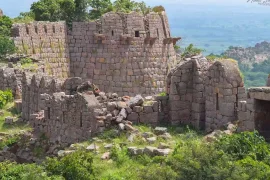
The Sheki historical site also has influence from the feudal system of the Caucasian khanates, which developed from 1743 to 1819, that can be represented by the Khan’s palace architecture, the interior of wealthy merchant houses, and the fortifications.
The second criterion aligns with the environment, which represents a traditional human settlement, land use, or sea use, representing the human interaction with the environment, considering the ‘garden city’ plan developed in the historical site, the hydraulic water system for driving mills, and irrigation, productive structures related to sericulture and the peculiar organisation of the houses aligned to their cultivated fields, all reflects in the landscape background present the in the city.
Shebeke Mosaic Window
Another exceptional attribute that creates the local aesthetic is the Mosaic windows named Shebeke, this art originated in the 18th century when traders exchanged spices for Murano glass from Italy. The technique consists of pieces of glass fitted in wood frames made of chestnuts or walnut wood without the need for nails or glue. It was a result of a technological restriction as craftsmen did not know how to make larger pieces of glass. Mainly the colours used are bright, creating outstanding reflections on the interiors, greens, reds, blues, and yellows are the choice.

Inside the Sheki Khan Palace found sixteen types of patterns, including different geometric shapes, and biomorphic rhomb-shaped motifs, and includes delicate and small details. It is one of the features that traditional Islamic architecture has in order to help people feel comfortable inside the building despite the temperature outside. (Allin, 2014)
In conclusion, the Historic Center of Sheki with the Khan’s Palace represents a testament to the region’s historical significance and cultural heritage. Its cultural mosaic reflects in the architectural styles and its role in the Silk Road trade makes it a priceless resource to both Azerbaijan and the world. The addition to the UNESCO World Heritage List in 2019 proves the global importance the historical site promotes, not only for its architectural beauty but also for its cultural, social, and economic contributions.
The Historic Centre of Sheki represents a living example of a cultural tradition that has thrived through various historical periods, making it an important site for both local and international visitors. The Sheki Khan Palace, with its stunning mosaic windows and unique decorations, embodies the artistic and technological abilities of its times and continues to inspire admiration and scholarly interest.
In the end, the Historic Centre of Sheki with the Khan’s Palace is not only a cultural and historical treasure of Azerbaijan for its outstanding universal value but also represents the legacy of human creativity and resilience.
References:
Aghabayli , A. (2016) Geometric Patterns In Islamic decoration- A Parametric Envision of Portuguese and Azerbaijan. dissertation.
Historic Centre of Sheki with the khan’s palace, azerbaijan – google arts & culture (no date) Google. Available at: https://artsandculture.google.com/story/historic-centre-of-sheki-with-the-khan%E2%80%99s-palace-azerbaijan/WAVx5cfV3sANIQ (Accessed: 03 July 2024).
UNESCO World Heritage (no date) Historic Centre of Sheki with the Khan’s palace, UNESCO World Heritage Centre. Available at: https://whc.unesco.org/en/list/1549/ (Accessed: 03 July 2024).