The Rise of Parametric Architecture
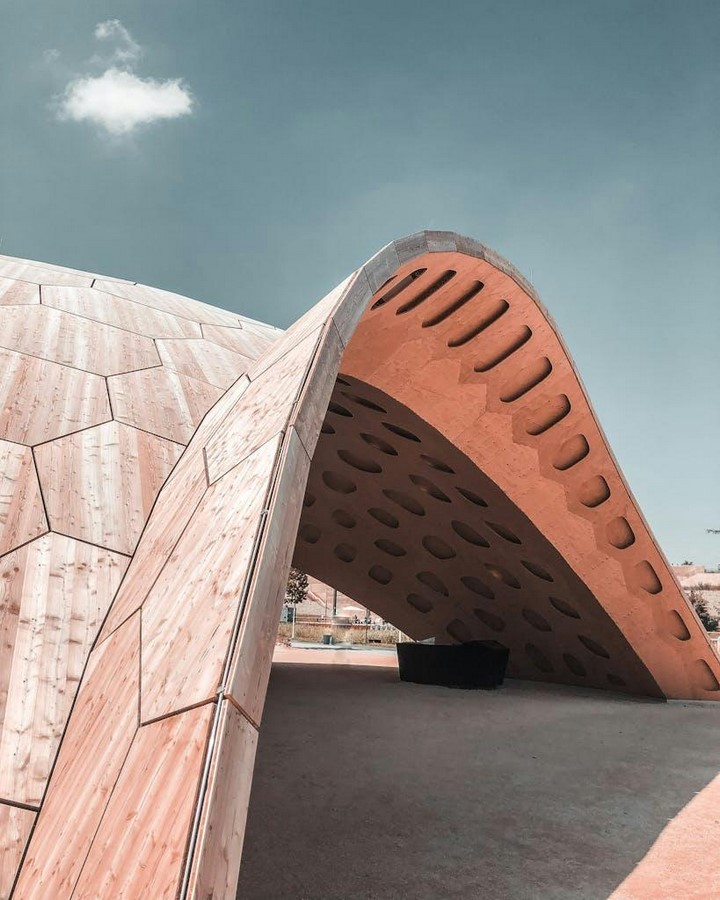
The evolution of architecture has always been alongside technological advancements, from drafting tables of the Renaissance to the digital modelling software of the 21st century. One of the most remarkable developments in recent years has been the integration of digital tools into architectural projects. Parametric is more than just aesthetic choice, It is a design philosophy integrating computational thinking, automation and optimization to generate structures that respond to environmental conditions, user needs and material efficiency. Software such as Grasshopper for Rhino, Autodesk Dynamo and AI-assisted generative design tools have allowed architects to push boundaries.
Parametric architecture is a design approach that uses algorithms to define relationships between various elements of a structure, merging mathematical precisions with artistic creativity. By using computational algorithms, architects can generate complex forms that were once impossible to create. This article will explore future trends shaping parametric architecture including advancements in AI-driven design, digital fabrication, climate-responsive structures and urban improvements.
Technological Advancements in Parametric Design
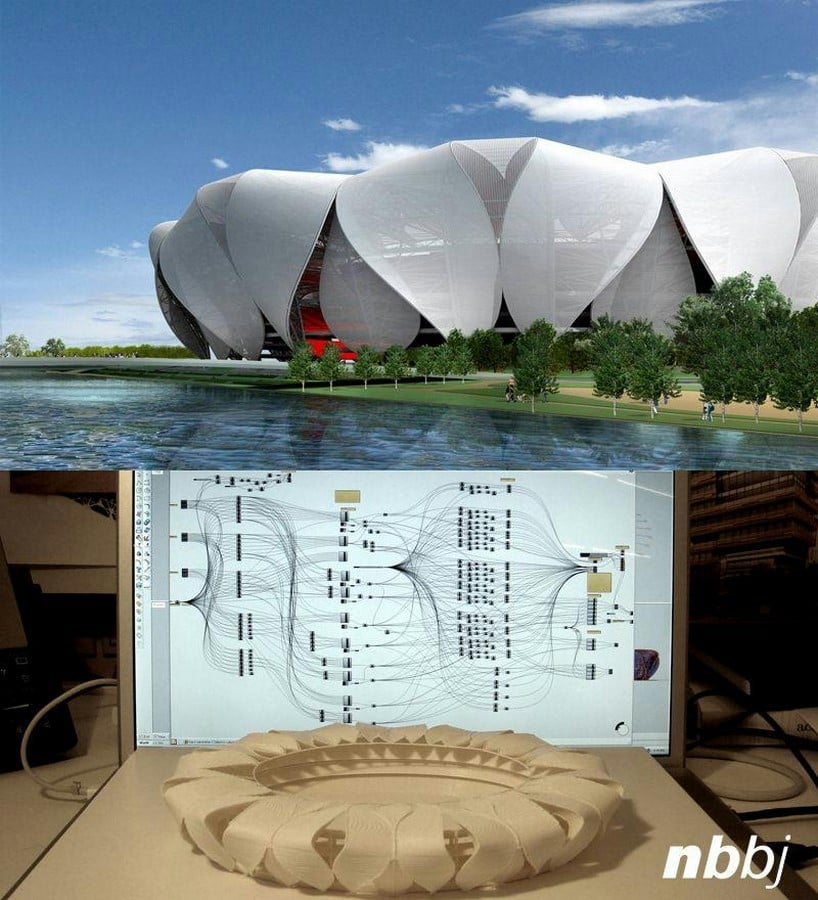
The use of parametric design in architecture has increased rapidly in the past few years. These tools have made a physical change to buildings, as modern tools such as Rhino and Grasshopper make parametric design possible. This technology enables designers to work with a large number of possibilities and to create new forms. Scripting and BIM are only the beginning of a more fundamental change, and today’s parametric metaphors are just the tip of the iceberg. Parametric design is the process of coding the human reason. Nevertheless, parametric design is still a manual, labour-intensive, and rather slow process. These systems are based on the setting of a large number of rules.
The use of artificial intelligence and generative design is one of the most significant innovations in parametric architecture now. Some examples of AI-enabled tools include Autodesk Dreamcatcher and NVIDIA’s generative algorithms which enable architects to specify design criteria and get thousands of potentially efficient design solutions in seconds. The development of parametric architecture is closely related to the development of digital fabrication, robotic construction, and 3D printing. These technologies enable the smooth transformation of digital models into real structures, decreasing waste and increasing the effectiveness of materials.
Applications in Urban Planning and Sustainability
The future of urban planning is algorithmic and data-driven. Real-time data on traffic flow, pedestrian movement, energy consumption and environmental conditions can be processed by parametric models to optimize city layouts. In addition, through the use of parametric tools, urban planners will be able to design self-optimizing cities that will adapt dynamically to population growth, climate variations and transportation demands, thus achieving the vision of smart sustainable cities.
Parametric architecture is also driving forward advancements in biomimetic design, where structures are made to mimic natural forms in order to optimize material usage and structural strength. Using the principles of biomimicry both in material choice and system design, architects can minimize resource consumption, increase the longevity of the structures, and design cities that can support themselves through recycling and energy generation, thus leading to the creation of sustainable ecosystems within the urban landscape. While climate change poses a significant challenge to the built environment, parametric architecture is increasingly focused on adaptive and climate-responsive designs.
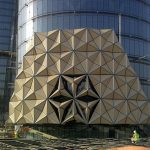
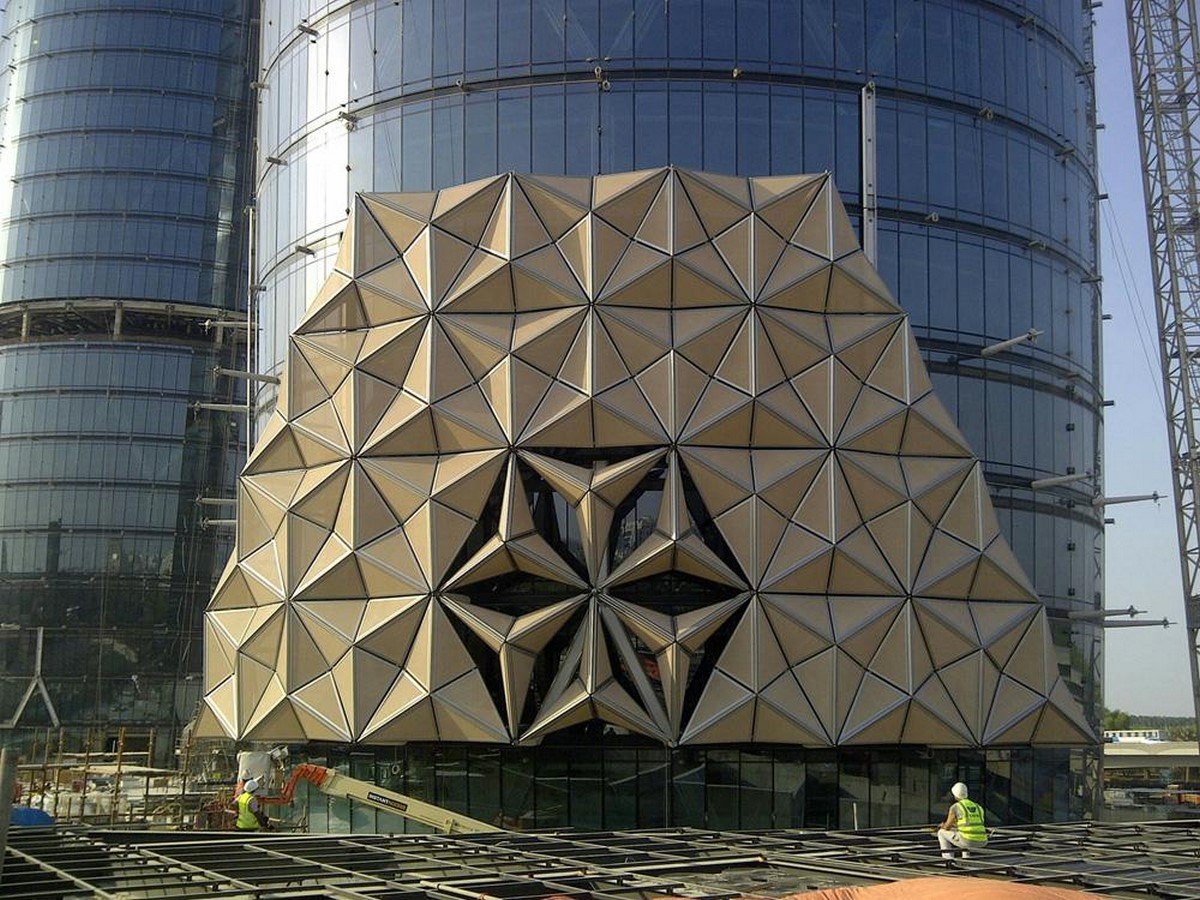
One of the most remarkable examples is the Al Bahr Towers in Abu Dhabi, featuring a parametric kinetic façade that adjusts to sunlight exposure, reducing heat gain and lowering energy consumption by 50%.
Challenges and Considerations
On the one hand, parametric design is widely known for computational thinking and automation. On the other hand, one can note the number of obstacles which need to be resolved to sustain the growth of moral, accessible, and long-term adoption. In the evolution of architecture and building practices, very soon all architects will need to know how to code, algorithmic scripting and computational thinking as it plays a significant part in working with parametric software. This is because the adoption of these techniques is hard due to architectural students being trained in manual drafting in the traditional way of doing things over computational techniques. In turn, both academic institutions and design firms have to include new technologies in architecture programs to give the coming architects the necessary skills. Properties and resources are the main concern since parametric modelling requires high-performance computing resources, which makes it both the most resource-intensive and expensive. Complex parametric modeling often requires high financial outlays in the way of software, hardware, cloud-based rendering, etc. to earn each profit which is not an option for smaller businesses and individual practitioners to enjoy.
As parametric design increasingly relies on algorithms, the question of human intervention in that area is at the centre of the field. Supporters of the opposing point of view argue that abstaining from fully automated production enhances imagination and will-to-power in the buildings’ makers. Moreover, the moral aspects like digital production using the confidentiality of data, as a criterion, biased judgments made by AI, and the carbon footprint of this media in the manufacturing process, are in agreement with the ethical and sustainable operation of parametric design.
Future of Parametric Architecture
In the future, parametric architecture will be easily accessible, sustainable and interdisciplinary. Thanks to AI-driven no-code and user-friendly parametric tools that will be popular soon, even architects, who have coding knowledge of a minimal level will be able to apply computational design more efficiently.
Prospective parametric practices will be in real-time AI optimizations alongside robotic fabrication and automated construction protocols. That being said, the labour costs will decrease and construction waste will be the result of efficient outcomes. Today we are in a world where AI-designed models enable consumers to personalize spaces and buildings such as homes, offices, and public spaces that adapt to the user’s preferences and environmental factors.

The Parametric Future is Here
Parametric architecture is a change of paradigm in the approach to design, construction, and enjoyment of built environments. The new landscape for avant-garde modelling, energy efficiency, and resource efficiency in construction will be marked by the AI, digital fabrication, biomimicry, and sustainability integration that architects have initiated.
The future of architecture is moving toward more responsive, data-driven, and sustainable designs; thus, the use of parametric design will be one of the driving mechanisms that will be shaping the future skyline to a point where it will not be easy to decipher from technology, nature or human creativity.
Books:
Spiegelhalter, T., Andia, A. (2015). Post-Parametric Automation in Design and Construction. United States of America. Artech House
Bullivant, L. (2006). Responsive Environments: Architecture, Art and Design. New York. V&A Publications
Articles:
Mona, M. (2025). The Rise of Parametric Architecture: Transforming Design Through Algorithms. Injarch. (Online Article) Available at: The Rise of Parametric Architecture: Transforming Design Through Algorithms Accessed on: [19/02/2025]
Illustrach Team. (2025). Parametric Design: Shaping the Future of Architecture. Illustrach.com (Online Article) Available at: Parametric Design: Shaping the Future of Architecture | illustrarch
Accessed on: [19/02/2025]
Ko. J., Ajibefun. J., Yan, W. (2023). Experiments on Generative AI- Powered Parametric Modeling and BIM for Architectural Design. Cornell University. (Published Paper) Available at: [2308.00227] Experiments on Generative AI-Powered Parametric Modeling and BIM for Architectural Design Accessed on: [19/02/2025]
Wikipedia. (2025) Parametric Design. Available at: Parametric design – Wikipedia Accessed on: [20/02/2025]
Images:
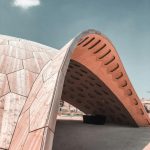
Image 1- Injarch. (2025) The Rise of Parametric Architecture: Transforming Design Through Algorithms. (Image) Available at: The Rise of Parametric Architecture: Transforming Design Through Algorithms Accessde on: [19/02/2025]
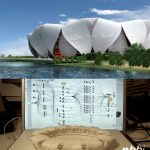
Image 2_ Rhino3D. (n.d.). Hangzhou Stadium Designed Using Rhino3D. [Photograph]. Retrieved from https://www.rhino3d.com/images/aec-nbbj-hangzhou.jpg Accessed on: [19/02/2025]
Image 3- Archi scene. (2012). Al Bahar Tower by Aedas (Image) Available at: Al Bahar Towers by Aedas
Accessed on: [20/02/2025]
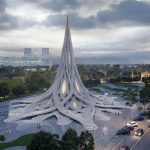
Image 4- Nuru Karim. Parametric Design by Nudes Architecture.(Image) Available at: aerial+night+view.jpg | Home Accessed on [20/02/2025]