Welcome to another enlightening edition of Future Talks by RTF – a platform where we engage in conversations with the visionaries shaping the realm of design. Today, we are honored to have in our midst an extraordinary architect and educator, Ursula Emery McClure, whose illustrious career has left an indelible mark on the field of architecture.
Ursula’s journey is a testament to her unwavering commitment to architectural excellence and innovation. A founding partner of emerymcclure architecture, Ursula has not only contributed significantly to the profession but has also nurtured the minds of future architects during her tenure as a Professor in the School of Architecture at LSU. Her diverse educational background, with a major in architecture and a minor in History from Washington University in St. Louis, coupled with a master’s degree from Columbia University, NYC, showcases a rich tapestry of knowledge that informs her design philosophy.
Having honed her skills in the bustling architectural scene of New York, working with prominent firms like Wendy Evans Joseph and Mitchell Giurgola Architects, Ursula’s expertise extends beyond the traditional realms of architecture. Her commitment to addressing pressing global challenges is exemplified through her research practice, which focuses on climate resiliency and adaptive preservation. In recognition of her outstanding contributions, Ursula was rightfully selected as one of ArchDaily’s Most Innovative Practitioners in 2018 and, in 2022, was elevated to the esteemed position of Fellow in the AIA.
In the year 2020, Ursula embarked on a journey as the Ralph Hawkins Visiting Professor of Architecture at the University of Texas at Arlington, adding another chapter to her legacy. Now, as we enter the year 2023, Ursula has accepted a faculty position at K-State, where she will continue to shape the minds of aspiring architects. Her interdisciplinary approach, spanning the G.E. Johnson Department of Architectural Engineering and Construction Science and the Staley School of Leadership, reflects a holistic vision that transcends traditional boundaries.
As we delve into today’s conversation, we anticipate gaining insights into Ursula’s innovative design stories, her perspectives on ethical considerations in architecture, and her dedication to addressing the urgent challenges posed by climate change. Join us in this captivating dialogue with Ursula Emery McClure – a true pioneer whose work not only celebrates architectural excellence but also serves as a beacon for a sustainable and resilient future.
RTF: Hi Ursula, We are glad to have you as a guest on Future Talks by RTF. Thanks for joining us. What does the balancing act of being an architect and an educator look like?
Ursula: It’s difficult for me to comment on the balancing act because it has always been how I have worked. As an educator and architect since the beginning of my career I do not really have to balance: it just is. I do have to balance my clients and builders however, explaining that there are times of the week when we are not available because we are in class. We are very good at creating schedules as we have to make them for students all the time and so we just work very hard at scheduling all we do to maintain our balance.
RTF: How do collaborative efforts shape a project? How exciting is working with your Partners Michael McClure and Sarah Young?
Ursula: As a small firm, we collaborate on all decisions and efforts and do so pretty evenly. We never know who is going to have to take the lead on a project because our academic responsibilities need our attention, so we make sure we all know what is going on and are fully vested. We also have been together a long time so we know how to communicate, delegate, and critique. We see ourselves as a pretty tight unit so as often as we can, we collaborate with others outside of our firm. We think that as a practice, the more we are able to bring in guest team members to collaborate, the more flexible and nimble we can be and the more range our work has. They always bring different ideas to a project, they cause us to question our process, they make us uncomfortable, and therefore we find ourselves always better after the fact. That is what may be the most exciting thing about our partnership; we are willing to be uncomfortable and know that it makes us better as a team.
RTF: How have your architectural research publications helped you maintain an informed and progressive mindset?
Ursula: emerymcclure is a design research practice and we disseminate our research through design works, research writings, and teaching. As this is how we practice, we view our publications as opportunities to reflect on what we are doing, how we can improve, and how we imagine futures. The mission of our firm is to speculate on the role of design in the confluence of multiple, seemingly contrary systems and we aspire to develop tectonics that configure their futures. So we seek out publication opportunities (competitions, essays, chapters, etc.) that afford us the ability to imagine futures. This keeps us progressive and helps us fulfill our mission
RTF: Can you share your experiences and insights into the challenges and benefits of getting published in online and print media platforms?
Ursula: Publishing work demands perseverance. We have found it is very difficult to predict the editors, reviewers, or juries, and so we do not try to do that. We do submit often and to a variety of places (editorial, peer reviewed, and popular.) We hope the merit of the work will get us noticed but we also know the competition is stiff and sometimes biased. So our goal is to keep trying until we are successful. We definitely look for alternative places (versus focusing only on design platforms) to disseminate our work because it demands we present our work in a more inclusive way and to a broader audience. We also believe that all press is good press and so that to us is the greatest benefit. We find getting published always leads to something; more projects, more ideas, more reflection, and more conversations.
RTF: How does a community make ‘An Architect’? And how important is the role of parents in shaping a child, who is sensitive towards art and architecture?
Ursula: I think a community makes ‘An Architect’ the same way it makes a good citizen.
If a community teaches its members to participate, to observe, and to care about the community, then the built and natural environments tend to reflect that behavior. A young person will see buildings that are cared for and have an identity, public spaces that promote group activity, green spaces that allow them to run around, and adults that make all that happen. As a professor of design, I find that when I ask my students why they decided to pursue a design career, 9 times out of 10 it is because they love where they grew up. When I ask them WHAT about where they grew up makes them love it, it is almost always a building, a park, a neighborhood, or the natural environment. In regards to how parents shape a child who is sensitive towards art and architecture, I’m a parent and one knows you never give other parents advice. We do have a college-aged child and she is not going to be an architect, however she definitely makes many of her decisions by how things look and how well they are cared for. She was dragged on every study abroad we taught and has probably been to more churches and art museums than most. She could not help but be immersed in reading the built environment because of her childhood. She does have a clear understanding that citizenry is tied to place and is very participatory in her community so my hope is that all her exposure to art and architecture led to this.
RTF: Which has been the most rewarding project for you until today? And, what factors made it so?
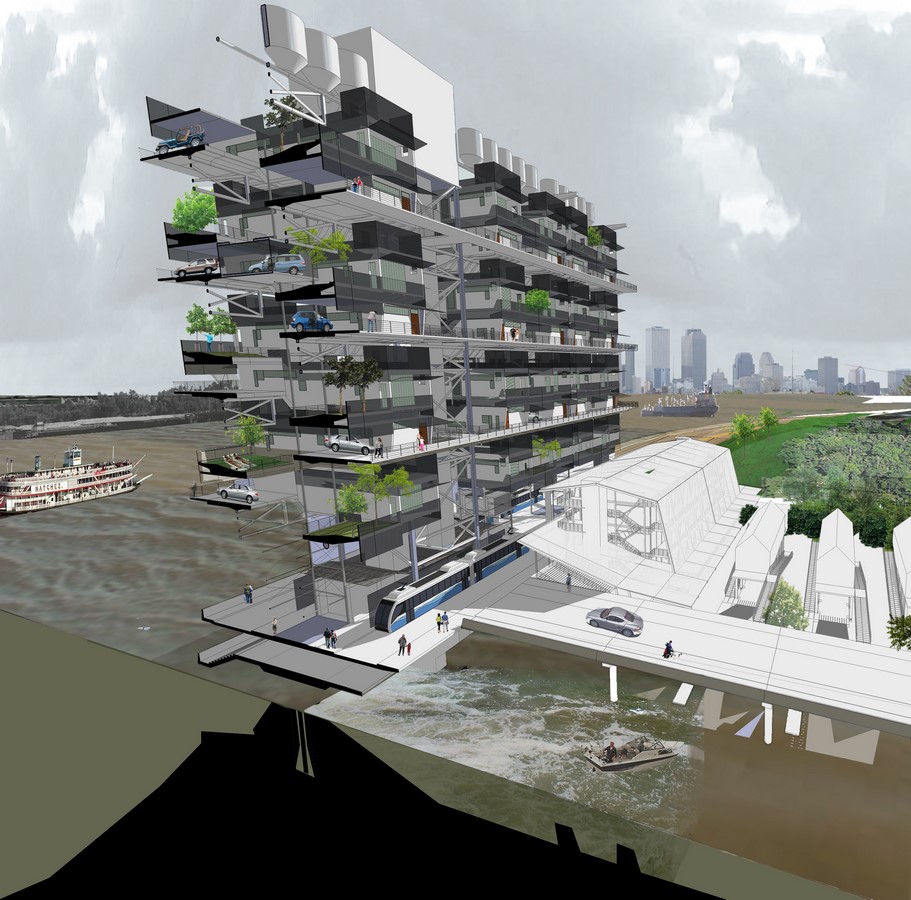
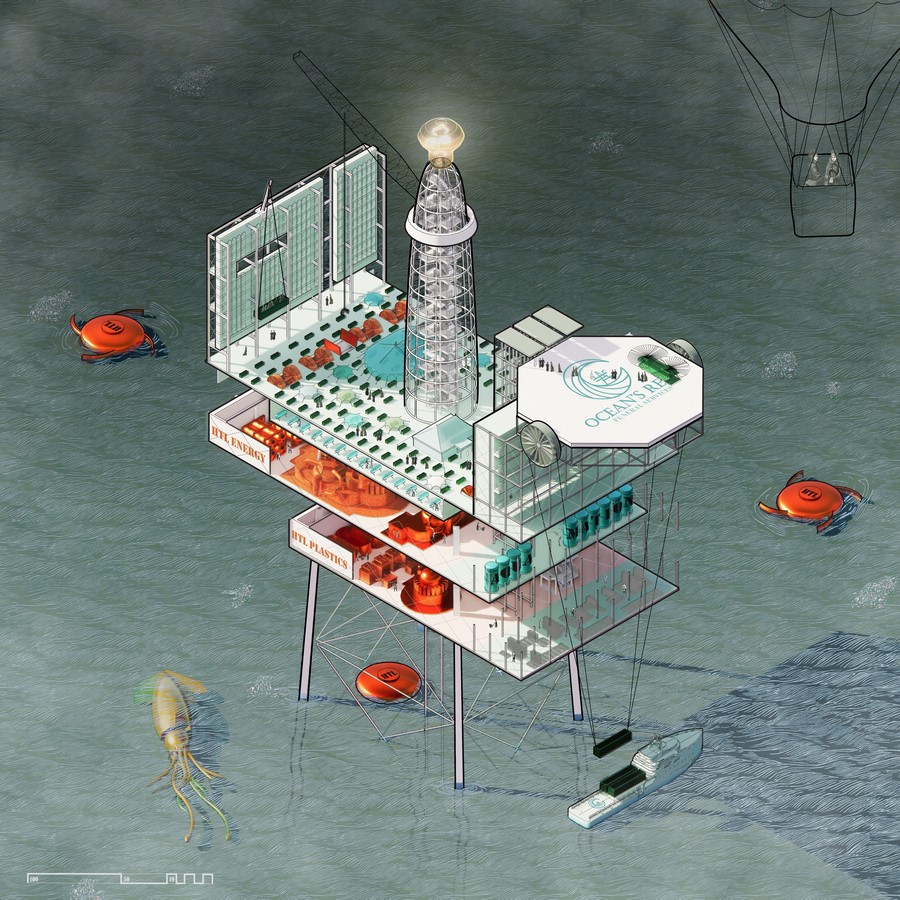
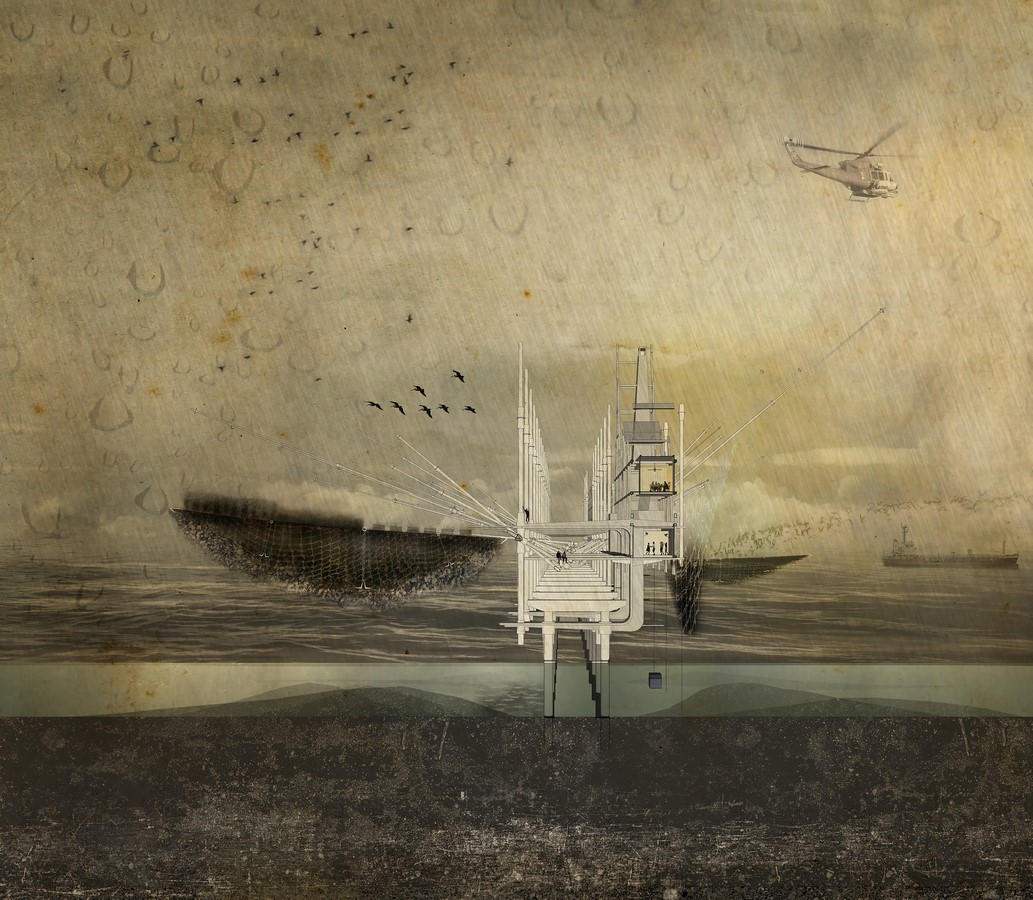
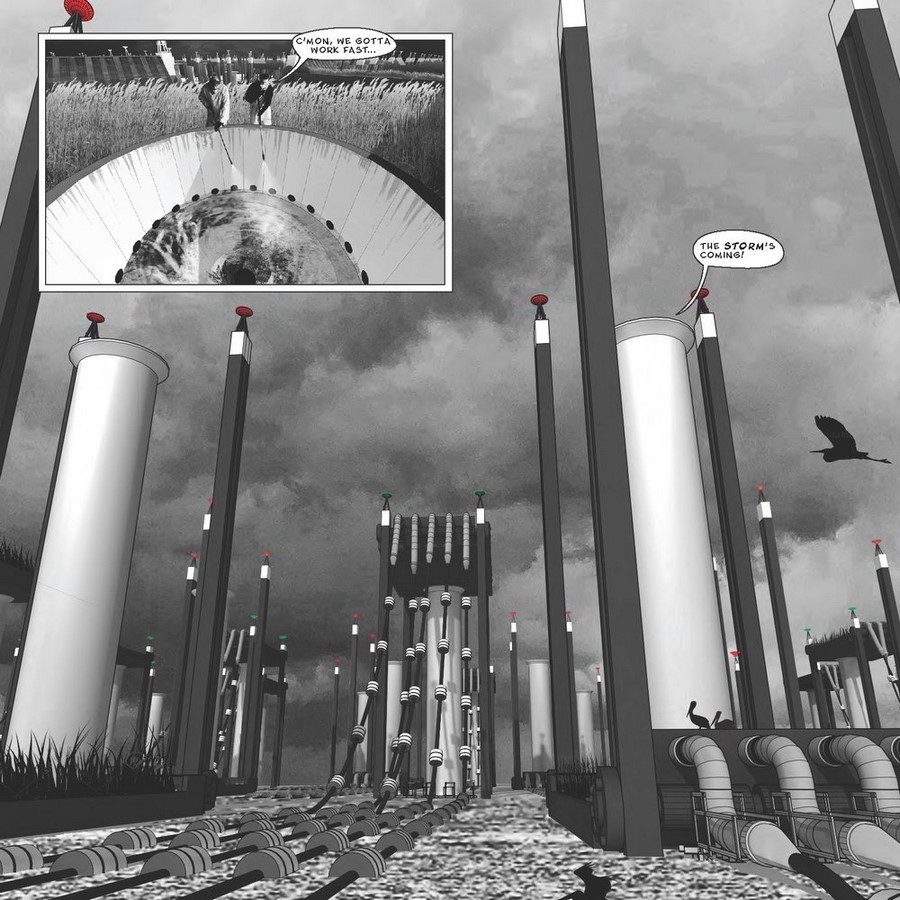
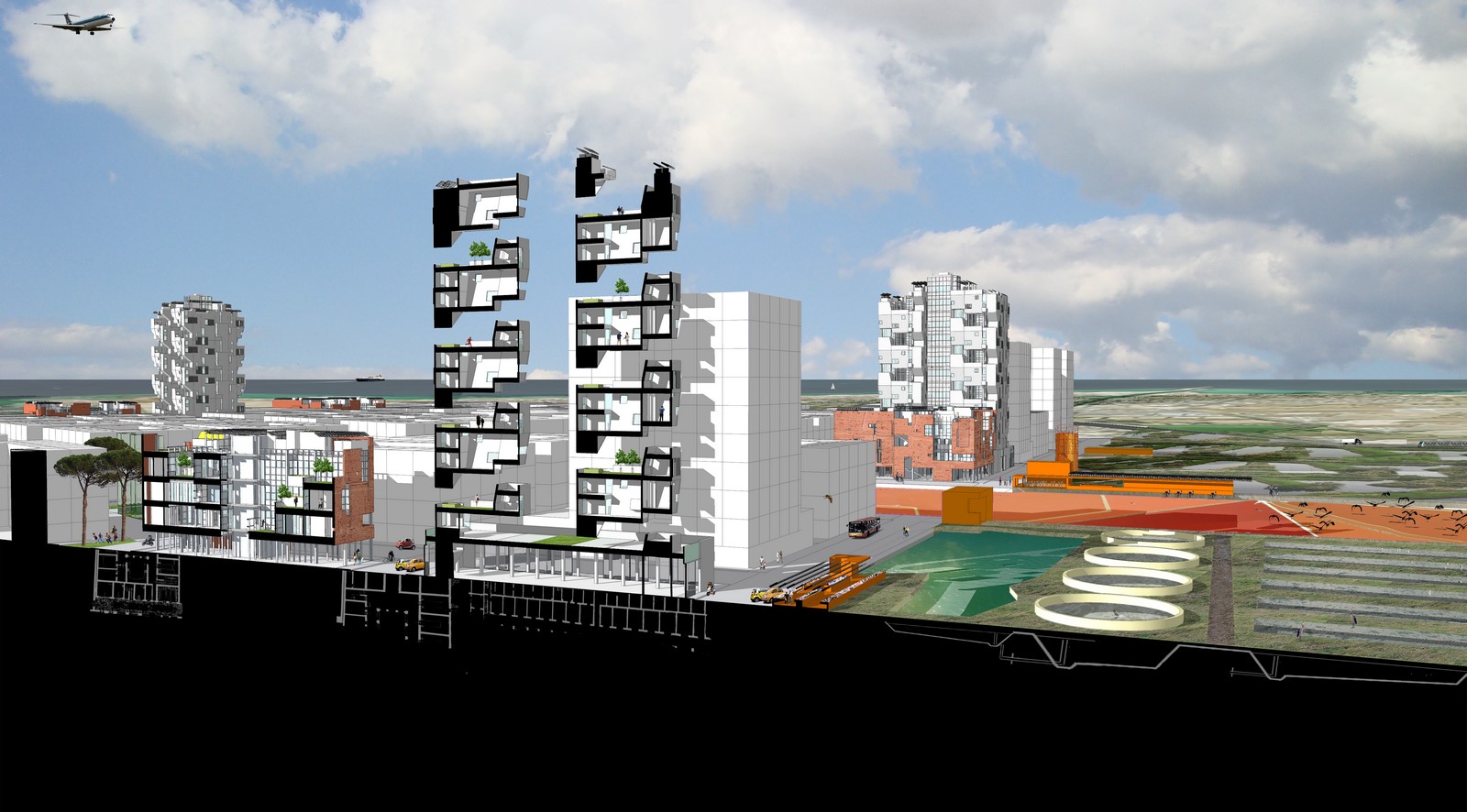
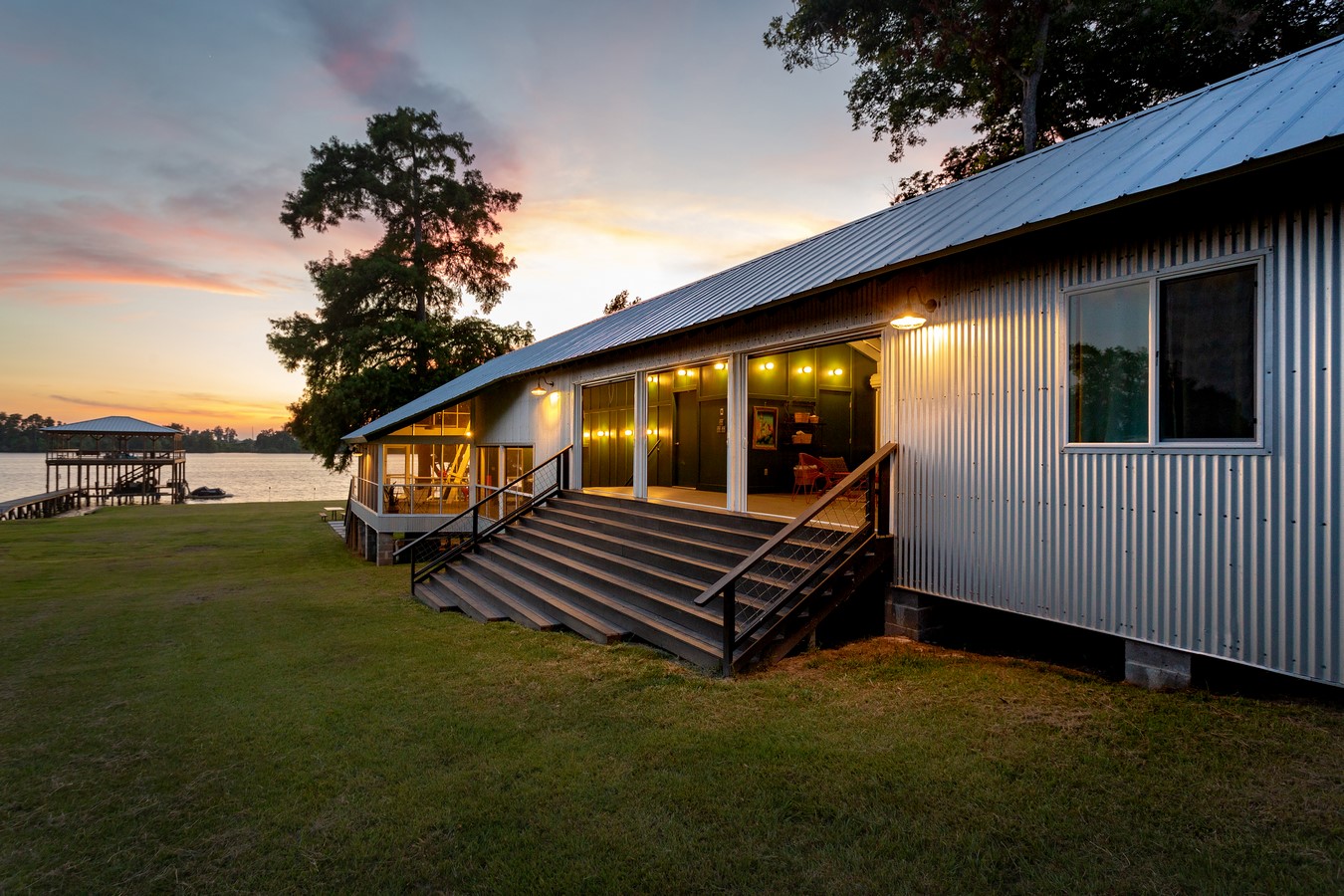
Ursula: The most rewarding project for me to date is not actually a singular work but a theme we investigate across many works. When we moved to Southern Louisiana to begin our academic and research practice careers we found and named our new environment the “Terra Viscus.” The terra viscus is a super-saturated condition, never completely solid or liquid. It consists of geological, economical, cultural, and ecological conditions that interweave and overlap. This physical description of our site also serves as our analytical methodology. The terra viscus condition allows us to vivify, analyze, and create relevant building strategies in the phenomenal identity that is southern Louisiana and other deltaic and coastal conditions. To date we have completed many projects that investigate this theme including NOKat (Post Hurricane Katrina New Orleans), Nuova Ostia Antica (New Occupancies among the ruins of an ancient roman port city), Coastal Caretaker (Rebuilding the barrier islands along the Gulf Coast), GATORhouse (lake camp designed for flooding,) Water is the New Oil (Reusing Oil & Gas Infrastructure to distribute water), and Over my Dead Body (Adaptive Reuse of oil rigs for the victorian death ritual of wake and burial.) All of these have either won awards, been published, and/or been exhibited which of course is rewarding but more importantly, as a collective, their acknowledgements substantiate the terra viscus theme as generative of critical design works. As the authors’ of the term and the research projects that investigate it this is especially gratifying.
RTF: What are the changes in the American Architectural and Design landscape that also mirror Global changes or vice-versa and how do you look at it?
Ursula: What an architect does now is much broader than the definition in Websters or the Oxford dictionary. Those who are taught design are able to look at disparate components and construct a way for them to come together and create something new. I do not think that is limited to the traditional construction of buildings. In the contemporary realm where global systems are changing rapidly and within one generation, the methodologies and creativity of the design mind have become more critical than ever and much more accessible. A designer of the built environment has always had large responsibilities but now the awareness of their actions and how they affect the greater world has become more present and I hope more accountable. Demolition waste, air conditioning systems, water use, resource management, and environmental degradation name just a few global concerns that architects have contributed to and now have the opportunity/responsibility to address.
RTF: What is your perspective on the evolving role of architectural criticism and the influence of architectural critics in the digital age?
Ursula: As I often tell students, getting a constructive critique is like having an editor review your writing. A constructive critique makes the work better, more understandable, and more focused just like an editor. It can also raise questions that the designer (author) might have missed because they were too “in it.” I see this as the primary role of architectural criticism. My perspective on how or if it is evolving in the digital age is that it is trying to keep up. How architects contribute to the built environment now is so much more than just “the art and science of designing buildings” I do not know how today’s architecture critic defines their role or expertise. Coupled with digital platforms that flood the world with images, I am not even sure how an architecture critic discerns what to discuss and/or who the audience is, much less if they are listening.
RTF: How do you look at the work beyond designing for young architects, such as the likes of involvement in publishing, handling media and building an online presence?
Ursula: For us design expresses a voice and it is very important to disseminate one’s voice_to speak out. That demands that one puts their design work out into the public realm for comment, critique, and/or accolade. This is risky and tricky but if you shy away from being published and the media, who will know what you are trying to do. So, we put the work out there, try to get published, and to create a unique and interesting voice in our media. It takes work, we have to design our presence to reflect who we are, and we have to accept the criticism that comes with being out.
RTF: Where does one find you when you’re not working?
Ursula: I do not really think of what I do as work. It is just what I do. So I am not really ever not working. I tend to just do stuff while I am awake. I guess when I am not at a digital device it’s because I am dining out or working out or meeting with people. That does not necessarily mean NOT working but it is a different type of environment. I love what I do, I think about it all the time, and well, it’s great being part of the design world.