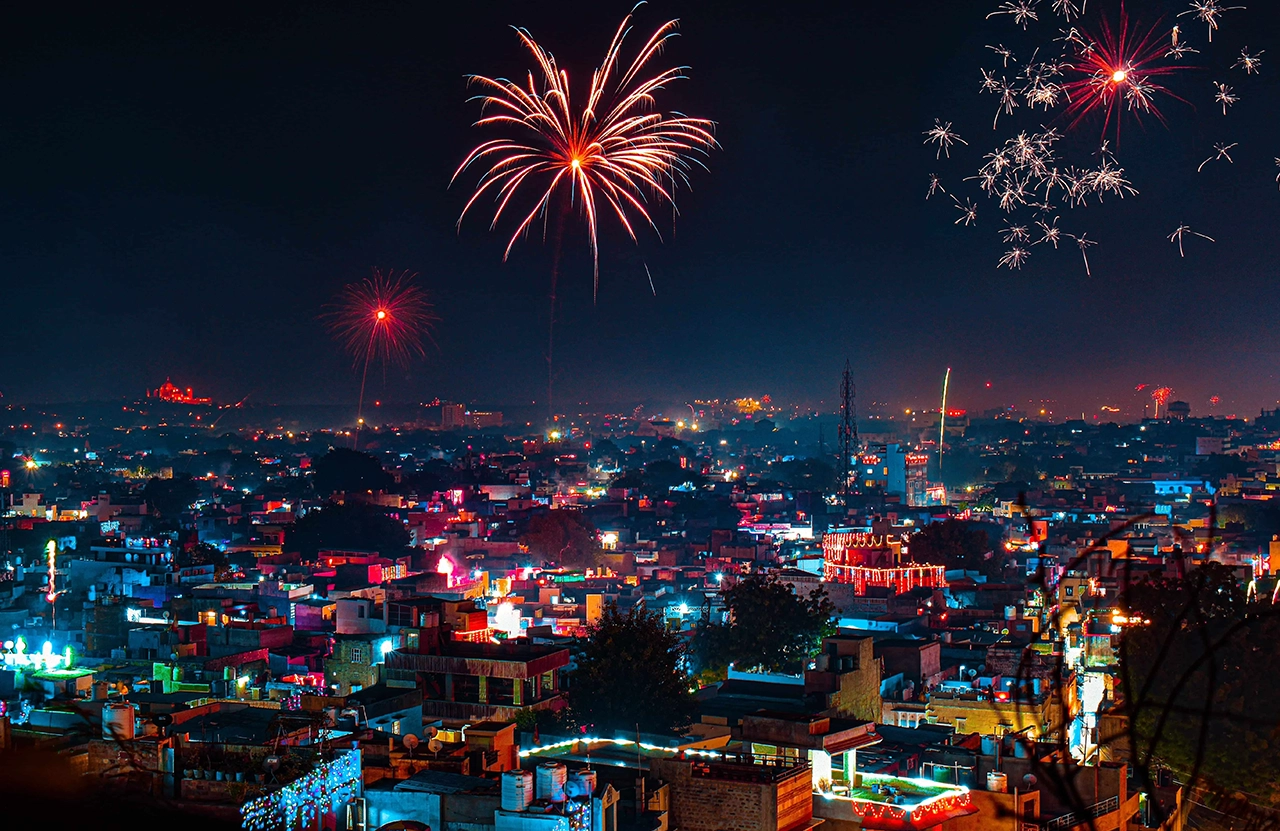
Diwali is often described as the festival of lights. Yet, to see it only as a visual spectacle is to miss the many other ways it reconstructs the modern Indian city. Across the urban landscape, it transforms the city not only in how it looks, but in how it sounds, smells, tastes, and feels. Streets, homes, and marketplaces are temporarily reshaped by light, texture, aroma, and activity, creating immersive experiences that extend beyond the ornamental. While we frequently perceive festivals through an ocularcentric (sight-based) lens, focusing on the glow of lamps or the sweep of decorations, this approach risks overlooking the full spectrum of sensory life that defines the city during celebration. Recognising these other dimensions allows us to appreciate how festivals inhabit, animate, and restructure urban space, revealing layers of culture, memory, and social connection that make the built environment.
Juhani Pallasmaa’s The Eyes of the Skin provides a framework to understand this multisensory urban transformation. In his seminal work, Pallasmaa argues that architecture, and by extension, cities, are experienced not only through sight but through all senses: touch, sound, smell, and even movement. Buildings and spaces, he suggests, acquire meaning through embodied experience rather than purely visual perception. Applying this lens to Diwali, we can see the festival not just as an aesthetic display, but as a multisensory phenomenon for the city, where the interplay of lights, sounds, textures, aromas, and tastes momentarily redefines urban life and our experience of space.

The City that Glows: The Festival through Sight
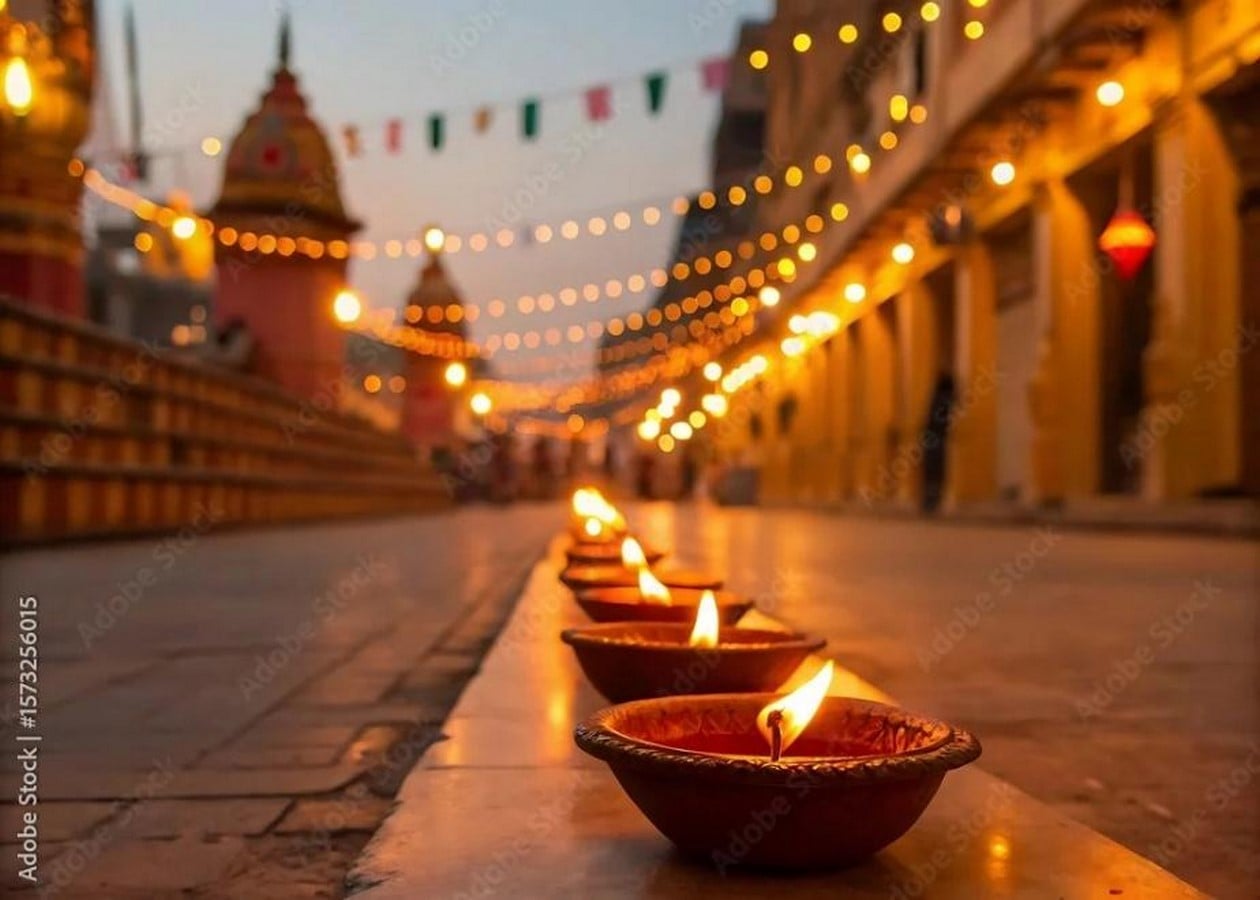
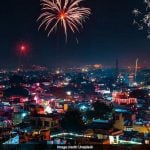
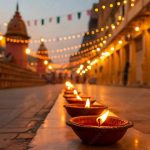
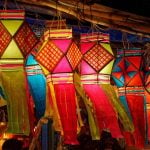
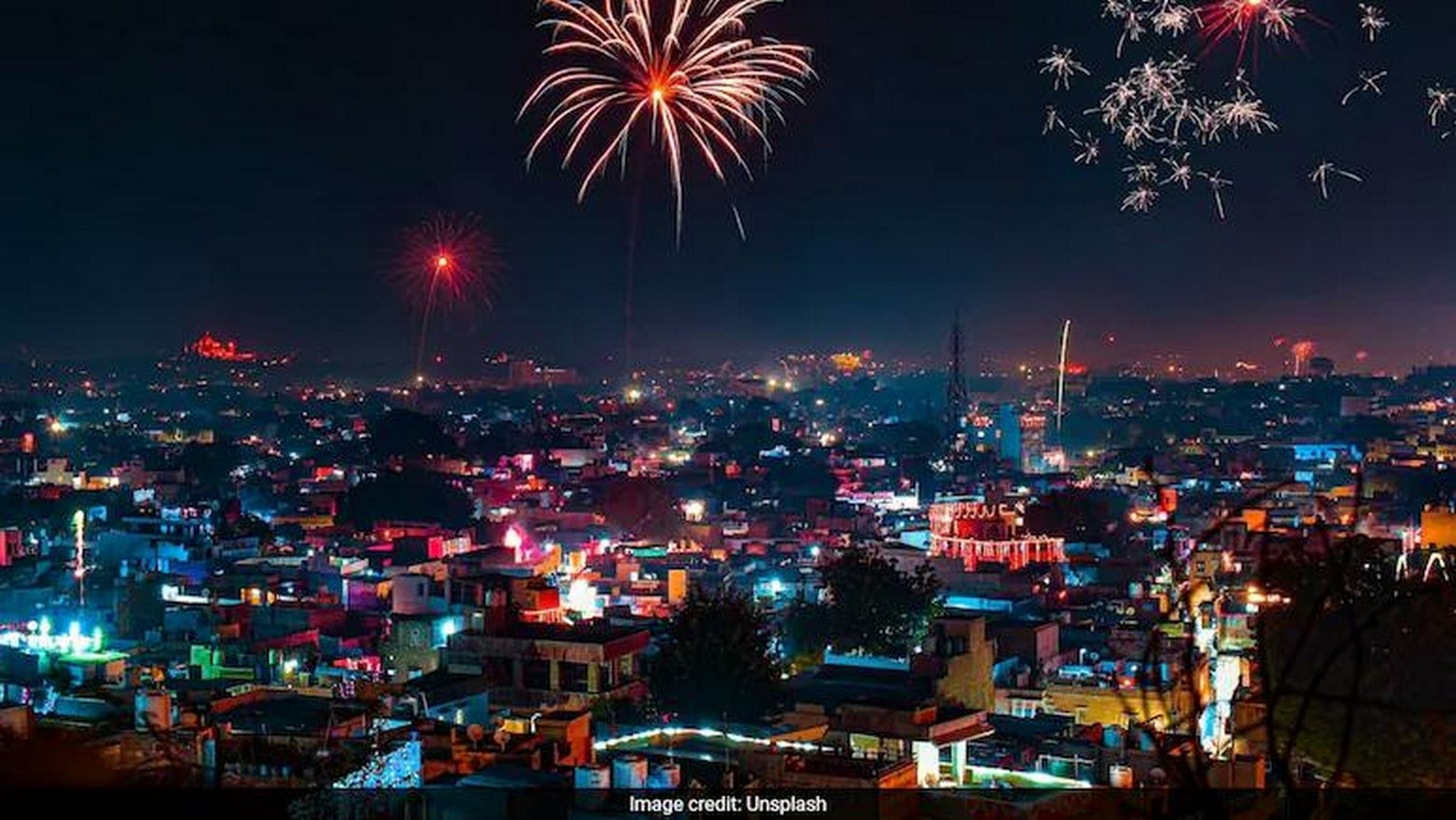
Sight is the most immediately noticeable, and perhaps the most sensorially dominant dimension of Diwali, and it is through vision that the festival often first shapes our perception of the city. Rows of diyas lining residential streets, façades draped in string lights, the vibrant colours of rangolis, and the splendid colours of fireworks splashing against the dark sky collectively define the festival’s visual character. Even the lit up sartorial palettes of the town’s inhabitants contributes to this urban spectacle, creating a layered and temporally specific pattern of light across the city.
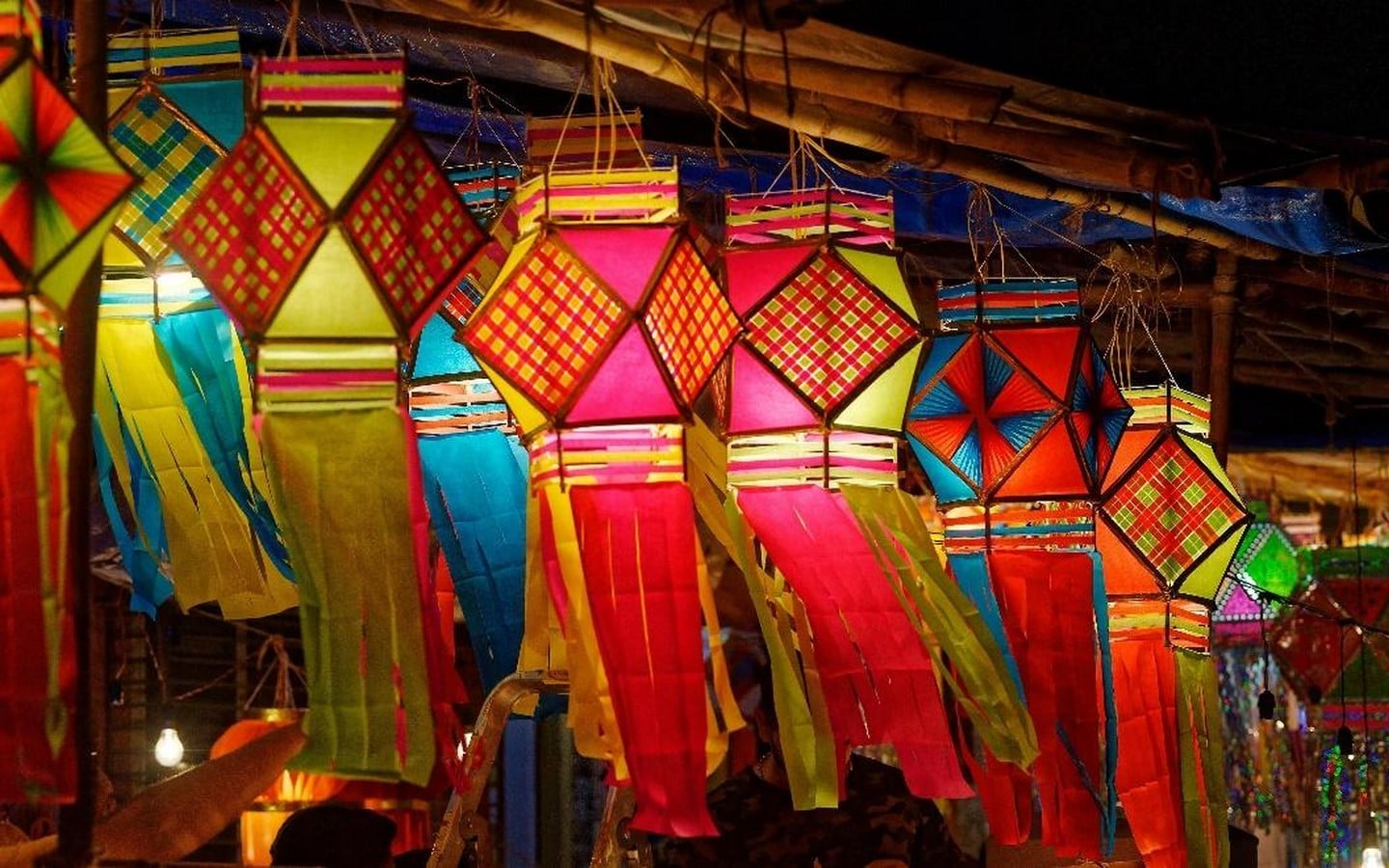
From an architectural perspective, these visual interventions extend beyond decoration. The rhythmic placement of diyas and paper lanterns across façades and balconies produces a form of temporary urban ornamentation, linking individual households into a coherent, city-wide spatial experience. Streets that are otherwise quiet and sparsely occupied at this time, whether due to residents returning to their hometowns or preferring to celebrate at home, are momentarily reframed with warmth through these luminous installations.
Pallasmaa’s The Eyes of the Skin emphasizes that architecture is experienced through all the senses, not sight alone. In the context of Diwali, the visual spectacle is inseparable from other sensory experiences: the crackle of fireworks, the texture of clay diyas, and the flow of people through illuminated streets all contribute to how the festival reshapes the city. Sight may dominate the experience, but it is precisely in combination with these other senses that the urban environment is transformed, revealing how a festival can temporarily reorganize familiar streets into a cohesive, shared, and lived sensory landscape.
The Resonance of Celebration: Hearing the Festival
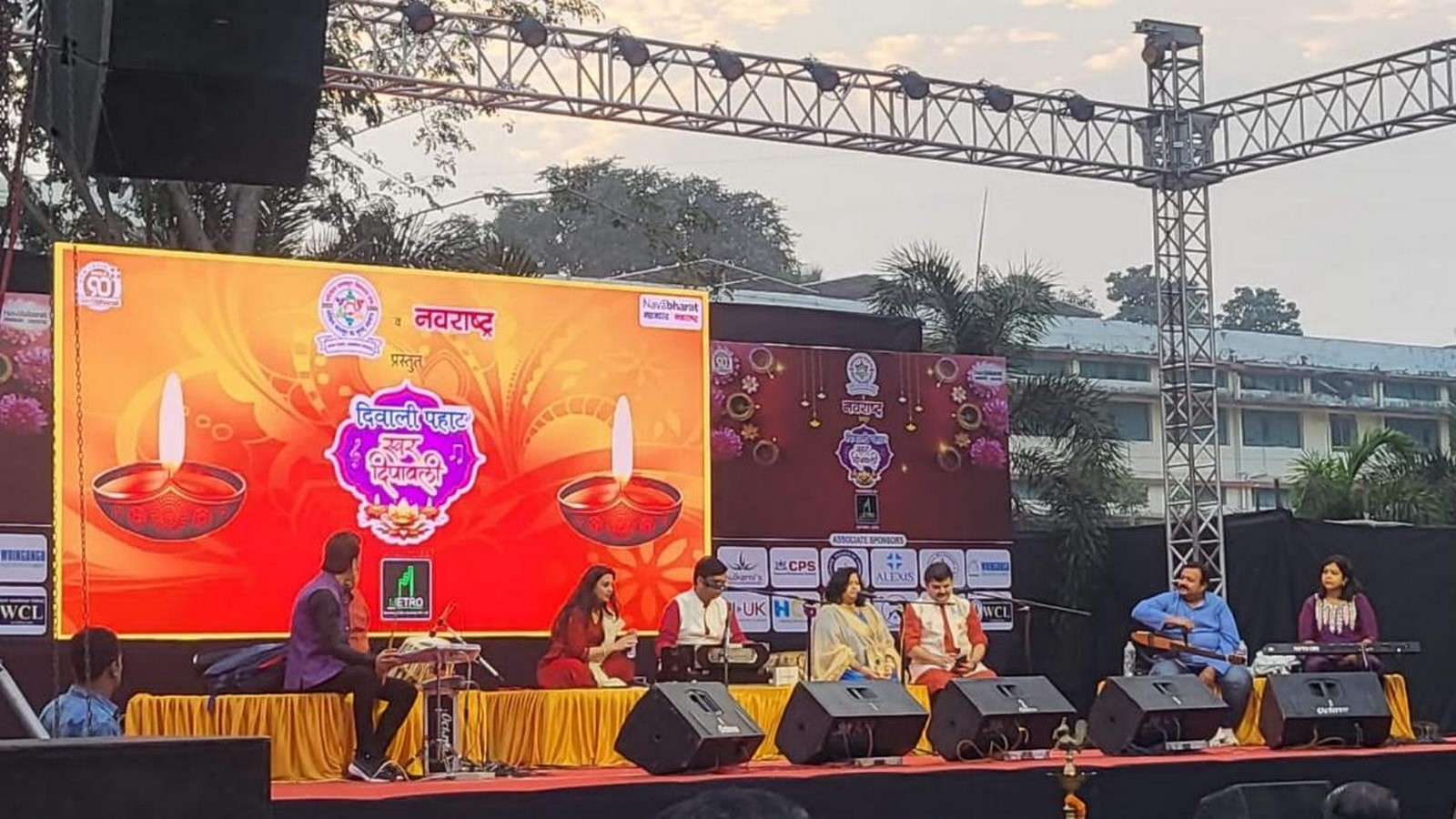
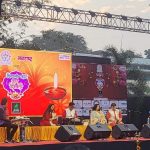
While sight establishes Diwali’s visual framework, sound shapes the city’s experiential texture. Firecrackers explode at varying intensities across different neighbourhoods, creating a shifting acoustic map that signals local activity and temporal rhythm. Early morning classical music programmes, performed in community spaces or broadcast in residential areas, reveal the cultural fabric of specific localities and add layers of resonance unique to each part of the city. Streets that are otherwise busy or noisy often fall silent during the day as residents remain home, preoccupied with festive preparations, creating pockets of quiet that contrast with the intermittent bursts of sound from exhibitions, marketplaces, and street festivities. Even domestic, intimate sounds, like the crackle and hiss of chaklis, karanjis, and other fried faral (festive foods) as they hit the oil, announce the festival in private kitchens, extending the celebration into the tactile and acoustic realm of homes.
From an architectural perspective, these sounds are inseparable from the urban fabric: they articulate spatial boundaries, reveal patterns of occupancy, and highlight the interplay between public and private realms. Pallasmaa emphasizes that acoustic perception is essential to experiencing architecture, giving depth, scale, and rhythm to spaces. During Diwali, sound transforms streets, courtyards, and alleys into inhabited and dynamic environments, demonstrating that the urban experience is as much shaped by what is heard as by what is seen.
Festive Aromas: The Festival and its Fragrances
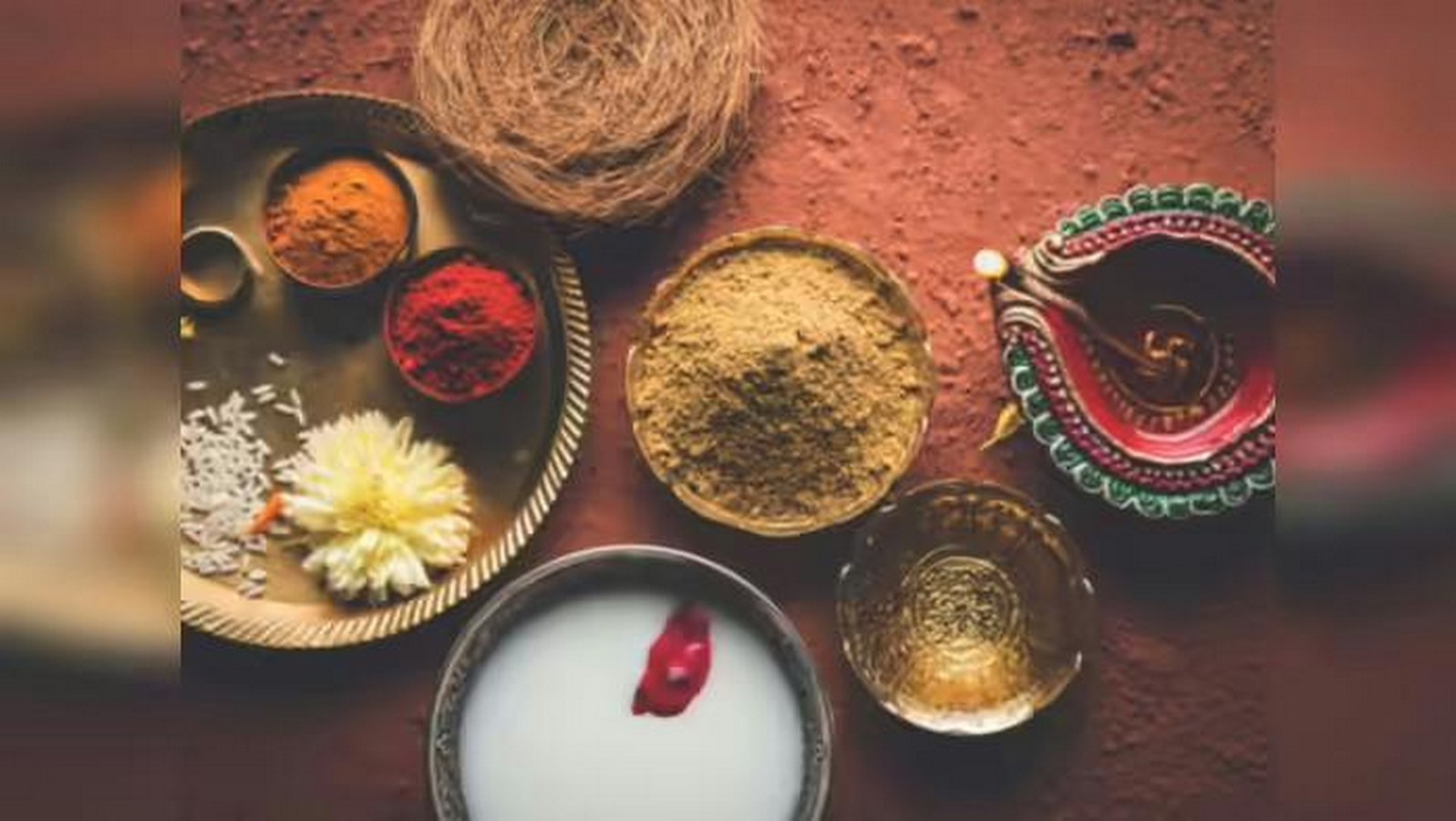
Smell is often the most overlooked dimension of architecture, yet during Diwali it gives the city a distinct and palpable atmosphere. The acrid scent of spent fireworks lingers in the streets, mingling with the rich aroma of faral delicacies, the earthy fragrance of freshly made clay diyas, and the subtle notes of camphor, incense, and candles. Markets and streets transform into temporary olfactory corridors, each shop contributing its own signature fragrance, be it scented soaps, gift items, ghee-laden sweets, or festive flowers, all layering the air with ephemeral but memorable impressions.
From an urban perspective, these scents influence how the city is experienced at a bodily level: they draw people toward marketplaces, guide movement through streets, and signal zones of activity and celebration. Unlike light or sound, olfactory cues are diffuse and permeate multiple spaces simultaneously, linking interiors and exteriors in a continuous sensory field. Pallasmaa emphasizes how smell anchors experience in memory, emotion, and place. During Diwali, the city’s air becomes a medium of social and cultural architecture, an invisible layer that structures movement, occupation, and interaction, creating a shared sensory environment that is as central to urban experience as visual or auditory cues.
Tactility and Texture: The Feel of the Festival
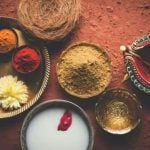
Festivity, in its essence, is a tactile act. The rough surface of a clay diya, the grainy texture of rangoli powder, or the delicate craft-paper strands of a lantern, each invites touch, grounding the celebration in the physical. Even the crisp folds of festive fabric, embellished with beads, mirrors, and motifs, carry within them the texture of tradition, activating a sensory intimacy that is as much cultural as it is material.
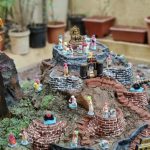
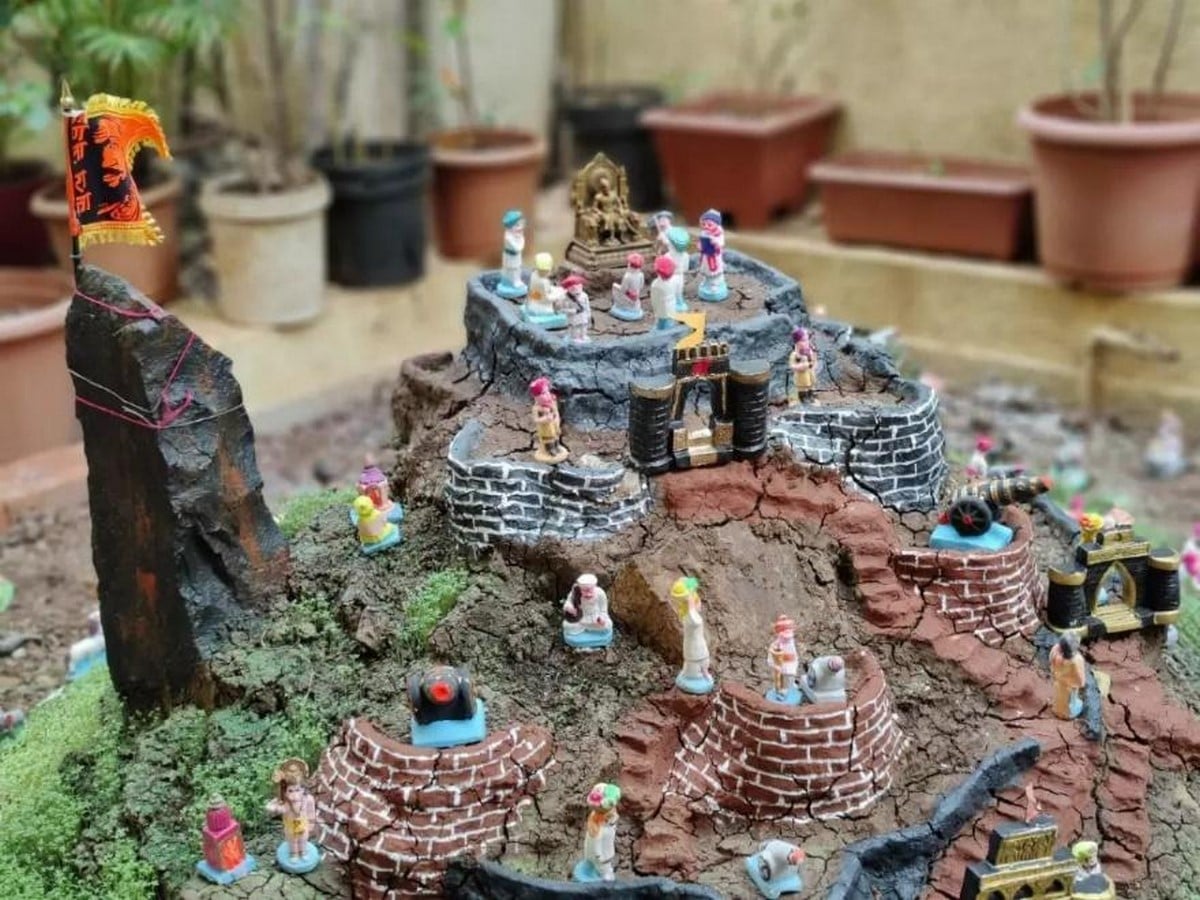
In parts of western India, this tactile engagement is beautifully embodied in the making of killas, miniature earthen forts sculpted by children during Diwali to commemorate Chhatrapati Shivaji Maharaj. These forts, often made of cool, malleable mud and adorned with vibrant, hand-painted clay figures of mavales (Maratha soldiers), are a humble yet profound expression of touch-based creativity. They merge craft, play, and festive commemoration, transforming courtyards and balconies into temporary landscapes of memory and participation.
At an urban scale, Diwali introduces its own tactile architecture. Temporary installations emerge across the city: bamboo frames for lantern stalls, tin-walled firecracker kiosks, tensile extensions to sweet shops, all transforming otherwise static streets into dynamic corridors of interaction. These ephemeral structures redefine the texture of urban space: circulation patterns shift, street edges become porous, and the built environment momentarily feels handmade, shaped by collective participation rather than formal design.
Pallasmaa’s work reminds us that touch is the most fundamental sense through which we experience architecture. It mediates scale, materiality, and emotion. During Diwali, the city becomes profoundly haptic: from the clay and paper of its festive artefacts to the provisional tactility of its temporary markets, it invites the hand as much as the eye. Through this embodied engagement, the festival temporarily reclaims architecture from abstraction, making the city not just visible, but tangible, felt, held, and inhabited.
Festive Flavours: Taste and the Festival
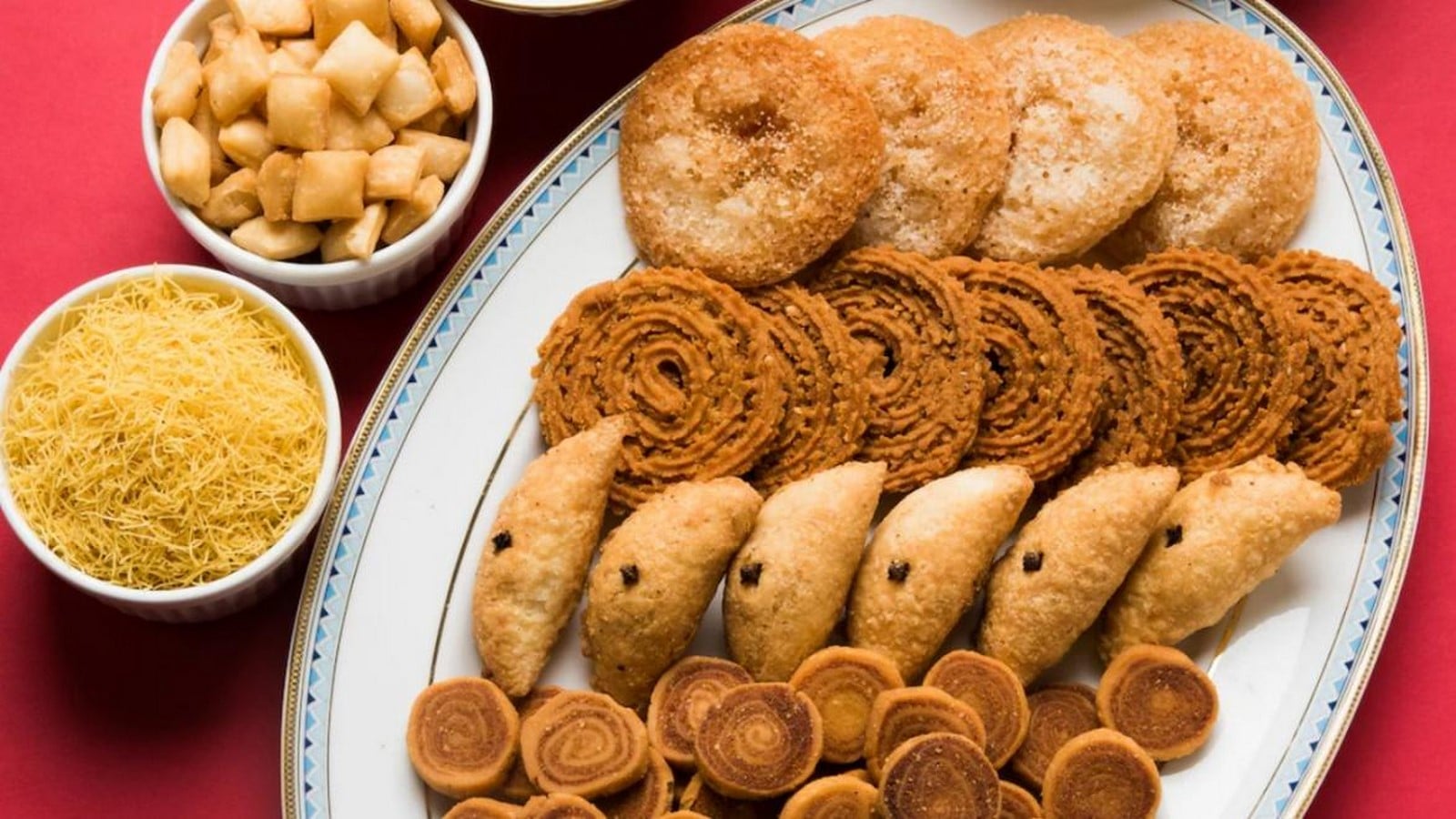
Diwali also reshapes the city through appetite. The festive season transforms taste into a form of social architecture, one built not of brick and mortar, but of exchange and generosity. Across Indian cities, neighbourhood sweet shops momentarily become civic spaces, sites of congregation and anticipation. Each box of faral, an assortment of homemade delicacies like chakli, karanji, laddoo, and chiwda, travels across thresholds, linking households through shared ritual and flavour.
This edible exchange reconfigures the city’s circulation: streets, markets, and apartment corridors hum with movement as people deliver, receive, and taste. In this sense, food becomes an extension of the urban fabric; an architecture of togetherness enacted through the body.
Pallasmaa reminds us that architecture, to be truly human, must engage the entire body, not only the eye that observes but the hand that makes and the mouth that tastes. During Diwali, taste performs this role: it restores intimacy to the urban, grounding the festival in the corporeal and the communal. Flavour becomes memory, memory becomes place, and the sweetness of laddoos or the savour of chakli imprints itself into the sensory identity of the city long after the lights fade.
Festive Ephemerality and its Urban Afterimage
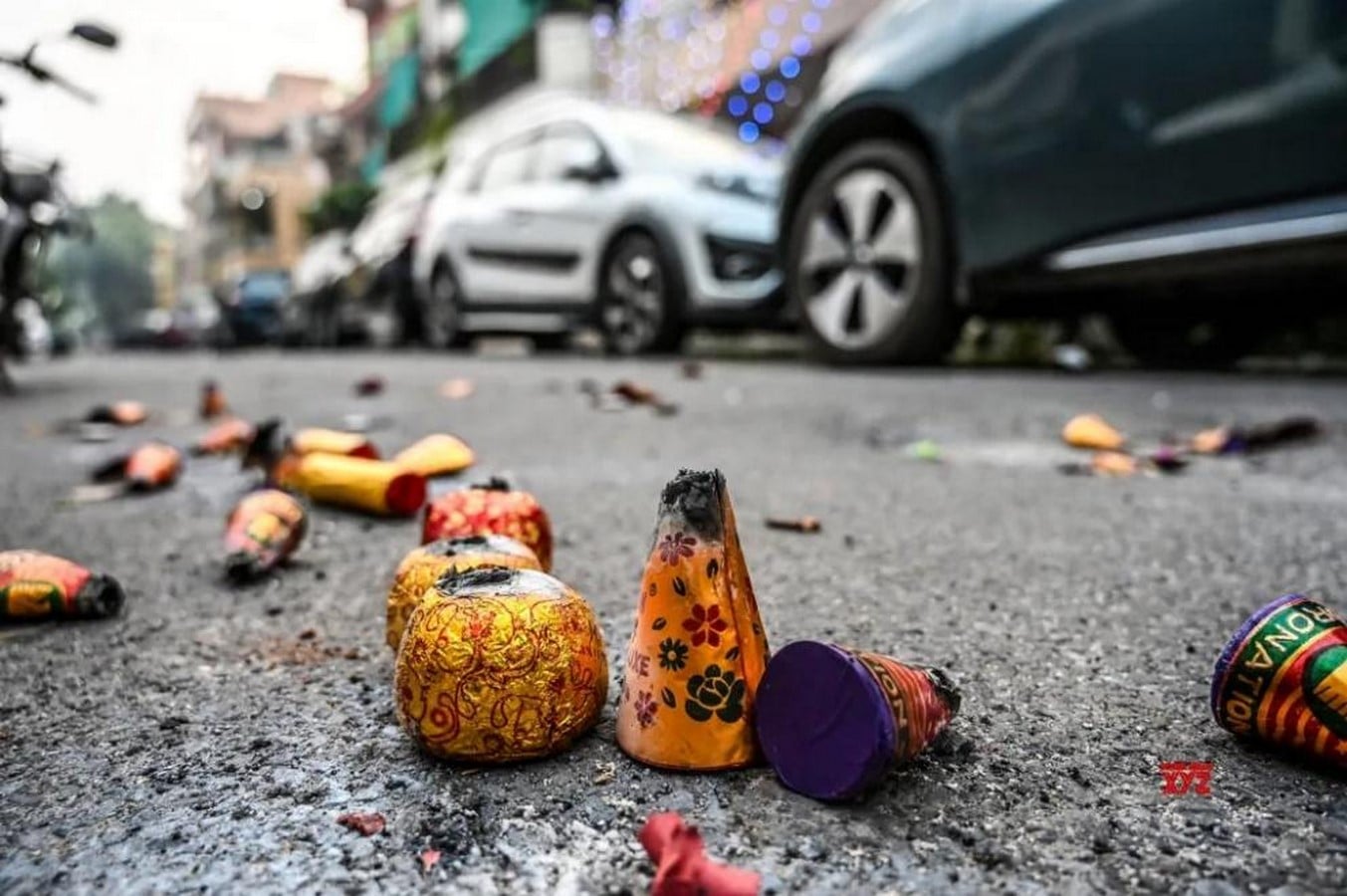
When the diyas extinguish and the lanterns come down, the city’s festive architecture dissolves. Yet, its sensory residue endures. The faint scent of burnt fireworks, the traces of soot on walls, and the quiet hum of emptied streets all attest to the celebration that once was. What remains is not the spectacle itself but its afterimage; the subtle evidence of a city that briefly reimagined itself.
These remnants are architectural in their own right. They remind us that cities are not static compositions of concrete and steel, but living organisms shaped by cyclical performances. Festivals like Diwali reveal this rhythm: they construct temporary architectures of light, sound, and texture that alter how space is perceived, used, and remembered.
In Pallasmaa’s terms, such experiences highlight architecture’s continuity beyond form; continuity into atmosphere, memory, and sensory participation. The city after Diwali is therefore not diminished but redefined: its walls have absorbed warmth, its air carries echoes, and its people inhabit it with renewed intimacy. The festival ends, but its multisensory architecture lingers, reminding us that urbanism, at its most humane, is built as much in emotion and ritual as in material and design.
Conclusion: City, Senses, and Celebration
Diwali’s significance extends beyond celebration; it becomes an act of urban reawakening. The festival momentarily rehumanises the city, compelling its citizens to reinhabit the city through their senses. Light, sound, fragrance, and touch weave together to momentarily dissolve the detachment of daily urban life. In Pallasmaa’s philosophy, architecture is not a visual spectacle but a multisensory dialogue between body, memory, and material. Diwali renews this dialogue at the scale of the city itself.
In an age when the city often numbs its inhabitants through speed and spectacle, Diwali restores attentiveness through a brief but profound return to slowness, presence, and participation. For a few nights each year, the urban fabric remembers what it means to feel. The festival thus reveals that architecture’s most enduring purpose may not lie in permanence, but in its ability to host moments of shared sensorial meaning, where light, sound, scent, taste and touch remind us that to dwell is, above all, to belong.
Citations:
Pallasmaa, J. (1996). The Eyes of the Skin: Architecture and the Senses. London: Academy Editions.