Orchha is a town near Niwali in the Niwali district of Madhya Pradesh, India. The city was founded after 1501 by the Rajput ruler Rudra Pratap his Singh as the seat of the former monarchy of the same name, forming part of the state of Bundelkhand in central and northern India. Orchha is located on the Betwa River, 80 km from Tikamgarh and 15 km from Jhansi in Uttar Pradesh. Orchha was founded in 1531 (16th century AD) by the Bundela Chief Rudra Pratap Singh. He became the first king of his Orchha (r. 1501–1531) and built the Fort of Orchha. His son Bharti Chand initiated the transfer of capital from GarhKunder to Orchha. This location was well suited to counter the increasing pressure of the Mughal Empire.
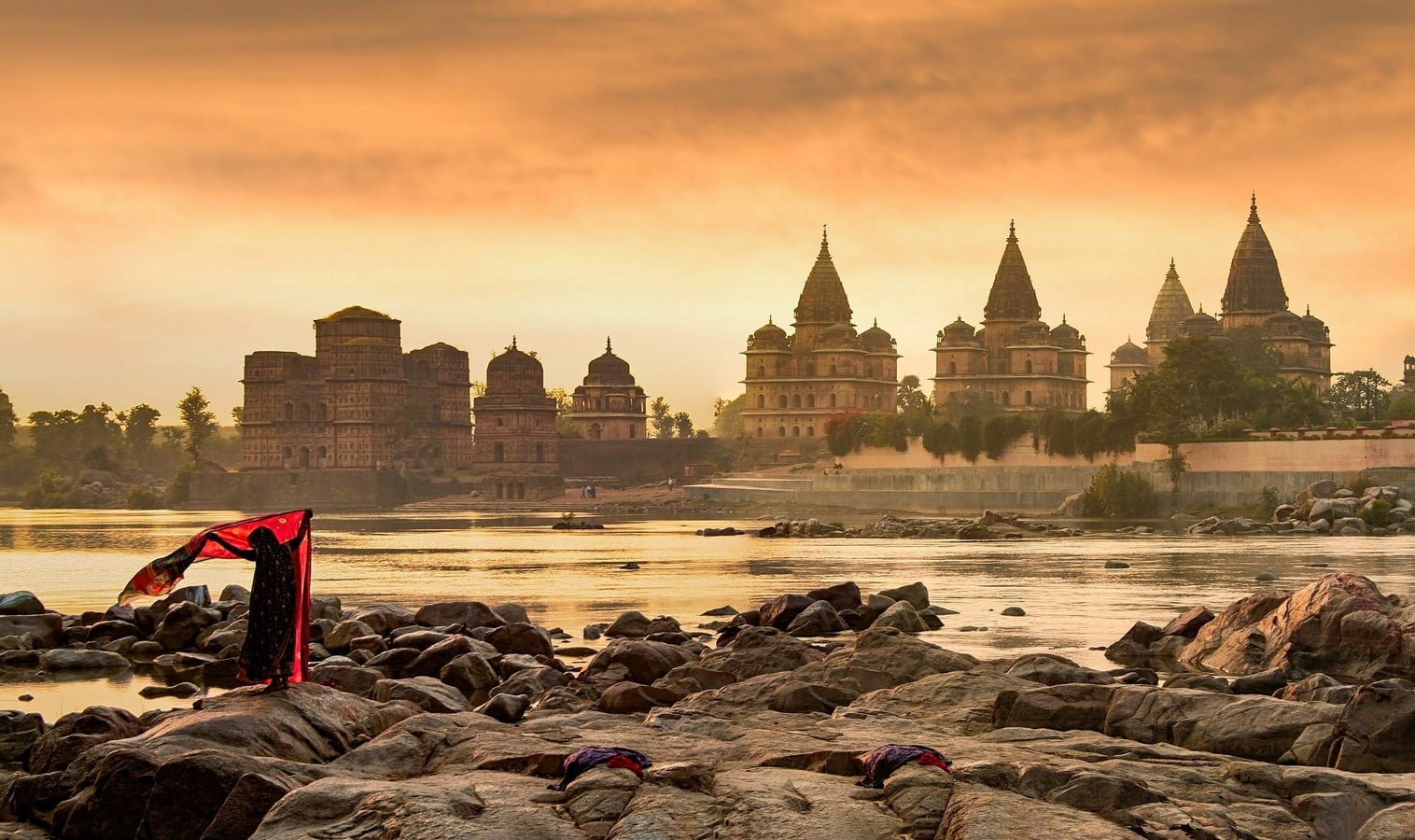
Monsoon is the perfect time to visit Orchha and explore its architectural wonders. Clouds in the sky and fog around enhance the experience of visiting temples and palaces. People also like to see the city in winter, but it is advisable to avoid travelling to Orchha in midsummer to avoid the scorching heat.
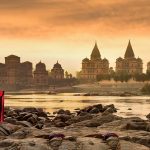
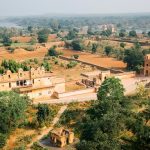
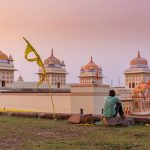
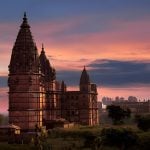
Orchha’s most attractive feature is its skyline, punctuated by domes and shikaras of palaces and temples, testifying to the architectural grandeur of the Bandera dynasty.
A stroll through the busy streets of the medieval town of Orchha in Madhya Pradesh reveals saffron-coloured sadhus, warning horns from cars, shops selling Dhokra crafts, Indian sweets and delicacies, and the Gond tribe. You are sure to come across artists sitting and filling the streets. Above all, the contours of Gond paintings with characteristic points and lines.
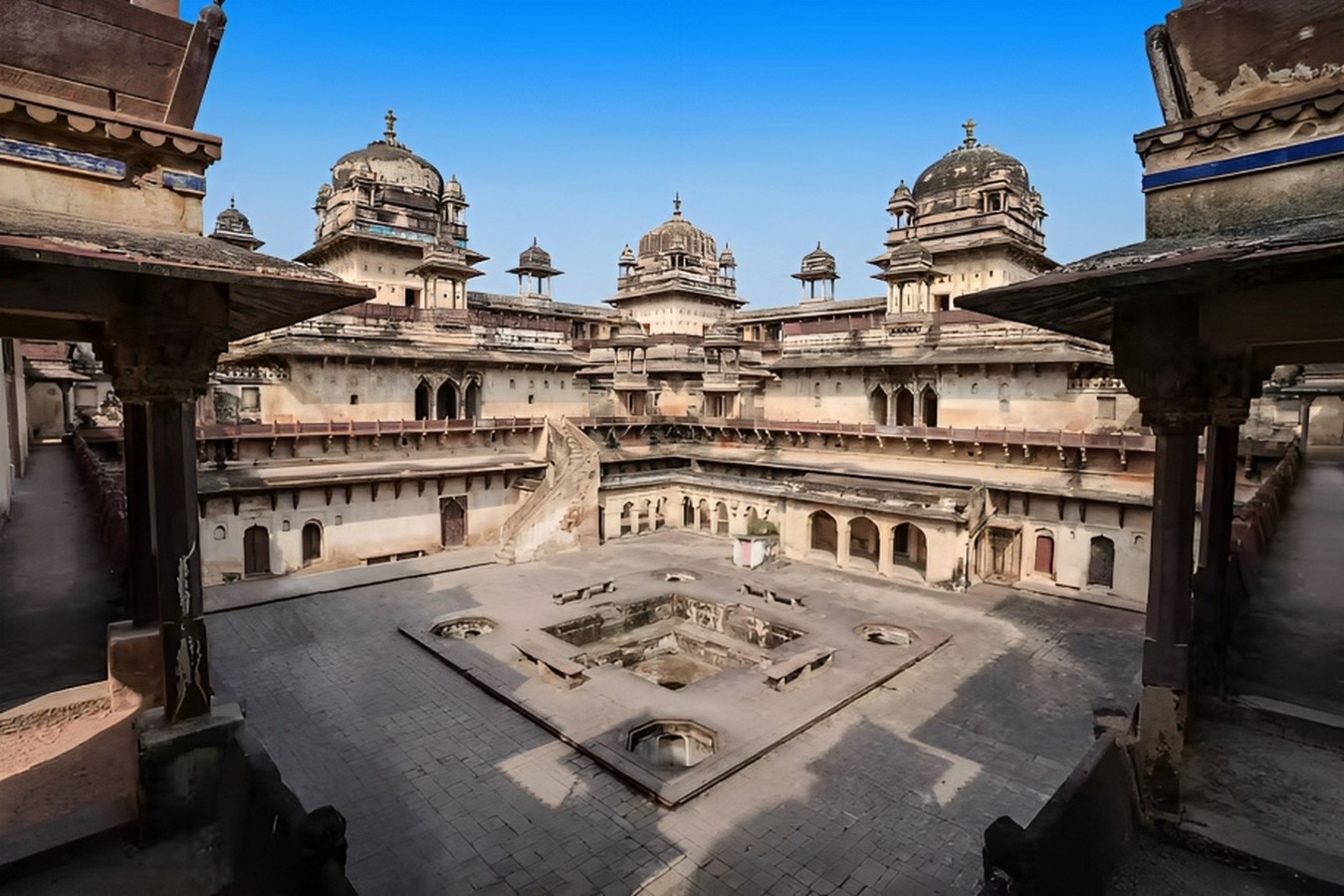
The Bundera architectural style began with the majestic Orchard Fort built by Rudra Pratap but reached its peak under Bir Singh Deo’s reign. The Bundera style architecture is a striking fusion of Rajput architecture and Mughal design. The fortress of Orchha Palace is heavily fortified with more than 15 rounded bastions and three entrances. The fortress complex consists of several interconnected buildings built over time. The most notable are the Raja Mahal, Jehangir Mahal, and Rai Parveen Mahal.
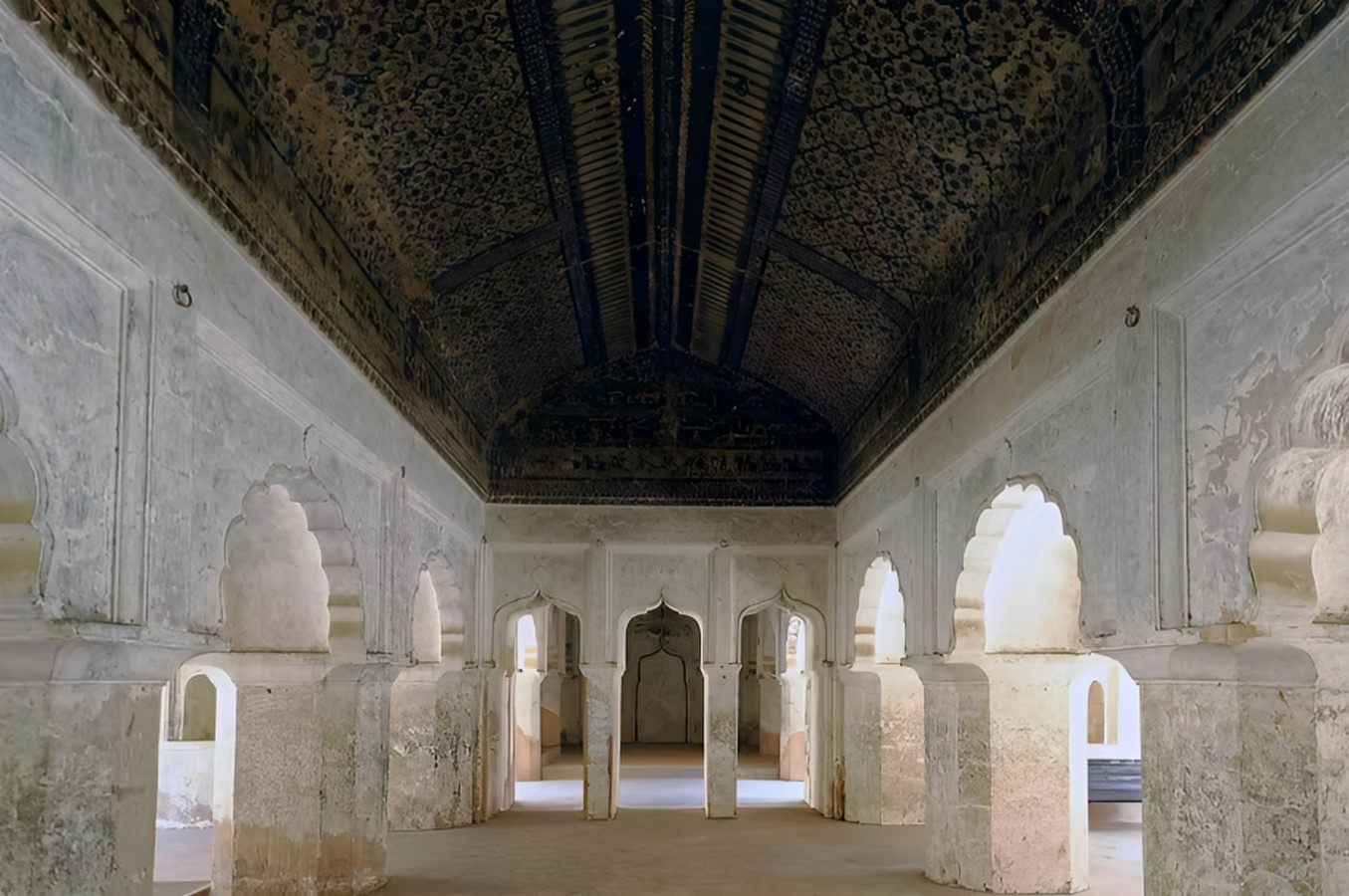
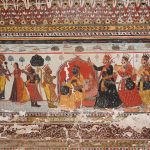
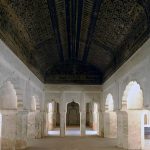
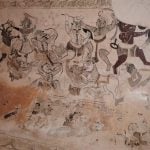
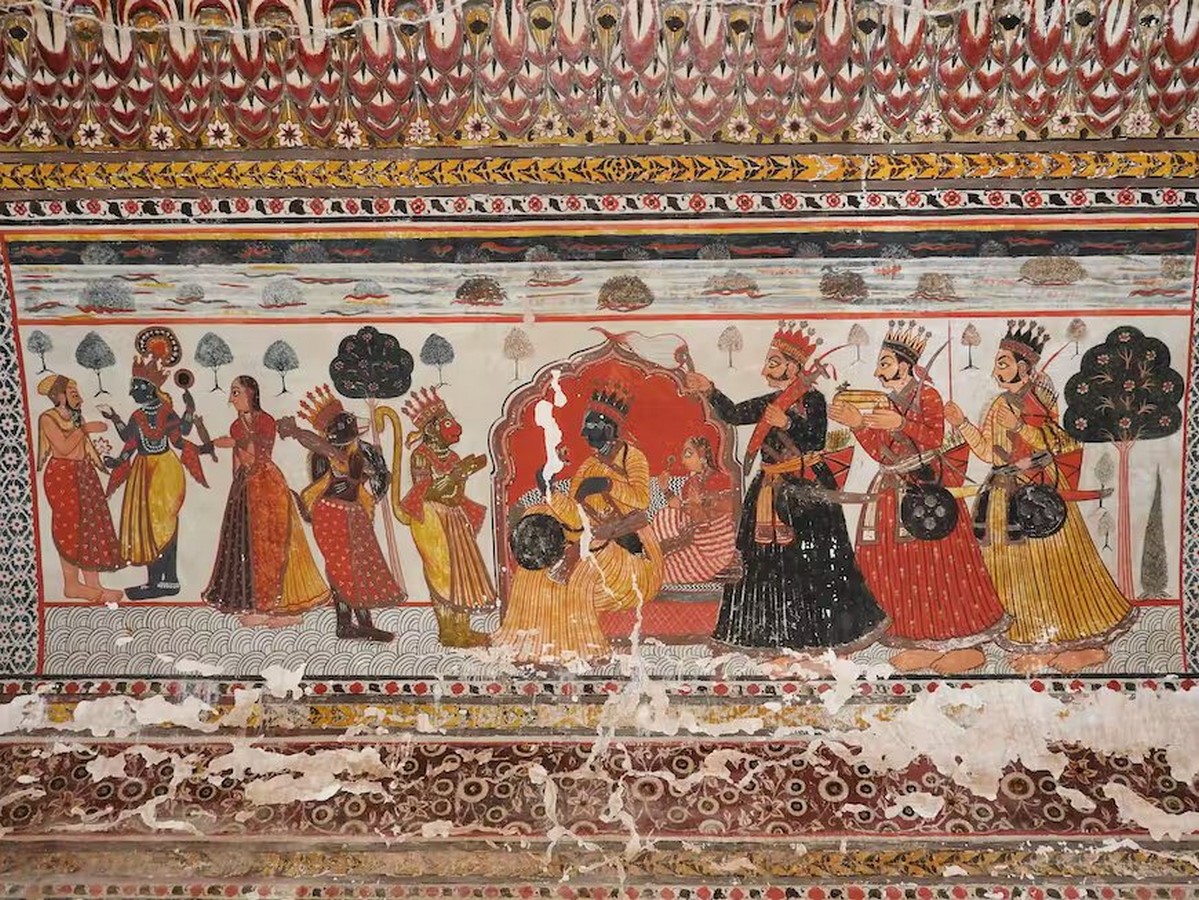
Built-in the early 16th century, the Raja Mahal is their oldest. It was a residence for kings and queens until the late 18th century. The Raja Mahal consists of two courtyards. The Mahal’s rooms, halls, and verandahs feature the finest murals in earth tones and black. They work with mythological stories, everyday life, hunting scenes, and flora and fauna inspired by the natural environment. Room openings are decorated with meticulous jali (lattice) work. The roof has thin pillars topped by arched kiosks.
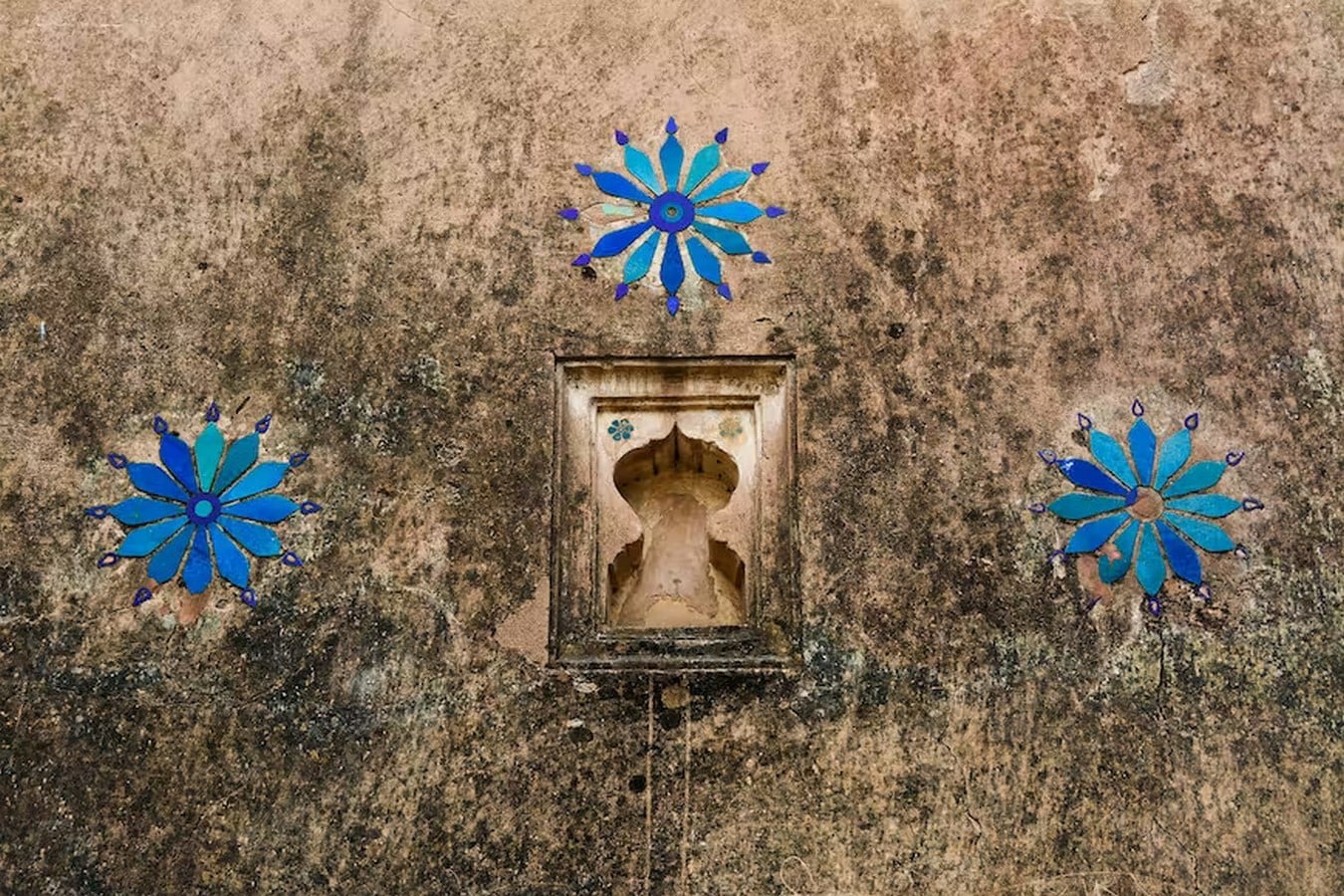
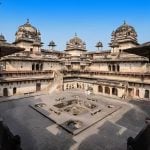
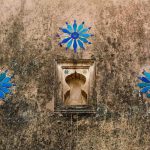
According to popular belief, Jahangir Mahal was built by Bir Singh Deo exclusively for Jehangir, the Maharaja’s overnight guest. It was built as a symbol of the Emperor’s warm welcome. The intricately carved entrance to the palace is flanked on either side by elephants placed in jarohas. The exterior walls bear traces of the lapis lazuli and turquoise that once adorned the court. The palace’s most striking features are its rooms with beautiful latticework, carved bracket carvings, and mural paintings. The huge square courtyard contains a water tank and a central fountain, with four smaller fountains in each corner. Like the Raja Mahal, the roof consists of no less than eight domed pavilions, adding to the structure’s beauty.

The Rai Parveen Mahal is a palace dedicated to Rai Parveen, a beautiful prostitute, poet, and musician in the court of Raja Indrajeet. The castle contains beautiful paintings, mostly in shades of grey and black. Upstairs, images show Rai Parveen’s various dances, her mudras and her slaves. Besides being a favourite there, she also inspired the poems of the famous Brajivasha poet Keshavdas. At an evening soiree conducted by Raja Indrajit, Keshavdas recited a poem from his famous Rasikapriya, Parveen danced, and the audience applauded.

The Ram Raja Mandir was originally part of a royal fort, later converted into a temple. It houses a unique idol of Lord Rama. According to legend, Madhukar Shah’s wife, Raniganesh, her Kunwar, brought this statue from the Salyu River in Ayodhya. This idol should be placed in the Chaturbhuj temple. However, as the temple was under construction, she was temporarily enshrined at Rani Mahal. The Rama Raja Mandir is the only temple in India where Lord Rama is worshipped as a king.
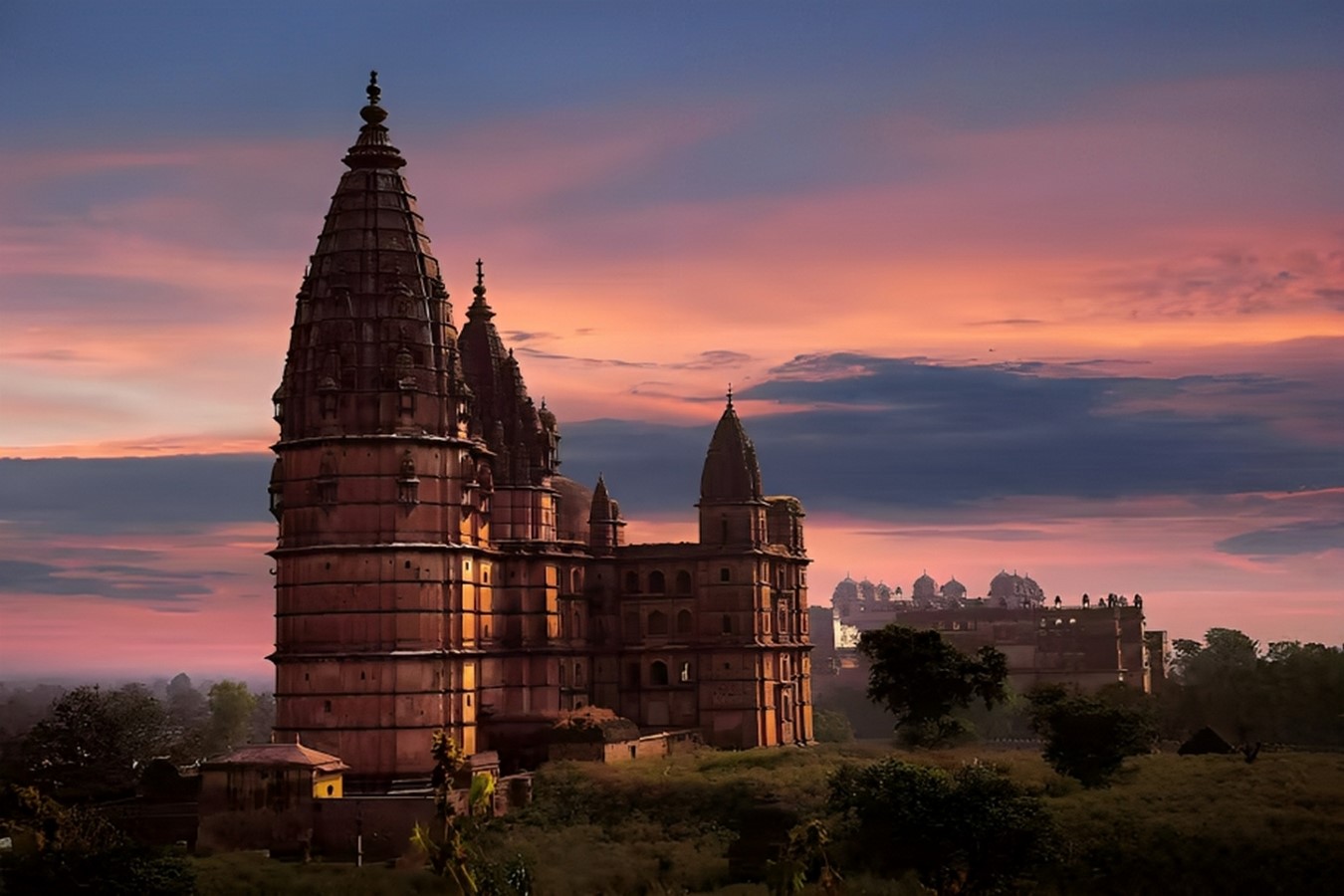
The Chaturbhuj temple dominates the Orchha landscape. It is an impressive structure built on a massive foundation accessed by steep steps. Above the temple are his six towers of varying heights (higher than any palace dome), adding to the majestic grandeur of the building. The temple offers spectacular views of the palace fortifications. Today, the temple houses idols of Radha and Krishna.
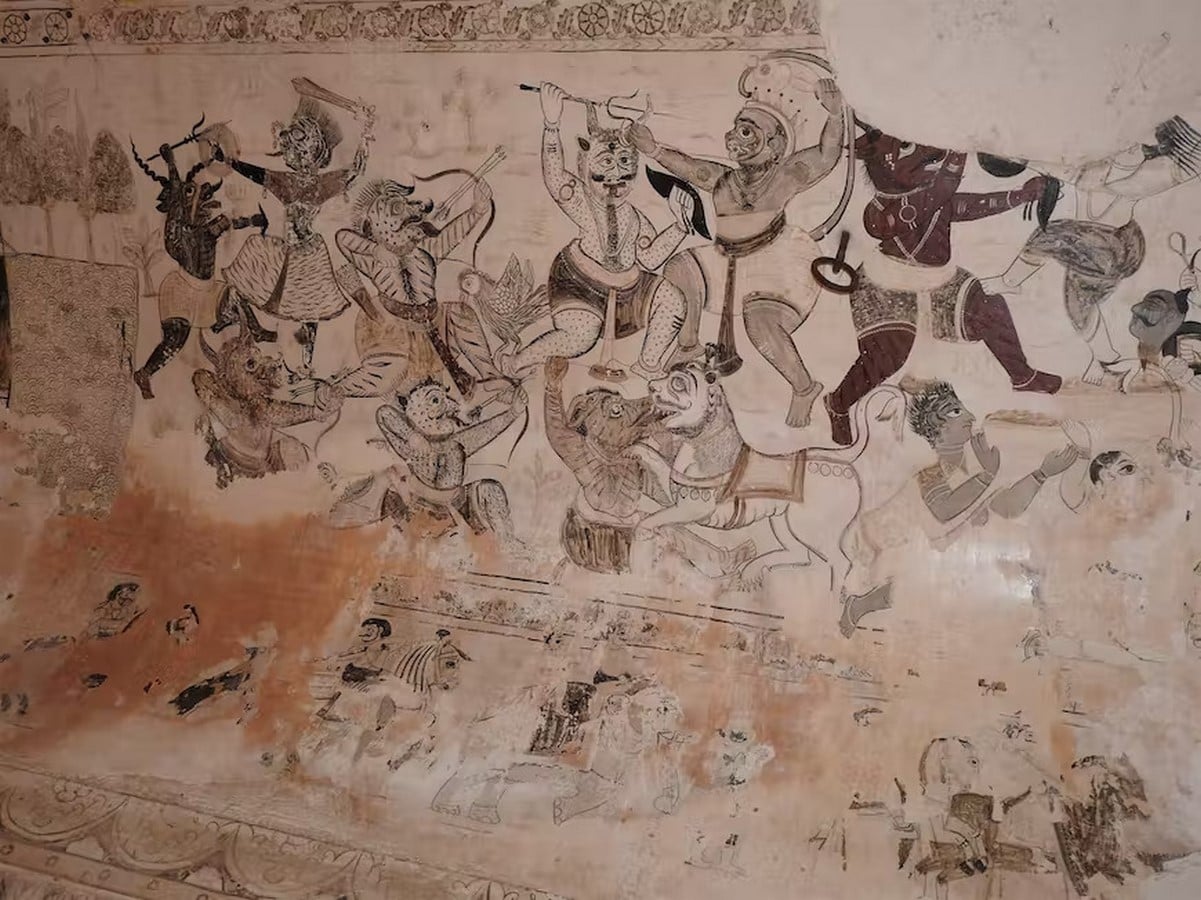
Lakshmi Narayan Temple was built by Bir Singh Deo and later renovated by Prithvi Singh. A structure that combines a fortress and a temple. Artillery sites and bastions give it a distinctive fort-like appearance. The interior of the temple is decorated with beautiful murals depicting both secular and mythological depictions. In addition, historical events such as the famous Battle of Jhansi were also depicted.
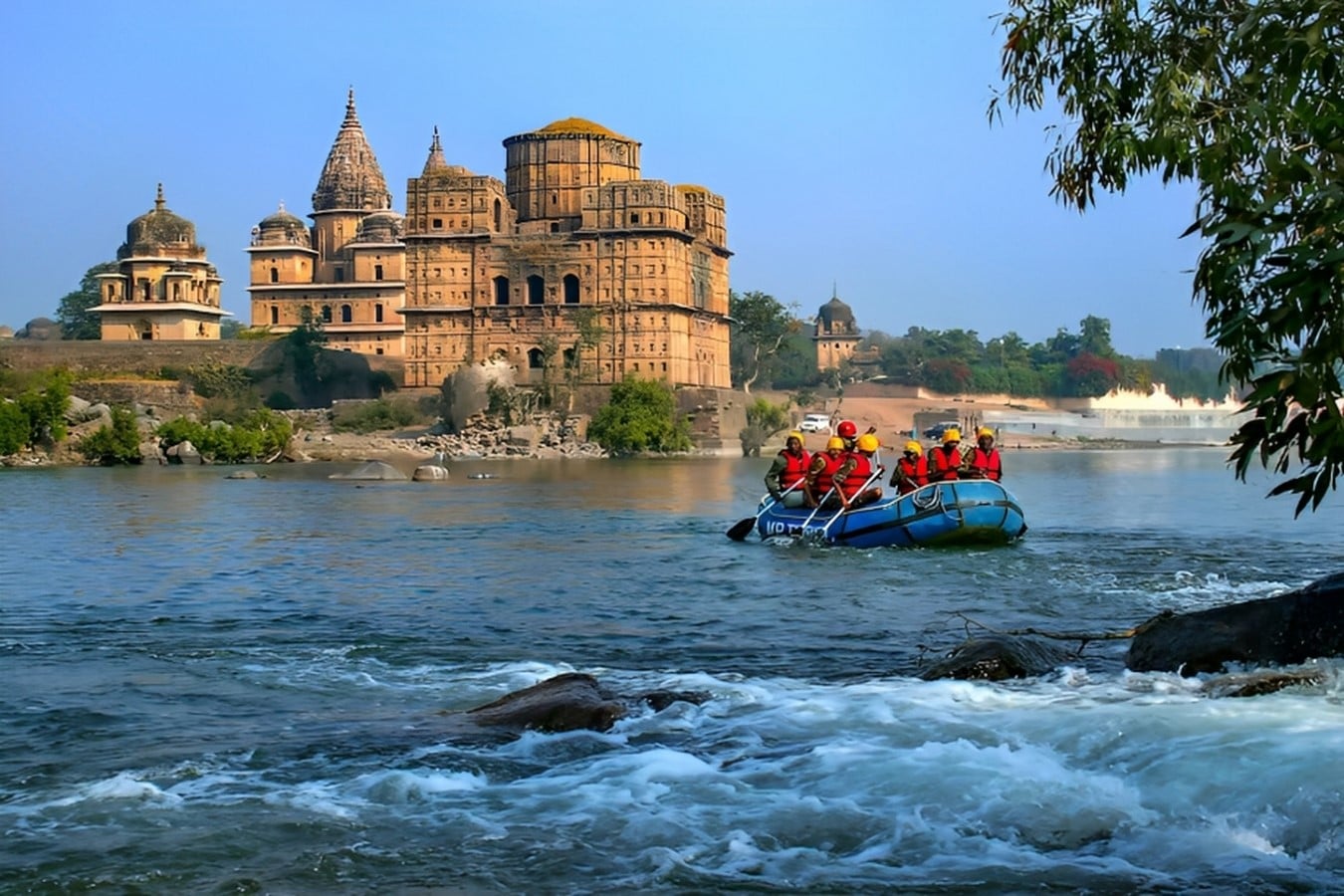
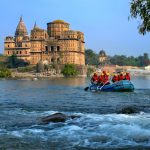
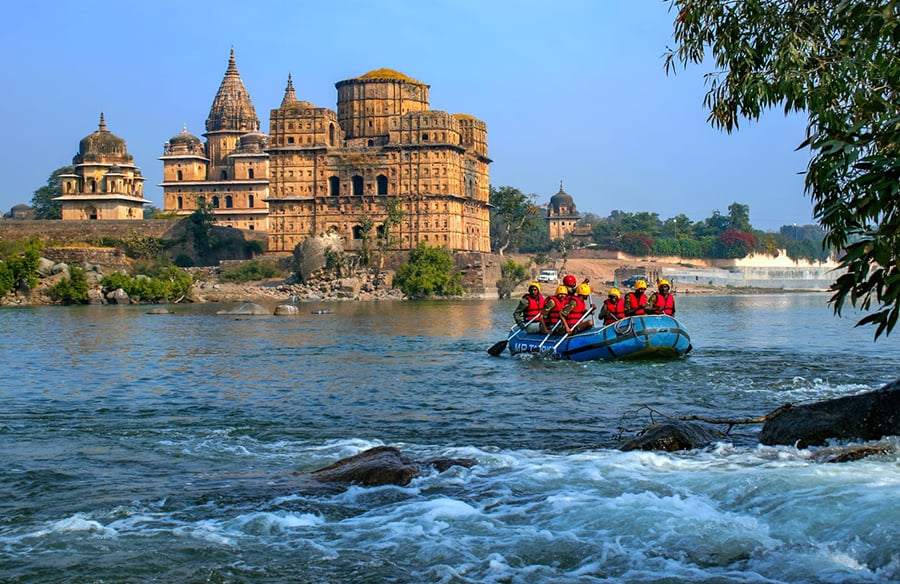
On the banks of the Betwa River at Kanchana Ghat is a spectacular chhatri or cenotaph built to commemorate the Maharajah of Orchha. They are included in one connection, and there are 14 of them. All chatrices are similar to each other. The plan calls for his three-story building with windows on raised platforms. But the Chattri at Bir Singh Deo, closest to the river, stands out for its massive pillars and its prominence. This structure tells the story of the King’s August past. The best way to see these chhatris is by rafting on the Betwa River. The art, architecture, legends, and myths celebrate the glory of Orchha.
References:
Majestic orchha (no date) Best Tourist Places to Visit in Orchha – Madhya Pradesh Tourism. Available at: https://www.mptourism.com/destination-orchha.php (Accessed: November 12, 2022).
Drishti IAS (2019) Architectural Heritage of orchha, Drishti IAS. Available at: https://www.drishtiias.com/daily-updates/daily-news-analysis/architectural-heritage-of-orchha (Accessed: November 12, 2022).
Pandey, A. (no date) Orchha- the architectural heritage of Madhya Pradesh, GRANTHAALAYAH. Available at: https://www.granthaalayahpublication.org/journals/index.php/granthaalayah/article/view/IJRG20_B04_3301 (Accessed: November 12, 2022).
The medieval art and architectural wonders of Orchha (2021) Lonely Planet. Available at: https://www.lonelyplanet.com/articles/medieval-art-and-architectural-orchha (Accessed: November 12, 2022).