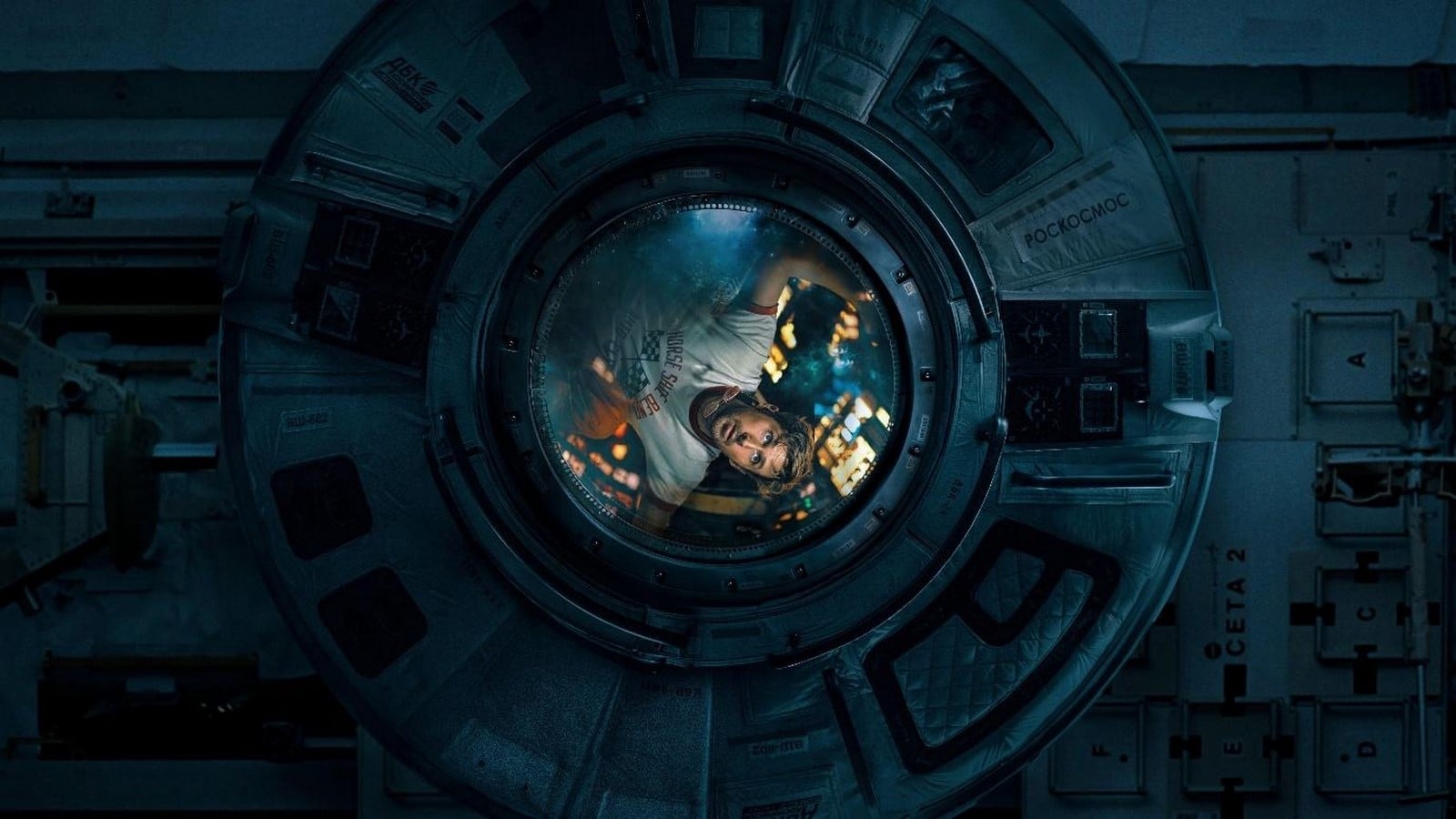
When Ryland Grace wakes up from an induced coma, utterly alone, millions of light-years away from Earth, with the fate of humanity resting in his hands, he must get creative in order to accomplish his mission – unlocking the secret of the star system ‘Tau Ceti’, which is the sole system immune to Astrophage, the microorganisms dimming the Sun’s energy. He encounters Rocky, an alien from the planet of Erid, and they embark on an interstellar journey to save their people from slow extinction by solving the problem of the Astrophage. They develop a growing bond as they learn to communicate with each other and combine their scientific genius to discover innovative ways to survive extreme conditions and dwindling resources.
Directed by Phil Lord and Christopher Miller, and starring Ryan Gosling as Grace, Project Hail Mary is a seat-gripping sci-fi not only for lovers of classic space-odyssey-meets-unlikely-friendship narratives, but also for those seeking something more intellectual – it packs a punch with its handcrafted practical production and set design, technical rigour and unforgettably hilarious, yet heartwarming, characters.
Spoiler warning – While the risk is mild, please read at your own discretion.
A Race for Survival
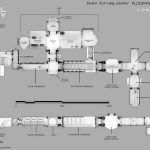
As sunlight slowly diminishes on Earth and at least a quarter of the world’s population is projected to die over the next 30 years, scientists are desperate for a solution before it is too late. Grace is sent with a crew to look for the Tau Ceti System, 12 light-years away, in a desperate attempt to save mankind from extinction. They are induced into a coma to preserve their life on the multi-year journey, scheduled to wake up when they arrive. Their spaceship is designed for durability and adaptability, equipped with all sorts of technologies to let them conduct their research. The purpose-driven interiors are designed to be highly functional; efficient spatial planning is prioritised. This gives rise to a very specific programme, and consequently, layout of spaces within the ship.
A Moving Skyscraper
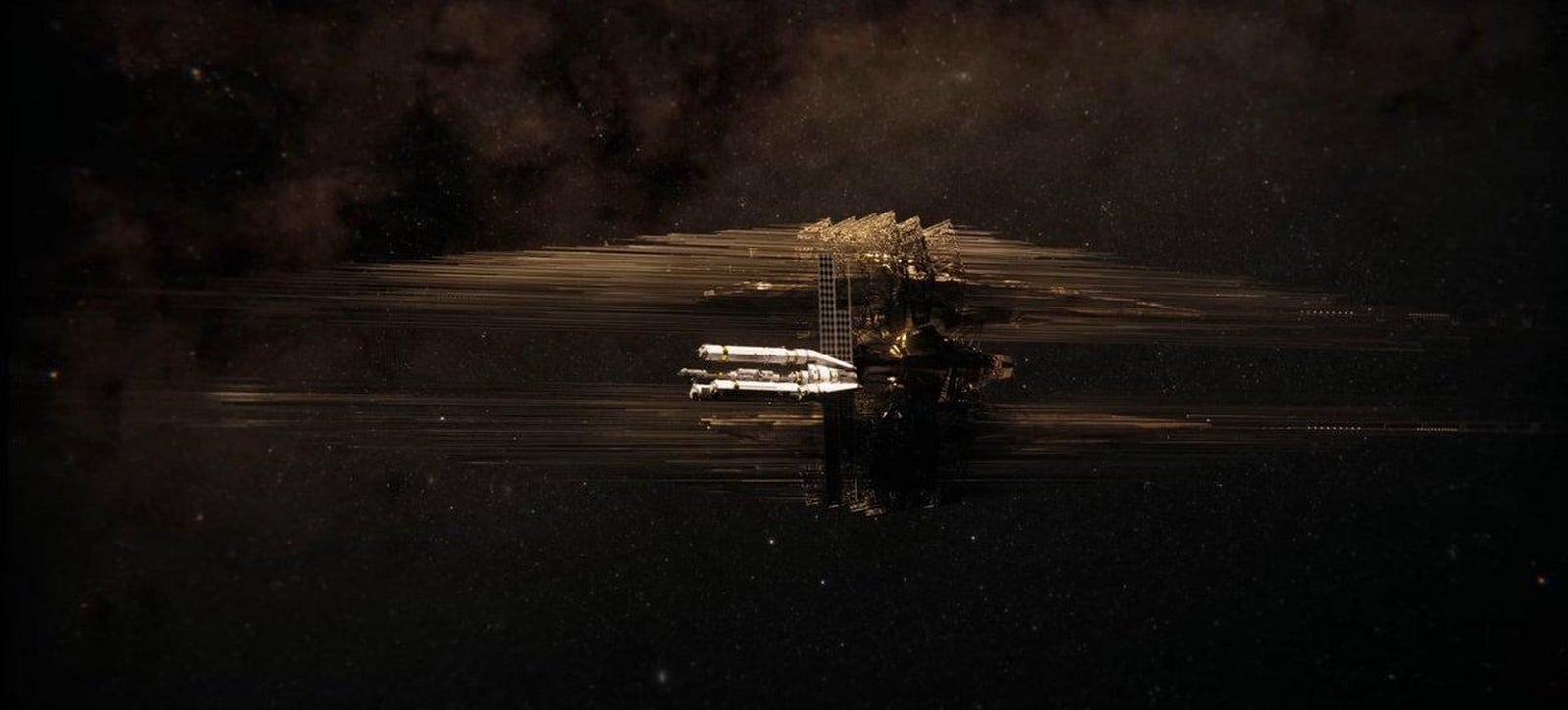
The ship is fuelled by astrophage, which ironically also converts radiation into matter, moving forward by expelling energy (toot-to-scoot); this requires massive engines to constantly propel it forward. It is also fitted with a radiation protection shield. This means that the most protected area of the ship is at its base, which is the best shielded from radiation.
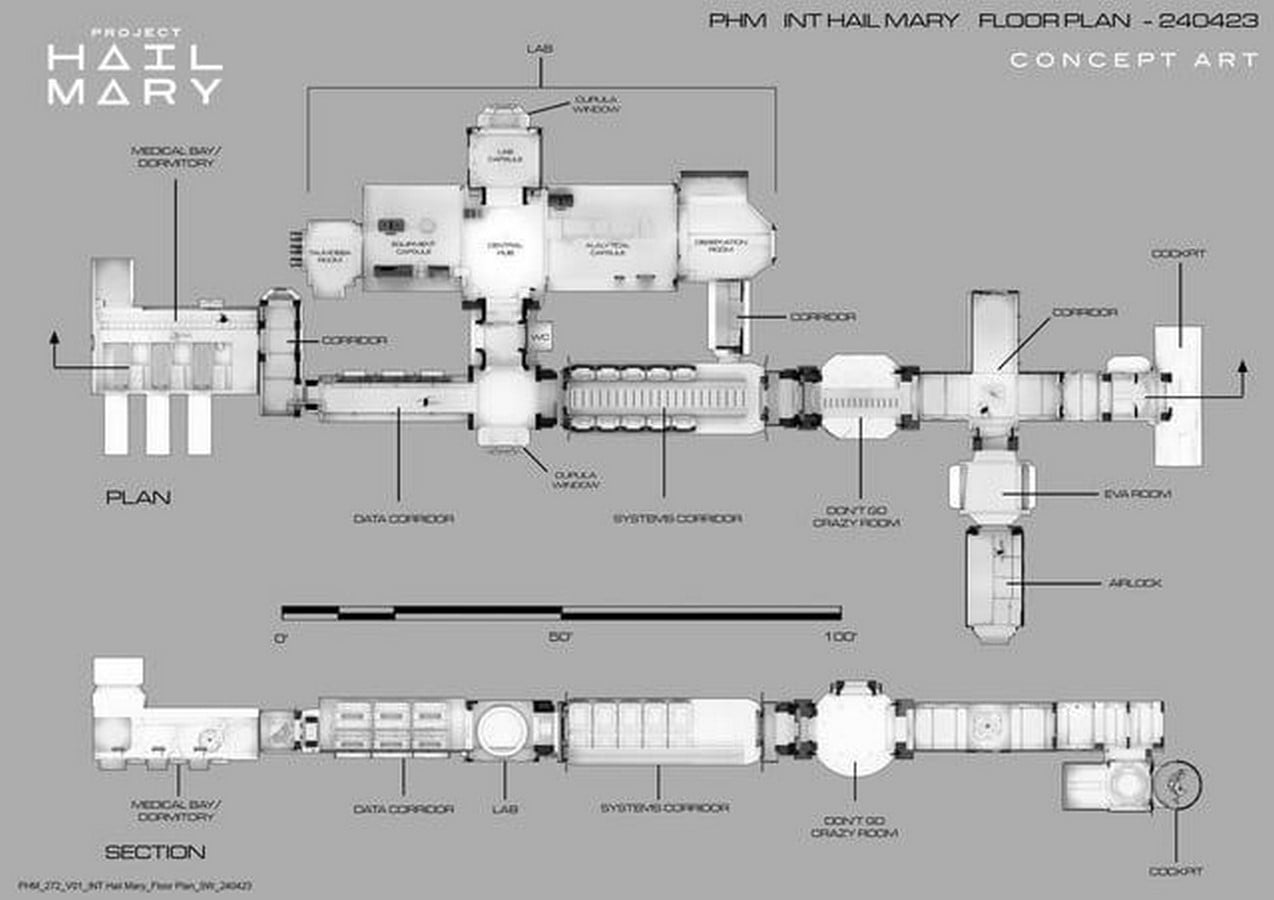
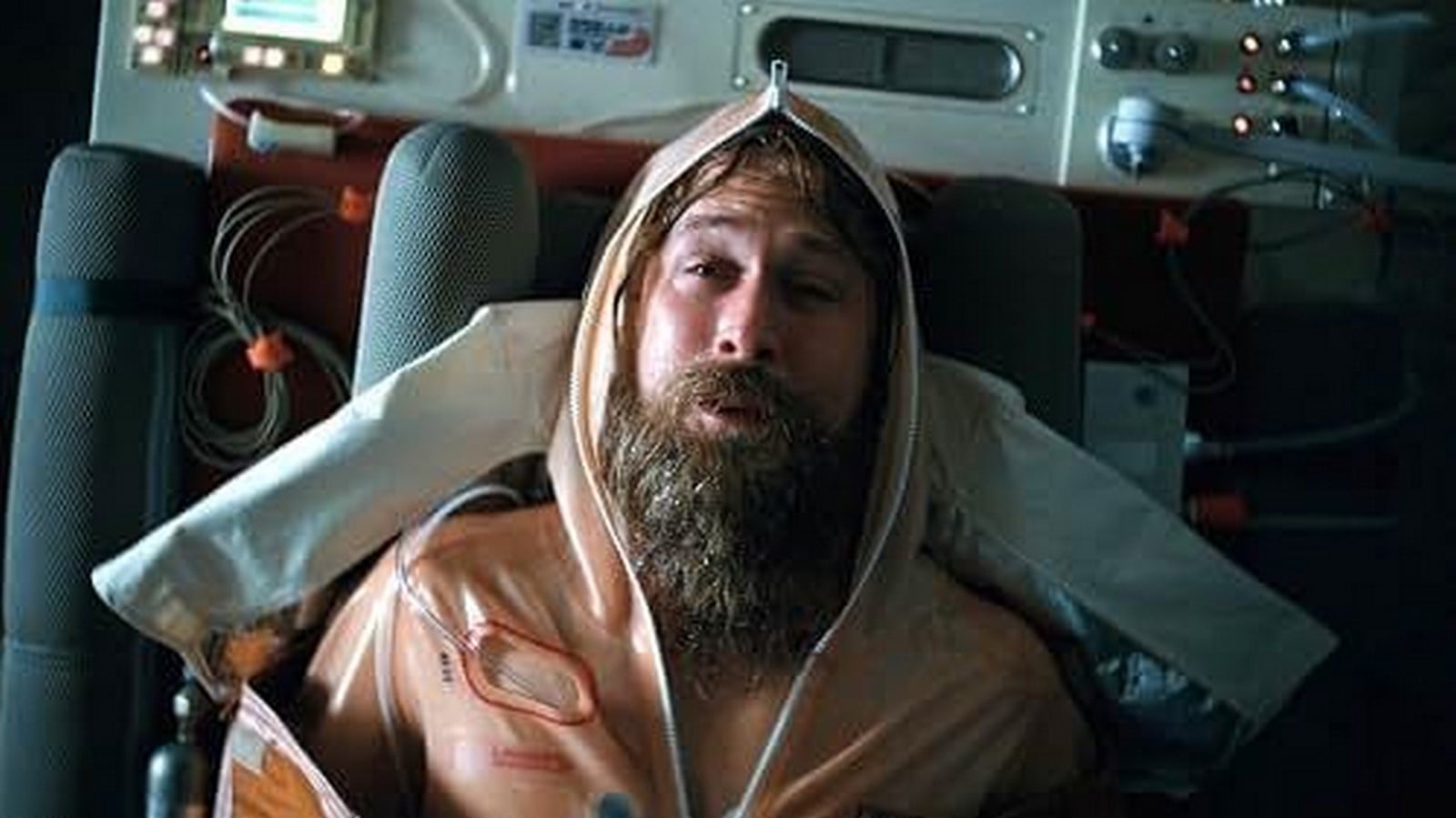
Right on top of the base is the Medical bay; this is where the crew sleeps, and the hibernation pods and life support are located. Its interiors are cold and surgical; white surfaces all around and medical equipment make it quite a harsh space to relax in. The cushioned floor and laddered walls enable safe movement within the space. After awakening from the coma, as Grace claims the space over time, and later Rocky too, the space feels more lived-in, reflecting their messy coexistence in such exceptional conditions. Perhaps the stark sterility was a subconscious design decision owing to the near-certainty that they would not survive the journey.
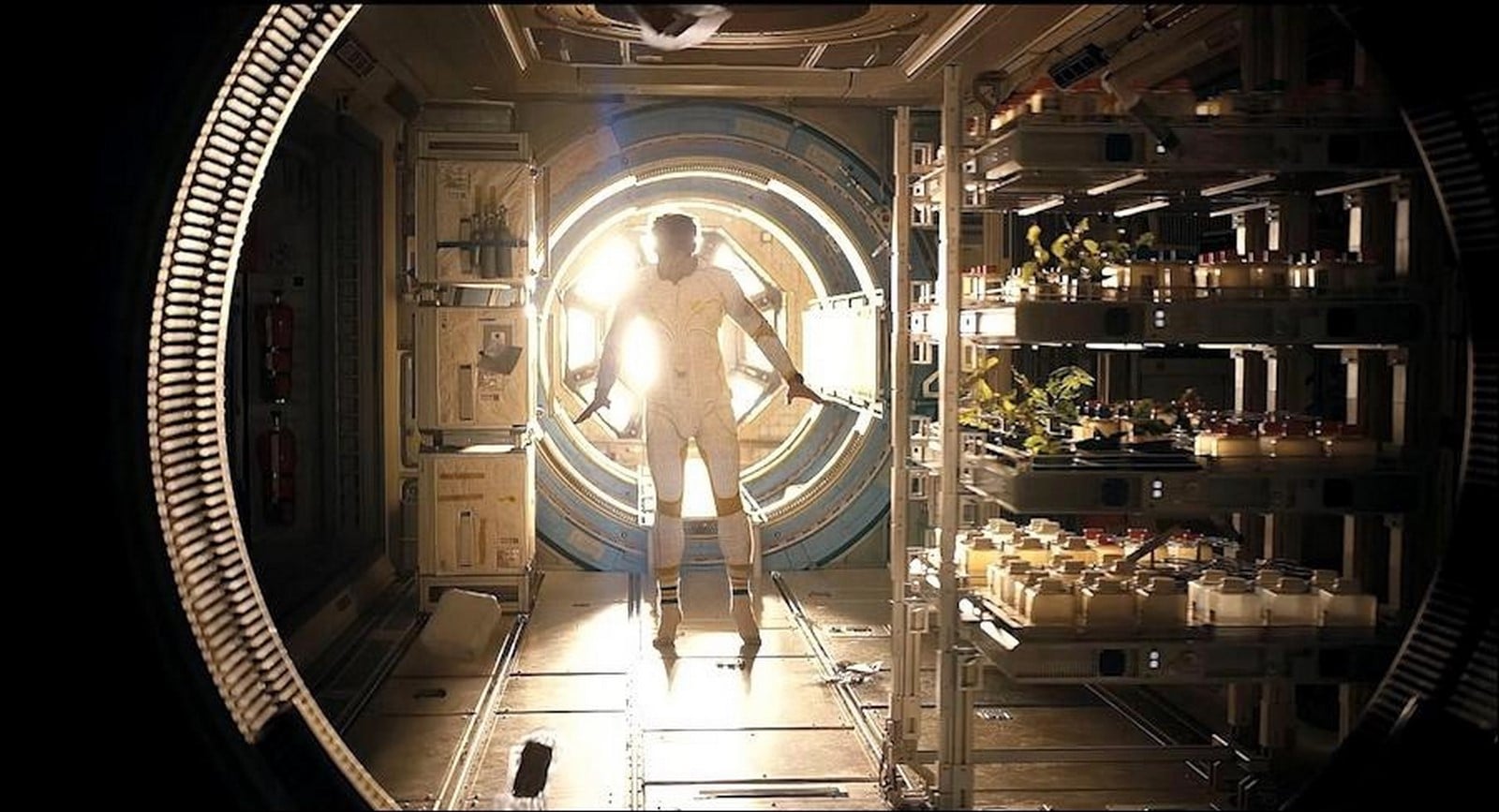
The Medical bay is followed by the Research lab, where the crew was meant to test samples of celestial substances and experiment with astrophage during the course of the mission. These are the brains of the ship, where Grace and Rocky bond over their shared fascination for science and saving their people.
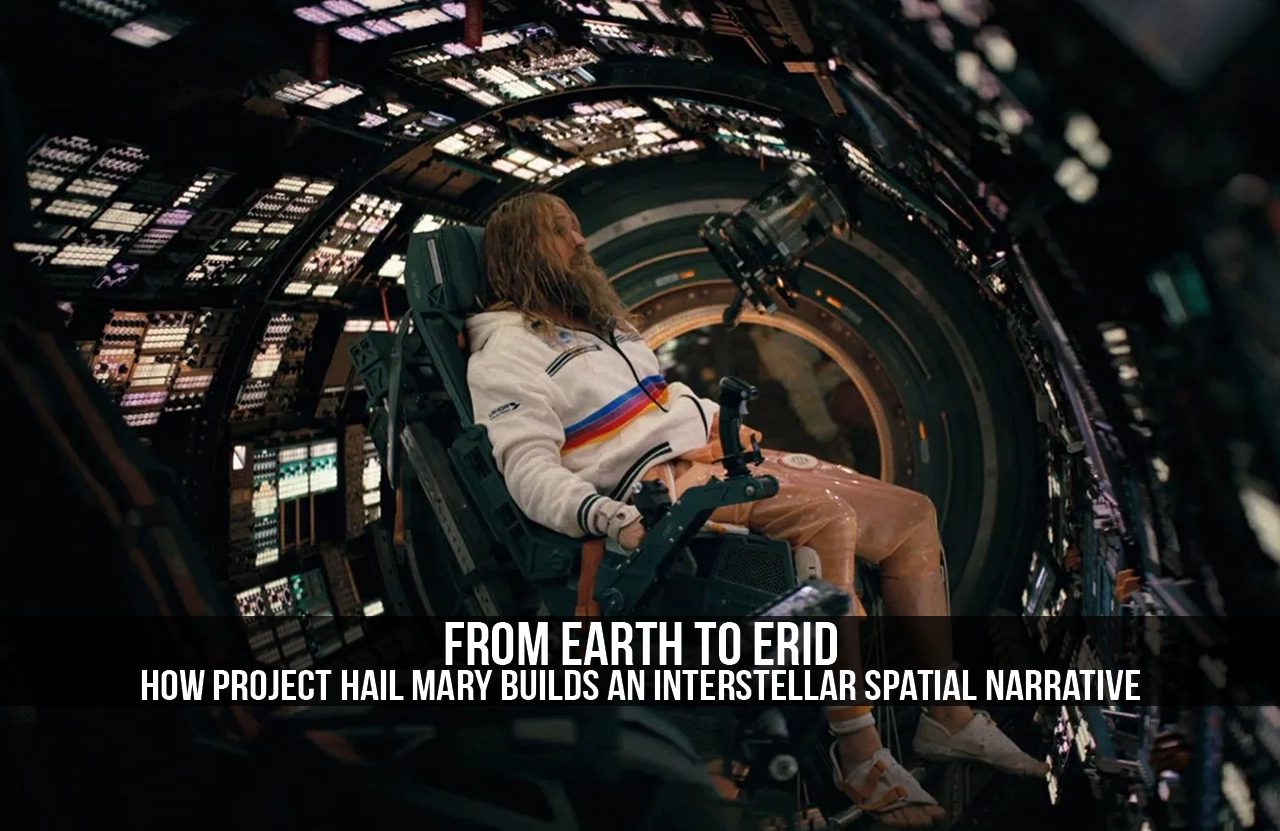
Stacked above is the ISS-inspired Cockpit. Grace, initially untrained to fly, manages to master precise navigation with practice. With Rocky constantly in tow, personal space is at a premium for Grace, and he finds himself most at ease in the cockpit, where he can converse with the voice assistant on the ship, Mary, like a daily journal to confide in. He also relies on Mary to guide him in operating the ship. Finally, the Airlock portal allows access to outer space and docking to other ships.

The human scale is essential to the design of the ship. Although the interiors are cramped and claustrophobic, the internal volume is just wide enough for one to easily reach out to the walls on all sides without long travel distances. The crew members reside in simulated gravity produced by the constant acceleration of the ship (at 1.5 times the gravitational force of the Earth) through space, forcing everything downwards. While this is the case when the ship is in motion, as soon as it comes to rest, or the direction of travel changes, the ship returns to zero-g conditions. This means that every surface needs to be equipped with handrails and harnesses to hold back things. The arrival of Rocky brings out the limitations of the space – it was certainly not designed to accommodate extra-terrestrial species.

A Structural Feat
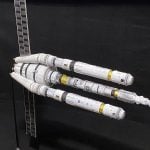
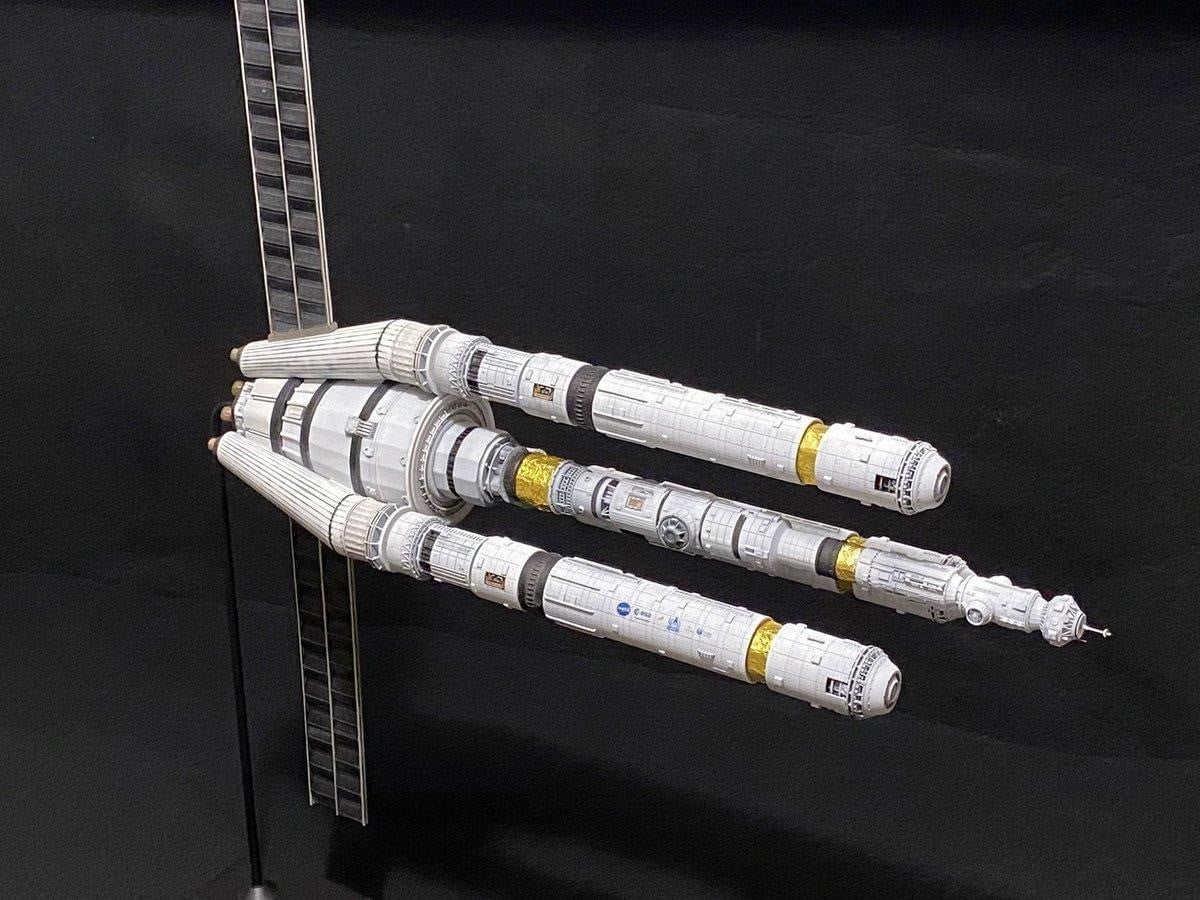
At a height of 100 m, the ship stands impressively tall – and heavy. The beautiful 3-pronged metallic body, with its wing-like radiators, resembles a dragonfly, and the golden bands on the propellers and the central bay give it a telescopic appearance. Inside the cockpit is an observatory module that lets its user project out of the ship, immersing them in outer space. More functionally, its purpose is to enable unobstructed 360-degree viewing to let the crew assess for incoming threats. Although the cockpit acts as a portal to the vast emptiness outside, it does little to alleviate the sense of loneliness. A central spine under compression, inspired by that of the International Space Station, cross-braced with trusses, holds together the entire structure.
But perhaps even more awe-inspiring is the spaceship Rocky, Grace’s alien comrade on this operation, stays in. If the sheer scale of the Hail Mary had been startling, Rocky’s ship is equal parts majestic and elegant. It is a testimony to the Eridians’ craftsmanship, made of Xenonite (Xenon in solid form) and composed of thousands of delicate-but-sharp, needle-like components clustered into two gigantic tapered spans, connected in the centre by an inhabited bay, which is further composed of transparent glass-like panels framed by more Xenonite. The interiors have a deep, cavernous quality to them, perhaps a decision stemming from the Eridian tendency to stay on guard at all times – they like living in close-knit groups and watching over each other as they sleep.
A Practical Set
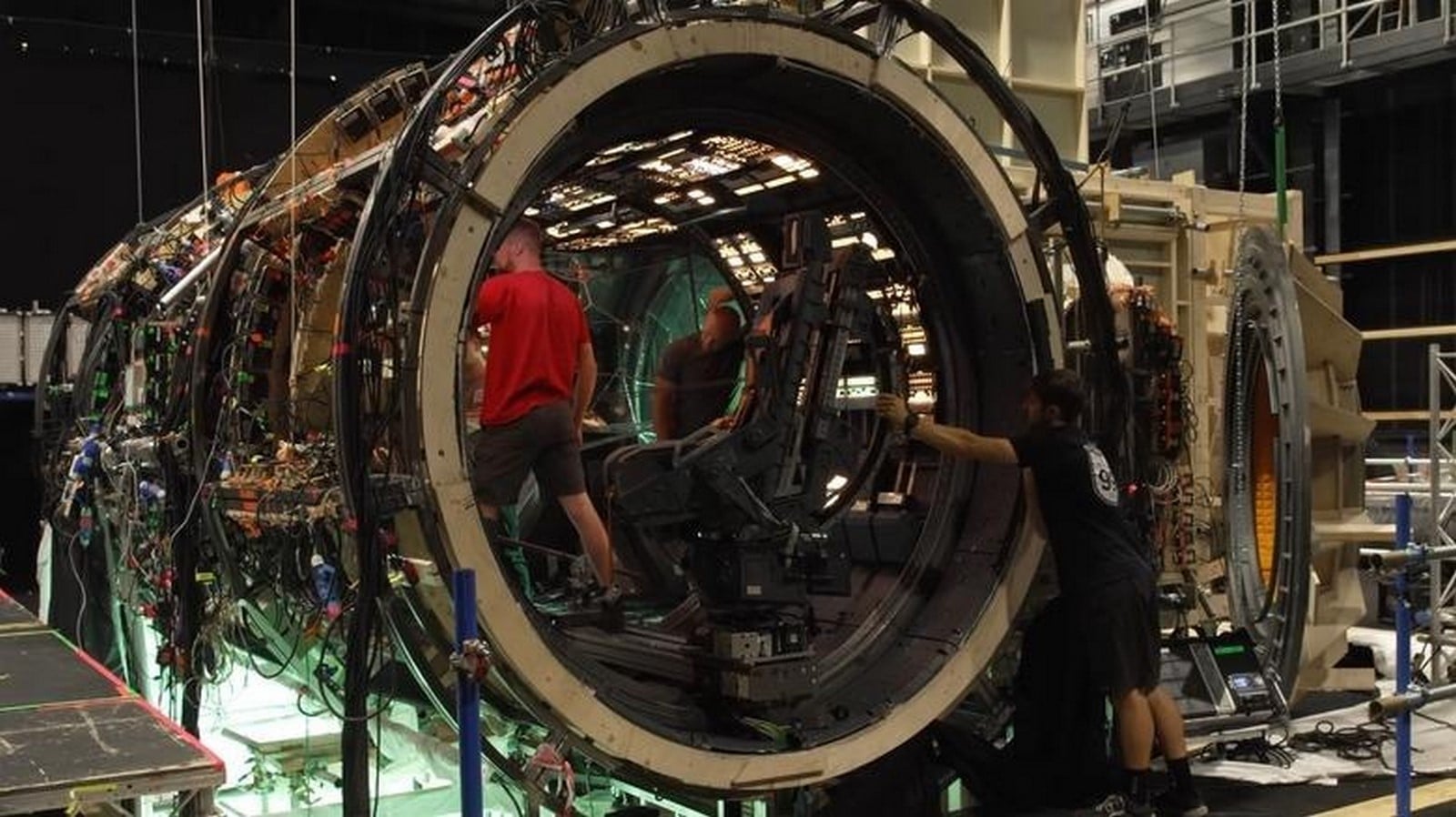
The cockpit is lined with switchboards, controls, and screens on practically every surface. The set designed for the movie contains over 150 screens, all practical with custom display animation, and over 750 custom switchboards in various languages, as a nod to the shared multinational purpose of the mission. The exterior of the modular set is encased in colourful wiring – only a handful of technicians actually know how to navigate them. The entire structure is detachable and rotatable, at the request of Christopher Miller, who wished to be able to film from all angles, and was set on a tilt-and-shaker to simulate turbulence, capable of tilting up to 25 degrees. The technical design crew spent weeks setting up each set – and this was just one of many. Another level of complexity was the need for filming scenes both upright and with the set lying down, requiring the set-up to be replicated a second time.
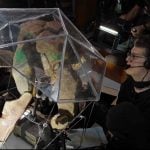
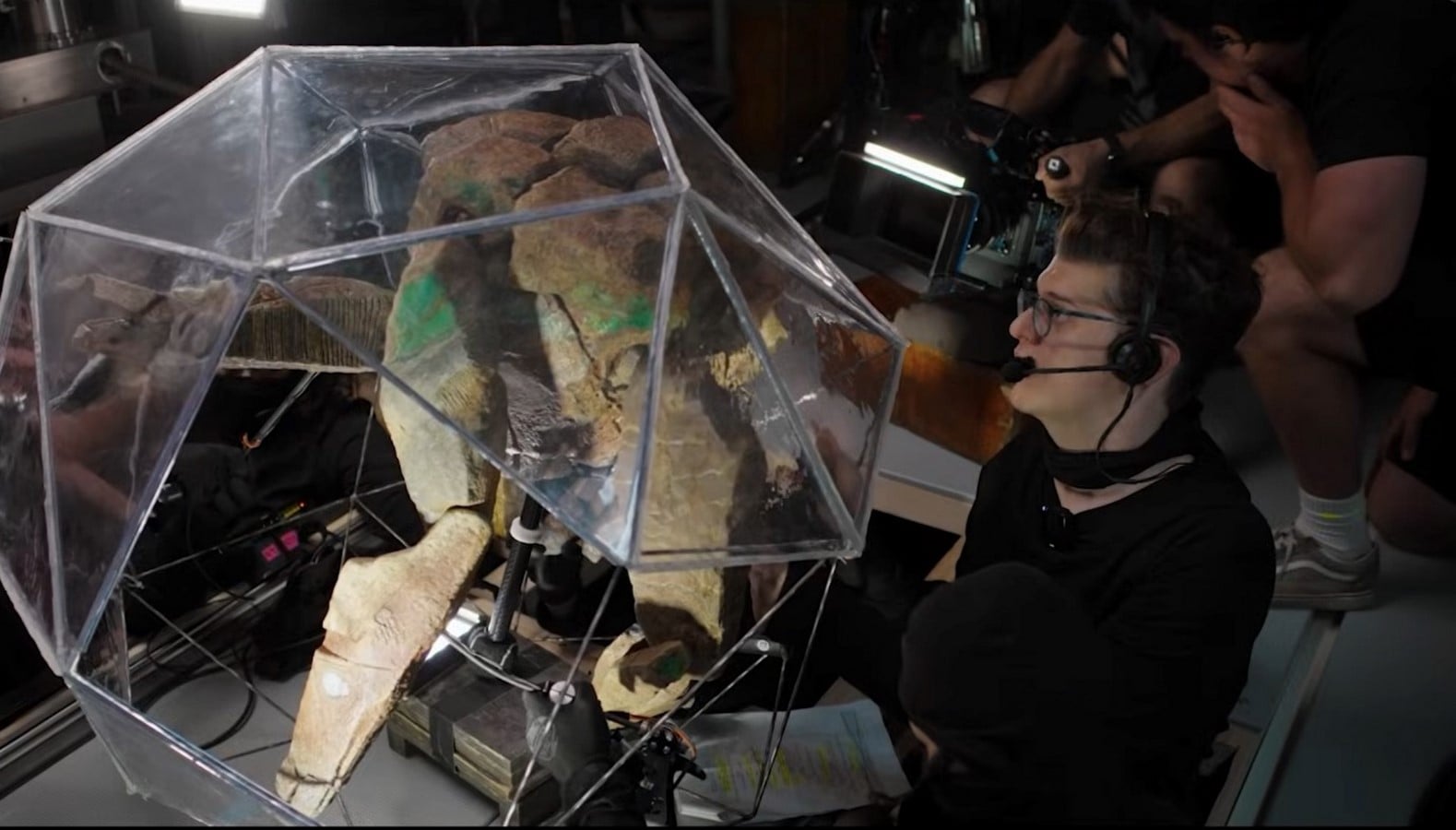
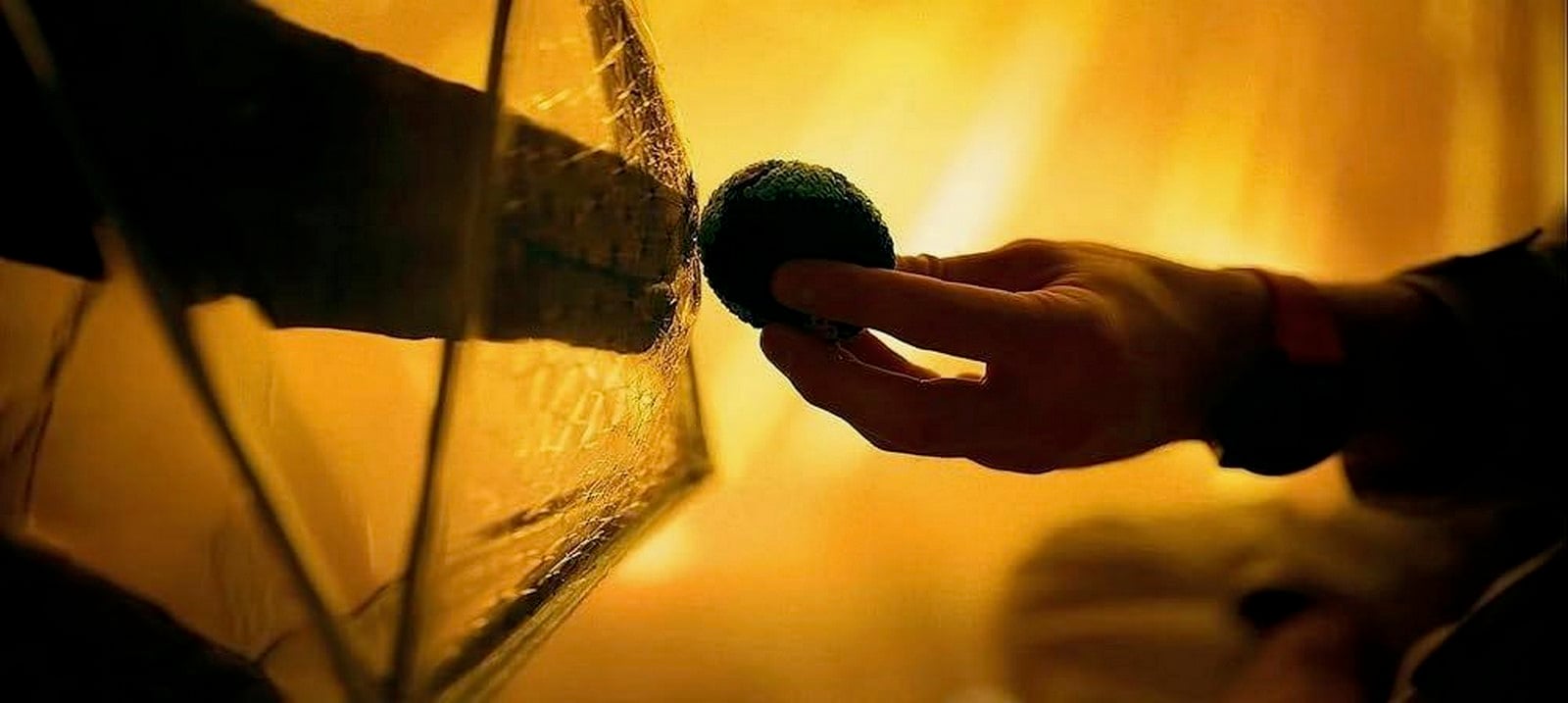
The technical rigour that went into the set design was only matched by the practical production techniques used by Miller. No green screens were used during filming – instead, various backdrops were used to simulate space and the auroras of planets. Moreover, Rocky was a real animatronic puppet, voiced by James Ortiz. Puppeteers, dubbed ‘Rockyteers’, controlled Rocky on set, with digital animation invoked only when simulating Rocky’s haywire motion; Rocky’s asymmetric-geodesic enclosure was both tricky to put together, and challenging to film. The costumes were not computer-generated either – costume designers took inspiration from real NASA and SpaceX costumes to develop lightweight but realistic versions.
The exemplary world-building and hand-crafted quality in Project Hail Mary make it a joy for built environment enthusiasts and practical-effects connoisseurs to watch. Spaces (in literal Space) carry the story of two civilisations, highlighting their technological achievements and their values. The relationship between comfort and survival is also explored – How does one optimise an environment for an unlikely journey and unknown circumstances? The movie is a curiosity-quencher; it experiments with complex aerospace concepts through a simplistic, emotionally-charged story of friendship and rediscovering oneself. You will soon find yourself ‘fist my bump’-ing through your day, wondering what Grace’s life in … well, you will have to find the rest out for yourself. Happy watching!
Reference List:
Adam Savage’s Tested. (2026). How Project Hail Mary’s Spaceship Set Was Built. [YouTube video]. Available at: https://youtu.be/OUSwAUaMaiQ?si=ya4n-Klxzgho7JwW [Accessed 23 August 2026].
Looper. (2026). What Ryan Gosling’s Project Hail Mary Looks Like Without Special Effects. [YouTube video]. Available at: https://youtu.be/Zdc9z_KY3mc?si=ml-IKOaEMak5ebry [Accessed 23 August 2026].
Setcircle. (2026). Take a Closer Look at the Production Design of Project Hail Mary. [Instagram]. Written 8 July 2026. Available from: https://www.instagram.com/p/Dagtr-fj8Ut/?img_index=11&igsi=MTF6aHNjbWczeHIw [Accessed 23 August 2026].
Souktikbhattacherjee. (2026). Space Architecture of Hail Mary Spaceship Design / Project Hail Mary / Explained for Space Nerds. [YouTube video]. Available at: https://youtu.be/Mg8YDDHGMLQ?si=ph6XdrQgwCZNpRs9 [Accessed 23 August 2026].