“There’s always three incarnations of a story: the story that is being told, the listener’s interpretation, and the version the listener retells in the future.”
— Tarsem Singh, interview with Benjamin Crossley-Marra, Ioncinema
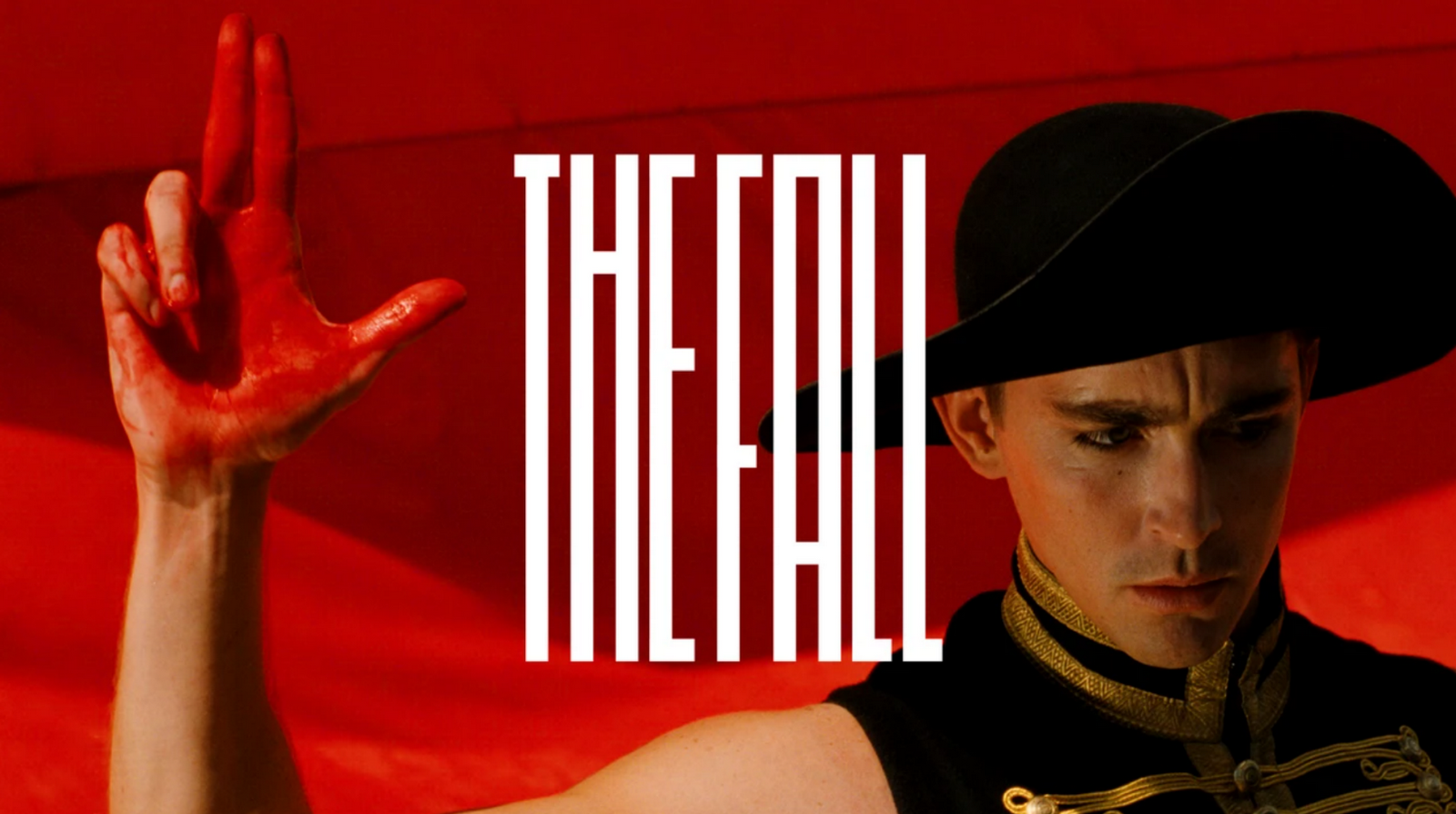
What is a story?
How has it acted as a primordial narrative instinct, shaping the ways of living, transmitting memory, and transcending generations? Storytelling is not an ancillary human activity; it is the fundamental architecture of consciousness. The earliest act of building, a shared space where memory, fear, faith, and longing could find form.
It has always been our way of holding time, passing the pulse of one generation into the hands of another. Stories were inhabited. Within them, we learned to build worlds, to imagine, to fall and to rise again through the act of retelling. They carried the weight of rituals, the color of myths, the rhythm of lives lived between the sacred and the ordinary.
Even now, in the quiet repetitions of a children’s tale, you can still feel those ancient lineages, oral geographies folded into small, familiar words. They remain our cultural continuity, the living architecture of who we are and what we choose to remember. Because of the stories they construct. They create spaces of empathy, of belonging, of meaning. And somewhere within that structure, we find ourselves rebuilding the same fragile shelter of imagination.
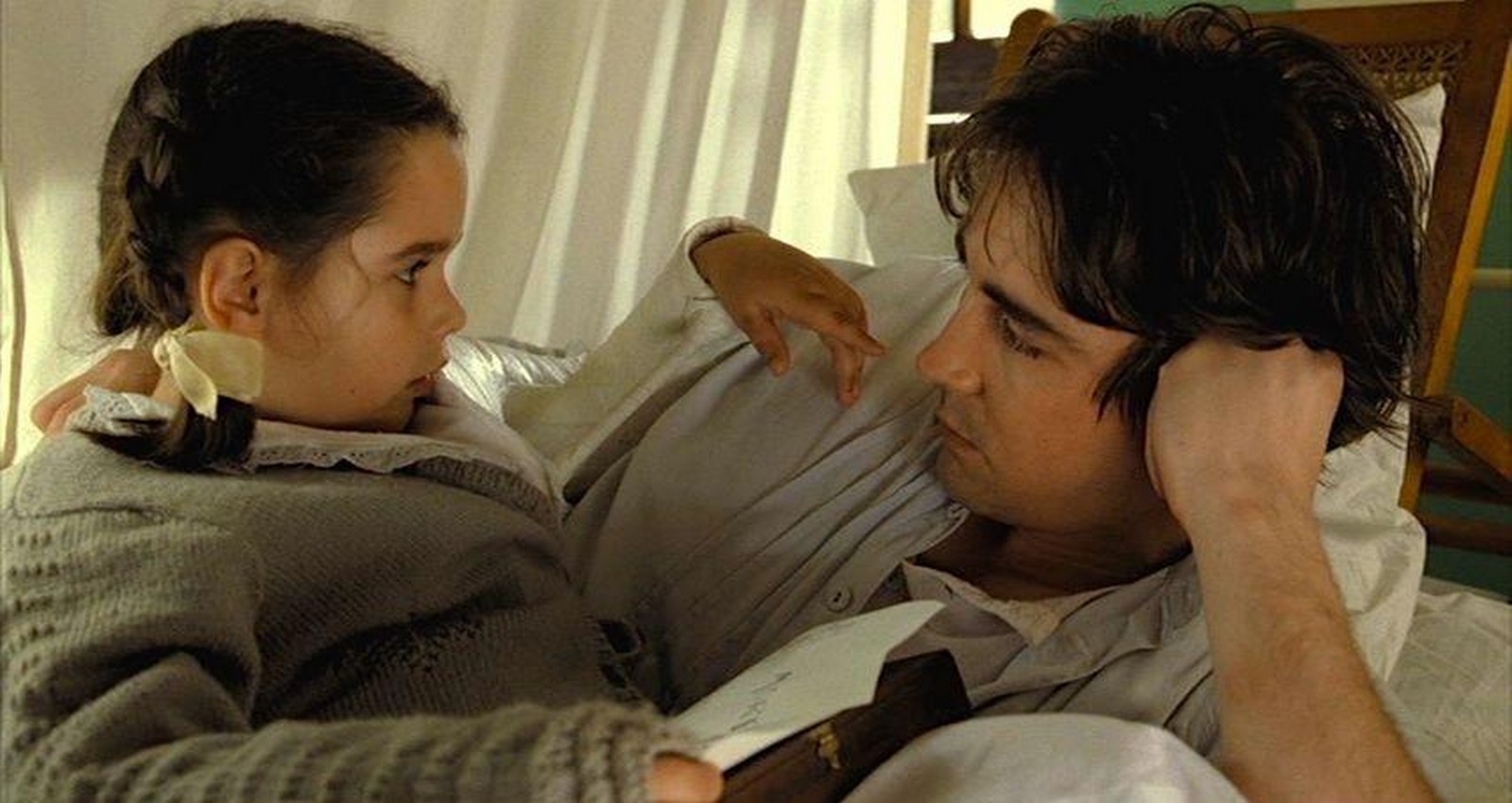
In their layering — between the teller, the listener, and the imagined, lies the same fragile alchemy that defines The Fall: the way the imaginary dissolves into immediacy, and immediacy, in turn, breathes life back into the imaginary. Since Aristotle, it has been known that stories shape our moral and emotional worlds. As Martha Nussbaum writes, “You can’t really change the heart without telling a story.”
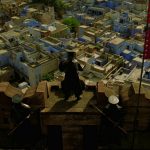
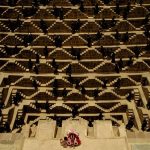
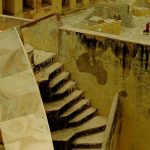
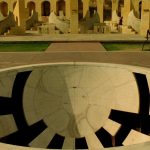
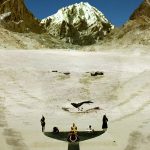
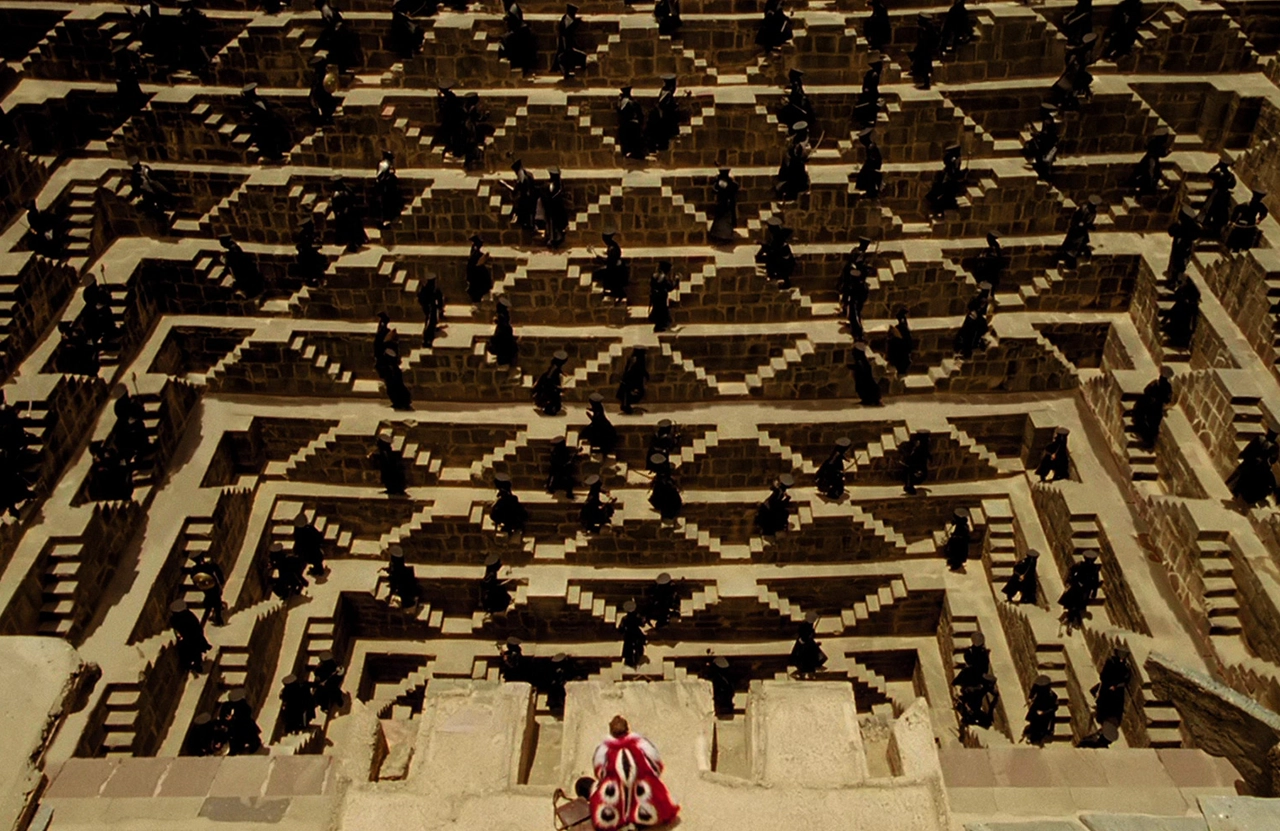
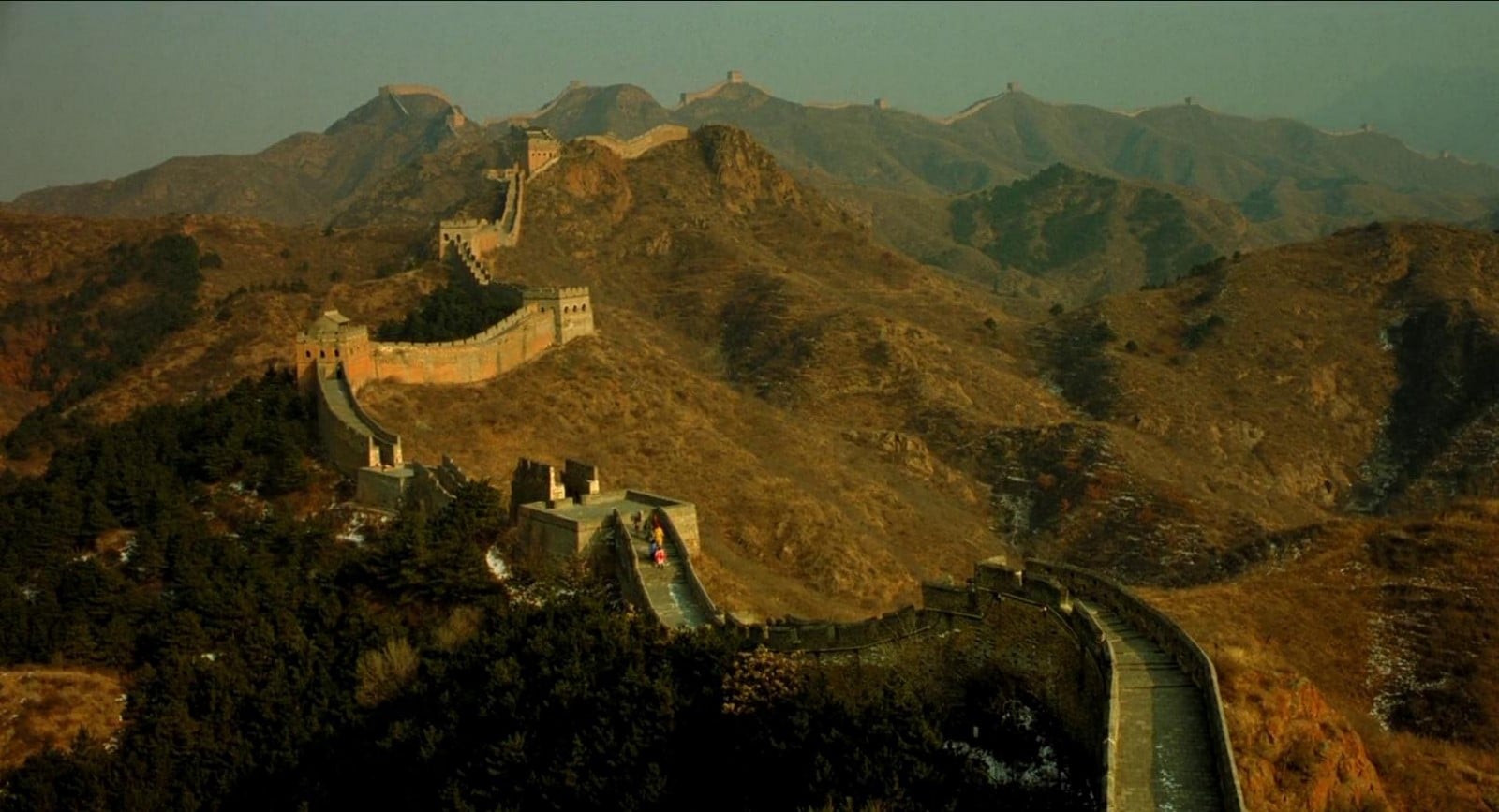
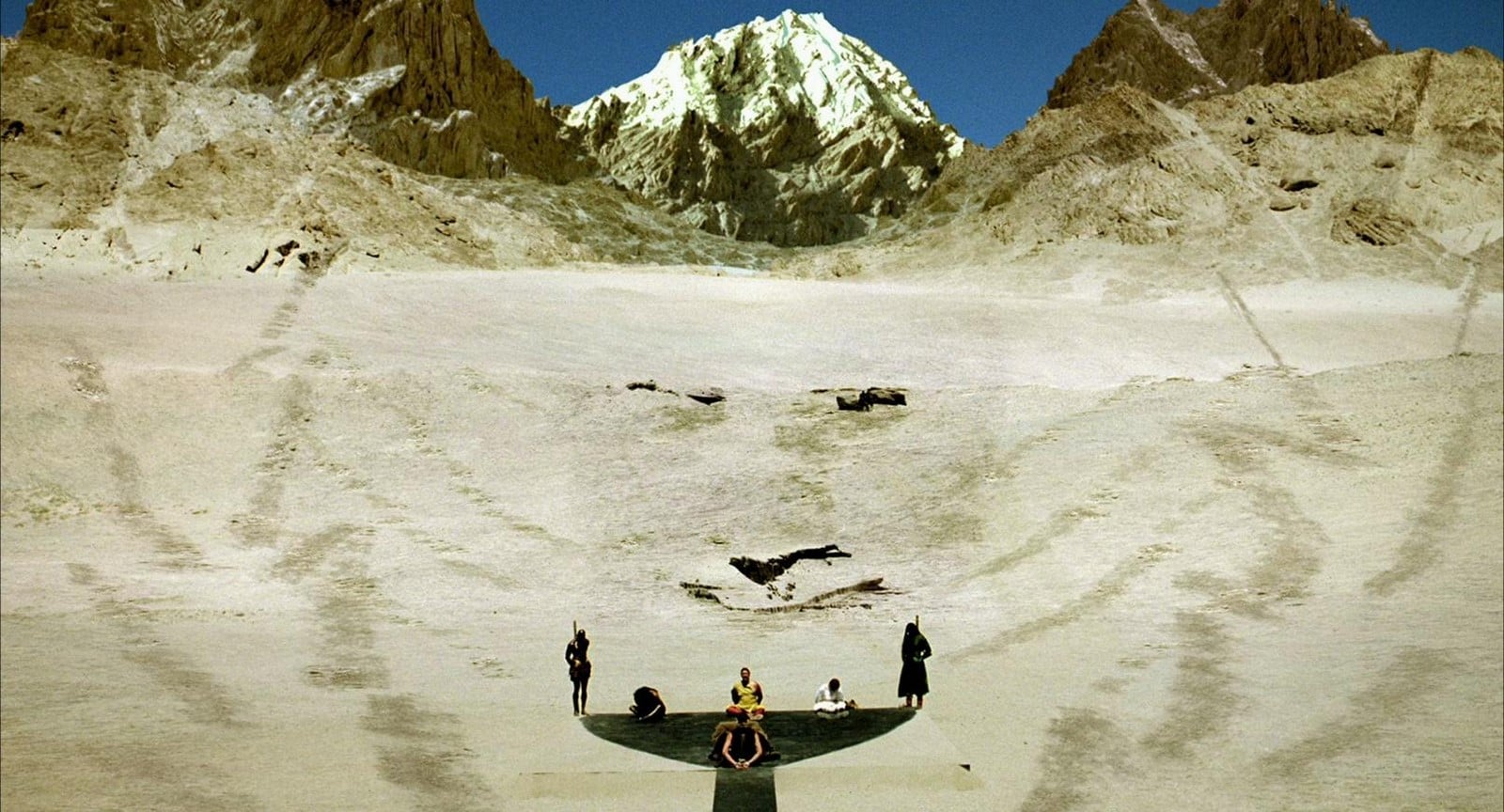
In an age of digital age and algorithmic imagery, Tarsem Singh’s The Fall (2006) stands as a defiant monument to this ancient truth, that storytelling remains the most human act of world-making. Singh rejects the sterile artifice of CGI, instead crafting imagination through geography itself. Over four years and twenty-four countries, he transforms landscapes into living myth, the cerulean walls of Jodhpur, the labyrinthine geometry of Chand Baori, the monolithic dunes of Namibia, each place becoming both real and imagined, both wound and wonder.
The Fall posits that the most profound imaginaries are morphed from the immediacy of the real. To tell a story here is to build, and to rebuild, the world itself. Its architecture becomes its story: the fragile construction of a shared consciousness between a broken man and a hopeful child.
I: “How’d you hurt your arm?” / “I fell.” / “Me too.”
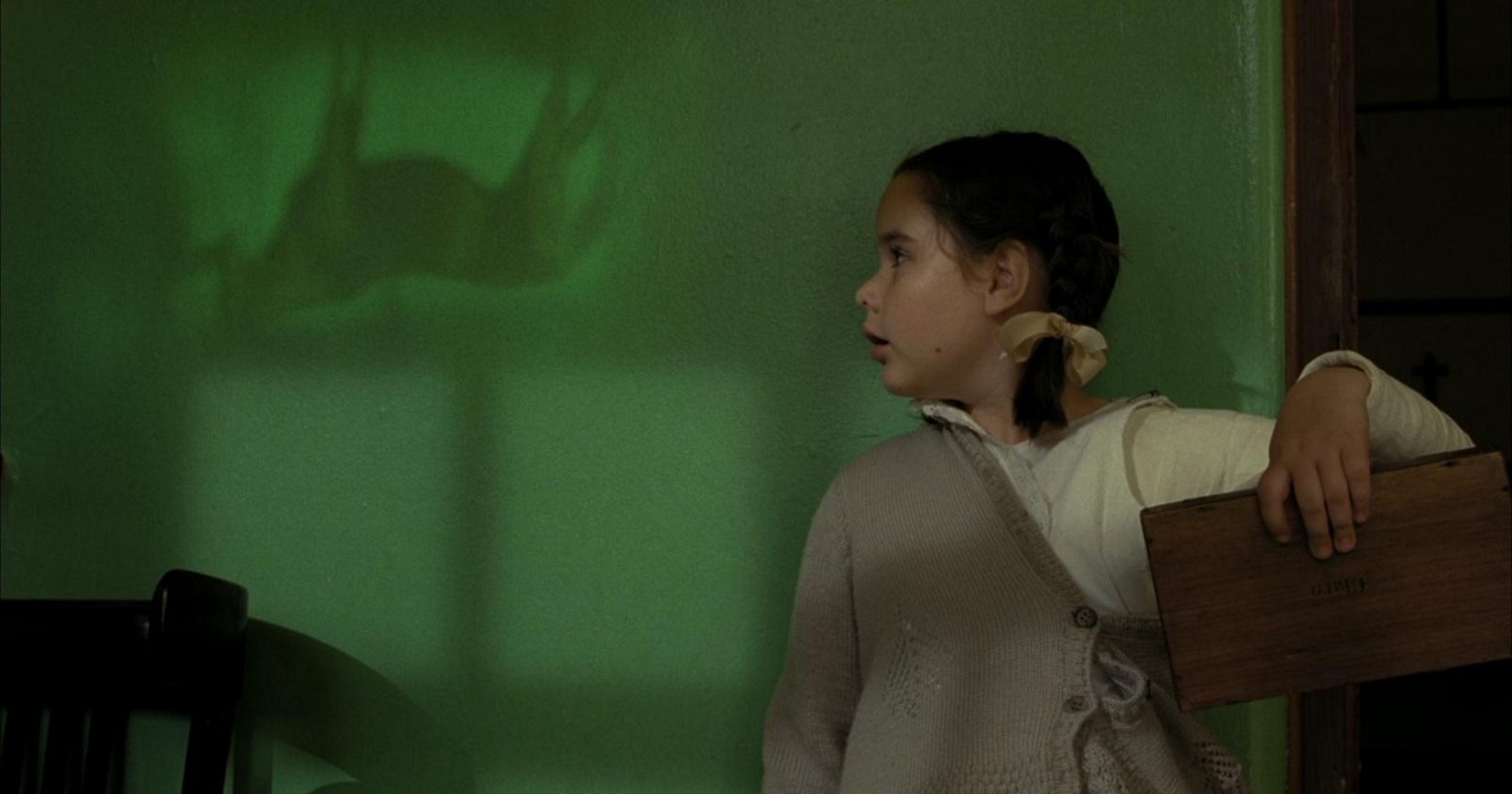
The film begins with this simple, devastating exchange and with it, two parallel descents. Both Roy and Alexandria have fallen: physically and emotionally. Set in a near-empty Los Angeles hospital in 1915, the story opens on Roy Walker (Lee Pace), a silent film stuntman immobilized by a tragic accident. In the same ward, a five-year-old Romanian immigrant, Alexandria (Catinca Untaru), nurses a broken arm.
What begins as boredom slowly unfolds into a constructed world, a shared imaginary. To distract her, Roy begins to tell a story, an epic of love, betrayal, and vengeance. Yet beneath the vivid imagery lies his unspoken despair. Through storytelling, Roy reconstructs the world he has lost; through listening, Alexandria begins to build one of her own.
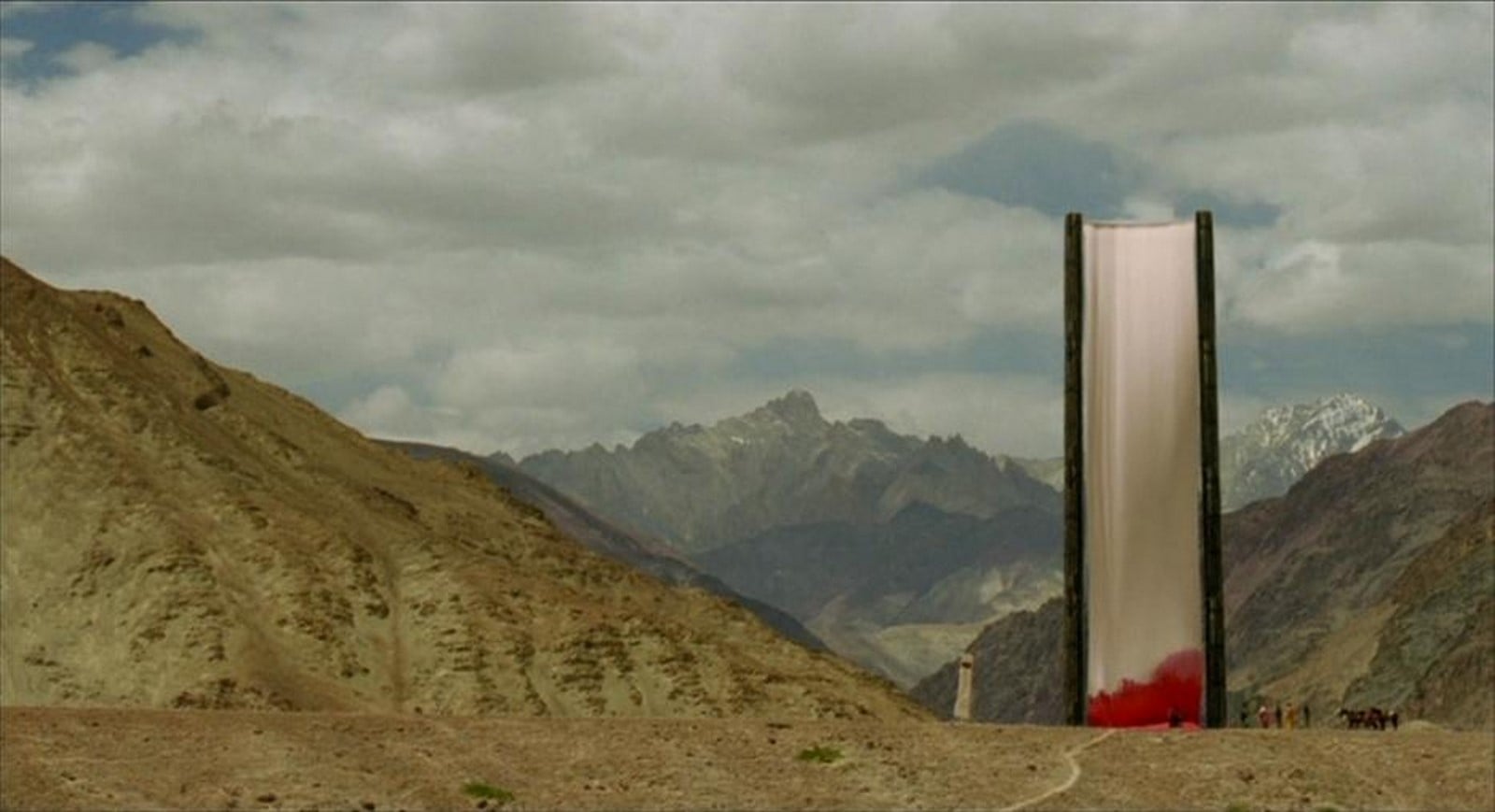
Act II: “Will you tell me the story now?” / “What story?” / “The Epic.”
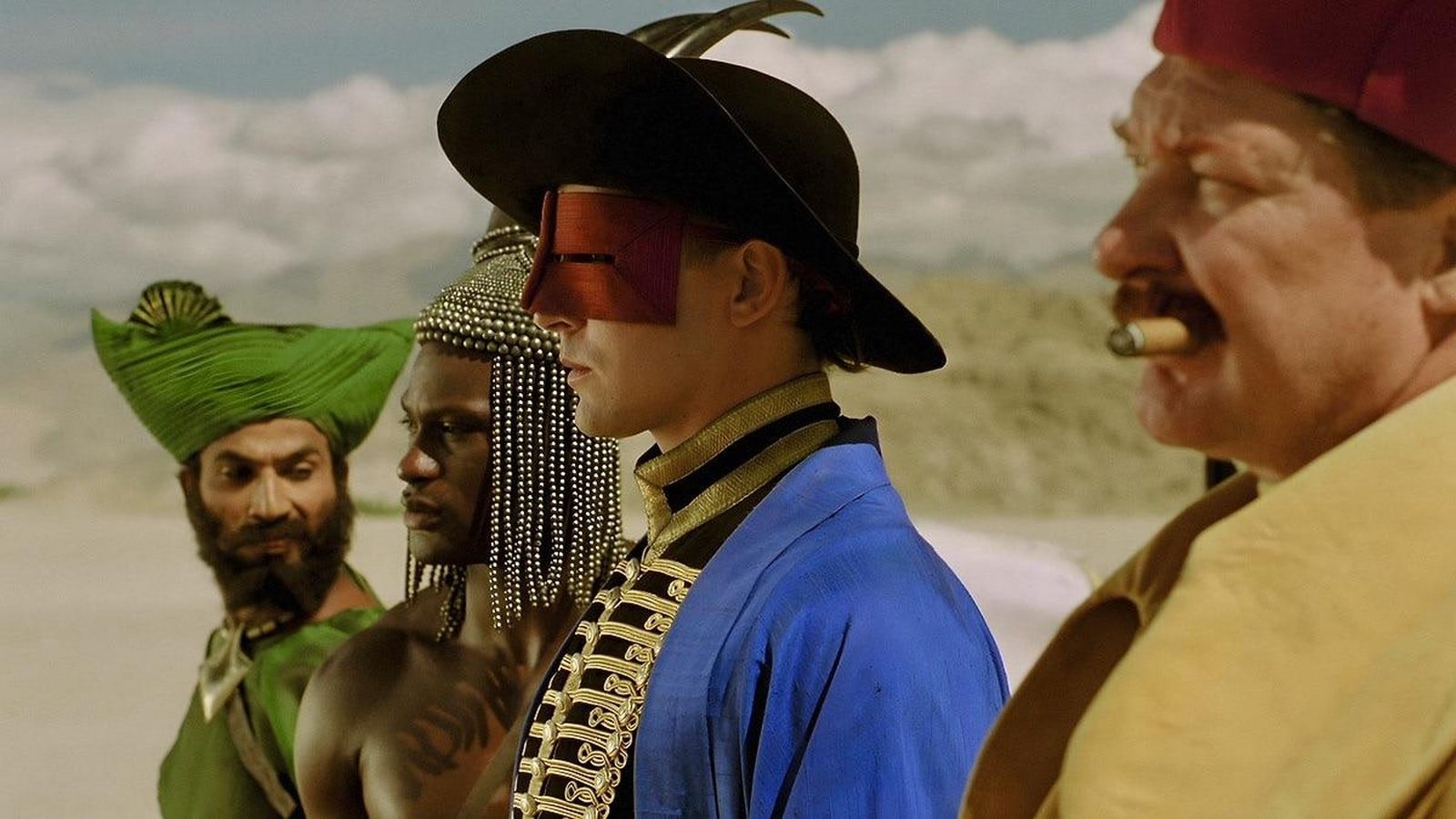
Tarsem’s brilliance lies in the doubling of worlds. The real world and the storied world unfold in tandem, each informing the other. The sterile hospital becomes the foundation of Alexandria’s imagination, a scaffolding on which her fantasies are built. Alexandria “casts” her world from the fragments around her, a cinematic collage shaped by the immediacy of memory. The nurse becomes a princess, the ice-delivery man becomes Charles Darwin, and Roy himself transforms into a tragic bandit.
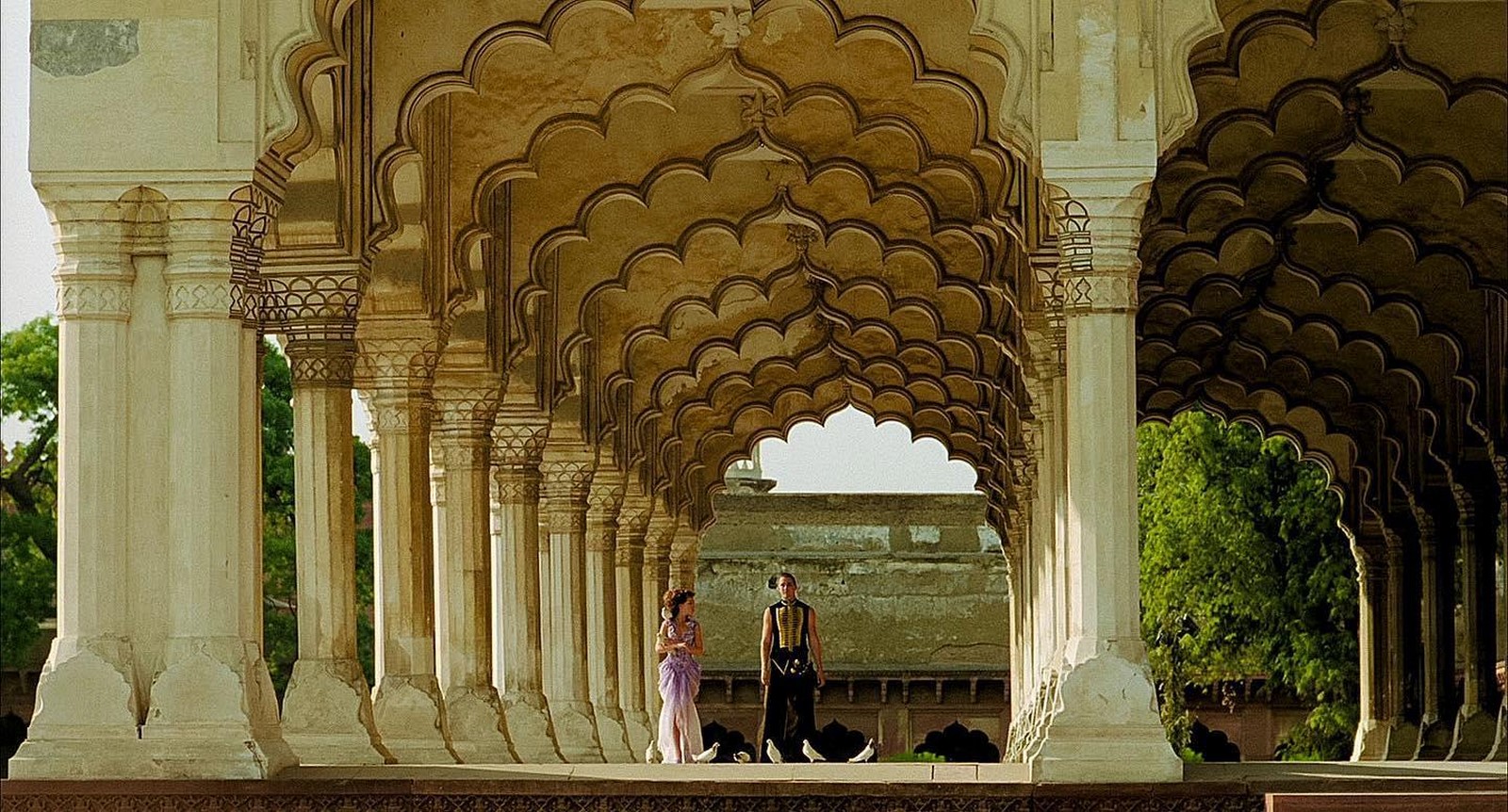
III: “Are you trying to save my soul?” — The Real and the Storied
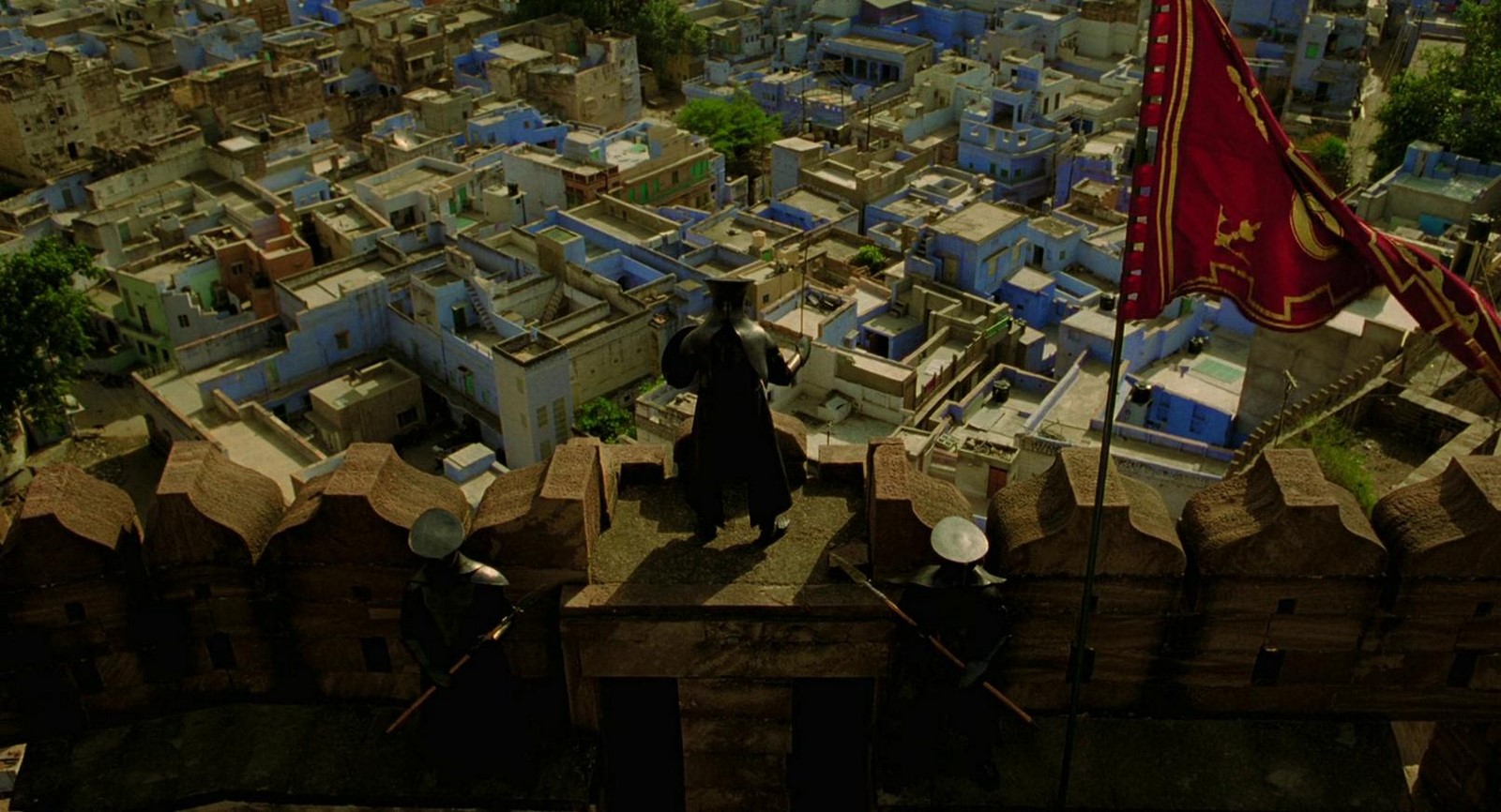
As the narrative oscillates between their two worlds, we witness the architecture of imagination, the hospital’s physicality dissolving into deserts, fortresses, jungles, and oceans. What Roy narrates, Alexandria spatializes. What she imagines, the film builds.
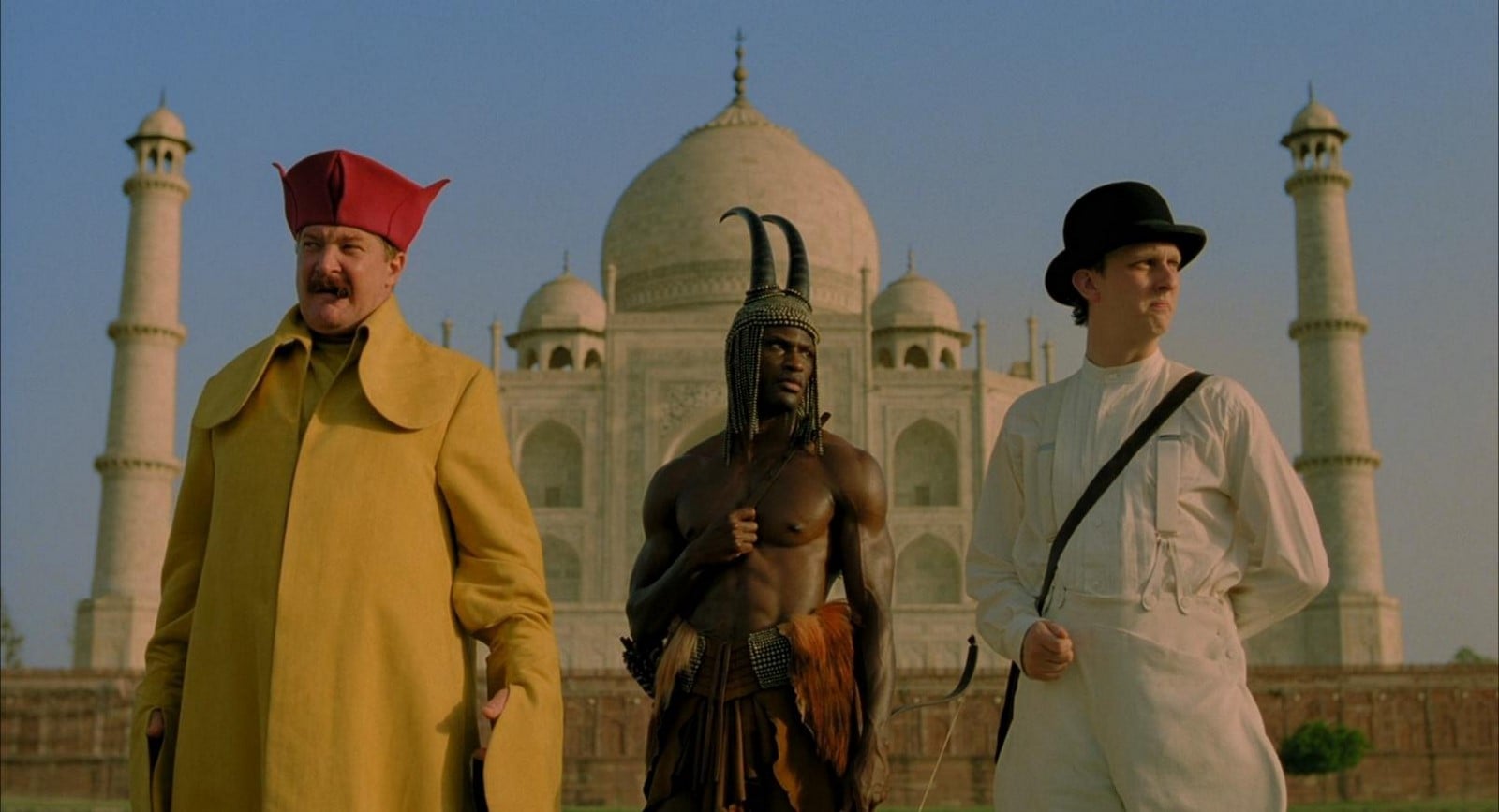
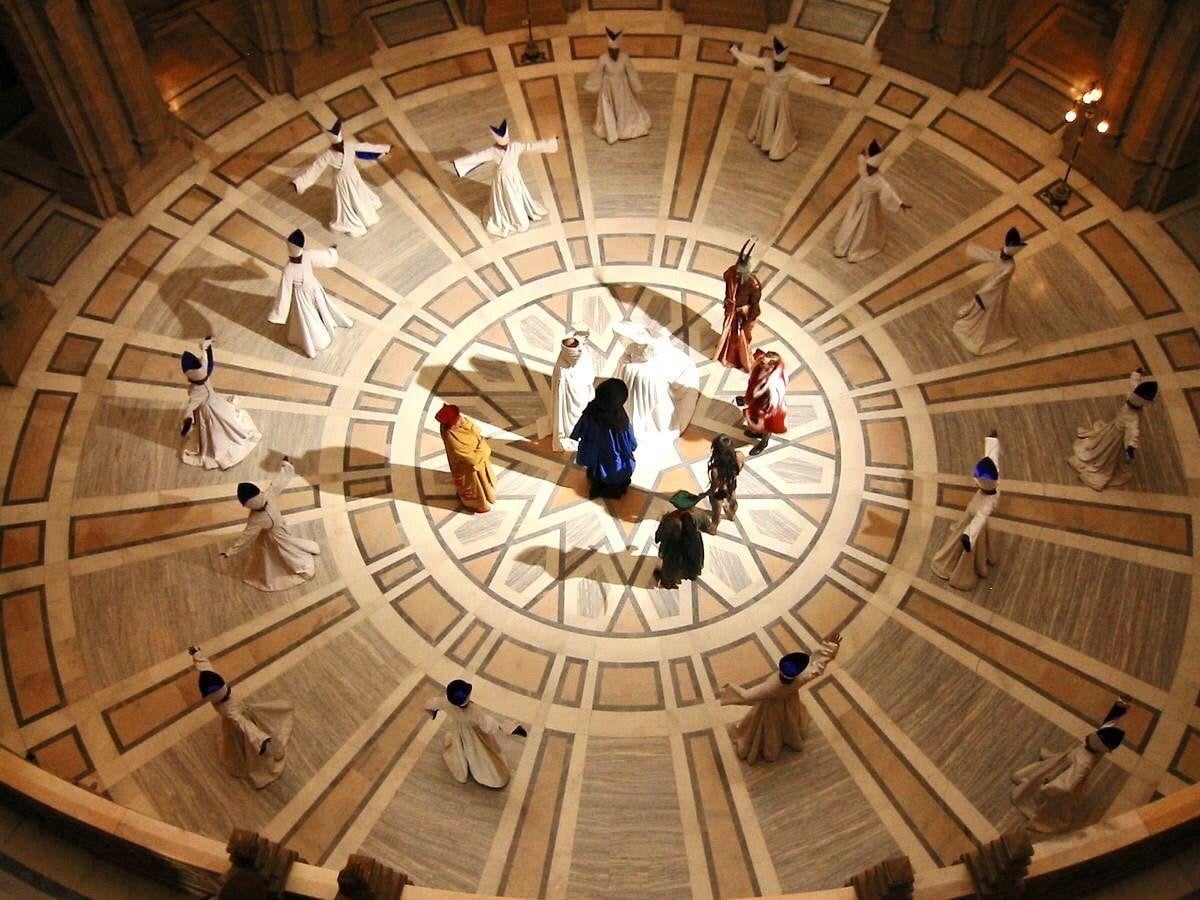
Roy’s tale unfolds as a collage of archetypes, the masked bandit, the runaway slave, the Indian mystic, the explosives expert, and Charles Darwin with his pet monkey. These heroes are the emotional avatars, projections of Roy’s fractured self and Alexandria’s interpretive lens. The landscapes they traverse, the Blue City of Jodhpur, the ornate Taj Mahal, the stepwells of Rajasthan, the deserts of Namibia are living extensions of their psyche.
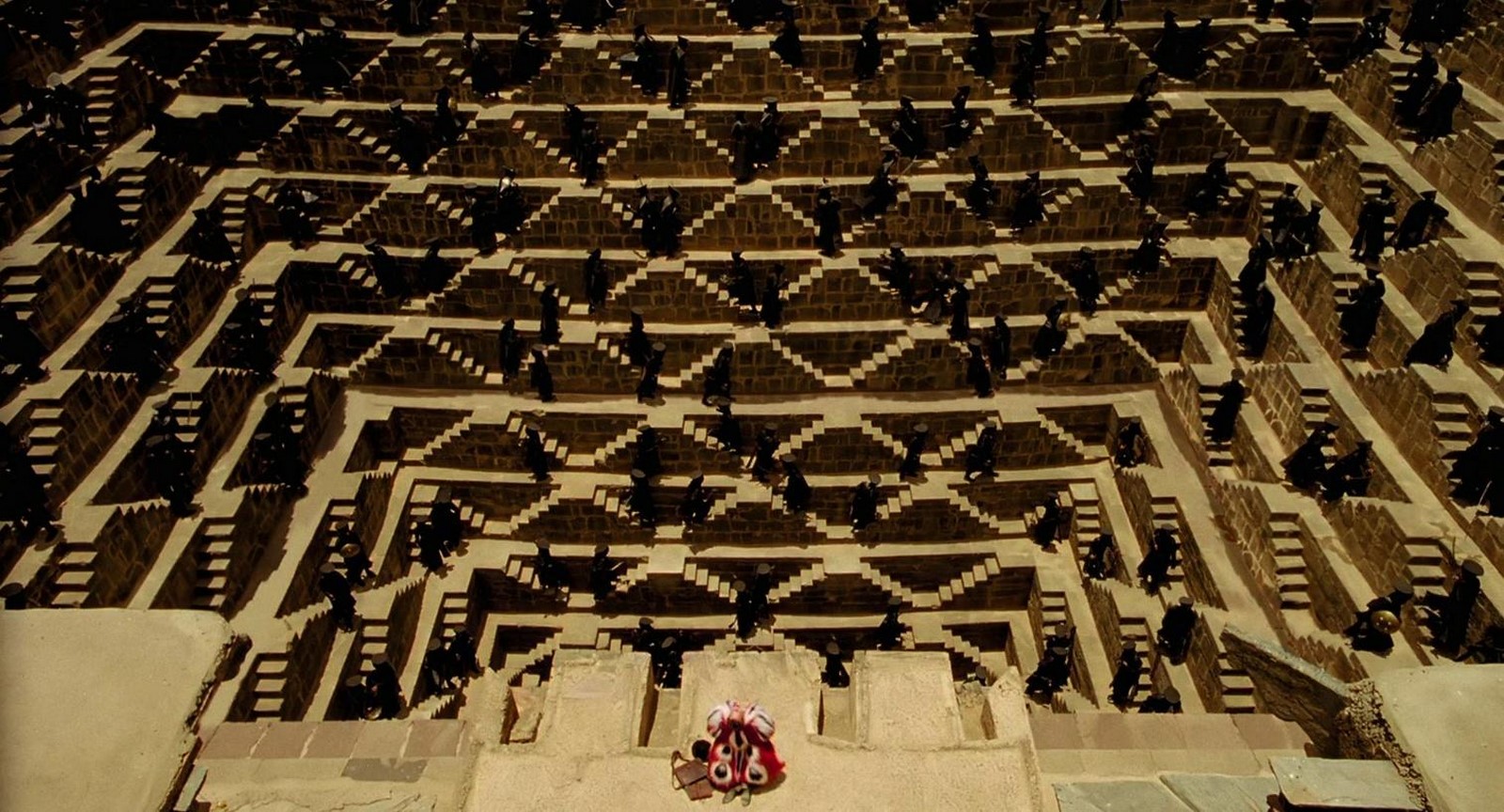
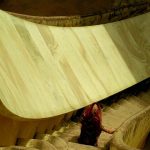
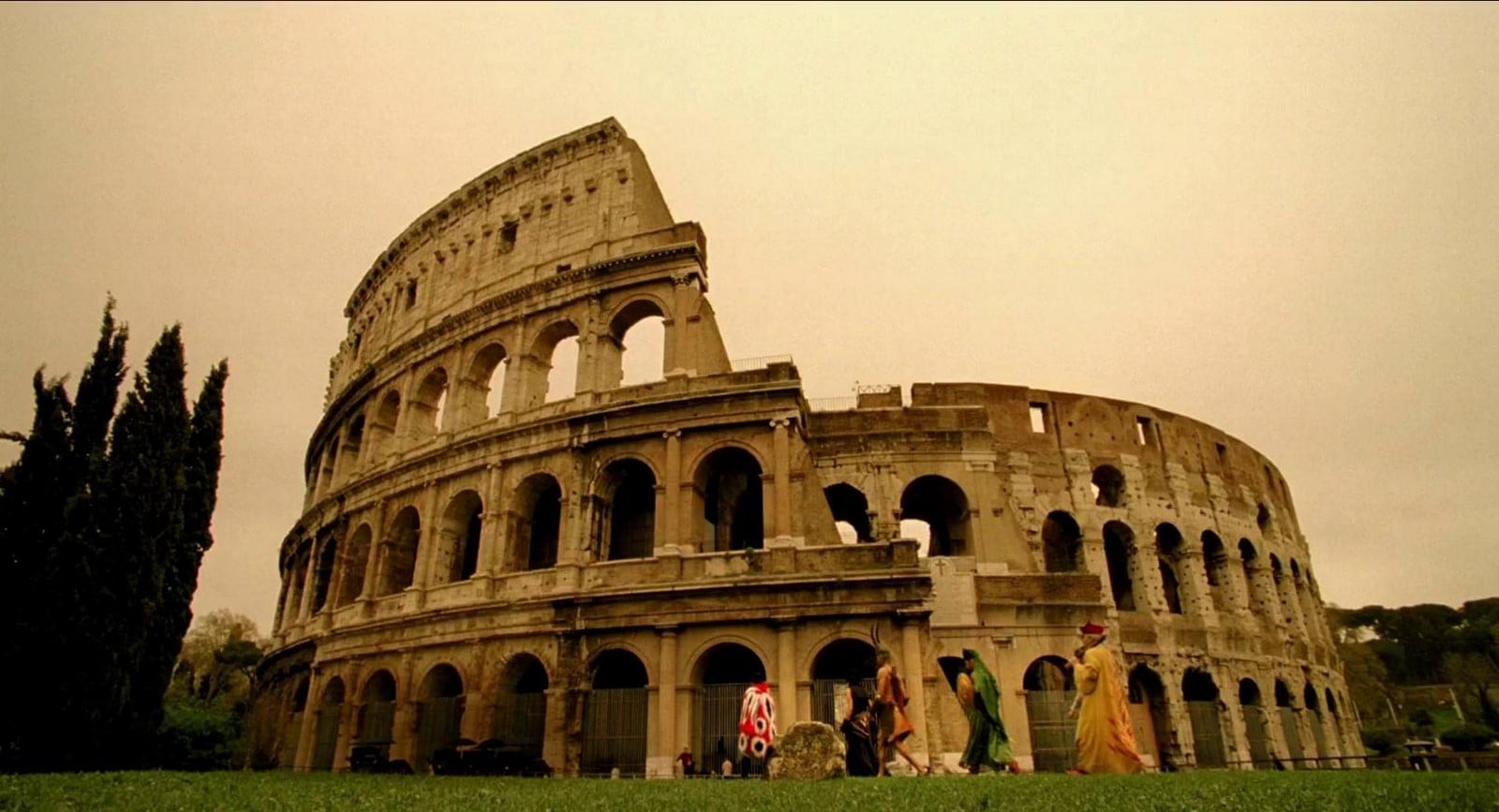
Each frame is a study in context-born imaginaries. From one setting to another, Singh creates juxtapositions that blur geography and chronology: From the Tropics of Bali to the Arid Plains of South Africa, then from dunes of the Namib Desert in Southern Africa to geometric abyss of the Chand Baori stepwell in Rajasthan, India. These surreal assemblages construct an architecture of collage — a world built from fragments of real ones, bound by a child’s dream logic. Singh and cinematographer Colin Watkinson choreograph this slippage with painterly precision, crafting a spatial rhythm that feels dreamlike yet deeply tactile.
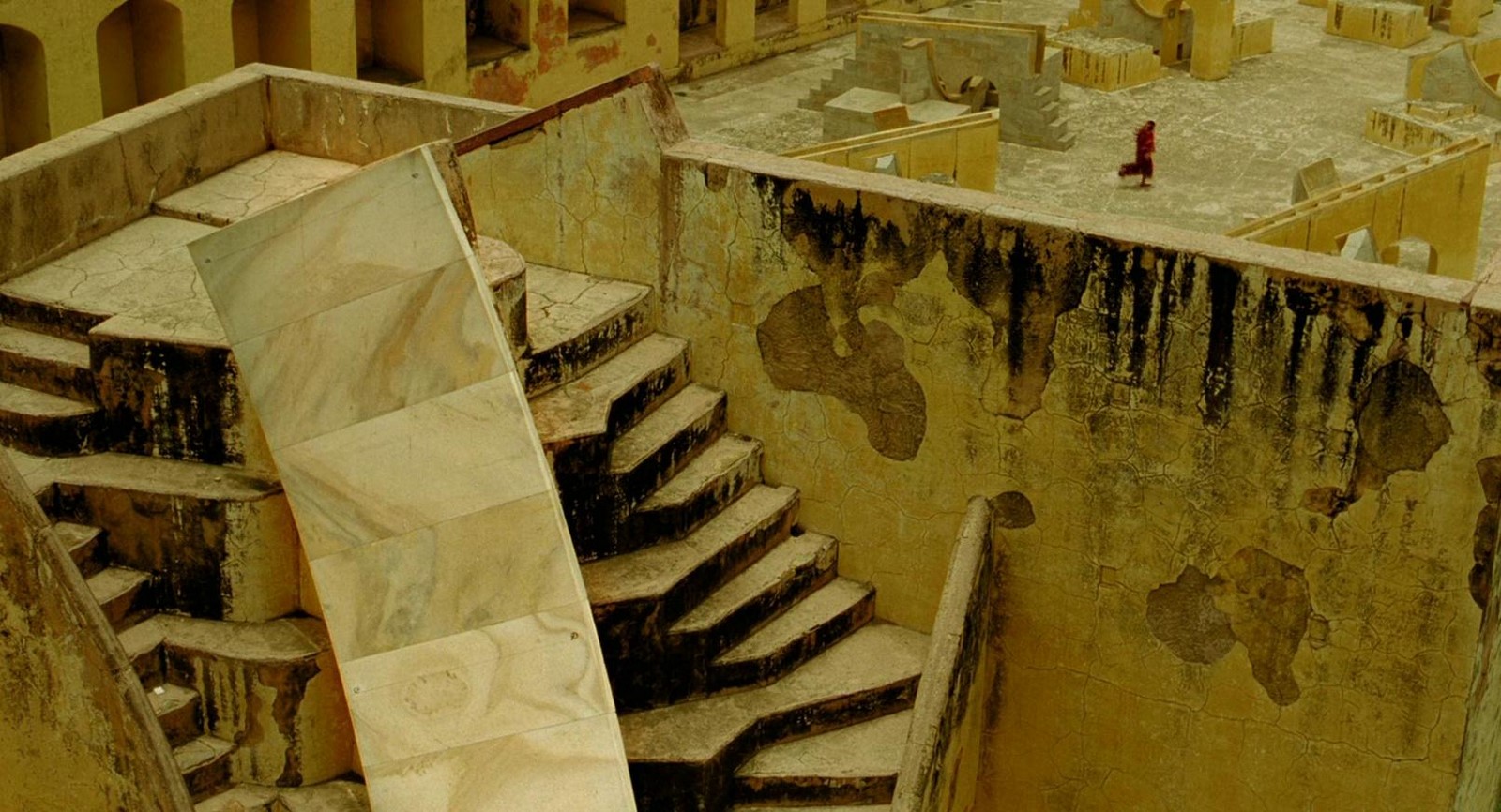
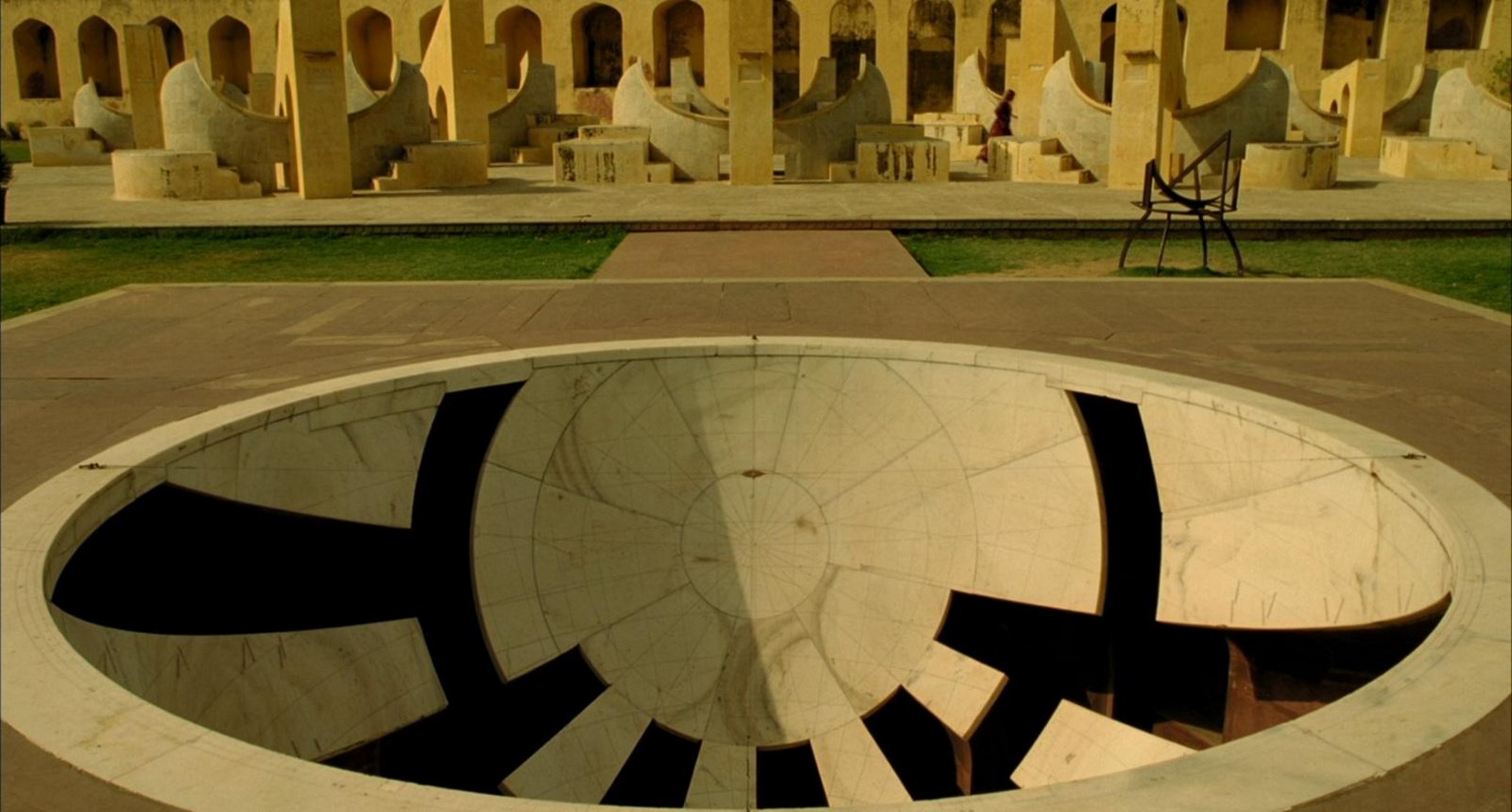
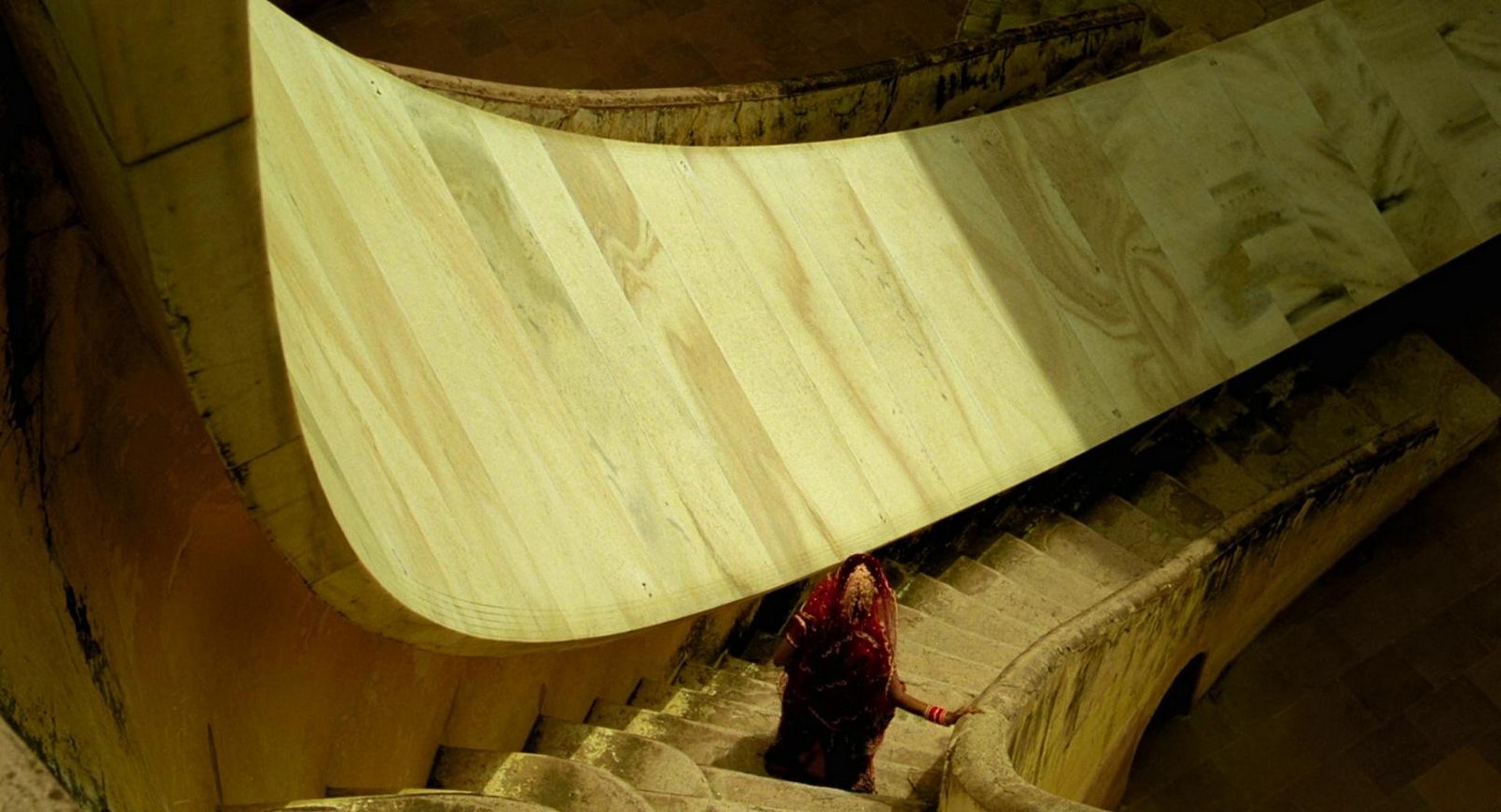
Act IV: “It’s my story.” / “Mine, too.”
The child’s imagination becomes the film’s architecture. Her visions, vivid, disjointed, full of wonder, shape the spaces we see. In The Fall, the act of storytelling becomes spatial construction. The sterile hospital expands into an emotional topography, its walls melting into landscapes of the mind.
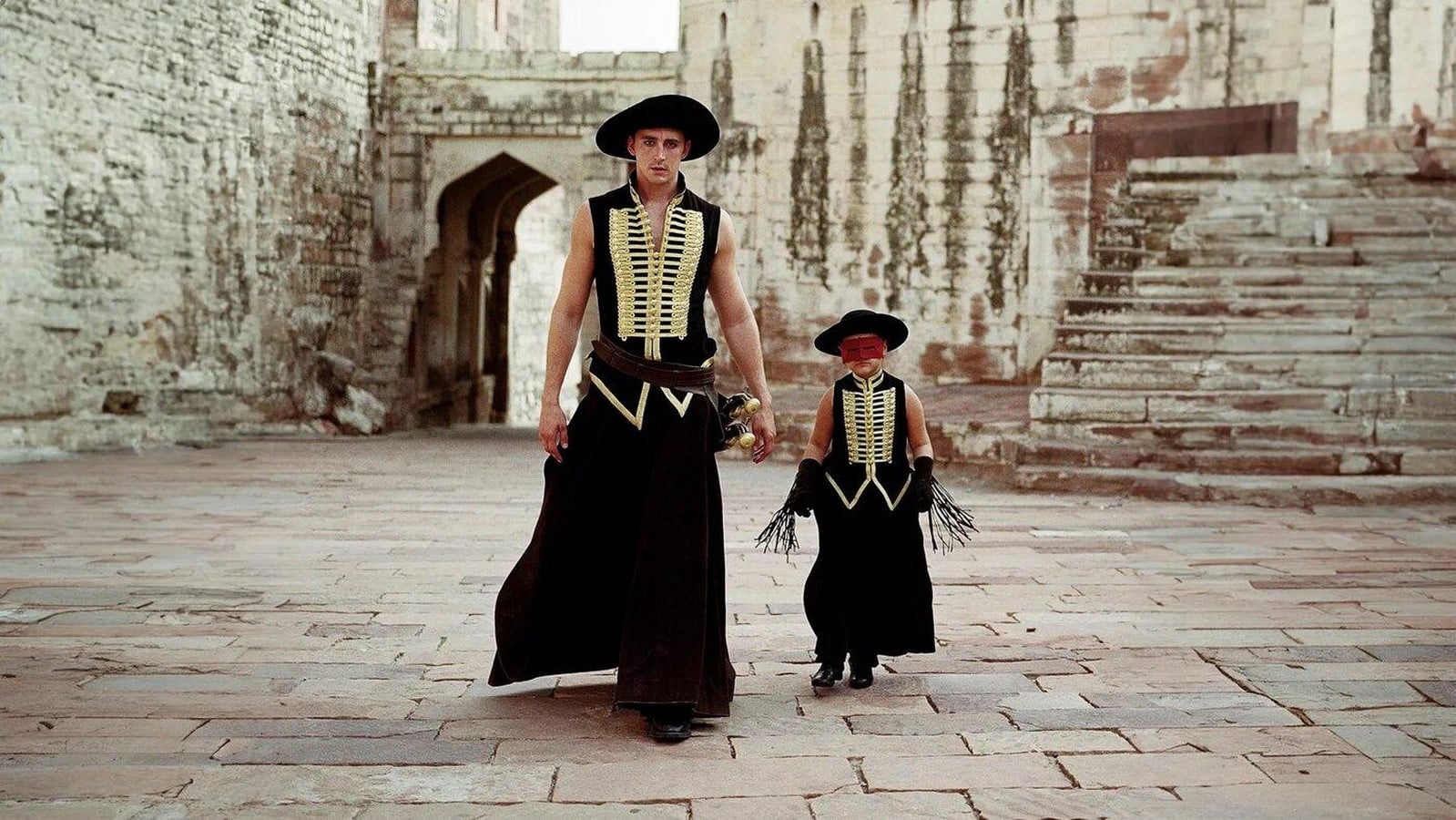
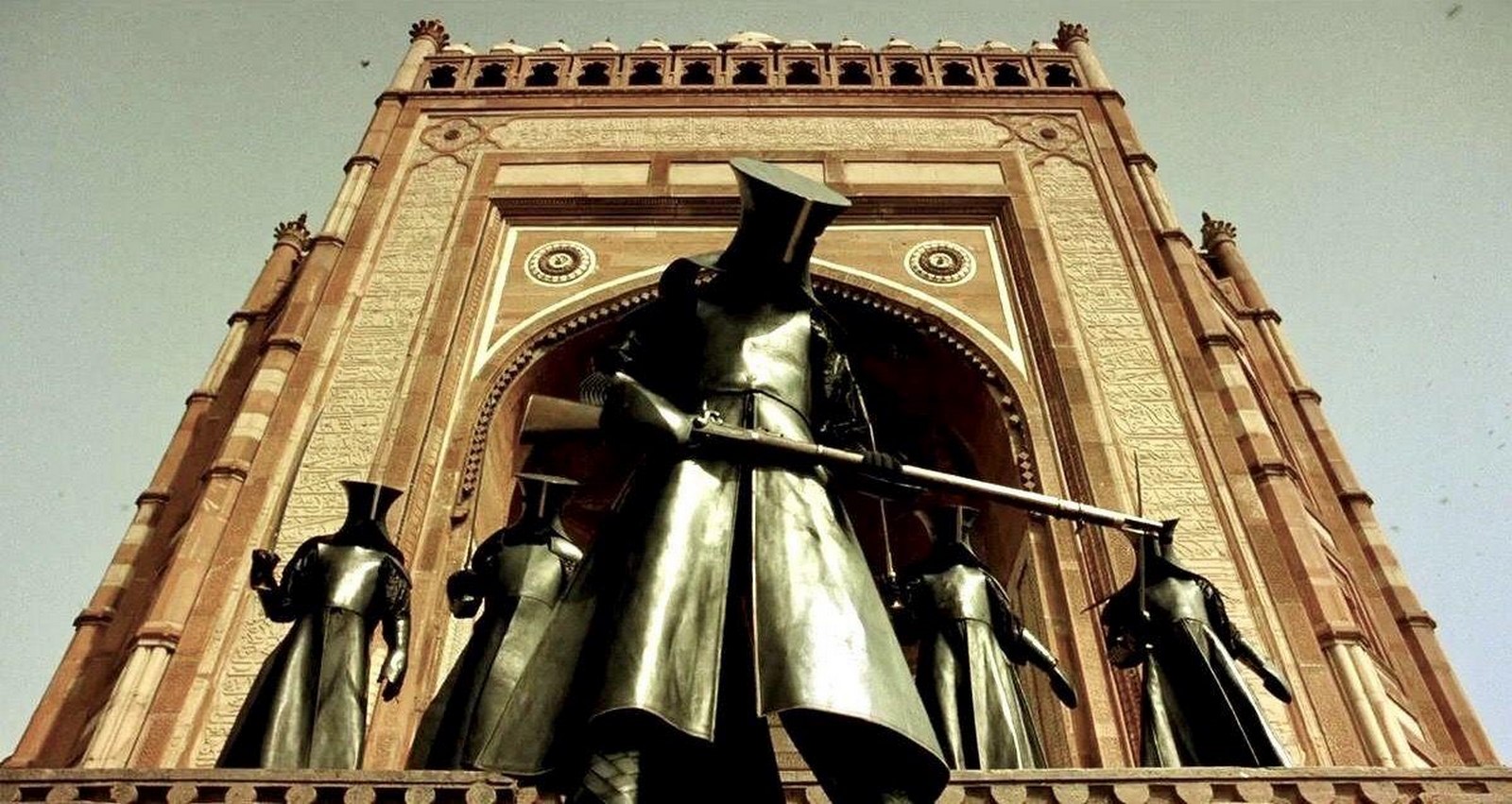
Each location mirrors how Alexandria reconstructs the world around her, how the real is reassembled into the imaginery. Singh’s lens captures emotion through geography, revealing that space and imagination are inseparable acts of world-making.
V: The Convergence of Imaginaries and Immediacy
“What if you let someone who loves you rewrite your story? Who would you be?” — Molly Templeton
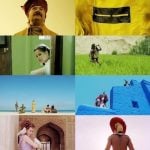
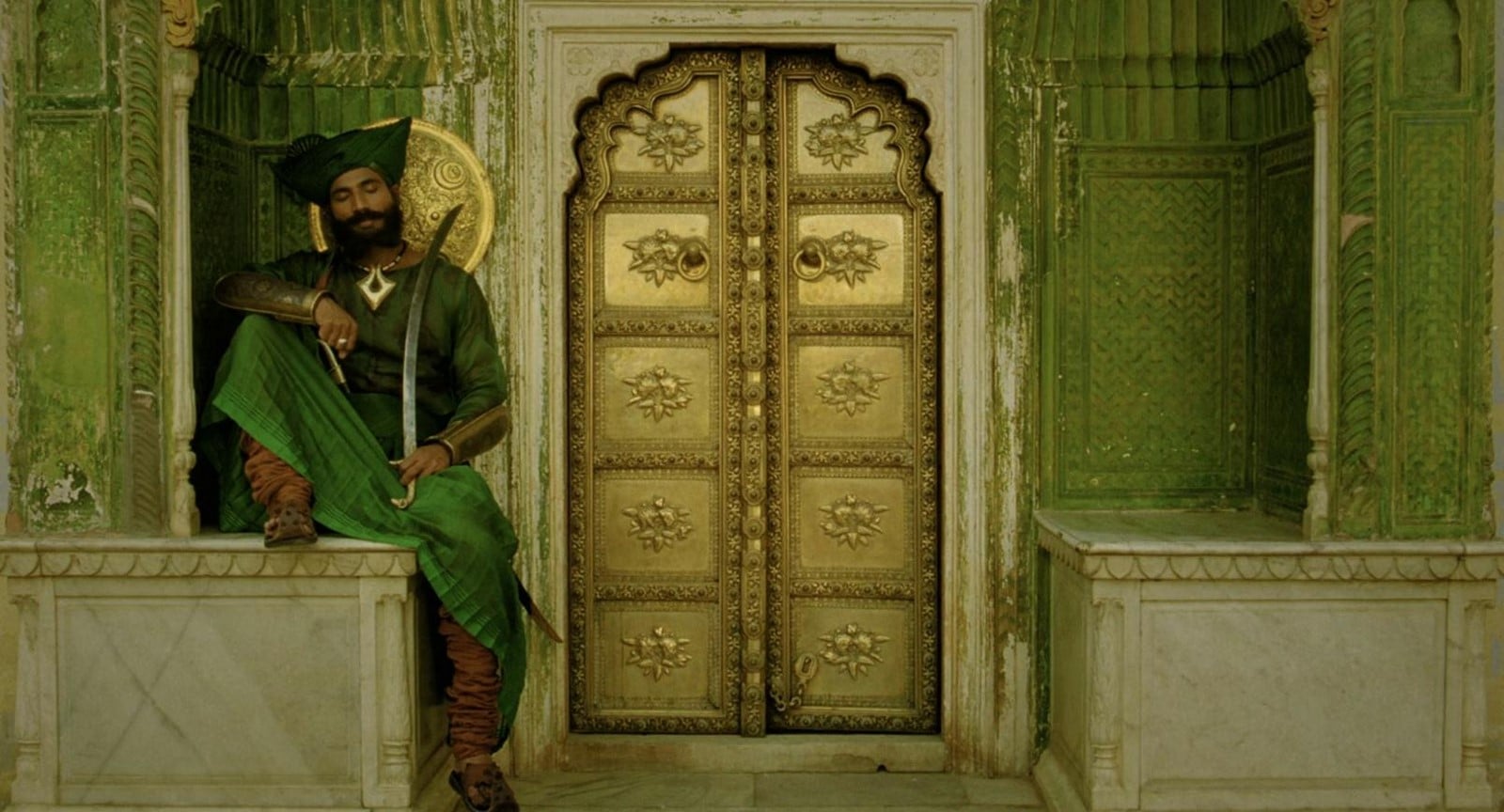
The imaginaries of The Fall, its monumental locations, fluid temporality, and chromatic symphony, speak to the immediacy of storytelling itself. The story-world exists only because Alexandria imagines it, and because Roy needs her to.
The film functions as a palimpsest, a layered conversation between storyteller and listener, between creation and interpretation. Tarsem’s decision to rely solely on real locations grounds this imaginative realm in physical truth. Every landscape exists; every frame is lived.
As the story unfolds, Alexandria’s imagination reconfigures reality itself. Each place she envisions becomes a container for emotion, grief, wonder, empathy. The film’s visual language thus becomes architectural, constructing meaning through spatial and emotional immediacy.
Act VI: The Story That Saves
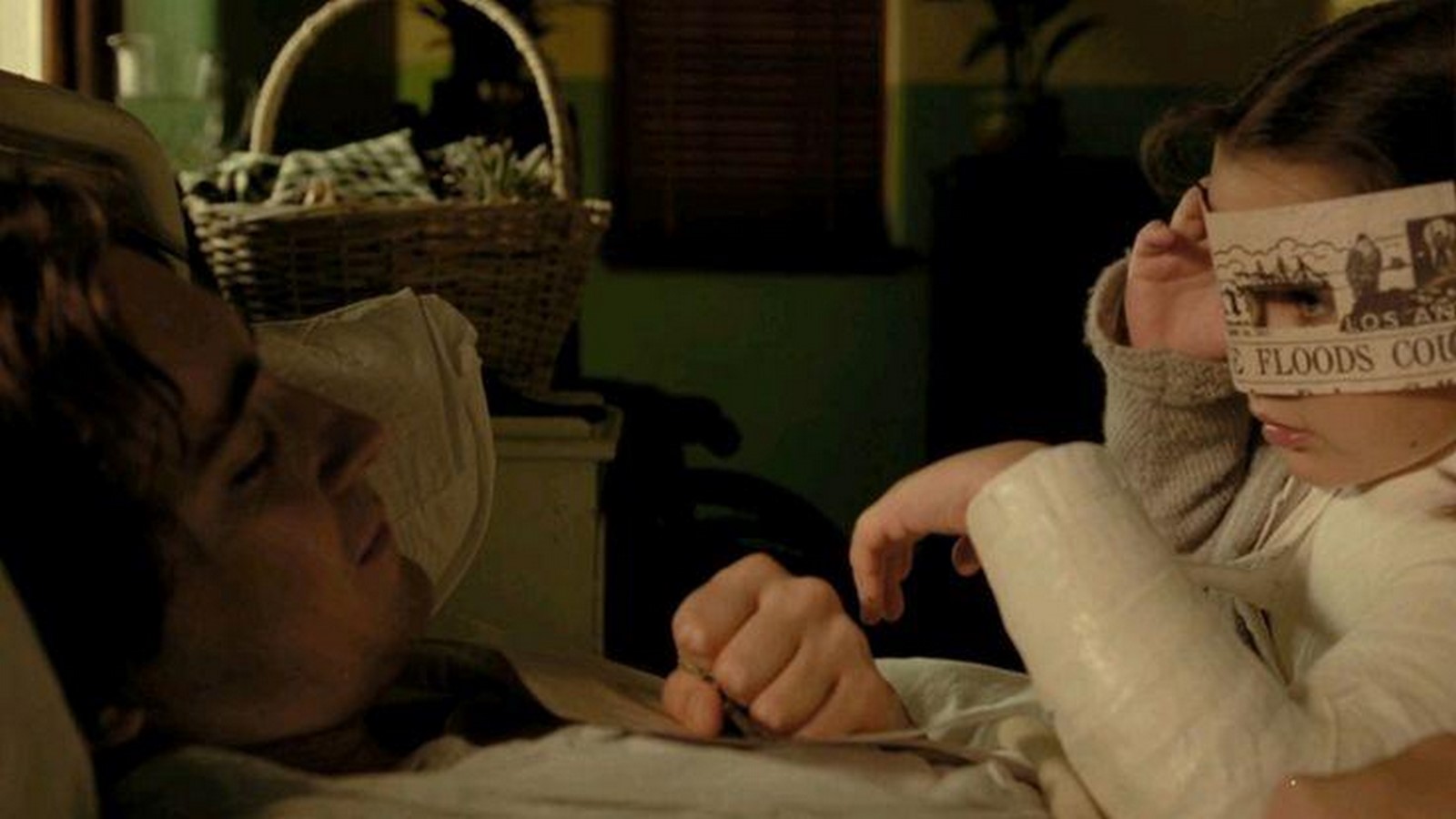
The heart of The Fall lies not in its spectacle but in its tenderness. Its architectural genius emerges in the slippage between Roy’s narration and Alexandria’s re-creation, a dialogue between despair and innocence. As Roger Ebert wrote, “It is her imagination that creates the images of Roy’s story, and they have a purity and power beyond all calculation. Roy is her perfect storyteller; she is his perfect listener; together, they build a world.”
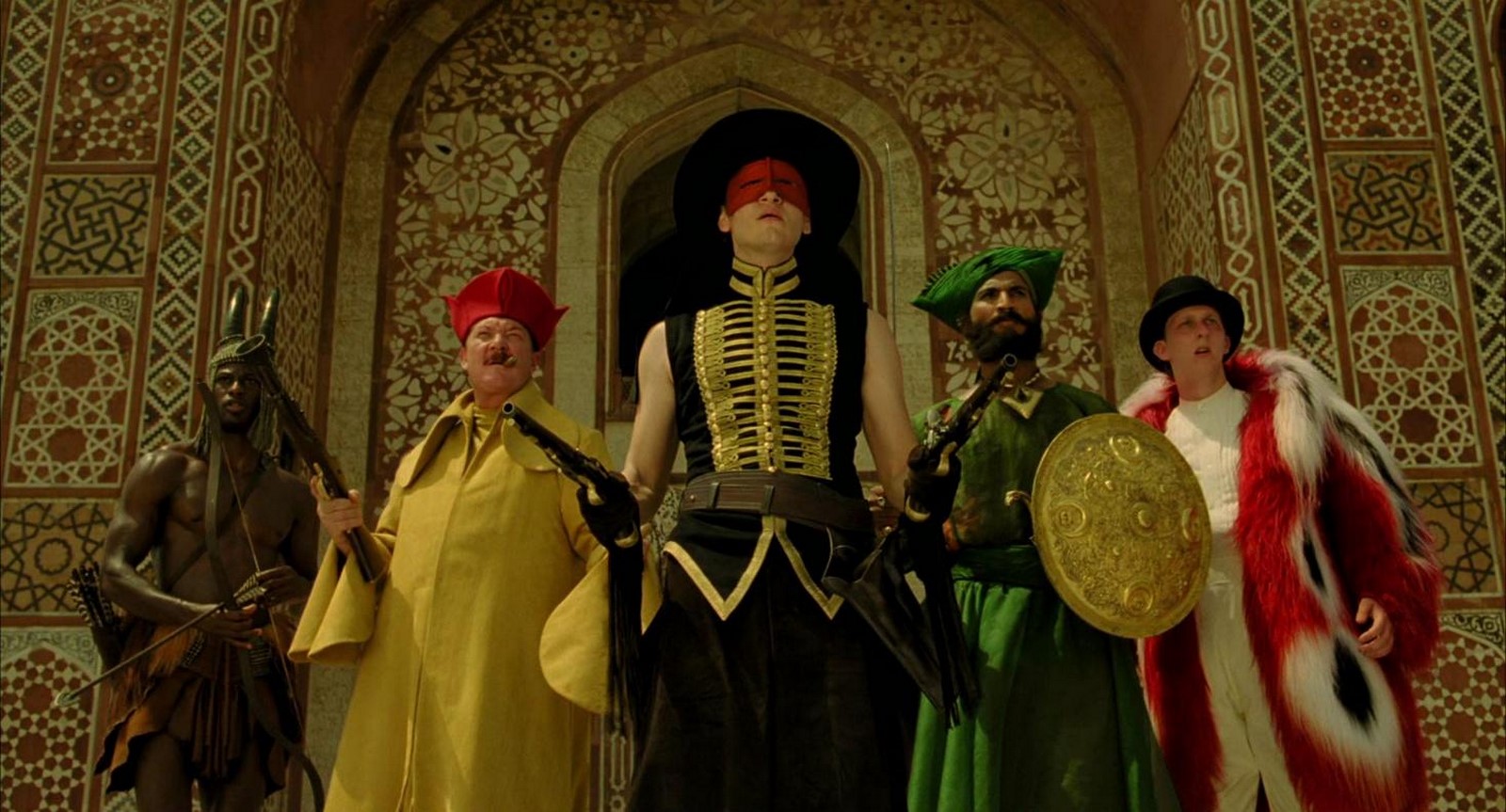
As Roy’s despair deepens, his story darkens. He begins to destroy his own heroes, collapsing the imaginative architecture he built. Alexandria refuses.
ROY: “Why are you making everybody die?”
ALEXANDRIA: “It’s my story.”
ROY: “No, it’s my story.”
ALEXANDRIA: “Mine, too.”
In that moment, the listener becomes the storyteller. Through empathy and imagination, Alexandria rewrites the narrative, saving not only the story, but Roy himself.
Epilogue: Stories That Build Us
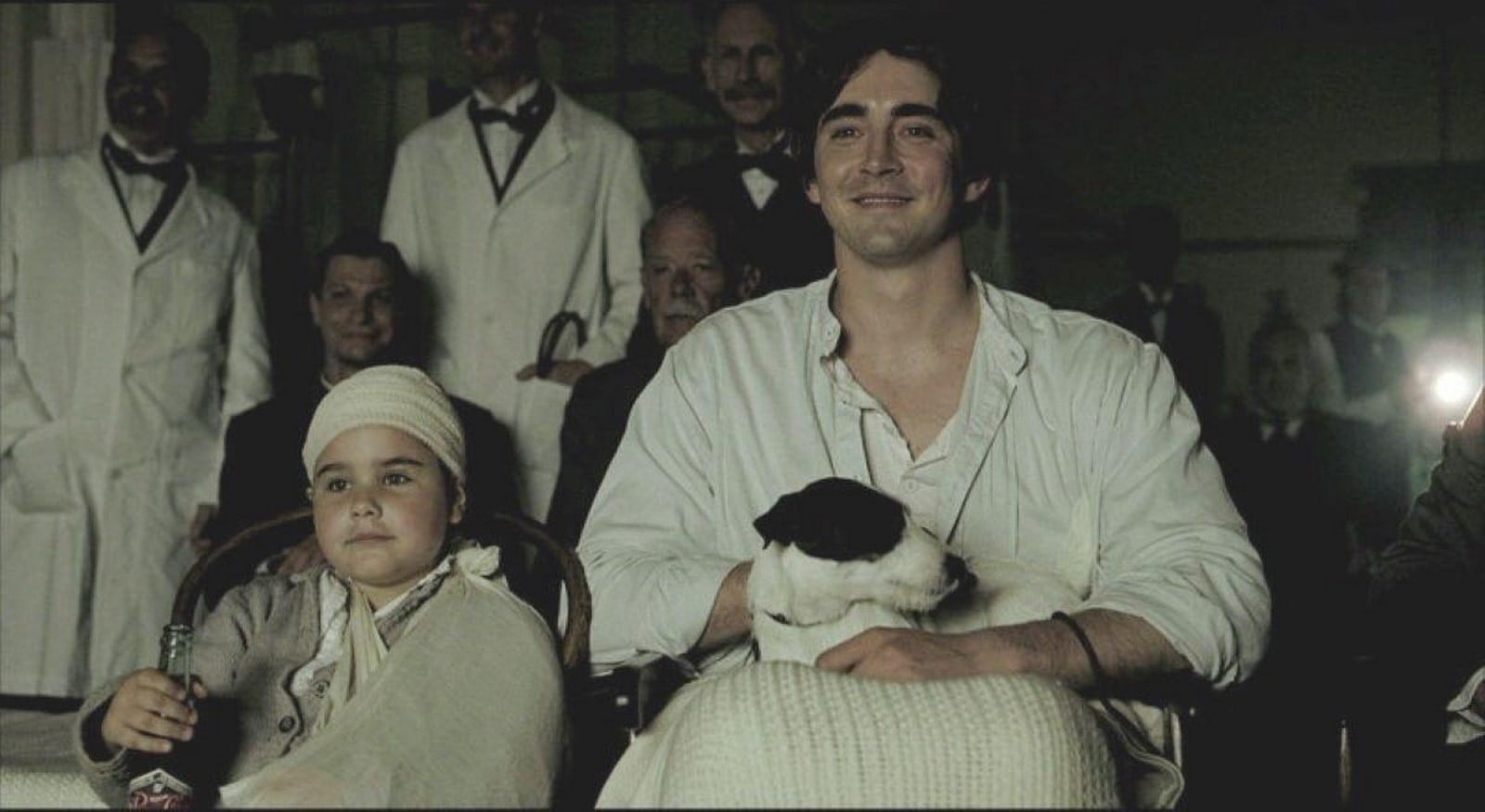
The Fall proposes that stories are the inner interstices of the architectures we inhabit. They define how we shape the world, how we love, remember, and heal. The fall that wounds also becomes the fall that liberates: a descent into imagination, empathy, and connection.
In an era of digital uniformity, where CGI and AI aesthetics dissolve the immediacy of the real, The Fall reminds us that authenticity still resides in the lived, the hand-told, and the human gaze. When Alexandria says, “It’s my story, too,” it becomes a declaration of belonging, a shared authorship of the world we imagine together.
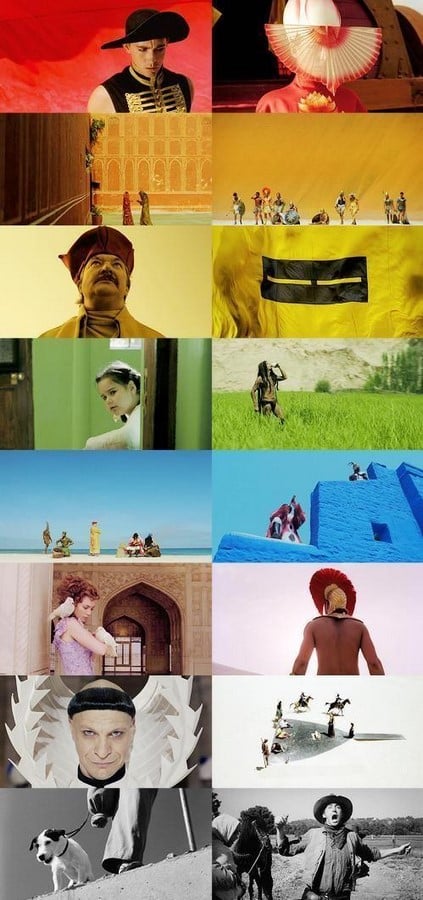
“The Fall is not to be explained; it is to be experienced.”
— Roger Ebert
Streaming on: MUBI
Director: Tarsem Singh
Cinematography: Colin Watkinson
Production Design: Ged Clarke
Costume Design: Eiko Ishioka
Starring: Lee Pace, Catinca Untaru
Year: 2006
Reference:
- Tarsem Singh. (2024). ‘I Made It So I Could Breathe’: Tarsem on Restoring The Fall, Distribution Woes, and the Next Chapter. [online]. The Film Stage. Available at: https://thefilmstage.com/i-made-it-so-i-could-breath-tarsem-on-restoring-the-fall-distribution-woes-and-the-next-chapter/ [Accessed 8 October 2025].
- IvyPanda. (2022). Film Analysis: “The Fall” by Tarsem Singh. [online]. Available at: https://ivypanda.com/essays/film-analysis-the-fall-by-tarsem-singh/ [Accessed 9 October 2025].
- IP Indexing. (n.d.). The Power of Storytelling: Exploring the Cultural Significance of Narrative. [online]. Available at: https://ipindexing.com/journal-article-file/45094/the-power-of-storytelling-exploring-the-cultural-significance-of-narrative [Accessed 11 October 2025].
- Friskie, S. (2020). ‘The Healing Power of Storytelling: Finding Identity Through Narrative’, The Arbutus Review, [online], 11(1), pp. 46-58. Available at: https://journals.uvic.ca/index.php/arbutus/article/view/19324/8643 [Accessed 11 October 2025].
- Ebert, R. (2008). Tarsem and the legend of The Fall. [online]. rogerebert.com. Available at: https://www.rogerebert.com/interviews/tarsem-and-the-legend-of-the-fall [Accessed 11 October 2025].
Images:
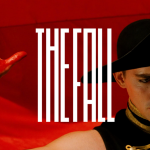
01_The Immediacy of a Dream_©Tarsem Singh, The Fall, 2006
02_The Storyteller and His Visionary_©Tarsem Singh, The Fall, 2006
03_The Immediacy of a Dream_©Tarsem Singh, The Fall, 2006
04_An Entrance to Imagination_©Tarsem Singh, The Fall, 2006
05_The Bandits_©Tarsem Singh, The Fall, 2006
06_A Fictional Romance_©Tarsem Singh, The Fall, 2006
07_The Blue City of Jodhpur: A Pigment of Imagination_©Tarsem Singh, The Fall, 2006
08_The Chand Baori Stepwell_©Tarsem Singh, The Fall, 2006
09_The Labyrinth at Jantar Mantar in Jaipur_©Tarsem Singh, The Fall, 2006
10_The Labyrinth at Jantar Mantar in Jaipur_©Tarsem Singh, The Fall, 2006
11_The Labyrinth at Jantar Mantar in Jaipur_©Tarsem Singh, The Fall, 2006
12_The Roman Colosseum_©Tarsem Singh, The Fall, 2006
13_The storyteller and the listener, entwined in an imagined realm — Roy and Alexandria_©Tarsem Singh, The Fall, 2006
14_A figure of vigilance at Buland Darwaza, Fatehpur Sikri_©Tarsem Singh, The Fall, 2006
15_Guarding the threshold, the King at the Jaipur Door_©Tarsem Singh, The Fall, 2006
16_The landscapes of the Great Wall, Jinshanling, China_©Tarsem Singh, The Fall, 2006
17_Three Warriors Before The Monument of Love, Taj Mahal_©Tarsem Singh, The Fall, 2006
18_The Tale’s Rage_©Tarsem Singh, The Fall, 2006
19_A Narrative of Redemption_©Tarsem Singh, The Fall, 2006
20_ Rewriting a Tragic Ending_©Tarsem Singh, The Fall, 2006
21_A Landscape of Imagination_©Tarsem Singh, The Fall, 2006
22_A World Within a World_©Tarsem Singh, The Fall, 2006
23_The Intangible Power of an Imagined World_©Tarsem Singh, The Fall, 2006
24_The Chromatic Scale of an Epic_©Tarsem Singh, The Fall, 2006