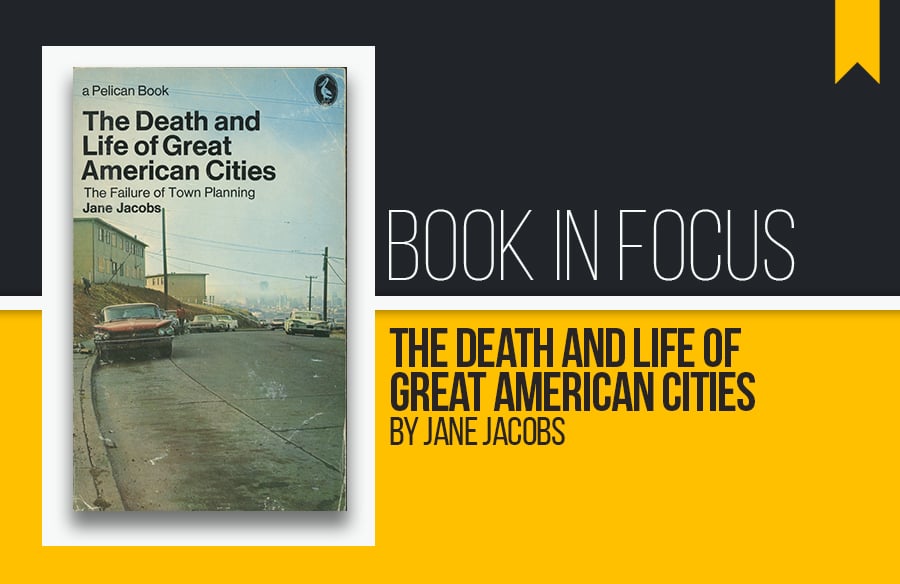
Jane Jacobs, a pioneer in planning for cities, radically changed our concept of city evolution with her landmark essay, “The Death and Life of Great American Cities.” Published in 1961, Jacobs’ critique of the then-modernist approach to urban planning is now an essential component of urban thought, calling for a more natural and community-focused evolution. This article digs into the fundamental concepts of Jacobs’ vision, examining how her ideas disrupted the established quo and continue to impact modern urban planning.

Challenging the Orthodoxy
In the mid-twentieth century, urban planning in the United States was driven by notions such as land use division, dependency on vehicles, and large-scale reconstruction initiatives. Jacobs passionately criticized these concepts, claiming that they destroyed lively neighborhoods and created uninteresting urban landscapes. The book she wrote was an aggressive assault against what she saw as erroneous and damaging processes in city planning and reconstruction, which she claimed were based on abstract notions rather than the reality of life in cities.
Jacobs’ method was groundbreaking. She felt that urban areas should be viewed as living entities with uniqueness and intricacy, rather than simply external environments to be created and managed. Her views of urban life in New York City served as the basis for her ideas, championing the concept that prosperous cities generate a feeling of belonging and enable citizens’ regular communication.

The Importance of Diversity
One of Jacobs’ most lasting achievements was her concentration on variety in urban settings. She maintained that a diverse range of construction kinds, ages, and uses is critical to a city’s financial and communal health. According to Jacobs, variety in urban areas promotes dynamic life on the streets, economic opportunity, and social cohesiveness. She pursued the zoning pattern that segregated residential, commercial, and industrial sectors, claiming it inhibited community development and vitality.
Jacobs argued for “combined principal utilizes,” in which several sorts of tasks and structures interact. This combination fosters the continued use of civic areas throughout the day, which improves security and vibrancy. She claimed that when individuals from all origins and goals occupy identical areas, it promotes a greater feeling of shared identity and cooperation, which is essential for a successful urban environment.

Eyes on the Street
Jacobs developed a critical notion known as “eyes on the street.” She thought that streets should be monitored by the citizens who use them, which would encourage safety and community participation. Jacobs believes that a street’s sustainability rests on its capacity to draw a steady flow of people, which organically deters crime and fosters social connections.
Jacobs noticed that a high level of pedestrian activity, along with a diversified mix of services and enterprises, results in a self-regulating neighborhood in which inhabitants feel responsible for the safety and maintenance of their immediate surroundings. This approach stood in sharp contrast to current design techniques, which favored automotive traffic and frequently led to empty, hazardous public places.

The Case for Small Blocks
Jacobs emphasized the relevance of small sections in urban architecture. She contended that smaller blocks foster greater pedestrian circulation, generate more junctions, and provide diverse paths, all of which promote a lively street life. Modernist planning’s use of huge blocks and superblocks isolates neighborhoods and discourages movement, limiting possibilities for serendipitous contacts that are essential for urban life.

Community and Participation
Jacobs was a major supporter of regional neighborhood involvement in the planning process. She thought that citizens had a natural grasp of their neighborhood’s requirements and should take an active role in determining its development. This collaborative planning philosophy was groundbreaking at the time since it challenged the top-down tactics generally used by city planners and development professionals.
Her concentration on involvement in the community has since grown into an essential component of current urban planning. Working with local communities ensures that developments are more responsive to inhabitants’ needs and preferences, resulting in environmentally friendly and inclusive urban settings.

The Generators of Diversity
One of Jacobs’ most important contributions to urban theory was her recognition of the circumstances required to generate variety in cities. She identified four critical circumstances: mixed main uses, short blocks, older structures, and a large number of people. Each of these factors is crucial for creating dynamic and financially viable urban areas.
Jacobs claimed that mixed primary uses ensure that diverse sorts of activity take place together, resulting in a dynamic urban environment at all times of the day. Small blocks, with several junctions, promote pedestrian flow and accessibility. Old structures offer cheap facilities for many purposes, including small companies and cultural events.

Myths About Diversity
Jacobs also addressed various fallacies concerning urban diversity. One prevalent myth she refuted was that high-rise structures or suburban-style development may result in dynamic communities. Jacobs contended that true diversity stems from organic, mixed-use development and vibrant street life, not detached, homogeneous constructions. She stressed that a city’s liveliness is contingent upon the diversity and engagement of its citizens, not only the physical structure of its construction.

The Self-Destruction of Diversity
In her research on urban decline, Jacobs highlighted a process she dubbed “self-destruction of diversity.” She saw that when an area becomes very famous, it frequently draws overdevelopment and homogeneity, which can destroy the exact features that made it appealing in the first place. Gentrification, for example, can result in rising rents and the displacement of long-term residents and small businesses, causing a loss of variety and community identity.


To avoid such harmful results, Jacobs emphasized the importance of carefully managing urban expansion. She pushed for gradual, community-led development that retains the distinctive qualities of communities while allowing for lasting growth and change.
Visual Order and Its Limitations
Jacobs also criticized the emphasis on visual order in urban planning. While she accepted the importance of aesthetics, she emphasized that they should not take precedence over the utilitarian and social components of urban planning. Jacobs thought that cities are complex, adaptive systems that necessitate flexible, context-sensitive methods of planning and development. She stressed that effective urban spaces focus on human needs and behaviors above strict architectural rules.

Governing and Planning Districts
Jacobs advocated for decentralized, community-based planning techniques. She argued that local governance models are more sensitive to inhabitants’ interests and may promote more efficient urban development. Jacobs argued for an inclusive and participatory planning approach that recognizes and values the views of local people.

The Kind of Problem a City Is
In the book’s last chapter, Jacobs delves into the complexities of cities and urban planning issues. She claimed that cities are complex, adaptive systems that cannot be understood or governed using basic, top-down techniques. Jacobs highlighted the significance of adaptable, context-sensitive planning that addresses the distinct peculiarities of each urban setting. She thought that cities flourish when they may expand and change spontaneously, influenced by citizens’ needs and actions.

Jacobs’ ideals have been incorporated into many parts of modern urban planning, including the New Urbanism movement and contemporary initiatives to create walkable, mixed-use districts.
Her critique of large-scale urban renewal projects and her advocacy for the preservation of existing communities resonate with current efforts to balance development with social equity. Cities around the world have adopted her ideas, emphasizing the importance of human-scaled design, diverse land uses, and community engagement in planning processes.
References:
Laurence, P.L. (2024) Jane Jacobs, Cyclist, ArchDaily. Available at: https://www.archdaily.com/1016717/jane-jacobs-cyclist
Gray, N. (2023) Who plans?: Jane Jacobs’ Hayekian critique of urban planning, Strong Towns. Available at: https://www.strongtowns.org/journal/2016/5/2/who-plans-jane-jacobs-hayekian-critique-of-urban-planning
Saunders, D. (2021) Opinion: Jane Jacobs’s afterlife: Revisiting the death and life of great American cities, 60 years later, The Globe and Mail. Available at: https://www.theglobeandmail.com/opinion/article-jane-jacobss-afterlife-revisiting-the-death-and-life-of-great-american/
(no date) Available at: https://www.citethisforme.com/bibliographies/a7cb2a2e-d8e5-49ed-ae3a-ffb14cb5a2d0
Rele, M. (2023, May 5) The life and times of Jane Jacobs, the urban activist who revitalized city planning – Question of Cities, Question of Cities. Available from: https://questionofcities.org/the-life-and-times-of-jane-jacobs-the-urban-activist-who-revitalised-city-planning/
Taylor, M. (2017) Vintage Book Review: The Death and Life of Great American Cities by Jane Jacobs, San Antonio Report, 21 December,
Sassen, S. (2023, May 5) Reading Jane Jacobs today: Why her urban renewal agenda is still relevant – Question of Cities, Question of Cities. Available from: https://questionofcities.org/reading-jane-jacobs-today-why-her-urban-renewal-agenda-is-still-relevant/
Jacobs, J. (1961) *The Death and Life of Great American Cities*. Available at: http://www.petkovstudio.com/bg/wp-content/uploads/2017/03/The-Death-and-Life-of-Great-American-Cities_Jane-Jacobs-Complete-book.pdf