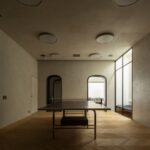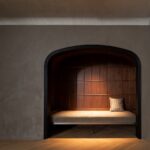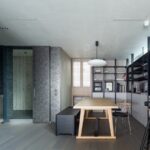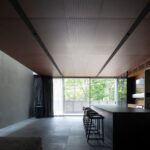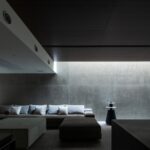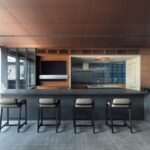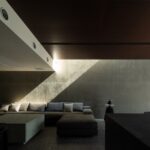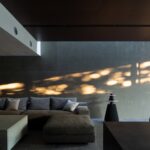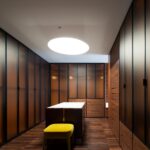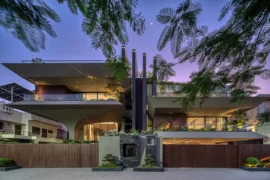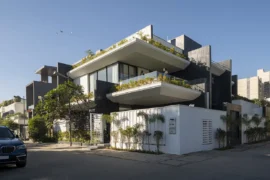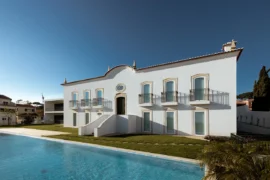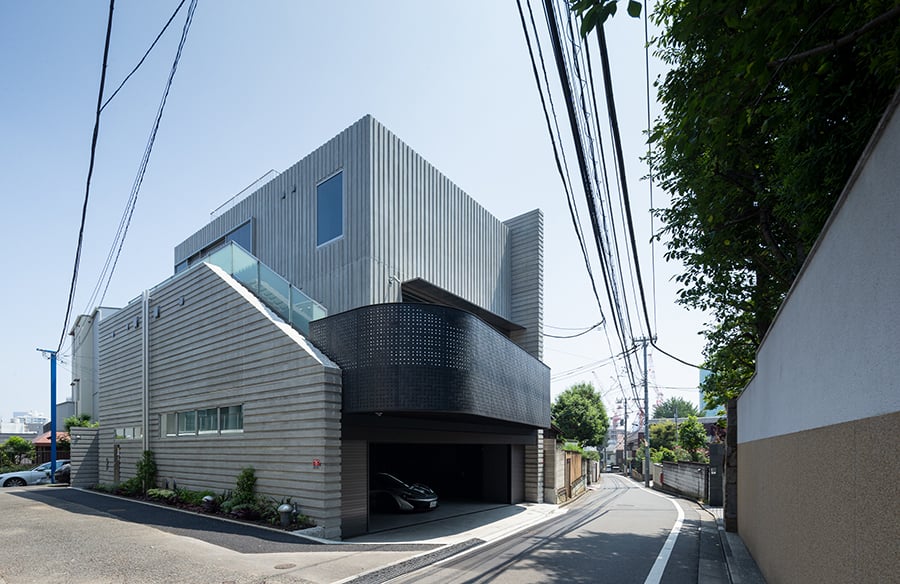
This secondary residence is located in a prime area of central Tokyo, just a minute’s walk from the owner’s primary home. The owner’s request was to create a design that complements the function of the main house while serving as a modern reception hall, contrasting with the classical style of the main residence.
Project Name: Villa In Azabu
Studio Name: Love Architecture
Status: Built
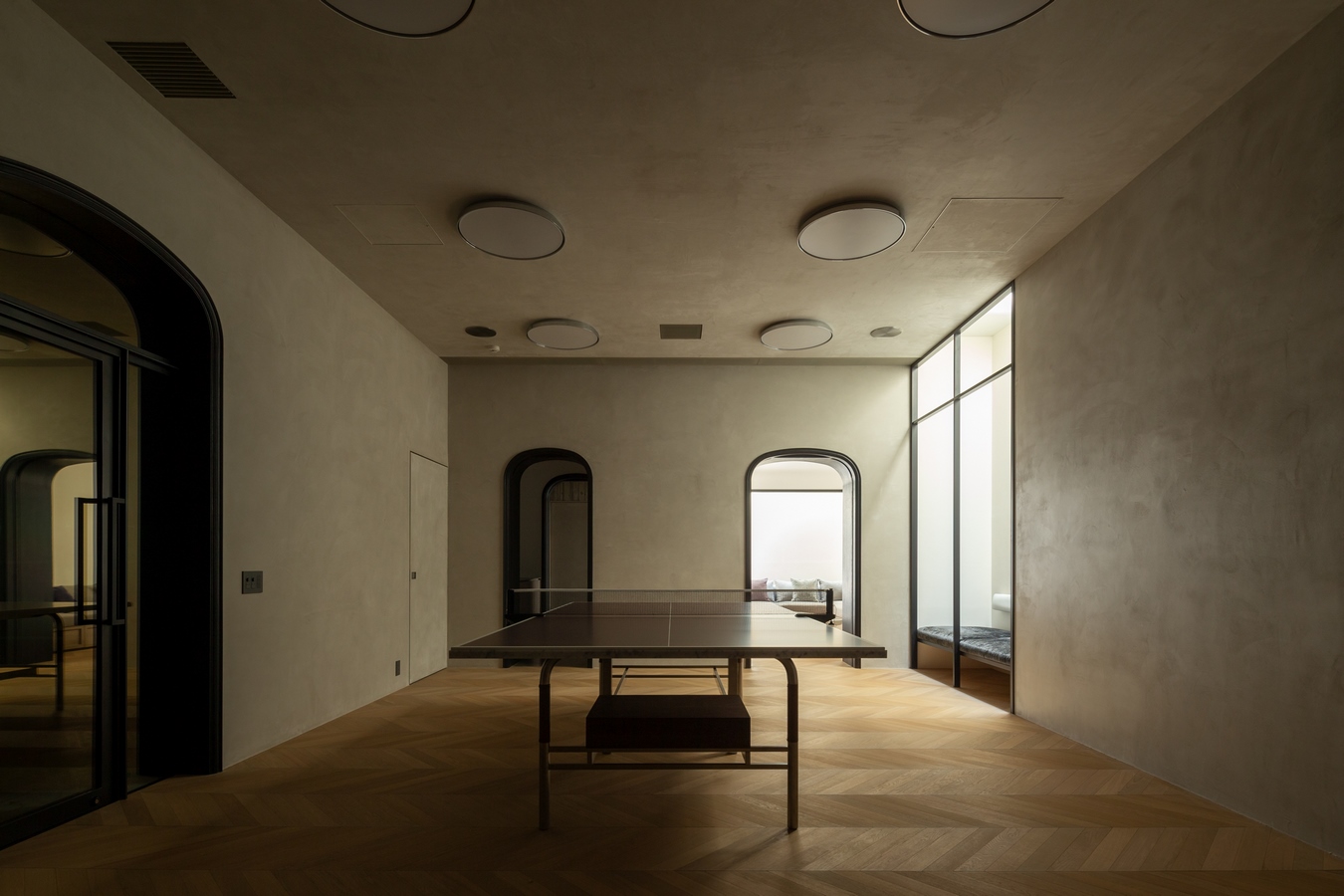
This villa, used on a daily basis, is intended to be an environment that constantly reflects familiar everyday life in a new, fresh way, distinct from both a typical home and a vacation house.
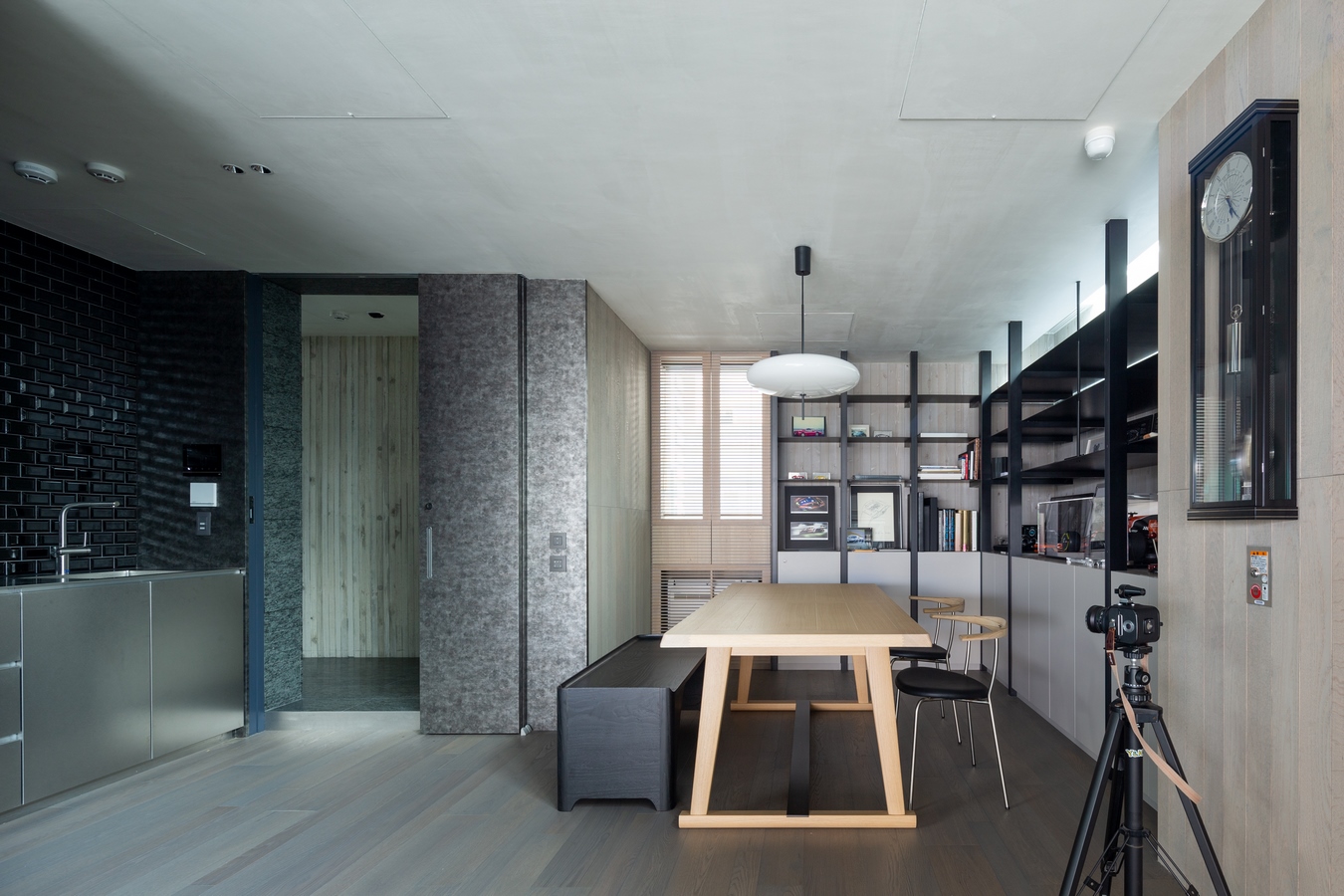
Humans gather information and perform activities through perception and sensory input from their surroundings. In a home, not only the floor plan but also elements like the placement of furniture, switches, and the softness of the sofa become familiar and create a sense of comfort, at the cost of freshness.
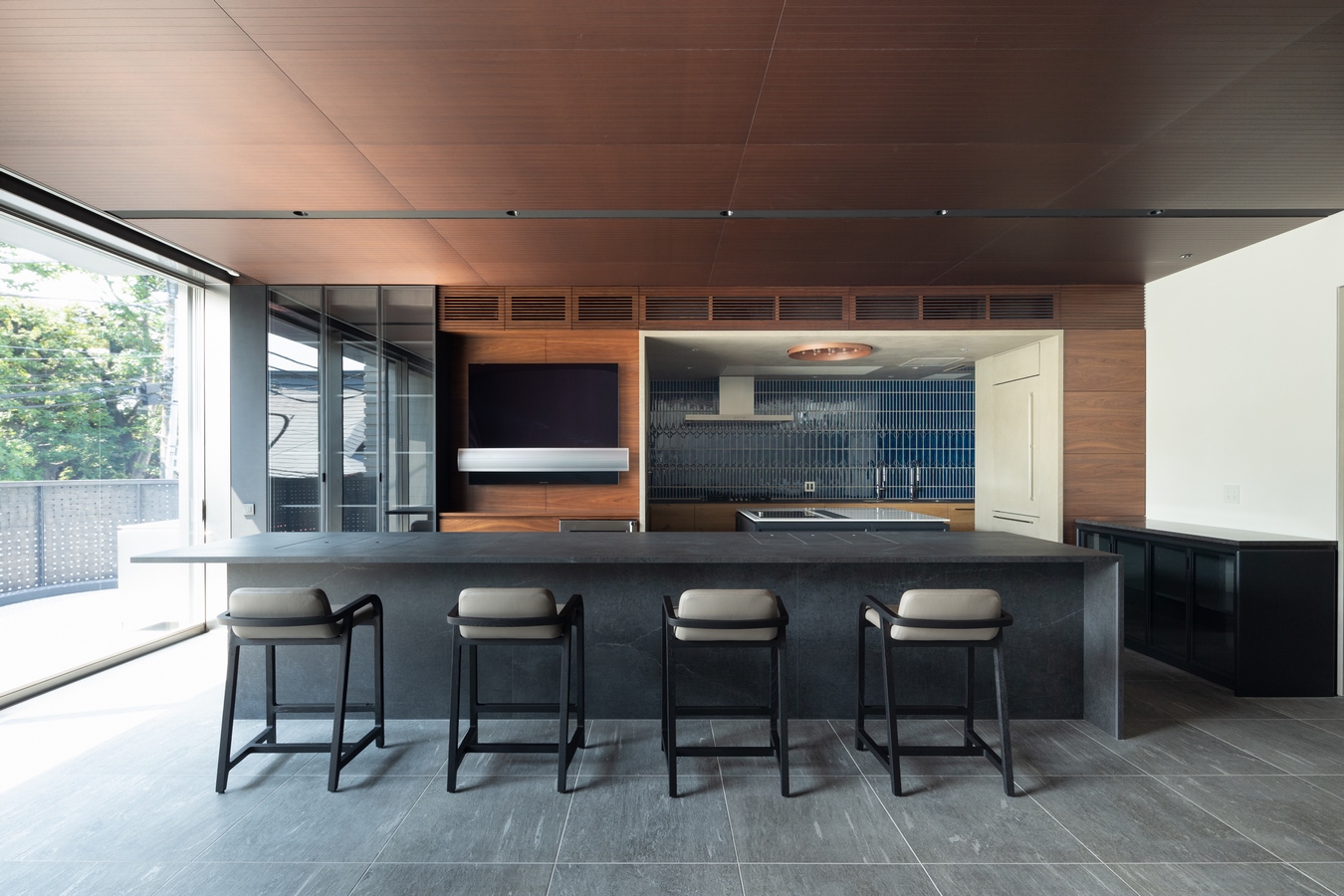
In vacation homes or resorts, the extraordinary is made possible by being in a setting that is not part of everyday life. However, given the limited space in central Tokyo and the villa’s proximity to the main residence, the potential to create a sense of the extraordinary through the garden was seen as limited. Thus, in this villa, the design stripped away conventional ideas of materials and styles, treating the building’s exterior, interior, furniture, and fabrics as an integrated whole to establish an ongoing sense of the extraordinary.
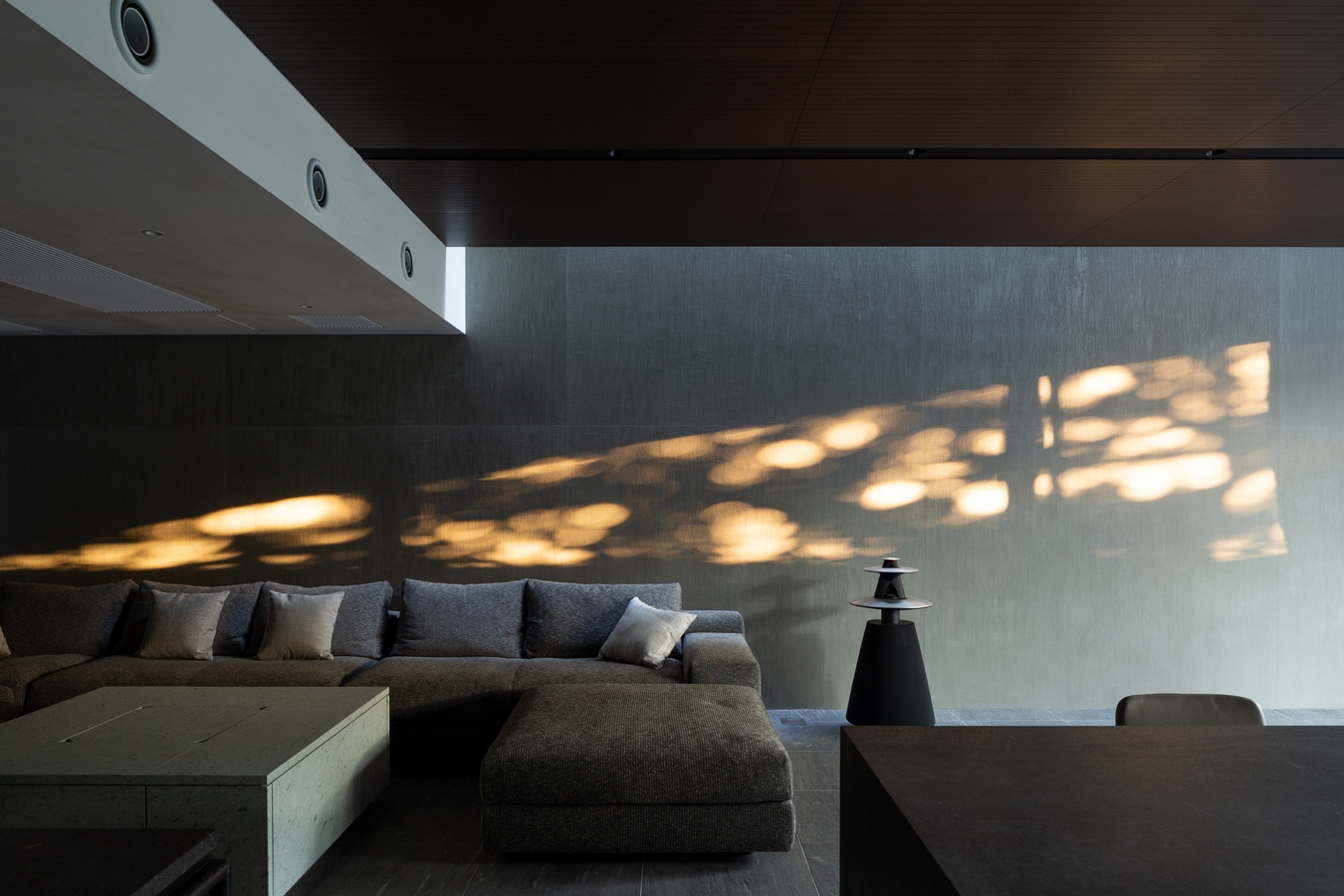
The façade features iron balcony railings and gate walls that resemble woven baskets, with gentle curves. The walls of the party space are finished like fabric, while curtains with a metallic sheen complement the adjacent space. In the kitchen, modern countertops are harmoniously mixed with handmade classical tiles and rustic wooden doors. In the wine cellar, the classical Italian floor tiles contrast with stainless steel racks and strip lighting, creating a cyber-like atmosphere while maintaining a delicate harmony. The bathroom, using the same marble, features varying cut methods that create diverse patterns.
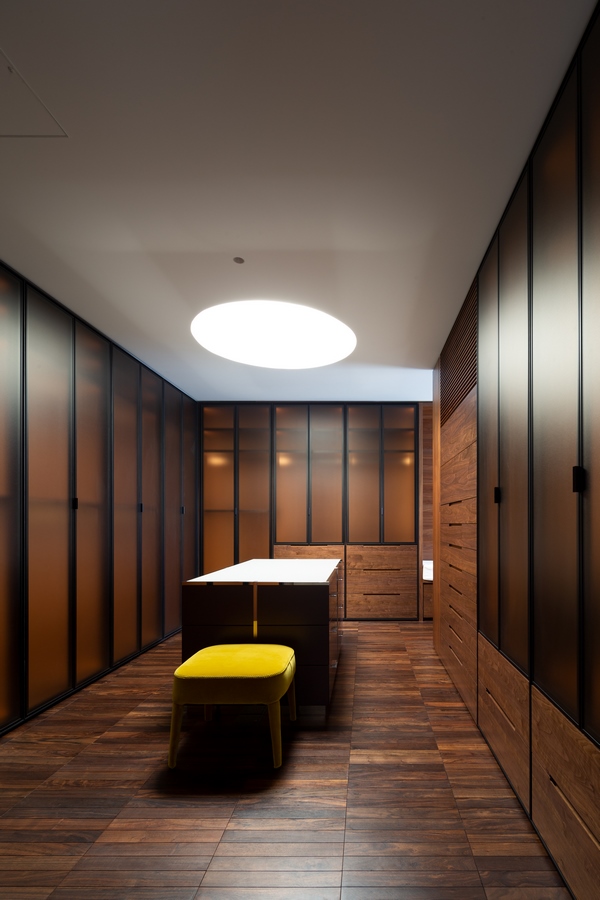
By treating the form, materials, finishes, and both exterior and interior elements equally, and fostering an interactive relationship between people and natural light within the space, the design enables an experience of countless unique moments, achieving a lasting sense of the extraordinary within the everyday.