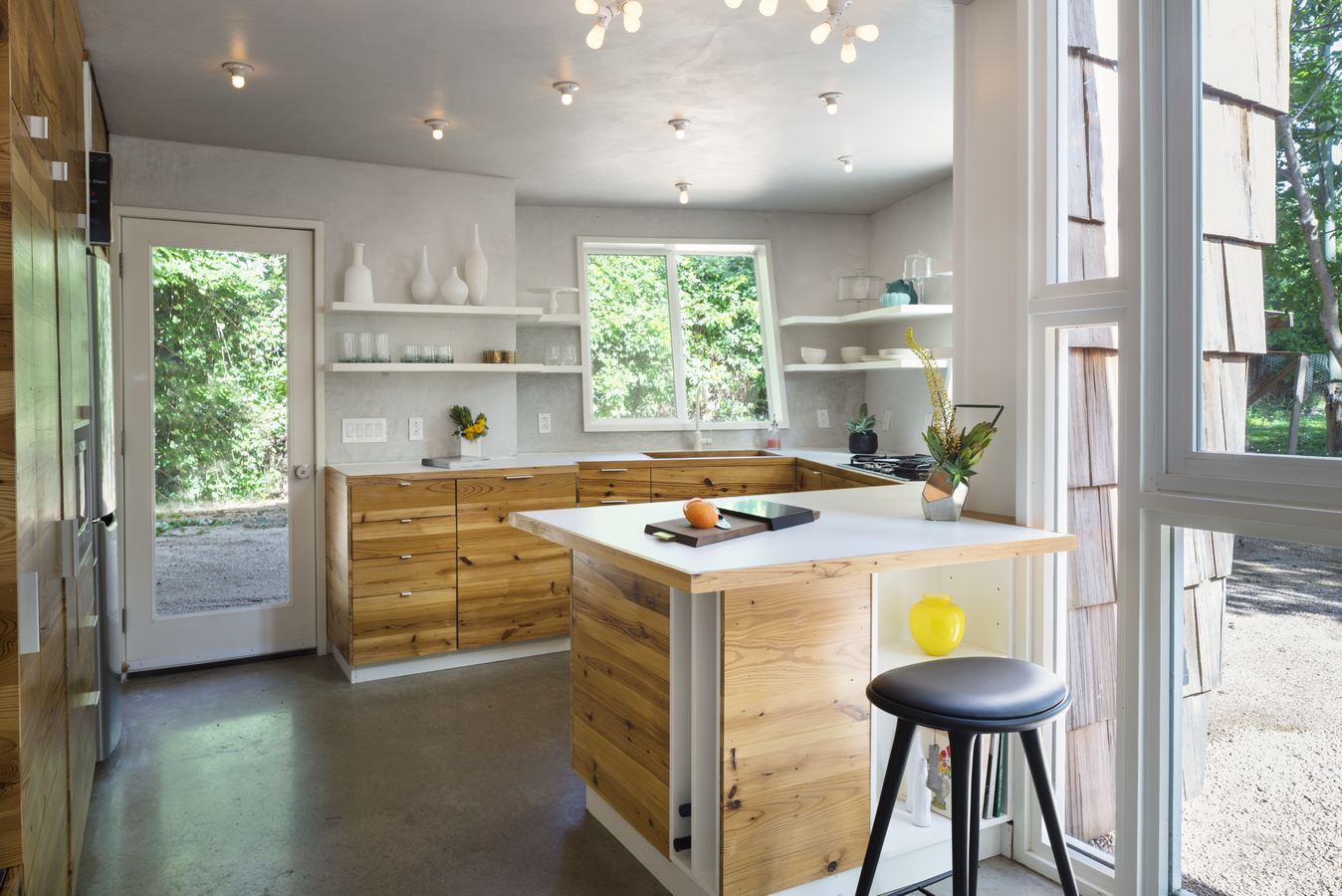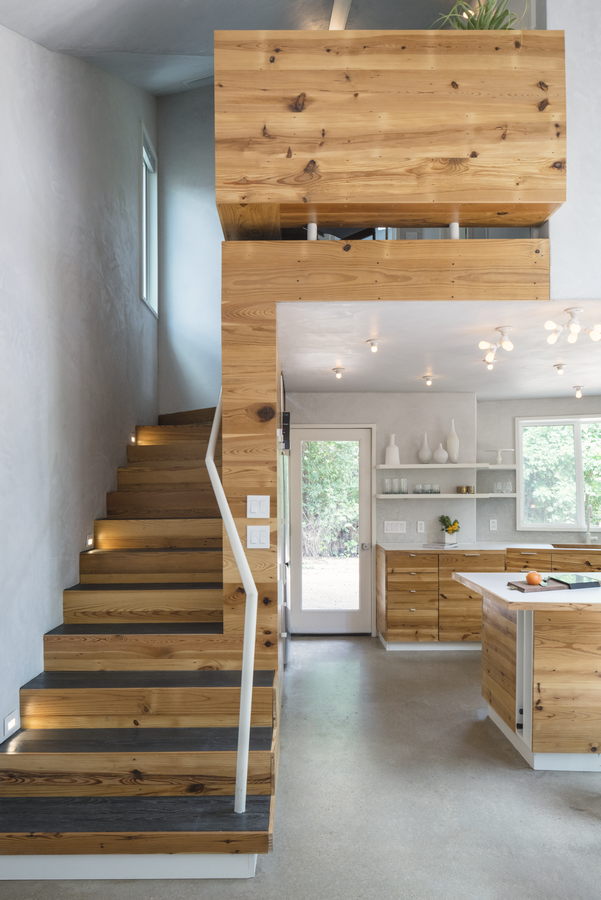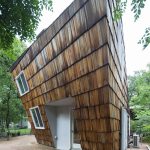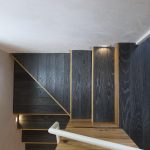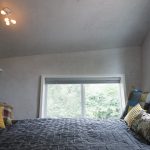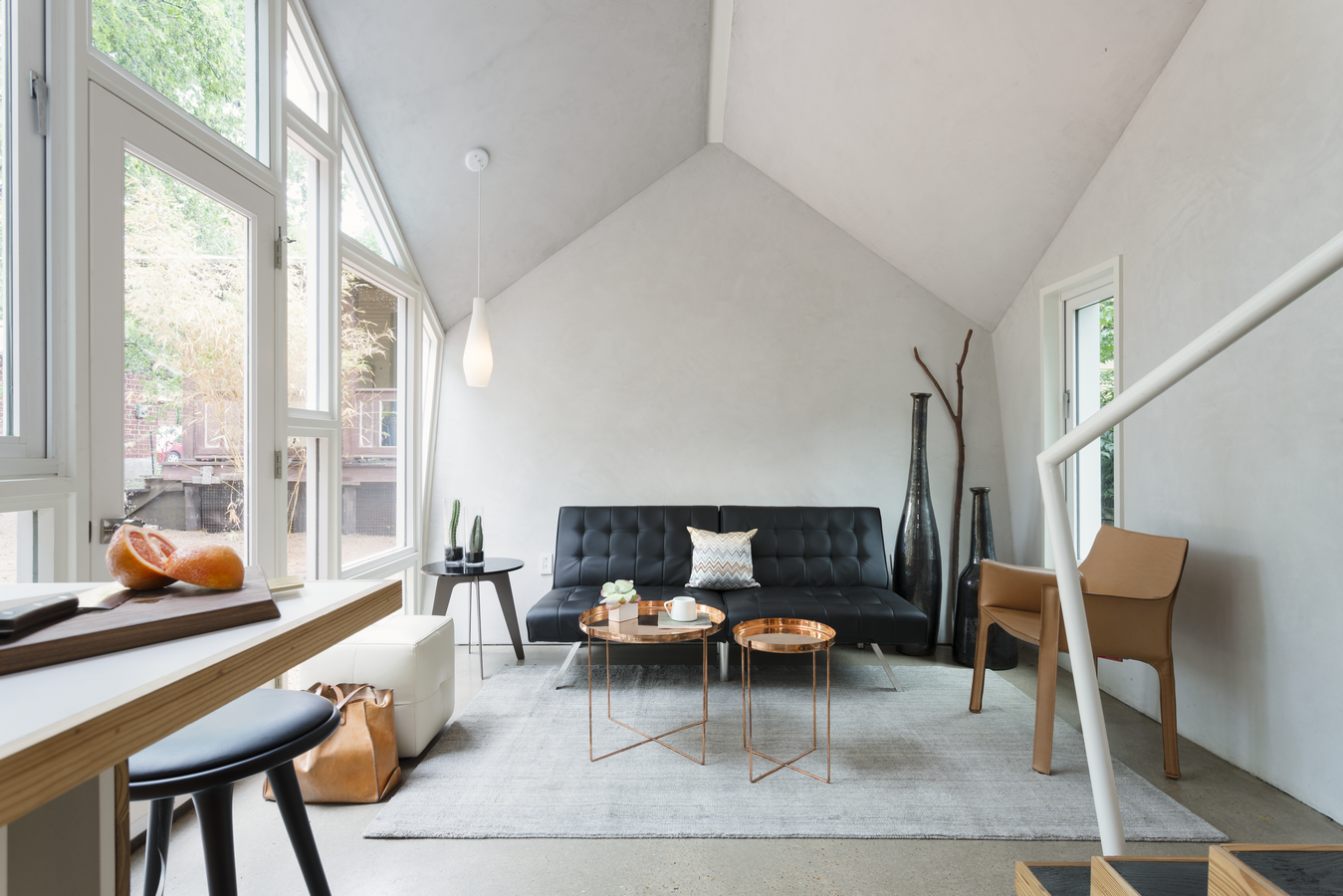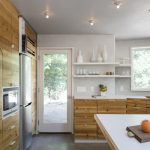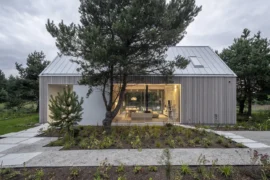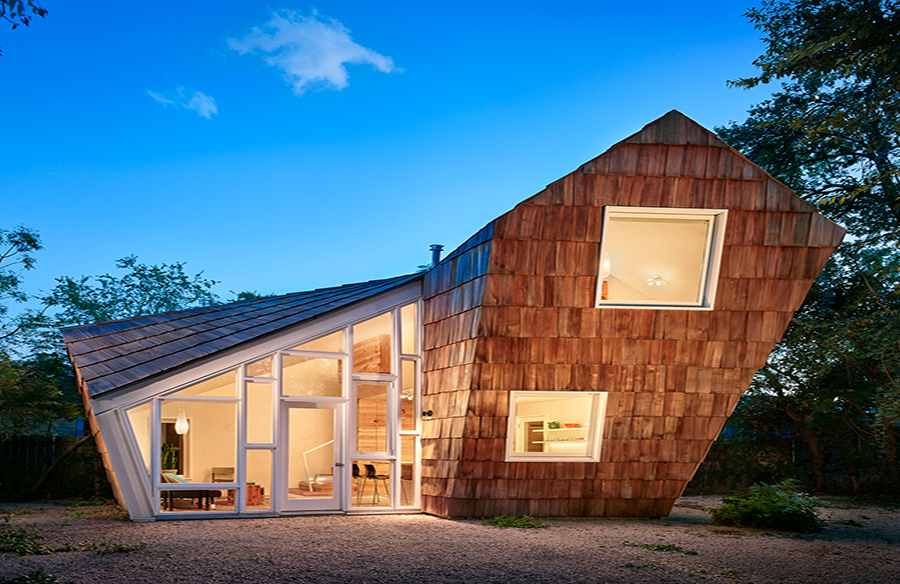
The Hive’s 320sqft footprint is the maximum allowed for a guest house by the city of Austin on this residential lot. To gain enough volume to fit a one-bedroom dwelling, walls tilt from the slab, hugging building setback planes and an angled utility easement at the back of the property, to add volume where needed — evoking the shape of a beehive. By carefully tailoring the space in three dimensions, rooms are cut down and expanded to suit the program.
Project Name: THE HIVE
Studio Name: Studio 512
Location: Austin, Texas
Completion: 2015
Size: 6500 sqft

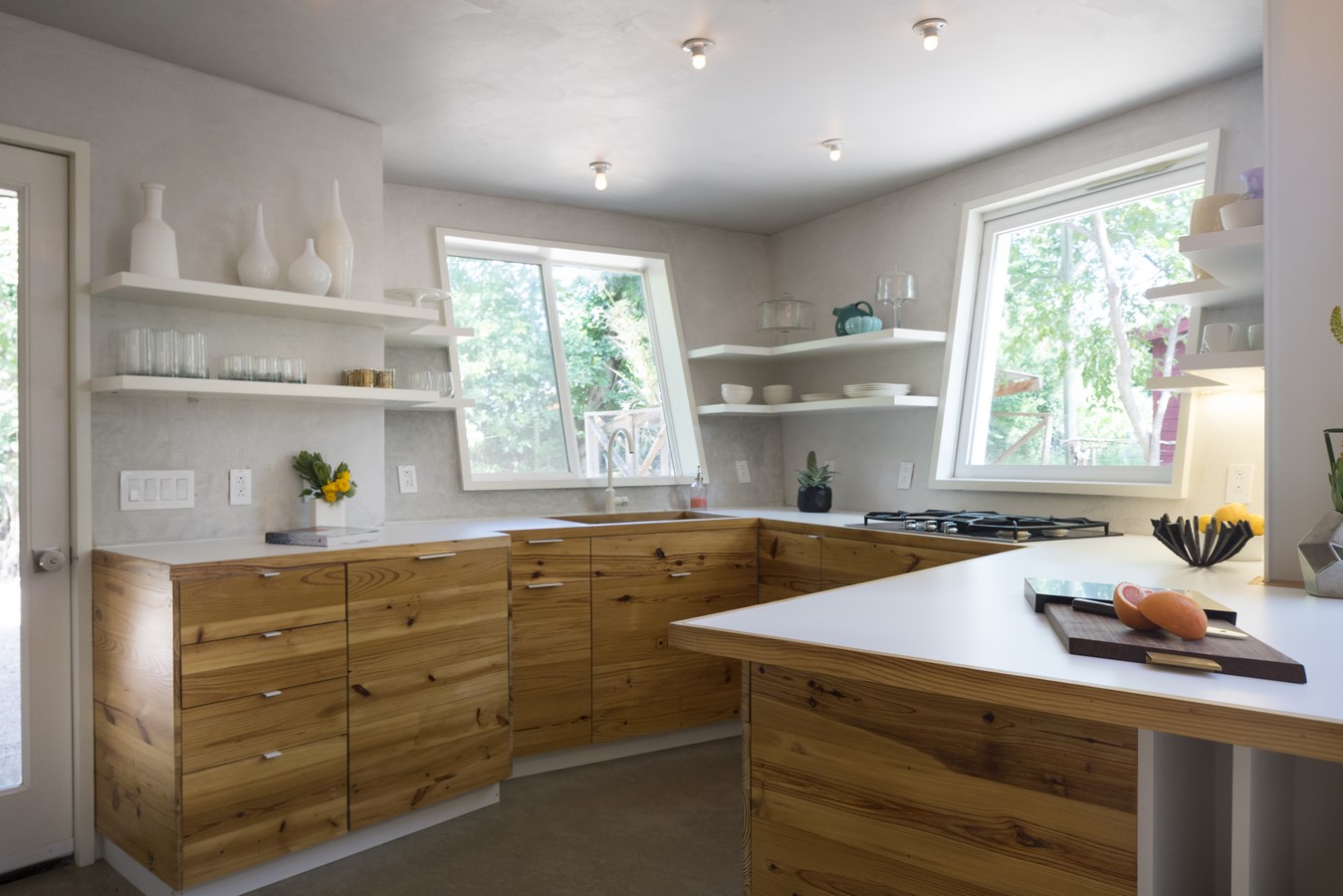
Remember the Vitruvian man with outstretched arms? His range of motion is circular, the widest at shoulder height, the narrowest at the ceiling and floor. This observation coupled with close examination of the actions performed in each space — sitting, sleeping, standing — inform the shape of the Hive to yield a dynamic, structured environment for living that feels both intimate and grand. Kitchen walls lean out for increased counter space, a large built-in desk with cantilevered bookshelf is nestled into a spot with low ceiling height and expanded view while seated at the desk.
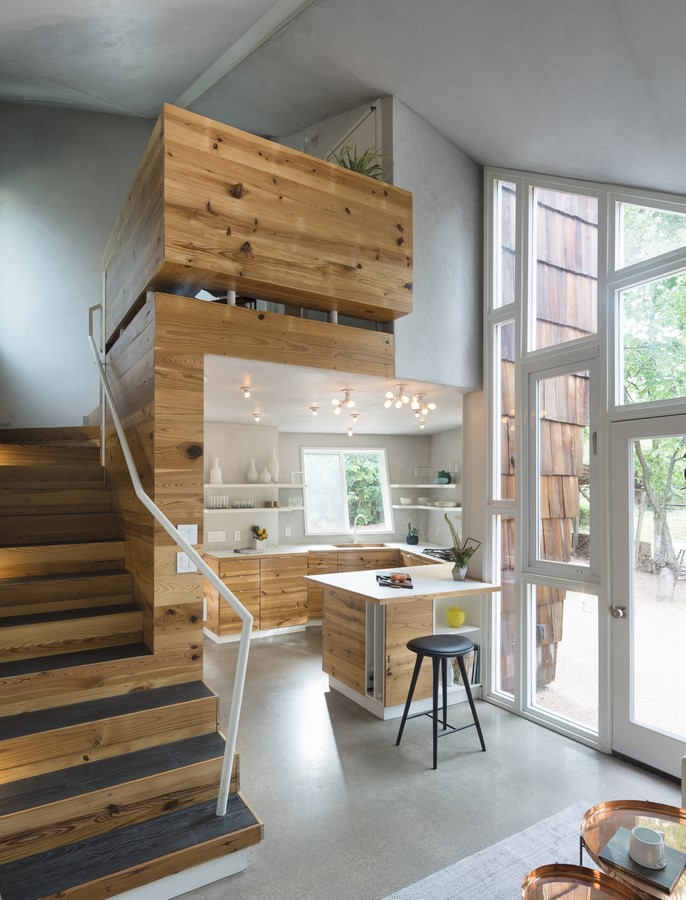
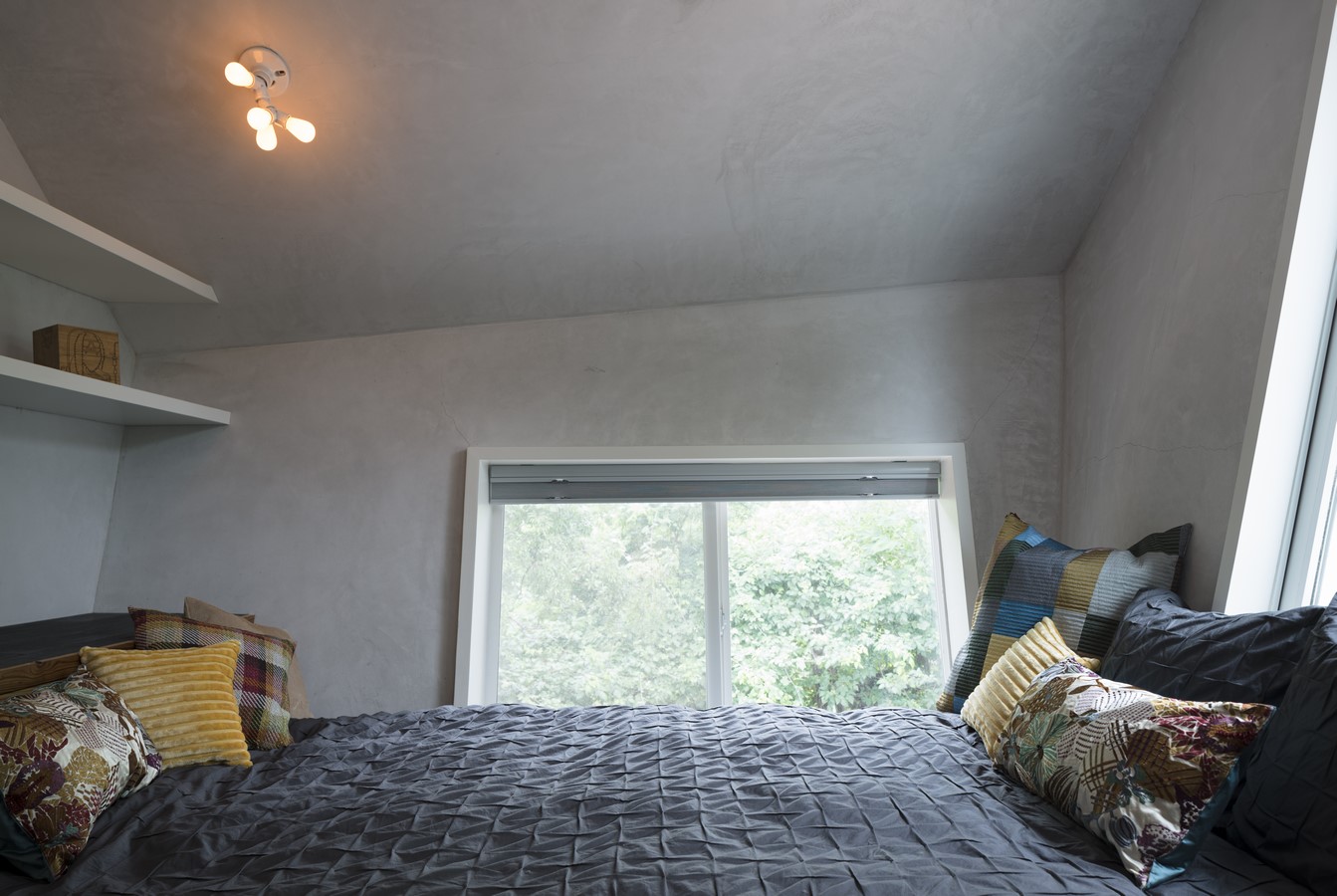
The shower is widest towards the center of the body up to the head, and a tall, narrow ceiling provides room for rising steam. In the bedroom, the width broadens at knee height to fit a queen mattress and is widest at eye level when reading from bed, but equally feels spacious when standing despite the limited floor and ceiling area. Also contained within the volume is a covered porch and private outdoor shower at the ground floor entrance, a closet with stackable laundry, a bath with walk-in shower and bench, built-in shelving and storage throughout, and an exterior bike storage closet beneath the stair.
The Hive’s design draws inspiration from Dutch and Japanese precedents that find creative solutions when faced with spatial constraints. While the box form is the reigning standard for economy of construction, reproduction, and reuse, equally important inefficiencies can emerge when examining other factors like material excess (purchasing and installing more materials on a cost/sqft basis than needed), energy consumption (to heat and cool more volume than needed), and oversizing (occupying real estate which may otherwise be shared by another function). Like a well-designed garment, a building may perform best when tailored to the shape and movement of its inhabitants.
Nicole Blair is a registered architect in Texas. She obtained a Bachelor of Science in Textiles and Apparel from Cornell University and a Masters of Architecture from Rice University. Before starting her own firm, she gained work experience in NYC in the award-winning offices of Robert A.M. Stern Architects and Peter Eisenman, Architects. Nicole’s work was recently featured in Texas Architect and she was named one of the greatest living architects in the world by Elle Decor Magazine in their January/February 2019 issue.