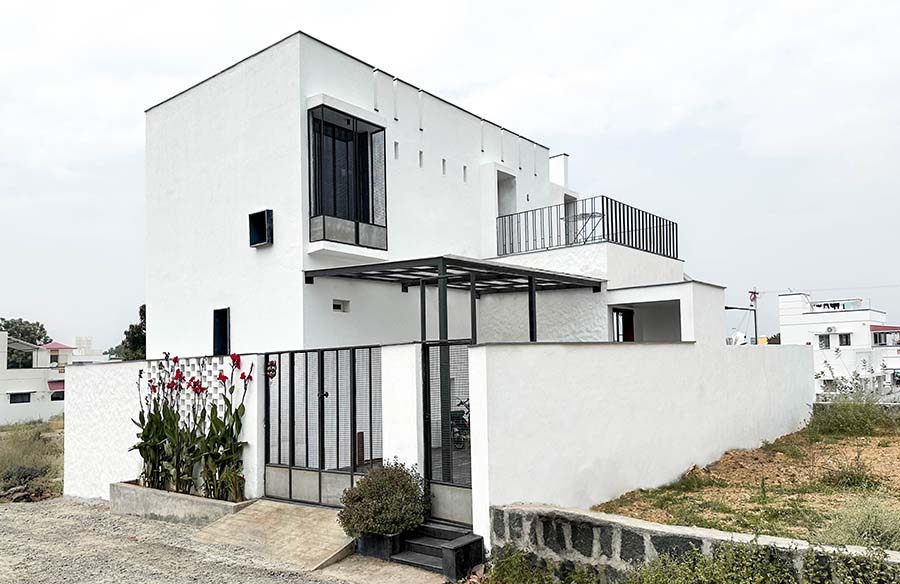
In a tier 2 city like Namakkal, reimagining minimalism through the lens of Frugal-ism offers a refreshing and sensible approach to architecture and aesthetics. This concept diverges from the high-end, luxurious simplicity often associated with minimalism, which can create a paradox where the pursuit of ‘less’ results in ‘more’—more cost, more exclusivity, and more disconnection from the local community and resources.
Project Name: Frugal House
Studio Name: Architecture RIFF

The residence is perceived as a resilient entity that caters to and adapts to its growing number of inhabitants and their evolving needs. Its openness and organic characteristics create a canvas for shaping their habitat according to their changing lives and lifestyles. Amid the chaotic pace of life, a tailored house enables its residents to adapt, evolve, upgrade, and expand their social and spatial needs throughout their existence.

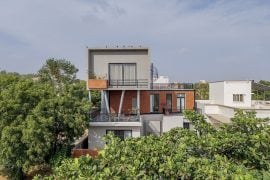
The concept of frugal-ism in the context of this house emphasizes the use of locally sourced materials within a 5km radius and the employment of local masons and fabricators. This approach reduces costs, supports the local economy, and minimizes the transportation of materials, aligning with economical building practices.
The design philosophy mirrors self-designed fabrics like corduroy and chenille, where the aesthetic emerges from the creation process itself. The house incorporates texture-plastered walls, exposed brickwork in selected areas, textured concrete slabs, and a close grid pattern in the flooring. These elements, integral to the construction, produce a raw, honest aesthetic that reflects the building process.

This house design emphasizes a balance between functionality and aesthetics. The front yard and facade are crafted for privacy and subtle elegance, shielding the interior from the harsh southern sun. The open north-facing living and dining areas promote a connection with a private garden. The central staircase with clerestory windows not only serves as a functional element, linking different levels, but also adds a dynamic quality to the space through changing light and shadows.
Bedrooms are designed as cozy, intimate sleeping pods, while the living, dining, and kitchen areas are interconnected to enhance connectivity and openness. Even though the structure is two-storey, double-height spaces and overlooking windows and doors maintain a cohesive, unified feel, ensuring visual and spatial continuity throughout.

The material palette is intentionally simple and monochrome, featuring locally sourced brick, Kadapa and Kota stones, mint green granite, mild steel windows, wired glass, and local wood. This simplicity is balanced by meticulous detailing and geometric coherence. Vertical metal lines and wall cutouts create visual harmony, while square grid flooring provides a rhythmic foundation. The interplay of light with textured surfaces and raw stone inlays adds depth and vibrancy, making the house feel dynamic and alive.

In conclusion, this house in Namakkal reinterprets minimalism through frugalism, striking a balance between cost-effectiveness, and aesthetic appeal. By utilizing local materials and craftsmanship, it explores how minimalist design can be both practical and beautiful, deeply rooted in its environment and community.