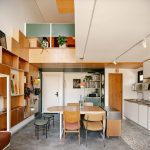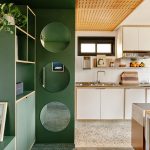
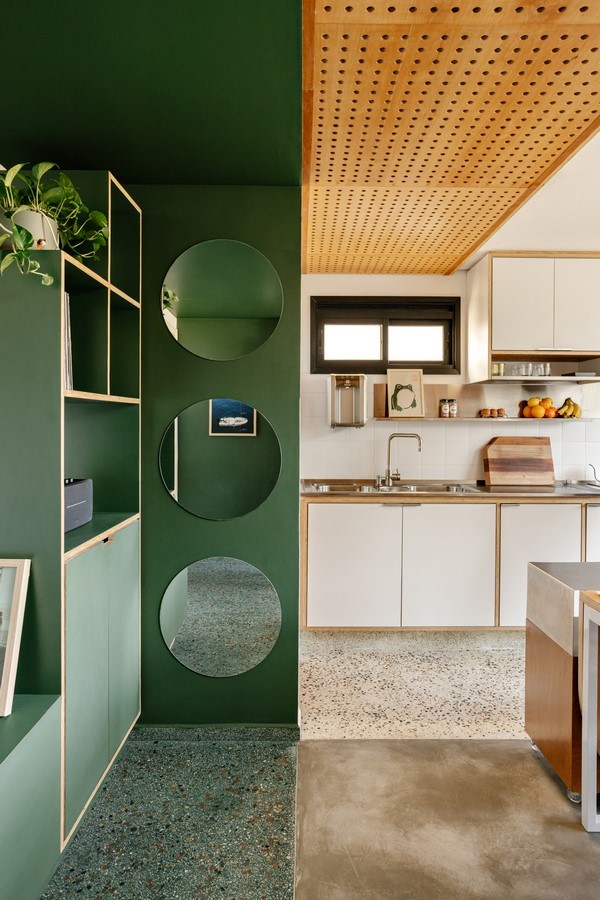
Upon entering the duplex of about 50 m², a deep green welcomes you with the calm attributed to it in the universe of colors. The granilite flooring, in the same tone, guides the path toward the staircase, marking the transition between arrival and living.
Project Name: SBC Apartment
Studio Name: Studio Papaya
Photography: Arthur Duarte
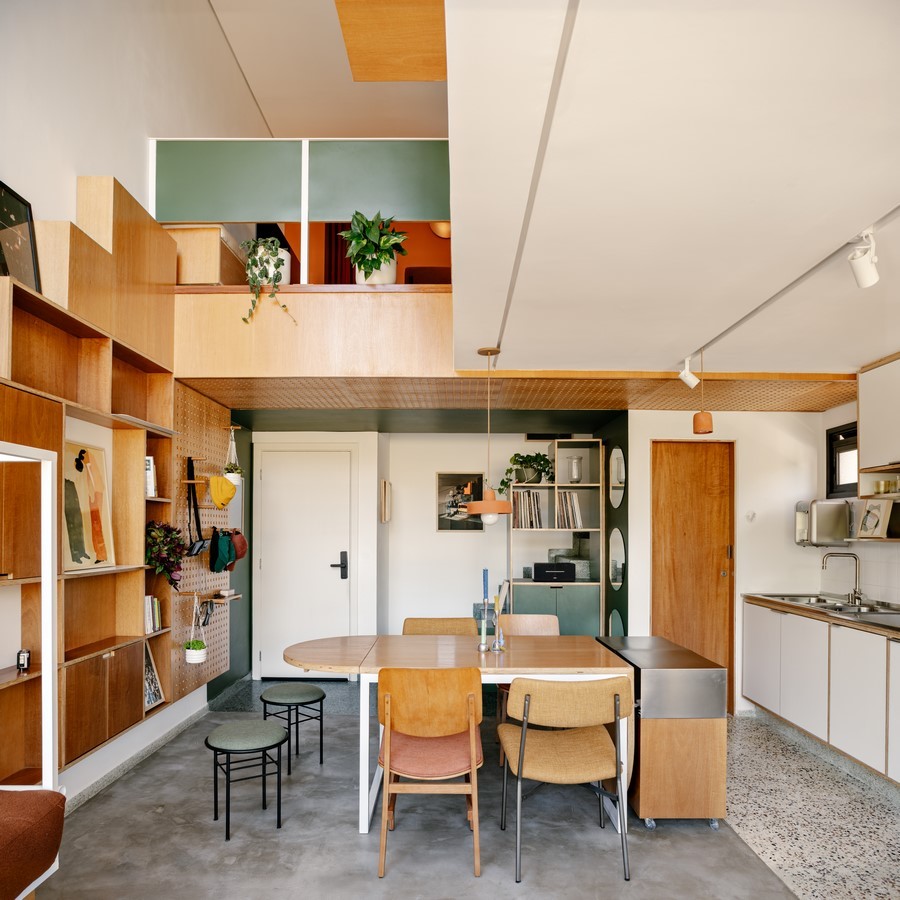
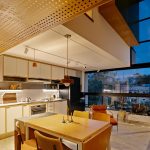
To the right, a perforated freijó-veneered panel receives bags, hats, and small objects; on the other side, a shoe rack invites you to sit, while niches in green laminate open space for books and records. Above, the panel transforms into a perforated ceiling, providing lighting and tracing a path that follows the circulation. Ahead, a wide view unfolds, as the former balcony was incorporated into the interior and the ground floor partitions gave way to a single space.
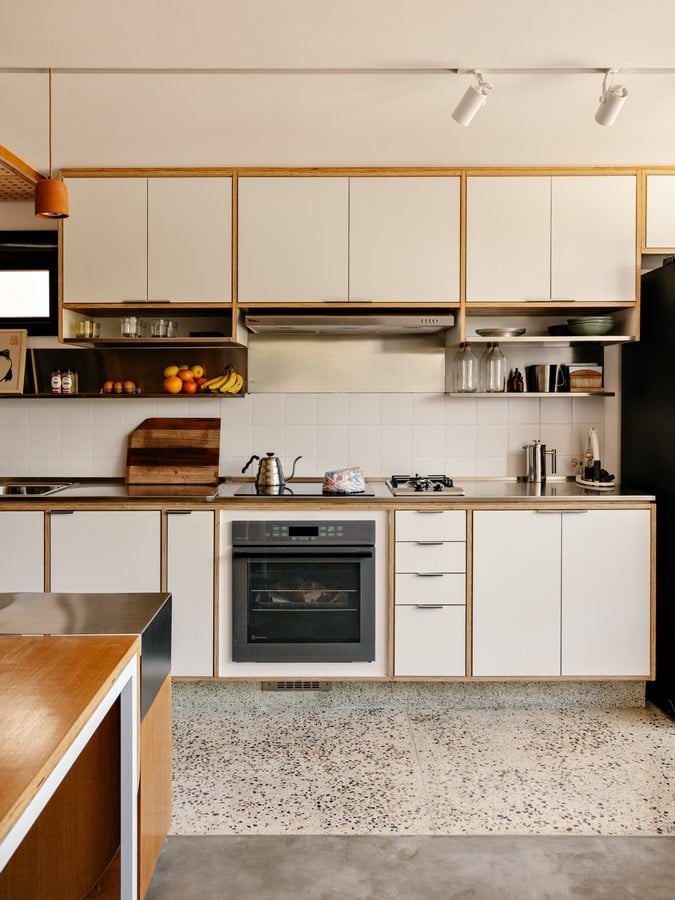
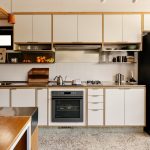
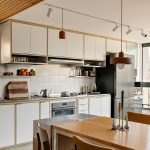
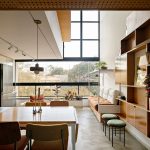
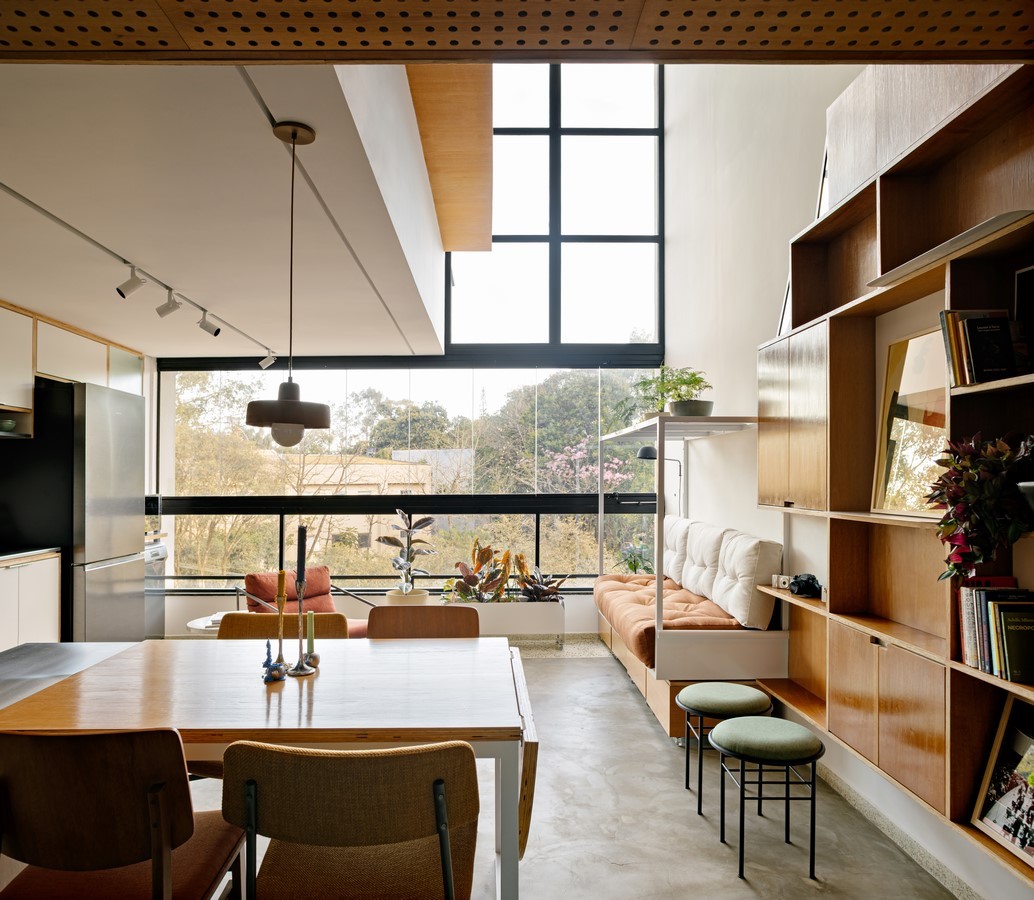
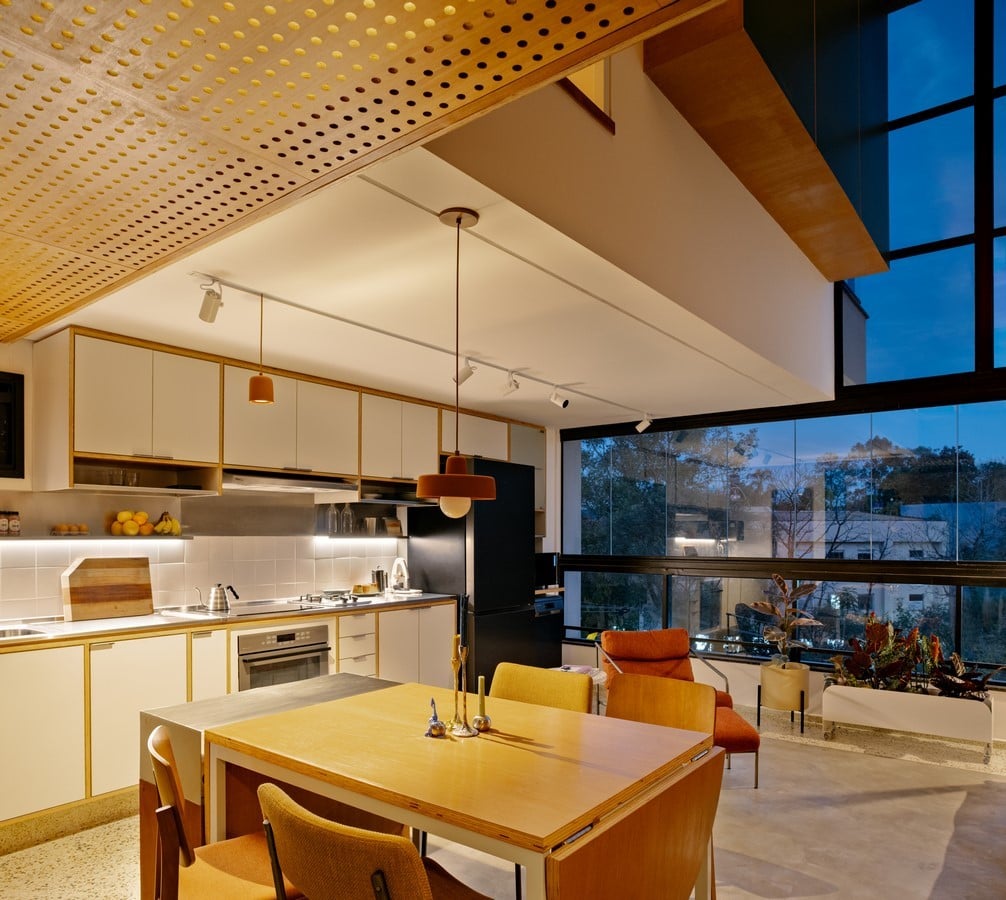
Designed specifically for the apartment, the table takes center stage and adapts to different uses: a wood and stainless-steel module slides out, becoming support when it’s time to cook or host. The kitchen combines white fronts with exposed plywood edges; the long counter and stainless-steel shelves keep everything within reach, clear and functional, like a workshop. On the floor, a “rug” of cement defines dining and living, while white granilite signals the kitchen—demarcation drawn at foot level. The hierarchy of materials helps read the space: white for the kitchen, natural wood for social areas, green in the hall and circulation.
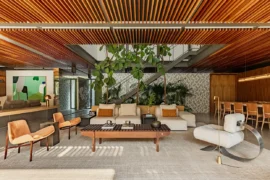
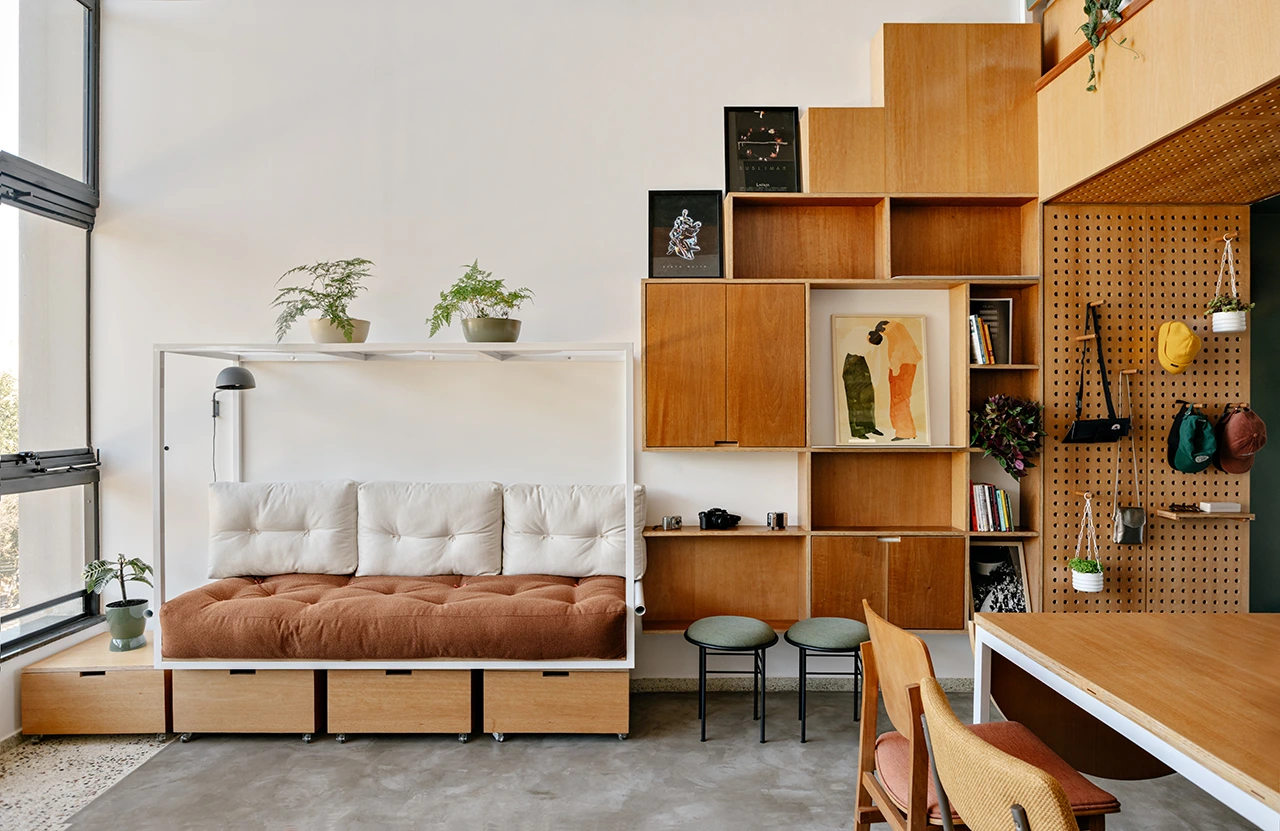
Carpentry stitches the project together. On the ground floor, modular shelving and the perforated panel organize entry and living; a metal-framed sofa with burgundy futons, along with rolling trunks, supports daily life; the freijó veneered table extends for gatherings. In the kitchen, upper and lower cabinets with open niches and continuous stainless-steel shelves align preparation and storage. The large window of the double-height span brings tree canopies indoors and turns the façade into a lived-in balcony, with benches and planters. Track lighting with spotlights and discreet pendants punctuate the scene without competing with daylight.
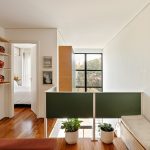
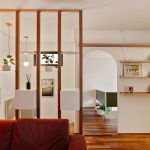
Through the void of the double height, the eye reaches the mezzanine. At the top of the staircase, a white guardrail with a green laminated panel appears. On the upper floor, a terracotta wall and amendoim wood flooring create a suitable atmosphere for a TV room; a slatted partition replaces the former wall and, together with delicate metal shelves, provides visual separation without blocking light. Along the way to the bedroom, a light shelving unit with tension rods holds books, objects, and plants, while an arched mirror and slender volumes establish a visual rhythm.
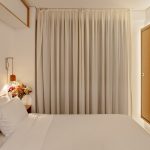
In the bedroom, the pace slows. Solid wood flooring ensures continuity; lighting is versatile—sometimes functional, sometimes scenographic. The carpentry was designed to free the floor: a simple freijó headboard supports lamps and outlets; the main wardrobe, positioned “almost outside” the bedroom in an opening created for the double-height span, frees space for the bed and provides a sense of amplitude previously nonexistent, while externally presenting itself in an unusual, floating way. Cotton curtains filter natural light and soften the atmosphere.
In the end, the intention is of a home shaped by precise gestures: walls that give
way to use, materials that guide, and bespoke furniture that lends form and
substance to everyday life.