We’re in Conca D’Oro, a densely inhabited area located in the northern part of Rome, just beyond the Aniene River. This district experienced substantial development in the decades following World War II, and much of that architectural legacy remains visible in its built fabric today.
Project Name: VDS House
Studio Name: 02A Studio
Location: Conca D’oro, Rome
Year: 2024
Area: 130 Sqm
Photographer: Paolo Fusco
The apartment is situated within a 1960s low-rise building, recognizable by its brick-pattern façade and distinct concrete cross-shaped pillars that support a wide overhanging canopy at the first-floor level. The structure speaks a quiet language of rationalism and endurance.
The original plan of the flat was already well-structured, so rather than implementing radical changes, the renovation focused on refining key spaces—primarily the kitchen and bathrooms—and improving internal flow without disturbing the overall spatial order.
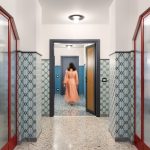
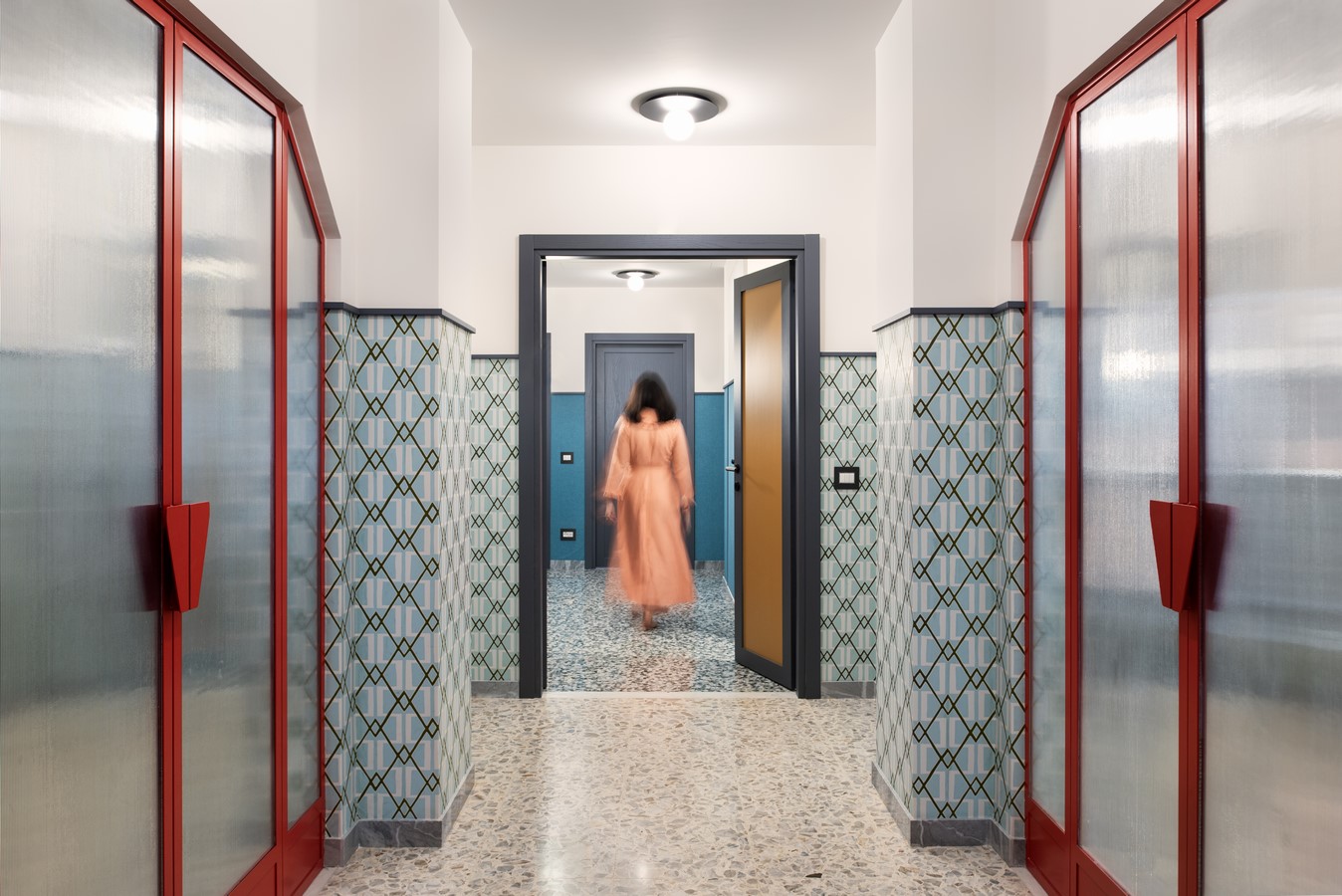
A long corridor, central to the home’s circulation, has been discreetly divided into two sequences. The first segment organizes the communal areas, while the second leads subtly toward the private rooms. A nuanced transition between these zones is established through the use of wallpapered boiserie—expressive and rich near the entrance, becoming quieter and more restrained as one approaches the bedrooms.
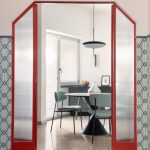
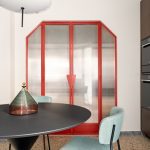
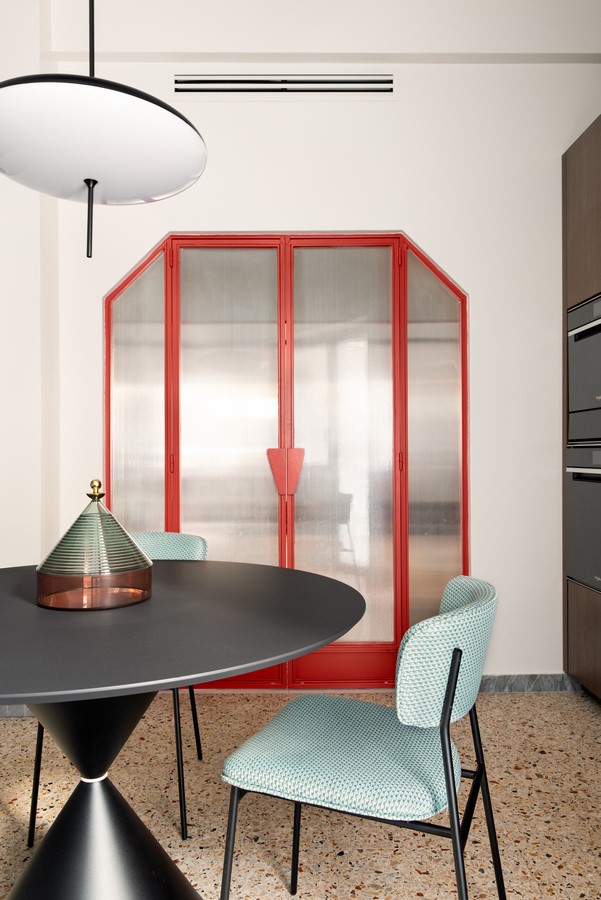
The main axis of the apartment is intersected by a strong transversal element: two diamond-shaped cut-outs, outlined in lacquer-red and fitted with glass inserts, visually connect the apartment’s two opposite sides. These become sculptural focal points embedded within the plan.
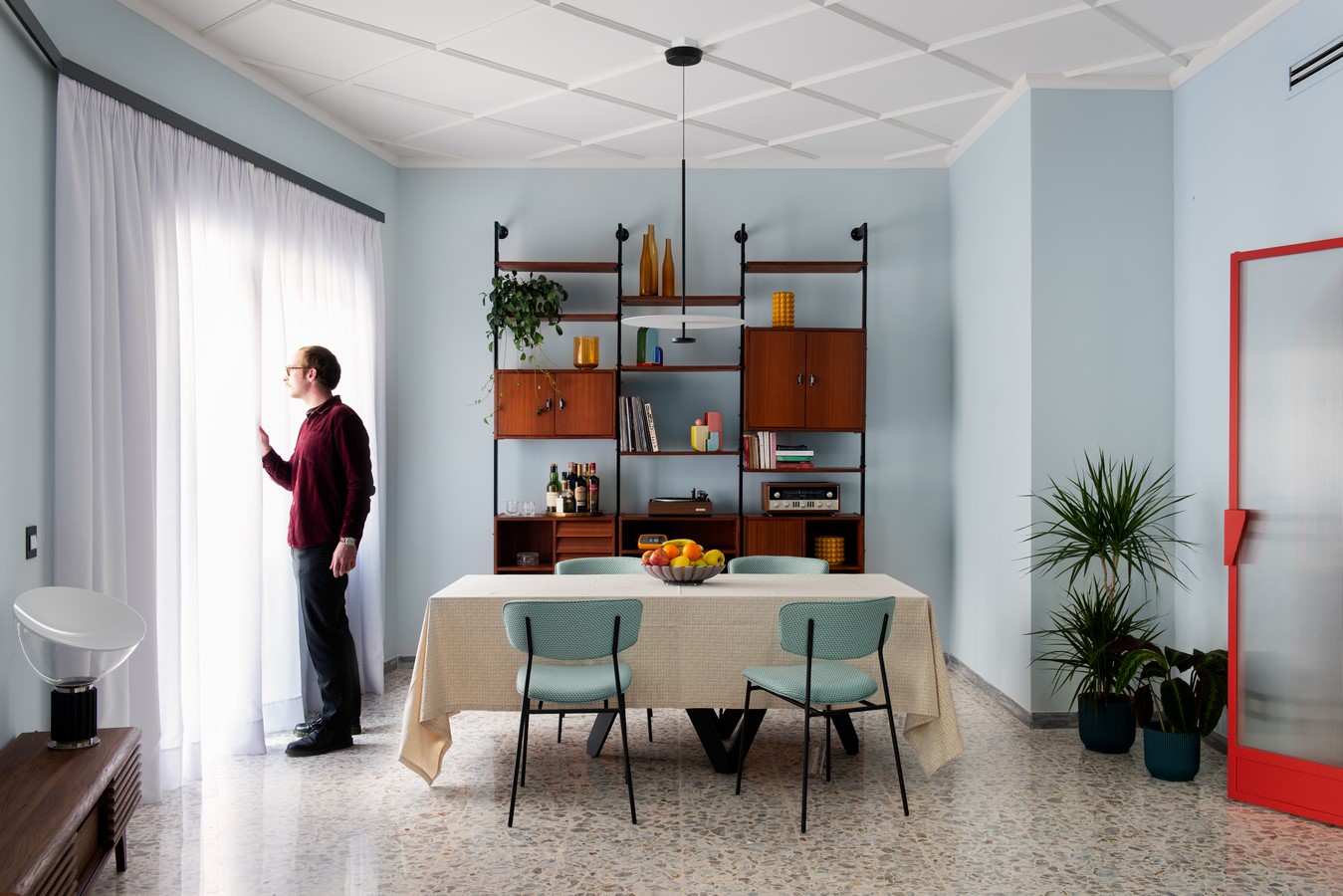
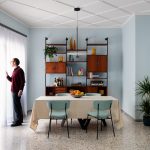
A number of original elements have been preserved and highlighted, such as the large terrazzo flooring and the bardiglio marble skirtings. These materials informed the chromatic approach in the living spaces, where shades of cerulean and soft grey define a tranquil background for the furniture and decorative accents.
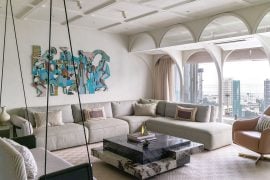
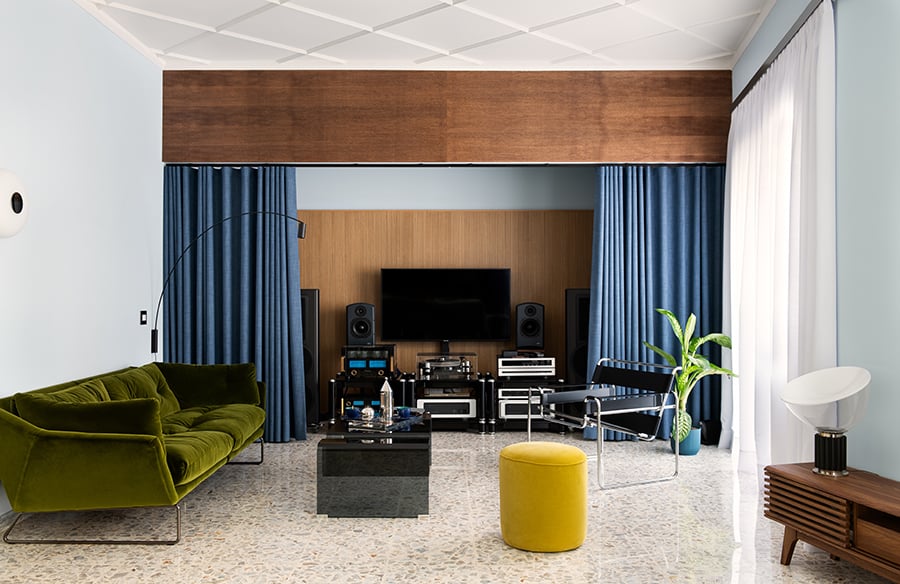
In the living room, the irregular shape of the external wall called for a unifying intervention. The chosen solution was a ceiling treatment featuring an intricate plaster grid, designed to create rhythm through shadow and light, bringing cohesion to the space.
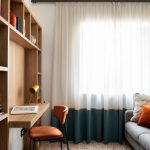
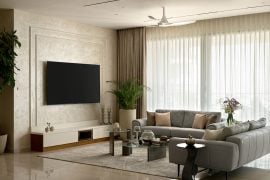
At one end of the living area, a curtain conceals a wall covered in acoustic panels—a tailored space for a high-fidelity audio setup, reflecting the owners’ passion for sound. It introduces a moment of warmth and analog intimacy within the social heart of the home.
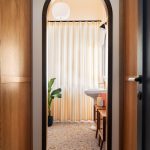
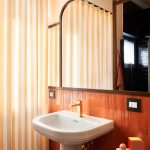
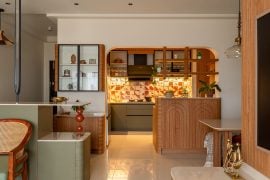
The guest bathroom, accessed via a compact laundry zone with custom oak closets, is bathed in warm, seasonal hues. The original terrazzo continues here, joined by rust-colored ceramic, peach-toned walls, and brass details—producing a nostalgic, almost cinematic ambiance that subtly references the era of the building’s origin.
By contrast, the second bathroom adopts a more minimal language, with cool tones and sharper lines. Its restrained palette and clean geometry lend a sense of calm precision—deliberate, measured, and serene.
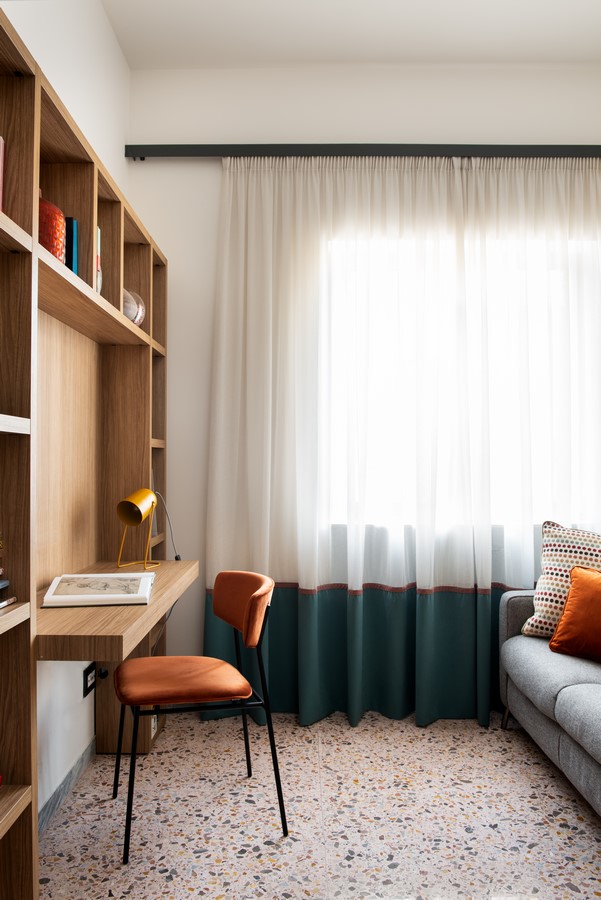
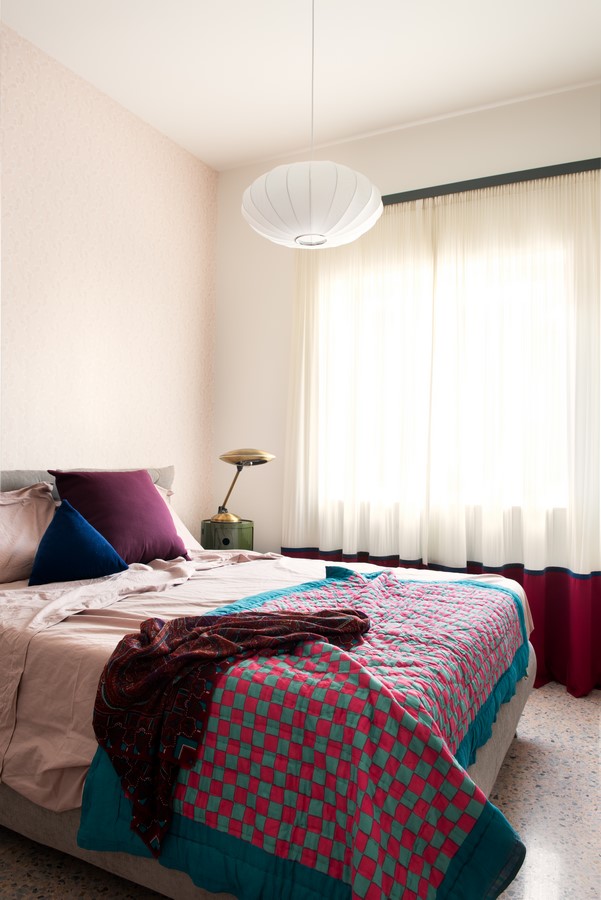
Ultimately, the renovation reveals a balanced and thoughtful interior—where interventions are assertive but never loud. Every choice feels like a natural extension of the existing architecture, with the design aiming not to impose, but to accompany and amplify what was already there.