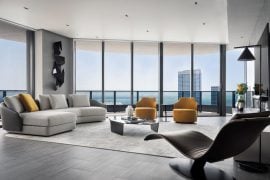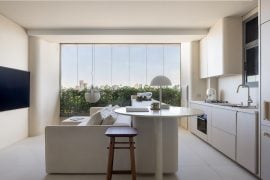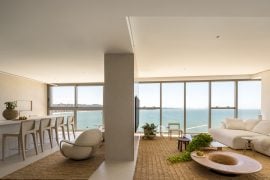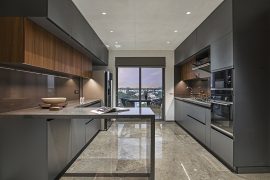
The couple wanted a complete renovation for the apartment. The main requests were: 3 suites, a TV room that could be integrated with the main living room, and an inviting kitchen that could be connected to the dining room and isolated when necessary. The clients asked for a timeless design, blending sobriety and lightness.
Project Name: Apartment VCA
Studio Name: SAAG Architecture
Total area of the property: 280m²

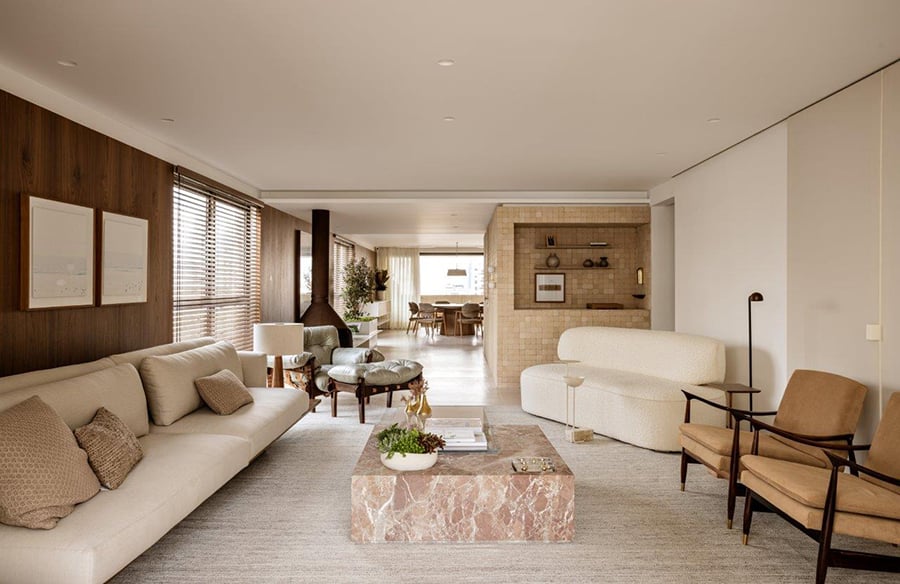
To achieve this, we balanced dark wood with light brick. These two materials were the initial foundations of the project. From there, we added different textures, creating diverse sensory experiences. The Mont Dore marble flooring, sliding doors integrating spaces with off-white solar mesh, and white metallic details on the fixed furniture completed the material choices.
Is this a renovation? Describe how the internal layout of the property was before and after.
The property consists of two apartment units. The previous owner had already combined the units, but they were still very sectioned. The elevator lobby opened into a second private hallway with two doors that divided the functions of the apartment. On one side, there was the living room, dining room, kitchen (not integrated), service area, and one suite; on the other, there was a TV room and two suites. The main challenge of the project was to find a way to restructure the layout so that the feeling of two units would disappear, creating instead an integrated space.

Was it necessary to replace electrical, plumbing, etc.? Please specify the details and reasons:
[The section regarding replacements isn’t answered in the provided text. If you have more details about this, feel free to share.]
What was the inspiration and concept of the project?
One of the starting points for the project was its scale. The space revealed its potential for spaciousness. The low ceiling was compensated by generous windows, and it was from this intention to value its potential that the project emerged, with the idea of exploring pure volumes. The goal was linearity, solid volumes, and symmetrical planes. We analyzed the existing alignments to intensify them. By removing any visual interference, such as protrusions or misalignments, the space was amplified as desired.

Is there a starting point that you consider key to the project?
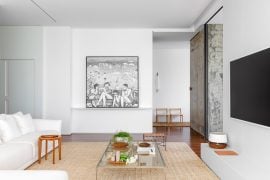
The key starting point of the project was the zoning of the apartment. The first step: to abolish the existing antechamber at the elevator exit. The large windows at the ends of the living and dining rooms had to be free from visual barriers, highlighting the symmetry of the units. Therefore, we broke down the walls of the antechamber and inserted a low console that welcomes the user into the apartment and houses a planter with a jabuticaba tree and a fireplace. The low console was designed to hold the painting *Parque Laje* by artist Flavia Junqueira, which holds significant symbolic importance for the family.

Thus, the barrier that previously separated the two units was removed. However, the elevator hallway block still divided the linearity between the rooms. We chose to highlight this block, which became a key element of the project: the cube covered with square ceramic tiles. There was a large beam between the units, which would have further segmented the space. We decided to conceal the beam and lower the ceiling height at the entrance to maintain the presence of the cube that houses the hallway, and we took the opportunity to create an inverted coffered ceiling with diffused lighting that highlights this element.

What factors were considered when choosing the finishing materials? Which materials stand out?
There was a concern that the materials used would dialogue with those already existing in the building (concrete, brick, and brown frames). The clients also had opposite desires in terms of aesthetics; one liked something denser, while the other appreciated softer elements. The contrast between light and dark materials stems from the need to navigate both desired universes. We sought to combine dark wood with softer elements, like the light solar mesh on the panels and the white metal of the ironwork. The ceramic of the main block reflects the desire for a more natural aesthetic through its imperfections. For the flooring, we chose natural stone, always timeless.