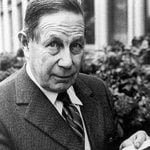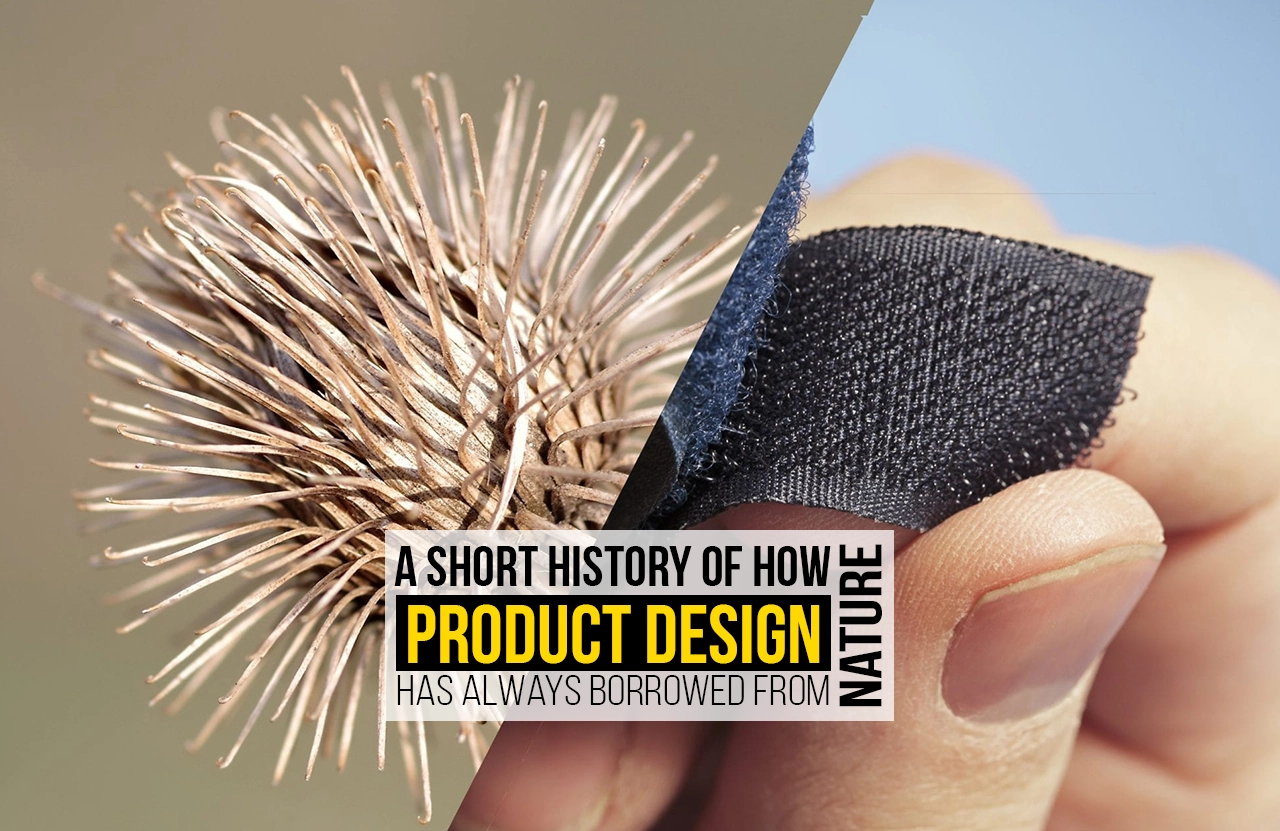
Have you ever walked through a field or a patch of grass and come back with tiny, prickly seed pods stuck to your clothes? They can be annoying and surprisingly difficult to remove, especially when they get caught in fabric or an animal’s fur. In 1941, Swiss engineer George de Mestral encountered exactly this problem after a hunting trip in the Alps. So he removed them off of his dog’s fur as one would and also examined one under a microscope as one would generally not. His observation eventually led to one of the most recognisable fastening systems in the world, and became one of the most familiar examples of nature-inspired product design.
The Tiny Hooks
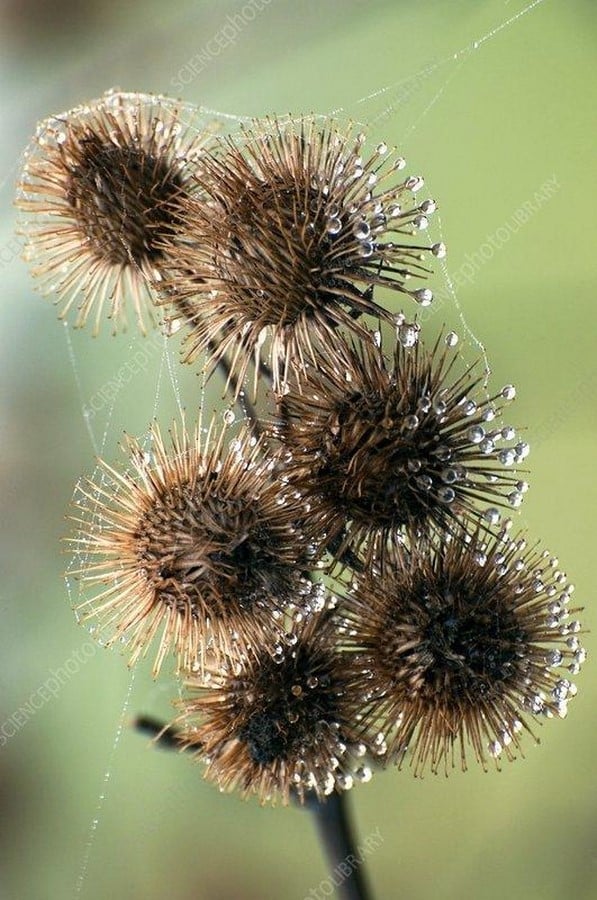
Under the microscope, the ordinary-looking seed pod revealed thousands of tiny hooks covering its surface. These hooks caught onto the fibres of fabric and fur, allowing the seed pod to hold on surprisingly firmly. The objects were called burrs, and their ability to attach themselves was not an accident or a useless inconvenience. It was part of how the plant reproduced. The burrs were designed to catch onto passing animals, allowing them to travel away from the parent plant and eventually fall off somewhere else. In this way, the plant could spread its seeds over a wider area. What de Mestral had discovered was therefore more than an interesting shape. He had discovered a natural mechanism performing a very specific job.
This is what makes the story interesting from a product design perspective. Nature had already solved the problem, but de Mestral still had to understand exactly what made the solution work. The hooks were not simply an unusual feature that happened to make the burr annoying. Their shape, arrangement and relationship with fibres were all contributing to a specific function. This distinction is important because nature-inspired design is often presented as simply copying something that looks interesting. De Mestral’s observation was different. He was not interested in reproducing the appearance of the seed pod. He was interested in understanding its mechanism. Once he realised that the burr could repeatedly attach itself to fabric and fur through tiny hooks, he began to consider whether the same principle could be recreated for human use.
From Observation to Design
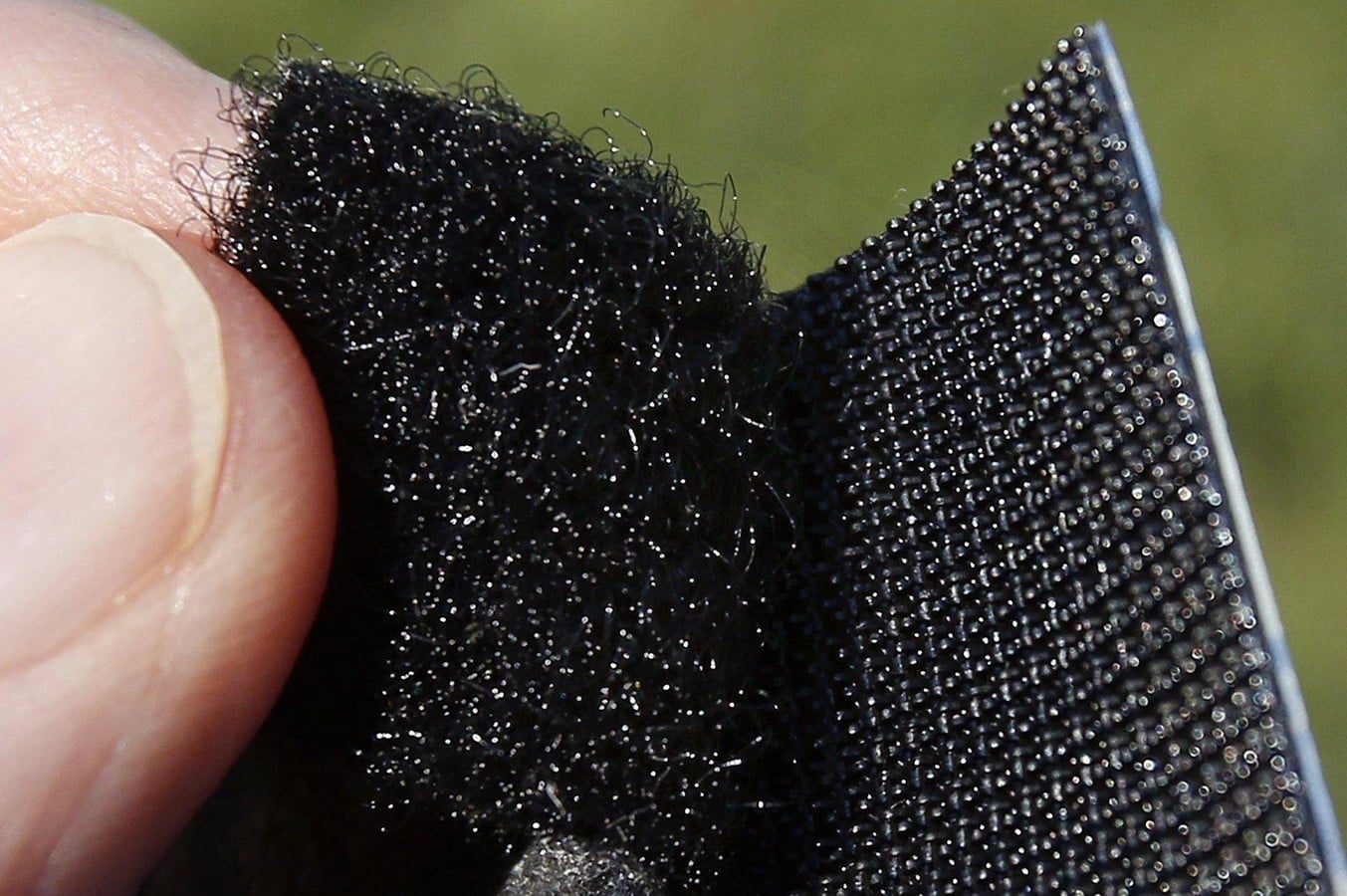
It would be easy to imagine that the invention happened the moment de Mestral looked through the microscope. In reality, that was only the beginning. Nature had produced the mechanism over generations of evolution; de Mestral had to figure out how to reproduce it deliberately. The idea was simple: create one surface covered with tiny hooks and another covered with loops that the hooks could catch onto. The challenge was getting the relationship between the two surfaces right. In early attempts, the loops could be too large for the hooks, while other combinations made the fastening difficult to release. The natural burr had already achieved the balance perfectly. De Mestral had to discover how to recreate that balance using manufactured materials.
He spent almost a decade experimenting with the idea. Eventually, he worked with a fabric manufacturer in Lyon, France, and began developing the fastening using nylon. The material could be shaped into hooks that were flexible enough to release under pressure while still being strong enough to hold the two surfaces together. This stage of the process is important because it reveals something that often gets lost when discussing product design inspired by nature: seeing the solution is not the same as designing it. Nature provided the principle, but manufacturing introduced an entirely new set of problems. The designer had to translate a biological mechanism into something that could be produced consistently, withstand repeated use and perform reliably outside the environment in which it had originally evolved.
The Decade Between the Idea and the Product
The burr gave de Mestral the principle, but it did not give him a ready-made product. He had to understand what actually made the burr successful rather than simply copying its appearance. The hooks had to be produced at the right scale, while the loops had to interact with them properly. The material had to be durable but also allow the two surfaces to separate when necessary. Every one of these decisions moved the invention further away from the original plant and closer to a manufactured object. This is perhaps where nature becomes most useful to product design. It does not necessarily provide a finished form to copy. Instead, it provides a starting point for asking why something works and whether that principle can solve an entirely different human problem.
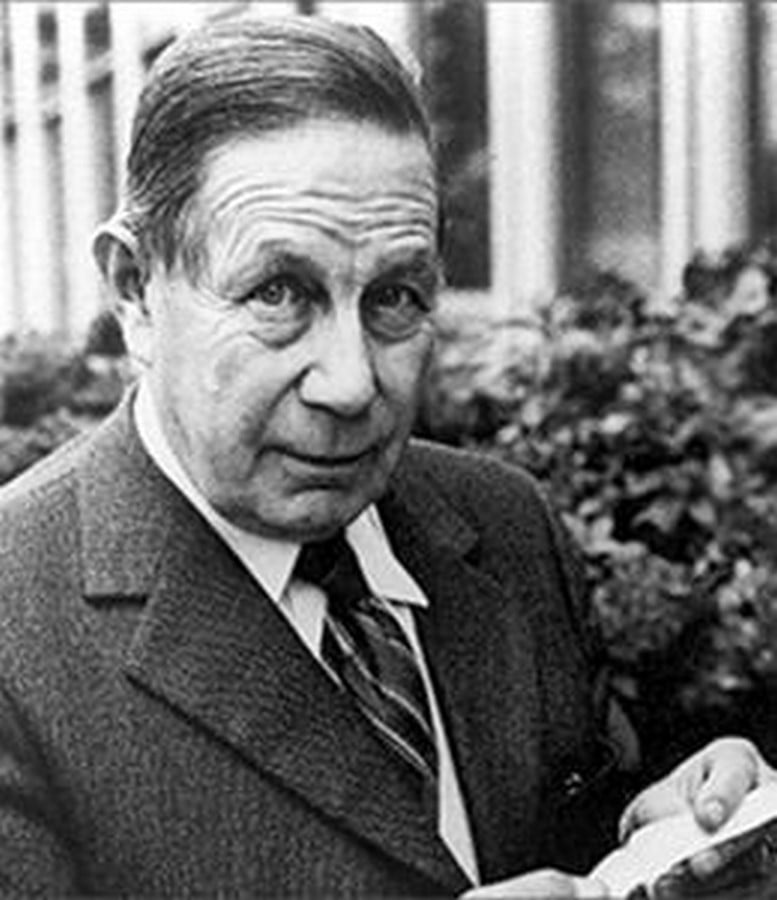
De Mestral eventually named his invention VELCRO, combining the French words velour and crochet, meaning velvet and hook. He filed for Swiss patent protection in 1951, and the first Swiss patent was issued on 16 March 1954. A US patent followed in 1955 for “Velvet Type Fabric and Method of Producing the Same.” Almost thirteen years had passed since the original walk in the Alps. The interesting part was not simply that de Mestral noticed something in nature. It was that he stayed with the observation long enough to turn it into a functioning product. The inspiration happened quickly; the design process did not.
From Seed Pod to Everyday Product
The invention gradually moved from experiment to commercial product in the late 1950s. Velcro shoes became increasingly common during the 1960s and 1970s, while industries such as skiing and scuba diving also adopted the fastening system. Its usefulness eventually took it far beyond clothing. Hook-and-loop fastening began appearing in sports equipment, hospital equipment, military gear, nappies, cars and aircraft. NASA‘s use of the material also helped give it visibility beyond its original applications. The mechanism had moved far beyond the problem that originally inspired it. A system that had evolved to help a plant spread its seeds was now being used wherever people needed a fastening method that could repeatedly attach and separate.
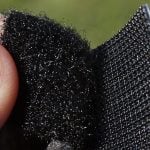
The transformation becomes even more interesting when considering how familiar the product eventually became. What began as an observation of a tiny natural mechanism had become something that appeared in ordinary shoes, clothing and household objects. It was no longer necessary for users to know where the idea came from or how it worked. The product had become so ordinary that its origins in nature had almost disappeared from view. Yet the basic principle remained unchanged: one surface uses hooks, the other provides loops, and together they create a fastening that can be pulled apart and used again. The success of the invention came from preserving the essential logic of the natural mechanism while adapting everything around it for human use.
References:
VELCRO Companies (2016) An Idea That Stuck: How George de Mestral Invented the VELCRO Fastener. Available at: https://www.velcro.com/news-and-blog/2016/11/an-idea-that-stuck-how-george-de-mestral-invented-the-velcro-fastener/ (Accessed: 10 August 2026)
De Mestral’s Velcro. Wikipedia. Available at: https://en.wikipedia.org/wiki/George_de_Mestral (Accessed: 10 August 2026).
HISTORY (2025) Who Invented Velcro? Available at: https://www.history.com/articles/velcro-invention (Accessed: 10 August 2026).
Hookandloop.com (n.d.) Invention of VELCRO® – Where & How Was VELCRO® Invented? Available at: https://www.hookandloop.com/invention-velcro-brand (Accessed: 10 August 2026)
Brackenbury, J. (n.d.) Plant burrs covered in dew. Science Photo Library. Available at: https://www.sciencephoto.com/media/462902/view/plant-burrs-covered-in-dew (Accessed: 10 August 2026)
ThoughtCo. (n.d.) Electron micrograph of Velcro. Available at: https://www.thoughtco.com/the-invention-of-velcro-4066111 (Accessed: 10 August 2026)
de Mestral, F. and de Mestral, C. (n.d.) George de Mestral holding a strip of Velcro. American Physical Society. Available at: https://www.aps.org/apsnews/2004/02/death-george-mestral-velcro (Accessed: 10 August 2026)