The Tale of Architecture begins with its Users
At the dawn of humanity, man hid from dangers in caves and primitive safe spots. With time, humankind learned how to use Mother Nature and built homes, which resulted in the development of architecture. Not only did it affect the surroundings, but it also affected humans. Today, architecture is viewed as an art form.

Architectural achievements have served as symbols of society throughout history, representing values, successes, and eventually the fall of civilizations. Taking a closer look at the monumental structures, the residences, and the buildings that make up a city, we can gain a more complete picture of who the previous residents were. Based on historical data and modern-day research, psychological and environmental factors can help us understand the built environment of the past and reflect its central essence in keeping its livelihood alive.
At its core, architecture is about creating a physical environment in which people can live, but it is also about shaping our culture. The design represents both how we see ourselves as well as how we see the world. Consequently, it directly communicates with the characters to increase the persona of the built form and the utility of the space for the user.
Architecture has Feelings
Inhabiting a space affects our behavior and our feelings. It is architecture and planning that creates the constructed worlds that people accept consciously or unconsciously, the places where they spend and enjoy their time. However, in the same way, spaces can arise that are distasteful or unwelcoming, and that are ultimately avoided.

There is no way we can exist outside of the space that surrounds us – which is often designed or shaped in some way. The spaces we inhabit each day are exceedingly diverse and of many different types and sizes. Our movements through a landscape, for example, give us an idea of its expansiveness. By creating a lookout, a focal point, or a certain route, an architect can change the point of view or bring something to the front.
Our role as architects in this interaction between built spaces and human beings is similar to the role of a movie director. On the one hand, this role involves reading and recognizing spatial potential, and on the other, understanding societal needs. As a result, the design language adapts from situation to situation. Our perspectives constantly change as we observe, listen to, and sense the space from a range of different perspectives. An individual must explore and participate to understand human interaction with spaces.
Space – The Matter of Experience
“Good designs are where it is not dictated to the individual how they should perceive, operate or feel in the building, but have the flexibility to explore and experience it for themselves,” says Dr. Marialena Nikolopoulou, from the school of architecture at the University of Kent. Every individuals’ experience about a space adds up to spending time in that particular space. We perceive space largely through our sense of sight, hearing, kinesthetic, odors, and temperature. Our perceptions are also shaped by the patterns of our culture.

Our senses influence our thoughts, feelings, and actions, as well as our whole body. Senses that are positively stimulated can have invigorating or calming effects. Therefore, spaces can affect our thinking, our actions, and, thus, for instance, promote motivation, our readiness to act, and strengthen our performance. Awkward spaces can make us feel restless, hypersensitive, or even anxious.
The space that surrounds us is more than just a simple vacuum. In the first place, it has a physical form that can be easily decoded and described with concrete characteristics such as length, width, scale, geometry, as well as texture, color, and light as a vivid experience. Additionally, it has other properties that are abstract and complex, and are difficult to explain. It is comprised of codes, rules, and abstract elements that work together to form meaningful things in space. Man’s relationship with space is a key element in understanding and discovering these spatial qualities.

Space encourages certain patterns of behavior, and designs and equipment influence how we interact with and use them. An environment can also serve as an instrument for identifying a person. Accordingly, of these processes, we become responsible for the spaces we inhabit. The way an architect perceives space is through measuring each element that makes up that space, right from the material to its form.
On the other hand, the way a common person perceives a space is through the experience of being in that space through the subconscious involvement of elements that he is not aware of as elements. Although both deliver the same product, which is experienced, the way they implement this experience differs dramatically. Thus, the impact of experience connects with the curve of positive or negative based on the way it invites the users. This leads its approach to involve multisensory dynamics in space.
Experience – A Vivid Architectural Approach
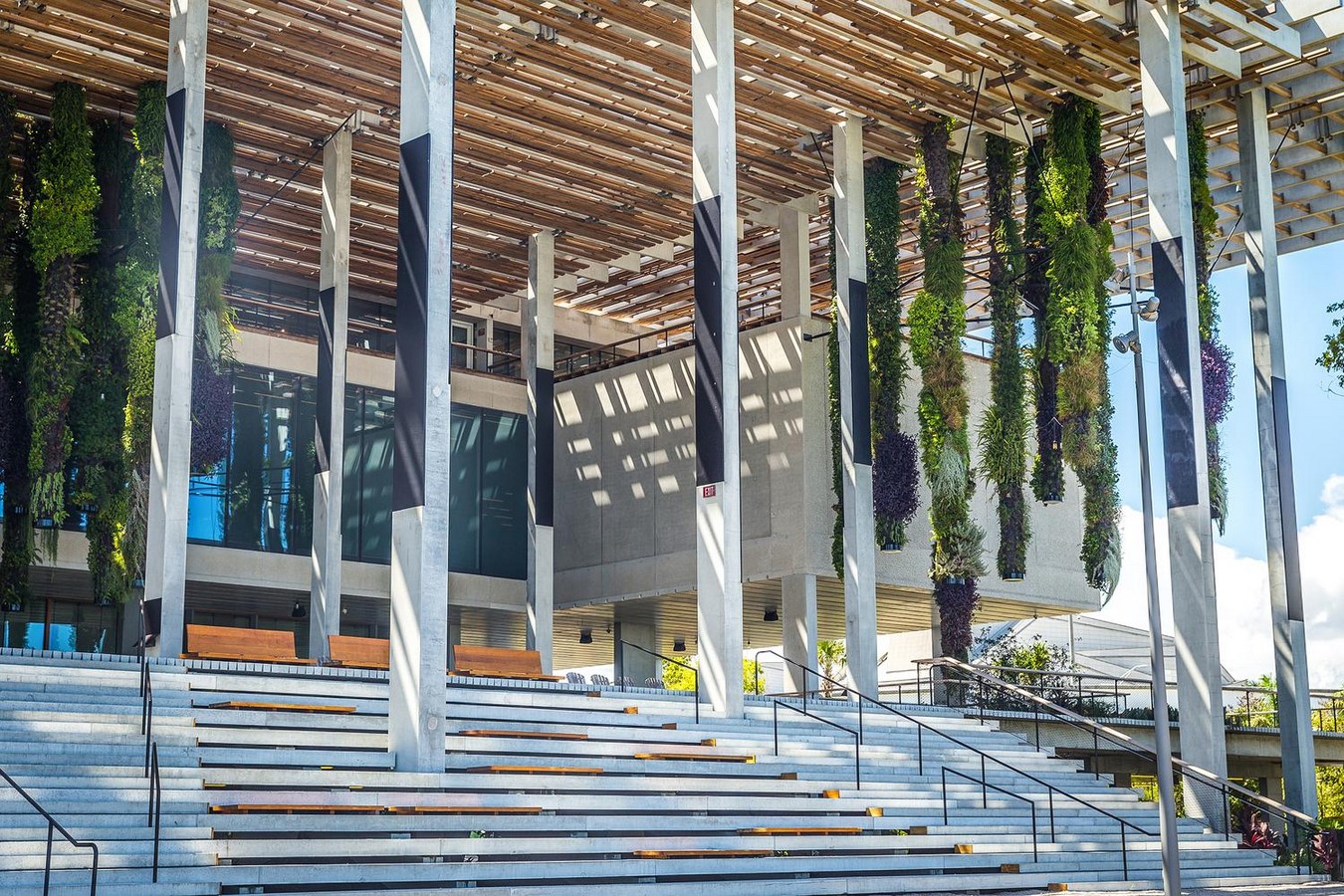
By designing experiences that engage more of the senses, we can enhance the quality of life, while at the same time creating more immersive, engaging, and memorable multisensory experiences. Experience is increasingly more important than just appearance in design. Nevertheless, it is also important to note that progress in translating the insights from multisensory research into architectural design has been slow. In this way, it will help create buildings and urban spaces that will benefit our social, cognitive, and emotional well-being.
“If everything yells for your viewer’s attention, nothing is heard”, – Aaron Walter, ‘Design for Emotion’
Thus, the foremost aspect for experiencing space and affecting its ways through architecture requires users to interact with purpose. The design made to function should exhibit the essence it is made for, not by overpowering but by considering the needs of the user.
References:
- Anon, Holzer Kobler Architekturen. Architectural Interface: Space – Architect – Humans | Holzer Kobler Architekturen. Available at: https://holzerkobler.com/process/architectural-interface-space-%E2%80%93-architect-%E2%80%93-humans [Accessed October 23, 2021].
- Spence, C., 2020. Senses of Place: Architectural Design for the multisensory mind. Cognitive Research: Principles and Implications. Available at: https://cognitiveresearchjournal.springeropen.com/articles/10.1186/s41235-020-00243-4 [Accessed October 23, 2021].
- Anon, 2019. How does architecture impact society? A high-level look: Thought leadership. HMC Architects. Available at: https://hmcarchitects.com/news/how-does-architecture-impact-society-a-high-level-look-2019-10-18/ [Accessed October 22, 2021].