Architecture in today’s world is often viewed through a narrow lens of style and functionality, but it truly lies in its capacity to tell a story through its layers and elements. In this race of super modernity in multiple parts of the world where political manifestos are uplifted, and economic data is outdated, the built architecture stands candid, preserving the historic and cultural record. Architecture serving different functions can be considered as a profound element of narration, which shows the strategic selection of different materials, the typology of spaces, and the resulting built forms that become the use of tangible proxies for a society that evolves social norms, cultural aspirations, and economic realities.
Material Culture: the socio-economic upgrade
Architecture is way more than the designs and concepts of a designer. The built forms articulate the society as beliefs, values and priorities of a region or community of people. Glancing at just one element of architecture that is material, one can easily study various other aspects such as the historical trace of the area, the cultural significance of the built environment, the social impact on the people and society, and many more.
The use of new modern materials in architecture, where every other designer tends to experiment with new materials to showcase a sustainable environmental approach, almost everyone has neglected how far human evolution has come compared to the very initial building materials used.
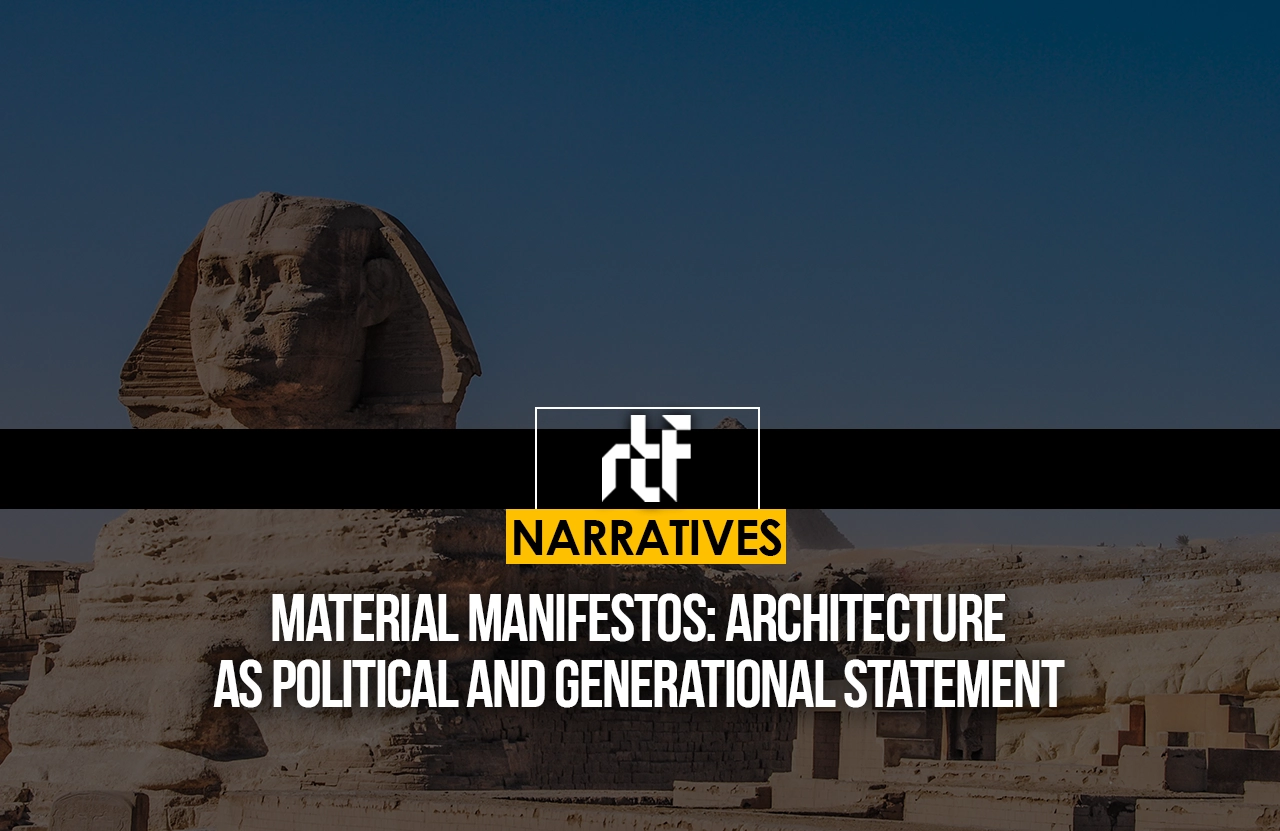
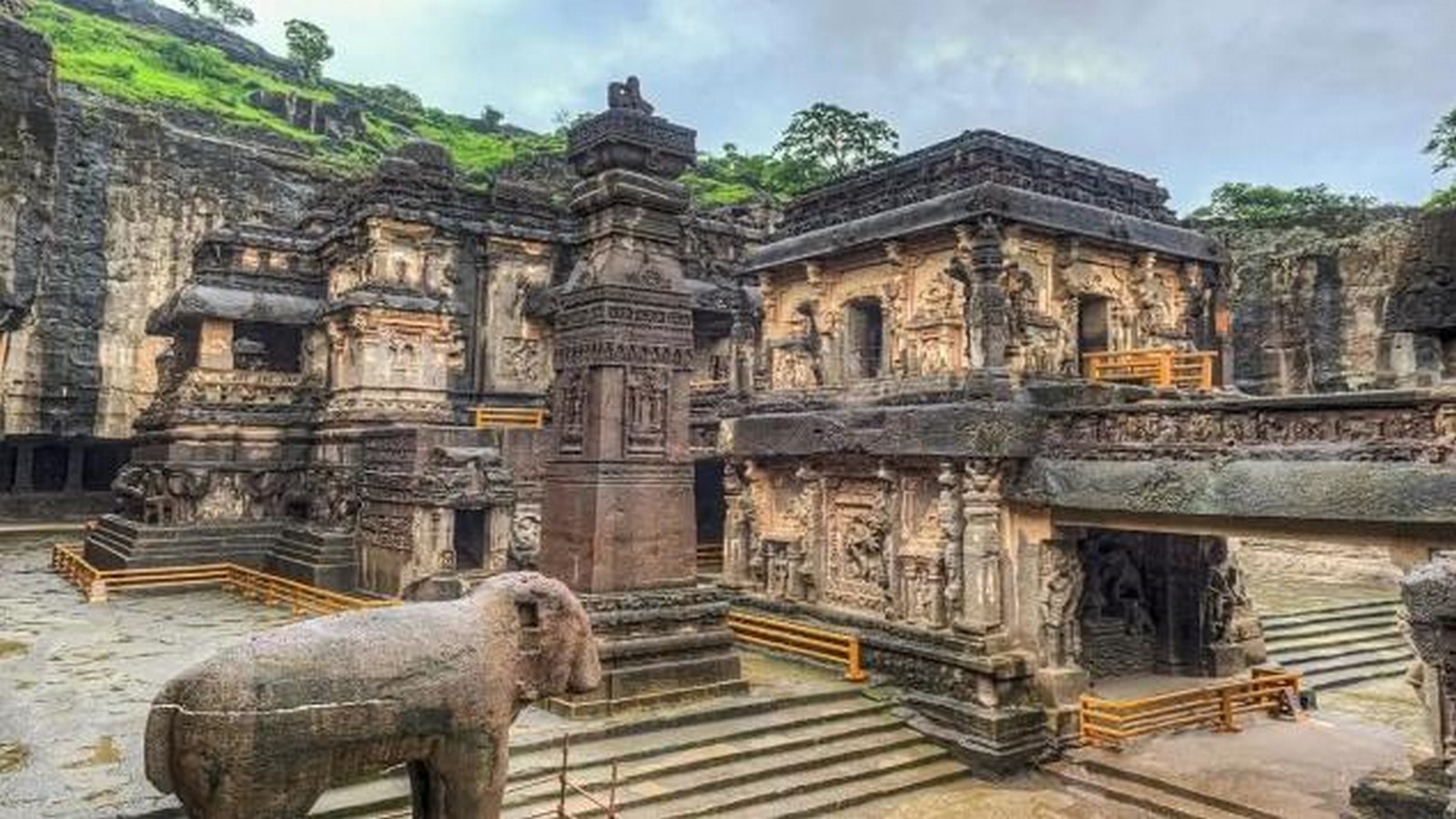
Considering the reference of The Great Pyramids of Egypt(fig.1) and the ancient caves and temples of India(fig.2), to the skyscrapers of the USA and the UAE, all architectural built forms reflect who they are and what they portray.
Material choices in design act as a direct anchor of socio-economic progress. (n.a., 2021) A society that was confined to vernacular architecture, utilising only local stones, mud, or timber, articulates a story of resource constraint and limited technological access (Pearce,2024). Economic upgrading within the social sector is one of the physical aspects embodied by the shift to complex, energy-intensive, or imported materials being used. The 19th-century rise of global trade and industrialisation, for instance, saw humble urban centres replacing the traditional load-bearing walls with structural steel and large plate glass. This material transformation allowed for unprecedented height and transparency, demonstrating not just the engineering skills, but the new economic priority of maximising profits per square foot in dense commercial districts and the social elevation of corporate enterprise. (n.a,2024)

Architectural Storytelling as religious narratives
Every typology of architecture is somehow a reflection of the religious aspect. Different styles of architecture apparently use different kinds of material, which in themselves narrate a story about the culture and era when it was built. Looking at the built structures belonging to Hinduism, an aura of storytelling can be observed in them. The ancient as well as newly built forms are designed with an intention that every part of the building symbolises the path of awe-inspiring religious beliefs and creates an instant connection among people (n.a,2025).
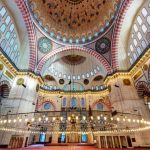
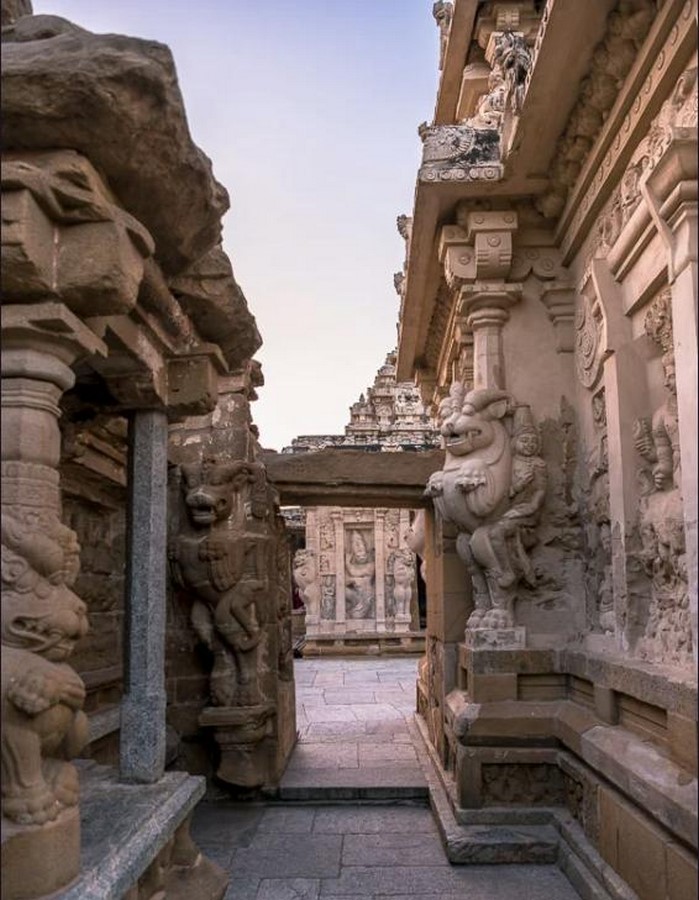
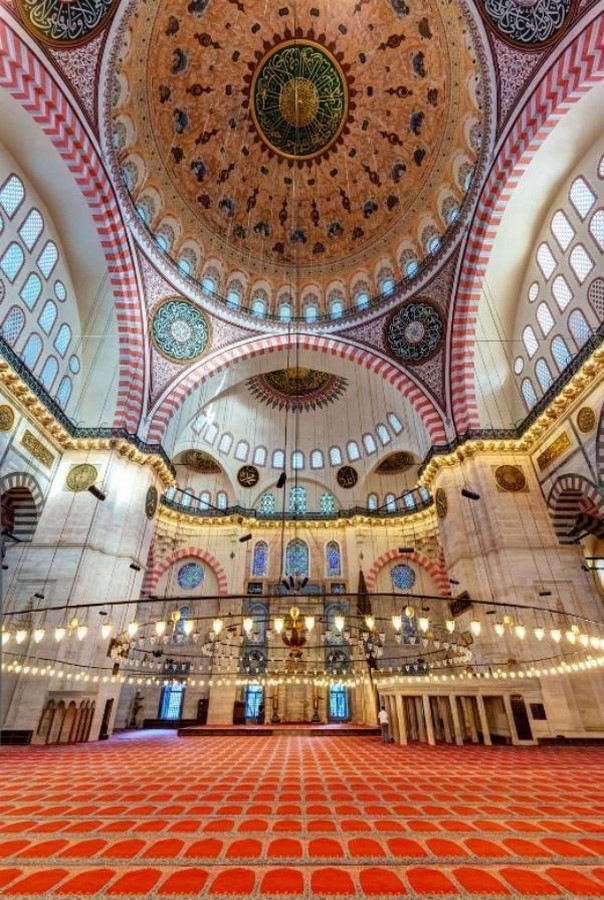
Kailasanathar Temple, situated in the Kanchipuram district of Tamil Nadu, India, features episodes of the great Hindu scriptures Ramayana and Mahabharata in its extensive carvings (fig.3); it can be considered an example to understand how architecture can be a medium of storytelling (Kak,2023). Whereas comparing it to other religious architectural styles, such as Islamic architecture, the interpretation of calligraphy writings and infographics on the structure symbolises the presence of God and narrates the religious message. Süleymaniye Mosque sets an example of how architecture symbolises religious beliefs while carrying the narrative of power and faith(fig.4) (Durmus and Genccan,2017). The design form, inscriptions on the interior side of the building -walls, domes, etc., and a group of community welfare buildings surrounding it provide strong evidence on how the building impacts society, portraying religious beliefs and builds a community.
Architecture narrating the political statements
The architecture-built forms and their aesthetics, including the scale, geometry, ornamentation, and overall structure style, are unintentionally one of the most direct architectural manifestos in themselves, which narrate the generational shifts in the form of knowledge and project the dominant political authority of the state.
Architecture is generatively political because it uses vast resources and occupies several public spaces, serving as a permanent, unambiguous statement of power. (Ruffo,2025) Architecture serves as a deliberate instrument of political power. Different regimes meticulously select styles to validate their rule, either by drawing continuity with the past or, conversely, by employing a visual language that signifies a total, often forceful, break from history.
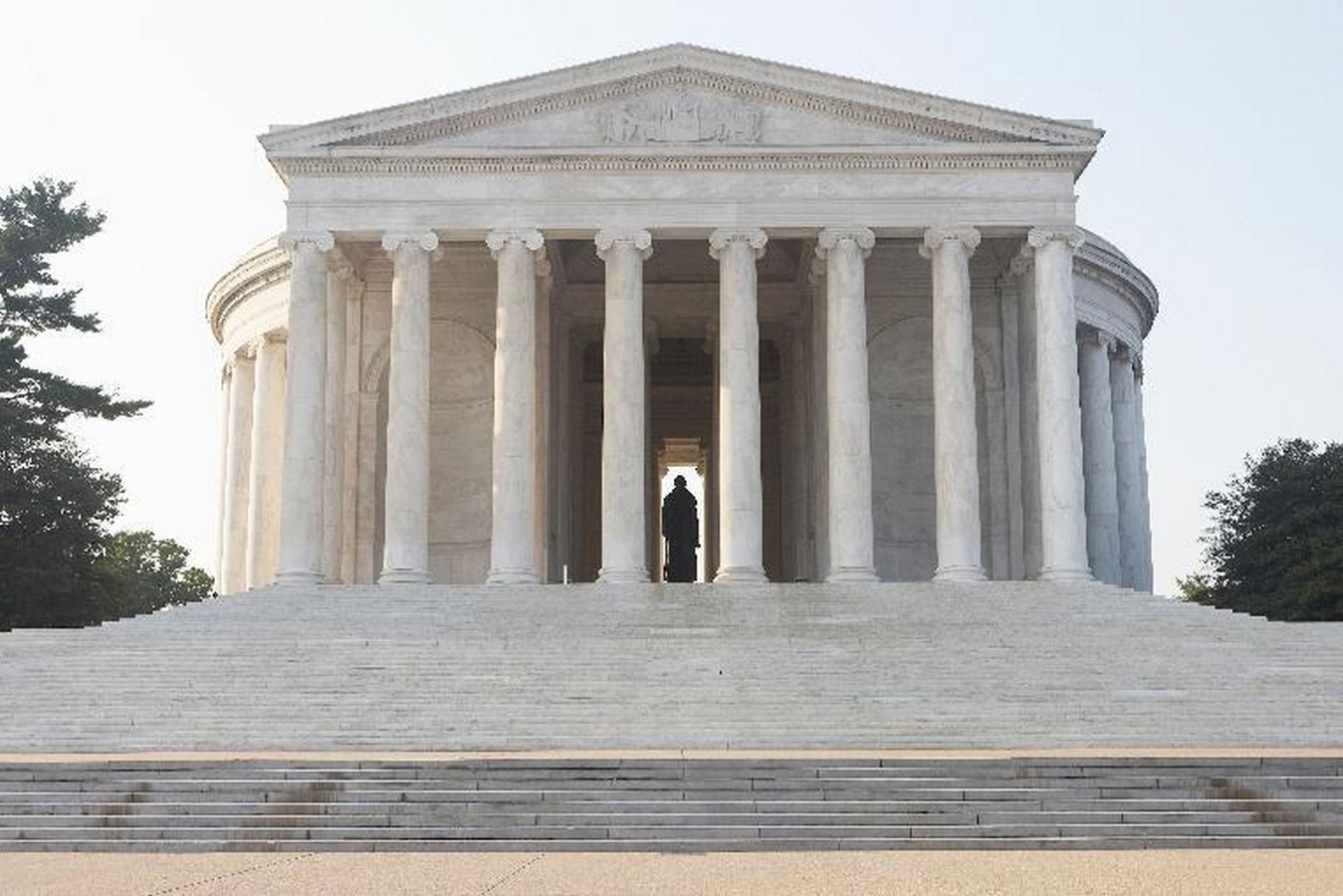
For instance, considering the Neoclassicism and Modernism styles of architecture, both served different powers and styles (n.a,2025). The monumental, orderly and columned Neoclassical style (fig.5), favoured by Imperial Russia and the early American Republics, spoke a language of timeless rationalism and inherited Western authority. They visually displaced the current political state in a direct lineage with classical antiquity, projecting stability, permanence, and universal order. The colossal scale itself demanded awe and submission, reflecting a clear political priority of hierarchical power.
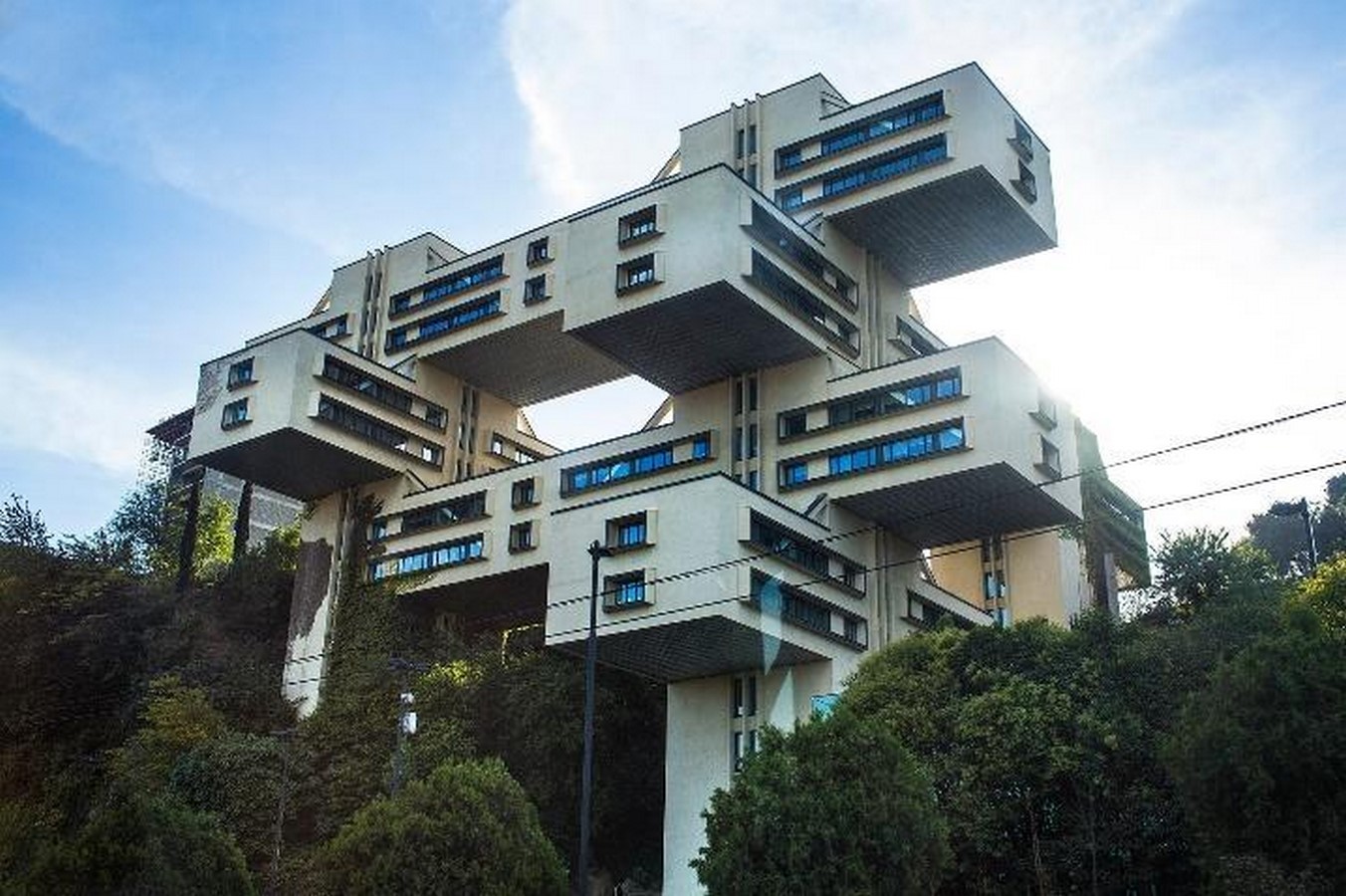
Whereas styles like Soviet Constructivism and the International Style (mid-1900s) eliminated all traditional decorations and carvings. This wasn’t a coincidence but a political message from a new generation asking for a clear break from the old and corrupt ways for both power and the built forms. They demand to be more focused on new technology, fast, mass production, and building a fair, equal society which is fit and suitable for everyone. (Mosher, n.a)
Architecture serves simple yet long term user efficient spaces would not be wrong . Built forms that are way more than designed structures for urban development are living examples of the structures explaining the past , politics and social upgrade. In an overall take from discussed pointers in the article , it is justified that architecture is no less than a graphical storyteller that carefully preserves historic references , religious messages and socio-political status of the environment. Multiple factors can be held responsible to state architecture as a storyteller, but three main headlines can be considered to take on not eon for the same, which are material choices being upgraded that reflect the economic shift, political regime being displayed in several forms and built ornamentation of structure. In the end, every architectural structure is a permanent anchor that holds history and challenges the narrow contemporary view of architecture by proving its essential function as a lasting, observable record of human values, power dynamics, and societal aspirations.
Reference List for Intext Citation:
- (n.a.) (n.d.), How Architecture Reflects Societal Values, Available at: https://architecturehelper.com/blog/how-architecture-reflects-societal-values/ (Accessed: 10 December 2025).
- (n.a.) (n.d.), Skyscraper in 19th Century, Available at: https://illustrarch.com/articles/34139-skyscaper-in-19th-century.html (Accessed: 10 December 2025).
- (n.a.) (n.d.), Architecture As Political Power, Available at: https://www.hercampus.com/school/queens-u/architecture-as-political-power/ (Accessed: 11 December 2025).
- (n.a.) 2021, History of Construction and Building Materials, Available at: https://www.webuildvalue.com/en/facts/building-materials-history.html (Accessed: 11 December 2025).
- (n.a.) 2025, Material Culture and Its Role in Emulating Genteel Society in Early America, Available at: https://twu.edu/history/ibid/ibid-volume-18-spring-2025/material-culture-and-its-role-in-emulating-genteel-society-in-early-america/ (Accessed: 11 December 2025).
- Durmus, B. and Genccan, E. 2017, The Concept of Power and Aesthetics in Ottoman Architecture: The Case of the Süleymaniye Complex, Available at: https://www.athensjournals.gr/architecture/2017-3-4-2-Durmus.pdf (Accessed: 12 December 2025).
- Fiveable Content Team 2025, Neoclassical government buildings, Available at: https://fiveable.me/history-of-architecture/unit-7/neoclassical-government-buildings/study-guide/AJ6hk4pfSDPfKiK1 (Accessed: 13 December 2025).
- Kak, S. 2023, Kailāsanātha: The world’s grandest artistic conception, Available at: https://subhashkak.medium.com/kailāsanātha-the-worlds-grandest-artistic-conception-2582f4d04847 (Accessed: 13 December 2025).
- Mosher, R. (n.d.), Modernism: How The Principles Developed – A Brief History, Available at: https://www.modernsandiego.com/article/modernism-how-the-principles-developed—a-brief-history/ (Accessed: 13 December 2025).
Reference List for Images:
- n.a.) (n.d.), Mysteries of Great Pyramid of Giza Solved: What You Need to Know About Egypt’s Iconic Landmark, Available at: https://www.admiddleeast.com/story/mysteries-of-great-pyramid-of-giza-solved-what-you-need-to-know-about-egypts-iconic-landmark (Accessed: 11 December 2025).
- (n.a.) (n.d.), Neoclassical Architecture Explained, Available at: https://www.architecturaldigest.com/gallery/neoclassical-architecture-explained (Accessed: 11 December 2025).
- Britannica Editors 2025, Sinan, Available at: https://www.britannica.com/biography/Sinan (Accessed: 11 December 2025).
- Parmar, R.S. 2025, Cave Temples of India: History Carved in Stone, Available at: https://bhartisanskriti.com/heritage/cave-temples-of-india-history-carved-in-stone/ (Accessed: 13 December 2025).
- Reyes, E. (n.d.), Examining Soviet Constructivist Architecture in the Light of Politics, Available at: https://www.arch2o.com/politics-architecture-look-soviet-russian-architecture/ (Accessed: 13 December 2025).
- Vikipandit (n.d.), Entrance Corridor – Kanchi Kailasanathar Temple [image], Available at: https://www.vikipandit.com/wp-content/albums/kanchi-kailasanathar-temple/Entrance-Corridor-Kanchi-Kailasanathar-Temple.jpg (Accessed: 13 December 2025).