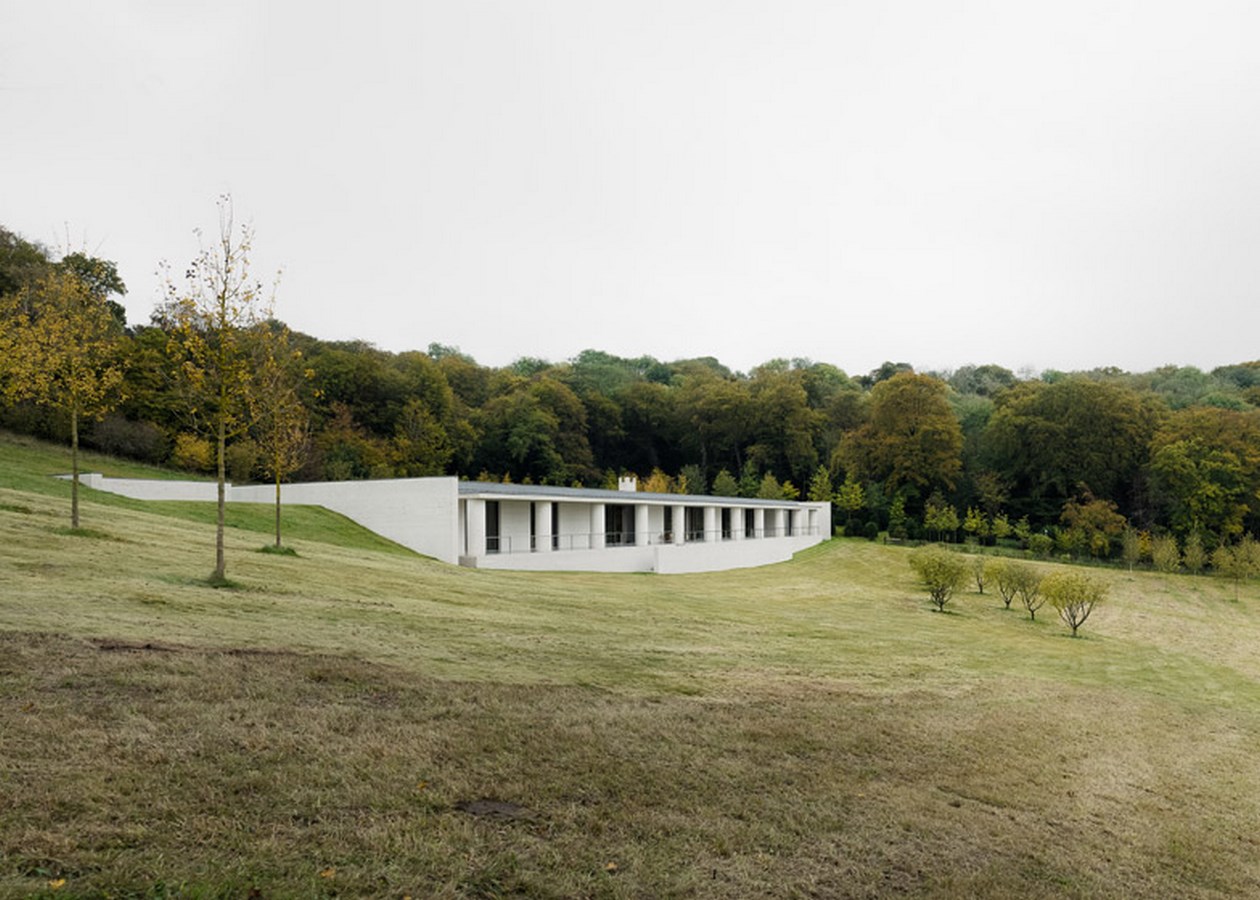
11. Fayland House, Buckinghamshire by David Chipperfield
Pale white brickwork, broad columns and a courtyard planted with trees are all features of this country house in the Chiltern Hills. Fayland House is a single-storey residence that stretches across a dip in the landscape. Its roof is set down well below the level of the tree canopy, while four sunken courtyards are concealed behind the walls. To negotiate the changing levels of the ground, the house is built on a 60-meter-wide plinth. The studio describes it as being “like a dam sitting on the cusp of the slope”. A colonnade framed by 11 round columns extends along the entire length of the facade, creating a sheltered outdoor space that connects with many of the rooms inside the building.
12. Naga Site Museum
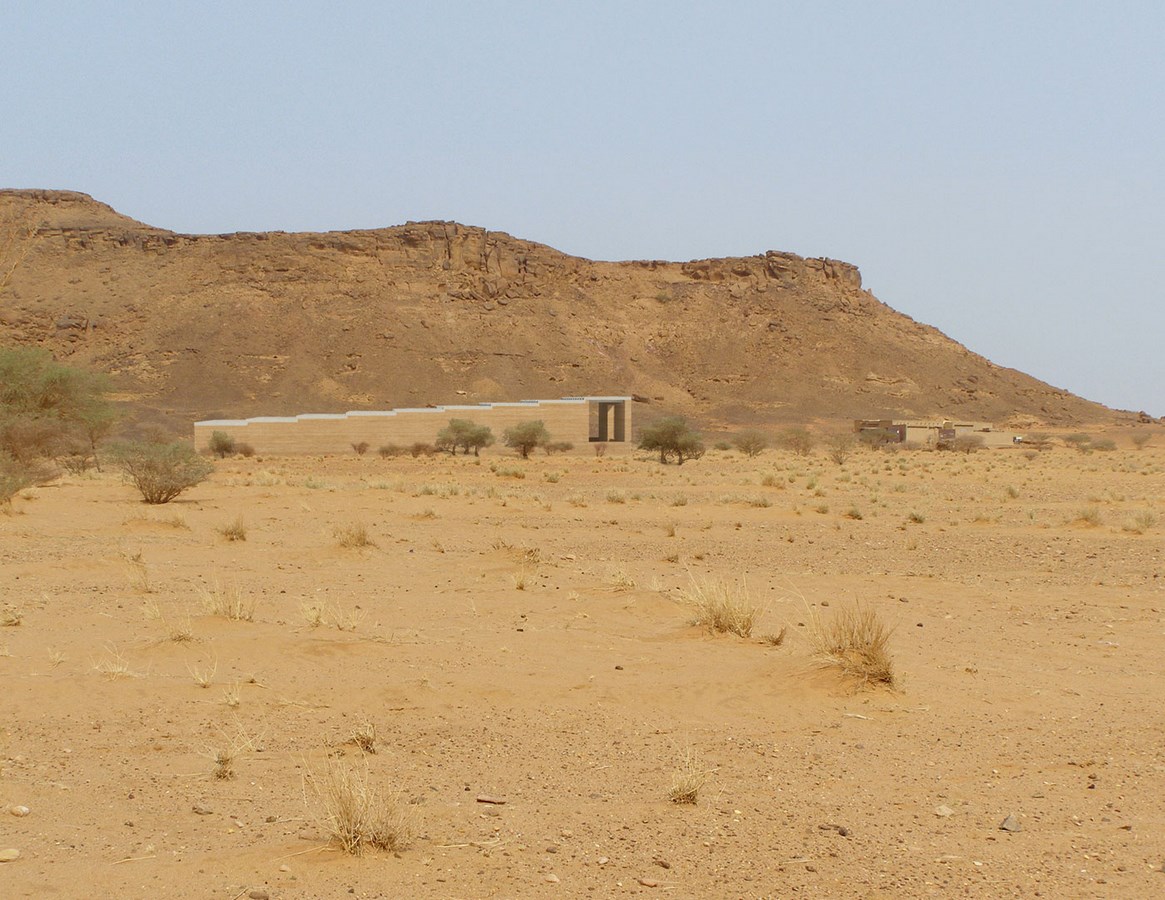
Naga, the southernmost of the ancient world’s most notable sites, lies approximately three hours’ drive to the north of Khartoum and is only accessible via sand tracks. For the transportable finds to be stored in situ, an excavation museum is erected. The outer walls of the building are constructed of compressed concrete with local sand and aggregates. The building, completely without glass, is designed by Chipperfield first and foremost to protect from the sun, sandstorms, rain, and looting.

13. James Simon Galerie, Berlin
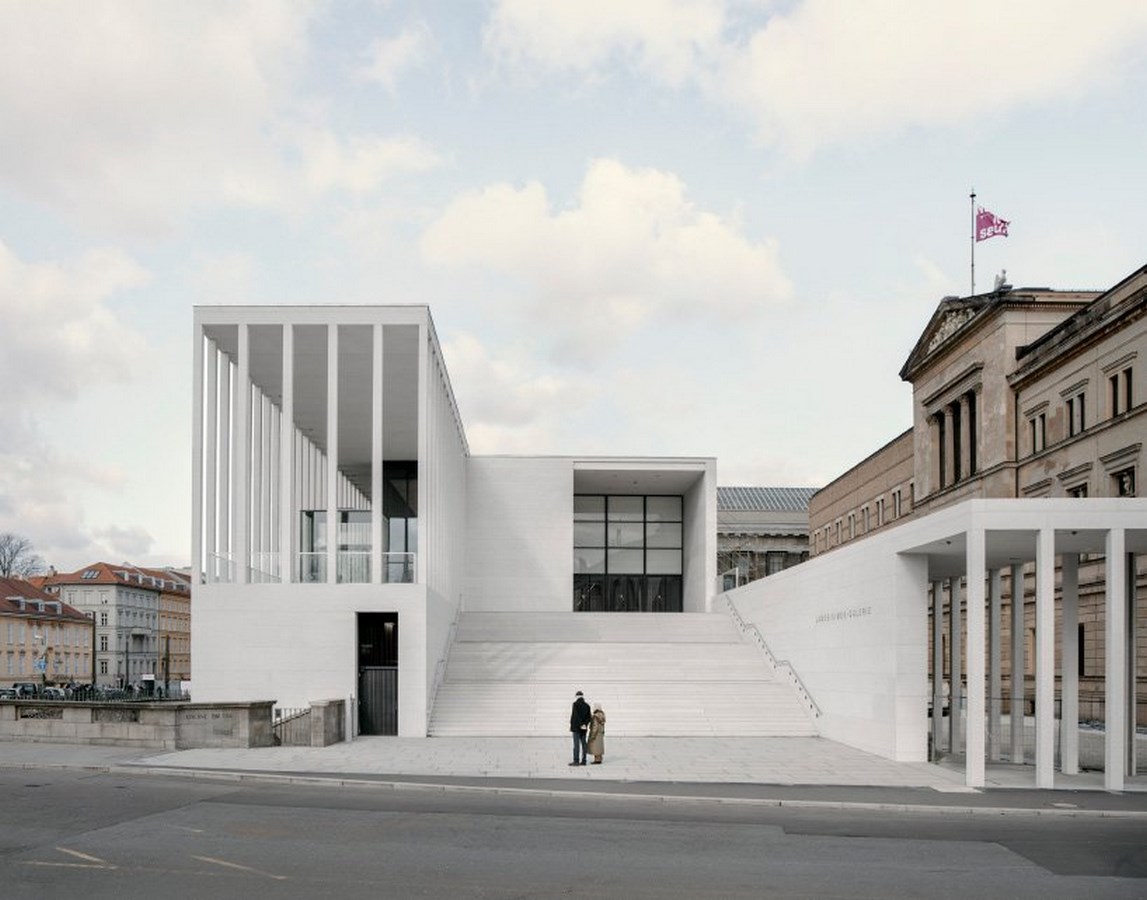
As the new gateway to the Museum Island, the James-Simon-Galerie plays a significant role and is suitable for welcoming large numbers of visitors, housing all the facilities required by the contemporary museum-goer. The high stone plinth of the building reinforces the bank of the Kupfergraben canal, above which a tall colonnade rises, expressing a classical piano Nobile. The materiality of the building in reconstituted stone with natural stone aggregate blends in with the rich material palette of the Museum Island with its limestone, sandstone and rendered façades, while smooth in-situ concrete dominates the interior spaces.
14. Inagawa Cemetery Chapel and Visitor Center
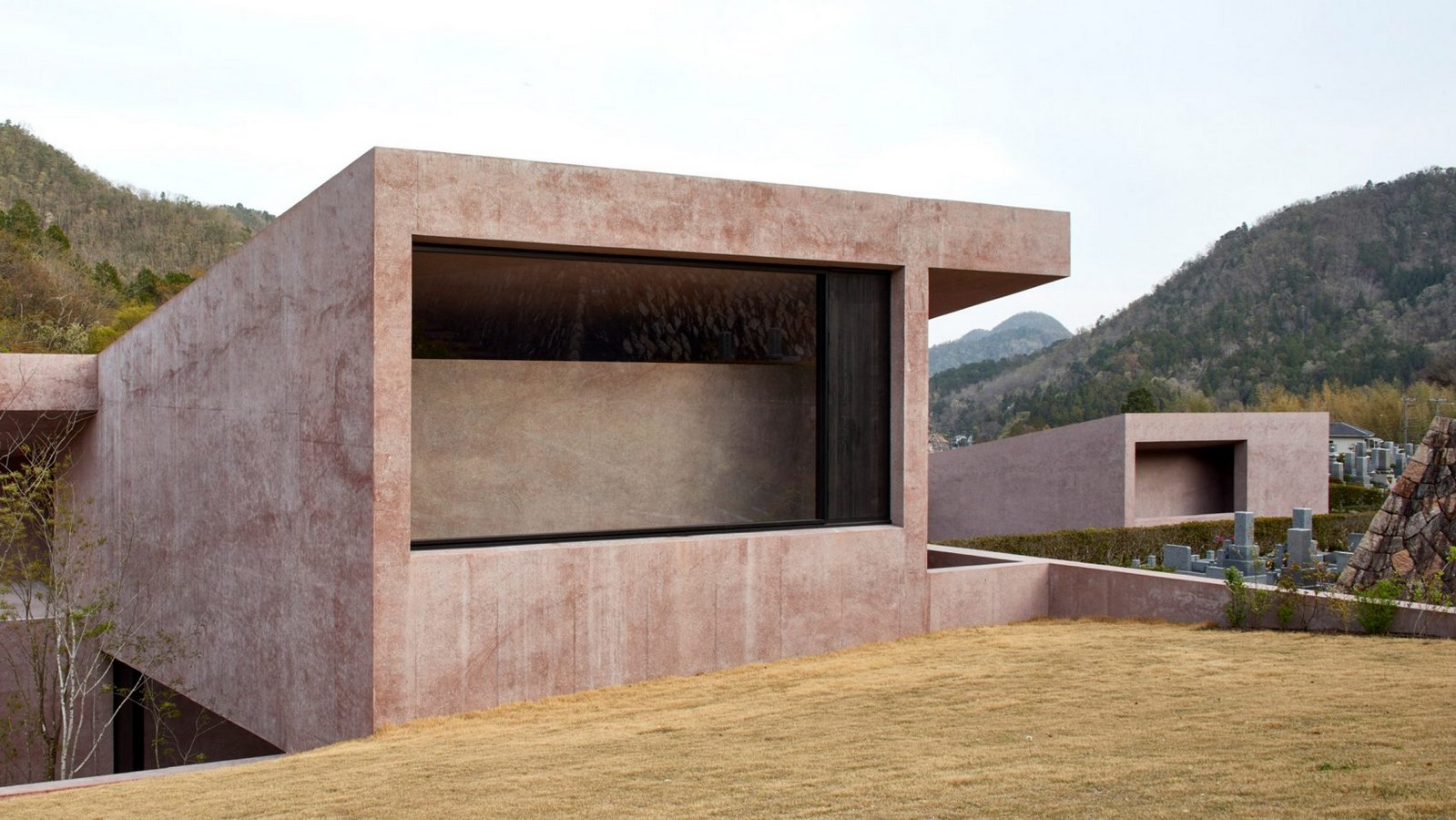
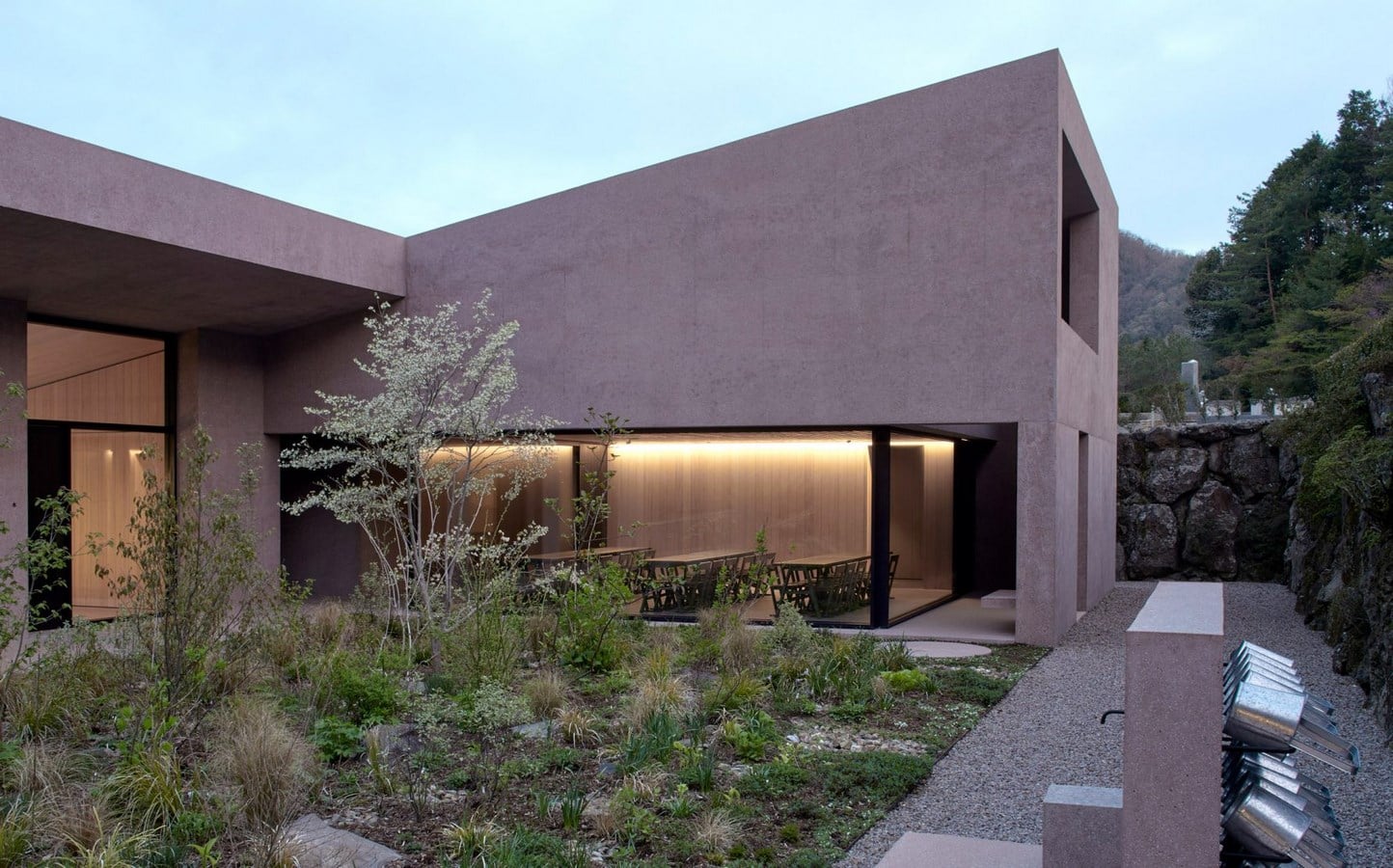
Inagawa Cemetery is situated on a hillside in the Hokusetsu Mountain Range of the Hyogo prefecture, around 25 miles north of Osaka. Chipperfield developed the visitor and chapel for a plot at the entrance to the site, which also contains a warehouse by Tokyo studio Key Operations made from charred and red-dyed cedar cladding. The new building is arranged around a courtyard at the base of the hill and aligns with a monumental flight of steps that forms an axis leading up the terraced hillside to the shrine. The simply furnished space is flanked by large windows on either side that looks out onto small gardens. The visitor center positioned on the opposite corner of the central courtyard consists of two large rooms that can be used for family gatherings and commemorations. The building is entirely constructed from pigmented concrete with an earth-like reddish hue that lends the structure a monolithic quality.
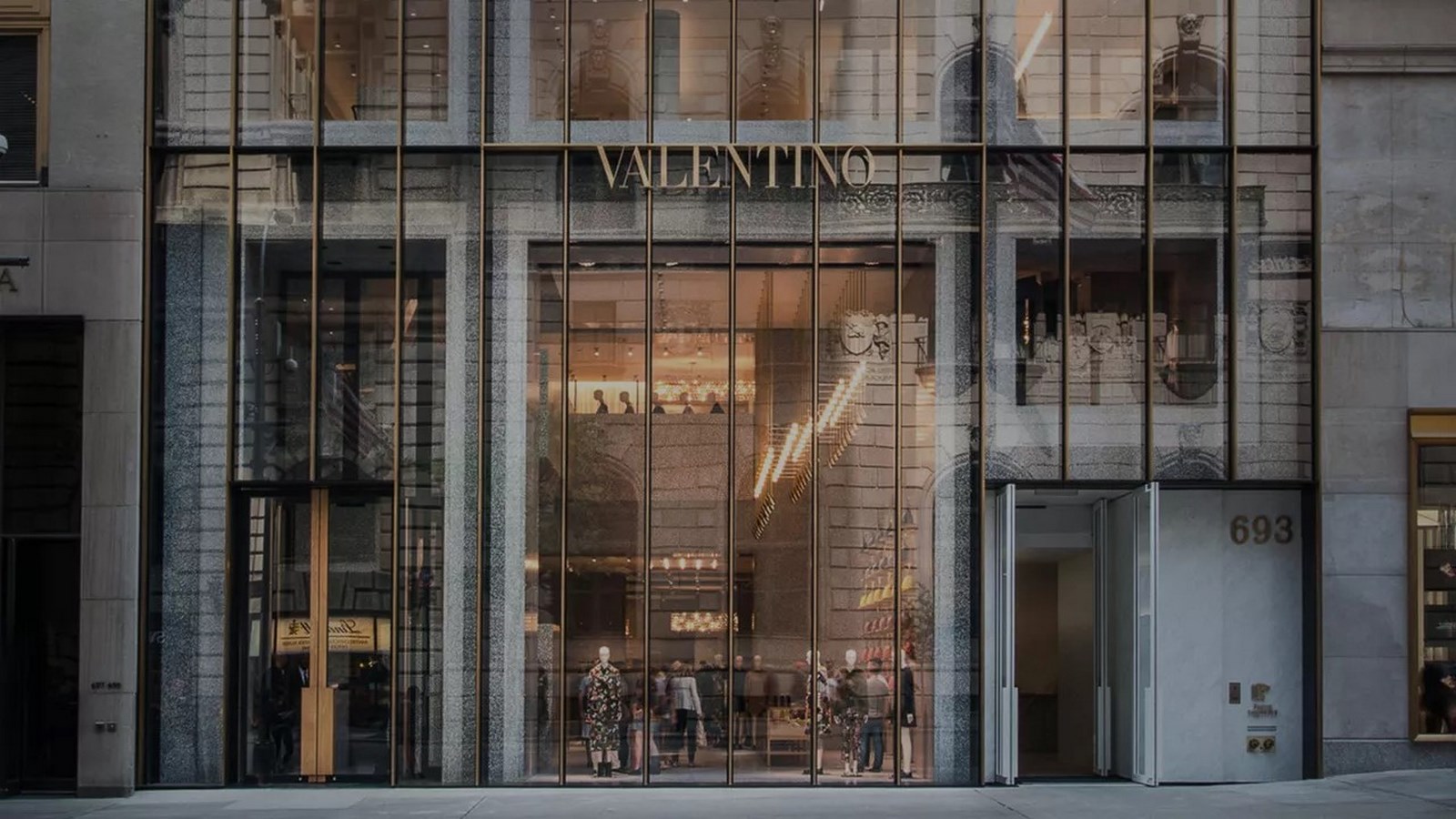
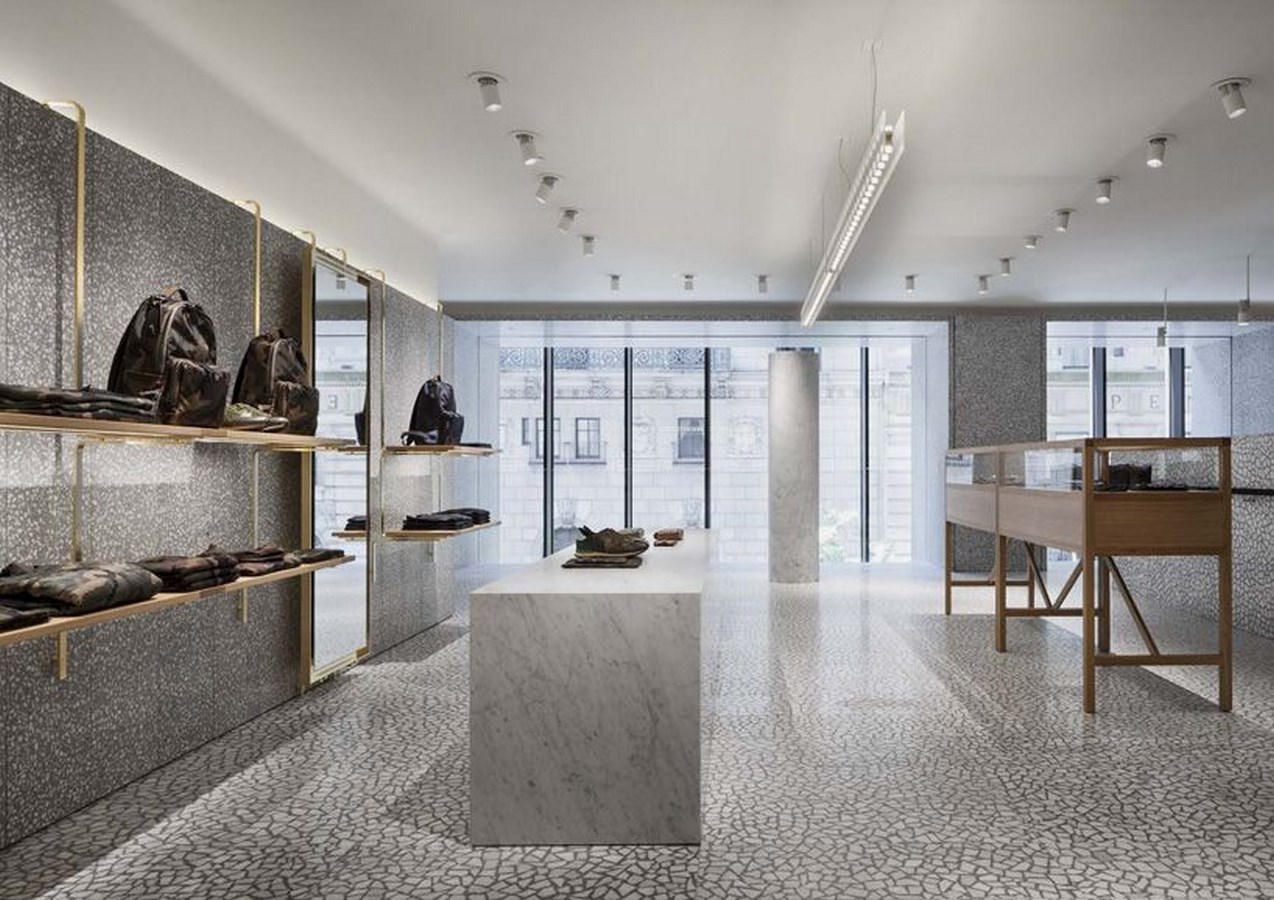
15. Valentino Flagship Store, NY by David Chipperfield
The 1,850-metre-square store for Valentino was designed in the former Takashimaya Department Store at 693 Fifth Avenue. A new eight-storey facade has been added to the Postmodern building, originally designed by architects John Burgee and Philip Johnson. The black steel and aluminum elements are designed to echo Mies van der Rohe’s nearby Seagram Building. Grey Palladian Terrazzo is used to clad surfaces throughout the interior to link the spaces. Oak shelving and hanging elements supported by polished brass fixtures are used to display the collection, along with marble plinths.