With Fumi translating to writings and hiko signifying history, the name Fumihiko represents those connected to Japan‘s historical legacy as custodians or contributors. For Fumihiko Maki this was a prelude to things to come with his legacy being the mastery of the creation of meaningful spaces, the mediator between the old traditional virtues and new modern ideals, an empathetic caregiver of his built creations, and a sculptor of visions that transcend the site and spaces but fit into the larger context.

Early Influences
Born in Tokyo, Maki received his Bachelor of Architecture from the University of Tokyo in 1952. His continued interest in architecture and urban planning led him to earn a Master of Architecture from Harvard’s Graduate School of Design. Education was translated into practical experience through apprenticeships at firms like Skidmore, Owings and Merrill, and Sert Jackson and Associates. Influenced by modern pioneers such as Kameki Tsuchiura, Sutemi Horiguchi, and Antonin Raymond, Maki’s early ideals of modernist architecture were shaped by the nostalgia of Tokyo and the maturity gained from his studies in the U.S which blend of cultures fostered a unique design perspective. Curiosity and interest drove the desire for new technology, which new possibilities and greatly influenced the design language, especially modular construction systems, a game changer at the time. Architecture like a black square against a white backdrop created a unique style of design that tended to be direct, restrained at times, and made of metal, concrete, and glass, the classic materials of the modernist age. Beyond the tangible, capturing the spirit of a time and place was key with spaces designed to have unforgettable scenes and accommodating the need for human interaction, highlighting the humanistic qualities each of the many projects tries to capture far beyond its outward expressive nature.

Design Philosophy of “Oku”
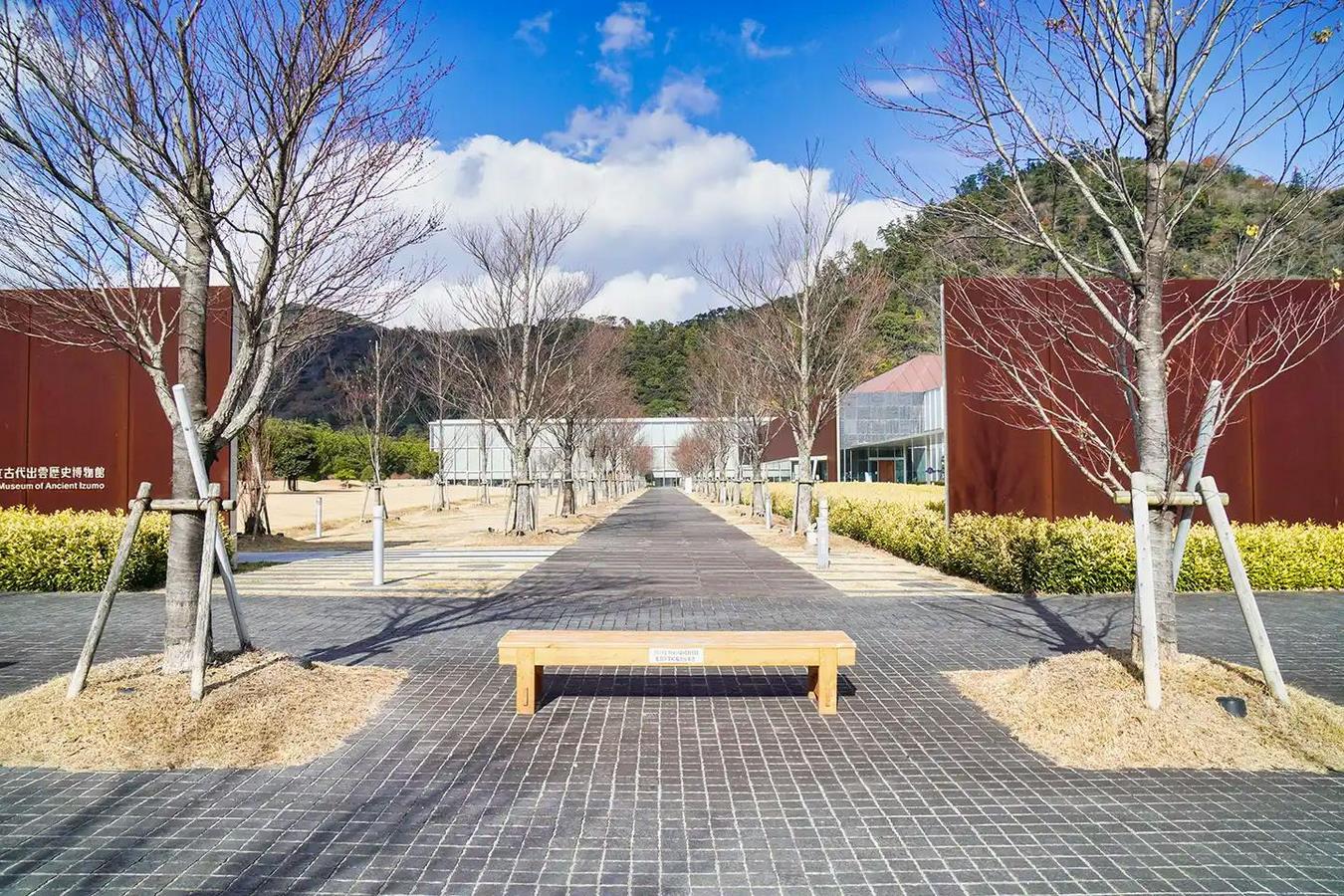
Rooted in Traditional beliefs Fumihiko Maki’s design philosophy centered around the idea of “Oku” (奥), composed of inner space, veiled spaces, and relational spaces that signified the entire composition of spaces as a journey of exploration. Just like peeling off layers of an onion the movement through spaces involved partial concealment and revelation. The sense of human curiosity invoked by the spaces is a journey rather than a mere destination. This philosophy was clearly illustrated in the Shimane Museum of Ancient Izumo, where the layered boundaries guide visitors on an exploratory path lined along natural features that terminate on arrival to places of meeting and rest.
Holistic Environmental Consciousness:
Maki’s design didn’t outright set out to be sustainable but happened to be so because of the combination of influences from cultural, social, and artistic aspects that possess rich conceptual ideas behind them. For example, the choice to have simple building forms allowed for emphasis on passive design strategies like daylighting, where the architectural screens filtered sunlight and reduced heat gain, much like traditional Japanese architecture. Like a guardian, his built creations often saw him visit long after the completion, a display of his commitment to user satisfaction and such was the case with the praise from the researchers of the University of Pennsylvania Annenberg Public Policy Center where a serene indoor environment with a strong connection to the natural outdoors was meant to create a serene and comfortable work environment.

Human-scale Design Inspired by Humanism
Maki’s design philosophy focuses on empathy and an emphasis on humans taking center stage in the design process focusing on the common but also particular behaviors of the users when designing for different places globally. The simplicity of design forms was seen as something that should embrace and appeal to the human spirit. Instead of making extraordinary forms, Maki focused on respect for human behavior and understanding what is liked versus what is not liked. A concerned emphasis on common and particular behaviors of the users when dealing with forms and spaces from different places. Design is looked at as a set of conscious decisions and unconscious elements, there’s always an unknown characteristic, a matter to be handled by the people, users, and passersby meaning architects can only control certain things.

The Adoption of Metabolist Architecture Ideas
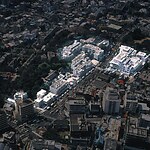
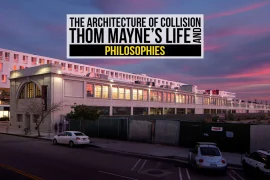
The 1960s ushered in avant-garde ideas like metabolist architecture, a concept where structures were built around a spine-like infrastructure with prefabricated, replaceable cell-like parts easily attached and readily removable when their lifespan is over. The style though popular at the time wasn’t fully embraced in its fullness but rather embraced because of its parallels and resonating qualities with his ideals as a designer. The Metabolist principles looked at architecture and urban growth as a sort of organism with a natural growth cycle that has flexibility in the way it grows and adapts to societal ever changing needs with time. Exemplified by his earlier project, the Hillside Terrace Complex, Tokyo, Japan, which was conceived to be built over multiple phases, respecting what was present and gradually developing upon it across time without wiping out anything present on site.

His name could not be more befitting for a man whose name meant “written history,” as an architect his work was a mediator between the preservation of old traditional wisdom and the progress of new modernist ideals. The simplicity of the forms and exterior created the opportunity for depth behind the steel, glass, and concrete. Maki’s overall design ideology and philosophies are worthy of emulation; they symbolize timelessness, simplicity, sustainability, and harmony. With the knowledge and experience gathered over the many years, his work is an embodiment of the recent past, and our task is to reflect on how we can use it tomorrow.
References:
Aviair.zone. (2024). Aviair. [online] Available at: https://www.aviair.zone/articles/architect-fumihiko-maki [Accessed 28 Dec. 2024].
Ceoinsightsasia.com. (2024). CEO Insights India. [online] Available at: https://www.ceoinsightsasia.com/business-inside/the-legacy-of-fumihiko-maki-is-the-pillar-of-japanese-modernism-nwid-12172.html [Accessed 28 Dec. 2024].
Encyclopedia Britannica. (n.d.). Fumihiko Maki | Japanese architect. [online] Available at: https://www.britannica.com/biography/Maki-Fumihiko.
JapanSocietyNYC (2015). Fumihiko Maki: The Construction of Place. [online] YouTube. Available at: https://www.youtube.com/watch?v=_t-3CR-atfM [Accessed 28 Dec. 2024].
mahdieh mirmiran (2018). Comparative Analysis of Fumihiko Maki’s Works according to Japanese Traditions and Concepts. [online] Academia.edu. Available at: https://www.academia.edu/35780670/Comparative_Analysis_of_Fumihiko_Makis_Works_according_to_Japanese_Traditions_and_Concepts [Accessed 28 Dec. 2024].
PLANE—SITE (2018). Fumihiko Maki — TIME SPACE EXISTENCE. YouTube. Available at: https://www.youtube.com/watch?v=cRa8dKJZfWw.
Smith, W. (2024). Remembering Fumihiko Maki (1928–2024). [online] Harvard Graduate School of Design. Available at: https://www.gsd.harvard.edu/2024/07/seng-kuan-remembers-fumihiko-maki-1928-2024/.
STIRworld (2024). The legacy of Fumihiko Maki, pioneer of Metabolism in Japanese architecture. [online] Stirworld.com. Available at: https://www.stirworld.com/see-features-the-legacy-of-fumihiko-maki-pioneer-of-metabolism-in-japanese-architecture [Accessed 28 Dec. 2024].
to, C. (2005). Japanese architect (1928-2024). [online] Wikipedia.org. Available at: https://en.m.wikipedia.org/wiki/Fumihiko_Maki [Accessed 28 Dec. 2024].
www.pritzkerprize.com. (n.d.). Fumihiko Maki | The Pritzker Architecture Prize. [online] Available at: https://www.pritzkerprize.com/laureates/1993#laureate-page-161.