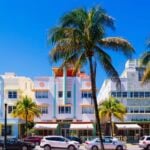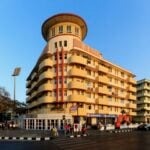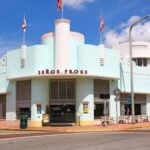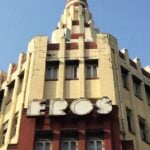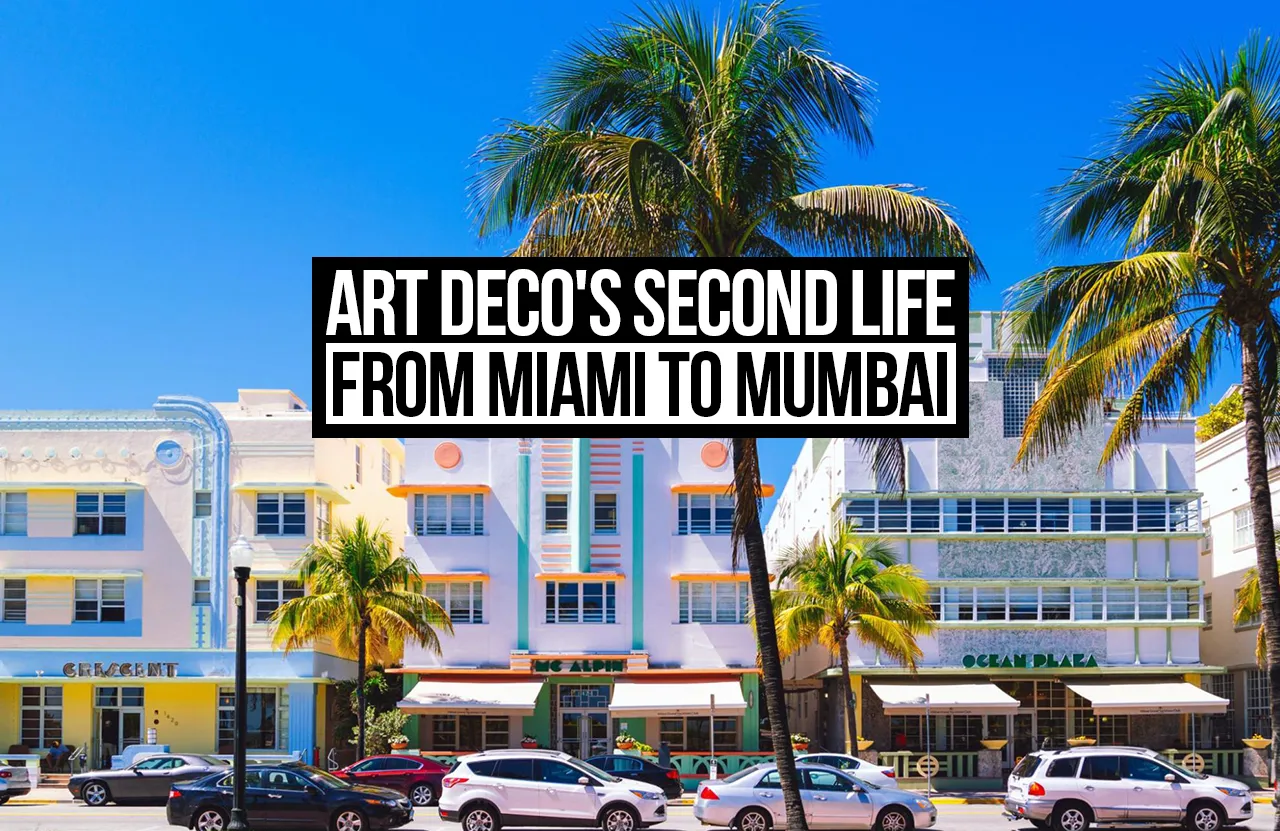
While taking a stroll along Ocean Drive, one cannot help but recall Marine Drive. The curved design of the road, the architecture of the buildings, and even the warm ocean breeze bring to mind another city that seems to have been built from the same instructions. The hotels in Miami are adorned in pastel shades, which look amazing at dusk. At the same time, the apartment buildings in Mumbai have cream and maroon colors and balconies overlooking the Arabian Sea. Different ends of the world yet identical architecture. Why?
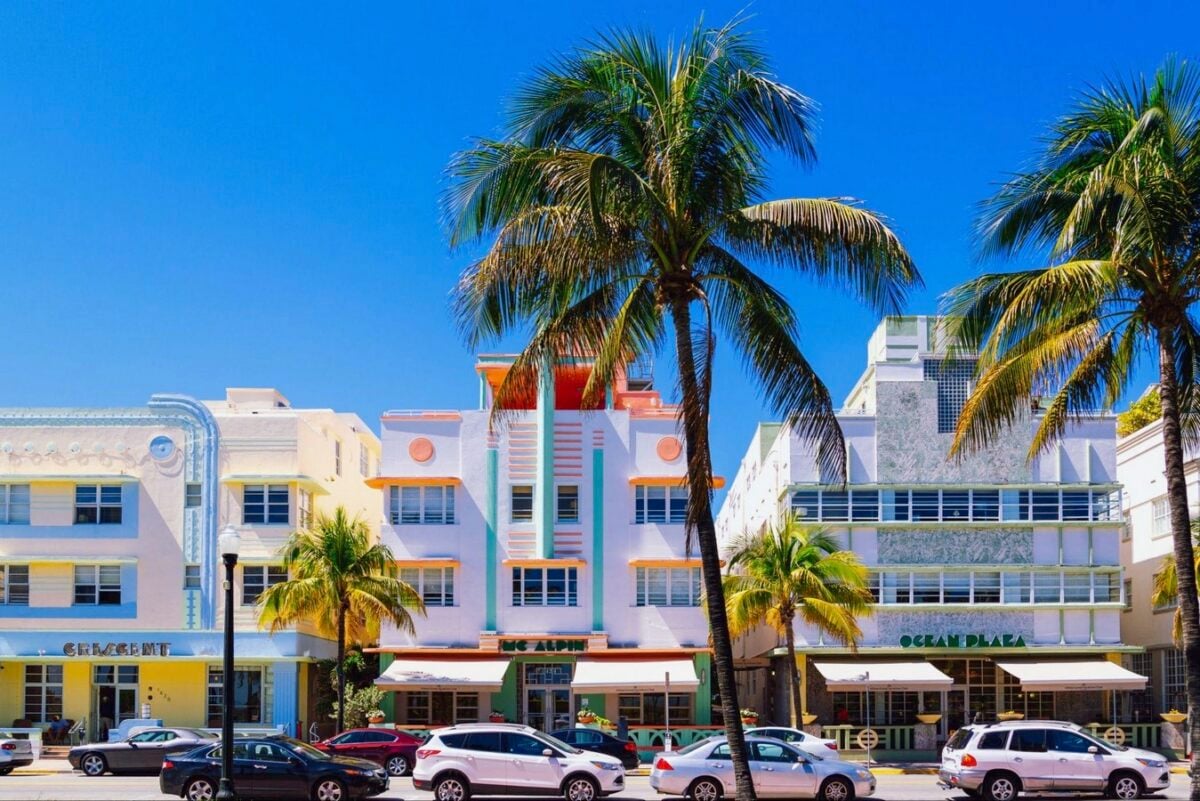
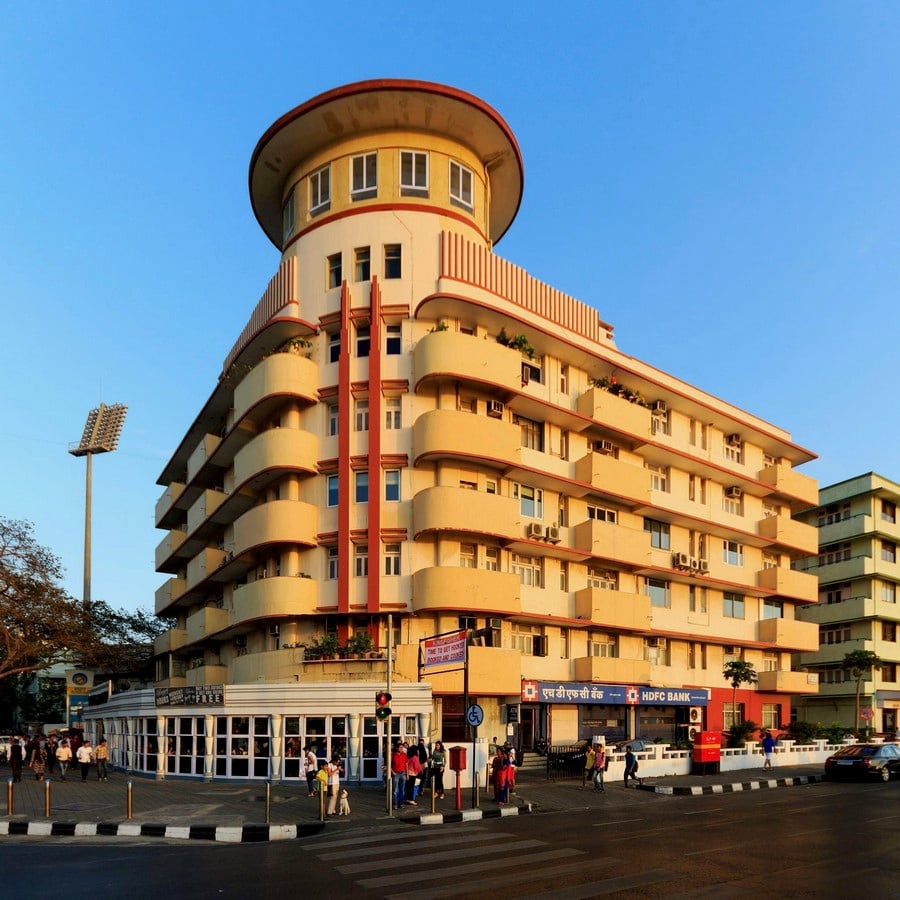
Art Deco design was first seen with the famous government-backed exposition in Paris that occurred in 1925 and remained popular around the world till 1939. The term “Art Deco” was not coined until 1968, as there was a desire to rethink the style among scholars. Art Deco is a shortened version of the term “Arts Décoratifs” in French. The architectural style had been called “le style moderne” or “Jazz Moderne.”
The emergence of Art Deco took place after the First World War and just before the Second World War. Art Deco motifs reflected the era’s concerns, such as technological advancement, consumerism, and steps toward modernity. Art Deco buildings include the elements of geometric forms, streamlining, use of pastel colors, ziggurats, and nautical features. Whereas the Neo-Gothic structures were made from igneous basalt and soft limestone, the Art Deco structures were constructed using steel frameworks, opaque glass, terracotta, smooth-faced stones, plaster, and reinforced cement concrete (RCC). The uniqueness of this architectural style lies in the fact that it incorporated different influences and movements, including Western modernism, Jazz music, Cubism, Egyptian architecture, Bauhaus, Ballets Russes, and Futurism.
From an architectural point of view, the Neo-Gothic buildings that came before Art Deco
buildings included buttresses, turrets, gargoyles, vaulted arches, and pointed roof lines, which meant reverence for a powerful imperial power. On the contrary, the Art Deco buildings of Bombay expressed a nationalist stand against colonial rule by using indigenous motifs which symbolized the hard-working, multicultural, cosmopolitan, pragmatic, and functional character of the people. (pdf)
Miami: Rescued From a “Seaside Slum”
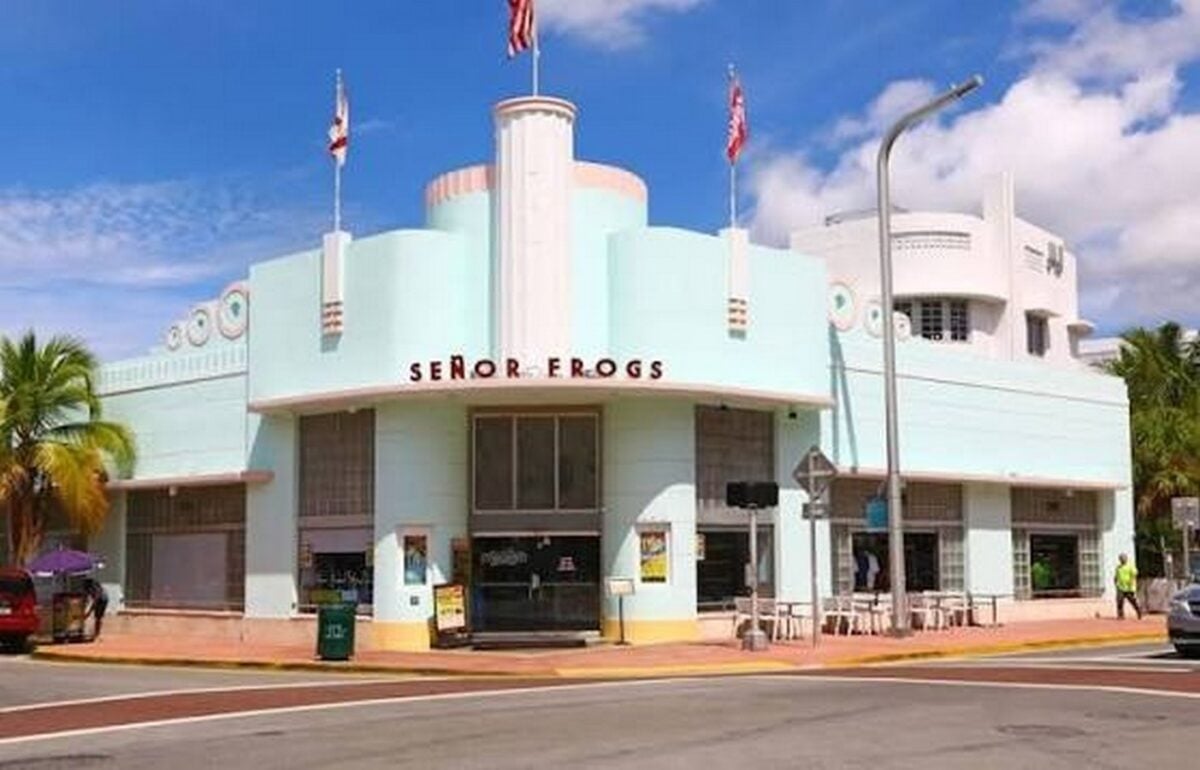
By the 1970s, South Beach was an area that had been abandoned by many Miamians. The hotels that lined Ocean Drive were dilapidated, and the area was populated mainly by Jewish retirees who had survived the Holocaust, living modestly amidst structures that everyone thought were not worth preserving. However, Barbara Capitman felt otherwise. In 1976, together with industrial designer Leonard Horowitz, she formed the Miami Design Preservation League, which incorporated a year later. On May 14, 1979, she successfully lobbied for listing the district in the National Register of Historic Places as the first urban 20th-century historic district. Horowitz chose the color scheme, the famous pastel colors that made rundown façades photogenic.
But Capitman did not undertake this mission discreetly. She was even known for standing in front of bulldozers to prevent them from demolishing any structure. According to her, “My whole life had been Art Deco. I was born at the beginning of the period and grew up during its height. It is a matter of fate.”But there was a tougher element involved in the rescue process. Capitman was trying to revive that particular place for the benefit of the poor and middle-class people who already lived there and were not just for the visitors. This element of the whole rescue process did not work because gentrification always ends up displacing those people it is supposed to save.
Mumbai: Deco With an Indian Accent
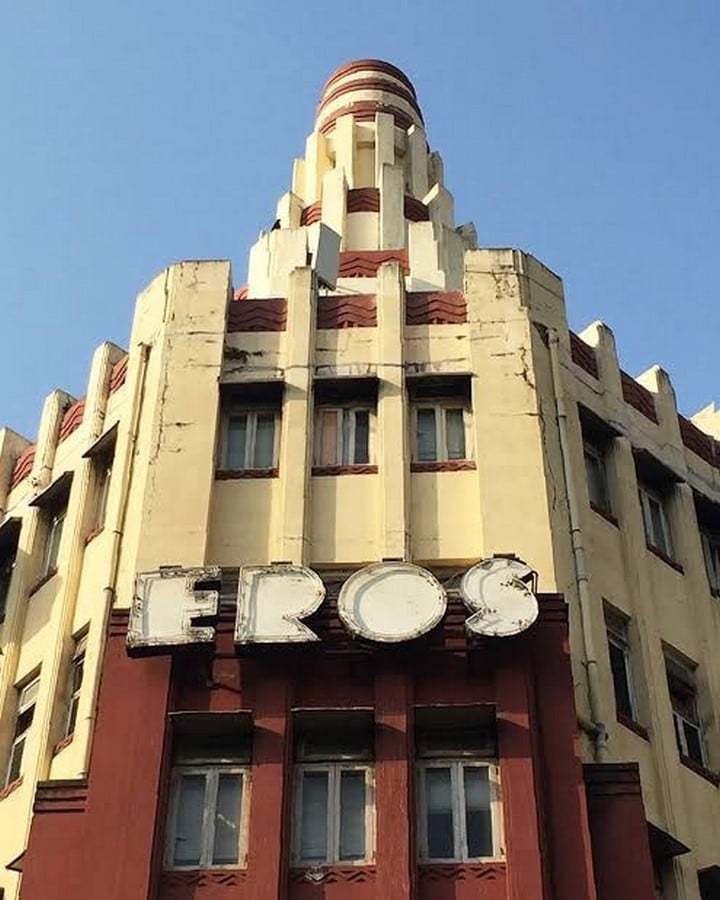
However, Mumbai’s Art Deco did not arrive from Paris or New York. As most historians of Mumbai would agree, it was largely designed, funded, and constructed by Indians, right at the time when the country was going through its struggle for freedom. The importance of this period cannot be ignored. This was not colonial architecture but Indian architects, developers, and builders adopting the global architectural style. Cinema is the usual beginning of any discussion on Art Deco in Mumbai. The first of such structures in Mumbai is said to be Regal Cinema in Colaba, built in 1934, designed by Charles Frederick Stevens, the son of the architect who built Victoria Terminus. The next two buildings were Liberty and New Empire. Then there was Eros, opposite Churchgate station, built in 1935 by Sohrabji Bhedwar. It was distinguished by its curved tower and stepped roof, similar to a ziggurat.
Yet the movie theatres were merely a prelude. The Deco residential buildings constructed through the 1930s and 1940s along the reclaimed land on Marine Drive and beyond, in the vicinity of the Oval Maidan, are what truly made Mumbai see itself differently. As it happens, Marine Drive itself boasts of 35 Deco residential buildings, characterised by their curvilinear, cylindrical balconies, their “eyebrow” window ledges, and their preference for curves rather than straight lines. Deco residential buildings such as Soona Mahal, Keval Mahal, and Shiv Shanti Bhuvan can still be seen from the promenade, repainted over time but otherwise architecturally untouched. Further inland into Fort, one will find the Laxmi Insurance Building and the Industrial Assurance Building.
It is the unique combination of elements that makes this particular architectural style stand out against other Decos all around the world. Along with the vocabulary of stepped structures and streamlined curves come features that came from the local environment. Atul Kumar, who studied this architectural ensemble for many years, described this architecture as a mixture of classical European Art Deco and its Indian variation, including ziggurats, round balconies resembling locomotives, and tropical decorations, along with Egyptian and Indian ornaments. As mentioned in UNESCO‘s description of this site, this place is full of buildings combining Indian architectural elements and Art Deco ornaments in the so-called Indo-Deco style, unique to this particular location.
That is why the Mumbai case is not about imitating anything. Miami drew inspiration from Paris and the ocean liner style of the 1920s. Mumbai used the same vocabulary to say something specific about its own city.
References:
Dembling, S. (2014). Barbara Baer Capitman: South Beach’s Art Deco hero. National Trust for Historic Preservation. [online]. Available at: https://savingplaces.org/stories/barbara-baer-capitman-south-beach-art-deco-hero [Accessed 26 October 2026].
Encyclopedia.com. (n.d.). Kolis. [online]. Available at: https://www.encyclopedia.com/humanities/encyclopedias-almanacs-transcripts-and-maps/kolis [Accessed 26 October 2026].
Florida Department of State, Division of Historical Resources. (2018). Barbara Baer Capitman, historic preservationist. Florida Historical Markers. [online]. Available at: https://markers.flheritage.com/home/details/16 [Accessed 26 October 2026].
Iyer, N.L. and Kumar, A. (2018). Art Deco in Mumbai: Oval and Marine Drive. Art Deco Society of New York. [online]. Available at: https://www.artdeco.org/mumbai-art-deco-architecture [Accessed 26 October 2026].
Jio Institute. (n.d.a). Sustainable traditions: Dried fish industry in Khar Danda Koliwada. Exhibits@Jio Institute. [online]. Available at: https://exhibits.jioinstitute.edu.in/spotlight/sustainable-traditions-dried-fish-industry-in-khar-danda [Accessed 26 October 2026].
Jio Institute. (n.d.b). Varuna’s blessings: The Koli festival of Narali Purnima. Exhibits@Jio Institute. [online]. Available at: https://exhibits.jioinstitute.edu.in/spotlight/the-koli-festival-of-narali-purnima [Accessed 26 October 2026].
Klein, J. (2024). The pastel perfection of Miami Beach Art Deco. Inhabit by Corcoran. [online]. (Last updated 16 October 2026). Available at: https://inhabit.corcoran.com/pastel-perfection-miami-beach-art-deco/ [Accessed 26 October 2026].
Koli, K. and Tandel, P. (2023). Mumbai’s Kolis are living on the edge on their own turf. Question of Cities. [online]. Available at: https://questionofcities.org/mumbais-kolis-are-living-on-the-edge-on-their-own-turf/ [Accessed 26 October 2026].
lepetitjournal.com Bombay. (2020). Admirer les bâtiments Art deco de Bombay. lepetitjournal.com. [online]. (Last updated 19 December 2023). Available at: https://lepetitjournal.com/inde/a-voir-a-faire/admirer-les-batiments-art-deco-de-bombay-271711 [Accessed 26 October 2026].
Loksatta. ([Year]). [Article title]. Loksatta. [online]. Available at: https://www.loksatta.com/mumbai/worli-koliwada-mumbai-800-years-history-redevelopment-issue-ssb-93-6087944/ [Accessed 26 October 2026].
Mahashur, N. (2021). Tracing the glorious history of Art Deco in Bombay with Walkitecture. Design Pataki. [online]. (Last updated 25 May 2026). Available at: https://www.designpataki.com/tracing-the-glorious-history-of-art-deco-in-bombay-with-walkitecture/ [Accessed 26 October 2026].
Miami Design Preservation League. (n.d.). A brief history of MDPL. [online]. Available at: https://mdpl.org/who-we-are/history-of-mdpl/ [Accessed 26 October 2026].
Prasad, S.C. (2025). A day in the life of Mumbai’s Koli women: From dock to market. India Water Portal. [online]. (Last updated 28 February 2025). Available at: https://www.indiawaterportal.org/people-and-culture/culture/from-dock-to-market-a-day-in-the-life-of-mumbais-koli-women [Accessed 26 October 2026].
Ray Chaudhuri, Z. (2017). Mumbai’s iconic Art Deco heritage is coming alive on social media. Scroll.in. [online]. Available at: https://scroll.in/magazine/824773/mumbais-iconic-art-deco-heritage-is-coming-alive-on-social-media [Accessed 26 October 2026].
Rogers, L. (2022). Mini Post: Miami Art Deco District. Dr. Lizzie Rogers. [online]. Available at: https://historylizzie.co.uk/2022/02/16/mini-post-miami-art-deco-district/ [Accessed 26 October 2026].
Sagamore South Beach. (n.d.). Art Deco district tour. [online]. Available at: https://www.sagamoresouthbeach.com/blog/art-deco-district-tour/ [Accessed 26 October 2026].
Thomas, S. (2023). BMC cleans Chimbai Beach after citizens’ appeal goes viral. Citizen Matters. [online]. Available at: https://citizenmatters.in/bmc-cleans-chimbai-beach-after-citizens-appeal-goes-viral/ [Accessed 26 October 2026].
Wikipedia. (n.d.). Art Deco in Mumbai. [online]. Available at: https://en.wikipedia.org/wiki/Art_Deco_in_Mumbai [Accessed 26 October 2026].
[Author]. (2015). Son Kolis: The aboriginal inhabitants of Bombay (now Mumbai) in transition. [online]. Available at: https://www.researchgate.net/publication/283771224_Son_Kolis_-_The_Aboriginal_Inhabitants_of_Bombay_Now_Mumbai_in_Transition [Accessed 26 October 2026].