One of the crucial skills that an architect possesses is to be cognizant of the context within which they build. The context here doesn’t specifically refer to only the physical site and its surroundings but also includes people, culture, climate and symbolic significance. Here we look at a few projects that have thoughtfully addressed the idea of how buildings can become culturally significant, engaging in conscious dialogue with the people, traditions and context.
National Museum of African American History and Culture

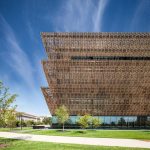
Designed by David Adjaye architects, the National Museum of African American History and Culture at Washington D.C serves as a symbol for African American history and identity. The building, designed with its distinct shape of three tyres, is inspired by a Yorban crown from West Africa, connecting African Americans back to their roots. The bronze lattice covering the facade pays tribute to the intricate ironwork crafted by enslaved African artisans in the American South.
The experience of the museum also pays homage to the stories of African Americans through dark chapters of the country’s past by beginning the journey underground and slowly rising into the light, representing resilience and hope. The thoughtful details presented in the building honk the African American experience and make the museum a place for culture, memory and progress.
Te Kura Whare – Tahoe Headquarters

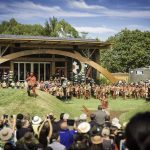
The Te Kura Headquaters by Jasmax and the Tuhoe people in New Zealand are a representation of the Tahoe tribe’s values and perspectives. Located in the Urewera region, it is the first building to be fully self-sustaining, using only local, non-toxic material and generating its own energy.
But what makes it iconic is how it reflects the Māori culture. The building is designed like a ‘Whareuni’ , a traditional Maori meeting house, encouraging community gathering and shared decision-making. The construction included the Tuhoe people in every step making it a symbol of self-determination and cultural pride. The narrative of this design speaks to the connection the tribe has to the land and their ancestors and functions as a blueprint for modern buildings and reflects ancient wisdom
Jean Marie Tjibaou Cultural Centre

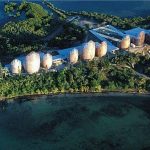
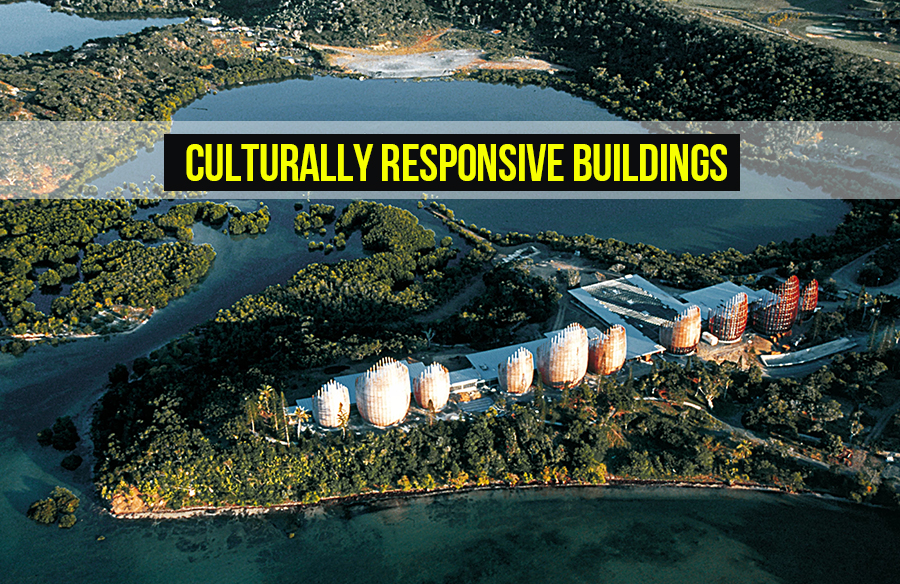
Located in New Caledonia, this Renzo Piano building honours the Karnak people of New Caledonia. It blends traditional building forms with modern design techniques. The tall, curved wooden structure that makes up the centre representing giant huts is inspired by the Grande Case, a central part of Karnak village life.
The centre, keeping in mind the site, which is along a narrow peninsula, is designed to work with the natural environment. The wooden shells allow free airflow, keeping the building cool in the tropics and reducing the load on air conditioning. The materials and spatial organisation, though all from the Karnak culture, don’t feel like a copy or replica. It forms its own identity, making the project respectful, thoughtful and forward-thinking.
Aga Khan Museum

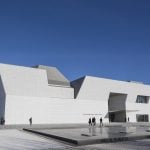
Built by Architect Fumihiko Maki, set in the centre of Toronto, Canada, The Aga Khan Museum is a quiet and serene space that is inviting and promotes reflection, rooting every aspect of the building design in Islamic tradition. The space crafted is meant to feel like a spiritual journey. The clean geometric forms a reflection of Islamic architectural expression across centuries, focusing on the play of light and shadows on patterns forming the experience of the place.
The white granite exterior glistens in the sunlight and slowly shifts tone as the day progresses, emphasising the role of light as a form of divinity in Islam. The central courtyard, inspired by the ‘charbagh’ that translates to a four-part garden, is a typical feature of Persian and Mughal architecture. The symmetries explored in the building symbolise harmony and paradise
Jawahar Kala Kendra
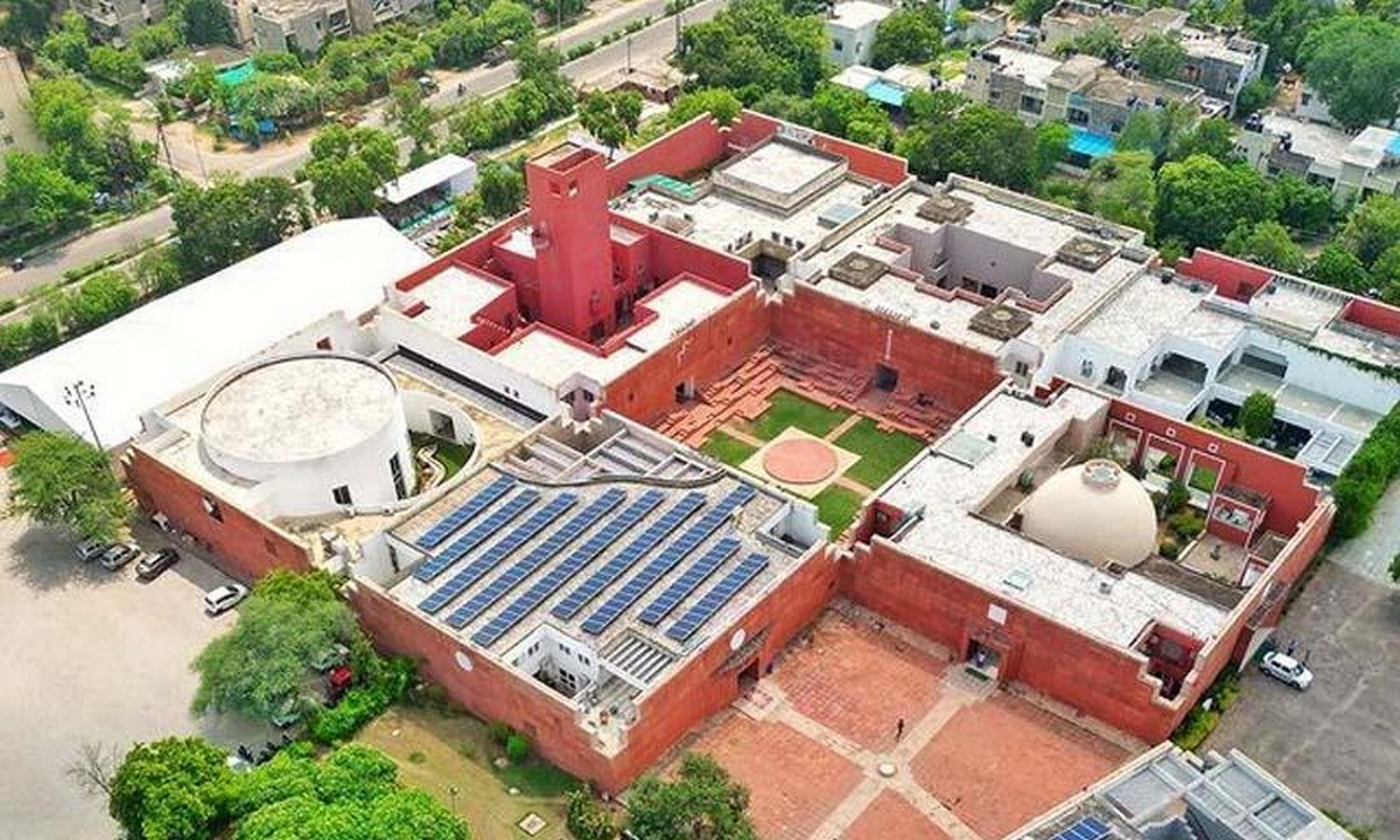
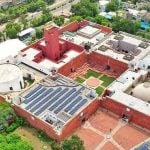
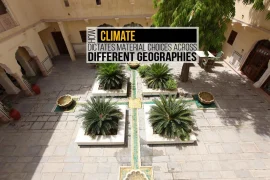
Jawahar Kala Kendra in Jaipur, designed by architect Charles Correa, is a place where ancient knowledge meets modern aesthetics. The cultural entire is based on the Navagraha – the nine-squared Vastu Purusha Mandal, an ancient Indian space-making guide. This is significant as the city within which the cultural Center is located was built on the very same principles. The grid becomes the foundation for how the building is laid out, aligning with Indian cosmology and architectural tradition.
Each part of the structure represents a planet, with spaces for theatre, galleries, and workshops, all thoughtfully arranged around courtyards and open spaces. Red sandstone, brick and marble are the primary materials used in the building and are locally sourced. These materials not only reflect the cultural landscape of Jaipur but also help maintain the building’s temperature in Jaipur’s intense heat.
This project gains its significance by honouring Indian heritage without mimicking temple architecture. But applying the ancient principles in a refreshing and relevant manner.
References:
Smithsonian Institution. (2016) National Museum of African American History and Culture. [Online] Available at: https://nmaahc.si.edu [Accessed 23 Mar. 2025].
Adjaye, D. (2016) National Museum of African American History and Culture. Adjaye Associates. [Online] Available at: https://www.adjaye.com/work/national-museum-of-african-american-history-and-culture/ [Accessed 23 Mar. 2025].
Jasmax. (2014) Te Kura Whare – Te Uru Taumatua. [Online] Available at: https://www.jasmax.com/projects/te-kura-whare [Accessed 23 Mar. 2025].
Living Future Institute. (n.d.) Te Kura Whare. [Online] Available at: https://living-future.org/lbc/case-studies/te-kura-whare/ [Accessed 23 Mar. 2025].
Piano, R. (1998) Jean-Marie Tjibaou Cultural Center. Renzo Piano Building Workshop. [Online] Available at: https://www.rpbw.com/project/jean-marie-tjibaou-cultural-center/ [Accessed 23 Mar. 2025].
Frampton, K. (2001) Studies in Tectonic Culture: The Poetics of Construction in Nineteenth and Twentieth Century Architecture. MIT Press.
Aga Khan Museum. (2014) Architecture. [Online] Available at: https://www.agakhanmuseum.org/about/architecture.html [Accessed 23 Mar. 2025].
Maki and Associates. (2014) Aga Khan Museum. [Online] Available at: https://www.maki-and-associates.co.jp/project/aga-khan-museum/ [Accessed 23 Mar. 2025].
Charles Correa Foundation. (n.d.) Jawahar Kala Kendra. [Online] Available at: https://charlescorreafoundation.org/projects/jawahar-kala-kendra/ [Accessed 23 Mar. 2025].
Lang, J., Desai, M. & Desai, M. (1997) Architecture and Independence: The Search for Identity – India 1880 to 1980. Oxford University Press.