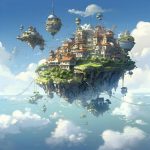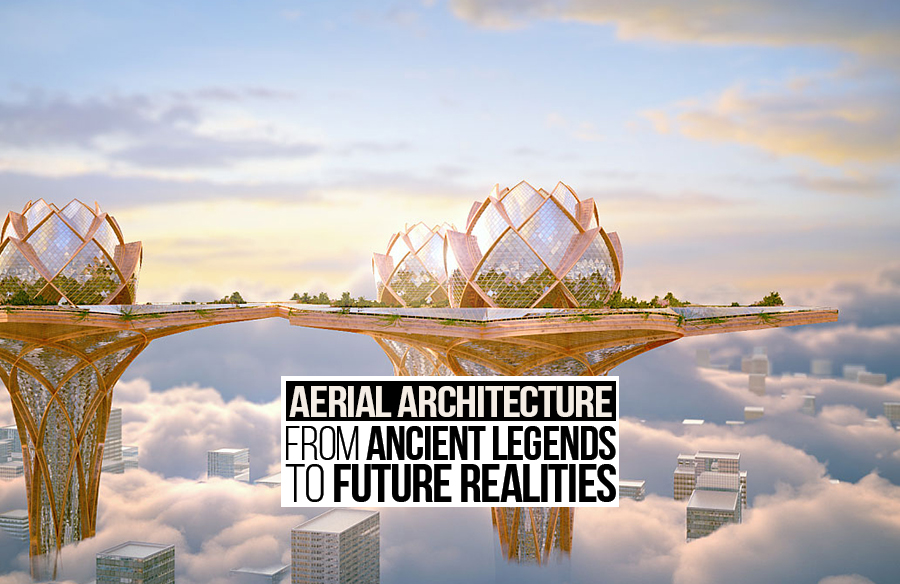
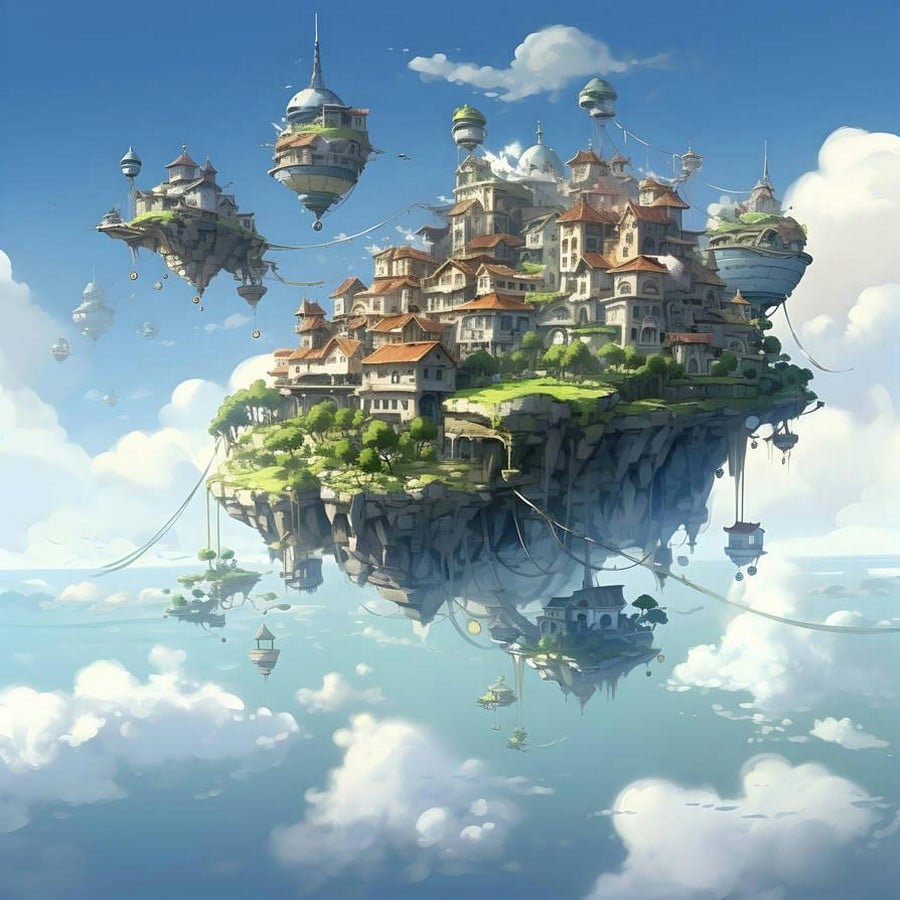
People have been fascinated, and have written about, floating cities and aerial architecture for a long time. The idea has inspired people for centuries, from science fiction stories that depict them as divine realms, utopian societies, or symbols of advanced civilizations, etc. Myths of floating cities are found in almost every culture and they have symbolized unreachable paradise, powerful divine kingdoms or even a lost civilization located in the skies. The idea also has implications in terms of the theme of separation between the privileged and the oppressed, which is a motif that has been carried on into modern storytelling.
Mythological Foundations
Mythologies across cultures have for a long time featured floating cities and islands as divine realms, celestial kingdoms, or utopian civilizations which are out of the reach of humans. These airborne worlds were imagined as the homes of gods, enlightened beings, or powerful rulers and thus, carried the idea of wisdom, power and purity being up there.
Greek mythology had Delos as the sacred floating island where Apollo and Artemis were born. Hindu and Buddhist traditions feature celestial cities which are the homes of gods. The great city of Lanka, which was built by the divine architect Vishwakarma, is mentioned in the Ramayana as the stronghold of Ravana and is symbolic of greatness as well as conquest. The same goes for Amaravati, the heavenly residence of Lord Indra, which is said to be a golden city that floats on the clouds.
Norse mythology also featured Asgard, a celestial fortress which was connected to the Earth through a rainbow bridge known as Bifröst, and could only be accessed by the worthy. Penglai was said to be a mystical floating island in the Bohai Sea and only immortals lived there and had the elixir of life in Chinese folklore. The Aztecs had Aztlán, a legendary floating city which was supposed to be the ancestral home of their people, and Polynesian legends had Hawaiki, a mystical paradise beyond the horizon which was associated with the afterlife.
In Slavic folklore, Kitezh is said to have sunk into a lake to protect itself from invaders and to be visible only to the pure-hearted. Like that of Tír na nÓg, the Irish myth is of a floating paradise of eternal youth, where time moves differently. Japanese folklore speaks of Takamagahara, a celestial realm where the Shinto gods are said to reside in a place called Heaven, called the ‘High Plain of Heaven’.
Aerial Architecture in Anime, Film, and Literature
Modern storytelling, anime, film, and literature have reimagined civilizations, with a new twist, incorporating fantasy, science fiction, and social commentary to discuss issues like social class, rebellion, and human hubris, among others.
-
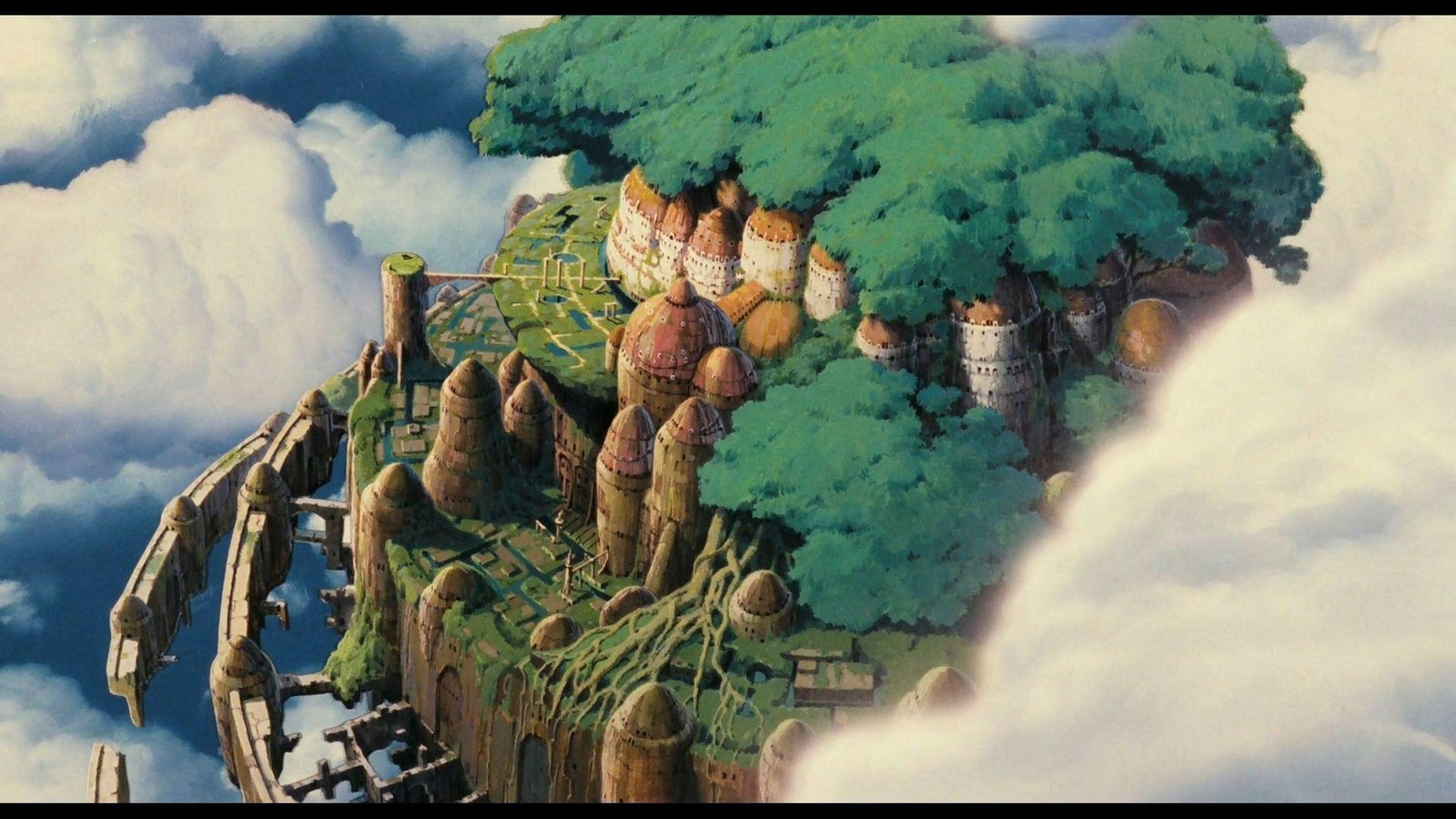
Movie: Laputa: Castle in the Sky (1986) –
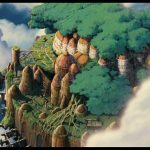
Directed by Hayao Miyazaki, this film presents Laputa, the floating city, as a distant and deserted kingdom. The plot develops around the questions of what happened to past civilizations, whether progress is always positive, and how people’s plans and actions correspond to the laws of nature.
-
Anime: One Piece – The Skypiea Arc –
In Eiichiro Oda’s popular manga and anime series One Piece, the Skypiea arc presents a civilization of people who live on Sky Islands which are floating land masses which are floated by unique cloud formations. These islands are created from sea clouds and island clouds and have a well-organized society. The description of Skypiea is based on different real-life floating city legends, which are combined into one great sea adventure.

-
Novel: House of Sky and Breath by Sarah J. Maas (2022) –
The second book of the Crescent City series, this fantasy story has a lot of floating and celestial architecture, including the capital city of Lunathion, which is powered by magic and technology. The novel is a typical example of the genre, with elements of high fantasy, romance, and political intrigue; the cities that float, the people with wings, and the high society that lives like a king and a queen on top of everyone else. It tells about the conflicts for power and the struggle for freedom, which are the same as in the floating city myths when the rich live high up and the poor fight for existence and justice.
Theoretical and Conceptual Developments with Modern Technology
While truly floating cities are still the only things we see in movies and cartoons, modern architectural and engineering innovations are slowly but steadily making them a reality. The water-based floating cities are already under development as a possible answer to the problem of population density and sea level rise. The Seasteading Institute is developing free-standing floating platforms and architect Bjarke Ingels’ Oceanix City is a concept for a network of self-sustaining floating cities.
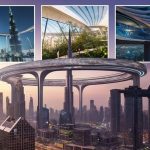
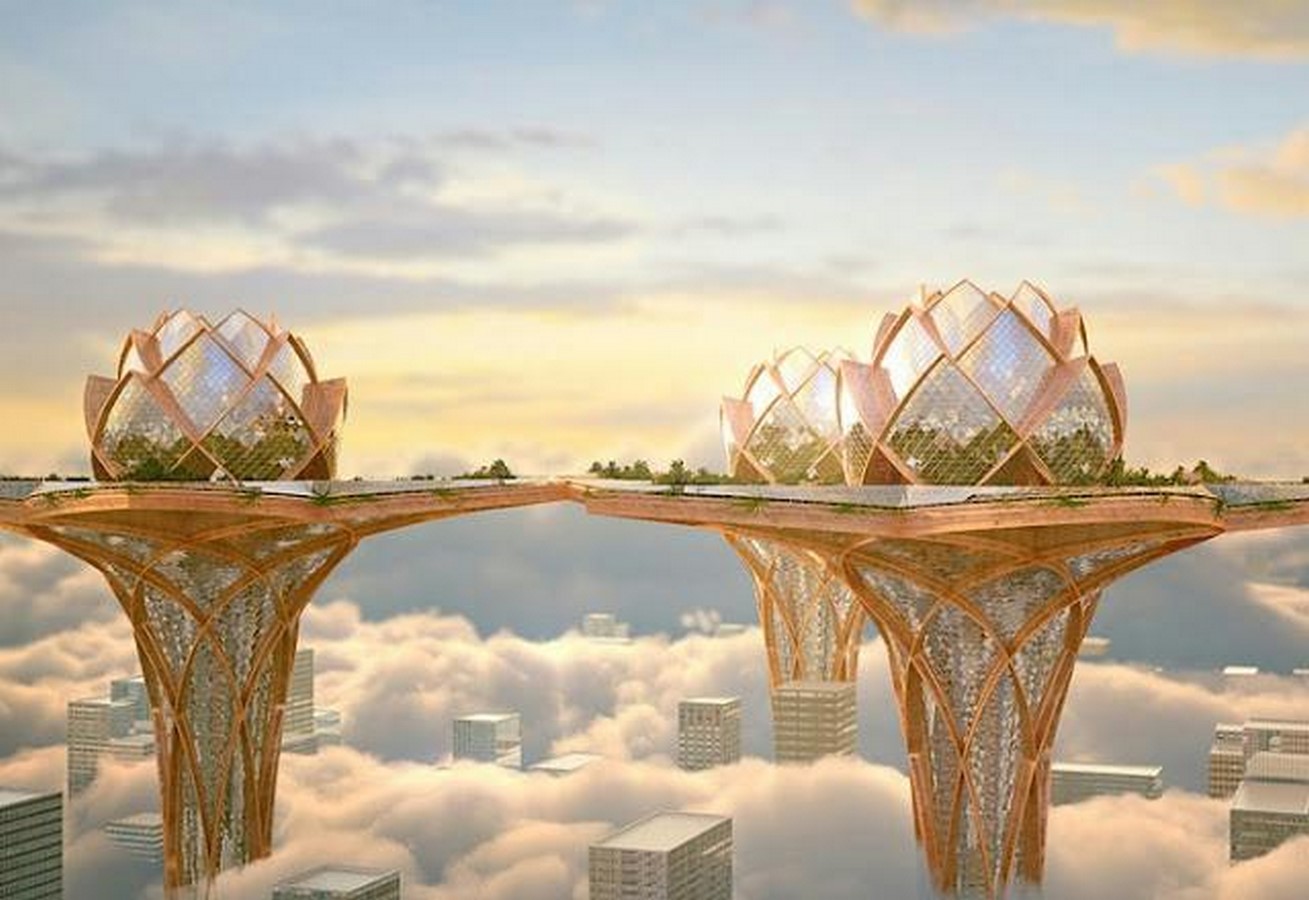
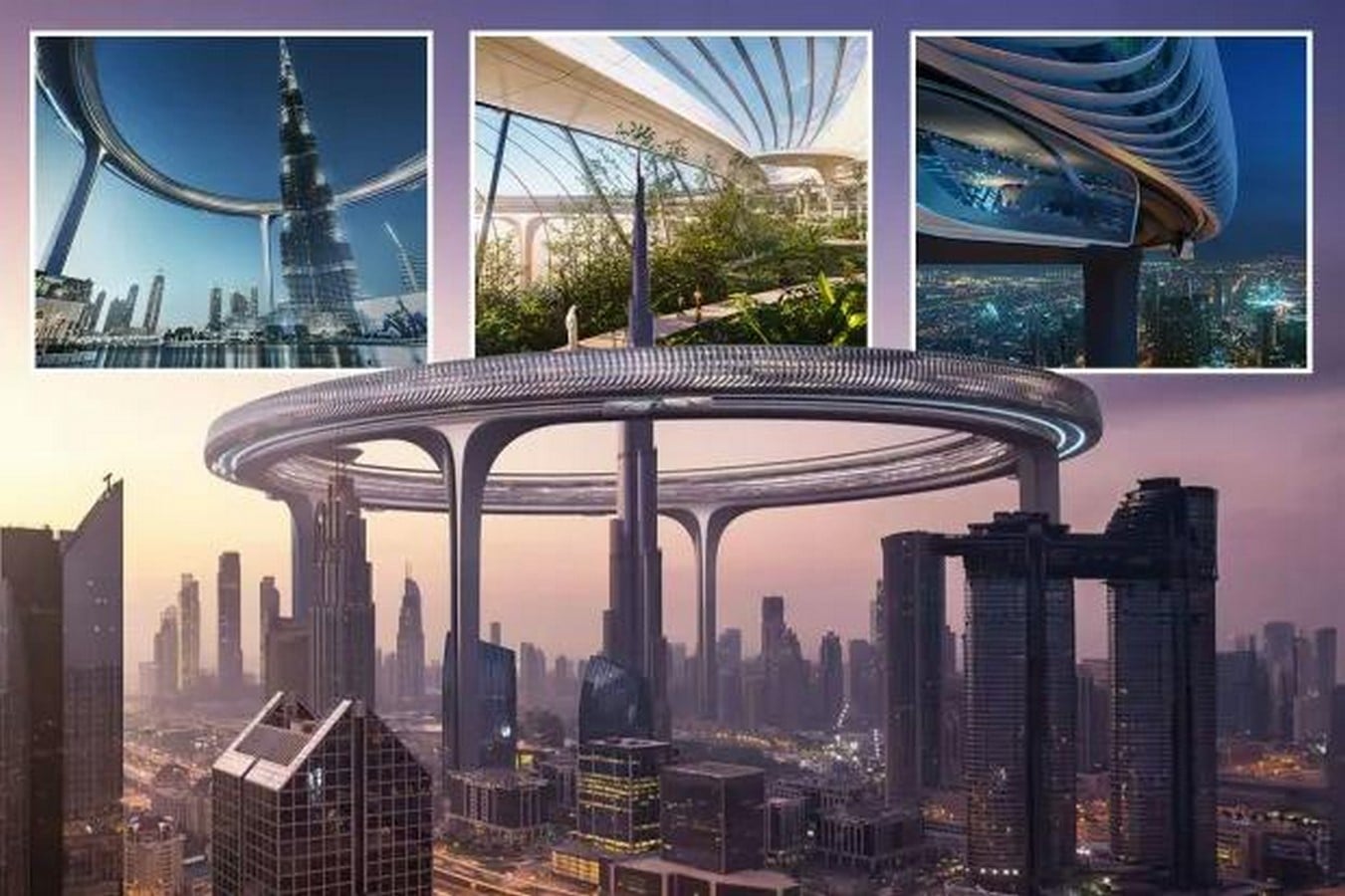
Technologies like The SAFE Building System by Greg Henderson, are structures which use electromagnetic levitation to float above the ground, minimizing earthquake and flood impacts. Downtown Circle in Dubai is a project of self-sufficient megastructures that hover over the existing skyscrapers and offer green spaces and renewable energy. These futuristic concepts indicate a shift in the approach towards the vertical as well as the aerial expansion of the urban area.
Floating Architecture Projects:
Architects are designing buoyant structures to solve space and environmental issues all over the world. These projects comprise floating homes and schools, and entire communities of sustainable living and adaptability to changing environmental conditions, to list a few.
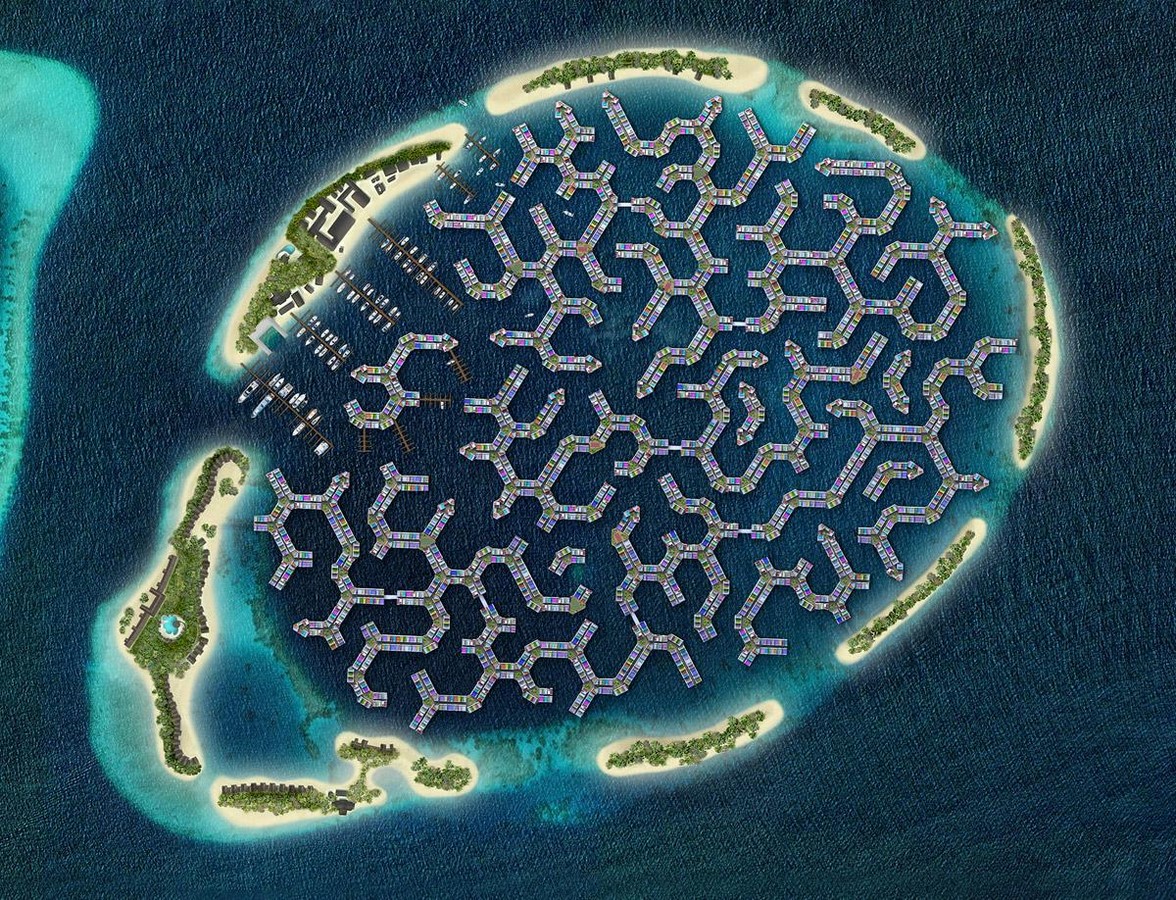
Maldives Floating City:
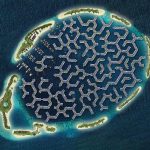
This ambitious project envisions a floating city with a nature-based structure of roads and water canals, which resembles the efficient organization of brain coral. It marks a new era of Maldivians being back in the water with resilient, eco-friendly floating developments.
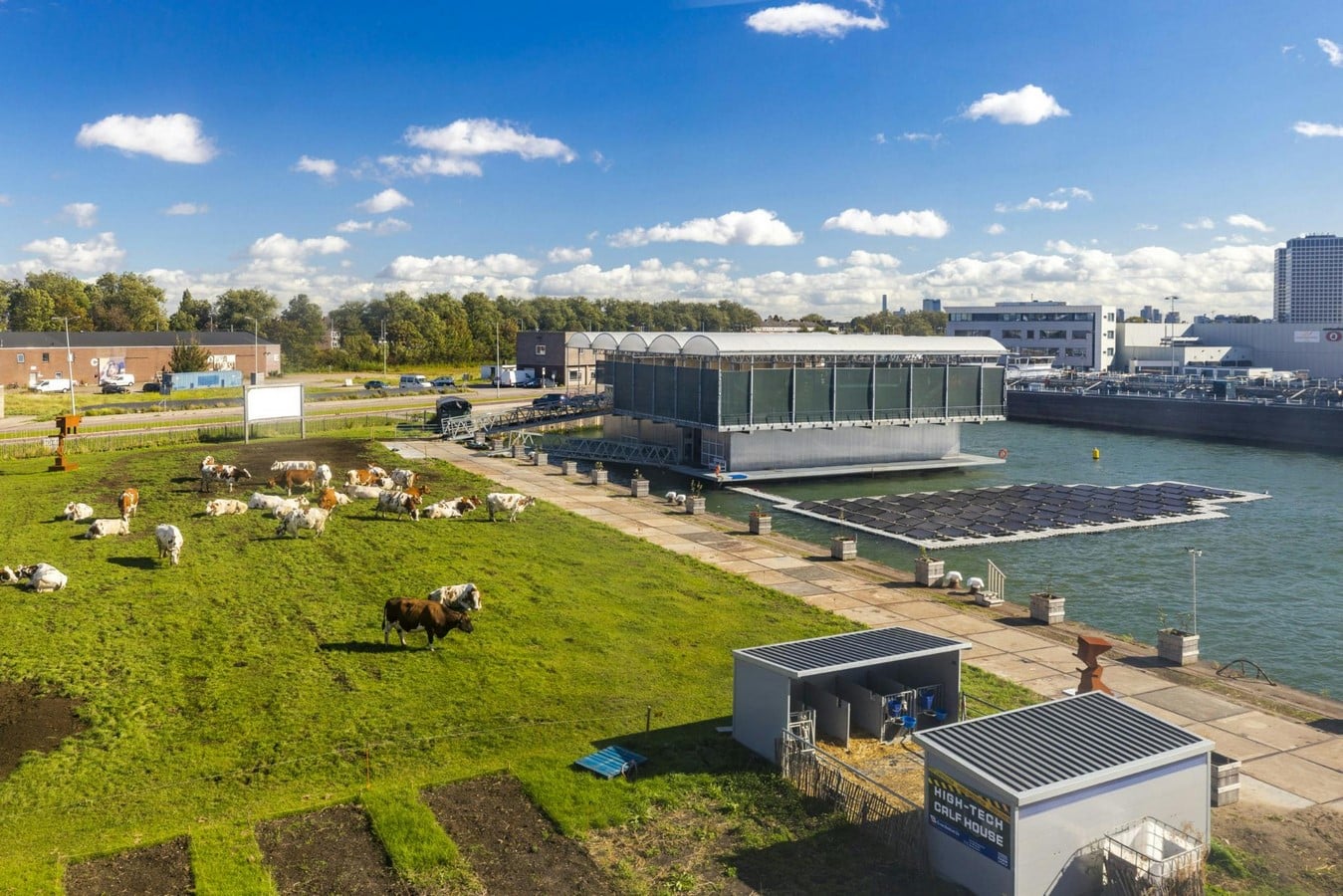
Floating Farms in Rotterdam:
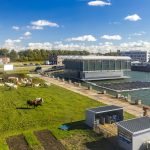
The Dutch company Beladon has created floating farms to produce dairy, vegetables and eggs. These structures are meant to be sustainable food production options for urban areas, including those prone to flooding.
Floating Hotels:
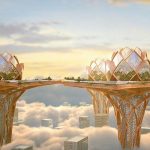
The latest futuristic concept of Dubai is a breathtaking floating ring city surrounding the iconic Burj Khalifa. This proposed megastructure, christened “Downtown Circle” is an attempt to redefine urban living with self-sustaining ecosystems, green spaces and advanced transport systems. If built, it will hover at 550 meters and could house thousands while incorporating cutting-edge sustainability features. This visionary project is a blend of aerial architecture with real-world innovation, pushing the boundaries of modern city planning.
The appeal of floating cities in mythology, anime, and manga is not new; it reflects the enduring human desire to transcend the terrestrial. With technology now increasingly inspired by these imaginative realms, the dream of aerial habitation is finally within our reach. Floating architecture offers a viable strategy for sustainable urban growth, addressing modern issues while inspiring future generations.
Articles / Websites:
- Beyda, E. (2025). How Floating Architecture Solves Urban Space Challenges | Built. [online] Built | The Bluebeam Blog. Available at: https://blog.bluebeam.com/floating-architecture-urban-space-solutions/?utm_source=chatgpt.com
- Wikipedia Contributors (2025). Floating cities and islands in fiction. Wikipedia.
- Wikipedia Contributors (2025). A Floating City. Wikipedia.
- Wikipedia Contributors (2024). SAFE Building System. Wikipedia.
- Bose, S. (2024). Mind-bending plan for 1,800ft giant floating RING CITY where thousands will live in the sky around world’s t… [online] The Sun. Available at: https://www.thesun.co.uk/tech/32380914/giant-floating-ring-city-dubai-burj-khalifa/?utm_source=chat
- to, C. (2025). Floating cities and islands in fiction. [online] Ultimate Pop Culture Wiki. Available at: https://ultimatepopculture.fandom.com/wiki/Floating_cities_and_islands_in_fiction?utm_source=chatgpt.com
- to, C. (2007). Floating Continent. [online] TV Tropes. Available at: https://tvtropes.org/pmwiki/pmwiki.php/Main/FloatingContinent
- Nicoll, J.D. (2020). Five Science Fiction Books Featuring Floating Habitats – Reactor. [online] Reactor. Available at: https://reactormag.com/five-science-fiction-books-featuring-floating-habitats/
- Architectural Trends & Theories. (2022). FLOATING ARCHITECTURE TECHNOLOGY. [online] Available at: https://advancedtheories.wordpress.com/2022/02/09/floating-architecture-technology-2/.
- McCoy, J.K. (2022). The Floating Continent Trope Of Sci-Fi & Fantasy, Explained. [online] Game Rant. Available at: https://gamerant.com/floating-city-sci-fi-fantasy-explained/
Images:
- Image 1_ Bouzuki (2023). The Floating City. Available at: The floating city by Bouzuki on DeviantArt
- Image 2_ Studio Ghibli (n.d.). Laputa. Available at: https://wallpaperaccess.com/full/1631604.jpg.
- Image 3_Oda (n.d.). Skypeia arc. Available at: https://static.wikia.nocookie.net/oproleplaying/images/c/c1/Skypeia.jpg/revision/latest?cb=20201117213139.
- Image 4_ Harma (n.d.). megatropolis city in the sky. Available at: https://inhabitat.com/wp-content/blogs.dir/1/files/2012/06/megatropolis-city-in-the-sky-hrama-10-660×453.png.
- Image 5_ Maldivesfloatingcity.com ed., (n.d.). Maldives Floating City. Available at: https://maldivesfloatingcity.com/wp-content/uploads/2021/03/Maldivesfloatingcity-Main-Render-2021-768×588.jpg.
- Image 6_ Pijper, G. (n.d.). Rotterdam is home to the world’s first offshore dairy farm, located in a harbour off the Nieuwe Maas River. Available at: https://rotterdammakeithappen.nl/app/uploads/2020/11/Floatingfarm_Guido_Pijper_06A9261-scaled-1.jpg.
- Image 7_ Bose, S. ed., (n.d.). The circle scraper_. Available at: https://www.thesun.co.uk/wp-content/uploads/2024/12/GM_18-12_DUBAI-RING_COMP_161b6c.jpg?w=620.