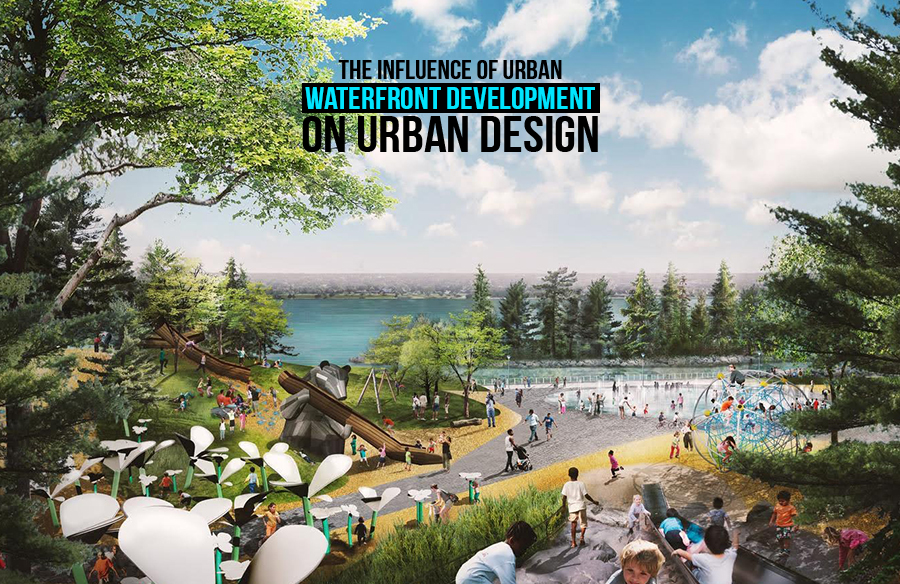
Urban design, through its objectives and principles, is slowly but surely shaping our society as well as our lives for a better tomorrow. Urban waterfront development, an essential part of urban design, helps create unique spaces in the waterfront for the common public. This relationship between the two, not only is required for the progression and development of a city but also to enhance the quality of life in all aspects. Reimagined and underutilized waterfront areas impact a city’s overall urban design. Moreover, the role of urban designers and architects is crucial in setting new benchmarks while adhering to urban design principles and strategies. This article explores the influence of urban waterfront development in urban design and the seamless intersection of the natural environment and built spaces.

Urban Waterfront Development: A Brief
The process of transforming areas adjacent to water bodies—rivers, seas, lakes, etc., into useful spaces that serve a purpose for the upgradation of the city in all aspects, refers to waterfront development in urban design. Some of the key features of this development include interactive spaces, commercial zones, shopping hubs, mixed-use developments, community building, etc., Historically, these areas near the waterfront have been used as industrial spaces or underused territories. As cities and populations grew, the demand for something new and progressive, started delving into the public mind. Waterfronts are now developed to become cultural hubs, with museums, theatres, art galleries, and spaces often integrated into these areas to reflect the city’s culture and heritage, creating lively public spaces.
Role of Urban Designers
Urban designers play a pivotal role in shaping the urban design context of an entire city. Creating public-friendly spaces, especially along a waterbody is visually interesting and entertaining to envision. The real challenge arises for the designers when they design, plan, and execute them as intended. However, an urban designer’s role is not just confined to designing and building spaces. In the context of waterfront development, it is about offering more open spaces rather than built structures. Thus, there are certain pointers to ensure that the development is accessible, sustainable, and integrated with the broader urban design environment.
- Visionary and Master Planning
- Creating Public Accessible Arenas
- Proposing Multi-functional Spaces
- Building Climate-Resilient and Sustainable Community Spaces
- Preserving Culture and Surrounding Context
- Promoting Social Inclusivity and Growth
- Facilitating Economic Progression

Urban Waterfront Development Strategies
Urban waterfront development being a key focus in urban design requires the balance of various aspects of design. The most common approach is a mixed-use development that includes housing, commercial uses, and cultural and recreational activities to ensure a lively and diverse environment. The need is to create a publicly accessible waterfront, multi-generational paths, promenades, and bike lanes that will allow people to enter the waterfront and link it to the river on one side and the neighborhoods around it. Connecting such ideas with the broader urban design mosaic is driven by transport networks and development, while community engagement constitutes the foundation upon which waterfront projects respond to the needs and values of local citizens. Sustainable resilience and climate adaptation is vital, especially for long-term environmental challenges, adaptive design and building energy efficiency need to address these issues. Waterfront development is phased so as to allow flexibility and gradual change over time.
Coimbatore Lakefront Development
Coimbatore is a fast-developing city in Tamil Nadu, known for its umpteen lakes. There are many lake development projects that have been launched to revive its natural water bodies while settling urban issues like flooding, water scarcity, and environmental degradation. The core aim of these initiatives is to revive the ecological integrity of the lakes, access by the public, and the creation of recreational and social spaces for the city’s urban design development and for the people. Ukkadam lakefront development is one of the remarkable projects in Coimbatore, strongly highlighting the cultural background of Coimbatore in every aspect of its urban design. From open-air theatres to food streets and entertainment spots, the design intent of the development has been reflected through user-centric design spaces These inclusions in urban design not only serve as a leisure center for people but also emphasises the need to preserve, conserve, maintain, and promote the unnoticed nature and water resources lying around.

Marine Drive Development, Mumbai
Marine Drive waterfront development, in Mumbai is a highly popular urban design development that will unquestionably define this city’s identity and coastal infrastructure. Lining the sea, Marine Drive, which gets its name from the curve of Pearl Necklace, is the main public space in Mumbai. Though this development is already considered a landmark, over the years, several strategies have been detailed and implemented to improve functionality, sustainability, and aesthetics. Marine Drive, being open to people across all walks of life, is an aspect of social inclusivity. It is a mixed-use public space for the congregation of locals, tourists, and professionals. Chowpatty Beach at the northern end hosts cultural and religious events such as the Ganesh Visarjan, highlighting the waterfront’s role in urban design and community engagement. The continuous development and maintenance of Marine Drive, amid an expanding and challenging city, will continue to be key to the signature of urban vibrancy and resilience in Mumbai.

Future Of Urban Waterfront Development
For a sustainable future, resilience with inclusivity needs to be placed at the core of urban waterfront development, incorporating climate adaptation through flood-resistant designs and blue-green infrastructure. Mixed-use development, incorporating residential and commercial spaces, and public spaces, contributes highly to vibrancy in urban design environments. Technological improvement places smart infrastructure in place to heighten efficiency while keeping intact its cultural importance through its historical value. As former industrial sites are adapted for reuse and nature-based solutions are integrated, the shift toward more regenerative design is highlighted with an improvement in biodiversity and urban ecosystem. Thus, generally, waterfronts in urban design are becoming multifunctional spaces addressing environmental, social, and economic challenges while enhancing urban life.

Urban waterfront development transforms cities’ urban design and identity, with unprecedented opportunities for urban planners and designers to build multi-functional, lively spaces. Waterfronts fuse environmental sustainability with public access and cultural heritage into sustainable urban designs, fostered with premises of community engagement and environmental resilience. Urban waterfronts can be inclusive and connected spaces by landscaping pedestrian promenades, maintaining architectural quality, and addressing climate change concerns like coastal erosion and sea level rise. With the backdrop of climate risks facing cities, developing waterfronts strategically does beauty and earns cities some functional credits towards long-term sustainability and resilience. Thus, urban waterfront development in urban design forges the transformation of relations between a city and its natural landscapes. It also creates spaces that can enrich the urban experience, at the same time, responding to the ever-evolving expectations of various communities.