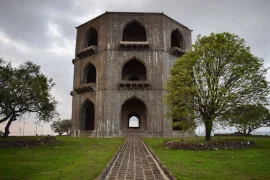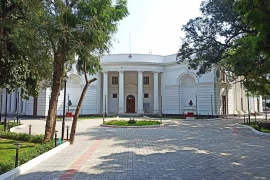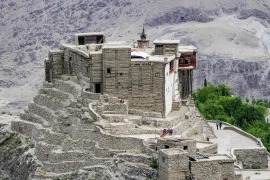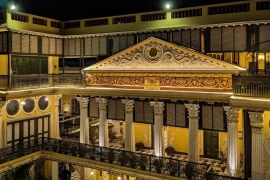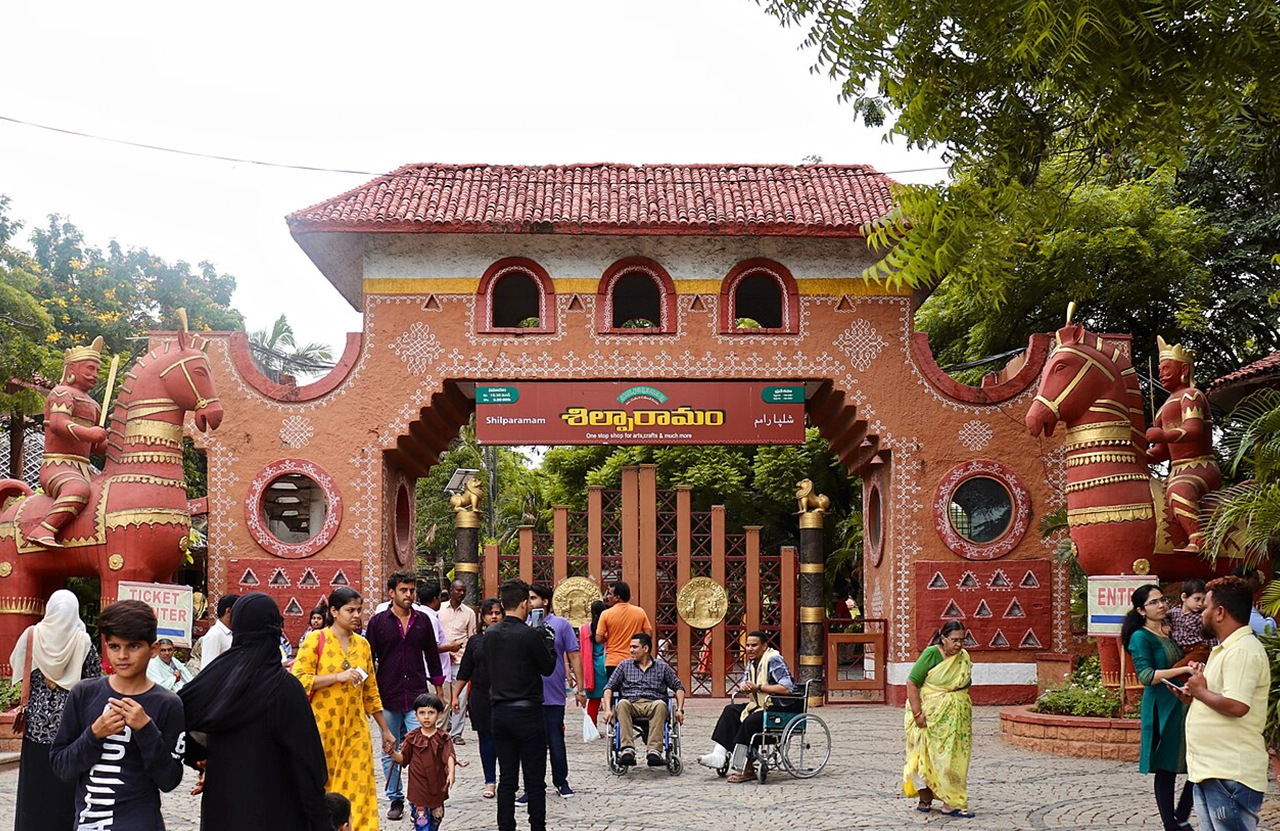
Shilparamam is a cultural craft village located in Madhapur, Hyderabad. It was established in 1992 by the Government of Andhra Pradesh to preserve traditional Indian art forms and rural craftsmanship (Shilparamam, n.d.). The idea behind the project was to create a living environment where artisans could present their work while visitors experienced vernacular architecture in an urban setting (Mrudulyn, n.d.). Within a rapidly developing information technology district, Shilparamam offers a cultural pause that celebrates hand-made craft, regional materials and traditional ways of life (The Globetrotter, 2019).
The village extends across almost sixty-five acres and recreates the atmosphere of Indian rural settlements through shaded pathways, open courtyards, water bodies and clusters of regionally inspired huts (AbhiSharma727808, n.d.). Its spatial planning reflects the diversity of Indian craft culture while encouraging interaction between artisans and visitors (Shilparamam, n.d.). Today, Shilparamam hosts exhibitions, fairs, workshops and performances that support craftspeople from across the country and stands as an important urban landmark that unites architecture, landscape and cultural heritage meaningfully (The Globetrotter, 2019).
Design and Planning
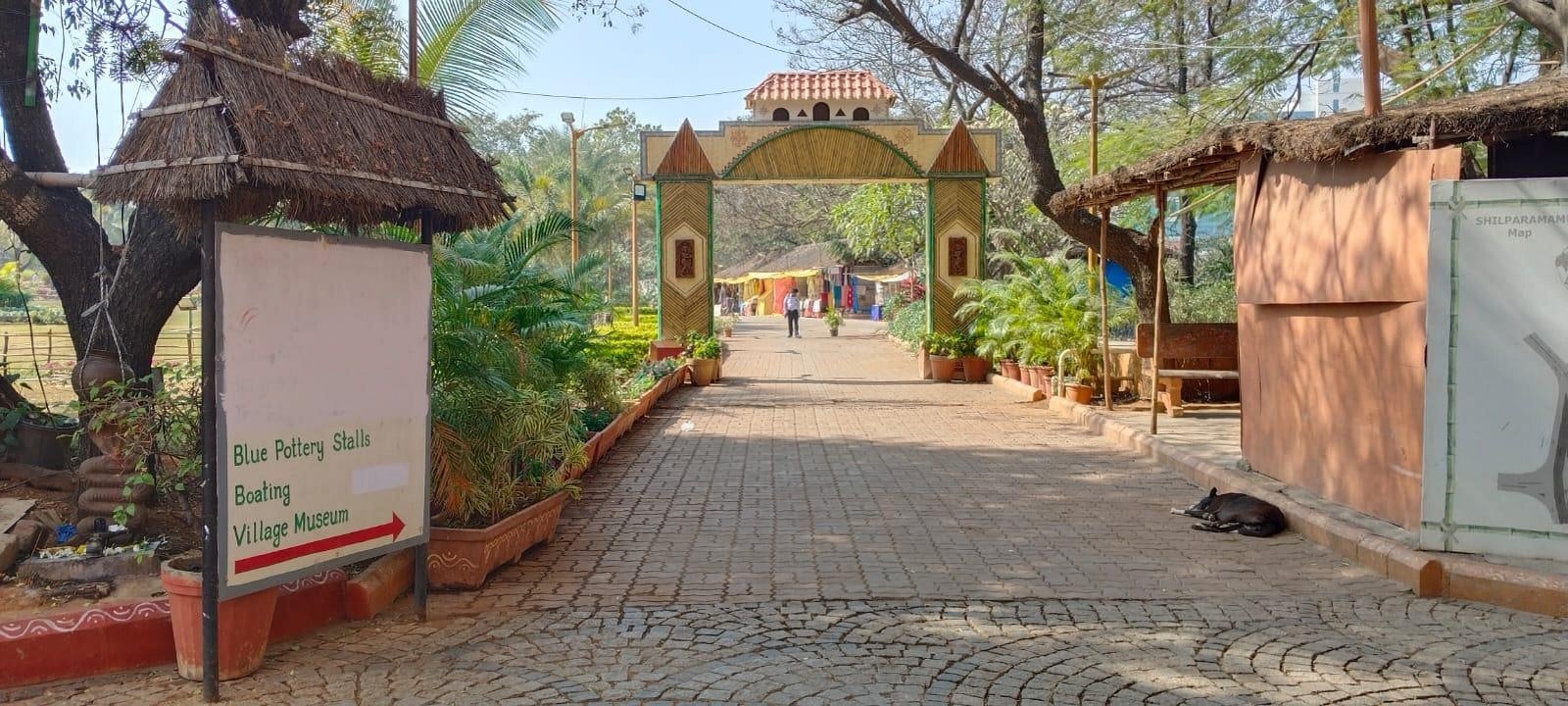
When you walk into Shilparamam, it does not feel like a place someone planned on a drawing sheet. It feels like a village that slowly grew on its own. That was actually the whole intention when the Tourism Department started this project in the early 90s. The master planning was guided by the Department of Tourism architects and consultants who shaped the campus using traditional settlement patterns rather than formal urban grids. Hyderabad was growing fast, and amid all the glass buildings in Madhapur, they wanted one space that still carried the warmth of rural life (Slideshare, n.d.). So instead of straight roads and rigid layouts, the planners allowed the space to unfold gradually with small turns, shaded walkways and sudden openings that feel like courtyards in an actual village.
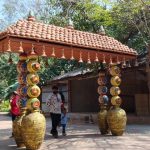
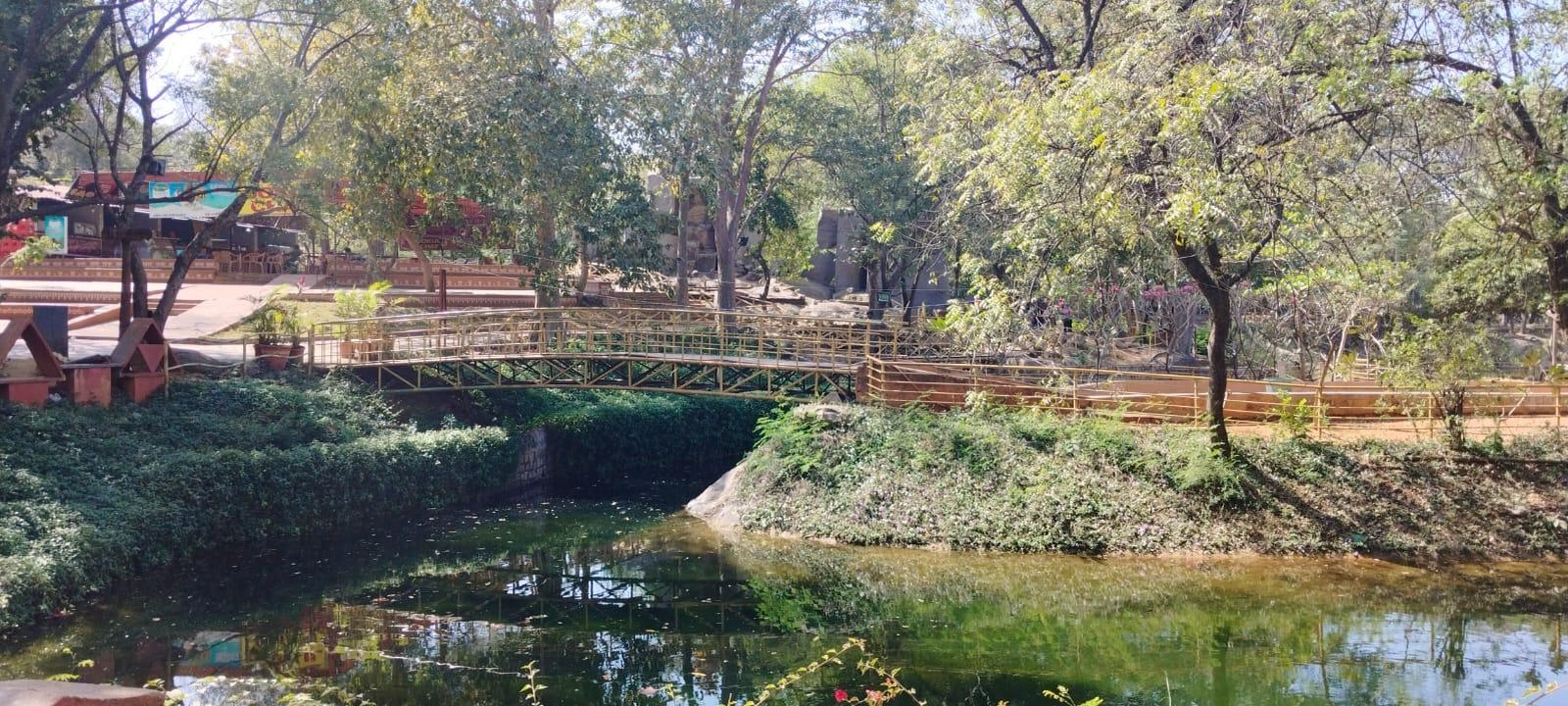
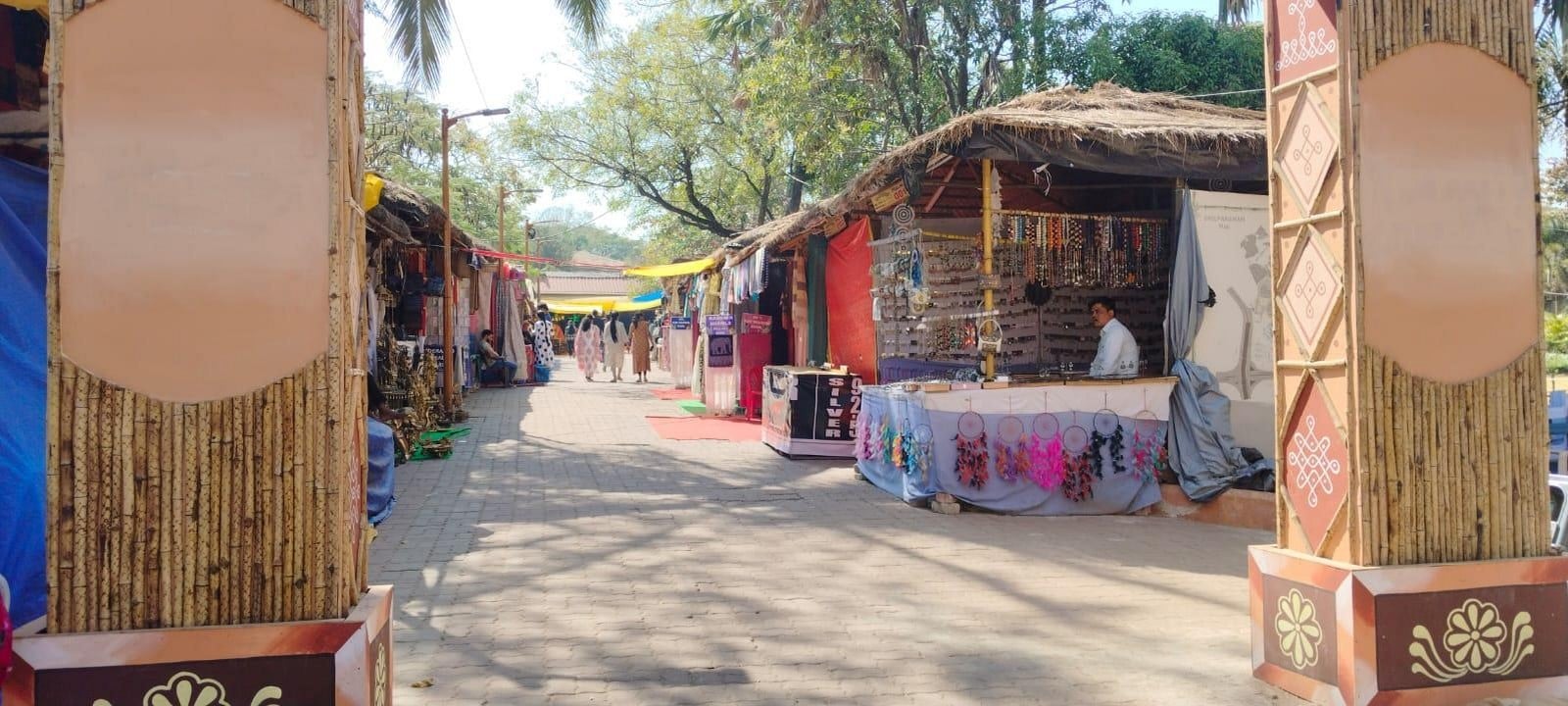
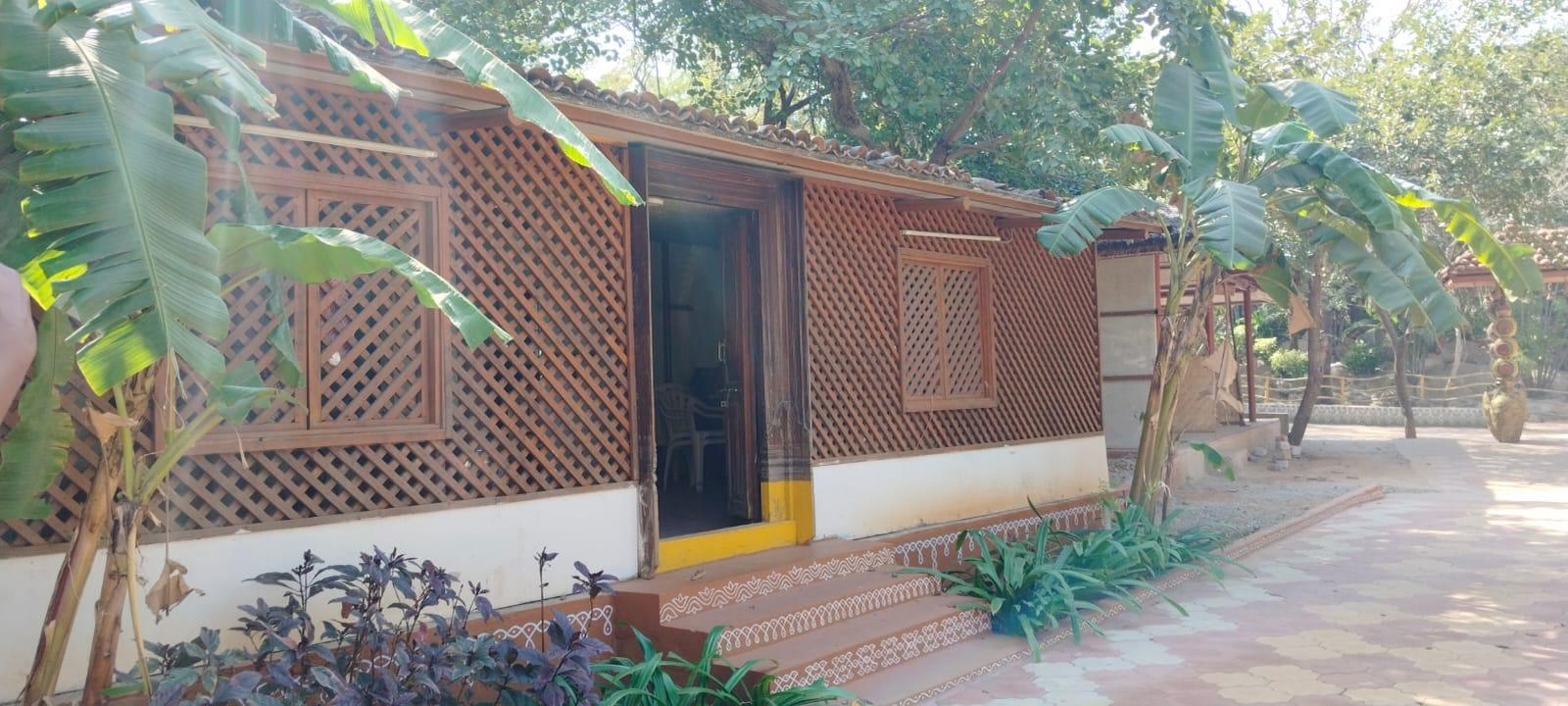
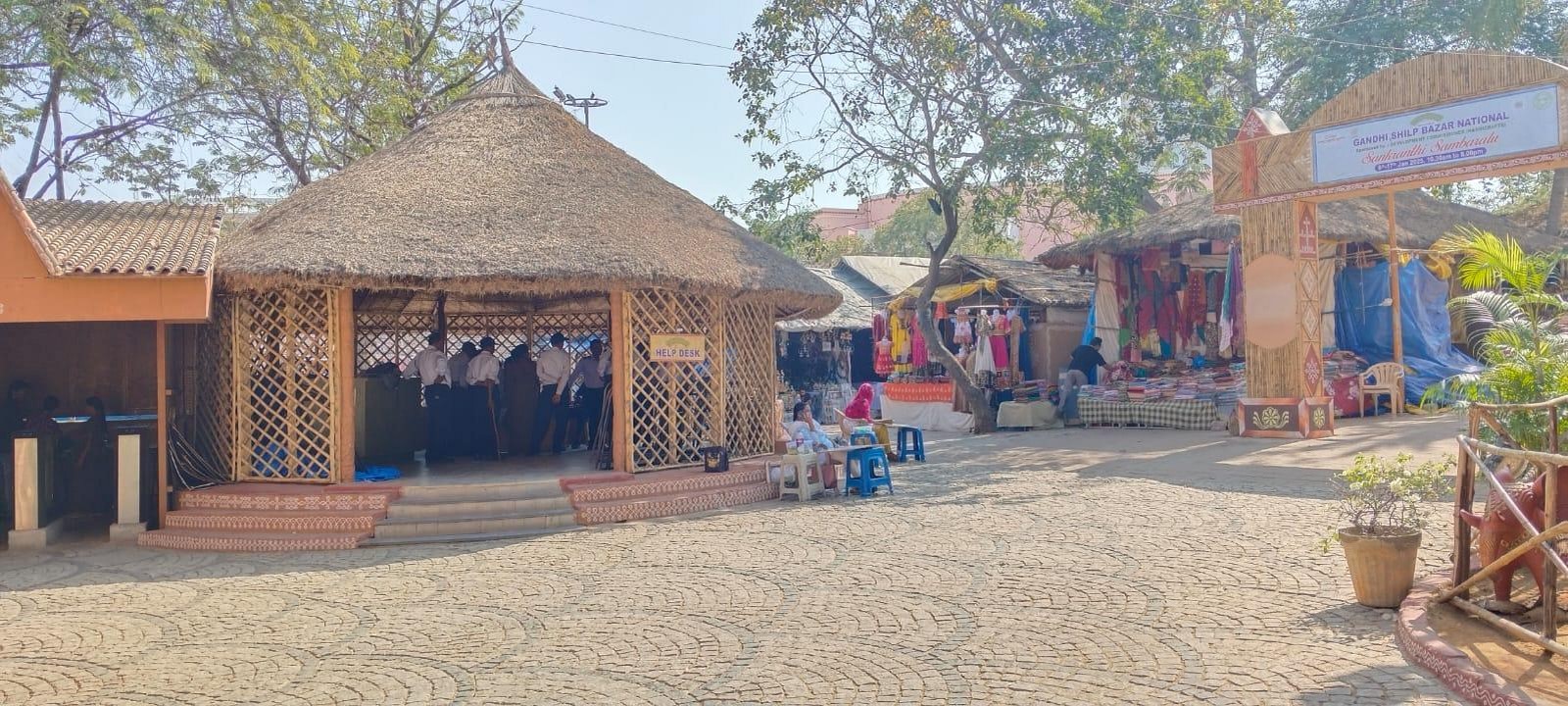
The lake became the heart of the campus. Once that central waterbody came into the picture, everything else found its place around it, the amphitheatre, the craft street, the performer zones and clusters of little huts. These huts are not built to look decorative, they are based on real regional houses from Andhra Pradesh and Telangana. Mud-like finishes, sloping tile roofs, carved wooden doors and long verandahs make the place feel lived-in and grounded. Every turn feels like discovering something, a potter spinning clay, a weaver working under a shaded tree or a courtyard opening towards the lake. This organic flow allows culture, craft and landscape to blend without feeling forced or staged, which is exactly what gives Shilparamam its identity. (Scribd, n.d.).
Material and Construction
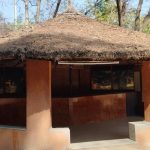
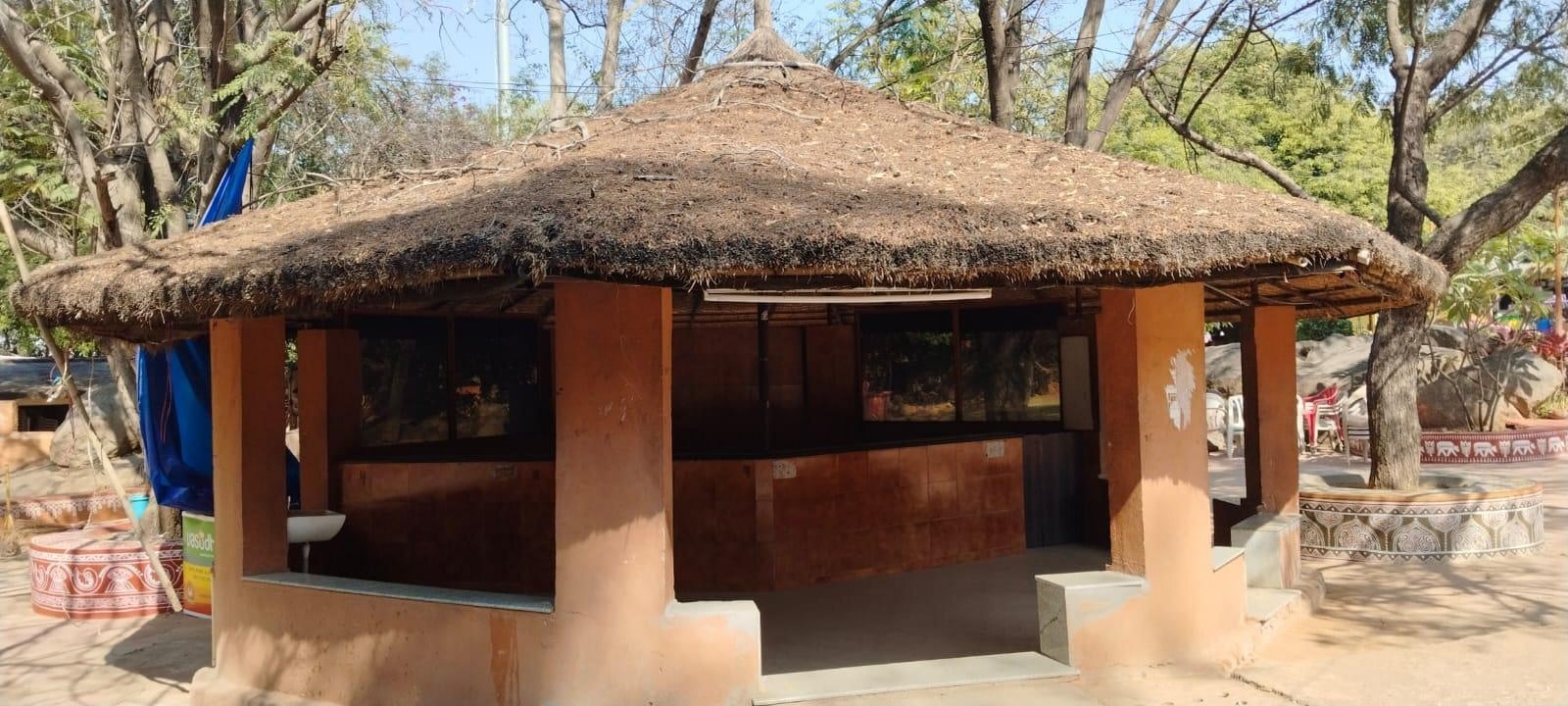
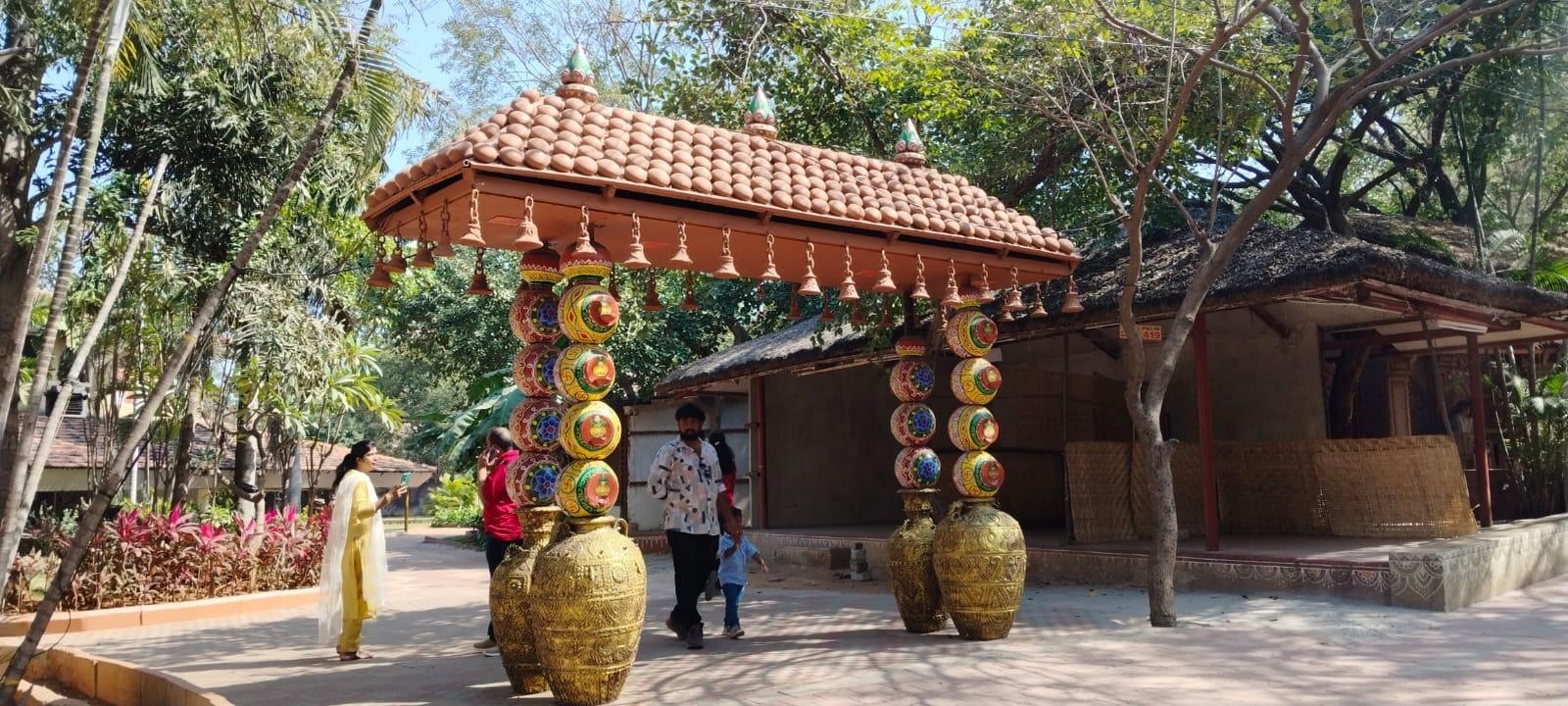
The materials used in Shilparamam were chosen with a very clear intention, they were meant to feel familiar, earthy and close to the traditional houses that inspired the village. Instead of polished surfaces or modern facade treatments, the builders relied on textures that belonged to rural India. Many of the huts use mud-plastered walls or lime-based finishes that mimic the look of natural earth construction. These surfaces keep the structures cool and create a soft, grounded atmosphere that immediately feels different from the concrete surroundings of Madhapur. The roofs are mostly covered with country tiles, a traditional roofing system that allows heat to escape naturally and creates an interior that feels calm even during the summer months (Globetrotter, 2019).
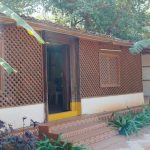
Wood is another essential material that shapes the character of the craft village. Carved wooden doors, shaded verandahs and structural beams are all crafted from locally sourced timber, echoing the very craftsmanship the space aims to preserve. The stone pathways add another layer of authenticity, guiding visitors through clusters of huts and courtyards with a natural rhythm. Even the amphitheatre follows the same approach using stone steps and uncomplicated construction. Nothing in the material palette seeks attention, instead the architecture becomes a quiet background that allows the artisans and their work to remain at the centre (Shilparamam, n.d.).
Sustainability
Sustainability at Shilparamam is not presented as a modern design feature, it simply exists as a natural part of how the space is built. The entire village sits gently on the land using principles that are rooted in traditional Indian settlements. The shaded pathways, thick walls and deep verandahs are all passive strategies that cool the environment without relying heavily on mechanical systems. The mud-like plaster used on many hut facades helps regulate indoor temperatures by absorbing heat slowly and releasing it gradually. This creates a comfortable interior even during peak summer days, supporting natural thermal balance in the most effortless way (Slideshare, n.d.).
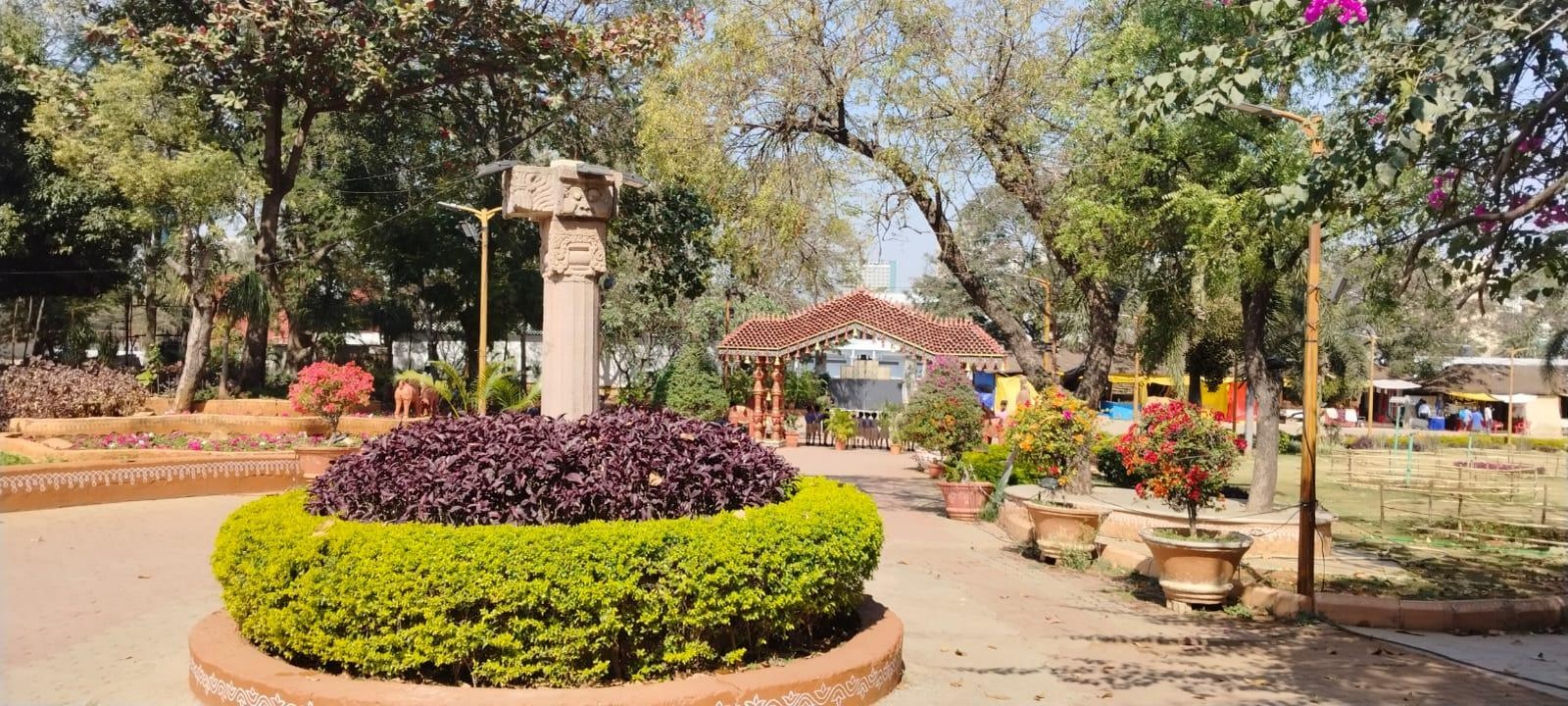
The landscaping plays an equally important role. The dense clusters of trees, waterbody edges and pockets of greenery act as natural climate moderators. They filter dust, reduce heat and provide shade that makes walking through the space feel pleasant. The central lake is not just a visual element, it supports microclimate cooling by bringing moisture into the air. The craft streets are positioned to receive filtered light through tree canopies, reducing glare while creating soft, comfortable brightness for both artisans and visitors. These subtle sustainable measures show how traditional design wisdom can still guide modern spaces. Instead of technology-driven solutions, Shilparamam relies on nature, material honesty and thoughtful placement to create a built environment that feels both calm and ecologically responsible (Globetrotter, 2019).
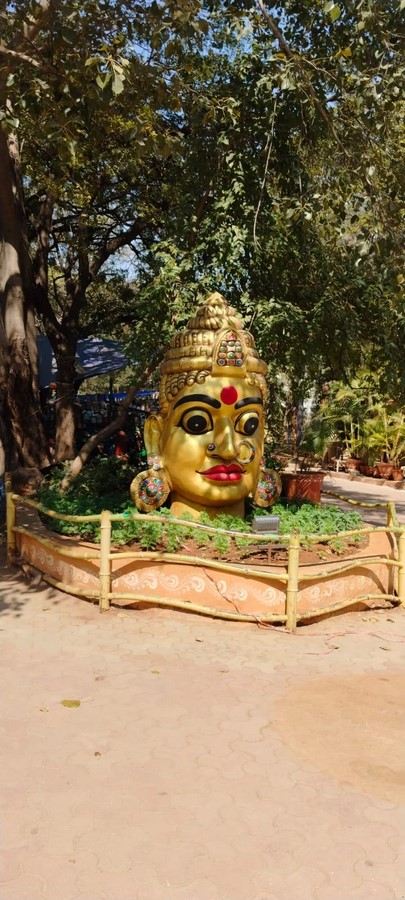
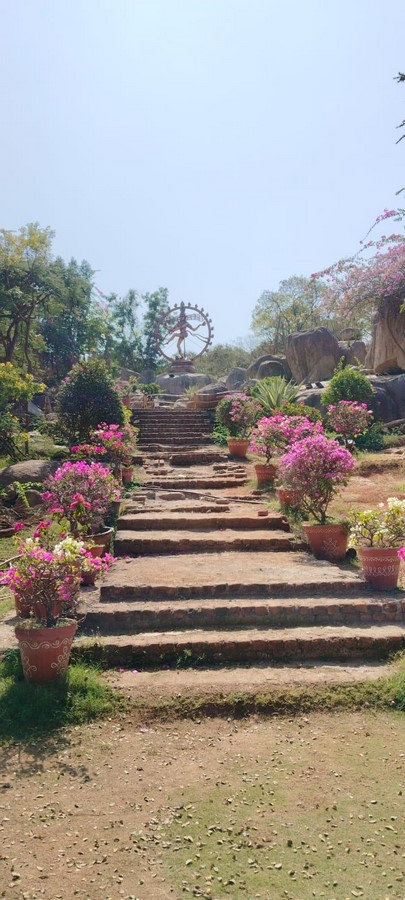
Shilparamam stands as a quiet reminder that architecture does not always need grandeur to create impact. Sometimes, the most powerful spaces are the ones that feel rooted, familiar and connected to nature. As soon as someone walks through its gates, the noise of the city softens and the pace of movement slows. The lake, the courtyards, the shaded craft streets and the earthy textures all work together to create a sense of calm that feels almost instinctive. It is a place where design is not announced, it is simply experienced.
What makes Shilparamam meaningful is how seamlessly it blends culture, landscape and sustainability. It carries the essence of rural life while sitting inside a modern urban district. This gentle balance of tradition and thoughtful planning makes the craft village an enduring landmark that continues to offer comfort, creativity and a connection to heritage for everyone who enters (Shilparamam, n.d.).
Bibliography:
Shilparamam (n.d.). Home. [online] Available at: https://shilparamam.in/home/ [Accessed 14 November 2025].
The Globetrotter (2019). Shilparamam Hyderabad Village Museum. [online] Available at: https://www.theglobetrotter.co.uk/2019/07/shilparamam-hyderabad.html [Accessed 14 November 2025].
Mrudulyn, H. (n.d.). Shilparamam Hyderabad. Scribd. [online] Available at: https://www.scribd.com/document/621555848/Shilpramam-Hyderabad [Accessed 14 November 2025].
AbhiSharma727808 (n.d.). Shilparamam (PPTX). Slideshare. [online] Available at: https://www.slideshare.net/slideshow/shilpramam-ad3pptx/256914998 [Accessed 14 November 2025].