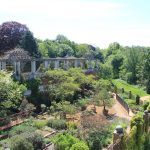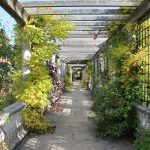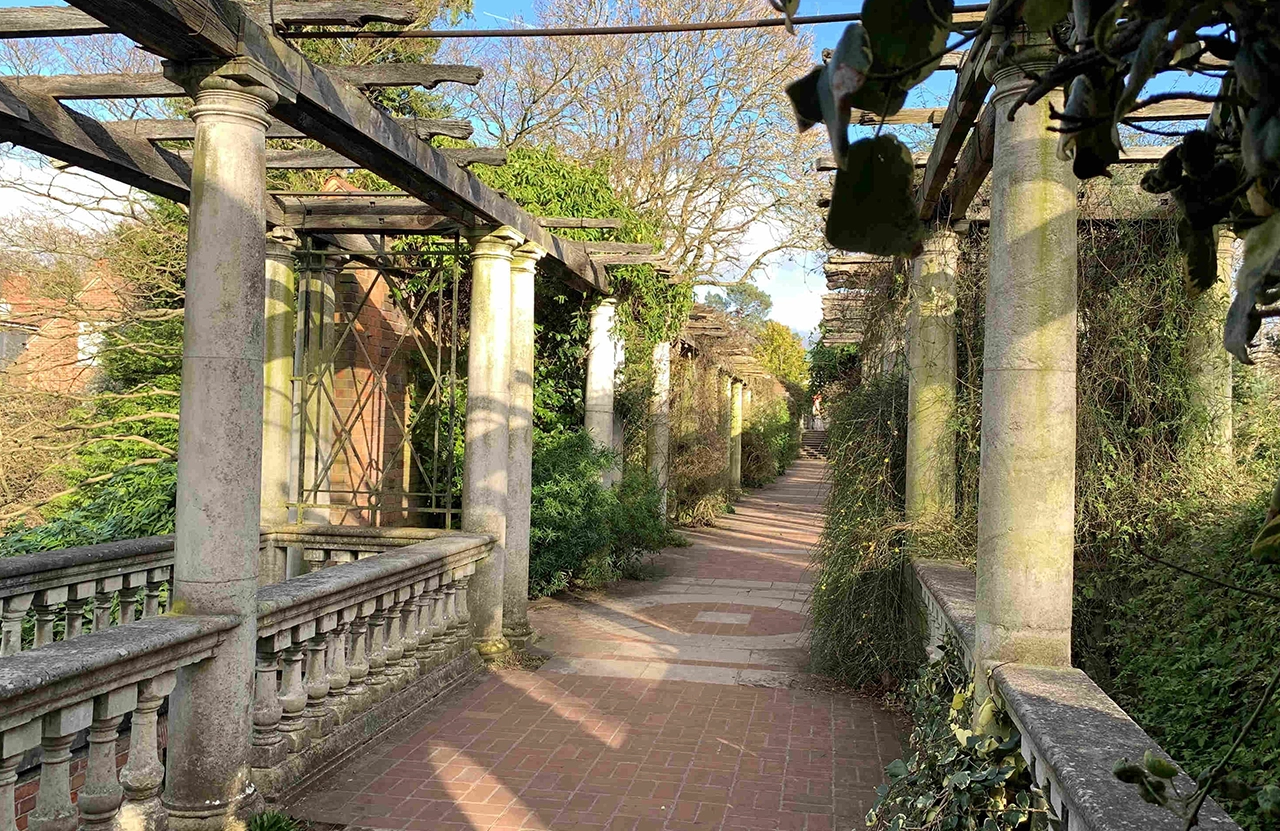
Hampstead Heath is a not-so-hidden fairyland in the middle of London. With its charming forest paths, swimming pods, and rich heritage buildings, it is a magical spot for locals and tourists alike. Walking by, one can explore breathtaking architectural sights, including Kenwood House, Jack Straw Castle, and a real treasure that requires some orientation skills to find: The Hill Garden and Pergola. This Edwardian-style raised walkway and garden is a favourable location for filming, photoshoots, weddings and (less commercially), a tranquil area for relaxation and nature bathing. Featuring arcaded undercrofts and an elevated colonnade of nearly 300 metres, this walking architectural piece is overgrown with climbing vines, wisteria, and rambling roses.
This classical-style elevated garden was commissioned by Lord Leverhulme in 1905, as an extension of his large town house on the Heath called ‘The Hill’; and was designed by Thomas Mawson, a world-famous landscape architect of his time. Acquired in stages from 1959 onward, the structure gradually entered public ownership, and in recent decades the City of London Corporation has undertaken several programmes of repair and restoration. While its gripping wonder and cultural impact are still undeniable, the Pergola has seen better days, thus recently being added to Historic England’s Heritage at Risk Register.
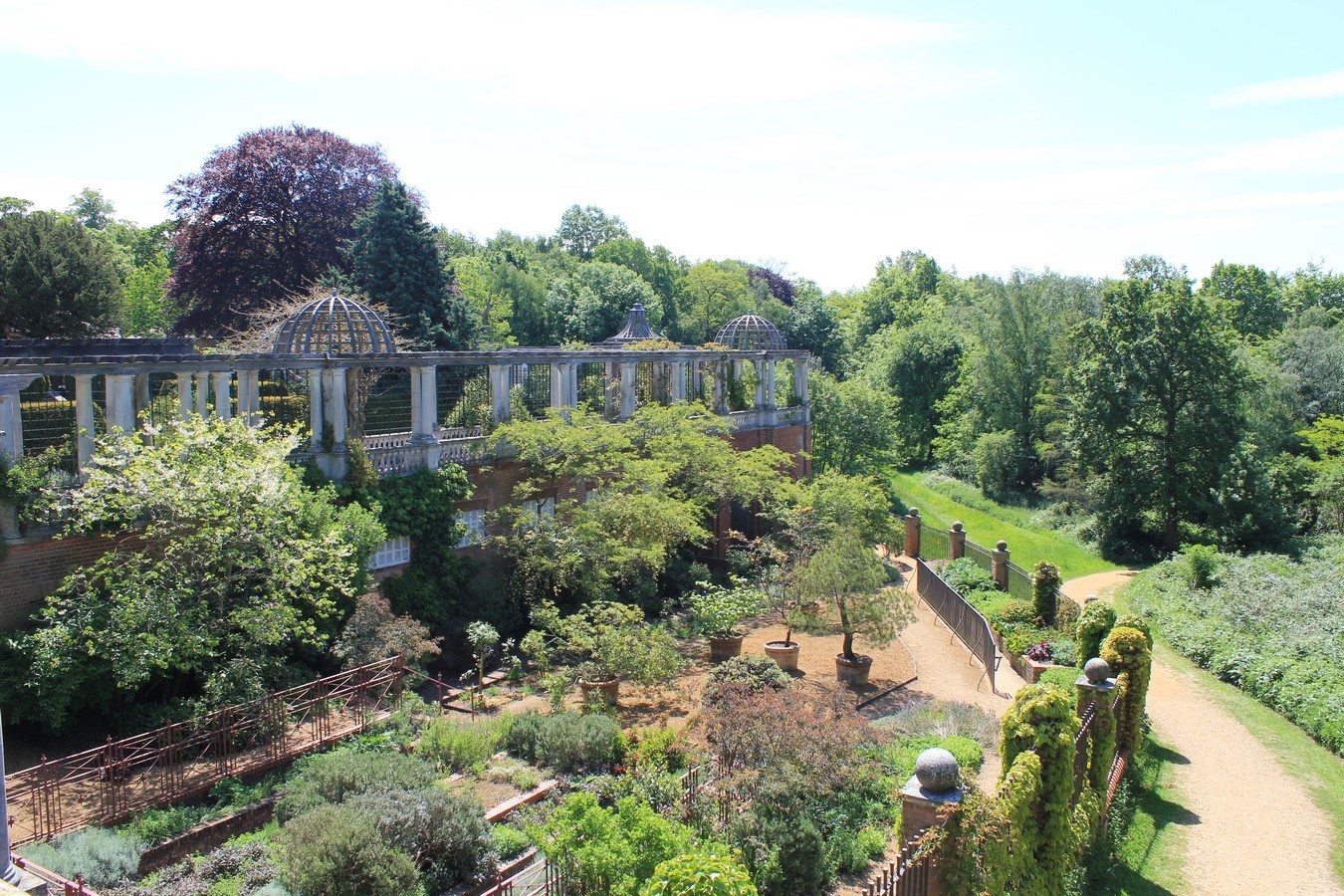
Returning to its origins, the Hill Garden and Pergola weren’t meant for public enjoyment, despite its proximity to dense, often impoverished urban areas. Although Leverhulme is widely known for commissioning philanthropic landscapes such as Port Sunlight and the public grounds at Rivington, his Hampstead estate served a very different purpose. As a Liberal Member of Parliament, Leverhulme needed a London centrum for the entertainment of political, business, and artistic circles, and the elevated position of the Pergola not only provided stunning views of the wooded Heath, but also seclusion from less fortunate neighbourhoods. The landscape was designed by Mawson in such a way as to ensure uninterrupted vistas for the guests while camouflaging the estate from nearby trails.
Phases of Construction
The construction of the Pergola was carried out in three distinct phases between 1905 and1920. During phase one (1905-1906), ‘The Hill’ is surrounded from the south to the north by evenly spaced timbers with an upwards trajectory in certain sections to form domed latticed ceilings. This long walkway is supported by Doric stone columns bounded by trellised walls on the north, while on the southern side, balustrades accompany the path, overlooking the landscape gardens. The second phase (1911-1914) was initiated after the purchase of Heath Lodge, which was demolished to make way for the Pergola’s extension – a stairway leading to a small domed temple on a bridge. This section emerged to be fairly limited due to its location underneath a public path.
Finally, in the third phase (1917-1920), development of the Hill Garden and Pergola continued west from the bridge for a further 100 metres. A double Doric colonnade sculpted from Portland stone runs level with the surrounding ground until views open to the gardens on the right, descended via steps at the end of the Pergola. Climbing plants richly guard the columns and original fading timbers, giving this newest section a unique, ancient atmosphere. The walkway wraps up its journey at a brick and limestone wall, behind which lie a summerhouse and a belvedere with a scenic view of Harrow-on-the-Hill, over 6 miles away.
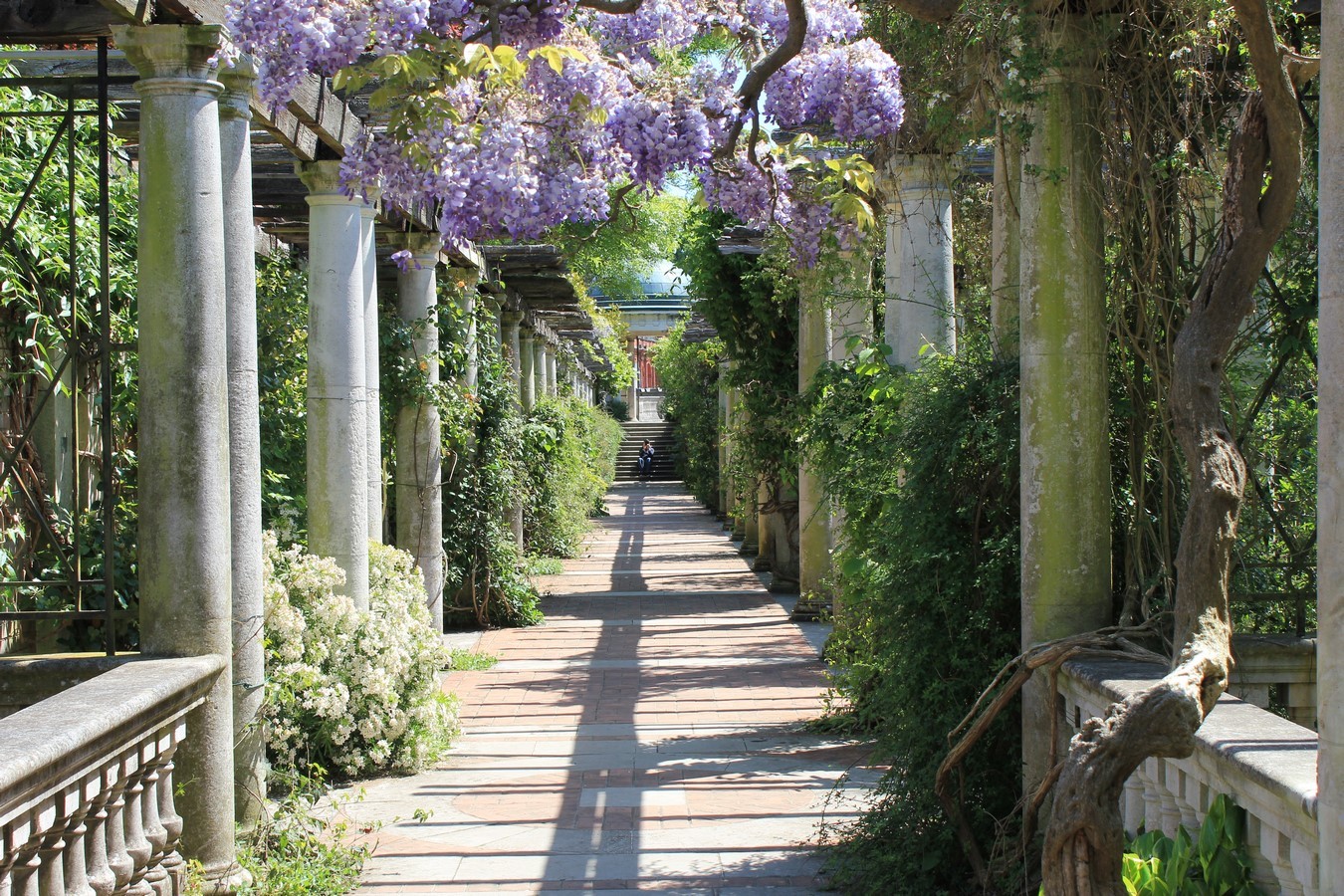
Since its reopening as a wholly public structure in 1995, the Hill Garden and Pergola is admired by hundreds of thousands of visitors every year. Compared to the time of Leverhulme, the garden is now a local and tourist hotspot, but it still serves its original purpose as a walking architectural space. The Pergola encourages slow, contemplative movement, drawing visitors to pause, observe, and enjoy the interplay of structure, nature, and scenic views. Within a historic landscape, pedestrians are guided through walkways that foster quiet social interaction and sensory engagement.
Walking Architecture and Heritage
First introduced in ancient Egyptian gardens, pergolas were adopted by Greeks and Romans for relaxation and entertainment purposes, while during the Renaissance in Europe, they served as orderly subdivisions and enclosed spaces. Their reintroduction in Britain coincided with the early-20th-century Arts and Crafts movement, ideals that were aligned with the Edwardian taste for crafted garden structures, a popular feature among wealthy aristocrats like Leverhulme. In this context, the Hill Garden and Pergola were shaped not only by architectural trends of the time, but also by the Edwardian practice of promenade or leisurely walking.
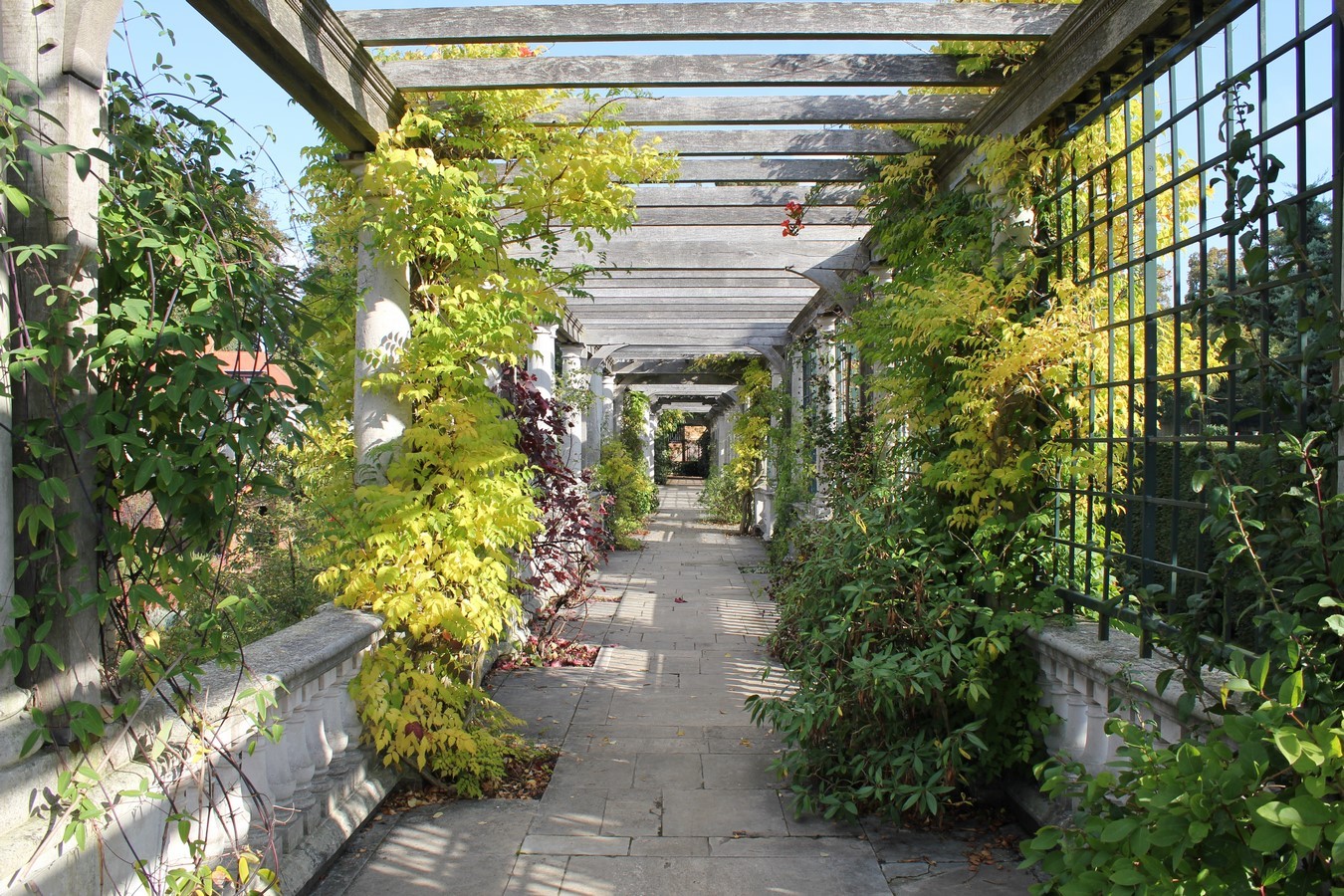
For Leverhulme and members of the upper classes, walking was a practice to enhance focus on political, business and social endeavours while easing tension and restoring physical and mental harmony. To achieve such enlightenment, the promenade needed an appropriate set design, a garden that embodies the Edwardian ideal of a self-contained world of escapism and gentle spectacle. The cultural imaginaries of the time dreamed of timeless exotic realms as settings for elegant gowns, cheerful conversation, and choreographed social encounters – far away from the realities of the First World War and imperial decline.
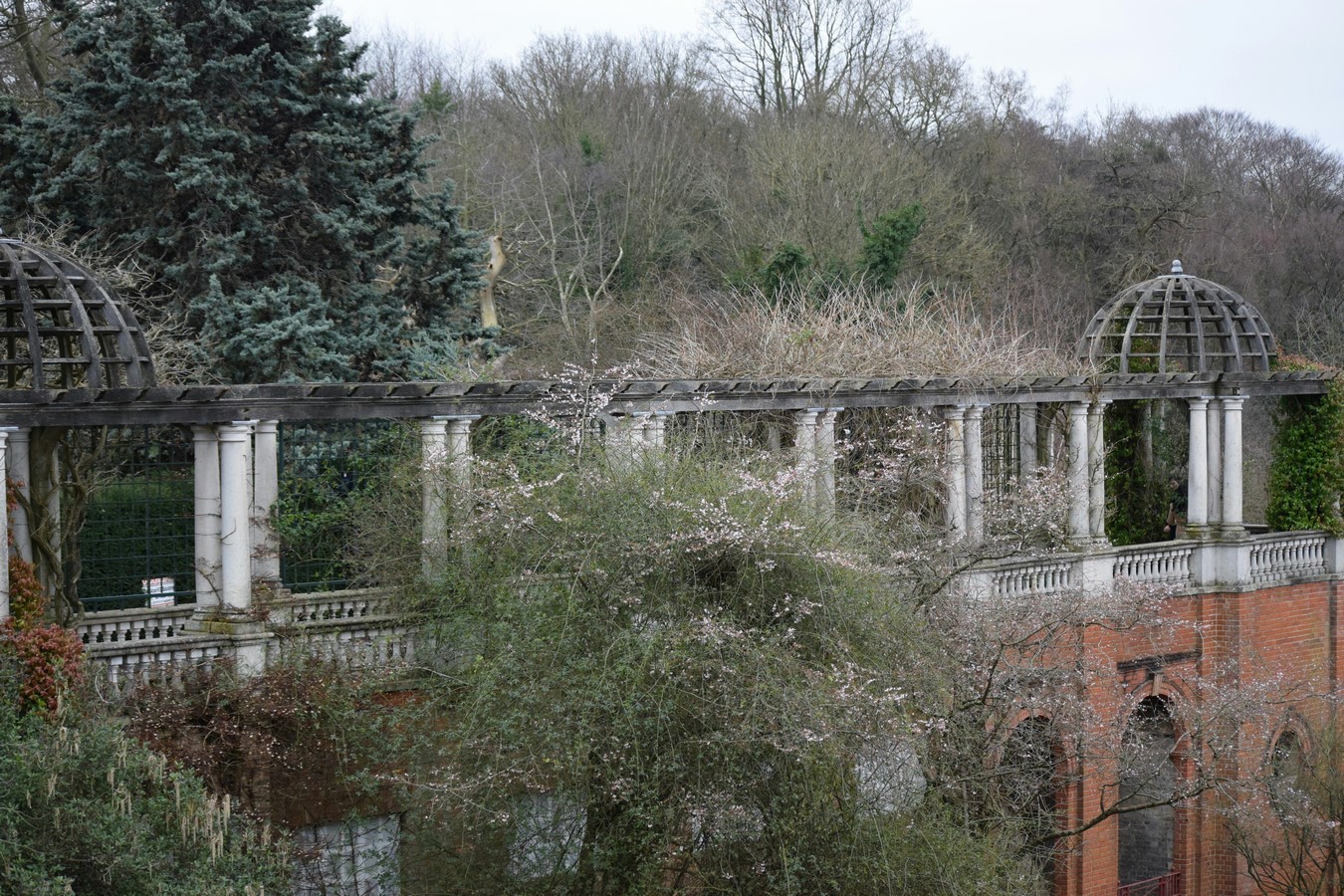
To this day, the Hill Garden and Pergola fits this idealised vision, encouraging visitors to stroll slowly, admiring the stunning view of Hampstead and beyond, as if partaking in one of Leverhulme’s garden parties. While the Heath is filled with runners, there is no such active movement in the Pergola; visitors are there to absorb the atmosphere of its rose paradise, Mediterranean garden and lily pond, and in contemporary fashion, take pictures along the way. Adding to its whimsicality, the changing seasonal landscapes from lush spring flowers to autumnal golds and, eventually, the bare silhouettes of winter, invite visitors to reexperience the garden’s natural wonders along with the passage of time.
Heritage Preservation
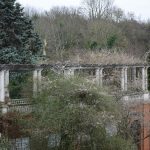
The Hill Garden and Pergola are no short of visitors and admirers, but even this cherished public space can’t avoid decline forever. In its over 100 years of history, the structure changed owners and functions several times, with eventual neglect and lack of resources leading to collapsed sections and decaying materials by the 1980s. Thankfully, once the City of London Corporation took over, they replaced the Pergola’s superstructure, rebuilt sections of the boundary walls and embankments, repaired damaged brick and stonework, renewed the balustrades, and improved drainage, all while remaining faithful to Mawson’s original design.
While its recent addition to Historic England’s Heritage at Risk Register acknowledges the immense care required to maintain a structure built with Edwardian materials, there is room for optimism. The new heritage status brings the promise of specialist guidance and the possibility of external funding to conserve one of the few surviving pergolas of its scale in the UK. As a rare example of Edwardian garden architecture that still fulfils its original purpose as a place for slow, reflective walking, this treasured landmark may continue to serve the public for many more years to come.
References:
City of London Corporation. (2024) Hill Garden Pergola Report – Maintenance Works and Future Proposals. City of London. Available at: https://democracy.cityoflondon.gov.uk/documents/s48037/Hill%20Garden%20Pergola%20FINAL.pdf
City of London Corporation. (2025) ‘Hampstead Heath: Hill Garden Pergola added to Heritage at Risk Register’, City of London News, 6 November. Available at: https://news.cityoflondon.gov.uk/hampstead-heath-hill-garden-pergola-added-to-heritage-at-risk-register
City of London Corporation. (n.d.) Hill Garden Pergola. Coles Conservation Architects. Available at: https://www.colesconservationarchitects.co.uk/projects/hill-garden-pergola
Edensor, T. (2023) Learning from Hampstead’s Pergola: walking and image-making at a spectacular Edwardian structure. Landscape Research, 48(1), pp. 120–133. doi: 10.1080/01426397.2022.2141700
The Garden History Blog. (2020) ‘The Pergola, Hampstead’, The Garden History Blog, 6 June. Available at: https://thegardenhistory.blog/2020/06/06/the-pergola-hampstead/
VisitGardens. (n.d.) ‘The Hill Garden and Pergola’, VisitGardens. Available at: https://www.visitgardens.co.uk/gardens/the-hill-garden-and-pergola/