The Kanadukathan Chettinad Palace, constructed by Rajah Sir Annamalai Chettiar in 1912, subverts the very meaning of what constitutes a palace. Unlike Rajasthan‘s forts or the durbars of Mysore, it was not constructed by kings or emperors. Rather, it was the work of a trading community, the Nattukottai Chettiars, who translated world capital into cultural hegemony. This palace is not just an artifact of the past; it is a repository of ambition, a theater of identity, and now, a changing landmark of the heritage economy of South India.
Socal and Political Importance: Architecture as Self-Assertion
The sole reason for constructing the palace was not just to accommodate a family but to announce the arrival of a community on the political forefront. In the early 20th century of colonial India when traditional kingship was fading and colonial administration was becoming more powerful, the Chettiars were influenced by finance, philanthropy, and political representation. Rajah Sir Annamalai Chettiar, patron of the palace, was the first Tamil member of the Imperial Legislative Council and went on to establish Annamalai University. The palace was an expression of this dual identity: grounded in the village but finding resonance at national and imperial levels. It was a statement that prosperity acquired through banking and trade could be on par with dynastic legitimacy. Nowadays, the palace has another form of social significance: it ties together memory and pride for both the Chettiar diaspora and locals. Its ongoing utility proves that heritage is not static; it evolves from being used as a political icon to becoming a cultural anchor for education, tourism, and identity.
Urban Fabric: The Palace as a Social Magnet
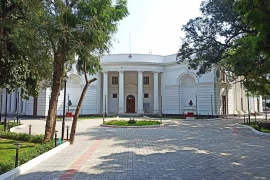
Contrary to most Indian palaces that hover away from the mundane city, segregated in forts or situated upon hills, the Chettinad Palace is integrated into the domestic grain of Kanadukathan. The grandeur of the Chettinad palace dictates the rhythm of the neighboring mansions, several of which take simplified forms of its arches, verandahs, and plaster decoration. The palace served as a social magnet wherein ceremonies, processions and various gatherings took place, encapsulating it into the fabric of everyday village life.
With the growing importance and cultural significance of the Chettinad palace, streets became ceremonial axes, doorways became thresholds of status and the urban fabric itself was a reflection of the palace’s order. In today’s times, the gravitational power of the palace has transformed. It now attracts large numbers of heritage tourists and foreign nationals. The indigenous economy, like restaurants, homestays and antique stores, are seen to flourish around its orbits, and the palace serves as an active agent in reshaping the urban fabric even a hundred years later.
Architectural Style: A Cosmopolitan Vernacular
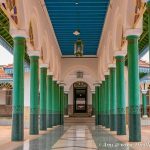
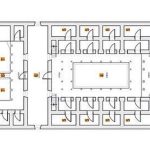
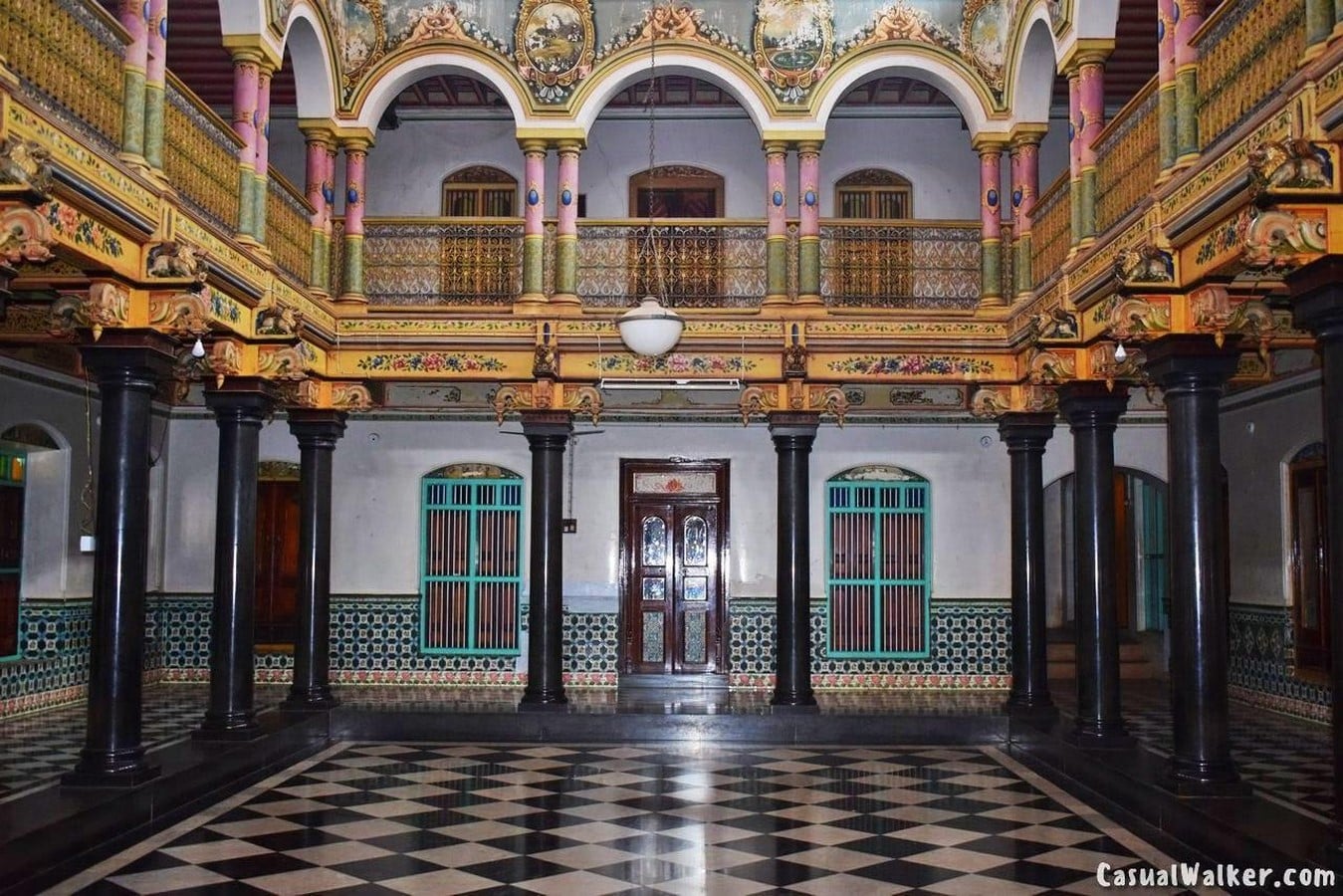
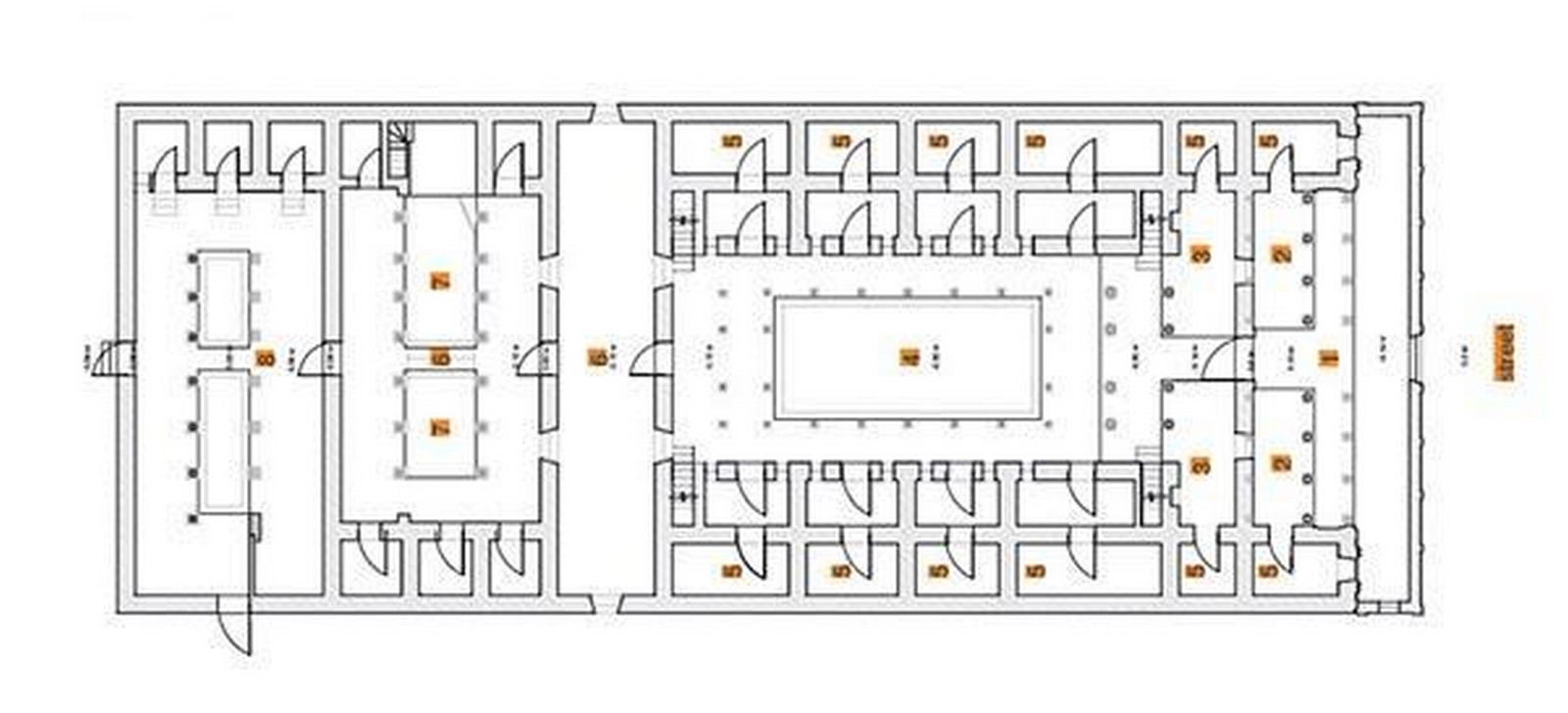
The Chettinad Palace is a paradox: at once profoundly Tamil and strikingly global. Its spatial organisation is according to Dravidian logic, central courtyards (mutram), axial planning based on vastu, and verandahs planned for climate and hospitality. But its materials are cosmopolitan, which include polished Italian marble floors to brilliance, Belgian stained glass filtering tropical light into jewel colors, East Asian tiles layering exotic motifs, Burmese teak carved into monumental doors.
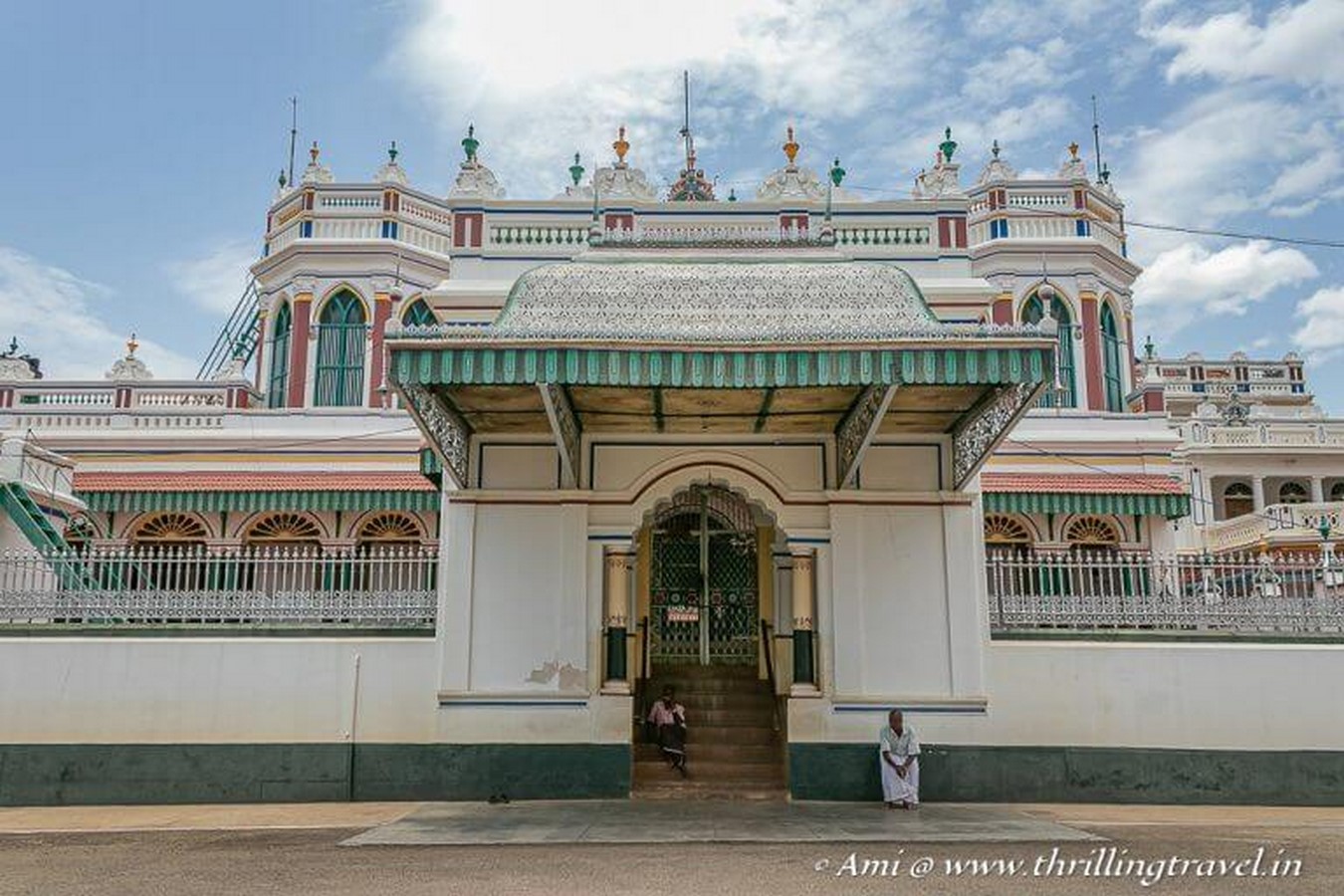
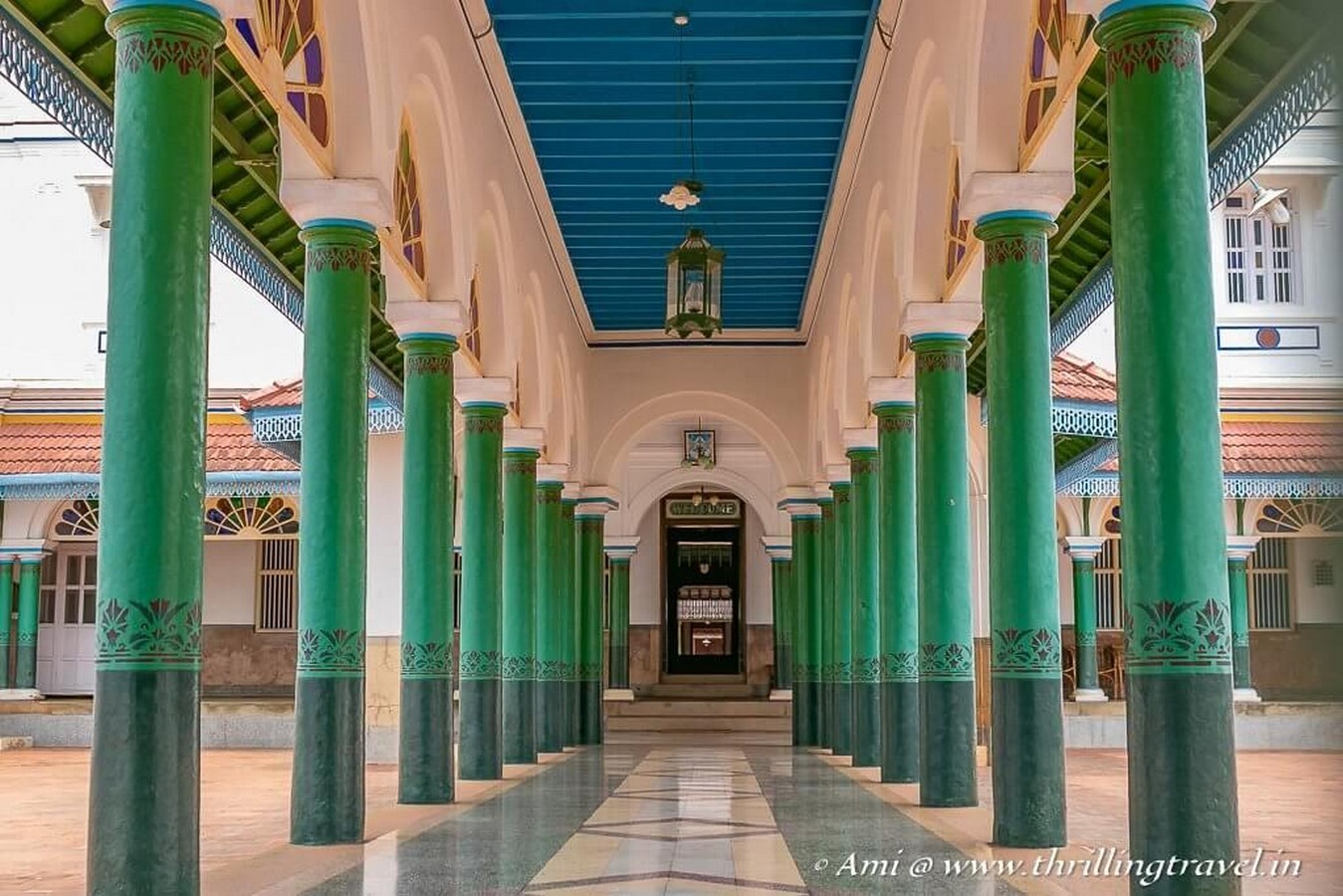
One can’t claim that the Kanandukathan Maharaja’s Palace is colored. Nor can claims be made that it’s white. The most appropriate way to state the exterior facade is that the colors complement the white. It is actually very endearing to behold those small blues, reds, greens and even yellows just complementing the white walls. The blending gives a modern flavor to the Chettinad palace, but simultaneously does not conceal its magnificence. The large white umbrella above the enormous gate provides that royal touch to the Chettinad bungalow. The small motifs on the top give it the look of jhaali work. The green eaves give it the appearance of the leafy toran found on the doors of India. (The leaves are usually bound with lemon and chili to keep away evil). There were some glimpses of old paintings underneath the dome. Thinnai, or the verandah of any Chettinad house, is one of the prettiest places. This space was also used as an office space by the Chettiar businessmen. The one at Kanadukathan Palace was very regal in both size and decor. A chandelier descended the center aisle while the colored lights reflecting through the Belgian glass windows illuminated the raised platforms on both sides, adding to the eternal beauty of the palace.
Historical Importance: Rethinking the “Royal”
The historical significance of the Chettinad palace lies not just in its beauty but in how it redefines the ideal definition of a typical palace. In ancient India, palaces were generally equated to royalty, but the Chettinad Palace disrupts this narrative; it is a palace without kingship. This renders the Chettinad Palace historically subversive. It shows us that palace architecture can be a vital instrument of identity formation and social mobility. It serves as a constant reminder that heritage isn’t just about dynasties and empires; it is formed by local communities who shape history through finance and cultural patronage.
A Living Paradox
The Chettinad Palace is not just an architectural marvel or a landmark, but a paradox built in stone and marble. The uniqueness of this structure lies in the way it turns architecture into a narrative of ambition, trade, power, and cultural identity. For the Chettiars and inhabitants elsewhere, it is a living memory, a bridge between the past and the present. The endurance of the Chettinad Palace teaches us that heritage cannot be termed static, but rather dynamic. It transforms an urban space or even a locality, rendering cultural imagination and social identity generation after generation
Citations:
- Thrilling Travel. (2020) Inside Kanadukathan Palace – the Maharaja’s Palace in Chettinad. Available at: thrillingtravel.in/kanadukathan-palace-chettinad-karaikudi.html. (Accessed: 28 September 2025).
- Natarajan, S. (2015) Chettinad Architecture. Academia. Available at: https://www.academia.edu/15011828/chettinad_architecture (Accessed: 28 September 2025).
- Scribd. (2018) VA of Chettinad Palace. Available at: https://www.scribd.com/document/394376841/VA-of-Chettinad-Palace (Accessed: 28 September 2025).