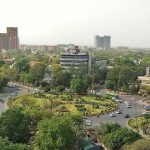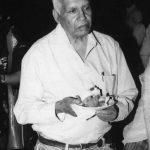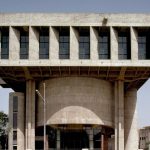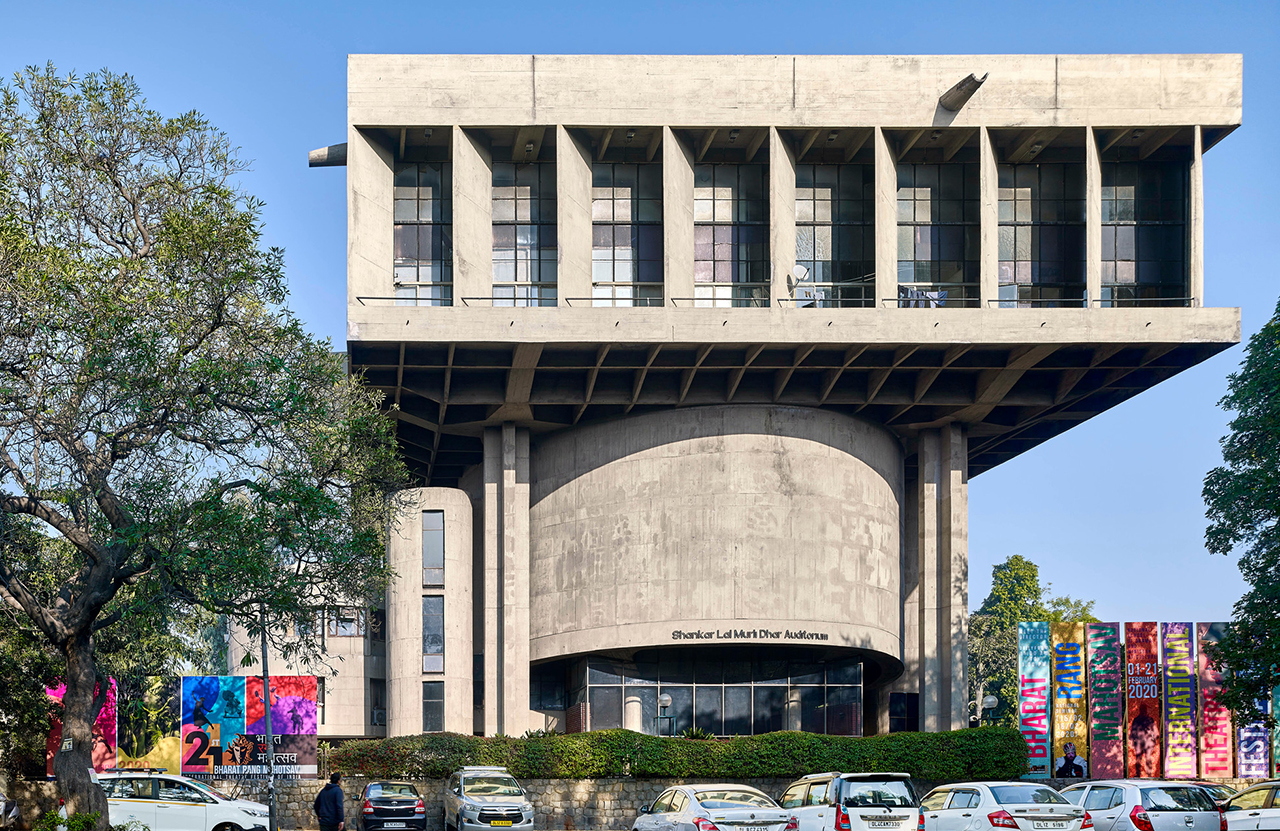
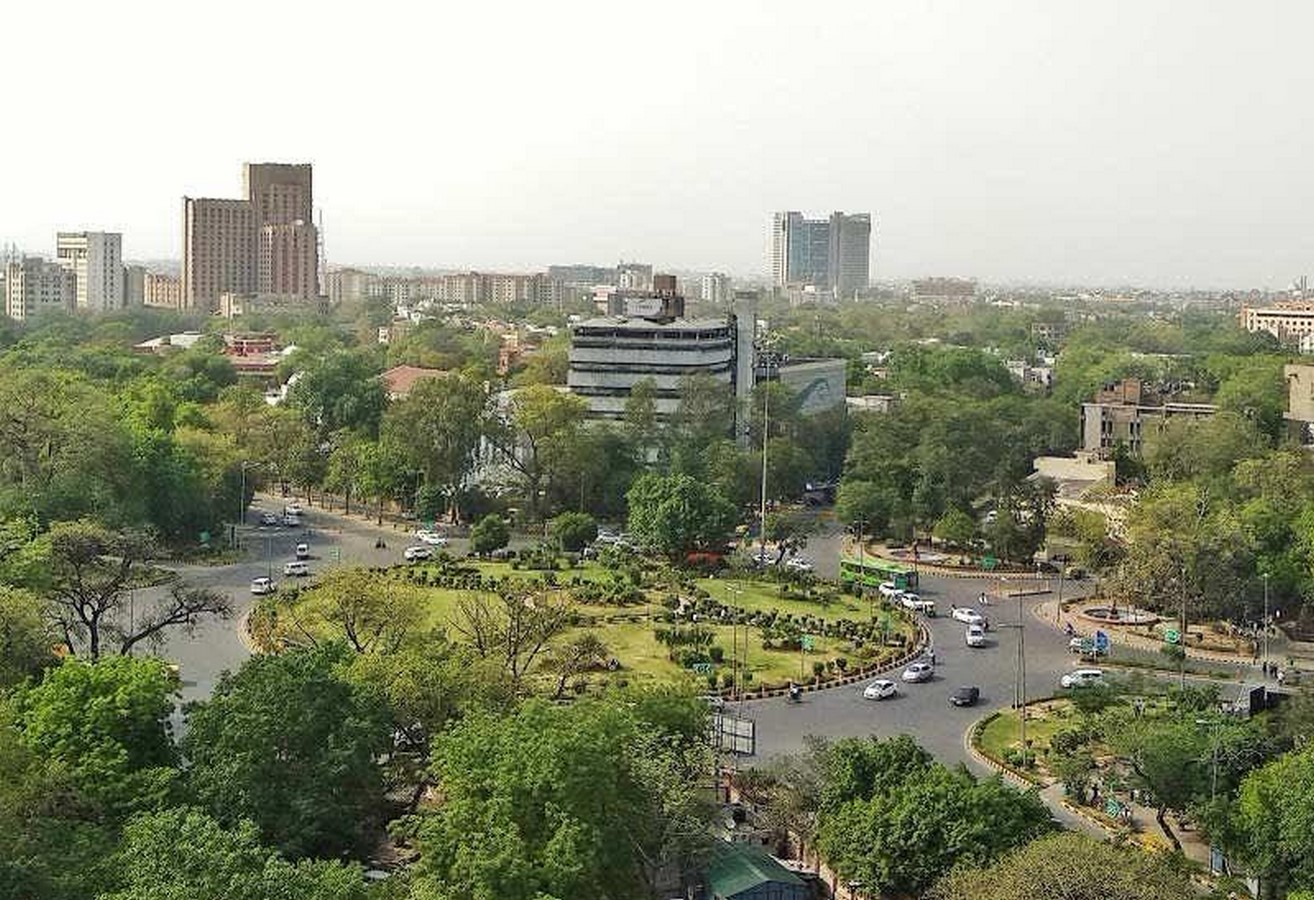
Shiv Nath Prasad designed the Shri Ram Centre for Performing Arts in the early 1960s. It is located at Safdar Hasmi Marg, and is considered one of Delhi’s theatre landmarks. It functions as an institution for theatre and performing arts in Delhi and is run by the Indian National Theatre Trust. It is built on a 0.25-hectare plot in the cultural hub of Delhi- Mandi House, which acts as a strategic location for such space. Mandi House is home to many prominent cultural institutions, including Triveni Kala Sangam and the National School of Drama, making it a popular destination among students and artists.
Shiv Nath Prasa
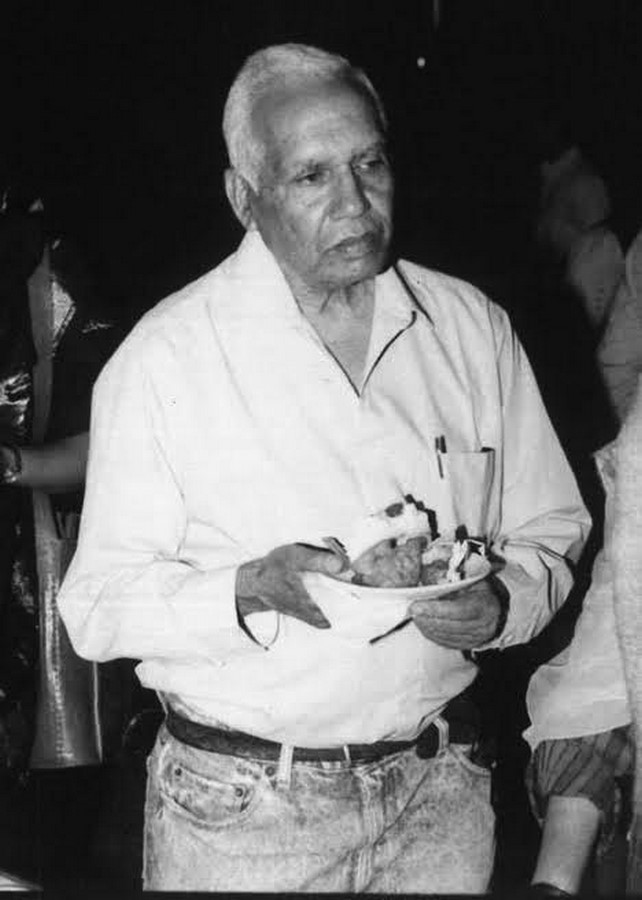
Shiv Nath Prasad’s buildings spoke of his admiration for Le Corbusier. His use of exposed concrete and bold geometry played a key role in shaping Delhi’s architecture post-independence. Although he never met Le Corbusier, his work shows their connection, which Charles Correa referred to as the relationship between Dronacharya and Eklavya. He understood Le Corbusier’s principles and architectural language and translated them according to the Indian context in his own unique way.
Design Philosophy
Among his many similarities to Le Corbusier was his belief that function meets form. The building’s bold geometrical form is thus derived from its function. This building is a striking example that architecture does not necessarily need decoration to be remembered. Sometimes, clean lines, the raw texture of materials, and structural elements are enough to tell the essence of the design.
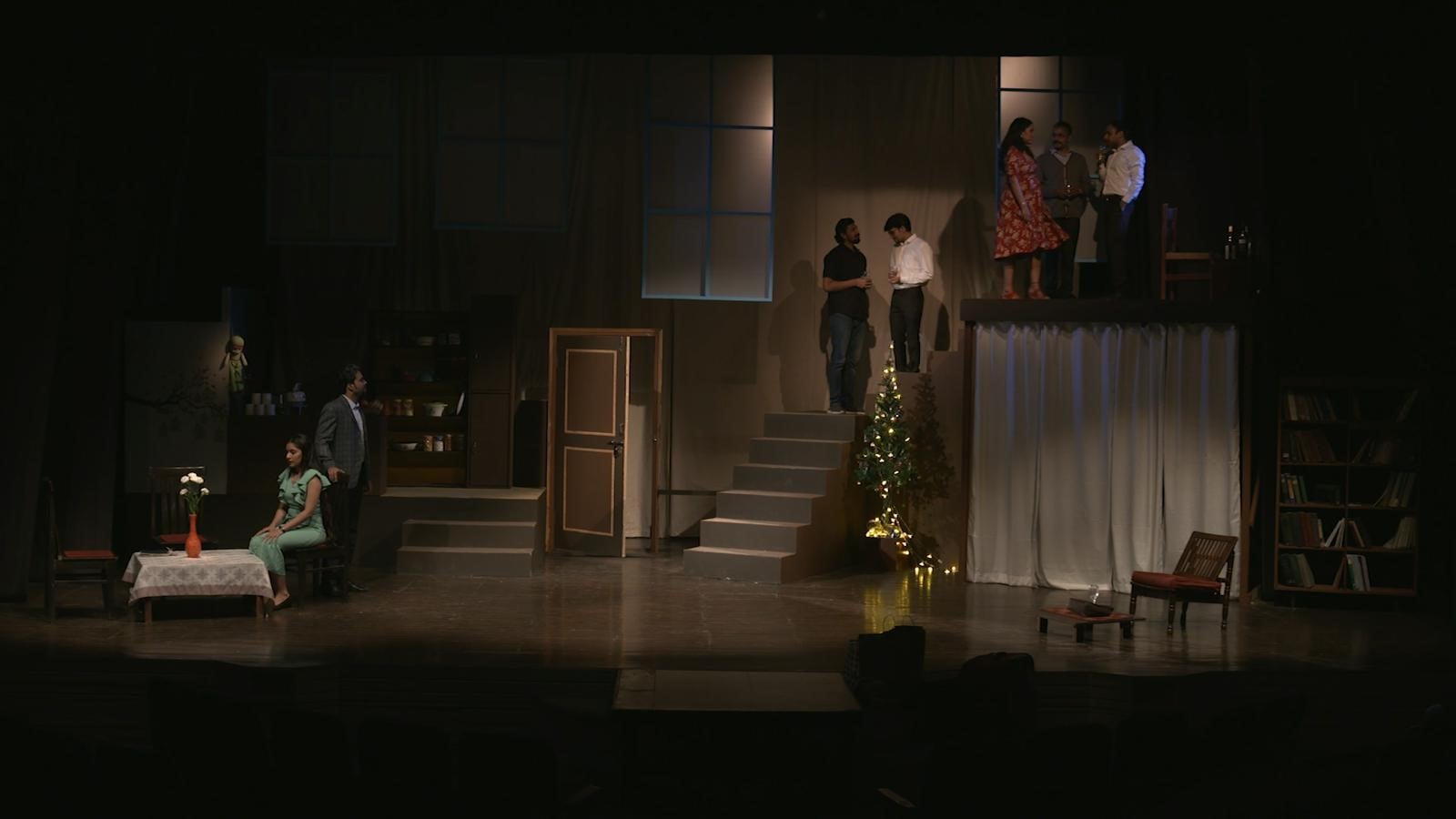
This building is not just a place for performances but an effort to nurture theatre as a profession; it hosts Hindi theatre and provides a space for Indian cinema to flourish. The building is used to host contemporary and classical plays, offers space for acting and direction courses and workshops, hosts theatre festivals, and many other events.
Design and Planning
The building is in the form of a cylinder with a cuboid on top. The cuboid rests on four cross-shaped columns and has a 6-meter cantilever. The ground and first floors are in the cylindrical part, with the first floor being the auditorium. The auditorium, which is called Shankar Lal Murli Dhar Auditorium, is designed for 375 people, arranged with sloped and balcony seating to provide a clear view of the stage from every seat. The ground floor has an open plan with smooth transitions between concrete floors and green spaces. It also houses a canteen and some offices, while the top floor functions as classrooms, rehearsal spaces, administration, and service areas.
The circulation of the building answers to the requirements of the space needed to perform plays. The ground floor acts as a spill-out area, providing semi-open and open spaces for gathering from where the audience moves to the auditorium on the first floor. There are spaces like green rooms, lighting and sound rooms, and prop storage areas connected to the backstage to avoid the performers having to pass through the crowd. The spatial hierarchy of the building is apparent through its vertical zoning, where the ground floor accommodates public spaces leading to the auditorium, as well as private zones in the form of backstage and service areas, whereas the second floor is for semi-public areas.
The planning of the building is such that it can be used for multiple types of performing arts and for workshops and training programmes as well. The auditorium itself can accommodate plays, dance programmes, puppet shows, and cultural events. The ground floor also acts as an exhibition space whenever required. The spaces in this building are equipped to handle events of different scales and genres.
Material and Structure
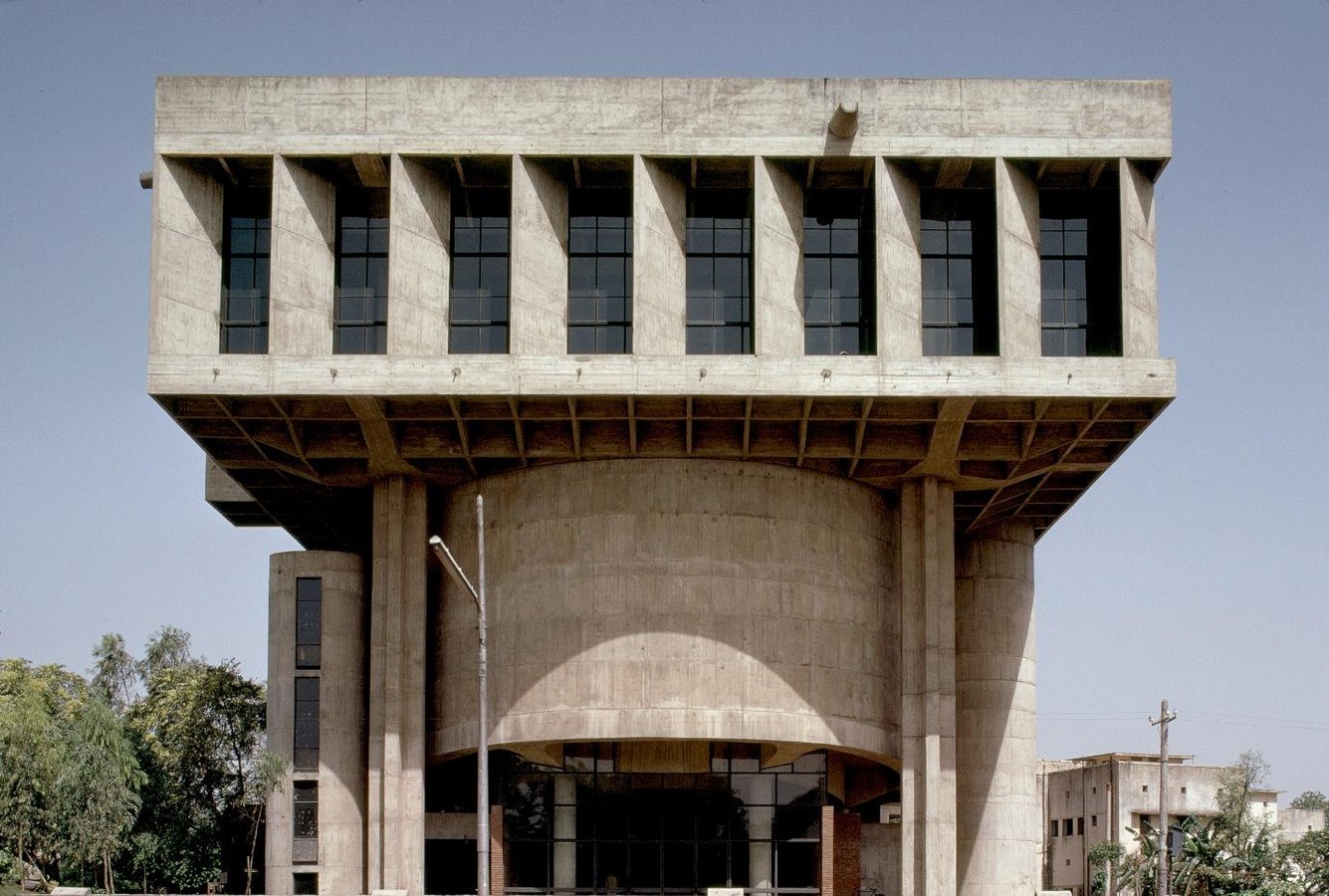
This building serves as an iconic example of Brutalist architecture. The entire building is made of reinforced concrete without any plaster or cladding. It retains the texture left behind from its framework. This all adds up to the huge volume of the building to make it seem monumental. As acoustic treatment is a crucial aspect for auditoriums, the finishing of the interior walls is done with sound-absorbing panels with glass wool in between.
The structure of this building is very bold and innovative for its time. The strategic use of cross-shaped columns so that they can distribute heavy loads more efficiently while adding an aesthetic element to the structure is brilliant. The base of the building, which is cylindrical in shape, seems to ground and stabilize the building, while the cantilever floor makes a statement to make the building leave a lasting impression. The building celebrates not only the material but also the structure, exposing them and making them the identity of the structure.
Climate Response
Though the building is practically a huge block of concrete, it does respond to the climate of Delhi in its own ways. The building has recessed windows, which provide shade and reduce the solar heat gain. The cantilever block further provides the lower levels with shade. The building has minimal glazing, and the concrete, having high thermal mass, absorbs heat during the day and releases it slowly during the night.
The Brutalist icon
In an era when glass skyscrapers often characterize spectacular architecture, this building, made of concrete, demands attention. Shri Ram Centre of Performing Arts not only strives to remind us of its raw and honest architectural style but also provides a space for culture and art to thrive amidst a busy city. As a symbol of Brutalist architecture, it stands unapologetically and reminds us of architecture that is resilient and nurtures human experience.
Citations:
- #SOSBRUTALISM. (2017). Shri Ram Center for Art and Culture. [online] Available at: https://www.sosbrutalism.org/sixcms/detail.php?id=15889751 [Accessed 26 Sep. 2025].
- The Random Delhi. (2020). Shiv Nath Prasad and Delhi’s Brutalist Architecture. [online] Available at: https://therandomdelhi.wordpress.com/2020/05/11/shiv-nath-prasad-and-delhis-brutalist-architecture/.
- World Architecture Community. (n.d.). An Ode To Shivnath Prasad: The Le Corbusier Of India. [online] Available at: https://worldarchitecture.org/architecture-news/cmzgp/an_ode_to_shivnath_prasad_the_le_corbusier_of_india.html.
- Rajat Nainwal (2025). Case study of sri ram centre and triveni kala kendra. [online] Slideshare. Available at: https://www.slideshare.net/slideshow/case-study-of-sri-ram-centre-and-triveni-kala-kendra/87129418 [Accessed 26 Sep. 2025].