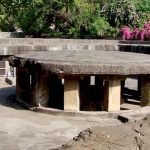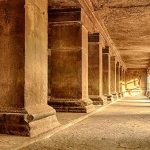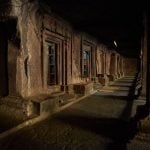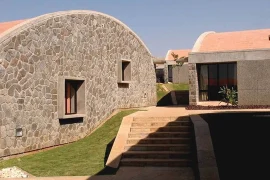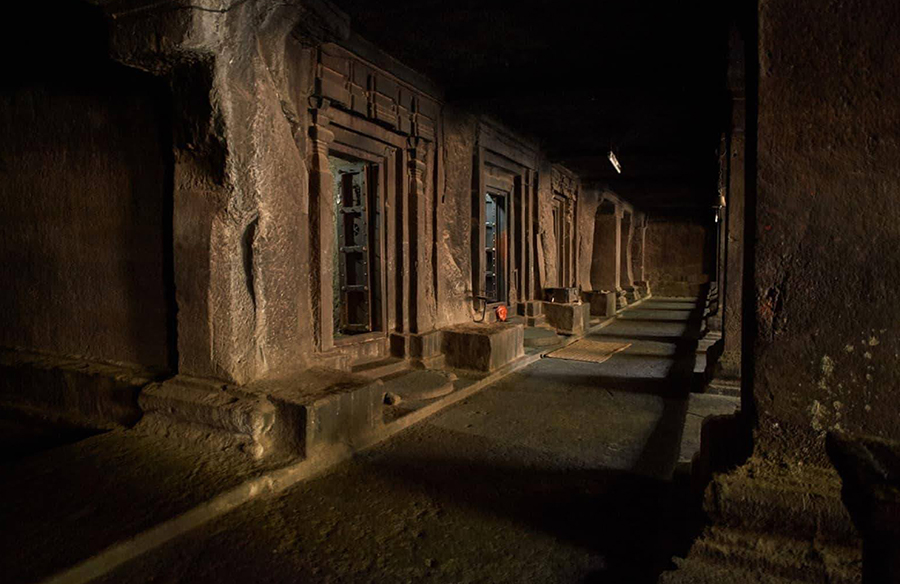
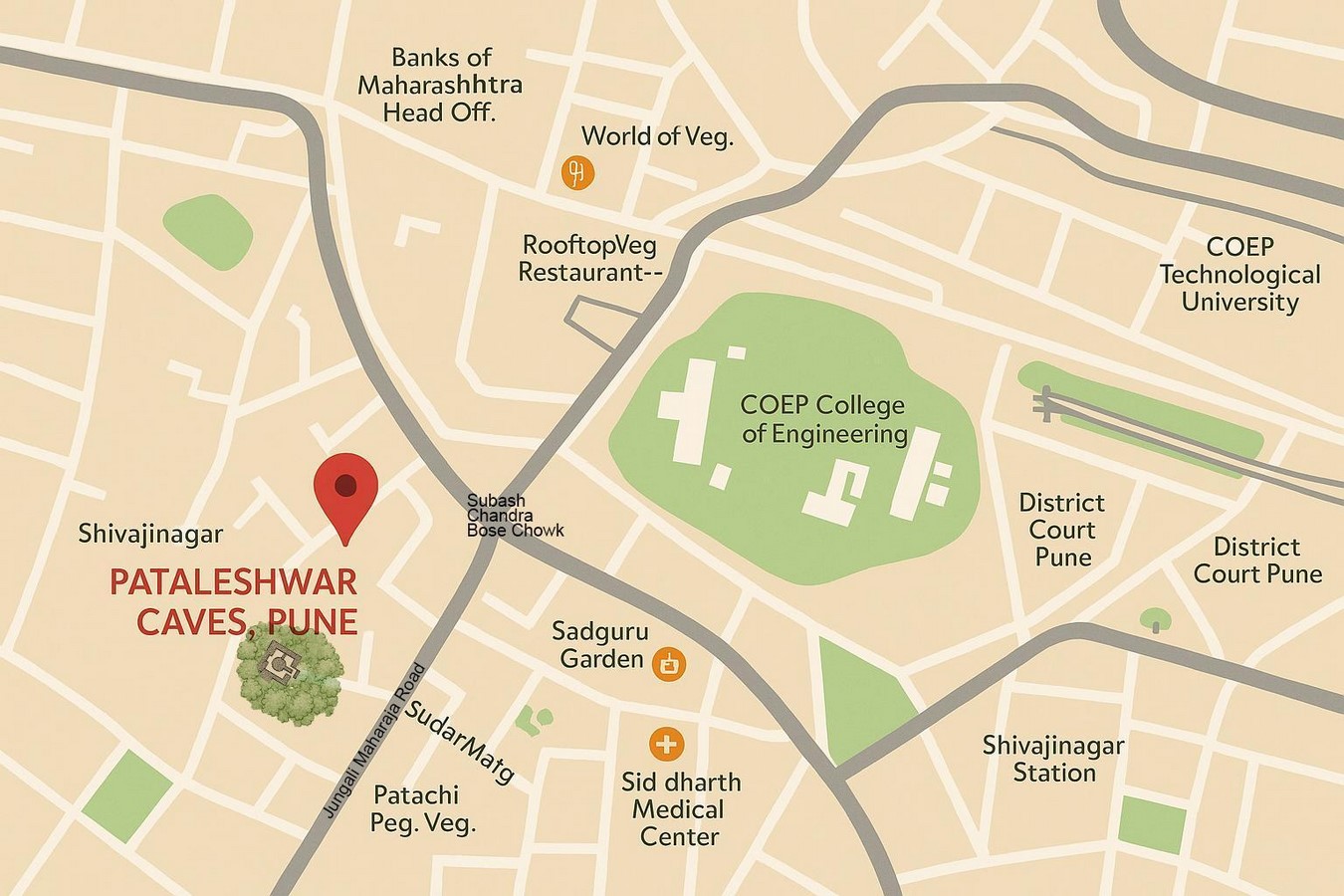
Hidden amidst the busy streets of Pune, Maharashtra lies an Archaeological gem unbeknownst to many. Located on one of the busiest roads in Pune, Jungali Maharaj Road, popularly known as JM Road lies the 8th Century Rock-Cut Temple dedicated to Lord Shiva, known as the Pataleshwar Cave Temple. This temple not only offers a glimpse of the rich heritage and tells tales of the city’s ancient roots, but provides its visitors solace and a sense of peace in the otherwise hustle & bustle of city life. While it is an incomplete structure whose reasons are unknown, it could be one of the oldest structures in Pune City. It is said to have been carved out from a single basalt rock, or monolithic construction. Throughout the years, the cave has been known by numerous names like “Panchaleshwar Cave” and “Bhamburde Caves of Pune”. This temple is protected and falls under the jurisdiction of the Archaeological Survey of India.
Medieval Period: Historical Context & Royal Heritage
The origins of the Pataleshwar Cave Temple can be traced back to the 8th-9th Century AD, i.e. Early Medieval Period in India. This period is particularly characterized by the emergence of regional powers following the decline of larger empires. Since the temple lies in the Deccan region, it can be associated and inferred that it was constructed under the Rashtrakuta Dynasty. From the 8th – 10th Century, three dynasties were highly prominent and contested for control of northern India: the Gurjara Pratiharas of Malwa, the Palas of Bengal, and the Rashtrakutas of the Deccan. As mentioned previously the period had an emergence of regional powers, which meant the political landscape was decentralized and kings had to rule with the aid of the powerful local lords. In this context, for social and political importance, rulers were often responsible for the building of religious structures to gain merit, and flaunt their power and influence.
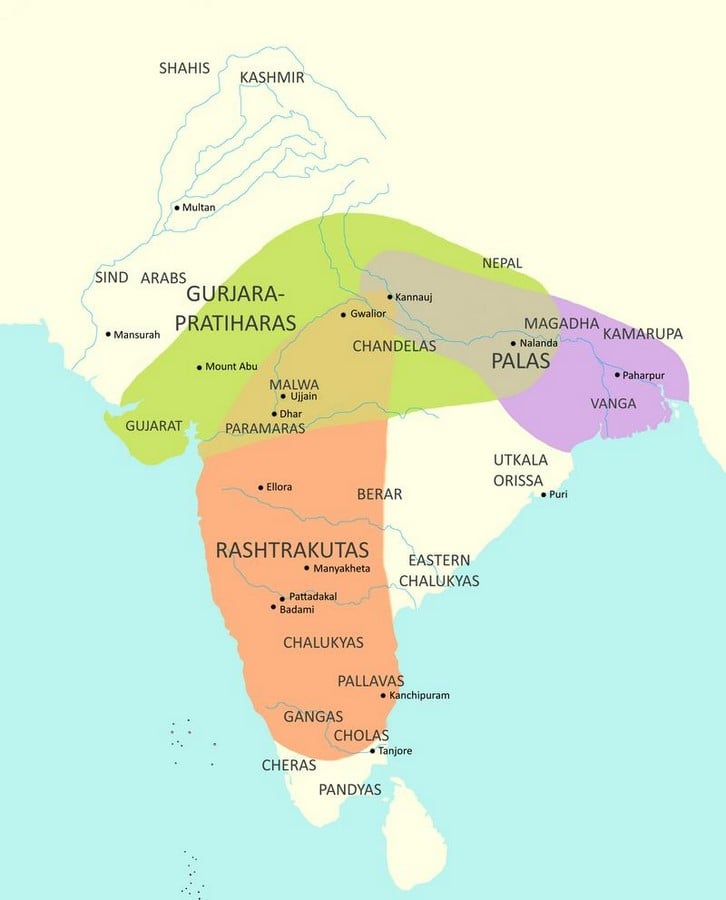
The Rashtrakutas significantly contributed and played a key role in shaping Deccan India’s religious and cultural landscape. The most prominent and famous work done by the Rashtrakutas are the Ellora and Elephanta caves. Therefore, the similarity of rock-cut architecture found in the Ellora & Elephanta Caves is visible in the Pataleshwar Cave Temple, which has been carved out of a single basalt rock. There is some local folklore pointing the temple’s creation towards the Pandavas of Mahabharat but no persuasive evidence whereas the historical evidence points towards the Rashtrakutas as the makers.
Inference
Due to the strong affinity towards religion in the people, constructing religious buildings used to have strong merit and proved to be a great way for rulers to flaunt their power and influence. This temple could have been built for the people as a local site of worship and spiritual retreat. Its name is believed to be drawn from the Sanskrit words ‘Patala’ (underworld) and ‘Ishwar’ (God), since the structure is underground and Patala in Hindu mythology is considered to be an underworld and since it’s a temple to pray to god, the later was merged, coining the name ‘Pataleshwar’.
It can be believed that the temple was initially located outside the main city for what could have been some religious and strategic reasons but due to the urban sprawl, it now nestles in the heart of Shivaji Nagar on JM Road in Pune.
Known History Interactions
There are scarcely a few ancient references in records related to the Pataleshwar Cave, through which its historical significance can be deciphered. A few of them accounted for are as follows:
- In 1810, Bajirao II offered a dakshina to all the temples in Pune including the donation of 1 rupee to “Bhuyaratil Mahadev”, which has to be Pataleshwar. The references recorded are in ‘Poona in Bygone Days’ by Rao Bahadur Parasnis.
- “James Wales, the artist under the patronage of Sir Charles Malet at the Peshwa court in the 1790s was fascinated by the rock-cut caves around Pune and has drawn a picture of “Pandoo’s cave”, aka Panchaleshwara.”
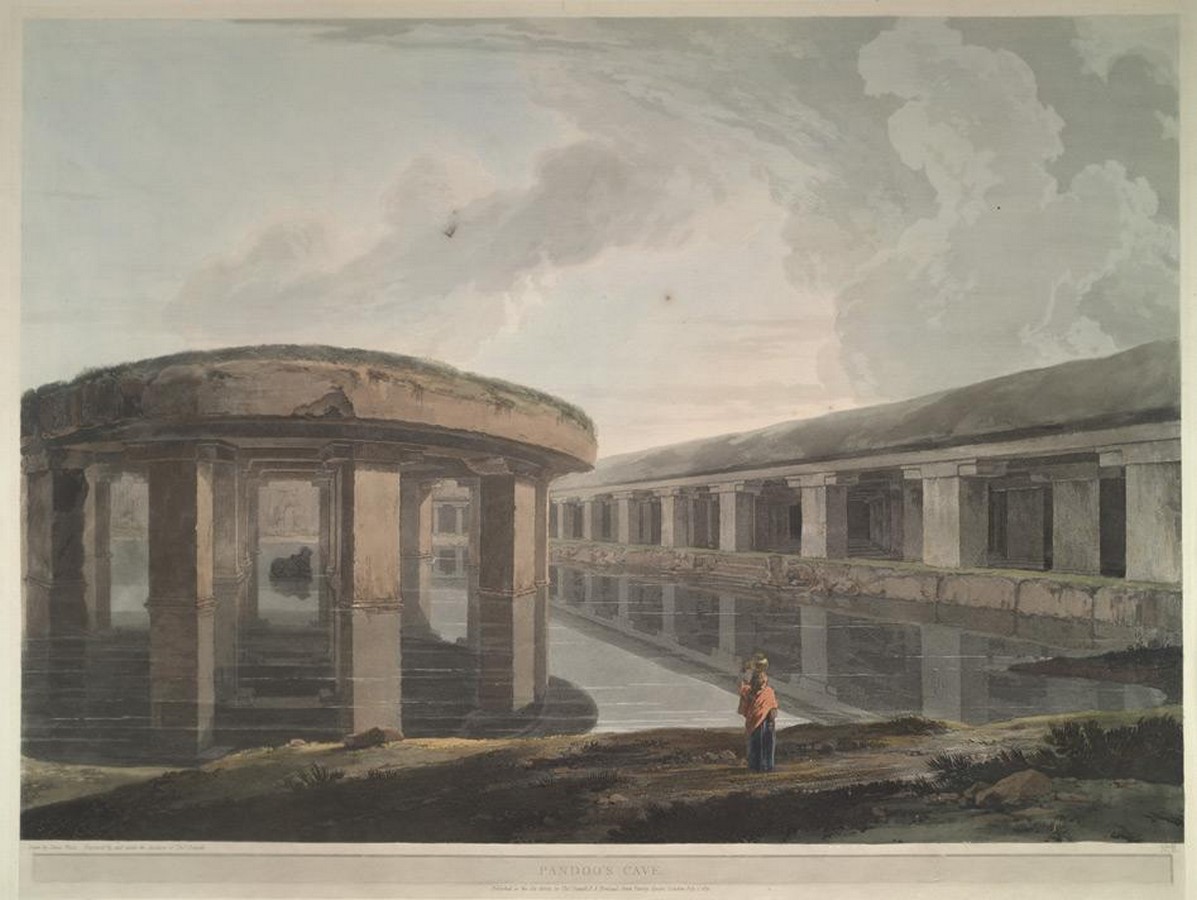
- It is further believed that the residence of Jangali Maharaj (1806-1890), a great spiritual guru gave the place a new identity. One can find the Jangli Maharaj Mandir next to the cave temple.
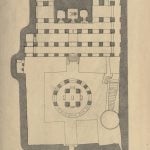
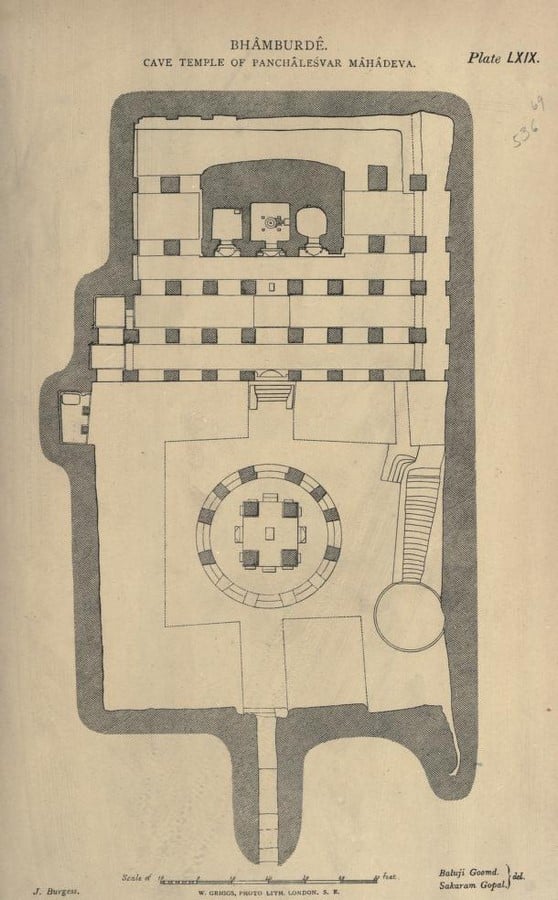
- In 1880, the Pataleshwar Cave temple was referenced in the book ‘The Cave Temples of India’ by James Burgess and James Fergusson. They provided a detailed ground plan which can be referred to below.
Architectural Design
The Pataleshwar Cave Temple draws inspiration from the rock-cut architectural style. The technique involved carving the structures directly out of an existing rock formation, showcasing intricate carvings and artistry. In comparison to Ellora caves, it has a minimalistic design, rich in symbolism and the typical spatial characteristics of a Temple. The monolithic construction is a true testament of the extraordinary craftsmanship found in the medieval times.
Concept
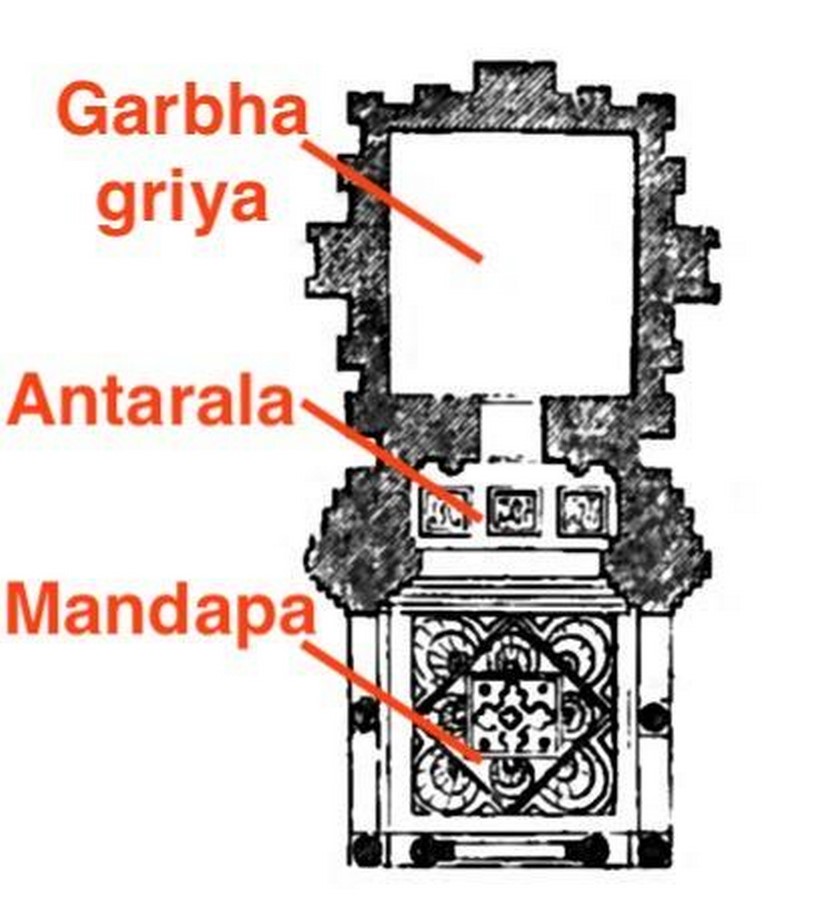
The temple draws similarities to the majority of other Hindu temple architecture. It is oriented towards the east and has the typical floor plan which follows the vastu-purusha-mandala. It is a composite Sanskrit word where ‘Mandala’ means circle, ‘Purusha’ is the essence or soul of Hindu Tradition, and ‘Vastu’ means the built structure.
Planning
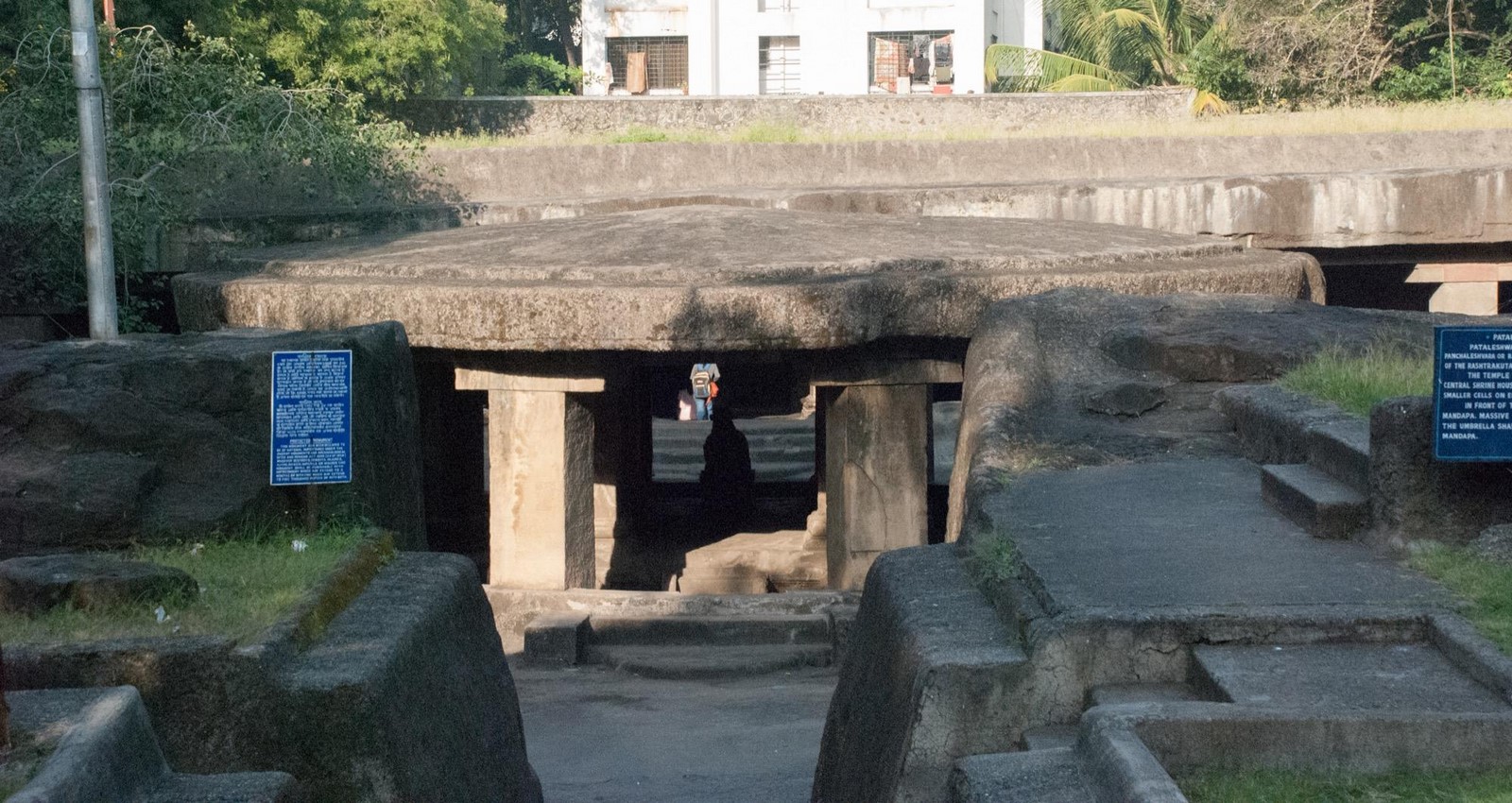
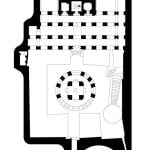
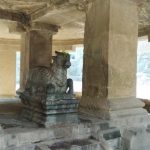
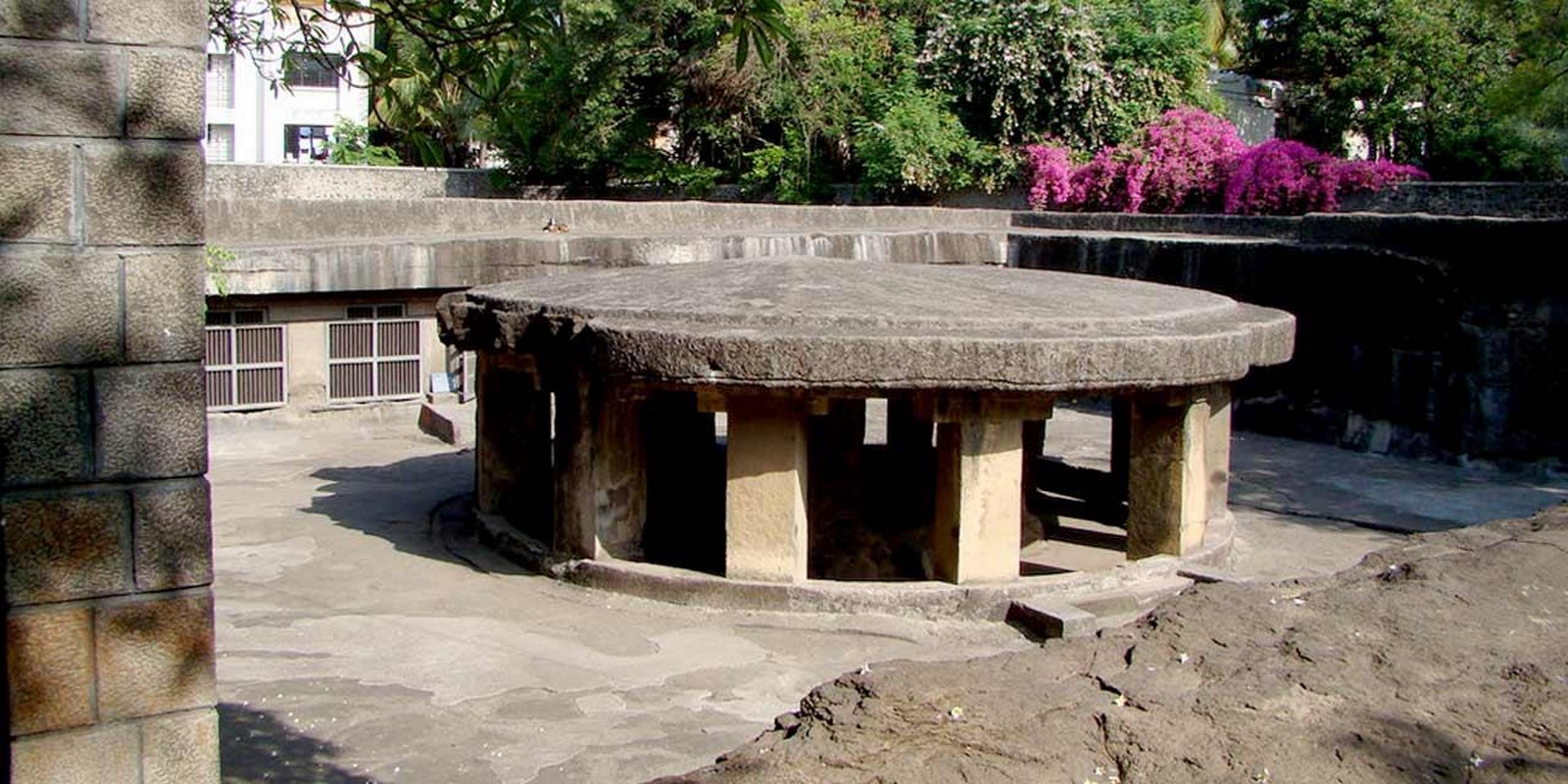
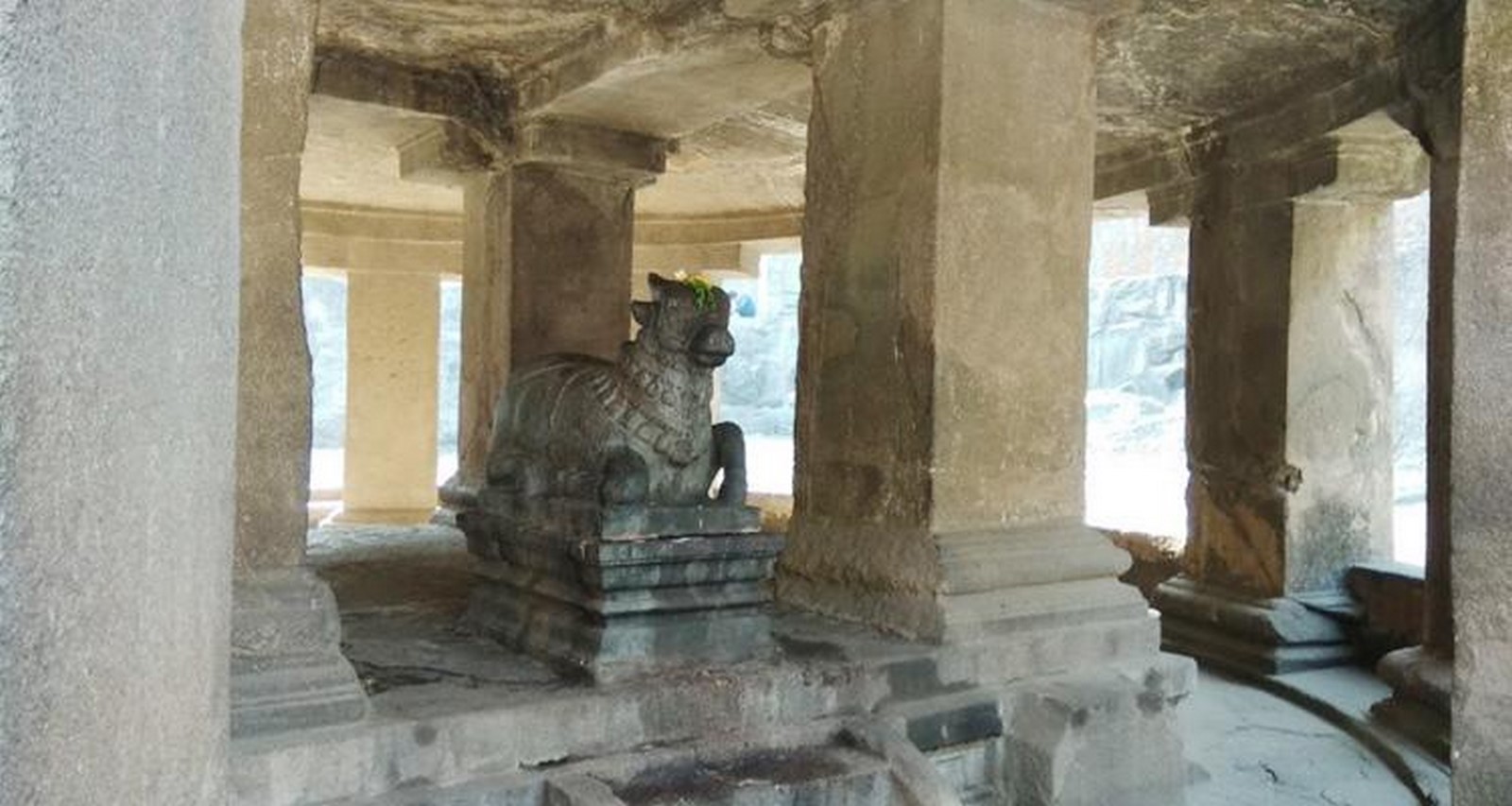
The entrance is through a garden with steps down leading to an open rectangular courtyard, enclosed by rock cut walls. At the center of this courtyard, the circular Nandi Mandapa stands out distinctively. It is supported by a total of sixteen pillars, twelve at the perimeter holding the rotunda roof and four positioned centrally, at the center sits a monolithic statue of Nandi, the sacred bull, positioned directly to face the sanctum (Garbhagriha).
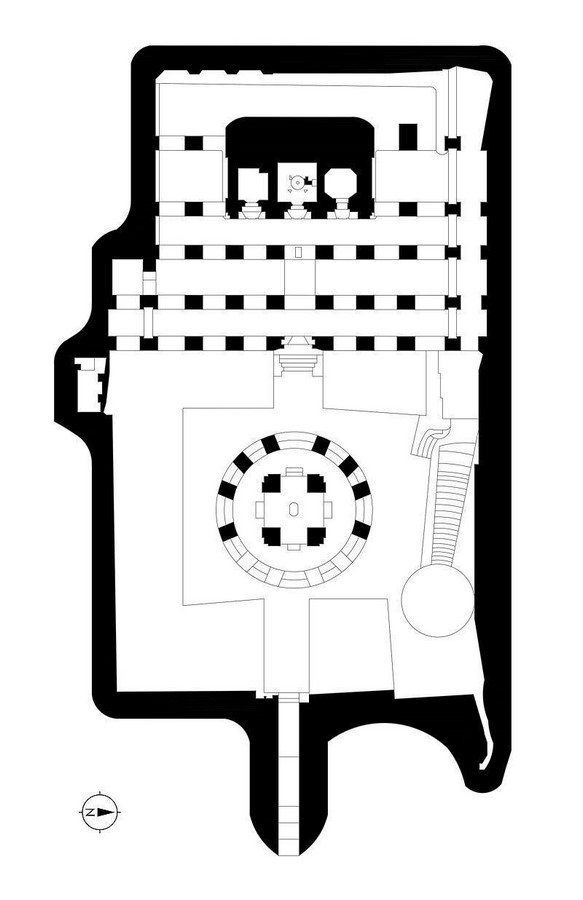
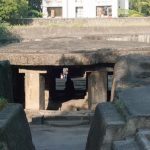
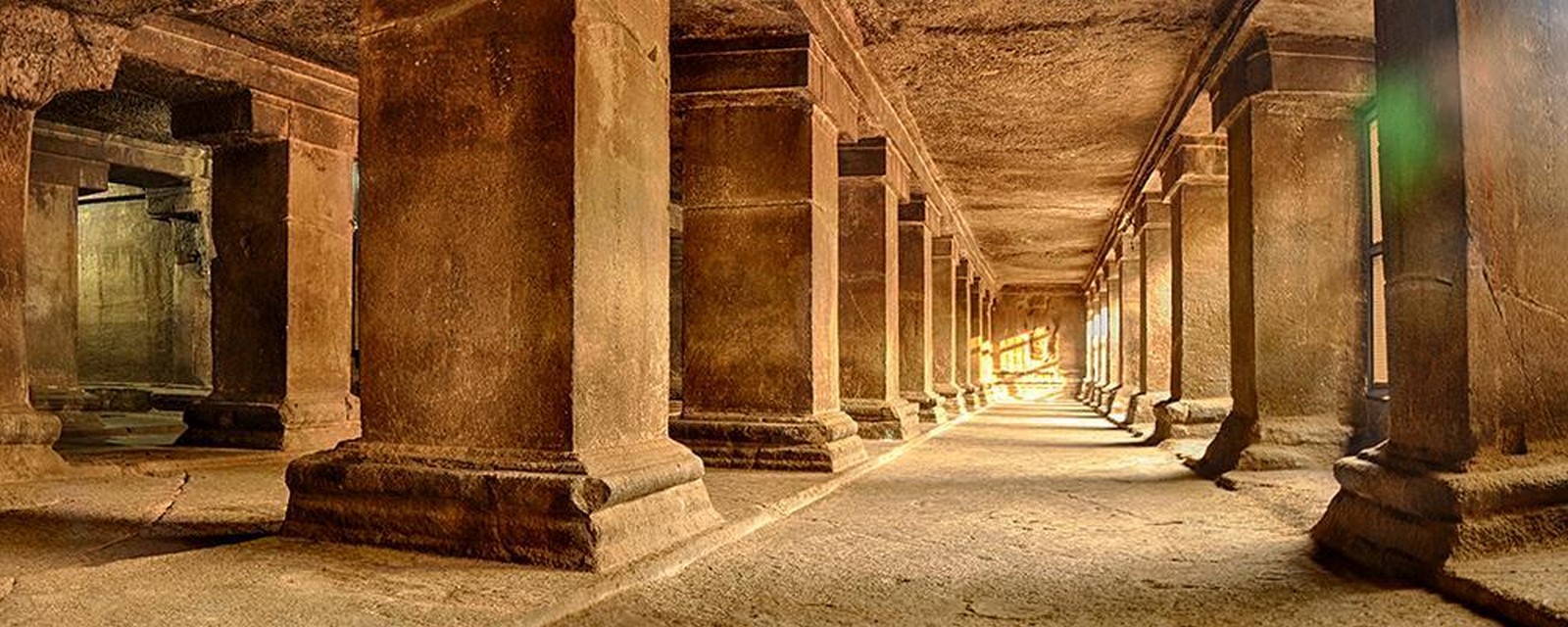
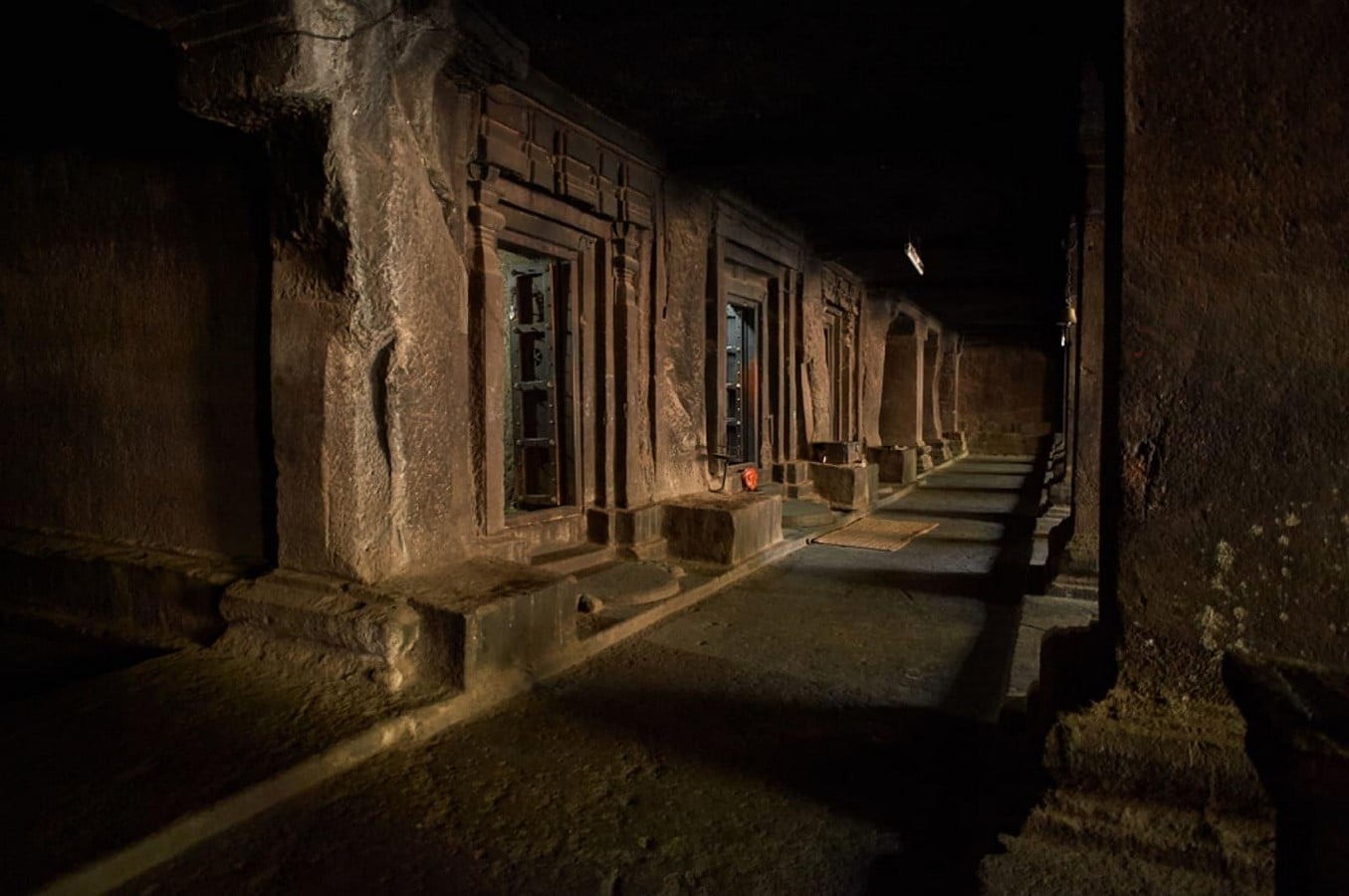
Walking straight towards the west of the Nandi Mandapa lies a pillared hall (Mandapa) with eight pillars and two pilasters leading to the inner sanctum, also known as Garba Griha. This Mandapa consisting of eight pillars and two pilasters is further divided into five rows, with an eight feet aisle. There are three inner sanctums which were presumably for housing the Shiva Linga, Parvati, and Ganesha. A Circumabulatory space is also present around these sacred spaces, commonly known as the Pradkashinapatha. This Pillared Hall (Mandapa) has an entrance marked by steps and flanked by two stone tigers. A brass temple bell at the entrance acts as a transition point into the sacred space.
Designing
It has been observed that the artists cut the floor around the Nandi Mandapa to work as an annular cistern about 2 feet deep, likely to hold any liquids that were used in ceremonies like washing the Nandi. It is to also be noted that between the third and fourth row of pillars, right in front of the sanctums is another small Nandi, which thus reaffirms that this temple was designed as a Shiva Temple. “The three sanctum caves total about 39 feet long and 27.5 deep.
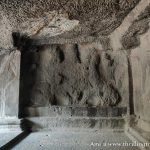
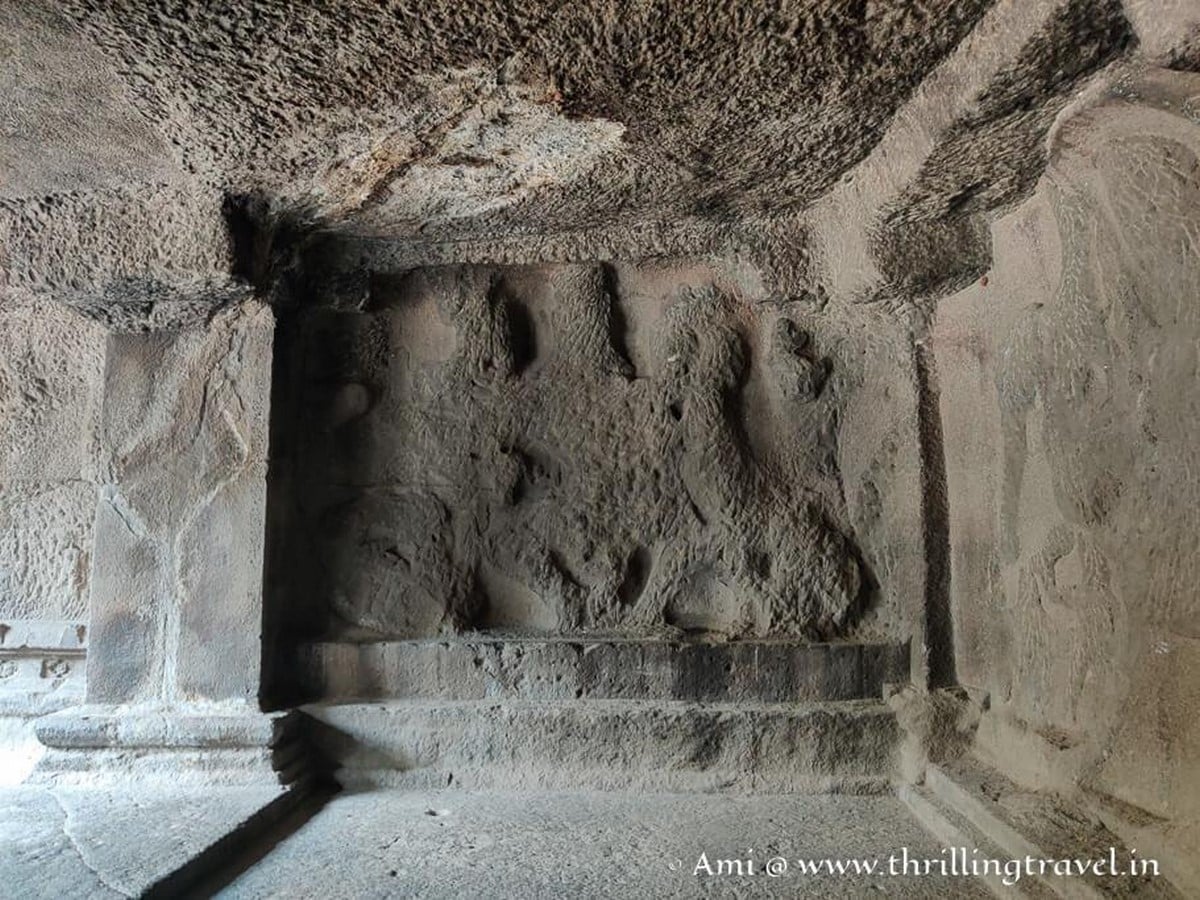
One may also find unfinished relief work in the temple due to which the cave temple also appears to be incomplete. Furthermore, there are a few traces of relief evidently visible yet largely lost depicting Saptamatrikas (Shaktism), Gajalakshmi, Tripurantaka, Anantasayin (Vaishnavism), and Lingodbhava.1
The complex is also inclusive of a small Durga Shrine.
Contemporary Importance
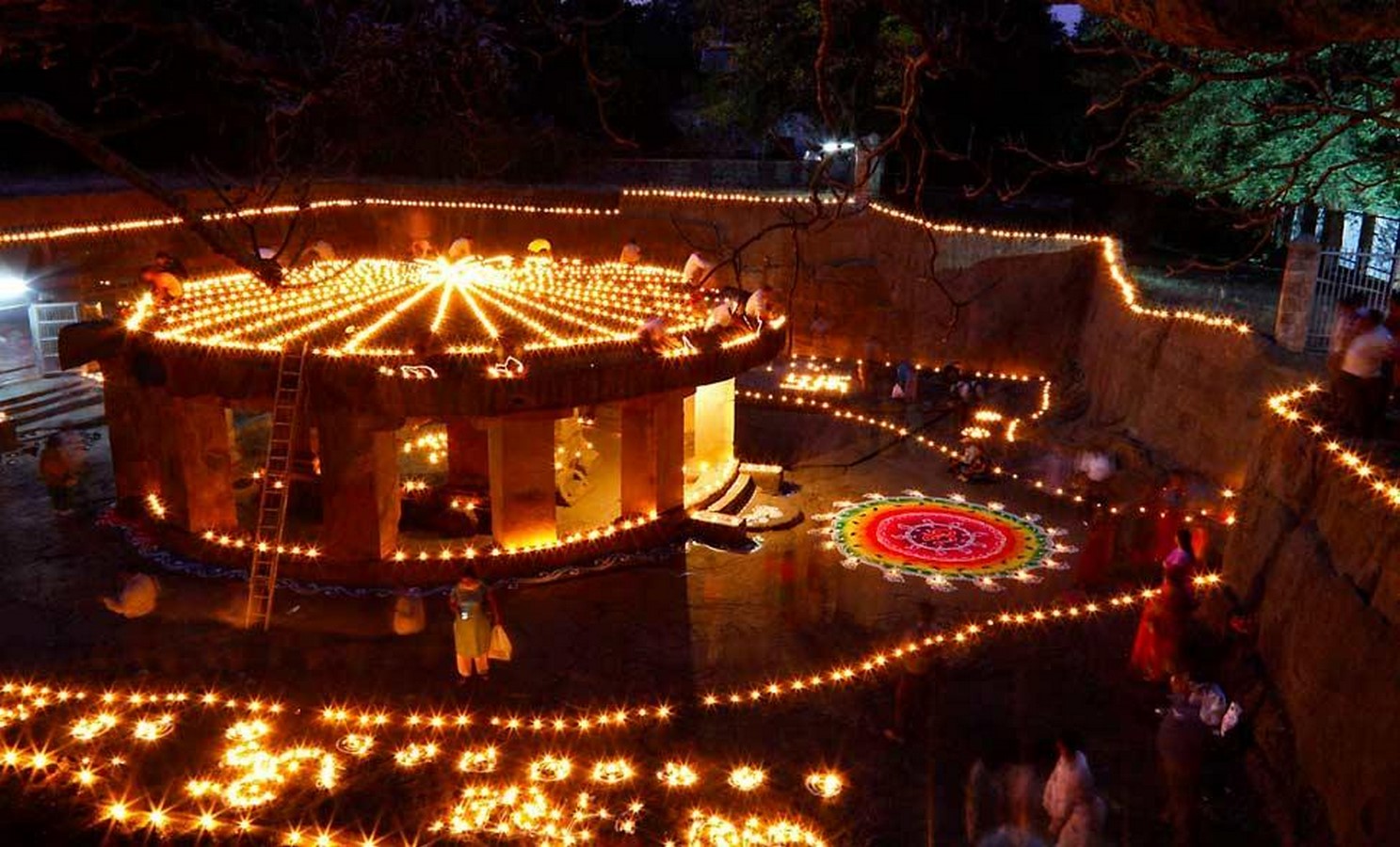
This cave temple complex is now a part of the community garden as is reported in the earlier colonial-era survey reports. There are a few 19th-century reports which mention a damaged drainage system, which might have caused rainwater to flood the caves and cause visible damage to the temple. The cave temple remains an active place of worship for the local community, especially during festivals like Maha Shivratri, and Diwali, thereafter drawing both devotees and visitors alike.
Impact on Urban Fabric
Originally the cave temple was situated on the outskirts of the Pune city but now stands at the heart of Shivaji Nagar, on the Jangali Maharaj road. The temple serves as a great place of peace and tranquility from the hustle and bustle of city life. The presence of a garden with huge trees and the underground structure made of rock makes it a sought-after place for refuge in the heat of summer since it provides the visitor with a cooling atmosphere.
It can be concluded that Pataleshwar Cave Temple stands as a powerful evidence of the artistic skills, and architectural and cultural history of the past. It stands out in the busy streets offering a tranquil sanctuary to the people around it. It has evolved from just a cave temple to a safe haven and invokes the feelings of calmness to the visitor, an experience to be cherished.
REFERENCES:
- Pataleshwar Caves, Pune (2025) Wikipedia. Available at: https://en.wikipedia.org/wiki/Pataleshwar_Caves,_Pune (Accessed: 07 April 2025).
- Super (2025). Pataleshwar Cave Temple Pune Timings, Entry Ticket Fee, Opening & Closing Time, Holidays & Phone Number – Pune Tourism. [online] Punetourism.co.in. Available at: https://punetourism.co.in/pataleshwar-cave-temple-pune [Accessed 6 Apr. 2025].
- Datta, R. (2023). Explore history, architecture and spiritual marvels in Pune’s Pataleshwar Cave Temple. [online] Telegraphindia.com. Available at: https://www.telegraphindia.com/my-kolkata/places/explore-history-architecture-and-spiritual-marvels-in-punes-pataleshwar-cave-temple/cid/1984765 [Accessed 6 Apr. 2025].
- Almas Tamake. (2019). One Of The Most Ancient Historical Structure In Pune. [online] Available at: https://almastamake02.wordpress.com/2019/08/31/one-of-the-most-ancient-historical-structure-in-the-city/ [Accessed 6 Apr. 2025].
- http://www.facebook.com/advanirajesh (2019). Pataleshwar caves – Pune’s hip underground meet-up place since a cool 1300 years! – ArchiSHOTS – ArchitectureLive! [online] ArchitectureLive! – Art, Architecture and Urbanism from around the world. Available at: https://architecture.live/pataleshwar-caves-pune-design-dalda/ [Accessed 6 Apr. 2025].
- (No date) NIOS. Available at: https://www.nios.ac.in/media/documents/SrSec315NEW/315_History_Eng/315_History_Eng_Lesson8.pdf [Accessed: 06 April 2025].
- History of India (2025) Wikipedia. Available at: https://en.wikipedia.org/wiki/History_of_India#Early_medieval_period_(c._650_%E2%80%93_1200) [Accessed: 07 April 2025].
- Admin and Admin (2018). Pataleshwar Cave Temple – History, Architecture, Timing, Attraction. [online] Guide Tour Explore Tourist places India. Available at: https://guidetour.in/pataleshwar-cave-temple/?utm_source=chatgpt.com#architecture_and_design [Accessed 6 Apr. 2025].
- Heritagetemples.org. (2023). Pataleshvar Rock-cut Cave. [online] Available at: https://heritagetemples.org/pune-project/patalesvar-rock-cut-cave [Accessed 6 Apr. 2025].
- Palande-Datar, S.K. (2021). Sutradhara’s tales: Pataleshwar cave temple is rock-cut legacy and monolithic marvel of Rashtrakuta period. [online] Hindustan Times. Available at: https://www.hindustantimes.com/cities/others/sutradharas-tales-pataleshwar-cave-temple-is-rock-cut-legacy-and-monolithic-marvel-of-rashtrakuta-period-101615360167431.html [Accessed 6 Apr. 2025].
- Internet Archive. (2025). Glimpses of old Bombay and western India, with other papers : Douglas, James, 1826-1904 : Free Download, Borrow, and Streaming : Internet Archive. [online] Available at: https://archive.org/details/glimpsesofoldbom00dougrich [Accessed 6 Apr. 2025].
- Internet Archive. (2025). The cave temples of India : Fergusson, James, 1808-1886 : Free Download, Borrow, and Streaming : Internet Archive. [online] Available at: https://archive.org/details/cavetemplesofind00ferguoft/page/n5/mode/2up [Accessed 6 Apr. 2025].
- https://www.facebook.com/thrillingtravel (2022). Hidden in plain sight – Pataleshwar temple in Pune – Thrilling Travel. [online] Thrilling Travel. Available at: https://thrillingtravel.in/pataleshwar-temple-pune.html [Accessed 6 Apr. 2025].