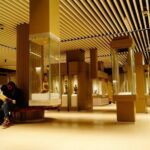
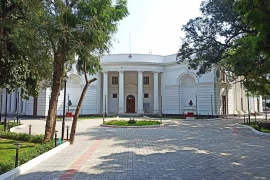
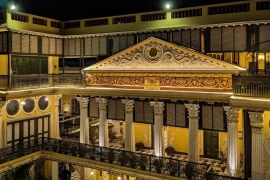
Inside the National Museum in New Delhi, the Gallery of Indian Bronzes is a captivating haven that celebrates India’s rich ancient history of bronze artistry. This curated space was designed by Mumbai-based Matrika Design Collaborative and houses a remarkable collection of 100 exquisite bronzes, each representing the diverse artistic heritage of the country.
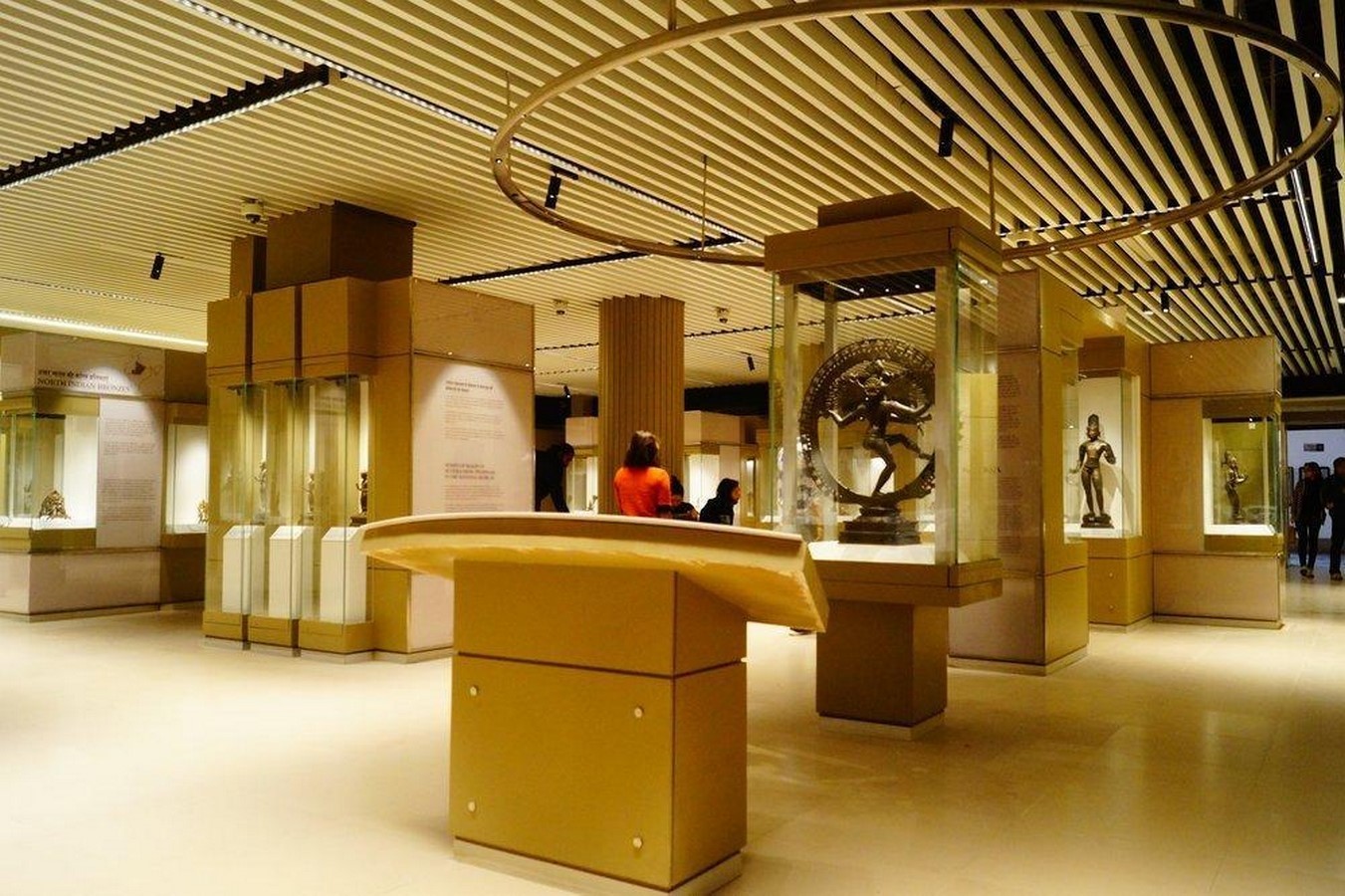
The founder and Principal architect of Matrika Design Collaborative, Abhishek Ray envisioned a modern take on the museum experience while appreciating and enhancing the relevance and importance of these cultural treasures. This was achieved by using design elements and materials that connect the history of these bronze pieces with the museum experience of today. Using innovative lighting and display techniques, the key attractions are displayed prominently to draw special attention within the gallery.
Spatial Organization of the Gallery
Designed with precision and care, the gallery uses an open-plan setting, with the collection divided and arranged based on its geographical origin. These intentional spatial narration techniques allow visitors to embark freely on a journey through the history of various regions of India.
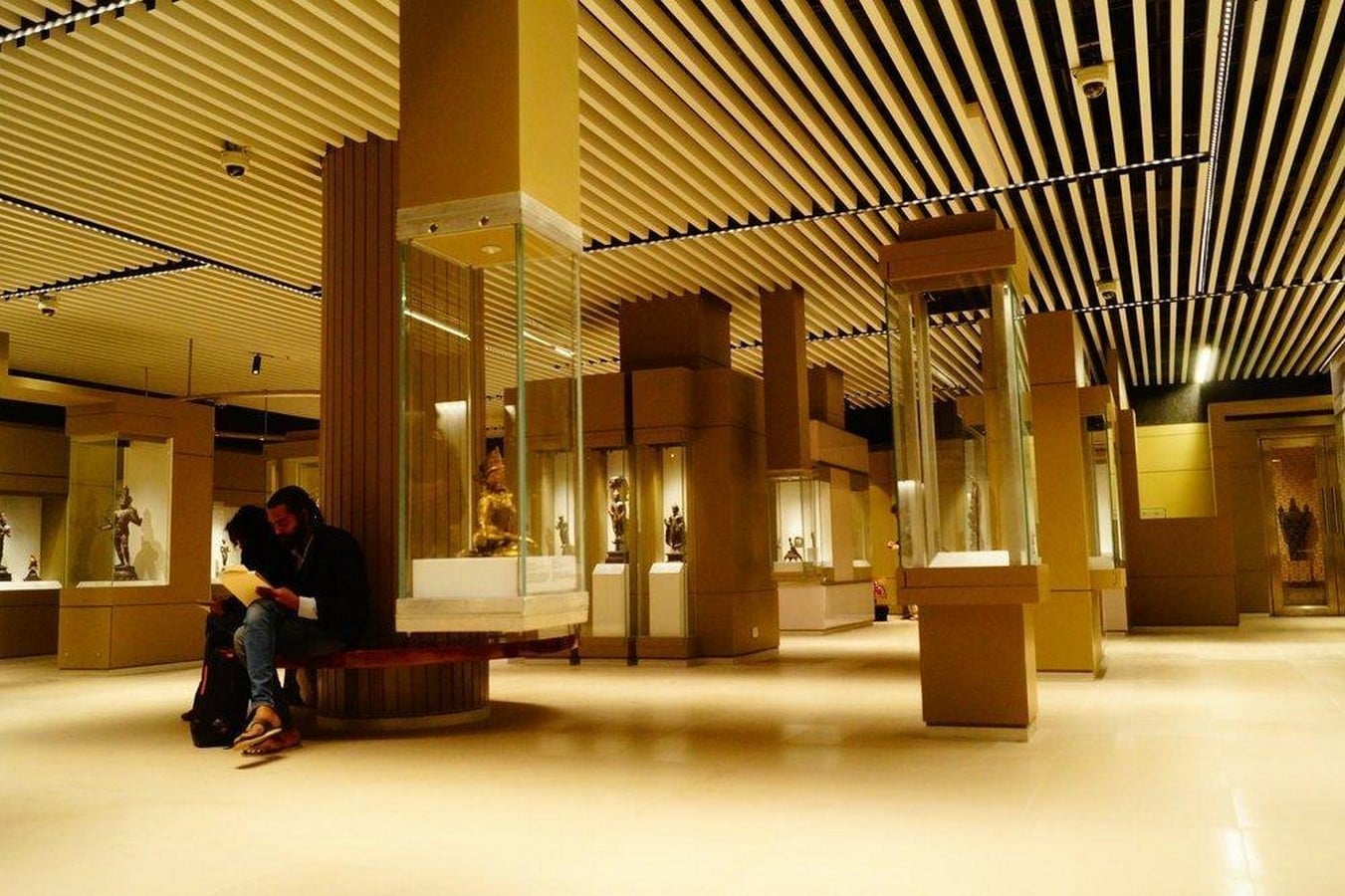
The open plan invites exploration and discovery. It makes the visitors active participants in the narrative of the rich artistic heritage on display. It provides a sequential understanding of the unique artistic expressions in bronze that have flourished in those specific regions. The gallery paints a vivid picture of the bronze artistry from the north to the south of the country, showing you the artistic diversity that existed in ancient India.
Standout Bronze Artworks
Among the many priced masterpieces, two of the collection stand out prominently—the Nataraja and the Phophnar bronzes. Special attention was given to these pieces because of the cultural and spiritual significance they hold.
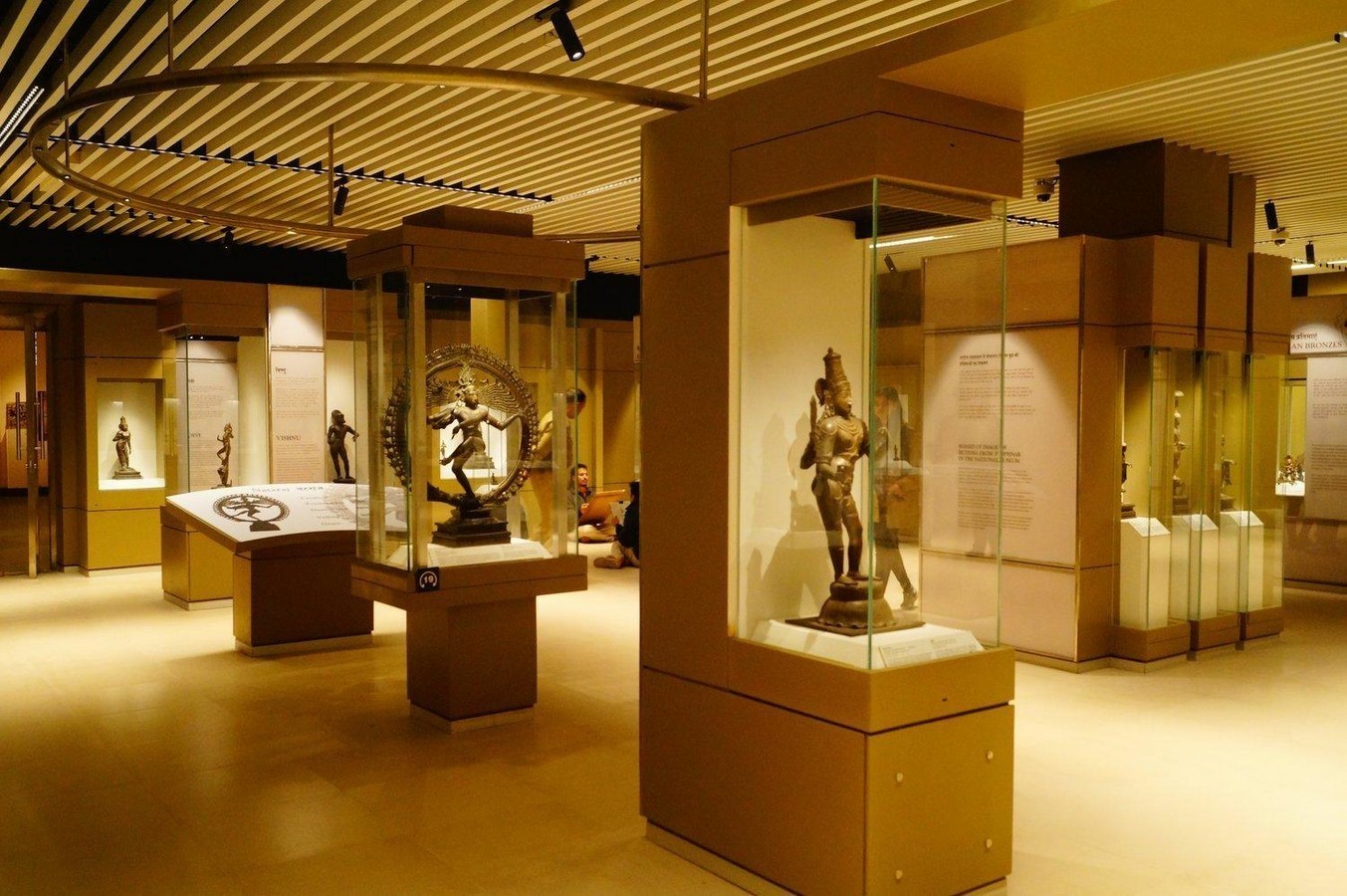
The Nataraja, a divine representation of Lord Shiva in a cosmic dance, graces the gallery with its divine aura. The Phophnar bronzes, with their intricate detailing and symbolic meanings, offer a glimpse into the rich cultural tapestry of the region they hail from. These standout pieces serve as focal points, drawing the attention of visitors deeper into the gallery.
Innovative Design Elements
Beyond the inherent beauty of the bronze sculptures, the gallery itself is a canvas of innovation.The gallery cleverly incorporates a modern theme, even while housing these ancient wonders. This is achieved through innovative lighting techniques.The deliberate use of golden light accentuates the bronze color theme.
The different types of lighting used plays a vital role in accentuating the details of each bronze work, making the museum experience richer.
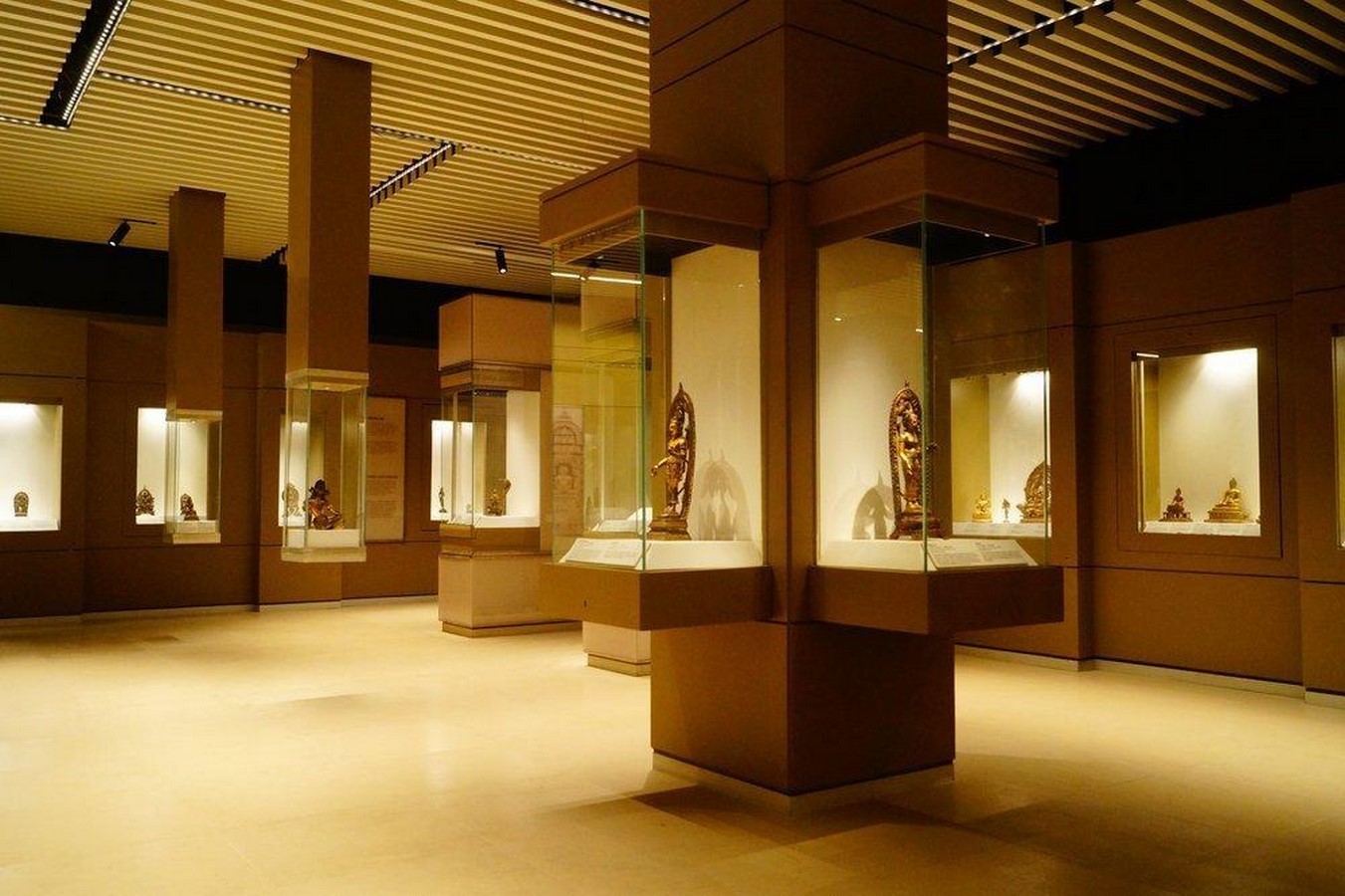
A balance between ambient, accent, and directional lighting ensures that every bronze is presented in its best possible light. Ambient lighting bathes the entire space in a soft glow. As visitors navigate through the open-plan layout, this ambient glow creates an environment that encourages unhurried exploration.
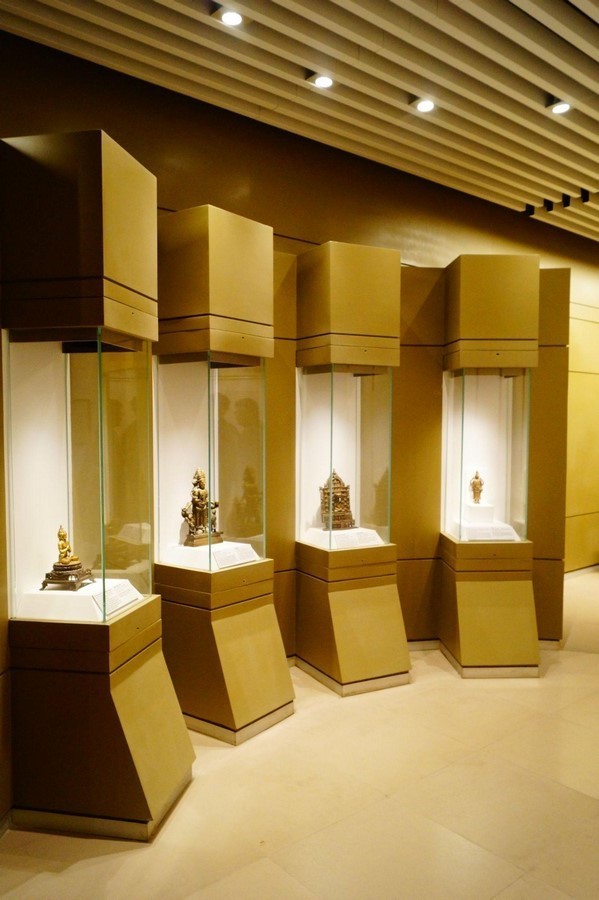
Strategically placed accent lighting casts shadows and highlights the individual features. Directional lighting eliminates harsh shadows that might obscure the details while enhancing the contours and textures of the artwork thus allowing visitors to appreciate the craftsmanship at a more detailed level. The intentionally placed lights and shadows add dynamism to the static bronze pieces.
The warm bronze hues and golden lights make the place feel cozy and connected. The color theme correlates to the bronze art on display and creates an environment for immersive experience to the visitors. The materials were chosen with care to compliment the pieces on display, while also making sure it doesn’t take the visitors attention away from the displays. The golden hues of lights add more life and spirit to the bronze and highlights the pieces on display
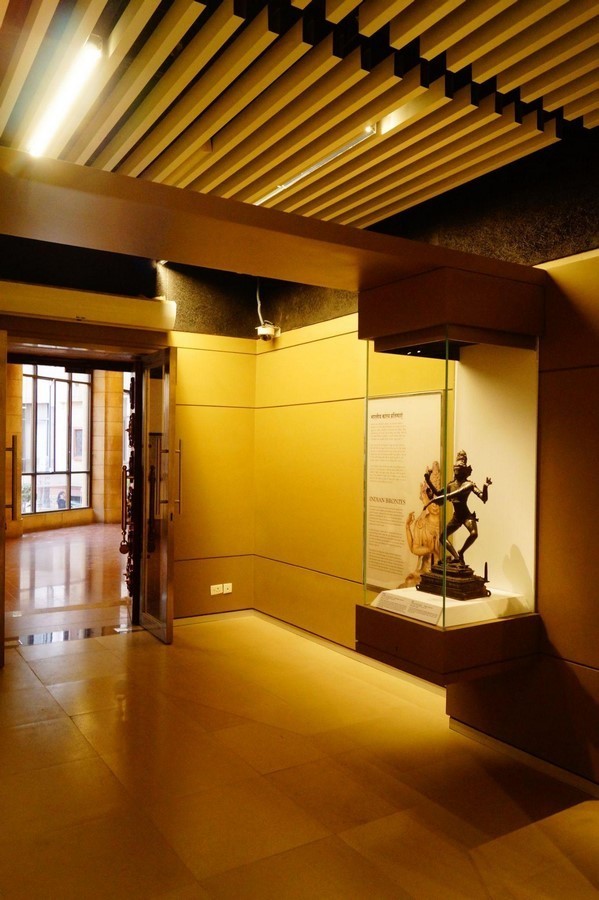
Acoustics, another crucial design aspect, adds to the immersive experience of the gallery. The ambiance of religious and cultural significance is created through the use of the chosen materials. It provides a space suitable for appreciating the importance and significance of the artwork in Indian history.
Conclusion
The Gallery of Indian Bronzes at the National Museum, New Delhi, is designed by Matrika Design Collaborative as more than a mere collection of artifacts; it is a narrative journey through time and diverse culture. The carefully designed layout, accentuated by innovative lighting, elevates the viewing experience of these intricate historical pieces, to a new modern realm.
The gallery provides an immersive experience in the enchanting world of Indian bronzes to visitors.It kindles a deep appreciation for the cultural narratives embedded in each bronze masterpiece. Together with the golden lights, they create an atmosphere of ethereal and historical beauty, making the gallery more than just a place to look at things—it’s a place to feel and imagine the artistic past of our country.