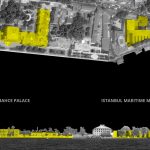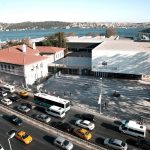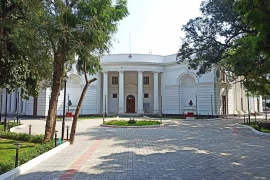
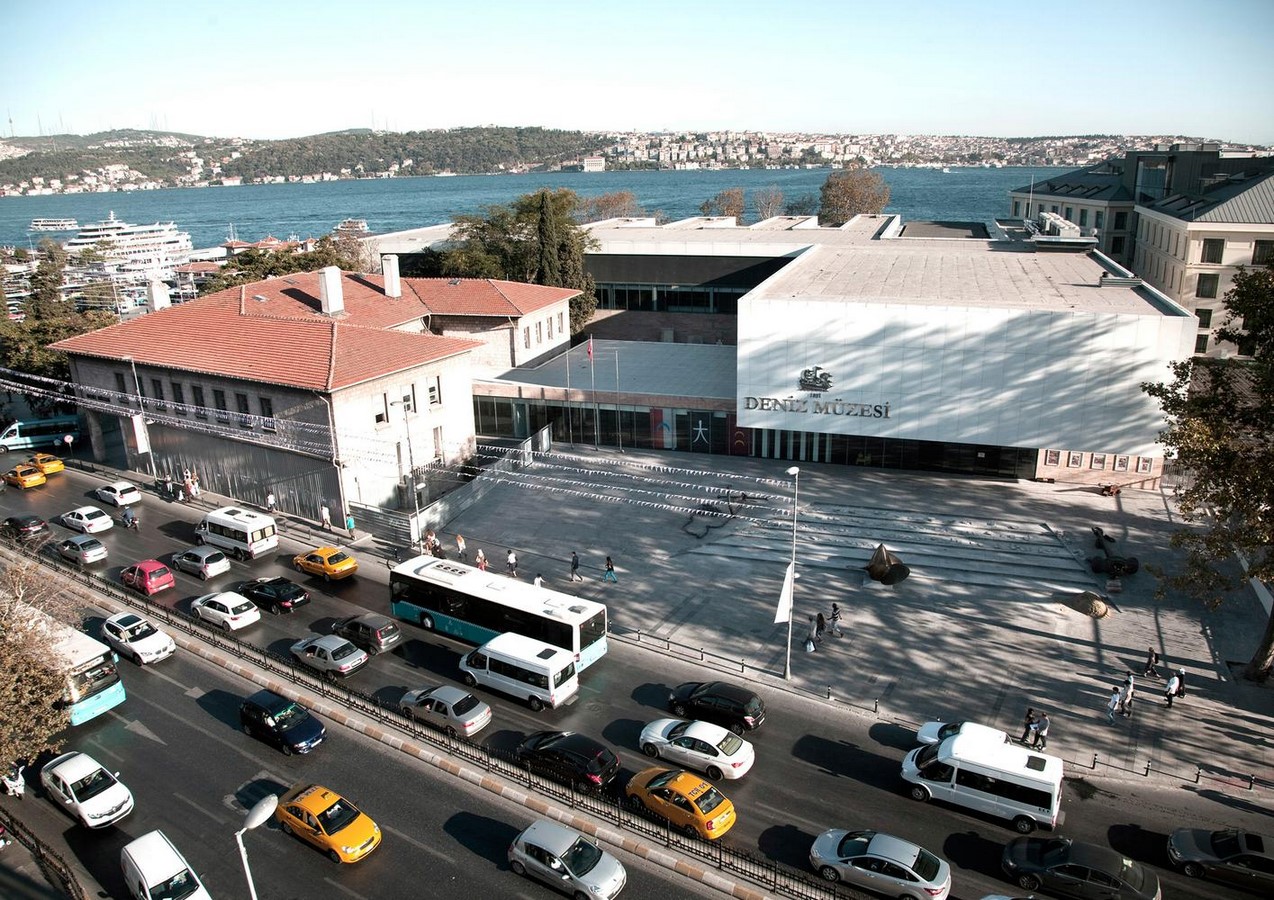
Along the strategic Bosphorus Strait, the Maritime Museum is beside the Beşiktaş Ferry Terminal on the south end. It is amid the bustling city, surrounded by a chic urban fabric. The site of the museum initially comprised an old Military Building Boathouse used as a depot and the listed Naval Museum Building, previously designed by the Monuments Council. Hence the task was to propose a new exhibition scheme for the same site, preserving the one –from the 1940s, within the strict conservation rules that have been observed both by Bosphorus Legislative Department and National Monuments Council.
The architectural competition for the museum was first announced in 2004 and the evaluation was completed in September, the same year. Most of the prominent architectural firms submitted their proposals as the problem was challenging as well as a prestigous one, so the architects say about the proposal.
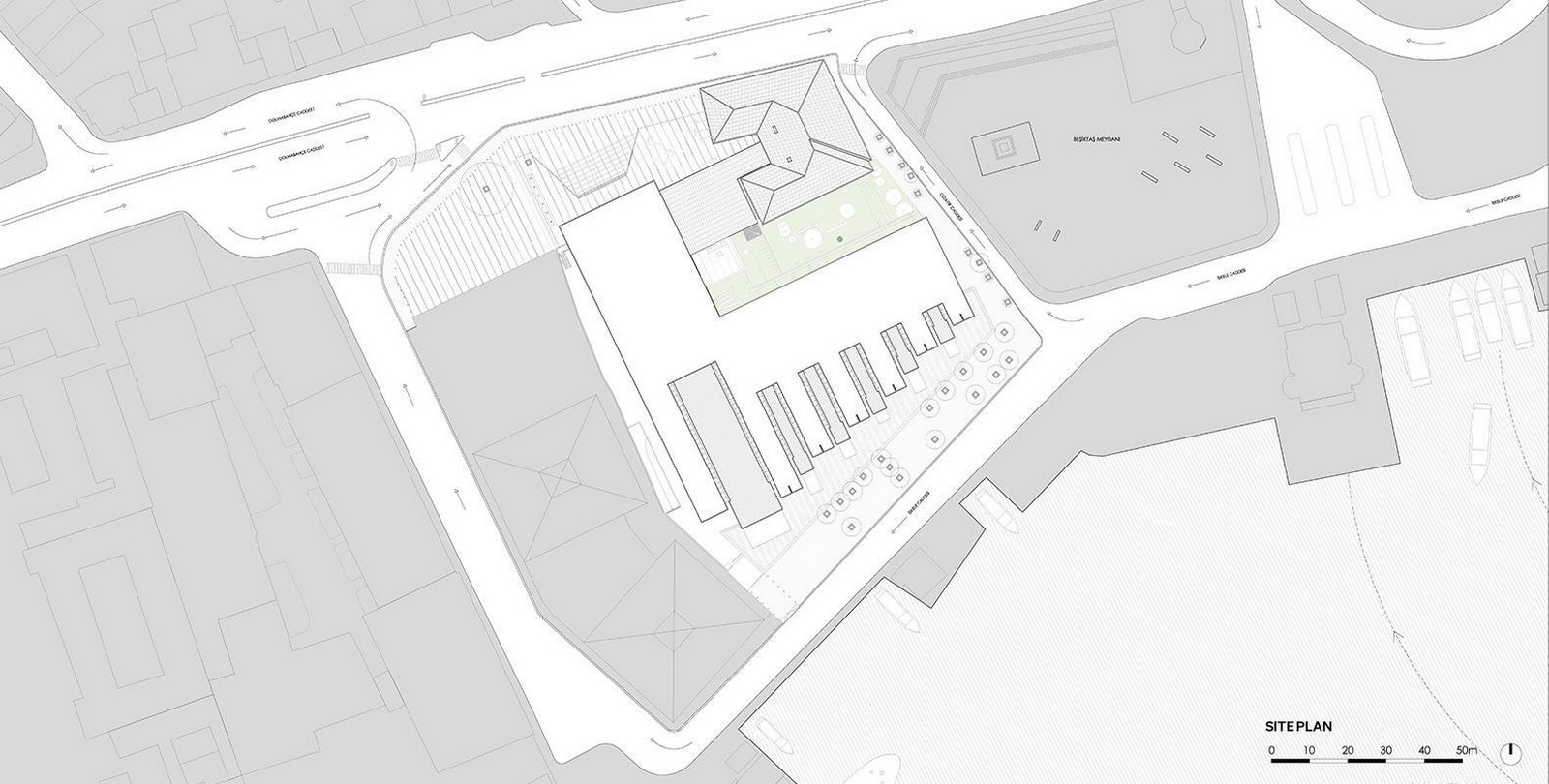
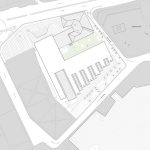
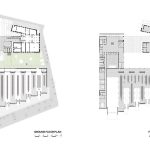
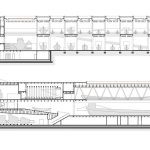
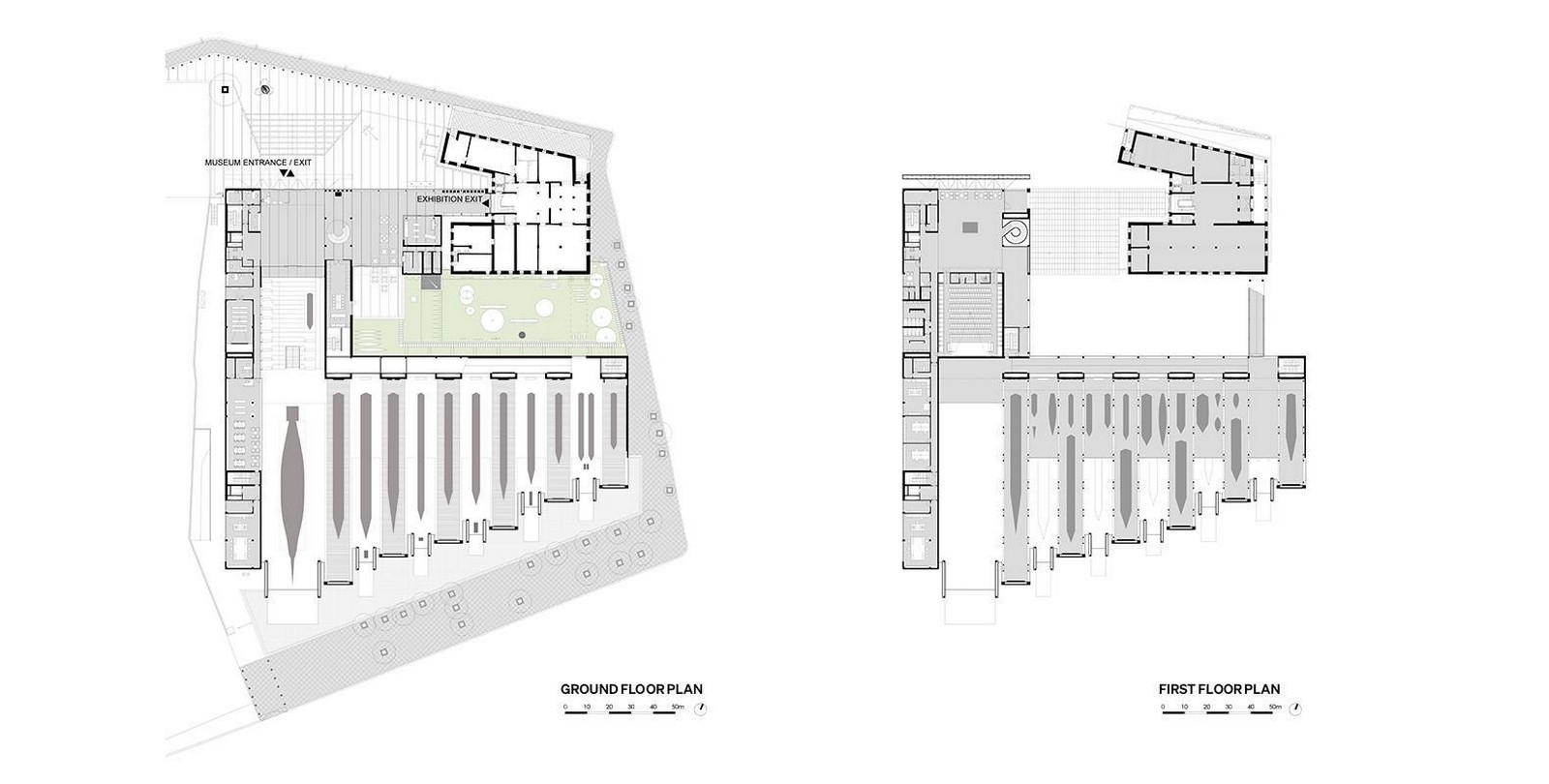
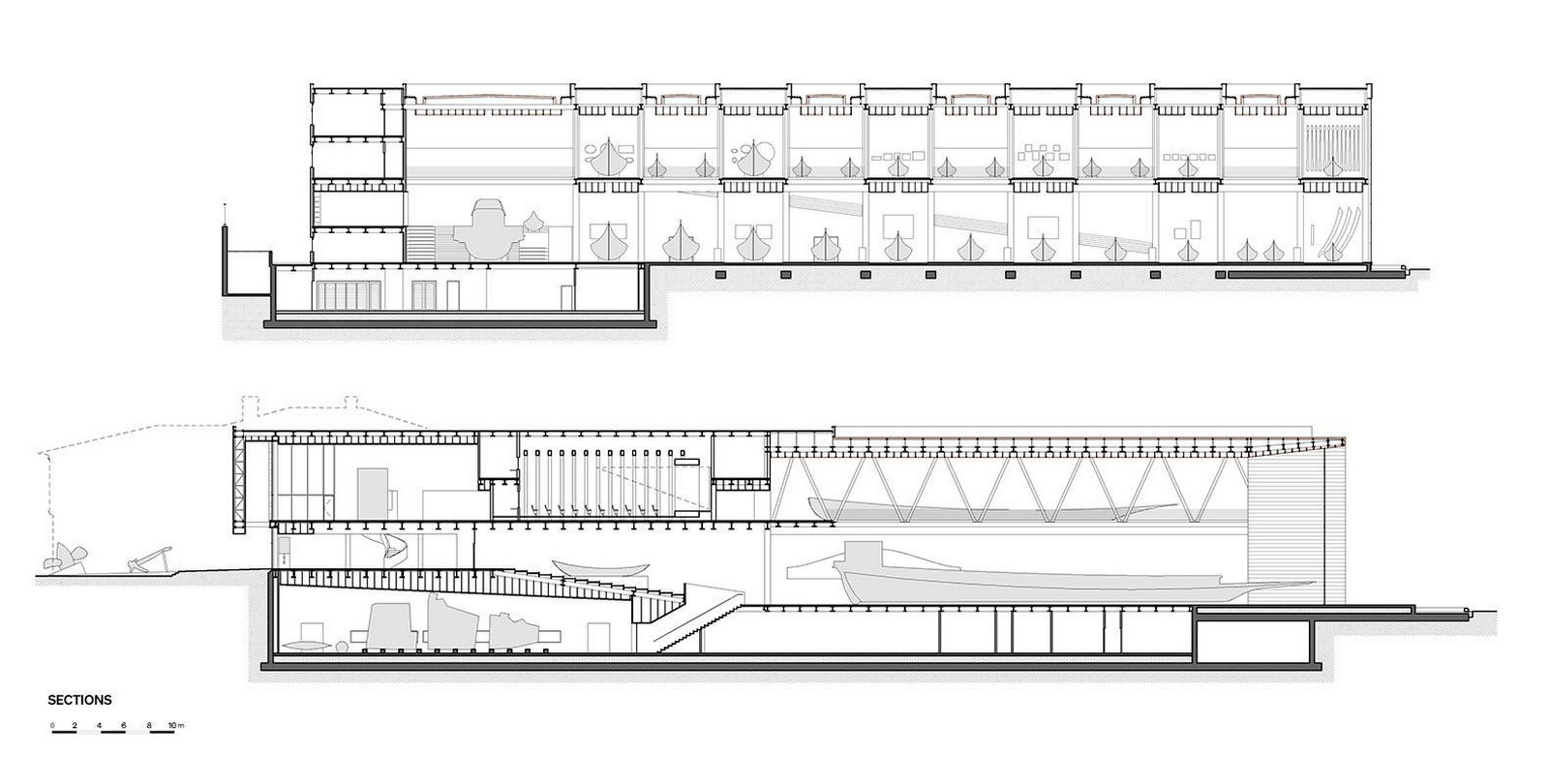
The site is chamfered on the seaside, wherein the plan of the building is staggered to blend with the surrounding landscape. Hence the staggering corners of the building plan offer an interrupted pattern of external-internal interactions. The entrance from the northern end opens out to the utilities including the lobby, cafeteria, staircases, conference halls and a mini auditorium that are meant for hosting events in the museum.
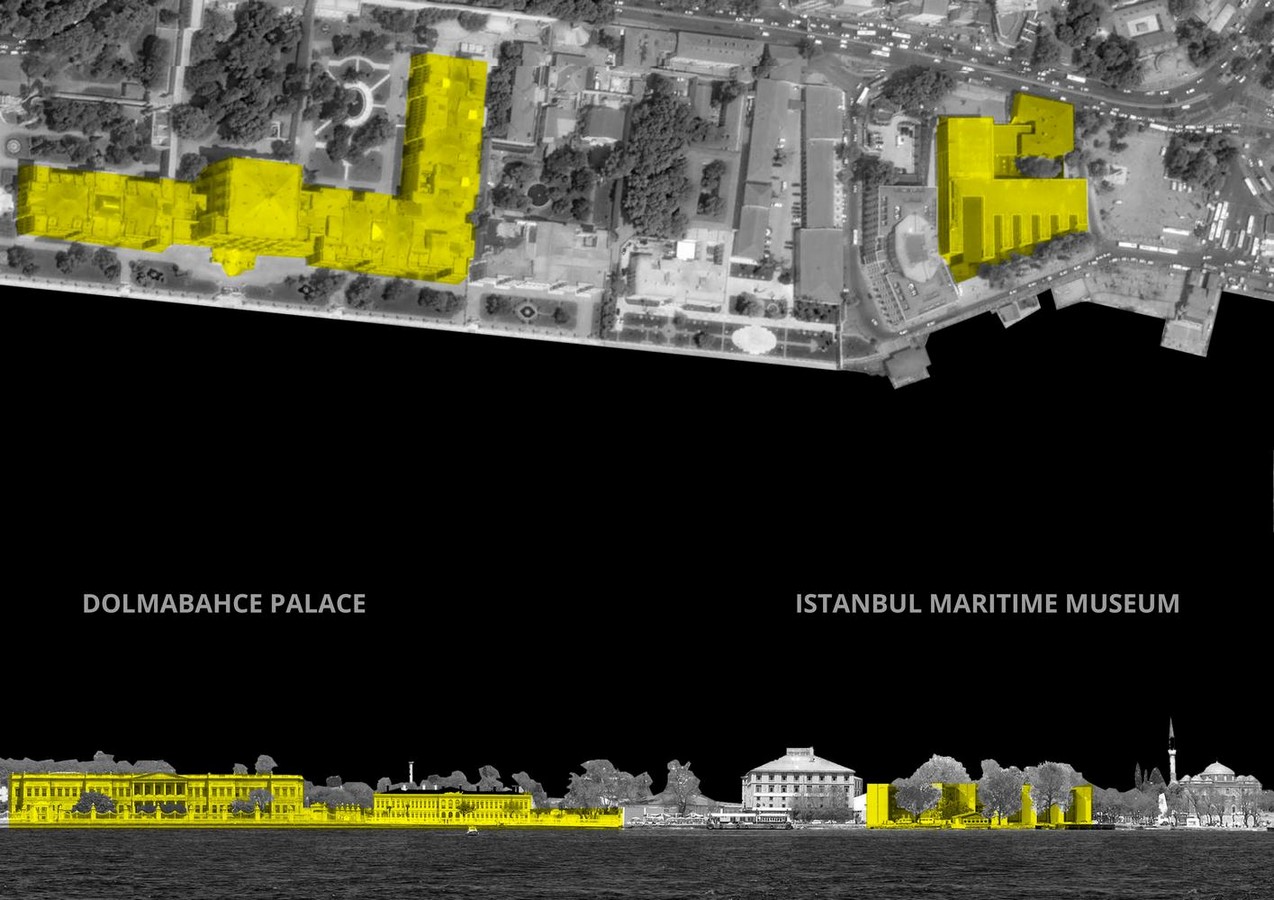
The Architects (Teğet) remarked that “The lot in Beşiktaş, by the Bosphorus aligned with Ottoman Palaces, offered a very limited space with a set of difficulties to design and build; on the other hand, offering a symbolic strength to such a location surrounded by intense metropolitan life and monuments like Bosphorus, Palaces, Sinan Mosque and Barbaros –Ottoman Admiral once very famous in the whole Mediterranean Region- Square with the Statue and the Tomb.”
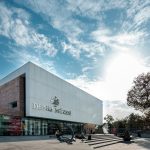
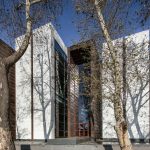
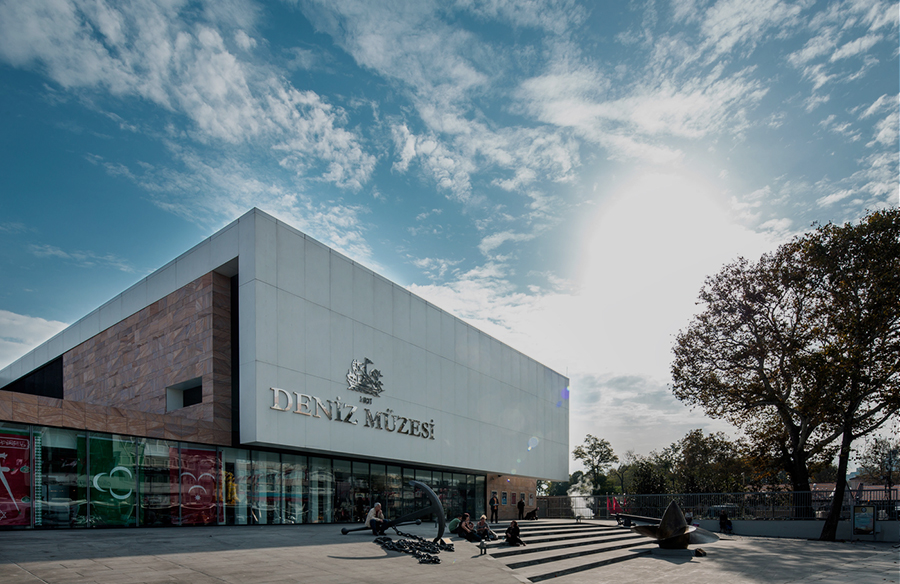
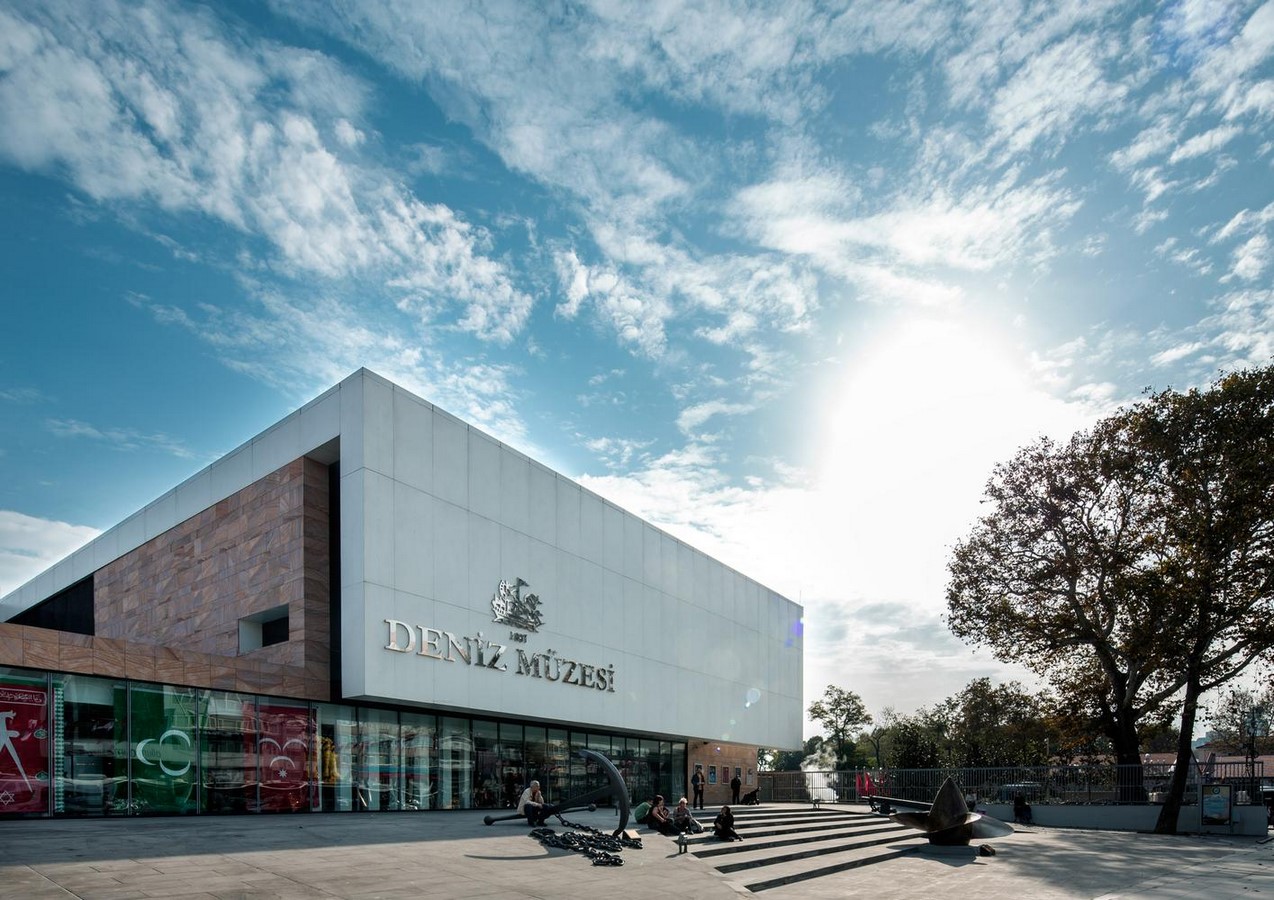
The Facade is mostly plain with the name and logo standing out. The building resembles a box of solid mass that has been contrasted with a layer of mirror-glazed full-length French windows that provide an interacting and gathering space with an elaborate ramp and stairs, along with some minimalistic features including an anchor and a sort of propeller fan, thus portraying what the building has imbibed. The front of the building offers a lively space amid the congested and vehicle-filled roads. One of the features of sea side facade is that a sort of continuous vision is ensured with the use of low E-glazing system that helps to prevent collection of unwanted and harmful sun rays, while also provoking thoughts of getting on the boats and launching them into the sea.
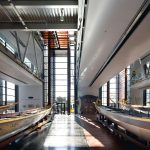
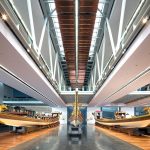
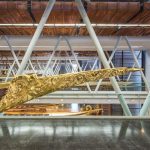
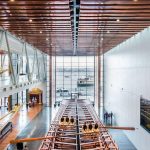
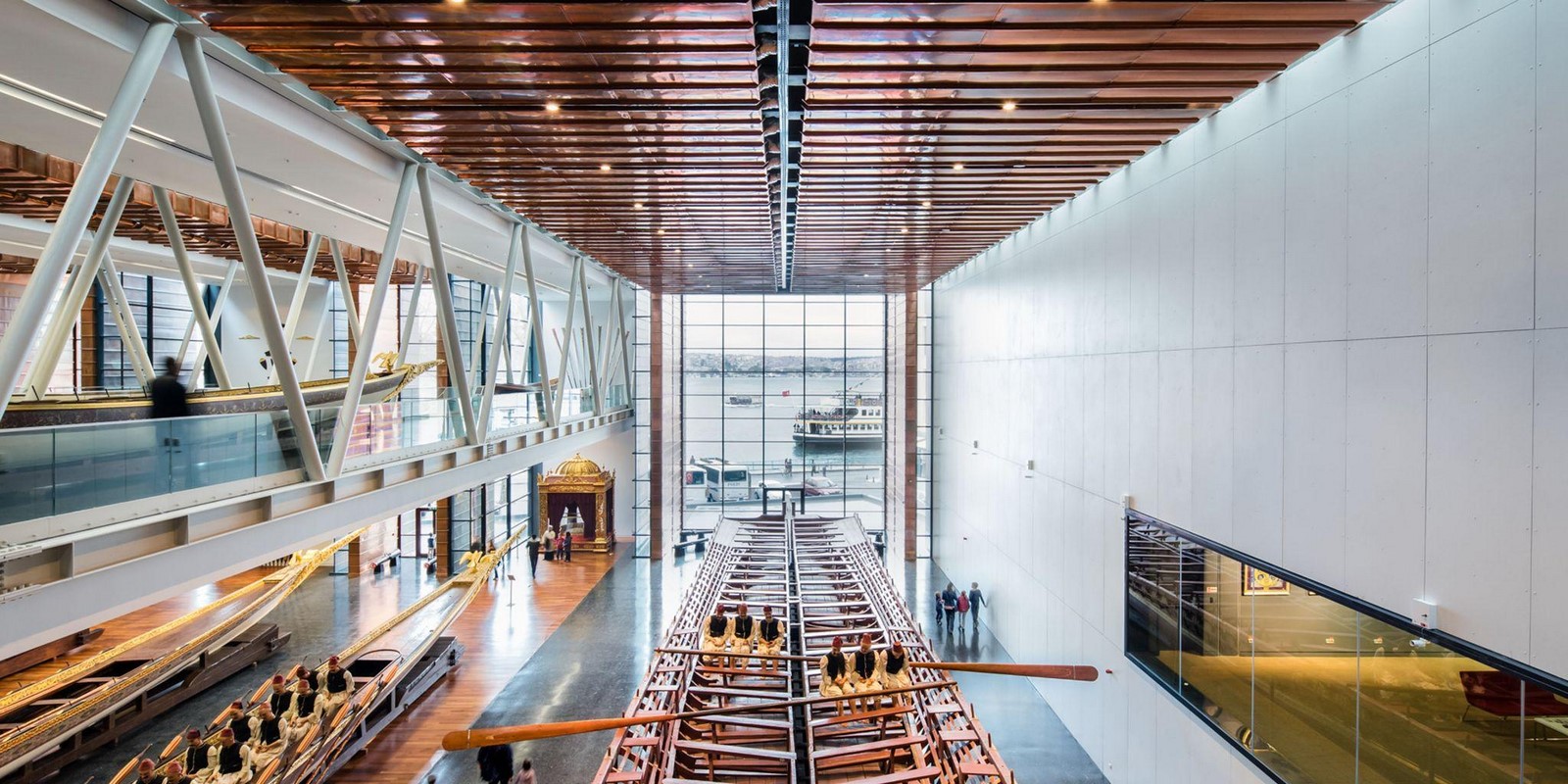
The exhibit area accommodates (Description by the architects) ship models, maps, photographs, navigation tools, outfits etc., of which the most striking aspect of the collection and apparently the most spacious is the part where about 40 Ottoman Sultan boats ranging from 45 meters to 10, dating from the 1500s to 1900s. It has been the most intriguing collection among its relatives throughout the world.
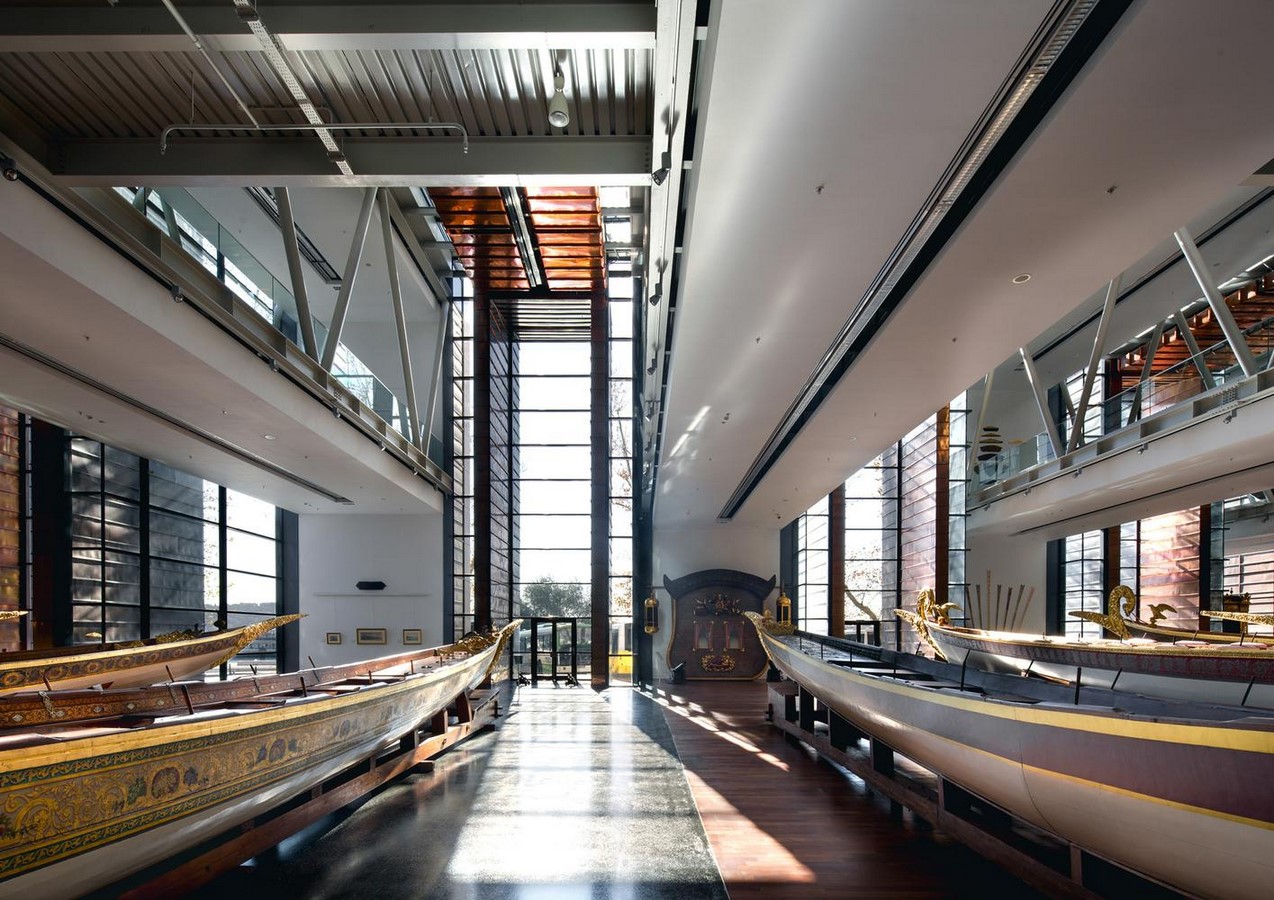
The interior exhibit area is a single columnless space where the area reserved for each long and slender boat is demarcated along the length and breadth of the hall into narrow segmented zones. The glazed windows provide a continued vision into the sea and can transmit one into an imaginary scene from the past, travelling on these abundantly sophisticated boats. Thus, The interior has served as a convenient fiction for the visitors as the mind constructs reality by capturing their attention to perceive the connectivity between the land and the sea.
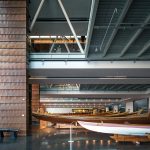
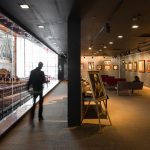
The circulation inside the museum has been planned according to the chronology of the exhibits- the boats mainly. Yet the considerations on the breaking the monotony of similarity of the boats have not been totally compromised. This has been done by using the walls alternating with the huge windows as niches to display various other smaller exhibits like the oars(rowing sticks), kerosene lamps, shields and swords used by the warriors and also few pictures from the period.
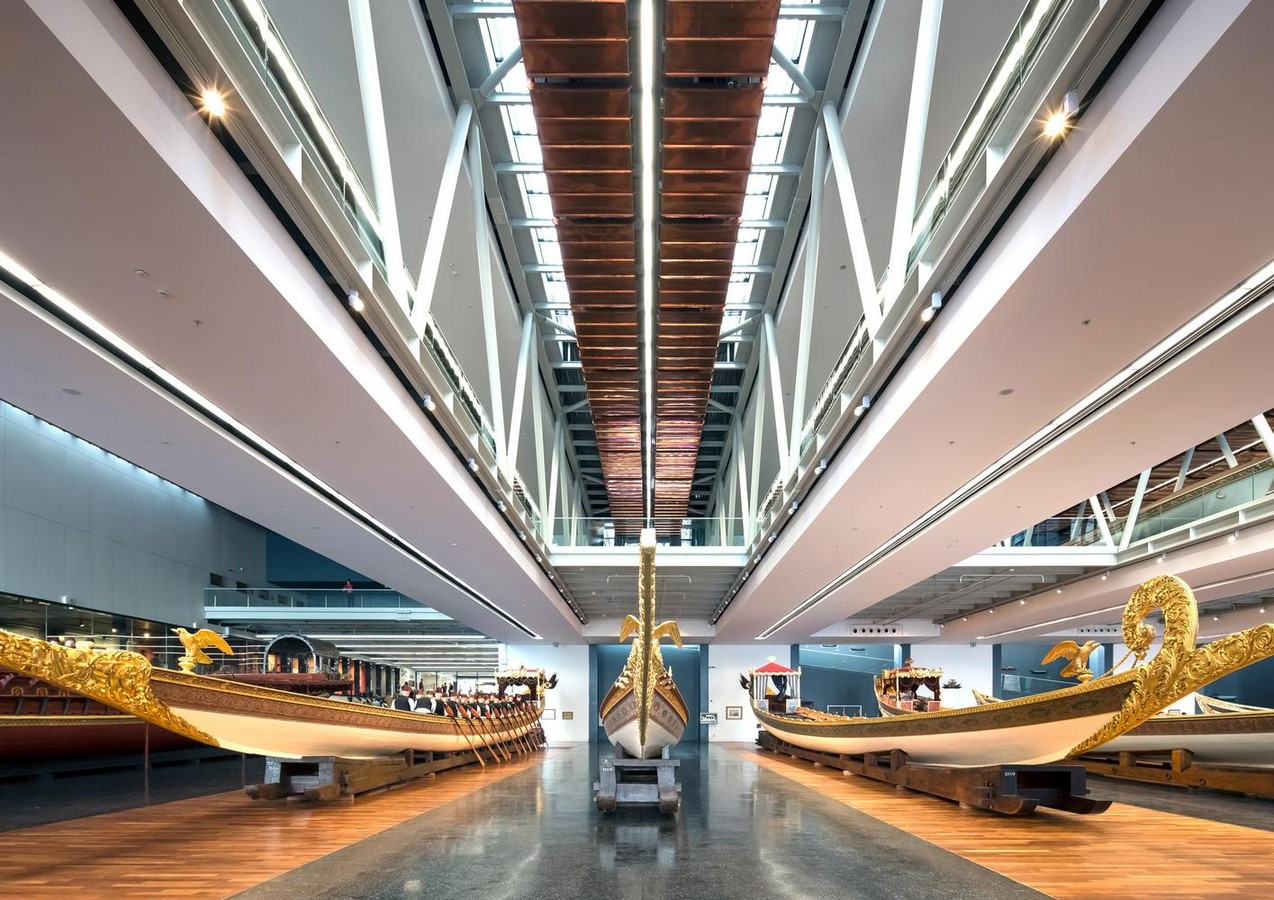
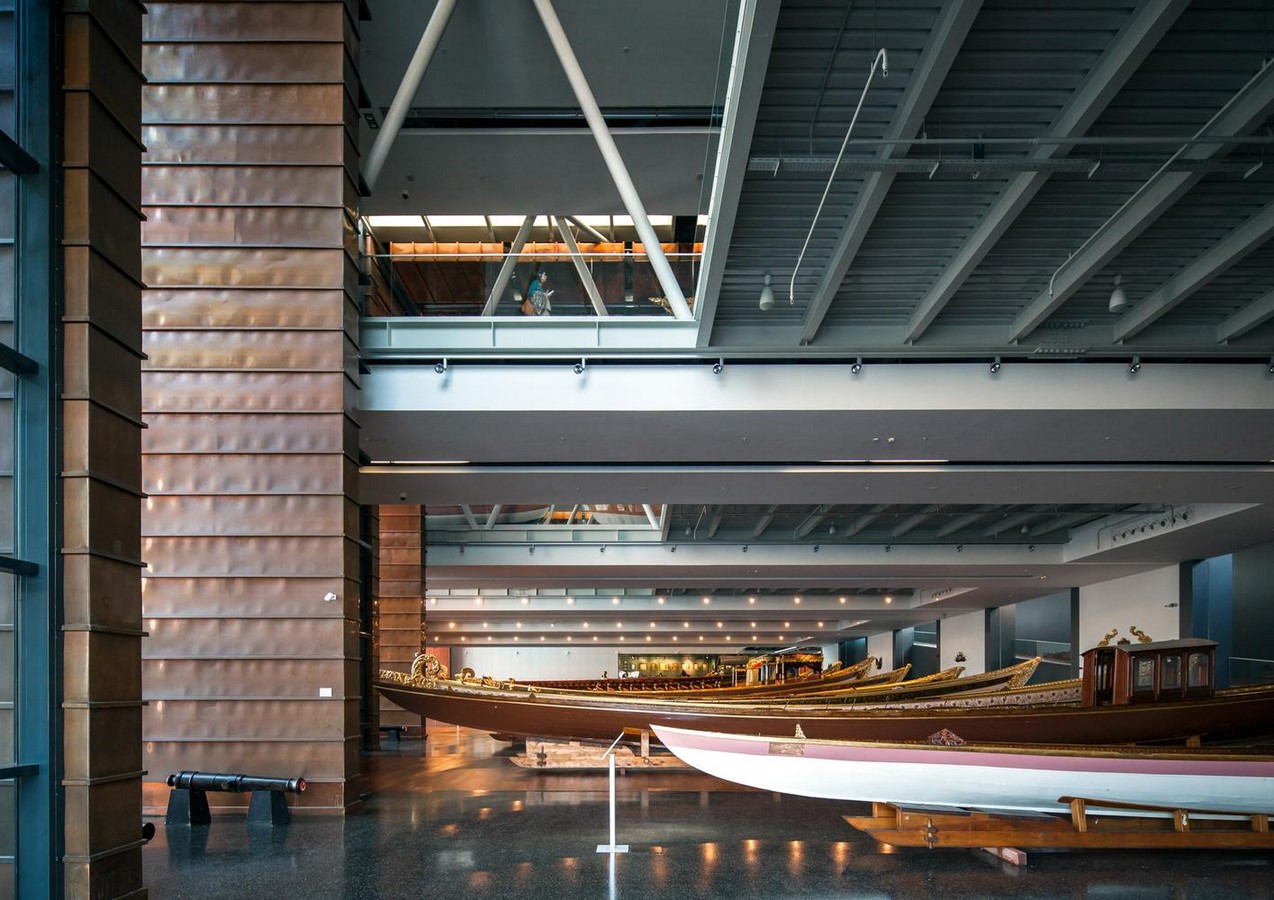
The scale and volume of the boats are immense relative to humans which occupy continuous spaces side to side. They are placed on wooden stands and the flooring is also matched with similar bands of cladding, separating the walkways and the exhibit(boats). The upward view from the ground level, inside, also gives one the experience of solids and voids that have been denoted by the use of materials accordingly. Fibre cement, commonly called Eternit indicates the solids and corrugated copper strips have been used to depict the void. There are also provisions for artificial lighting systems, as in the barn lights within the copper strips and ceiling lights within the solid Eternit.
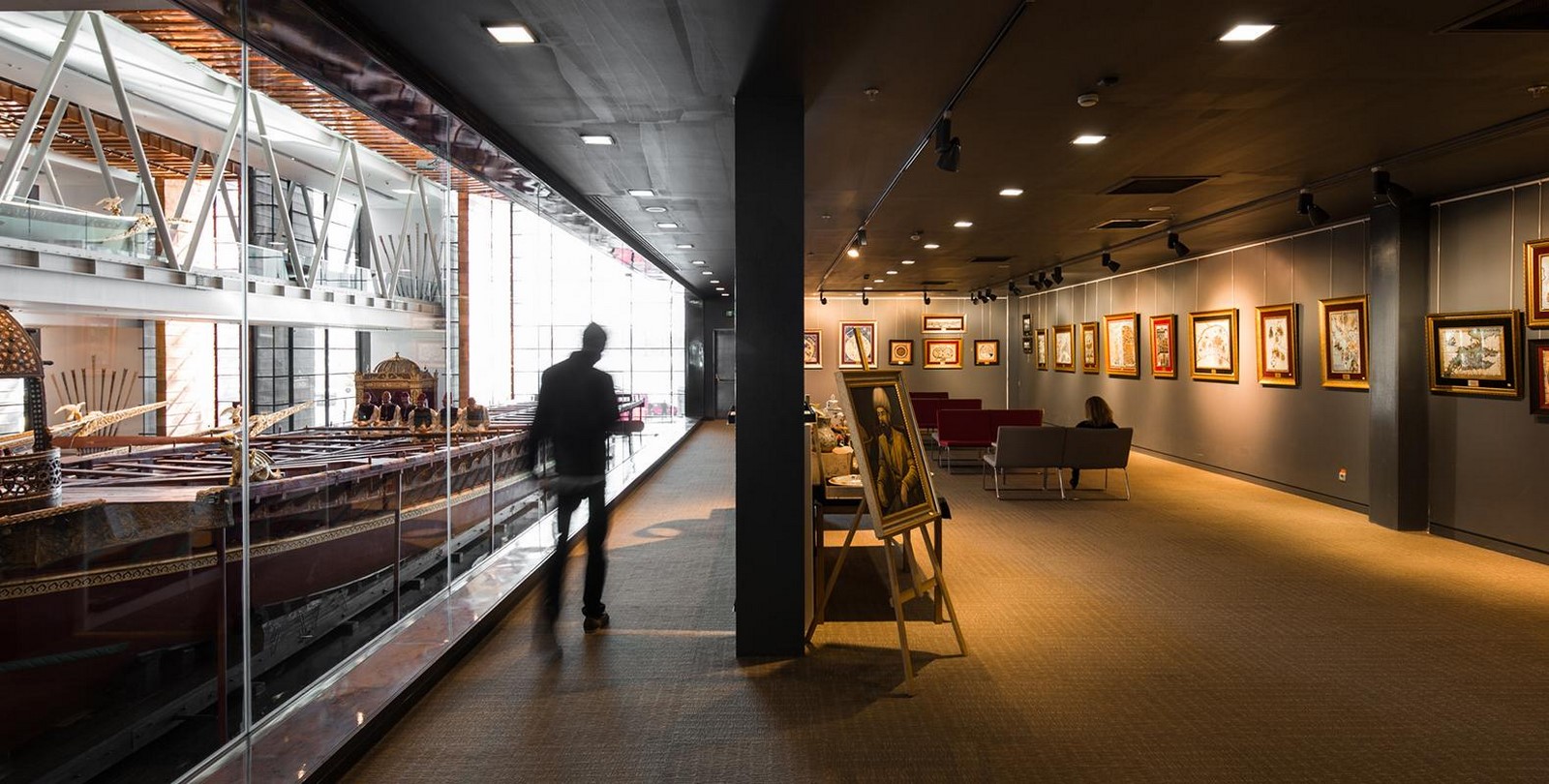
The interspersed double-height roofs are created with the effect of alternating voids and V-shaped steel trusses, which also make room for natural skylight. While on the first floor, one can experience the rhythmic variations aided by the interplay of materials and form, simultaneously having the top view of the boats on the ground floor.
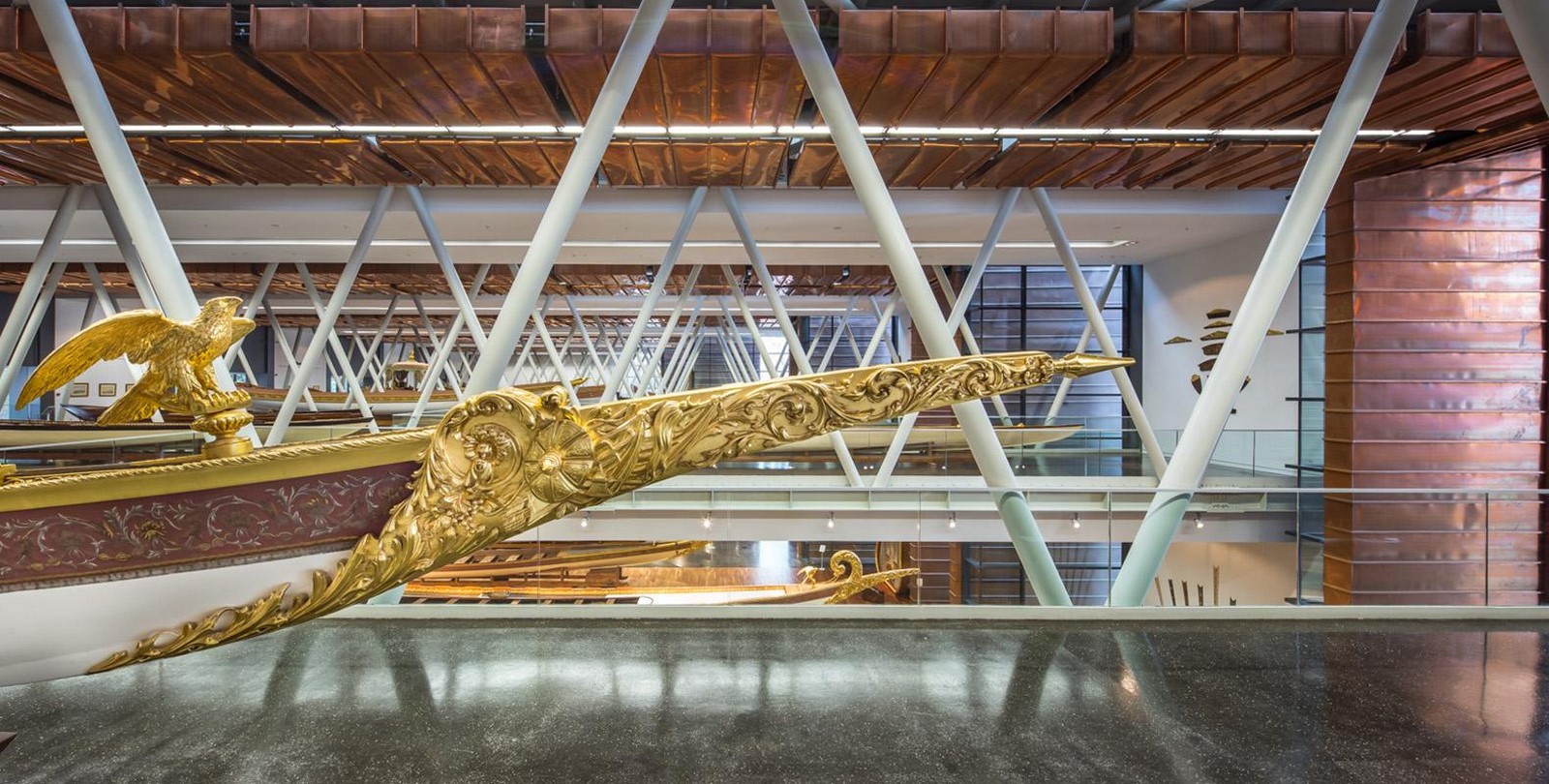
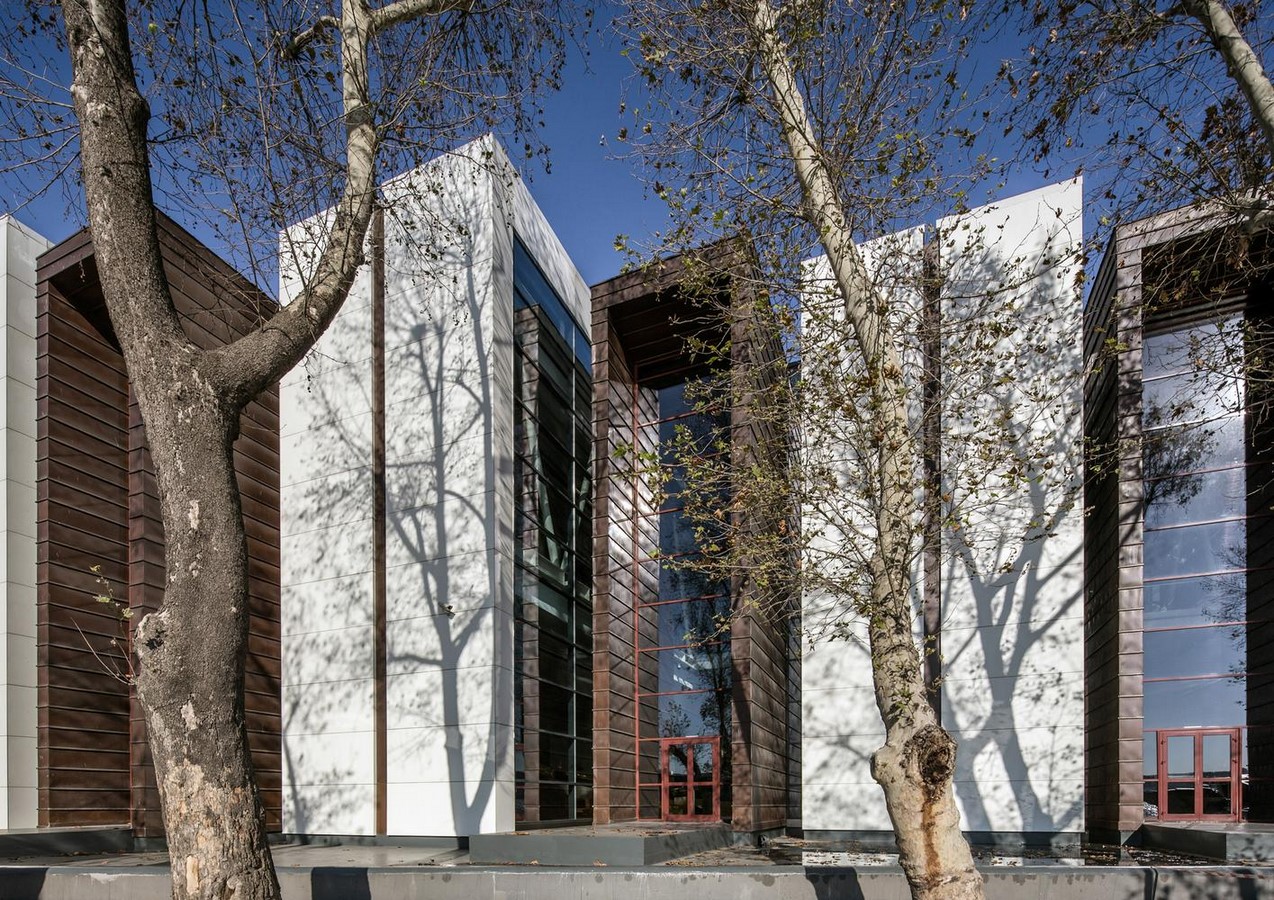
The building plan in the exterior and interior have therefore strived to maintain connectivity with the surrounding environment and to enable the real experience of boating in the era of Ottomans, alongside the modernised renderings as a reminder to bring us back to the present.
References:
Rojas, C. (2017) Istanbul Maritime Museum / Teget, ArchDaily. Available at: https://www.archdaily.com/867961/istanbul-maritime-museum-teget?ad_medium=gallery (Accessed: 25 July 2023).
İstanbul maritime museum: Teğet Mimarlık (no date) Teet Mimarlk. Available at: https://teget.com/project/istanbul-maritime-museum/ (Accessed: 25 July 2023).
Maps (no date) Google maps. Available at: https://www.google.com/maps/place/Naval+Museum/@41.0414641,29.0028548,17z/data=!4m14!1m7!3m6!1s0x14cab798b4fd6249:0x3c65e52926db932b!2sNaval+Museum!8m2!3d41.0414641!4d29.0054351!16s%2Fm%2F0bx_vp1!3m5!1s0x14cab798b4fd6249:0x3c65e52926db932b!8m2!3d41.0414641!4d29.0054351!16s%2Fm%2F0bx_vp1?entry=ttu (Accessed: 25 July 2023).