Environmental concerns, societal shifts, and quickening technological breakthroughs are driving a revolution in the field of architecture. As it works to stay current and develop the abilities and information required for future architects, this evolution offers possibilities as well as problems for contemporary innovations, sustainability, and novel forms of cooperation that must all be balanced in architectural education. This article examines the main issues facing contemporary architecture education, such as the need for multidisciplinary skills, curriculum revisions, technological integration, and environmental concerns.

Balancing Innovation and Tradition
Finding a balance between conventional architectural principles and contemporary innovations is one of the major issues facing architectural education today. Theory, design, and history provide a solid basis for architectural education. The way architecture is designed and built has evolved dramatically with the advent of new technologies like digital fabrication, parametric design, and Building Information Modelling (BIM). Teachers must balance incorporating new technological innovations with maintaining the integrity of conventional architecture education. In addition to making sure that students are proficient in modern technologies and techniques that might spur creativity in their future practice, it is critical to uphold a strong grasp of architectural history, form, and space.
Integration of Technology in the Curriculum
Technology integration in architecture education is both essential and difficult. With the advent of new methods for conceptualising and representing architectural ideas, software such as BIM, 3D printing, and virtual reality (VR) has become an essential component of the architectural design process. However, because students have varied backgrounds in technology, it might be challenging to guarantee that every student is skilled in these technologies. Furthermore, these technologies run the danger of overshadowing basic design thinking even when they might improve design skills. Students who rely too much on digital tools could put aesthetics ahead of organisation and functionality. Thus, architecture education must equip students to utilise these technologies critically, making sure they support the design process rather than defining it.

Sustainability and Environmental Responsibility
In contemporary architecture education, sustainability and environmental responsibility are critical topics that require attention. A more sustainable constructed environment is being created, and architecture is at the forefront of this endeavour due to the rising awareness of climate change and the depletion of natural resources. Therefore, sustainability principles from the use of eco-friendly materials to energy-efficient building techniques need to be incorporated into the architectural curriculum. Students studying architecture are now required to build with environmental sustainability in mind in addition to form and function. It might be difficult to include sustainability in the curriculum, though. It necessitates a paradigm change away from conventional building techniques and materials and towards creative solutions that might not be completely realised or extensively used in the sector yet.
Interdisciplinary Collaboration
The collaborative nature of the contemporary construction business is reflected in the growing multidisciplinary nature of architectural education. Architects have to collaborate with engineers, urban planners, environmental scientists, and other experts to design intricate structures and communities that satisfy various requirements. Consequently, curricula at architectural schools are starting to include multidisciplinary learning. Fostering this kind of cooperation is not without its challenges, though. Effective collaboration among students can be difficult due to varying priorities, approaches, and terminology across fields. Moreover, both specific knowledge and more general collaboration abilities must coexist in architectural education to make sure that students are both competent in their subject and capable of cooperating with a varied range of specialists.
The Changing Role of the Architect
Originally a master builder, the role of the architect has changed to include membership in a broader team of professionals. The breadth of what architecture schools teach has changed as a result of this change. In addition to creating structures, today’s architects also have to take sustainability, social effect, and building performance into account. It is anticipated that they participate in project management, comprehend legal and financial matters, and assume a leading position in design initiatives. The growing scope of an architect’s duties is a problem for architectural educators, who have to make sure that their graduates possess a broad range of skills beyond design. Together with technical know-how, this also encompasses soft skills like problem-solving, leadership, and communication.
The Impact of COVID-19
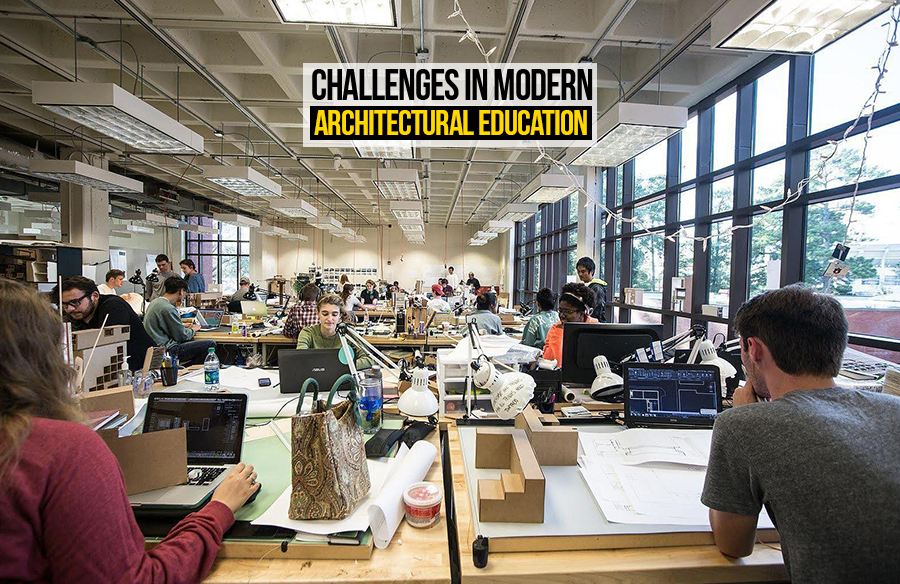
Architecture education has been significantly impacted by the Covid-19 epidemic. Teaching design and studio-based courses, which often rely on in-person contact and hands-on learning, has become more challenging due to the move to online learning. It has been challenging for students to participate completely in the design process due to a lack of physical studio space and material access. Furthermore, the epidemic has compelled architectural schools to reconsider how they impart knowledge as a result establishments have embraced hybrid teaching strategies. Online education is flexible, but it might be difficult to preserve the immersive and collaborative aspect of architectural education.

Adapting to Future Trends
Lastly, new development in the field of architecture requires ongoing adaptation of architectural education. The function of the architect is ever-evolving with time. Future issues that architectural schools will face include the growing significance of smart cities, the use of AI in design, and the requirement for more flexible and robust construction. In order to adequately educate students for an uncertain future, architecture education must be adaptable and creative. To prepare students to face the problems of tomorrow’s built environment, schools must be willing to experiment with innovative teaching strategies, curriculum, and technology.
Conclusion
In conclusion, there are possibilities and difficulties for modern architecture education at this crossroads where innovation, sustainability, and multidisciplinary collaboration are integrated. Teachers must make an effort to strike a balance between classic concepts and modern techniques as the architectural scene changes in response to societal demands, technology breakthroughs, and environmental concerns. Architects now have a wider duty for sustainability, social impact, and productive cooperation in addition to their traditional design duties. Architectural curriculums need to be flexible and dynamic to handle these challenges.
References:
Borden, Iain, and Katerina Ruedi Ray. The Dissertation: A Guide for Architecture Students. 3rd ed.
Ozkar, Mine. Rethinking Basic Design in Architectural Education: Foundations Past and Future. 2017.
Taylor, Branko Kolarevi, and Francis. Architecture in the Digital Age: Design and Manufacturing.